Perry Holley and Chris Goede explore the importance of authenticity in leadership, offering insights on how leaders can cultivate self-awareness, recognize their unique strengths and weaknesses, and consistently communicate their core values. They emphasize the power of vulnerability and transparency in building genuine connections with team members and highlight the value of daily self-reflection as a catalyst for personal growth and greater compassion for others.
Perry Holley:
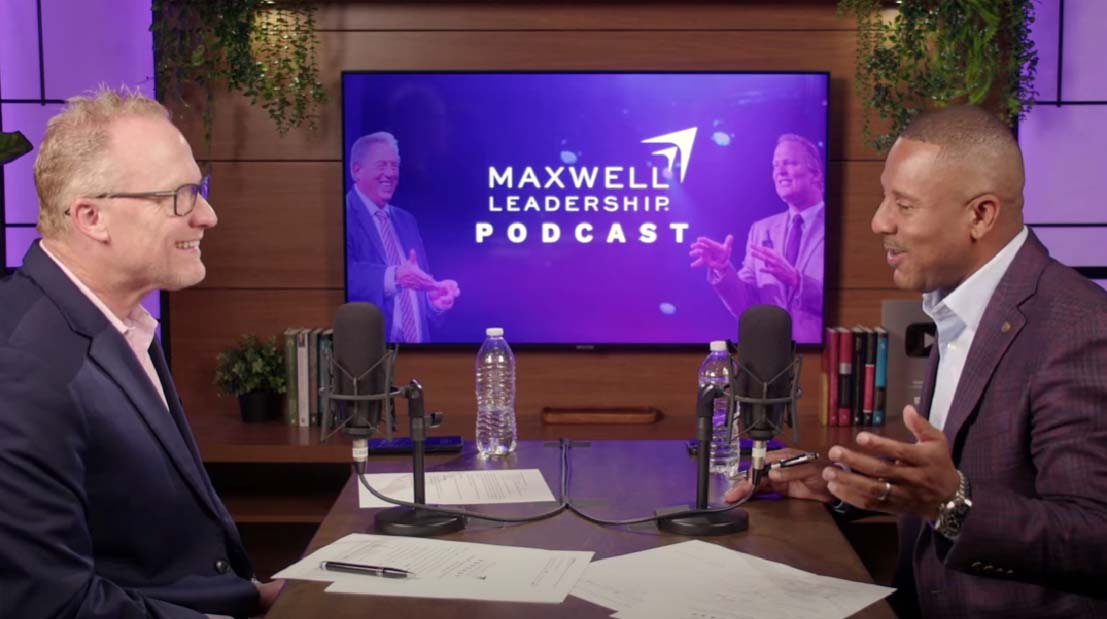
Welcome to the Maxwell Leadership Executive Podcast, where our goal is to help you increase your reputation as a leader, increase your ability to influence others, and increase your ability to fully engage your team to deliver remarkable results. Hi, I’m Perry Holly, a Maxwell Leadership facilitator and coach.
Chris Goede:
And, and I’m Chris Goede, executive vice president with Maxwell Leadership. Welcome and thank you for joining. As we get started, just a quick reminder, visit MaxwellLeadership.com/ExecutivePodcast. There you can fill out a form, leave some content, some questions. That’s what we’re going to talk about today is stuff that’s kind of on our hearts and what we’re hearing from leaders in the field. We’d love to be able to serve you in that way as well. Or if you’re looking for some training for your team on our five levels of leadership, which is our foundational course, we would love to serve you and, and be able to come and visit and do that on site. We’ll evexqn send Perry because Perry’s looking for an opportunity to get back on the road.
Chris Goede:
We were just talking about his schedule, so why not? We’ll add another one to it.
Perry Holley:
Add to those million miles, the million millions of plurals.
Chris Goede:
That’s right. That’s right. Well, today’s topic, I think is interesting the way we’re going to phrase this, right. Today we’re going to talk about. I don’t mind you thinking I’m perfect, right. As a leader. Like, I actually prefer it. Yeah.
Chris Goede:
I wish you would look at me as per. It doesn’t happen at home, so I wish it would happen here at work. And so what we’re really talking about today under this title is how do we become more authentic? Right. How do we, how do we make sure that as we’re leading people, we’re influencing people, we’re serving on teams, we’re serving team members that we come across as authentic. And it’s not just something that we have been talking about the last couple months. It’s something we’ve been talking about for a long time. It’s foundational to what we do. And authenticity is extremely powerful as a leader.
Perry Holley:
And I must, I try to think, am I really still surprised in today’s world that so many leaders still struggle with this a bit, Especially the higher you go. It’s like when you’re a young leader, a new leader, right out of the gate, first line manager, that type of thing. People expect you to make mistakes and you’re not going to know everything. And if you act like you’re a little silly acting like you’re all perfect there, but the, the more we get down the road and the more experience we have. I’m noticing some of the fol I coach that they’re not that open to the fact of sharing some of their mistakes or sharing some of their need from others and to help and you know, saying I don’t know and those types of things. So that’s where this came from. Thinking about, and there was a phrase of one of the guys I coached said that I feel like I need to be perfect. And I thought, well, I don’t want you thinking I’m perfect.
Perry Holley:
I kind of wish you would. However, what does that do for your leadership if people have that idea that you’re trying to, they already know you’re not perfect.
Chris Goede:
Correct. But you’re coming across like you are. Yeah, that’s perception 100%. So I love the play on the title there because yeah, we, we don’t want our team to think that we’re perfect and, and that’ll cause a disconnect which we’re going to get into. So here’s where it all starts with becoming an authentic leader. The only way to do that is to truly have extreme self awareness or maybe even just begin to have some self awareness. I was talking to a leader yesterday and we were just talking about this where there’s an individual on a team that’s just completely unaware and there’s some self awareness that has to develop in there. And so they don’t even really know how they come across.
Chris Goede:
Like what’s it like to be on the other side of their leadership? And so if they don’t know who they are, then how are people going to be able to trust them as a leader, as a teammate, whatever that might look like. I read this statistic from Harvard Business Review and we’ve talked about this in the past or in one of our trainings where it says 83% of people that can trust their leader, that they know, hey, that’s Perry the good, the bad, the ugly, they’re going to stay, they’re going to be engaged. And you start looking at the issue in corporate settings with retention and turnover and all this kind of stuff, and you go, I wonder how much of it, a lot is tied directly to their leader. We know that, but how much of it because they’re just not being authentic because they don’t even have self awareness.
Perry Holley:
Right. Well, those surveys almost always come back that the number one quality that people look for in a leader that they Trust is authenticity time and time again. And this idea of self awareness, I love you just said it. You kind of went awfully fast. So I’ll come back to it, which was asking yourself the question, what’s it like to be on the other side of me? Yeah, and we do that a lot here. We talk about are you aware of what it’s like to work for you? Are you aware of what it’s like to be in your home when you come through the door at the end of the day, do you understand what your family is experiencing when what are you making them feel? And so, and I teach that one a lot, you’re always making them feel something. Are you aware, aware of the emotions you bring out of others? Are you aware of the feelings you bring out of others? And I think this self awareness is a discipline. It’s not a one time event.
Perry Holley:
I have to continually be asking myself, what is it that I bring out of people and what is my effect on them? And it’s going to really, this is the central key of all authenticity to me, is how aware are you of what you bring on other people.
Chris Goede:
Well, and it’s hard to become self aware if you’re not leading yourself. And we are the hardest person that we will ever try to lead.
Perry Holley:
Why is that?
Chris Goede:
I don’t know. But I’m the best salesperson I’ve ever seen for myself, ever. One way or another, I can sell myself. Right. And so we’re not going to be able to lead others unless we figure out what is the rhythm that Chris needs to lead Chris and, and get, get on the inside of what makes me tick so that I know that I can lead consistently over time. If I can get comfortable with that, if I can become self aware and I can understand how to lead myself through good, bad, indifferent, and have people speak into our lives and accountability and coach and inner circles and all of that, then I think we can lead with clarity. I think we can really get comfortable in our skin. As they say of, hey, this is how I am, this is how I lead.
Chris Goede:
And I love the statement of if we have lack of clarity in ourselves, right, then there’s confusion and then that leads to failure of my leadership. So I just got to get really clear and what that looks like now, some people may take that and go, okay, well I’m gonna get clear. I’m just gonna be a jerk. Like that’s how I am. That’s how. That’s not what we’re saying. We’re saying, hey, let’s Figure out, become self aware. And then how do you lead yourself to grow through those things so that you get extremely clear and comfortable and your team can feel that.
Perry Holley:
I love that. And then thinking past self awareness, what’s next? Number two to me would be, are you, how aware are you of your unique skills and abilities, your strengths and your weaknesses? What is it you do really well? What is it that you don’t do so well? And I see a lot of this in leadership. I think it’s driven by a personal insecurity that you may have as a leader. That I try to do everything and I try to make it out that I do everything well. And I don’t, I don’t like the term stay in my lane, but I thought there are things that I do really well and there are things that people on my team do very well. Am I doing the things that I do well and letting them do the things that they do well? And am I clear? And many leaders don’t want to own the fact that they have weaknesses. I’ve heard John say this when he talks about the 21 laws. He’ll say you’re not supposed to be great at all.
Perry Holley:
21, he said, in fact, there are four or five that I am downright not good at. And I have to work on and hire to and get people to be better than me at that. So how do you see that showing up around skills and abilities that you recognize of your own?
Chris Goede:
Chris Fuller, one of our longtime partners here, he’s old. He is extremely old. He’s older than both, both of us combined, which he doesn’t. Listen to the podcast. Yeah. He says you say all the time and still does. Right. Lead where you’re strong, team or put a process in the system, you know, where you weak.
Chris Goede:
And that’s what you’re saying is how do we get to that place to where we truly understand who we are and then know what makes you different and stay in that lane and, and, and make sure that you kind of own what makes you different. Also thinking about Chris and our partnership with them, we have an incredible training that we do called teaming for success. You’re very familiar with this. I’ve delivered it a ton. And, you know, we get into the room and everybody’s got different personalities. And so if, if you’re leading authentically, which by the way, is influence, everyone’s leading at some point in time, you are authentically present on that team of how you’re wired. And we’ll get people that will say, well, what Is the, what’s the best profile to be a leader? Yeah, matter of fact, I just had this conversation with somebody last week. We were talking about the working genius and they go, of all the CEOs, the, the individual I was talking to actually works for their organization.
Chris Goede:
And of all the CEOs, like, what’s the, of the six, what’s the. Right, it’s the same thing. It’s like, no, no, it’s learning how you’re wired, how you’re created and then leading from there. Those are the best leaders. The ones that aren’t, are very unaware and haven’t been able to lead themselves. And so I love, and I know you taught that and I can see right now five stories going through your head about leaders in rooms coming up to you and being like, well, what about this?
Perry Holley:
Yeah, which of us?
Chris Goede:
Yeah, but even before we started today, you and I were talking and you said, well, one of mine struggles is that I could do this. And I’m probably portraying that now. I’m aware of that. Right. And so you got to kind of grow through that versus being like, well, yeah, no, I’m not aware of that. So it’s an extremely fun team. Building conversations, getting to understand the team a little bit differently. By the way, just quick plug if you’re interested, go, go back to the website in the form, say you’re interested in teaming for success.
Chris Goede:
We’d love to come out and do that, but it is so much fun to see people in the room go. Perry finally realizes what we’ve known for a long time because it just showed up on the, on the data of his personality assessment.
Perry Holley:
It comes up the. I’m an introvert. Can I, I can’t be. You just gave me an idea. We should do a podcast in a couple of weeks on can the introvert be a leader, has a personality integrity.
Chris Goede:
They probably feel like they can’t.
Perry Holley:
Yeah, because we are flaming extroverts. We obviously know they can’t. No, I’m kidding. No, they absolutely can. But let’s talk about that more.
Chris Goede:
Yeah, that’s good.
Perry Holley:
Take it number three. I was just.
Chris Goede:
Yeah. The next, the next big one is you’re thinking about this is how do you live and communicate your core values? And I’m going to throw this word in here consistently so that your team knows what you stand for. What are your non negotiables as leaders? Like what’s important to you because for everybody it’s a little bit different. Right. And the reason I threw the word consistency in there Is because your team has to know what to expect. Right. And so again we’re going to go back saying good, bad or ugly, they’re going to know and they’re going to give you grace when they know that you know that maybe that is not a strength of yours. The other thing I think when you live and communicate by your core values consistently, I also think this is huge as a leader.
Chris Goede:
To help you with your decision making filter, we’ll talk a little bit more about that. But it allows you to continually say, hey, you know, I’m not perfect. Here I am. This is where I struggle making decisions. The team kind of rallies around me. Okay, I got this one. Next one. Team rallies around me.
Chris Goede:
And just being able to do that and know what your core values and be able to communicate that consistently I think is a game changer.
Perry Holley:
Yeah. And if your team can’t articulate what your core values are, then you’re probably not living them. And your.
Chris Goede:
Yeah.
Perry Holley:
Values drive your behavior. And if you’re. Again, go back to self awareness and are you aware of what you’re broadcasting and it’s coming from your core values and people they know and, and, and I love adding the word consistently. Absolutely right. If you’re not, you can’t be one way this day and one way another. To do that.
Chris Goede:
You have to stay true right to who you are through that. When you’re communicating, when you’re making tough decisions, you have to stay true to who you are as a leader, not what’s in front of you. And I see a lot of leaders that really will kind of stray away from maybe who they are depending on the pressure or the size of, of the decision that they have to make. And I see them sometimes compromise the values of that. And it’s just the team’s going to get confused and it’s just going to be a mess.
Perry Holley:
I’m surprised when we do the five levels of leadership, we have a values exercise. Determine your personal values and how many. I always ask how many of you have never done this exercise for the first time? And it’s in the 90%. I very rarely see somebody say, yeah, I’ve actually sat down and thought about what are my core values? And then I said, well, why are we doing this? Because you’re broadcasting and people are trying to make a decision. Are they going to follow you because they want to? Because they have to. And your values, your behaviors make me either want to or not want to.
Chris Goede:
And the first way to disconnect from your team or have your Team disconnect from you is for there to be an example of how you’re living out being opposite of what you’re saying your core values are. Yeah.
Perry Holley:
All right. Number four is the big one. I think I teach this a lot, and a lot of people struggle with it, but are you practicing vulnerability and transparency? The vulnerability word is really a pretty big word in leadership these days around. And why would you want to be vulnerable? What does that even mean? Most people would think it means weak, but it’s not. It’s. If you ever see a leader being vulnerable, it’s absolute, 100% courage. And it is saying that, I. I need help.
Perry Holley:
I don’t do everything right. I need you. I don’t know the answer. I made a mistake. I. These types of things. And it’s such a critical, critical thing to do that it is the defining thing that says, I’m not perfect.
Chris Goede:
Yeah.
Perry Holley:
And it really speaks to people when leaders do that.
Chris Goede:
To your point, it’s not a weakness. It is being like. It’s okay to say. You say this. You go, hey, the three words that every leader should use a little bit more of is, I don’t know. Right. And so it is. It’s not a weakness at all.
Chris Goede:
It’s actually courage and saying, hey, man, I missed that. This is another per example. I woke up yesterday morning and I thought about something that I had told a team member on Friday about a certain price point, and it just hit me in the head, and I was like, I gave him the wrong number. So I couldn’t go back to sleep. So I got up and I sent an email really early. I was like, hey, let’s talk first thing this morning when you get this, I messed up. I gave you the wrong number. And if you’ve already sent out the proposal, it’s on me.
Chris Goede:
I got it. I’ll eat it. But if not, let’s talk about how we can cover it up. So it was like, hey, that’s on me. Like, completely. And it was. It was small, but it. I knew that I was wrong.
Chris Goede:
And so just come to the table and be like, here it is. Right. Like, it’s okay to do that to your team, because then they’re going to know that you’re being a little bit vulnerable with them. You have to. And if you want it from them, then you better model it.
Perry Holley:
Yeah. And so a lot of people would think, well, I look weak or I look dumb or I look. No, you know what you just did? You built trust. You built trust with my leader. And I now I trust my leader because they’re willing to say that they were wrong. I actually am. That’s attractive to me. I want to be around people versus somebody who says, well, I’m never wrong, which nobody ever says that.
Perry Holley:
They just act it out. And Renee Brown’s been very clear in her research that vulnerability drives trust. And that’s, it’s a number one facilitator of trust is knowing that you and I are a lot more alike because I know I make mistakes. Now you’re saying you make mistakes.
Chris Goede:
Yeah.
Perry Holley:
Oh, yes.
Chris Goede:
And your team will feel empowered to, to keep moving and they won’t feel paralyzed because they know, oh man, Chris made a mistake and he just said, hey, it’s on me if I make a mistake. So it’s not going to paralyze movement or any of their momentum.
Perry Holley:
It’s safe to come to you and.
Chris Goede:
Say, I made a mistake and you made a mistake. That’s right.
Perry Holley:
A lot of compassion.
Chris Goede:
Well, the fifth one is how do we build genuine connection for us, this is a level 2 skill set. Authentic leadership is always personal. It’s always relational. There’s a, there’s a connection there. It’s not as we talk about in the five levels of leadership. It’s not positional and so you can’t lead or what we like to say on the negative side of level one, command and control from that position, level of influence, and think there’s going to be any type of genuine connection that’s in there. So one of the things that I want to encourage us to do is that at level two, we talk about increasing your influence through relationships. Yes, we want to build relationships, but, but it’s deeper than that.
Chris Goede:
It’s about connection and all kinds of things connect versus just building a relationship with to. Some people are going to be like, I don’t have time to build a relationship. I don’t care to build. Okay, that’s fine. But there are all kinds of ways that you can connect with your people and, and it feel genuine.
Perry Holley:
I’ve heard leaders say, I don’t want to be best friends with people I work with. I don’t want to have this, I don’t want to generate this kind of friendship because I’m the boss, I might have to do hard things. And I, I, I just think that’s a cop out. I, I think that there are boundaries. And if you’re a great leader that builds great relationships, has solid connections with people, you also establish boundaries that we understand where, you know what’s Appropriate behavior around these. I can still have a direct conversation with you and let you know I love you and I care about you. But I’m going to tell you, this is what great leaders do. And so having that connection, a great word you added in there to do that I think is a beautiful thing.
Perry Holley:
One more before I start looking to wrap this up, but this, I’ve seen this taught and I didn’t do it. I’ve started doing it. But developing a habit of self reflection. And I wonder what your thoughts were on that. Is that the teaching on this is that if you spend three to five minutes daily is most helpful just reflecting on your day. I generally use a hey, what went well? What didn’t go well? What did I learn? What would I do differently tomorrow in the same situation just running through the day and the meetings and the people and the interactions, just reflecting on how I did. They say that this drives compassion from a leader. I wonder what you think about that.
Perry Holley:
That’s a big word for a very small habit.
Chris Goede:
Well, and I want to come back because I think the way we’re wrapping this up with this last one around self reflection, I think this, if we’re being true to ourselves and we’re leading ourselves well, I think this leads back to the very first thing we talked about, which was you got to develop self awareness. And as you begin to reflect and if you’re honest with yourself about how I acted, how did I respond to your point? What did I do well? How would I maybe have shown a little bit more understanding in a situation? You know, one of my, in my right path profile, one of my intense traits is very logical. So I have a hard time sometimes when it doesn’t logically make sense to me. Right, right. To stay connected. And so am I taking time at the end of the day to reflect back and go, man, when I was in that moment with Perry and having that conversation like it didn’t logically make sense to me. Did I stay engaged? Was I, Was I still curious? Was I, Was I? What? What was that? And if you can ask those questions to yourself in that reflection moment and be. And be true to yourself, then maybe not.
Chris Goede:
Maybe then you will begin to become aware and through some learned behaviors be able to, to lead different. You know, John is a huge, huge fan of reflection on experiences. Not the experiences that you learn from, it’s the reflection from it. So I would just challenge all of our leaders that are out there as we’re thinking about this and making sure that you’re being as authentic as you possibly can. What are the lessons learned during your reflection time? And I love. It’s the last one. And then acting on them, take notes, act on them, have somebody hold you accountable to it. That will begin to shift some of your thoughts and your team’s thoughts about how authentic you really are.
Perry Holley:
Right. And the research on it says that first of all, if you’re in the delusion that you’re perfect and you don’t mind people thinking you’re perfect, and you come across like you’re a little too.
Chris Goede:
Perfect, you’re listening to the wrong podcast.
Perry Holley:
Yeah, people don’t. People are not drawn to that. And you don’t really have a lot of compassion for others. Because if I’m acting like I, you know, in my mind, I’ve got it all together and I look at you and you don’t. I am not a compassionate. I have no. I might even come down on you. Like, why can’t you get your act together?
Chris Goede:
Yeah.
Perry Holley:
But if I self reflect daily and say, wow, I could have done that better. Like, you gave a great example. I gave a wrong pricing. I should have. I didn’t think through that. I should. I got to go back to that person. All of a sudden, you are.
Perry Holley:
I always tell people, I said, you have a choice every day as a leader to. To open up or armor up. And a lot of times when I was coming up, it was like, Iron man, put on the armor and look, don’t look like anything affects me. However, if I reflect and say, yeah, I could have done that better. Well, I should have. I didn’t use the right tone with that or I didn’t. Then when you see other people struggle, you have a lot of compassion because, you know, hey, me too, me too. And that’s where it comes from.
Perry Holley:
Let’s go ahead and wrap us up.
Chris Goede:
Well, authenticity is not a leadership style. It’s an attribute that leaders should have. And as Perry said, oftentimes it’s number one on the survey. So. But it’s not a leadership style. But what it is is a leadership advantage. I think if you can figure that out, I think you’ll have an advantage over others that choose not to. Because, by the way, everything I think we’re talking about, I was listening to us in my head while I was talking.
Chris Goede:
I was like, yep, I’ve had a leader like that. Yep. And there’s probably a lot of our listeners or watchers right now going, my leaders just like that. Right now. They’re completely armored up. None of this resonated with them. I don’t want to be like that. So we’re going to take the lessons we talked about today so it can be a leadership advantage for you.
Chris Goede:
And when people believe you, here’s the key. When they believe you, when you’re all thinking, when they believe you, they will also believe in you. And there are things that, as you lead teams, it’s going to be tough. You’re going to go through some good times, but you’re going to go through a lot of bad times. You’re going to go through some stagnant times. And they’re going to buy into you as the leader before they buy into a certain vision or a mission. And so if you want them to believe in you, they got to. They have to believe you.
Perry Holley:
So fantastic. Great stuff. And we mentioned several times during this conversation some of the offerings we have, like teaming for success, the five levels of leadership, the 360 leader. If you want to know more about any of those, you have a comment or a question about that, you can always connect with us at MaxwellLeadership.com/ExecutivePodcast. You can leave a comment or a question. We always love hearing from you. We’re very grateful you’d spend this time with us today. That’s all from the Maxwell Leadership Executive Podcast.
Transcript created by Castmagic.





Be the first to comment on "I Don’t Mind You Thinking I’m Perfect"