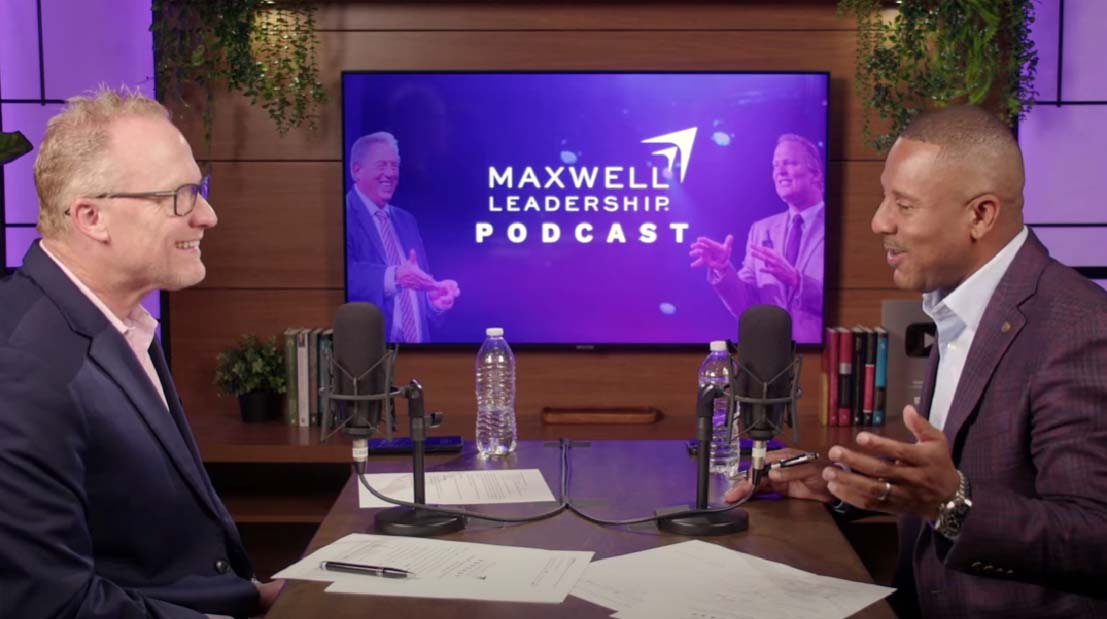
In this episode, Perry Holley and Chris Goede explore the positive power of confrontation and how leaders can use it effectively. They provide a framework for leaders to approach confrontation with the right mindset, focusing on clarity, purpose, and building trust rather than conflict. They also share practical steps for preparing for and engaging in confrontation, such as preparing one’s heart, choosing the right time and place, and collaborating on a path forward. Additionally, they discuss the benefits of healthy confrontation, including restored trust, improved performance, and higher engagement levels.
Perry Holley:
Welcome to the Maxwell Leadership Executive Podcast, where our goal is to help you increase your reputation as a leader, increase your ability to influence others, and increase your ability to fully engage your team to deliver remarkable results. Hi, I’m Perry Holly, a Maxwell Leadership facilitator and coach.
Chris Goede:
And I’m Chris Goede. I have the privilege of serving as the executive vice president. And this is one of our favorite things to do is to get in a room and just share content, Share things that our coachings and our facilitators are, are working with organizations with around the world. Perry takes it and puts his magic on it, and we’re bringing it to you. And so today, we’re going to talk about something that every single leader probably dreads. There may be a few that don’t, but absolutely need. We’re going to talk about that in just a minute around confrontation.
Chris Goede:
Before we do, though, I want to encourage you to go to MaxwellLeadership.com/ExecutivePodcast and there you can actually submit a form. And one of the things that we do with organizations is come in and teach a common language to leadership. If your leaders are out leading in different departments and they’re using a different leadership language, which is not wrong because leadership’s such a broad word. The problem is we’re kind of creating some leadership subcultures, and we got to get everybody in the same language. Our five levels of leadership does that. This is what everything’s based off of here. And if you’re interested in learning more about that, you can fill out a form. And our team would love to follow back up with you.
Chris Goede:
Well, I talked about confrontation. Well, the title today is the Positive Power of Confrontation. Now, before you just immediately say, what else can I learn? I don’t want to do this. This is a little bit different. And hear us out for just a minute. This is not just for having conflict. To have it. Some do.
Chris Goede:
Perry and I would probably not be on that. On that scale. Right. This is about positive power of confrontation and how to make it a tool where we create extreme clarity with our team members. We. We keep the connection. We probably grow the connection. But also there’s personal growth, not only for the leader, but also for the individual.
Perry Holley:
I think what I’ve learned is that I do. I’m a natural avoider of conflict. Well, I was when I was a younger leader. I’ve maybe I’ve gotten crusty as I’ve gotten older.
Chris Goede:
You’re sitting on your rocking chair in the front porch looking for confrontation.
Perry Holley:
Now get on my yard. I do Have a friend when I was with IBM that he, when we say, you know, we do a class, we say who, who everybody hates conference. He goes, I love confrontation. I go, yeah. And you do it very poorly because you’re trying to win, but we’ll let that go. But yeah, most, most of the people I know don’t fear it because they are weakened by any means, but they fear it because they’ve either seen it done bad, it always ends bad, makes others feel bad. It’s got some sort of anger, blame or ego involved in doing that. But healthy confrontation, you cannot be a good leader without having healthy confrontation as part of your either.
Perry Holley:
Giving feedback, challenging people, setting expectations. There’s going to be, there’s going to be pushback, but it’s more about, not about conflict but about, about care and clarity that you build with people. And I just, I think, to be honest, most of us avoid it at some point, but why would we do that? So I’m really looking like, let’s, let’s figure out why we avoid it and let’s move.
Chris Goede:
It’s really a, it’s a, it’s a communication tool. Right. Of how we go about doing this. And there are four big reasons that we have for you that people probably do this. One first one is pretty simple. It’s the fear of being uncomfortable. The fear of discomfort in actually starting the conversation with, with another individual because we often value harmony and we tell ourselves, oh, it’ll just work itself out. I’m the to.
Chris Goede:
I’ve done this before, right. It’s like, oh, just, you know, let the water flow under the bridge, it’d be all right. But what ends up happening is you think it’s just going to fade away, but actually it doesn’t. It actually is going to fester. And I love the statement that you gave me here, which is it may give you short term comfort, but it is going to create long term dysfunction if you don’t do that. This, that last statement is a motivation to me as a leader for my team, to protect my team, to be able to step in and have those.
Perry Holley:
Types of conversations and doesn’t just not get better. It sends a message to the rest of the team. That’s okay.
Chris Goede:
Yes.
Perry Holley:
That must be okay. Chris didn’t speak up.
Chris Goede:
That’s right.
Perry Holley:
To do that.
Chris Goede:
So, so then they start doing it. Yeah, yeah.
Perry Holley:
So second reason is fear of fallout. And we worry about is this going to hurt the relationship? Is, are they going to quit? Am I going to make somebody mad? They’re not gonna like me anymore. Those types of things go through some of our minds. But the irony of that is confrontation done well actually protects a relationship. I find it restores trust and honesty that people know that you are coming to them. You’re saying, I care enough about you to tell you the truth. I care enough about you to bring this forward. And of course, we’ll talk about some of the finer points of that.
Perry Holley:
You may have to earn the right to have done that. I’m thinking about Jeff Hancher and our work with feedback that we’re working with Jeff on. But yeah, you earned the right to let people know I care about you. And I’m doing this because I want you to. I want to get resolved this.
Chris Goede:
And if you think about it on the other side of receiving this from people, those are some of the greatest lessons I’ve ever learned. When people are willing to do that, right? To not be afraid of the fallout. Well, the third reason, and this is a big one, is just the lack of know how, the lack of a skill to be able to do it or even a framework. And we talk about this in the five levels of leadership about you’ve got to have a methodology of leadership. You got to have a framework of which to move the needle in the culture. It’s the same thing when it comes to being able to confront somebody is if you, you’re able to do it in a positive way and if you have a framework, it’ll work. So leaders, you know, we were just never taught. No one ever teaches.
Chris Goede:
That’s why we’re so drawn to Jeff Hancher and his. And what we’re bringing out to all organizations, you know, around having those types of conversations and having firm feedback because we want to be able to give you a framework. And, and most people in the past, I know when I’ve received it, especially on the sports field, there’s a lot of aggression going on. I mean, some, some words I didn’t even understand were in the English library, right. That, that were coming at me instead of it being from a heart of like coaching and clarity. And when I’ve received it that way, man, I’ve learned a ton from it. Yeah.
Perry Holley:
Another and probably the final of the four that I think of is self doubt, is that, you know, a leader might think, oh, I haven’t, like I mentioned earlier, you haven’t earned the right or who am I to correct you? Or what am I going to do with this? You doubt yourself enabled to deliver that. But truly, if you are responsible for people, you’re responsible for giving them the truth and holding them to an accountability for standards and expectations. So I think it’s. I think it’s a ticket to admission to great leadership.
Chris Goede:
I agree.
Perry Holley:
Straight talk.
Chris Goede:
So let’s. Let’s reframe how we think about this, how we see it. Let’s start with John Maxwell says all the time, you cannot correct what you’re unwilling to confront.
Perry Holley:
Beautiful.
Chris Goede:
So we have to correct some things as leaders. And. And you hopefully have a leader that is willing to do that for you as well, to correct a few things. And so in order to do that, we’re gonna have to confront some people. And so I want you to understand this. It’s not about winning an argument. This is not about, you know, the fact that we want to be right. It’s about being, doing right.
Chris Goede:
Like, what’s the right thing for the person and for the situation. So it’s not about winning an argument. It’s really about winning back the performance and the trust and the connection and the engagement level of that team member. The team member may even be just drifting, and they just need to have a little bit of that conversation from you in the right way, in a positive way to bring them back in and be engaged with the team.
Perry Holley:
Well, it is a bit of a mindset shift. And you’re right. I come thinking about probably most of the marriage problem I’ve enjoyed around being. Trying to be right or win when confrontation hits. And that’s not the goal. The goal is to. To really hear each other and. And find a way forward to do that.
Perry Holley:
So I think that the old view of conflict could be that. About confrontation, is that it is conflict. But a new mindset might say that it’s really about clarity.
Chris Goede:
I.
Perry Holley:
We. I’m not trying to cause conflict, just trying to get clear on what we’re talking about. A confrontation could feel like it’s personal, but. But it needs to be purposeful. And I like that. I picked that up somewhere. Just saying, yeah, it’s not about you, it’s about the situation.
Chris Goede:
That’s right.
Perry Holley:
I’m not mad at you. I’m not trying to affect you. It’s about the purpose of what we’re doing. Sometimes it feels like I’m breaking trust with someone, but it really needs about building trust. As we said earlier, if you know that I. And we think about the three things that John says, that people are looking at you. Do you care about me? Are you trying to help me? Can I trust you? This is really about building. Wow, you thought Enough to tell me, like you said, some of the best messages you ever got were some.
Perry Holley:
And then sometimes, as you said, it’s about being right, but this is really about doing right by people. And I just love that. Just saying make it. Make that little shift in your head, and all of a sudden, confrontation becomes something we. We need to do.
Chris Goede:
I didn’t even know you were going to bring that up. I stole that. I stole your thunder. I apologize about that. Yeah, I wanted to kind of. Yeah. I want to make sure that you’re.
Perry Holley:
Not often out in front, so I appreciate that.
Chris Goede:
Yeah, that is very true. So, okay, let’s give. Let’s get practical with this. This is what we want to do. This is. Perry and I try to bring some practical reality to how do we go about doing this and how do we make this happen and how we do it in the right way. So first, one step, one. It’s going to sound a little soft right here, but I want you to prepare your heart.
Perry Holley:
When I wrote that, I go, God, this is going to sound weird, but this is so right.
Chris Goede:
Not just your words. It’s like, where are you almost. What do you. What are the feelings you have about that situation? And prepare your heart so that when you do have this conversation and you have the right motive, I promise you, the other person is going to sense it. We all have a little bit of intuition in us, and when you have the right posture and the right heart behind it, they’re going to know, you know, what the motive is. And so here’s a couple of questions you can be asking yourself before you do this. Am I confronting to help them, or am I trying to get back at them? Am I trying to make a point and hurt them? Do I want to solve the problem, or am I just trying to let them know that I know more than they do? Right. Like, what’s the motive behind what you’re doing? And I think if your heart is right, and this is the next big one, your tone is going to follow, because your tone is going to mimic what’s on the inside.
Chris Goede:
It’s going to be what shows up on the outside. And there’s nothing worse than. And the other thing is, mind your face while you’re doing it. Okay. I was just thinking about. I’m having flashbacks right now of some conversations that I’ve had in other leadership situations, and I’m going, yeah. So I feel like the heart was right. The tone was maybe, but then the face told me it wasn’t right, or it could be the other way around.
Chris Goede:
Like the words could be even extremely hard to hear. But I knew the heart was right, the tone was right, and man, they were there. And I’m like, that hurts, but thank you.
Perry Holley:
Yeah, good. You know another way you prepare the heart. I just think about the three questions again that, that people are asking about you. If before you confront someone. And I’ll often do this when I’m giving tough feedback to someone, right. When I’m done, will they know that I’m. That I’m trying to help them, not help myself. That I care about them personally and professionally, not just caring about me and how I look and do they know that I can trust them? And I just think if I get my mind right, my heart right around help, care and trust when this is done, won’t that it’ll even change my tone? It might even soften my face.
Perry Holley:
It may affect my body language so.
Chris Goede:
That you actually feel that’s brilliant. What if we even started that way? What if you and I had a conversation and I said, hey, Perry, you know that man, I care for you. You know that I want to help you. You know, man, I can trust you. You can trust me. I gotta have this conversation.
Perry Holley:
Yeah.
Chris Goede:
So set the tone. You set the tone on the front end and then to your point, you get done with it and then you get on the backside and you use that as a reflection and does that mirror that whole framework of that thing? So, yeah.
Perry Holley:
Another thing practically to think about is where do you choose the right time in the right place to do this? Usually timing is as close to whatever you need to confront as possible. Don’t waiting weeks or months. I’m waiting for the annual review. No, don’t do that. But the play SC can. It needs to be personal, private, agreement. Confrontation done in public can. Can be humiliate, humiliating to people and can cause make it a bigger problem.
Perry Holley:
But when you’re in private, it makes you look like you’re partnering, that you care. Go back to the care, healthcare and trust is that I’m not an opponent to you. I’m not trying to win or be right. I’m trying to help you. But yet we go off to the side to do that. We don’t do that in public.
Chris Goede:
I think a lot of these are going to lead to showing the individual that you do care. Right. So step three is as per. And I just talked about begin with that care so they know where you’re coming from. You’re not coming right out of the chute. But then lead with clarity, do not be fuzzy, don’t be ambiguous about. Oh, and sometimes. And like to be able to give specific examples and be clear about it.
Chris Goede:
Once that, you know, they know you care about them, I think it’s a powerful way to do that. And so you want to start with belief in them, not blaming them for the situation. And something else on here is I value what you bring to this team and I want to help you succeed. Help. There’s another I want to help you in that. So you’re communicating that care and that help. And make sure, as I just minute ago, make sure you’re talking about the specific issue, not the person at hand. Right.
Chris Goede:
So, hey, Perry, next time you write a podcast, man, it would be great if we do this. It’s not like, man, Perry, you are a horrible podcast. Right. Like, you know, like there’s a difference in that. And make sure we’re going after the actual thing, the skill set, the task, not the individual.
Perry Holley:
Sure. Good, good. You know, invite their perspective is something I, I think in the heat of the battle, we forget sometimes is that.
Chris Goede:
Someone else has a different view of things.
Perry Holley:
Maybe you don’t see it the way I see it. Can you tell I’ve been married for more than an hour. Yeah, maybe she doesn’t see the way I see it. But thinking about asking questions like, how do you see it? How does this help me understand this from your perspective? What is. What did this look like? I know this when people at home and at work, when they feel heard, they kind of drop their defenses a bit and they become more open to hearing you. And, you know, I think about Tim Elmore telling us that I talk like I’m right, I listen like I’m wrong. Yeah, I thought that is such an easy thing to say. It’s so hard to do.
Perry Holley:
But I have a lot of confidence that I’m right. But I also am humble enough to know I might have missed something here. So I like that. I’m going to tell you what I think, but then I’m going to ask you, how does it look from your side? And then I’m going to genuinely listen with curiosity.
Chris Goede:
That’s the word I was thinking about. I think this is where, you know, you hit a lot on curiosity. I think this is where you really show up because you just said, hey, I’m not just listening. I want to be curious, you know, behind it. So I love that. Step five is to collaborate on the path forward. All right? This is something where we are going to collaborate on what’s next, you’re not going to go in. And Perry likes to say drop the mic.
Chris Goede:
He does that often when he’s on stages in front of thousands of people, drops the mic and walks off. That’s not what’s going on here. We’re going to walk out and say, hey, I want to. You’re there to help. You’re there to again, care for them, help them and trust to build a plan. You know, I think about too, when we talk about coaching and oftentimes in its simplest form, we talk about the three A’s. Someone that will ask you tough questions, someone will hold you accountable, and someone that’s going to help you build action plans. That that’s what we’re doing here.
Chris Goede:
You want to help them, you want to kind of coach through what you’re seeing there and to help them build a plan and determine what does success look like coming out of that conversation.
Perry Holley:
And finally, number six would be to end with an encouragement. You know, you may not be able to affirm their behavior or what happened, but you can affirm them. And as you said earlier, letting them know that I think you said belief that I believe in you. This is. But we have a situation we’re going to talk about and let’s move forward together. So after you collaborate on that solution, move forward together, affirm or reaffirm, encourage them that if you can give that final encouragement, it really turns out confrontation into an opportunity for connection. And you know, I’m thinking about John in the book sixteen Laws of Communication. He talks about that putting connection over content.
Perry Holley:
Connection over content is that I’m going to say something hard to someone. Can I say in such a way that I protect the connection I have with.
Chris Goede:
That’s really good.
Perry Holley:
And this again at home is another great one for relationships is that sometimes with the people that we’re closest with, we feel the freedom just to say whatever we want. Well, guess what? I need to make sure that whatever I say doesn’t harm that connection. The connection is more important than whatever I have to say. No matter how true I am, no matter how right I am, I need to keep manage that connection. So I think that ability to encourage and have belief in people, even though we have a problem, I don’t hate you, I hate what happened. And we’re going to confront.
Chris Goede:
I love that. The connection over the content. You still have to have the content and be clear, but your priority is the connection side of things and then also the belief. Perry and I see this every day in organizations around the world. There’s a bigger belief deficit now that people have in themselves. The last thing we want to do is pile onto that, and we want to try to help them work through that and do it in a way that’s constructive for them and, and the organization as well. So I love that. Okay, so, hey, what.
Chris Goede:
We go through all this, like, what’s the benefit of it? And, and we’ve talked a little bit about this as we’re kind of making our way through this, and Perry and I have given you some examples, but here’s a couple of the benefits. Just quickly, I’ll run through them, right? You’re going to restore trust. When people know that you’re being authentic with them and you’re telling them the truth, you’re going to restore trust. There’s going to be improved performance there. Oftentimes I don’t know that I haven’t had a conversation like that where now it might not have lasted. You might have had to have another conversation. But you immediately see them coming out of there, right? It’s like, Chris, hey, quit going to the buffet. And so I quit going yesterday.
Chris Goede:
Now I’m trying to go like, but. But you’re going to see some improved performance. There’s a healthier culture because I think people, you know, they, they, they’re open to the dialogue and it’s not about gossiping behind the scenes or, you know, whatever it might be. Hey, Chris is allowing. Yeah, Chris is. That’s right. Yeah. You’re reinforcing it.
Chris Goede:
Faster decisions. I love that there’s personal growth, I think, in the leader as well as in the individual. There’s reduced stress with the team, and it kind of sets everybody free. When we know that we’re having these type of conversations, then finally is you’re going to see higher engagement levels. And man, we need higher engagement levels on our teams. The numbers are just pathetic. And some people go, well, that’s not here. I’m like, Perry and I were just talking about this the other day coaching some people, and he’s doing a debrief.
Chris Goede:
By the way, we have an incredible tool called the Maxwell Leadership assessment. That the results of it come out in a way, they actually give you the categories at the five levels of leadership. It’s brilliant. Now, no one likes to take the traditional 360 degree assessments. And we tried to make this a little bit, a little bit more relative. I don’t know if it’s fun, but a little more relative. And it’s like, hey, we have these type of confrontations and we got to hold people accountable so that they have higher engagement levels. We don’t need to be putting fluff out there.
Chris Goede:
And a lot of leaders, I don’t think, are getting to the root cause of driving engagement levels up for sure.
Perry Holley:
Well, I’ve heard John say that the only thing worse than an uncomfortable conversation is a broken relationship tomorrow. And I think that collaboration doesn’t have to be this collision. It can be about connecting with people and really growing that relationship through the care and the help and the trust that you build with them. So why don’t you wrap it up?
Chris Goede:
Yeah. So here we’re going to actually confront you right now. We’re going to call you out. No, just kidding. But there are people in your world. It could be at home, it could be in the community, could be church, could be whatever on your team where there’s a situation that you need to have a conversation about. We gave you a framework. There’s a lot of positives to it.
Chris Goede:
And so I want you to think about that right now. And we want to challenge you to go out and actually have that conversation. Before you do, maybe ask yourself a couple questions about, man, what is the fear that’s holding me back? How do I overcome that? Maybe go back and listen through this again. Hey, if I did this, would this strengthen? If I did it the right way with the framework, would it strengthen my relationship? If these. If the answer is yes, you got to have the conversation. And then what? After you ask yourself those two questions, then, man, what’s one step? What’s the one conversation that you’re going to have to help bring clarity to being able to have that confrontation? Or maybe it’s even just getting clarity in the conversation with the individual. But we want you to take action. That’s why we got really practical and gave you some tools to be able to do that.
Perry Holley:
Super good stuff. As a reminder, if you’d like to get that learner guide for this episode or learn about our offerings or the other podcasts in our podcast family, you can do that at MaxwellLeadership.com/ExecutivePodcast. You can also leave us a comment or a question there. We love hearing from you. Very grateful you’d spend this time with us. That’s all today from the Maxwell Leadership Executive Podcast.
Transcript created by Castmagic.






Be the first to comment on "The Positive Power of Confrontation"