Perry Holley and Chris Goede stress the need for organizations to intentionally develop their leadership pipeline before promotions. They advise identifying emerging leaders by competencies—not just technical skills—and offering stretch assignments, mentoring, and shadowing to build influence early. They also recommend separate tracks for technical and leadership growth and celebrating when leaders apply what they’ve learned to reinforce a culture of development.
Perry Holley:
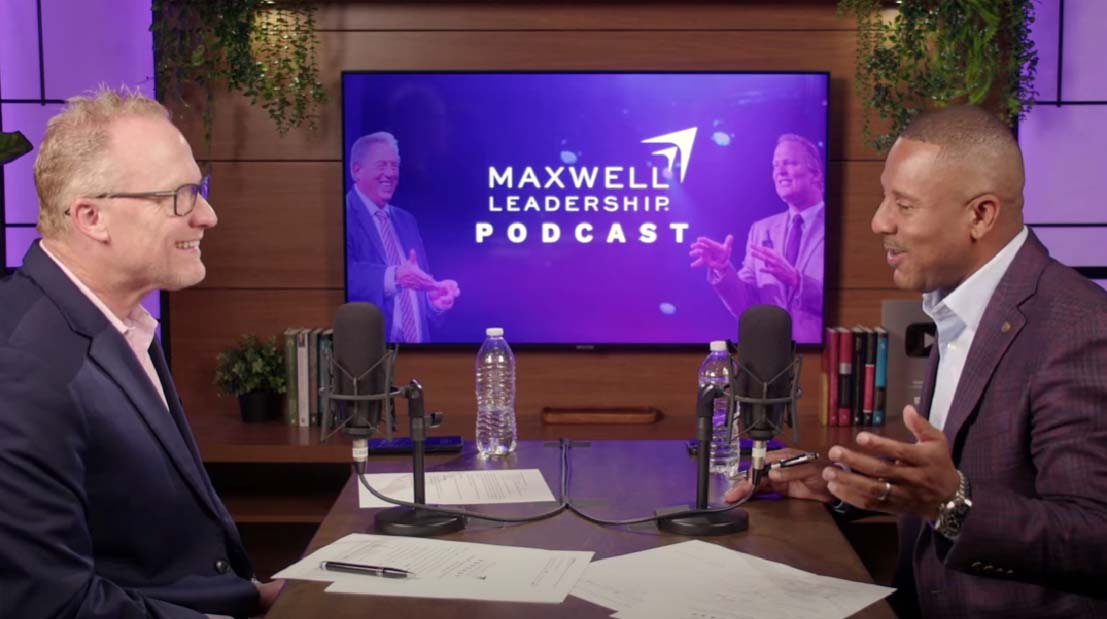
Welcome to the Maxwell Leadership Executive Podcast, where our goal is to help you increase your reputation as a leader, increase your ability to influence others, and increase your ability to fully engage your team to deliver remarkable results. Hi, I’m Perry Holley, a Maxwell Leadership facilitator and coach.
Chris Goede:
And I’m Chris Goede, executive Vice President, Maxwell Leadership. Welcome and thank you for joining us today. We want to encourage you. One of the greatest compliments that Perry and I get is when we hear about teams that take these 20-minute episodes and they listen to them individually and then as they start their team meeting, first five, ten minutes, hey, what was the number one takeaway? Just creates an environment where they’re able to share what they’re learning, have people on an easy personal growth journey. So thank you for doing that. But we also want to encourage you to do that these topics are relevant no matter the industry, no matter the size of the company, because they’re coming straight out of the. Yes, straight out of the field.
Perry Holley:
And I don’t know if I told you this, but we just did an international gig and then we were in. I was with the team in Slovakia and the Bulgarian team were there. And when I was introduced to the team, I’m going to tell you, over half them said, hey, really like your podcast. Tell Chris I said, hi. That’s awesome. You don’t even think about the reach and how people are hearing these lessons. So it’s really like you said, a real honor.
Chris Goede:
Yeah. And so we’re grateful for you. We just want it to be something that you guys are able to apply. So speaking of that, I want to encourage you, go to MaxwellLeadership.com/ExecutivePodcast and there, if your team is struggling with something, fill out a form, let us know what it is. One, we would love to be able to help with some of our virtual training, maybe some of our leadership coaching. But two, we would love to address it for you here on the podcast and we’ll work through the leadership lesson that is in that request and then we’ll protect the innocence. We won’t say, hey, so so and so team or organization struggle, we might throw that out there. We.
Perry Holley:
No, we’re not going.
Chris Goede:
So today’s topic is titled soloist to conductor. What’s the organization to do? So if you are just joining us this week, we need you to not stop. I want you to listen to this one, but then when you’re done, we want you to go back and listen to last week’s because we actually took it last week and we looked at it. And we said, okay, well what’s the soloist to do as to be prepared for moving into becoming a conductor? One of the things that this is something that we hear all the time, all the time is that the growth, the lack of growth in organizations is because of the capacity of its current leaders and the bench of leaders that is behind them that’s ready to kind of step up. And so one of the things that we want to encourage organizations, the ones we’ve seen do it really, really well, have put a plan in place, they’re intentional about it because what often happens is the exact opposite. Organizations are unintentional about it and they really set new managers up. And I say managers because they are, they say, hey, manage these things and they forget about the fact there’s people behind those things and they have to lead those people. But they don’t have that skill.
Chris Goede:
It hasn’t been developed. And it’s not the same skill to be able to manage things and to lead people.
Perry Holley:
I’m thinking as you’re saying that the way I started out of university, went through, took a job as a salesman for IBM and then IBM had a very intentional process. If you were blessed to be chosen to be a manager, to make the first leap into titled leadership, you had to go through a process. And when I spent four years selling for them in one city and then they gave me the opportunity and said we’re going to promote you to be a first line manager, but you need to go to another city. That’s what IBM stood for. I’ve been moved and moved us to another city, but I wasn’t going there to be a first line manager. I went to the new city to join into another organization inside IBM where I would be leading, informally leading teams and leading projects and leading. Yeah. And so I went through 18 months of test lab of different leadership challenges to help build while taking leadership courses to build that.
Perry Holley:
And then after the 18 months got promoted to another city and got my first team and then immediately went off to a two week deep dive on leadership and a lot of management stuff around how to run the systems and things of being an IBM manager. But I look back on it now, they don’t do that now. And pretty much what most of society does is we take the top performer, hey, you’re the number one sales guy or you’re the number one service guy or you’re the leader of that and we’re going to promote you to be the manager of that team. And you often end up leading your own peers that you were your peers one day, now that you’re the boss the next day. It’s a recipe for disaster if not done correctly. So last week was about if you’re the soloist and you’re trying to get promoted, there’s some things you should be doing. And if you’re. This week we’re talking about if you’re the organization and you’ve got a bunch of soloists that you’re thinking about maybe bringing into the management titles, there’s some things you should be doing.
Perry Holley:
Because this is a big challenges that we put up. We put a bunch of unprepared people into really important positions to lead people that without giving them all the help that they could possibly get. And we don’t. It’s not done purposely. It’s just. It’s just the way things happen and unfold. And we were busy and we got a lot going on. I really think last week’s for.
Perry Holley:
If you’re the soloist, don’t wait for the organization to figure it out for you. You own your own development and getting prepared. And I think John Wooden is the one who said if you wait until the opportunity appears, it’s too late. So the opportunity is coming. If you wanted to now get prepared to do that. But if you’re an organization, could you take some things to help them with?
Chris Goede:
Yeah. And John talks about to getting out of the people pile.
Perry Holley:
Oh, yeah.
Chris Goede:
And what I love about where you just challenged the individual contributors or those that are leading smaller teams, that have a desire to lead bigger teams is get yourself out of the people pile. If we know that organizations don’t have a track record of doing this, then how do you separate yourself and be ready for that so that when they look around, it’s pretty obvious who they would look to promote? So one of the things that we want to challenge now, the organizations to do is build a leadership pipeline before the promotion. What does your leadership bench look like? Right. So as Perry said, we don’t need to wait until they’re promoted. We need to start thinking about how do we identify them, how do we select them, what are some of the behaviors that we’re looking for in them. So that were aware of that. And. And maybe even some.
Chris Goede:
Some organizations, they have a. What we call a mentoring program or they have a shadowing program where you pair an emerging leader up with somebody that is at a higher level and you can allow them to kind of watch how they run meetings. What does that look like? Maybe even give them as an organization, give them Some stretch assignments where it’s not a fatal flaw if they don’t like Perry was talking about. I loved how IBM put him in different situations where it was, it was at a contained environment for him to, to, to test some leadership stuff. What does that look like? How did Perry influence his peers there without the title? And so it’s not just about the, the people that you’re looking for, the men and women, it’s not just those that are executing with excellence. When it comes to the metrics. What we want to do is we want to be looking at the whole person and we want to be evaluating on some of their leadership competencies. Whether it’s communication, collaboration, maybe it’s their flexibility, their coachability.
Chris Goede:
One of the programs we’re working on right now, we actually have an assessment that the leaders are going to take on their emerging leaders and their high potentials and maybe even some of their peers and maybe themselves as well. And you begin to put a process in place like IBM that’s just relevant to your organization that allows you to get to that point where we go, yeah, yeah, no, when it’s time for promotion, when it’s time to, to open a new whatever, like we have the people ready. Because it is so important when you got people inside that understand the culture, to get them ready technically and leadership wise versus bringing in a leader from the outside and asking them to merge with the culture.
Perry Holley:
Fantastic. Well, I think organizations have a big role to play on helping people kind of shift their mindset. If you’re thinking about your like I love you use emerging leaders or your high potentials, getting them out of the mindset of individual contribution, they still need to do their jobs, but getting them into team contribution or team success and getting that in their mind that they normalizing things like delegation or you know, that’s one of the big ones. Even today, even experienced managers struggle with is I can just do it faster myself. Yeah, it’s easier, just let me do it. But no, leadership really is about building capability, not just making it efficient. And could we be helping the team to collaborate better, get more things done as a team? Maybe even the coaching models that you could put in. We used to talk about the grow model where you, you know, set goals, you have reality, you have what are the options.
Perry Holley:
You say, what’s the way forward? Helping people to think through their own growth in helping the team and helping others to grow. Can we teach these up and coming new managers to develop people by asking better questions to not jumping in to fix the problem? We talked last week about giving up your need to be the expert. Can you help them not need to be the expert. Can you help them build capabilities in others as they’re developing the teams that they’re on? Seems kind of odd if you think they haven’t been promoted yet, but should I be doing these things? Yes, you’re trying to give them that test field where they can be trying things to see how would I do it if I was in charge of this group. Instead of everything’s about the individual, everything’s about me and what I’m trying to accomplish.
Chris Goede:
One of the things that we do see when organizations are proactive about this, one of the traps that they fall into is that they overwhelm new leaders with a lot of theory. Like, hey, here’s the a theoretical leadership thing. One of the things I love about Maxwell Leadership and have for the longest time, it’s probably one of the reasons why I understand so much of the content is that it’s just so practical.
Perry Holley:
Yes.
Chris Goede:
This is things that I think make sense and are practical both in and outside of organizations. And so most of our organizations will start with the five levels of leadership training that we do because it’s, it is about, it’s an influence model, it’s a methodology. It’s a plan for them to increase their influence and be doing it in a way that they can do it without their title, but still influence people up, down and across from them. And the goal is for them to get the basics of that down, to understand what does influence mean with people and understand what levels of influence do you have with people and what does that look like? How do you increase your influence? Hey, how, what do I, what do I do if I lost my influence? How can I lose money? All those basics, I think are so important that we got to get right. And if you can do that and make it very practical for them when they go into their first leadership role, they’re going to have more confidence to.
Perry Holley:
Be able to do that. Right. I love it when we, we arrive to do a five levels workshop and there’s people in the audience that are the high, the hypos or the emerging leaders. They, they don’t have titles yet. Asking, why are you here? Yeah, I’m not a leader. I don’t know. Yeah, you are a leader because leadership is influence and you’re, you’re kind of setting that mindset shift is that I need to be thinking influence, not a title. And so leading without my title, leading from the middle is great.
Perry Holley:
Another Game changer I’ve seen is don’t leave your leaders out on an island by okay, you got promoted. Good luck. No, you, you pair them up with someone. You maybe set a leader buddy system or something. You know, peer managers or getting people together. Pair somebody with a more seasoned leader perhaps to do that. Maybe having learning circles. We talked about team meetings that discuss things like this podcast or about some other readings that they’re doing.
Perry Holley:
Small groups of new managers be able to share what’s going on and what’s. And what’s happening with them. Don’t forget ongoing coaching. We’ve really seen a trend in our business lately. Used to be let’s get a five levels workshop. And it was one and done. It is not sticky that way it’s fun and you can learn a lot. But then you go back into the heat of battle and yeah right away.
Perry Holley:
Yeah.
Chris Goede:
How do I do that?
Perry Holley:
Yeah. So this ability to maybe do some workshop with ideas and strategies for leadership but then follow it up with coaching. Giving new, new managers or any manager the opportunity to have a coach that can, you know, over six months, 12 months to be talking about that and I love the stickiness just goes up immensely. People. I just did one yesterday where they were. I was there three months ago to do five levels and then for three months in a row we have a 90 minute deep dive on what we did talked about in the workshop. And I get. They have homework and things but over four months they will have had a workshop and then three 90 minute and then I’m back in December to do another full day of something else and then we’ll do three 90 minutes over the next three months.
Perry Holley:
And this is really building. I’m noticing on the call that they’re, they’re beginning to apply things and think about things.
Chris Goede:
That’s the key.
Perry Holley:
Yeah. Remember things.
Chris Goede:
Yeah. And with those three follow up 90 minutes like that’s where you go from hey, these are great principles, simple principles to hey Perry, how do I do this in X, Y and Z industry and what does that look like? And it gets great. They go, they test it, they work on some things come back and to be able to do that I think that is huge.
Perry Holley:
Yeah. It’s also. They bring when you do the follow on these are all new leaders that they’re conducting this orchestra but they’re having trouble like you know the, the, the viol low as the rebelling or you know, whatever. But in, in their world it was. Somebody’s really having a lot of problems with, with their Part of the business and they’re not succeeding. And so how do do I. How do I. And they bring these challenges and struggles to the calls and then that opens up to the rest of their team, the vulnerability which then builds trust.
Perry Holley:
And then they get. They begin to. They begin to connect with each other and they, and they now they know each other, what they’re dealing with. So it’s really a beautiful thing to watch.
Chris Goede:
One of the things that we see in organizations that are doing this well is that they have really two different tracks of development. They have the one for the. The technical mastery, right. The. The IQ side of what it takes to do your job and do your job well, and another for leadership. And there’s a difference between the two. One of the reasons I love that they do this is that we want to make sure that everybody inside the organization has a growth mindset. So we don’t want to have just a program where we go, oh, well, you know, you are going to get into this leadership track, emerging leadership.
Chris Goede:
No, there’s also plenty of other opportunities out there for technical development as you are a soloist, right? They give opportunities for them to be able to serve. So one of our encouragements to you is when you look at, say, hey, what is our current development program? What does that look like? Make sure it’s not just one track. Make sure that you actually have a technical side and what we would call an essential skill side or the leadership side. And, and you’re moving them at their own pace that they want. They self select into some of these things, which I also love that, by the way, you want to put some things out there and you want to see who has the initiative to continue to grow and to continue to be a leader. You’ll see right away that who’s got the initiative to be able to do that. The other thing that I think it’s really important about having these separate tracks is that what good looks like, what great looks like, is different between a technical skill set and a leadership skill set. And you don’t want to blend the two of those.
Chris Goede:
You actually want to be very clear and to separate those two so that there is clarity for that leader. The other thing, last thing I’ll say about this is make sure that as you set these development plans up and you begin to see. I love it. You were just talking about how they’re starting to apply what they learned in the five levels in the field of the organization as a leader. Now, some of these are already leaders of people, some are individual contributors that are asking you questions. I don’t have a title. What am I doing here? What ends up happening is when you see activity that’s headed in the right direction, make sure you call it out and recognize it. Celebrate the fact that they are applying it, that the team’s developing, that they are collaborating around whatever their initiative is.
Chris Goede:
Make sure that you call that out as an organization, as a leader, because of the fact that when that does happen, it becomes contagious. And other people are like, well, hey, they’re calling out Perry, Holly, I want to go do some of that. And so just make sure that you have that recognition celebration behind it.
Perry Holley:
One that’s I know is that a soloist succeeds when they play really well and a conductor succeeds when the orchestra plays really well together. And I think the whole idea behind this is you’re going to be promoting people into leadership from their soloist positions. Are they ready and have you given them the best chance to succeed? And once you do that promotion, are you leaving them hanging out there or are you providing for them? But why don’t you wrap it up for us?
Chris Goede:
Yeah. What I love about this, I was just thinking is we’re wrapping up the last two weeks, man, if we can get to a place to where the organization is providing an opportunity for our individual contributors or soloists to develop, and we can get our soloist taking the initiative to develop, man, your, your, your bench of leaders is going to be strong if you can have both of those together. And so the last thing I’ll say about this is if you want to have an organization where that lid is lifted off on the ability for growth, remember, you’re only going to grow at the capacity of which you have leaders in place and your leadership. And so if you want to multiply leaders, create an environment where the soloist or the individual contributor can learn, practice, experience, leadership in what I say, safe ways. It means that it’s not detrimental if they make a mistake to the organization’s P and L, you know, for that month and make this just part of the process of what you guys do. Normalize leadership development like we do. Skill based development, have those two different tracks. Because it’s not just developing people to become a leader to get a promotion.
Chris Goede:
It’s just part of what we do here.
Perry Holley:
Well, great topic, great conversation. If you’d like to know more about this five levels of leadership or other podcast offerings, you can do that at MaxwellLeadership.com/ExecutivePodcast. You can also leave us a comment or a question there. We love hearing from you very grateful you spend this time with us today. That’s all from the Maxwell Leadership Executive Podcast.
Transcript created by Castmagic.




Be the first to comment on "Soloist to Conductor – What’s the Organization to Do?"