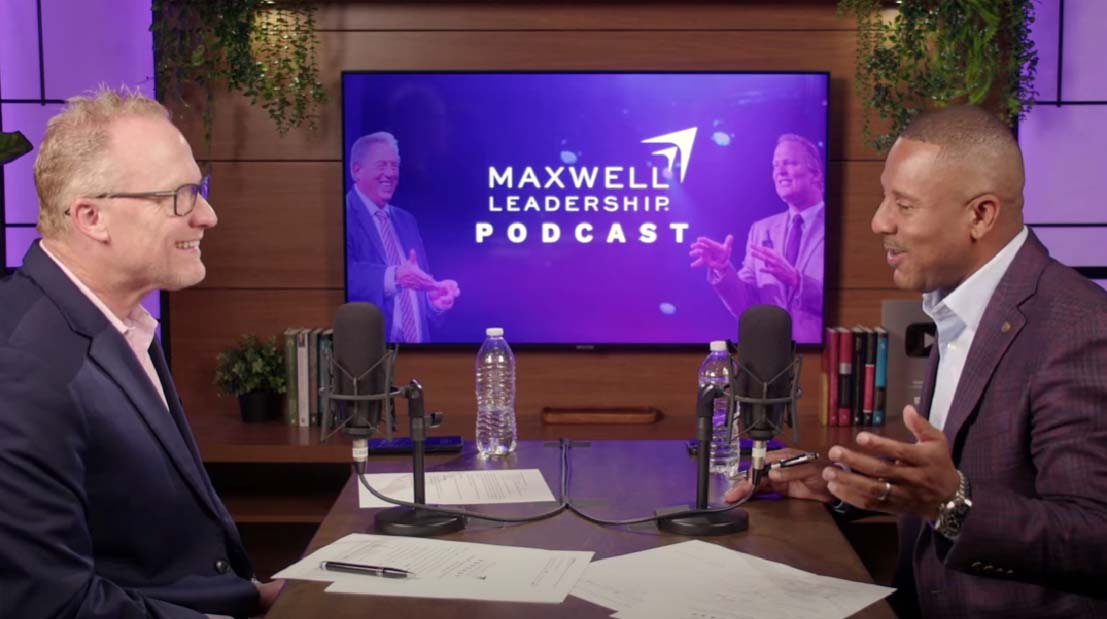
In this episode, Chris Goede, Perry Holley, and Tricia Sciortino explore how executives can harness the power of a strong executive assistant to maximize their leadership impact. They discuss strategies for building trust, delegating effectively, and rethinking the leader-assistant partnership as both roles and organizations evolve. Tricia shares practical steps to overcome the reluctance to delegate and highlights the benefits of leveraging the unique strengths of an executive assistant. Listeners will receive actionable insights on reshaping their workload, improving communication, and creating systems that lead to greater productivity and organizational growth.
Perry Holley:
Welcome to the Maxwell Leadership Executive Podcast where our goal is to help you increase your reputation as a leader, increase your ability to influence others, and increase your ability to fully engage your team to deliver remarkable results. Hi, I’m Perry Holley, a Maxwell leadership facilitator and coach.
Chris Goede:
And I’m Chris Goede, executive vice president with Maxwell Leadership. Welcome and thank you for joining. I’m super excited about today’s episode. The title of it here, I’m going to just start with that. We’re calling it the Executive Multiplier Harnessing the Power of an Executive Assistant. Now, what that means is, well, you and I are not, we are not the subject matter experts on this, but we are super excited because we have a long time partner of Maxwell Leadership and one of the things we want to do is to do an episode and really talk about this. We know a lot of those that are listening are executives. They’re, they’re leading teams.
Chris Goede:
And I think you’re in for a treat. I had the privilege of even just looking through some of your notes and some of the things that we’re going to be asking our guests and I learned something and they were just your notes. So I can’t wait to dive in to that story. So, yeah. So let me, let me introduce real quick, before you get to hear from her, let me introduce you to Tricia Sortino. She is the CEO of Belay Solutions. And Belay has been a longtime partner of ours. If you’ve never heard of Belay, they are a premium US based staffing company that helps high performing leaders and growing organizations get the right support.
Chris Goede:
And here’s what I really love about this because I struggle with this. So they can focus on only what they can do as an executive.
Perry Holley:
What’s your tagline?
Chris Goede:
That is my tagline. What I love about it is Belay is much more more than that. And we’ll hear a little bit about that. But not only assistant solutions, but financial solutions and they intentionally will match you. We talk about it leadership. We talk about we need to lead people the way they need to be led. What I love about that is their services actually match you with the right team, with the right assistant, whatever it might be that meets your needs and where you’re at. And so Tricia not only leads Belay, but is a sought after speaker and the creator.
Chris Goede:
And this is what I’m, I’m more excited about than anything, the 40 hour CEO system. So Trisha, if you can help me with this and the 40 hour system, this is going to be worth it from the get go.
Perry Holley:
But all of us.
Chris Goede:
Yeah, for all of us. That’s right. So not only, though, again, let me go back. Not only are we a partner and they’ve been a sponsor for many of our events and our podcast, but just someone who’s been a part of the journey. And what I love is I just learned as we were getting ready to start, her first ever leadership book was the 21 laws. So anyways, enough about all of that because I want to get to some really, really good content. But Tricia, thank you so much for taking time out of your day to join us and to just share some nuggets and some leadership tips for those that are listening and joining us today.
Tricia Sciortino:
Thank you for having me. I am so excited to be here with you guys to talk about multiplying our leadership and I’ve been such a steward of all the work you’ve guys done for so many years. So I’m just so thrilled to have this conversation with you guys.
Chris Goede:
Well, we, we appreciate it. And before we go any further, I’m gonna throw it to Perry. Listen, if you’re watching us, you’re listening. Make sure you stay to the end because one of the things that we want to ensure is that you get a gift that Trisha has for you. You’re going to be able to learn more and download a free gift from you around the 40 hour CEO work week and you’re going to want to hear about that. So we’ll talk more about that at the end. But Perry, take us away.
Perry Holley:
Well, I’m interested and I want to make sure the audience knows because Chris kind of alluded to it was that you’re kind of known for the executive virtual executive assistant. But as Chris was saying, we’ve been reading your story and learning so much more that you do. So much more. Would you walk us through who is Belay Solutions and help the audience understand everything that you’re into?
Tricia Sciortino:
Yeah. Thank you. Yeah. We are providing fractional support and solutions to small businesses as it relates to all business operations. So now that includes executive assistant type support, operational type assistant support, but also leans into the financial support that businesses need and SMBs need. So we have a full suite of fully managed accounting solutions. So from bookkeeping controller, fractional CFOs, complete outsourced teams. So we’ve expanded our suite of services over the years so that SMBs can really leverage Belay for their all of their back office business operational needs.
Chris Goede:
I love that. So as I was doing some of my Research for the podcast today. One of the things that I think is fascinating is that you were employee number one. And when I read, I was reading
Perry Holley:
the story, which wasn’t like number one as the CEOs, it was number one.
Chris Goede:
Yeah, that’s right. Yeah. Like you probably have won employee of the year many times, but that’s not what we’re talking about. You were number one, the first employee. And now I love this story. And now to becoming the CEO in 2020. What an incredible leadership journey. I think I heard her say it was all because of the 21 laws of leadership.
Chris Goede:
But can you tell us a little bit more about that 10 year journey that where you went from being the first one that was hired to in 2020, becoming CEO?
Tricia Sciortino:
Yeah, it’s been a ride. Employee number one in 2010, you know, startup founder, mode in with the owners. You’re wearing all the hats. You know, those first few years, you’re juggling every single part of the business. You’re doing a little bit of marketing, a little bit of sales, a little bit of operations, a little bit of everything, you know, from the beginning. And I just had the opportunity very early on to step into leadership, you know, first year into the business in 2011. And that’s when I started my true leadership journey. That’s when I did find John Maxwell and did read 21 irrefutable laws back in 2011 ish timeframe.
Tricia Sciortino:
And it really did change the trajectory. Trajectory of how I led. But I think the biggest thing for me along my entire 10 year journey that I would say I’ve learned is that the people you bring alongside you are the most important decisions that you make. And so very early on, the owners and founders of the company, soon as I was in a leadership role were like, we want you to have an executive assistant. It’s going to be a staple for every leader who works here. Because we believe we want you focused on only what you can do. We want you leading, not doing. And so we don’t want you distracted or overwhelmed by the work.
Tricia Sciortino:
And so, you know, first year in as a new leader, I had an assistant. Up until that point, I had been an assistant. I was actually an executive assistant to a few people prior. I was the executive assistant to Michael Hyatt, if you know him. I was the executive assistant to the founders kind of of this business prior to. So it was an interesting journey for me to go from being the assistant to having an assistant and making that transition and understanding the power that can go into having somebody by your side to strategically multiply the things you’re able to do over time. That’s kind of been the impetus of my journey, is understanding to leverage the right people around me.
Perry Holley:
So with all that growth and it happened fairly quickly and it’s all in a 100% remote environment. What. What have you learned that our listeners should know? The especially our executive listeners should know about making this transition. And with everything remote, I’m guessing that’s tough for a lot of leaders not to have someone face to face, one on one. What’s your thoughts on that?
Tricia Sciortino:
Yeah, I mean pre 2020working remote.
Chris Goede:
I was just thinking that I was like they were way ahead of the curve, right?
Tricia Sciortino:
Like, yeah, it worked out in favor. You know, for those first 10 years we were really creating what we hoped could exist. And it was a lot of trial and error. And I think it. It boiled down to a few key things. It boiled down to number one, you really have to be an excellent communicator when you’re not in person with somebody written, verbal, voice, memo, zoom, like how you communicate, frequency of your communication. The clarity in your communication was really going to be highlighted when you were working remotely. So I knew very early on that my.
Tricia Sciortino:
My number one job was to be. Be a clear, concise, direct communicator. Watch your tone. Like everything people can’t read your. Your full body language. So communication was very important. And then it was also put in systems and processes for people to follow because you are not going to be able to see what people are doing. And so create systems and processes and checks and balances to make sure what you say should be done and what you hope to be done is being done the way you would like it to be.
Tricia Sciortino:
And I think if you can get those two things in check early, you can kind of lead anybody from anywhere.
Chris Goede:
And you absolutely become a strategic partner. Right. With that executive. Because it is hard, I think about even for me and my executive assistant right now is in person and making that shift and everything that you just said would be. Would be critical in being able to trust or empower. And it all starts with communication. I think I’ve heard that before.
Perry Holley:
Yeah.
Chris Goede:
Plenty of leadership issues with organizations for your.
Perry Holley:
Your jump from having no. No executive partner to now having an executive partner, that was a bit of a shift. And I’m thinking in. In Trish’s world, if you had to go from having no executive partner to have a virtual executive partner, how what she just said is so critically important about you cannot see me, you cannot Feel me, you cannot experience me. It’s all communication and clarity and trust and over. Over communicating, I’m guessing.
Chris Goede:
So you, you talk a lot about good stewardship. I love that. And very intentional. We love, we love the word intentionality about leadership. How does having the right executive partner enable executives to be a better leader, not just a better producer or, you know, drive the bottom line. We need that. But how does it help them become a better leader?
Tricia Sciortino:
Yeah, I think, you know, I, I certainly know that I, I would not be in the seat I’m in today if I didn’t have an amazing executive assistant. So much has gone into that relationship, you know, kind of to your point. I just believe as part of being a great leader is you hand over trust and you don’t wait for it to be earned. And so I think that’s where I see people stumble, is like, they tiptoe into what it looks like to have an executive assistant. They’re kind of unsure, and so maybe they do it 50% of the way. But I, I’ve kind of just initially really threw myself into the relationship and said, I’m going to extend 100% trust to this person. I’m going to literally give them everything and let them prove me unworthy otherwise. It’s a leap of faith type of things.
Tricia Sciortino:
You know, just, just hand it over and give them access to everything, give them visibility to everything, really, chief of staff type of mindset. Like, they can see the entire thing and let that be true. And that has been so effective for so many reasons. Number one, as far as my leadership, it allows me to truly have somebody that sits at a place and a seat in the organization where they can sit, see everything I see. And when you’re the leader or the CEO or the business owner, like, nobody has your vantage point. People are close. You know, maybe your CFO can see parts, but, like, you have a preview into the business that few have, but your executive assistant has the same preview. They kind of see everything you see.
Tricia Sciortino:
They see every email you get, they read every document that comes across your desk. They really can understand, you know, the seat you’re in. And if they’re a really good strategic executive assistant, they really become a great partner to you on where they pull you out of weeds, what they take off your plate, where they help realign your focus, how they can get ahead of you, because they start proactively seeing or knowing what’s coming around the corner. They learn your preferences, they learn your style. They learn about your team, who needs what of you who requests what of you? And they can kind of cut things off at the pass. So I’m a better leader because my time is spent on the absolute right things, because my executive assistant has learned where I should spend my time based on what she can see about my day, my week, my month, my year.
Chris Goede:
Let me. Let me stop for just a second because I think this is really important. I want to unpack this for just a minute. It reminds me a lot of, you know, John Maxwell says, I mean, with belief, right? He puts a 10 on everybody’s head. And I love what you said around trust. You said, in order for this to be as successful as it could be, you got to put a 10 on the trust meter. So my question is, there’s an executive out there that’s thinking about this, or maybe they do have an executive assistant, and they’re not doing that. How do you help those executives cope through the process.
Chris Goede:
Right. Of doing that with everything that they are responsible for? Have you had to, through the years, really coach executives to allow them to do what you now do and are seeing the fruit from it? Talk us through a little bit of that. Just inquiring minds want to know.
Perry Holley:
I’m just not asking for a friend.
Chris Goede:
I’m just asking for a friend. Right, Right.
Tricia Sciortino:
Yeah, We. We see it all the time.
Chris Goede:
Yeah, I bet you do.
Tricia Sciortino:
Everybody’s. There’s a lot of trepidation. And so, you know, two things. First, if you’re thinking about, for the first time ever, having an executive assistant and maybe one who’s remote, we have seen the struggle with people really making this step. So part of what we’ve done at Belay is we’ve kind of built in a safety net. So we have a client success consultant team. But every single. Every single client of ours who comes to us to get an executive assistant gets a consultant, a coach that is stays within the entire time they’re with Belay, and they’re helping you, you know, delegate.
Tricia Sciortino:
They’re helping teaching you how to delegate. They’re teaching you how to delegate remotely. We’ve learned a lot over 15 years on how to do this well, so we’re giving resources or getting on calls with your inner assistant to help calibrate and teach. And so we. We do take the seat of teaching at Belay. Now, having said that, let’s say you have an assistant already. You don’t need Belay, and you struggle with the trust or the letting go or whatever that is. I think there’s a couple things, you know, one is It a you thing.
Tricia Sciortino:
So like analyze the situation where what is my current, what is the actual problem we’re solving?
Chris Goede:
Self awareness. Yeah.
Tricia Sciortino:
They are the control freaks. And so I like to use that word. It’s just true. Like they, they have a hard time letting things go to others. It doesn’t matter who the executive assistant is. It doesn’t matter who the manager is. It doesn’t. They, they love to have control of the work.
Tricia Sciortino:
So that’s. Define that. If that is you, then that’s a you work thing. Then you, then you go through your process and you say okay, how can I release control of work? What are the steps? And I think underneath there there’s many things, you know, admitting it’s like a three step process. Admit you have a problem.
Chris Goede:
Yeah.
Tricia Sciortino:
Attempt to solve the problem. In other words, spend some time and think through okay, realistically, what are some things if I evaluate my time that I should, when I see it on paper. No, I have, I have no business doing this work. Like it should not sit on my plate. This is part of the 40 hour CEO workbook guide stuff by the way. If I see it on paper, I go, I can’t even believe I’m doing this. This is silly. I need to stop this.
Tricia Sciortino:
Those things are easy. See what they are, then decide who should do them. Not you. Who Is it somebody else on your team? Is it a partner, a peer? Do you need to hire somebody? Is it an executive assistant? Is it another role? Who needs to do this work now and then go from there? Put the 10 on the trust and teach. And so there is no magic wand. You’re not going to bring somebody into your organization on the first day and they will know exactly what you need and you want. And it’s the same with an executive assistant. Take the time, teach them, train them, onboard them, release the work.
Tricia Sciortino:
Feedback loop, feedback loop, feedback loop. Right. Iterate. And in 90 days you’ll be coasting.
Chris Goede:
It’ll be different story. That’s good.
Tricia Sciortino:
It’ll be a different story.
Perry Holley:
Yeah. So I love thinking about my, my original question was thinking around what are the best practices? You’ve seen the highest performing executives, how do they utilize assistance? And you’ve said trust and you’ve said really committing to trust before they’ve earned it, which is something we would teach in leadership as well, that somebody’s got to go first. Leaders go first. So extending that trust. I like the way you said that. Giving up control, I can see that being a big issue. I can see that being a big issue. And also me too.
Perry Holley:
I would be the problem.
Tricia Sciortino:
I mean, I still have a little bit too. Here we go.
Chris Goede:
It’s all three of them.
Tricia Sciortino:
Yeah, I’m 90% there maybe.
Perry Holley:
Okay, everybody’s on record now. Are there other things that really high performing executives do better than others when it comes to this, to really fully utilizing this amazing tool that you’re offering through assistant?
Tricia Sciortino:
Yeah, I mean, I think that people who are constantly iterating on what they’re overseeing, what they’re leading, when they bump up against lids or boundaries, like redefining what their responsibilities are and how that relates to your assistant. So like for me, in any growing organization, I mean, the job is changing almost quarterly. And so I think it’s never. The people who are very successful never set it and forget it. They don’t install an executive assistant and then like, this is what they do for eternity and that’s the end of it. I think the people who are most successful realize that every couple of months you’re going back to the drawing board and go, okay, is this still effective? Does this still work? By the way, there’s new technology at play. How can we leverage this to our advantage? What else could you be taking off my plate? Oh, now I have this new responsibility I’ve taken on, or the company has grown, or I have a new report or a new department that’s being created. So what does that mean for my assistant? So I think people who can lead and iterate as they’re scaling their companies and also scale the work that they are doing and their assistant are doing, and then they lean heavy into creating, process, offloading, letting go and teaching.
Tricia Sciortino:
When that is perpetual motion, it just becomes wild success.
Chris Goede:
I love that rethinking about that. Just like we do our business every quarter, right? We’re adjusting and we’re moving the budgets and we’re the targets and everything. I didn’t even think about that. In regards to your executive assistant, what’s the, in your experience, what, what’s the one thing? Not one thing. Give me maybe a couple things that we do that we, that we get it wrong. When it comes to partnering with an executive partner to help us with our leadership, both with people and to become productive, what do you, what do you see us doing wrong?
Tricia Sciortino:
Yeah, I think, you know, number one is we don’t, we don’t teach and we make assumptions. So we assume. We assume certain things. We assume gaps exist for a reason. We assume intentions. We make assumptions over a lot of things. So I think that goes back to a Lot of communication and clarity being super important. So I think we make assumption over what is possible and what’s not possible.
Tricia Sciortino:
And when you can’t see somebody that’s right. Are you filling the gap with trust or not? So we also like to lead with. When there’s a gap, you fill it with trust. So assumptions is a big one for sure. We see people who have a hard time releasing the work. They hire somebody because they want to, but literally they have a hard time letting go of work. Because we believe for certain things, we believe a few things. We believe we can do it better, we believe we can do it faster.
Tricia Sciortino:
We believe it’s. We created it, so it’s ours to keep it. You know, all these things we, we. We’ve told ourselves that we’re amazing and nobody else can do it quite like us. I’m one of these people. Like, I made this. This is awesome. Nobody can possibly come in and do this quicker and faster and better than I can.
Tricia Sciortino:
And we, we think those things, but the truth is we’re wrong. It is not true. You can actually find people who are way better at things than you, you know, so my executive assistant is way better than putting, putting together a, A board deck. She’s way better at calendaring and schedule things. She’s way better at booking travel than I ever would be. So once we realize that there are people out there that do things better than us, and that’s actually okay. And part of the job of a leader, by the way, is to hire people better than you. And it can start with your executive assistant.
Tricia Sciortino:
They can be a better administrator than you can be.
Chris Goede:
It hit home when she just said your travel like that. That is one thing, like even, right? I go, that’s interesting. I, I like to, I’m just being transparent with all of our, our listeners is that I like to control that travel. And then I have reasons why, well, Atlanta traffic, I know when to take off, when to land, all those things. But then you go, okay, there’s only certain things that I can be doing on behalf of John Maxwell, Mark Cole, is it booking travel? And then I go, oh, well, it’s easy now it’s online. But. But I’m just sharing, right? This perpetual thing to your point where if I got to a place and I let that go, what else could I be doing for the organization? So I love that.
Tricia Sciortino:
Yeah, totally. And, you know, I had a VP of ops that worked for me, and he was, he was, he loved booking travel. He enjoyed it. He was like, I love looking at the. You know, and I’m like, I’m paying you a lot of money to operate the business and I want you to not book your travel. So you have an ea. I would like you to hand it off. You can, you can give her a whole workbook.
Tricia Sciortino:
I prefer this. I prefer that. I like the aisle seat, I like the window. I want to be an extra. Like, give all the preferences, Write them down. Here’s the. Here’s the boundaries, right? And let her work inside them, you know, and so I know. I believe in delegation.
Tricia Sciortino:
In is also iterative. So, like, give something up. But the first step will be, well, before you book anything, bring it back to me and let me review it. Well, we’ll do that two or three times until by the third time, you’re
Chris Goede:
like, okay, you got it.
Tricia Sciortino:
They’re figuring out what works for me and I no longer need to see it. And then they can actually go on. And in the future, book the travel. Or may. May never. Like my assistant right now I have a trip coming up that I’m headed to Atlanta, and she knows the time the meeting starts and she knows the time it ends. And so she will just send me some flight options. Knowing traffic, she will book my cars, she will book the hotel based on where I’m going, and she will send me this little list of all of it, and I won’t have to have thought of a thing.
Tricia Sciortino:
It’s fantastic.
Perry Holley:
And she’ll probably put it in your calendar so you’ll be able to see it.
Tricia Sciortino:
It’s on my calendar. It’s color coded. If it’s travel, it’s lavender. You know, I have it all.
Chris Goede:
Yeah, of course, of course.
Perry Holley:
So I was going to ask you the question I think was originally going to be, what? What do I need to unlearn to have an assistant? I think you’ve hit a lot of there, but you just triggered with me. And maybe the travel is a good one. Is I. And it goes back to being a me problem. You said that earlier. You got to determine this is a me problem first is that I don’t like doing travel. I hate booking travel. And I wouldn’t wish that on anybody.
Perry Holley:
So I don’t want to put it on an assistant. I’d rather. And I do this out of some sort of, I’m being a nice guy and I don’t want to burden somebody else with something I hate. But another lesson I’ve learned in years of leading is there are people that love doing things I hate, and they’re very Good at doing things I hate. If I would just trust them. Back to your word again. To do the things they can actually do. The things I hate better than I can do.
Perry Holley:
Do you see this come up? Do people. They don’t want to burden somebody. Is that just me and my insecurities?
Chris Goede:
It’s a you problem.
Perry Holley:
Is a you problem.
Chris Goede:
Yeah, but it’s a me problem. Yeah.
Tricia Sciortino:
Yeah. It’s one of the control freakism. Like.
Chris Goede:
Like five of them control freakisms.
Tricia Sciortino:
I just. There. I have. There’s five of them, and that’s one of them is you. The work is such drudgery that you can’t imagine anybody would like to do the work. And so you feel you should burden the work because you don’t want to put it on another person. Like, that is real life. And the truth is, you hit the nail on the head.
Tricia Sciortino:
There are people who love the thing you think is drudgery, and that’s why at Belay, we intentionally match. And we briefly talked about that. Like, we. We find out what are the things you. We need to find somebody who loves this thing specifically, because that’s one of the areas you’re going to struggle with. And that’s what works out well. Like, mine is meeting logistics. And so because we’re remote, anytime we want to have a meeting, we have to get a meeting room.
Tricia Sciortino:
We have to. Is there a whiteboard? Do we need to zoom anybody in? Do we have to have AV set up? Do we need to have food brought in and the catering and, like, what time and everybody on the calendar and who’s arriving when and syncing up car transportation, like, it’s a whole thing and all of it. Dislike all of that. And my assistant loves. Like, if she was gonna leave this business and go start her own, she would start an event logistics company. Literally. It’s her genius. She loves it.
Tricia Sciortino:
And she goes over the top. You know, she. She makes sure there’s, like, branded cookies there. Like, she’s all over it, and I hate it.
Perry Holley:
That’s a great example. I hate it.
Chris Goede:
She loves it. Yeah. I could just see. Let’s say I send an application. They’ll be like control freak on application number seven. Let’s find the right. Let’s find the right pairing. Cause I.
Chris Goede:
But I love that because that’s in direct alignment with our leadership principles and leading people the way they need to be led. If we tried to be an executive assistant the same way to every executive, you wouldn’t be succeeding like you are. And so I think that’s a key to your success. One last question for you and then we’ll kind of wrap up. And I want to hear a little bit from you too about the 40 hour CEO work work week planning guide. But before we get there. So let’s say there’s a senior executive listening to us right now, maybe watching us on YouTube who is stretched way too thin. He’s got Gumby for those that don’t know.
Chris Goede:
Right. The stretch all across got too many things, but will not make the decision to say, I, I need to, I need an executive assistant. What would you say to him? But how do you, how do you take somebody that’s there and, and then convince them and to take the leap to be able to partner with Belay?
Tricia Sciortino:
Yeah. I think the biggest thing is if you cannot make the leap to offload and unburden yourself as the owner leader and you continue to hold all this work that is surmounting and building over time, only a couple of outcomes can be true. Number one, you completely hit a wall and burn out. You are a very unhappy person. You’re working too many hours and you’re stressed out. Like all of these things are happening. Number two, the business will stop growing. Like at some point you are stifling the opportunities because you are bumping up.
Tricia Sciortino:
You are the lid. And so you will stunt the growth of your organization if you cannot free yourself from the things that are grabbing your time, attention and hours. So there will be critical mass. And so we see people who, they can never really let go and the business plateaus and it flatlines and maybe they hit, you know, x million, but then they just stay there. You never really can get past a certain place unless you’re really ready to do so. And so I think the, the most dramatic thing you can see is that the business does not survive. You know, in addition, like you personally like your health. I mean, there was a season before when I was uncovering my 40 hour work week where I was working too much and I didn’t feel good.
Tricia Sciortino:
You know, like physically it wears on you when you know your mental load is too heavy. Physically you’re working too long, you know, you start having headaches or your back hurts. And so at some point, like it physically manifests. So I think those are two very dramatic things that can happen if you really just don’t figure out how to let others come inside your business and lead with you. And it starts by just being excellent delegator, giving work to others, giving other people the opportunity to do great work with you. And be part of your organization. It’s so easy to start with a fractional executive assistant that can just scale up and down with you and be very customizable.
Chris Goede:
Yeah, I love that. And communication that keeps resonating in my head.
Perry Holley:
So if you had somebody new that was really you, like Chris’s model, he said about really struggling, I could get a somebody fractional, just a part time. Try it. And then with the, with the belay assistant, help coach me how, give me ideas. How, how could you use me better? How could you put me to better use? Is that something that they would venture into?
Tricia Sciortino:
Okay, yeah, exactly.
Perry Holley:
Coaching.
Tricia Sciortino:
Yeah, yeah, no. So when you, when you come on board, we assign you a client success consultant. The client success consultant is the person that is going to discover what your needs are. They’re going to do discovery. They’re going to go through like how you work, what’s on your plate, what you’re trying to accomplish, learn more about your business. Then they’re going to go find the executive assistant for you after. So then they will take everything that they learned about you, your business and your workflows. Your style are your morning person.
Tricia Sciortino:
Like there’s so many different traits about people that we take. And then we have a bench of pre vetted us based executive assistants who are then waiting to be matched. So we kind of go through our bench and say, hey, who are the top 10 matches based on all these things? We interview all these candidates for you and then we bring back the one that we believe is the best suited person for your very specific needs. And then we, your client success consultant, we do the intro, we do the meeting, we do the zoom and we stay with you all along. We, we hold your feet to the fire to delegate. We have you set goals of what you’re going to delegate in your 30 days, 60 days, 90 days. We hold you accountable to delegate those things. If you’re not, we’re asking you why, you know, so we believe it’s, you know, it’s part coach, part accountability partner and part very customized.
Chris Goede:
Yeah, I love that it is coach. Like you said, it’s coaching just like we do on the leadership front. So. Well, listen, maybe you are that leader and you’re like, man, I, I’m stretched too thin. And, and oftentimes what we do is we go, well, let’s just work harder. I know I can work myself out of this. I know I can get to a place. And that’s not, that’s not the answer.
Chris Goede:
It is to build systems, to build processes. To. To then. I love what you said, Trisha. Right. To bring people with you and around you so that as a team, collectively we can multiply the impact that we’re having around the world, whatever that might be inside your organization. And you will improve. Your leadership is going to improve.
Chris Goede:
You’ll be a better steward of your time. We talked a little bit about that and I think it’ll have a huge impact on the people that you lead in the organization, organizational impact. So this has been super helpful for me. Love diving into it. Maybe a little bit of self reflection work I got to do after. After this. I feel convicted. But one of the things we talked about at the beginning and Tricia mentioned it halfway through, is that we have a free resource for those that are listening.
Chris Goede:
And so you can download this, this resource, the 40 Hour CEO Work Week Planning Guide by Texting Exec. So it’s EXEC, 55123. That’s 55123 there. You can download your free copy of that Perry, before I throw it to you to wrap up. Tricia, thanks again for your time today, for your partnership with Maxwell Leadership. As we transition. Tell us a little bit about this planning guide. What, what is in it and what is something that they can look for to have takeaways by downloading this planning guide?
Tricia Sciortino:
Yeah, it’s gonna start walking you through what your ideal state would be like if you could have your dream week. What would the bookends look like? For me, my personal journey was very much I was a mom with a career and I wanted to make sure I was home for dinner. So it started by creating boundaries. So the workweek planning guide will walk you through a series of first, creating boundaries and why you create the boundary. If you have a why tied to a boundary. For example, be home every night for dinner being the boundary. And the why is I want to be a good parent. If you have those things tied together, it helps you create a work week that you will sit within because you have a reason to hold that to be true.
Tricia Sciortino:
So it walks you through creating boundaries that fit into your life, whatever that is. It might be you want to go to the gym. It might be you want to have coffee with your spouse. It might be you be home for the kids. It might be whatever those boundaries are, creating those boundaries, understanding why they exist and, and then plotting them on an ideal work week, and then walking through an exercise of what we talked about earlier, what has to go because it shouldn’t sit in your role, and then what to do. With that work once you release it.
Chris Goede:
Good, good. I love it.
Perry Holley:
Well, thank you Tricia. It’s been very informative. I’ve really enjoyed and learning your story and about what Belay Solutions does to help people like us and our listeners. For those of you watching or listening, you can go to MaxwellLeadership.com/ExecutivePodcast. You can leave us comments or questions there to learn about our offerings. And don’t forget, you can text EXEC to 55123 to receive the the guide that Tricia and Belay are providing for you today. We love hearing from you. We’re grateful you spend this time with us. That’s all today from the Maxwell Leadership Executive Podcast.
Transcript created by Castmagic.