What sets truly successful people apart from others isn’t their achievements—it’s all the work they did beforehand. In this week’s episode, John Maxwell starts a new two-part lesson revealing the 10 essential lessons he’s observed from successful leaders.
After his lesson, Mark Cole and Chris Robinson share practical strategies and real-life stories to help you immediately put John’s success strategies into action.
Our BONUS resource for this episode is the What Successful People Know and Do (Part 1) Worksheet, which includes fill-in-the-blank notes from John’s teaching. You can download the worksheet by clicking “Download the Bonus Resource” below.
Mark Cole:
I was having lunch with a dear friend. They said, what have you observed about John to be the most consistent thing? And I said, his commitment to learn. I remember a time that he and Jim Collins, author of Good to Great, we were in a green room and we knew we were going to have about 30 minutes in the green room. Jim comes in, they hug one another, and John said, sit down. I got some questions. Jim said, no, you did that to me last time. I have my questions this time. These guys fought for 10 minutes of their precious 30 minutes about who was going to get to ask who questions.
Mark Cole:
Here’s the point. Successful people, they’re always asking questions. Welcome to the Maxwell Leadership Podcast. Once again, I just find myself anticipating a couple of episodes of a conversation that I can’t wait to have with you. And we’re going to talk about what successful people know and do. And John’s got 10 things that he’s observed from successful people that he’s going to share in a 2-part episode. 6 of them will be today, 4 next week. And I’m super excited, Chris.
Mark Cole:
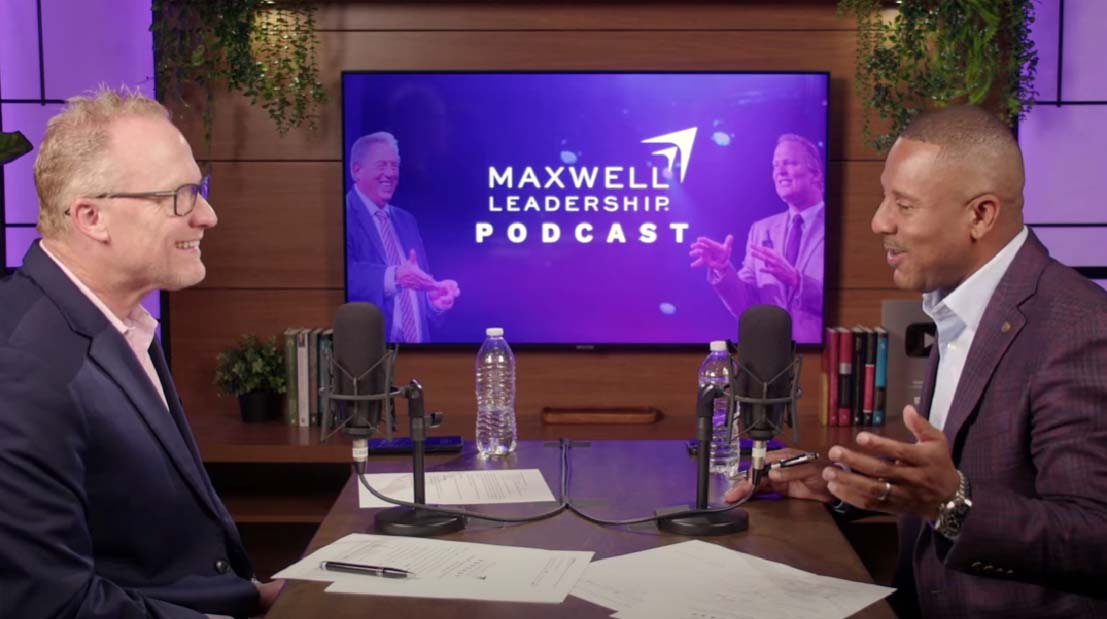
Y’all know Chris Robinson with me here in studio. If you’re watching on YouTube, you know Chris is here looking good in that jacket, buddy. I mean, that’s a good looking jacket. But I’m super excited because number one, I’ve been with John Maxwell for 26 years. So I know a thing or two about successful people. I’ve observed a thing or two. I always call Chris Robinson the product of the product. Chris runs, he is the president of our Maxwell Leadership Certified Team.
Mark Cole:
He is president of that, but he’s one of 62,000 coaches because he was a coach first. Yeah, that’s correct. He was a successful coach first and then came and a successful corporate leader as well. And so I’m really excited from that frame of reference when I saw the title and got to listen to John just a while ago, I went, man, I’ve got the right guy beside me because this is a guy that is around a lot of successful people, has been successful. And so it’s going to be a lot of fun talking about it.
Chris Robinson:
Yeah, always. I love it. I love talking about this topic. And again, I think it starts out with attitude.
Mark Cole:
I do too.
Chris Robinson:
And that’s a place that I love to talk about and that I’m getting to see flesh out in my own life with my kids and things of that nature. So just love, love, love this topic.
Mark Cole:
You’re going to love it too. And if you are a podcast listener, if you’re a podcast viewer and you’ve jumped onto the Maxwell Leadership Podcast because you want to be successful in leadership and successful in life, we’ve got 2 episodes for you that you’re going to love. So grab a pen. If you want a follow-along guide, we have resources for you. We put a lot of things, not just our supplemental notes, but a lot of other things you’ll find at MaxwellPodcast.com/SuccessfullLeader.
Mark Cole:
That’s MaxwellPodcast.com/SuccessfullLeader. You’ll be able to take advantage of that fill-in-the-blank worksheet, as well as some other things. So get that, grab a seat or the treadmill, whatever you’re doing, and listen in, because here’s John talking about what successful people know that you want to know too. Here’s John.
John Maxwell:
The 10 secrets to success. And what successful people know and do. Number 1, how you think is everything. Always be positive. Think success, not failure, and beware of a negative environment. You heard about the optimist and the pessimist that went into business together, didn’t you? Boy, the sales were just booming. And after about 3 weeks, the optimist, he was so excited and he just talked about, you know, people love our products. Our customer base is just growing and we’re selling more every week.
John Maxwell:
And the The pessimist said, well, sure, he said, but if things keep going like this, we’re going to have to order more inventory. An optimist thinks that the glass is half full and the pessimist thinks the glass is half empty. We’ve all heard that. But a realist knows that if he sticks around, either way, he eventually is going to have to wash the glass. How you think is everything. Ask yourself, is most of my thinking positive or is it negative? Is most of my thinking success-oriented or is it failure-oriented?
Chris Robinson:
Number 2.
John Maxwell:
Number 2, decide upon your true dreams and goals and write down your specific goals and develop a plan to reach them. Tom Hopkins says that goals are the fuel in the furnace of achievement. Here’s what I would encourage you to do. Sit down with a legal pad and write down— and I think 10 is a good number. It’s not a magic number, I just think it’s a good number. Sit down and write down 10 things that in your lifetime, when you did these or accomplished these things, you felt real good about yourself. And some of them may be very significant to you, some of them may be almost frivolous to you. But I would encourage you, go back and pull out of your life I did this, by the way.
John Maxwell:
I did this as I was preparing this lesson, and I was very amazed at some of the things that I thought about that I hadn’t thought about for a long time. Go back through your life and say, how did I feel at that moment? Now, here’s what makes that significant. It not only tells you a lot about your self-image and your journey, but here’s the question that I would really have you to look at after you list those 10 things. How many of those things happened a long time ago and how many of those things happened recently? What I have found is that if several of these things happened a long time ago, that gave you the foundation for a good self-image. But if some of those things happened recently, that has given you a lot of motivational fuel for whatever you’re doing in your life. And it’s not either/or, truthfully. Hopefully you have a balance of both. You have that which is foundational, and you have that which is what I call motivational.
John Maxwell:
But just look at your life, and out of that, you kind of decide who you are, how you feel about yourself, what are your dreams, what are your goals, okay? The 3rd secret to success for those who not only dared to have a dream, but then made that dream become a reality in their own life, success secret number 3, take action. Goals are nothing without action. Don’t be afraid to get started now, just do it. And then I have some great quotes. Dreams don’t work unless you do. It is only our deeds that reveal who we are. Chesterton said, I don’t believe in fate that falls on men however they act, but I do believe in fate that falls on them unless they act. Paul Bear Bryant, the great coach at Alabama for many, many years, had a sign in his locker room that said, cause something to happen.
John Maxwell:
In other words, he understood the value of action. So many times we have something out there in front of us that we know we’re going to have to do. And for some reason we think, well, you know, boy, I hope when I get there I’ll be able to pull it together. Well, why would you wait till you get there to pull it together? Why not pull it together so when you get there, you’ve got something? Take action. Take action. Our lack of, of taking action today causes us great grief tomorrow. I have found that when I delay and procrastinate, tomorrow gets worse. I have found that the project compounds the longer I wait.
John Maxwell:
So take action now. Number 4, never stop learning. Never stop learning. You may have to go back to school, you may have to read some books, you got to get some training, you got to go acquire skills, but never stop learning. Learning is defined as a change in behavior. You haven’t learned a thing until you can take action and until you can use it. And there are 2 ways that you and I learn. We learn either through experience, in other words, learning by our own mistakes, and we’ve done that, or Through wisdom, which is learning through the mistakes of others.
John Maxwell:
And it’s more fun to learn through the mistakes of others, isn’t it, huh? But we do both. And from the game of learning, leaders and learners alike need to derive meaning from events, to make projections from figures, to sculpt strategic plans from the chaos that often surrounds us. So let me give you 5 rules of the learning game. Number 1, seize every opportunity to exchange knowledge. Seize every opportunity. Anytime you have a chance to exchange knowledge with somebody, grab it. Number 2, embrace contradiction. One of the things you’ll find in learning is that the more you hear from people who don’t think like you, the more you learn.
John Maxwell:
Number 3, brainstorming works. Get together with people that are good thinkers and throw some stuff on the wall and see what sticks. Number 4, look at the big picture. Always look at the big picture. Anything— anytime you learn anything without applying it to the big picture, your puzzle won’t come out right. Number 5, every day read and file. If you really want to learn effectively, you have to every day read and file. And number 6, every day share and apply.
John Maxwell:
Every day, share and apply. In other words, what you’ve read and filed, begin to share and apply in your own life. Share with others and apply to your own life. But never, ever, ever stop learning. Number 5, the 5th principle of success, be persistent and work hard. We have to realize that success is a marathon, not a sprint, and that we’re never to give up. I love what William Gladstone said, if hard work is the key to success, Most people would rather pick the lock. Number 6, successful people who realize their dreams learn to analyze details.
John Maxwell:
They get all the facts, all the input. They learn from their mistakes. A minute of thought is worth more than an hour of talk. All things are filled full of signs, and it is a wise man who can learn about one thing from another. On analyzing and the details, Successful people learn to see the numbers. They learn to hear the story and they learn to pick out and see what’s important.
Mark Cole:
Hey, welcome back. Anytime I talk about success or hear John talk about success, he talks a lot about Jack Welch, just the CEO for GE, period, just for years and years and years.
Chris Robinson:
Incredible.
Mark Cole:
And Jack Welch says this, the secret of success is changing the way you think. And I just love that because I’ve been around a lot of successful people and so often it’s not their accomplishments, it’s not their acquisitions, the things that they have. There is a different thinking that happens in successful people. And somehow we discover that through life. But I’ve watched you. I didn’t say this in the setup, but we call Chris Mr.
Chris Robinson:
Attitude.
Mark Cole:
John calls him Mr. Attitude. I call him Mr. Attitude. He is our go-to when we think about attitude. And Chris, I think attitude really is a part of thinking and disciplining yourself in thinking.
Chris Robinson:
Yeah, it really is. I mean, if you— I think it goes down to even like this pin that I carry. You know, I’ve shared this before on the podcast, but this is one of my favorite pins because of the inscription on it. Now, this is from Rudyard Kipling. It says something simple. It says, if you can keep your head while all about are losing theirs, then you’ll be a man, my friend. I love that. thinking right there.
Chris Robinson:
Like, you could react to environments, you could react to the circumstances, you could react to what other people are thinking, but staying calm in that storm and controlling your thinking, I think, really makes a difference for a lot of people. That’s so good. You know, John opens us up with that. You know, it’s like how you think is everything. And, you know, he talks about attitude being the difference maker, but attitude isn’t everything, but it’s the main thing. But thinking is, thinking is. So you’ve been around a ton of successful people, you know, for years and years and years being beside John and being inside the rooms. But what do you know about success today that you wish you knew 30 years ago?
Mark Cole:
Well, oh man.
Chris Robinson:
Oh man.
Mark Cole:
You went back 30 years. I was like, oh, I could go back. I could go back.
Chris Robinson:
Potato chip guy.
Mark Cole:
Yeah, exactly. It was 30 years ago. You went back there. I was like, okay, what did you know about success now that you didn’t know? I go back 30 years ago and it did because that 36 years, I’m 26 years into working on this team with you and with John, learned a lot. What I wish I would’ve known 30 years ago, because my actions and my internal self-leadership 30 years ago was atrocious. And I think about the course that I was on in my leadership. I had a leadership role. I had a leadership role nobody in my little circle had ever had at my age.
Mark Cole:
I was recognized way ahead of my time in leadership. But 30 years ago, I did not know that how I led myself was so important. And I was leading a lot of things then. I was doing decent. Well, I was successful. We were accomplishing all the key measurements, all the KPIs that everybody could see was working like crazy good. Everything was up and to the right. Boy, internally, I was a wreck.
Mark Cole:
And the distortion that I had in my thinking, talking about thinking, the distortion that I had in my actions, my incongruencies, how I felt like I could keep the external thing going well and be so deteriorated, so neglected on the inside, is probably the thing that I go back, man, somebody could have woke me up to leading myself better 30 years ago. There would be a lot less destruction and a path of wake of mess in my life if I’d have known that 30 years ago.
Chris Robinson:
Wow. Talk to me about the gap though, because I think a lot of people deal And I think a lot of people deal with that. There can be this external success on the outside, but yet there’s this internal distortion or disruption of life that really kind of is separate. How did you bridge that gap and get those closer together?
Mark Cole:
Man, so a crash and burn. I mean, a crash and burn. You know my story. I joined this team, speaking of success, I joined this team with no success. I tell people I only had 2 things, a commitment to never lead again and a commitment to never have a meaningful, deep relationship again. things that I brought to the leadership table. I had nothing. Broke emotionally, financially, relationally, all the brokes.
Mark Cole:
I was broke. And you get in this business or you get in this environment and the thinking really changed to where I believe the only thing sustainable. I’ve had days lately, Chris, that I go, man, my leadership stinks. But very quickly I go, oh no, it’s not. I remember 30 years ago, that was stinking leadership.
Chris Robinson:
Right.
Mark Cole:
That today’s environment, good or bad, the highs, the lows, does not define success for me. And so how I shrunk the gap is to have a first filter. And how I’m leading on the inside is 10 to 1 more important than how you think I’m leading on the outside. 10 to 1. And so I shrunk the gap by not letting it be a gap. It became a priority. Internal leadership is the only thing sustainable in leadership. It’s the only thing that matters to legacy.
Mark Cole:
So I’ve been around a ton of corrupted internal leaders that had massive external success, but they’re not happy. They crash and burn with it. They die alone. And I’m just going to tell you, I don’t think that’s ultimate success. Ultimate success is doing something so significant that somebody wants to carry it beyond you, that it impacts beyond you. And so that success definition and realizing that that can only be sourced— success can only be sourced from the inside out— is I guess how I shrunk the gap. I eliminated the gap. I said, man, I don’t want to be externally successful if I can’t be internally successful.
Chris Robinson:
Right. Yeah. Well, I love that you were able to close that gap there. A lot of people don’t make it to that place. But John talks about these moments in our life that give us hope or motivation for the future. So in that distorted time, what gave you some motivation or hope for the future that it could be better?
Mark Cole:
My environment. There’s a time, Chris, and I really would like to speak into this for those that really want to change their thinking and get into action to do something different. You’ve got to create a different environment for yourself. When I got into this organization and I saw the benefits and the impact of unconditional love, because I’d never experienced that before, and I experienced the benefit of people that believed more for me than I believed for myself. So the belief was higher from outside than inside. And when I got around people that were as committed to my success as they were to their own success, it was a game changer for me. I did a webinar recently for our certified team. Again, Chris and I get the privilege of being a part of a 62,000-member team that’s changing the world.
Mark Cole:
Literally, they’re changing the world. If you want to know more about the team, go to MaxwellLeadership.com. I talk often, and I did recently on this webinar. webinar inviting people to join our team, that your environment matters more than your mom and dad used to say when you said, choose your friends, choose your friends, choose your friends.
Chris Robinson:
That’s right.
Mark Cole:
And I’m telling you, there’s a reason that parents tell their kids that. And as adults, choose your environments, choose your environments, choose your environments, because joining this environment with the attributes that I just talked about, Was the game changer for me.
Chris Robinson:
Yeah. So we talked about, you know, what you talked about sounded great. I mean, an environment of unconditional love, people believing in you, that is like opposite of the world of what I believe most people listen to and experiencing. So give me some practical, how do I change my environment? Because I grew up where I grew up, I work where I work, I live where I live. Now, and listeners may not have this environment. What would be some practical ways for them to find environments that can help increase their thinking?
Mark Cole:
Yeah. I want to first answer that question, and we didn’t know this, we didn’t rehearse this. So this podcast is not sponsored by the Maxwell Leadership team, although it kind of is too. I really want to invite you, you’ve been listening to this podcast for a long time, and today because of the successful people that come into our environment already, they’re already successful. And then the success that is generated by our environment is second to none. So check us out, MaxwellLeadership.com. It will be a game changer for you. Practically, number one, you got to understand you can’t choose your family.
Mark Cole:
That happened. You got family.
John Maxwell:
Right.
Mark Cole:
You can choose who you spend time with. Focus on the things you can choose. Focus on the things that you can change and focus on the things that you want. to be reality in your life and chase those, latch onto those. The environments, the people, the direction that I want to go. I do something at the end of every year. You probably do this too. Learned it probably from John.
Mark Cole:
Every end of every year, I do a relationship inventory. I look at my calendar from January to December, and I literally capture the 10 people that got most of my time. And then I put one simple thing on there, an up arrow or a down arrow. The up arrow means they gave more to me than I gave to them. The down arrow is they took more from me than I wanted them to take. And I literally put that on there. And then I do a hard double-click on whether I want another year like that.
Chris Robinson:
Right.
Mark Cole:
And if I do want another year to where I’m giving more because this is just a good time, or I’m getting more because I really need something from this relationship, I give it a thumbs up. If I want it changed, I put a plan for that relationship in my growth plan. If I don’t want it changed and I don’t want it anymore, I get rid of that relationship.
John Maxwell:
Oh yeah.
Mark Cole:
So really it is get serious about the people that you hang out with, the place you want to call successful in your life. What is it that defines the word success in your life? Chase people that have a key to that right there.
Chris Robinson:
I love that. I love that. I know John talks about never stop learning. So we’ve got our thinking, we’ve got our environment that we’ve talked about, but we still are here to learn. And so he gives us these 6 keys. Seize every opportunity to exchange knowledge, embrace contradiction, brainstorming works, look at the big picture, every day read and file, every day share and apply. Of these 6, Which one has really served you the best, if you like? Because doing all 6 may be hard for everybody starting out, but what’s one that’s just served you well that you do effortlessly now?
Mark Cole:
So I’m going to give you the one probably that I enjoy the most, and then the one that I believe has been the difference maker for me. The one that I enjoy the most, and you’re going to believe this immediately because you’ve worked alongside of me for a long time now, is embrace contradiction. I love contradiction. I started my own consulting firm some years back and it’s called The Iron League because of Proverbs 27:17, as iron sharpens iron, so does a brother sharpen one another, right? And I love that scripture because I do believe we’re better because of contradiction, because of conflict, because of sharpening one another. Believe it, believe it. I won debate class growing up. I know you probably don’t believe that. I’m hardheaded.
Mark Cole:
I know you probably don’t believe that. So the way I learn is somebody that will stand up to me and make me defend my position or be better at it that changes my position. Absolutely. Now, there are so many downsides to that and blind spots to that, that we don’t have time for a counseling session here and the couch is not in the studio anyway. So let me move on to the one that I really do defend every day and it’s everyday share and apply.
John Maxwell:
Okay.
Mark Cole:
You say something that I want you to talk about in just a moment. Learn a little, do a little. I believe every single day we need to learn something. And the best way to, after you have learned something, to make it stick is to go apply it, is to go share it, is to go put it into practice.
Chris Robinson:
Yeah.
Mark Cole:
So learning and applying is, I would defend that out of all 6 for sure. Before I have you talk just a little bit about learn a little, do a little, because all of us that’s been influenced by your teaching and especially me, loves that part of your teaching, but loves that part of your discipline. But on this concept of never stop learning, I’m struck by John Maxwell’s propensity to learn. Yesterday, I was having lunch with a dear friend. They said, what have you observed about John to be the most consistent thing? And I said, his commitment to learn.
John Maxwell:
Yeah.
Mark Cole:
I remember a time that But he and Jim Collins, author of Good to Great and many other great books, they’re good friends. We were in a green room and we knew we were going to have about 30 minutes in the green room. And John on the plane was writing something down. I said, you’re writing questions down for Jim Collins, aren’t you? He said, that’s exactly what I’m doing. He gets in there and Jim comes in, they hug one another and John says, sit down. I got some questions. Jim said, no, you did that to me last time. I have my questions this time.
Mark Cole:
These guys fought for 10 minutes of their precious 30 minutes about who was going to get to ask who questions. Here’s the point. Successful people, they’re always asking questions. The curiosity of successful people is staggering. The curiosity at 80 years of age—
Chris Robinson:
Wow.
Mark Cole:
In a world where he started training people with cassette tapes. Most of you jokers out there don’t even know what that is, podcast land. That was a podcast about 25 years ago. It was called a cassette tape, maybe 30 years ago. But anyway, Wow. Maybe 35 years ago. But John’s passion to learn, his curiosity to absorb something is unbelievable. John Maxwell, to this day, every time we get on planes, says, let me tell you what I just learned about AI.
Mark Cole:
Now he’s 80. He’s been there, done that with how content is consumed. And he’s constantly, constantly, constantly learning because that’s what leaders do. I wanted to talk about that little duel on who was going to ask the questions by Jim Collins and John Maxwell, because that’s what I think John is pointing the picture of right now, what successful people know and do. So because I did want to find a spot for you to talk about, learn a little, do a little, talk a little bit about that.
Chris Robinson:
Yeah. Well, I mean, it’s a real simple philosophy when it comes to actually doing something. A lot of people think that they need to know the entire picture before they do it. They say, well, I need another book. I need another course. I need another program. I need another degree. I need another this.
Chris Robinson:
actuality. We just need to take the next step that we know of. And then when you take action, what happens is that reveals another door. And so you do 2 things. You learn a little, then you do a little. And when you follow that rhythm, there’s more learning in your doing than actual learning in your learning. And so that is a mantra and motto that I teach everywhere because it’s moved me from one thing to the next in everything that I’ve done in life. Because there’s some things that you cannot learn, you will not know without actually taking action.
Chris Robinson:
And so again, coming back to John’s number 3 right there, it really boils down to taking action. It says the goals are nothing without action. So don’t be afraid to get started now. You got to get started now. And so real simple philosophy.
Mark Cole:
I love it. I love it. Well, and you do it well. You learn a little and then you go put it into application about as quick as anybody out there. You’re like, where’s Chris? Oh, he’s over applying.
Chris Robinson:
Right. But then when we get a result, then now we can tweak a result. But if we just keep planning and planning and trying to get it right, well, you still got to go out and do it. And then you still got to get a result. Then you got to evaluate the results. So you might as well take a little bit, go do something with it, and then now figure out, hey, what did we find out in that? There’s lots of learning in the doing. Lots of learning in the doing. We got to get to this last one right here, because this one I paused just a little bit on, because on number 5 here, he talked about be persistent.
Chris Robinson:
persistent and work hard, which is clear. We have to do that as successful people. But he says we are to never give up. So the question I want to ask you is, how do you tell the difference between a goal that requires persistence or a goal that requires a change of direction?
Mark Cole:
So I, um, I have a really, really great gift that I, I attribute back to my parents. And that is a solid certainty of the role of faith. And for me, it’s faith in Christ, but a faith in the organization, in a person’s life that is bigger than them. It’s got to be about something other than you. And my faith, my relationship with the Lord has given me that faith that it’s about something bigger. And that gift of faith, I don’t know how people live without a faith in something bigger and something greater than them. I don’t know how they do it. So that is a huge gift to me that I wish it for everybody.
Mark Cole:
I honestly do. The second gift that I was given was also by my parents and through my faith. And it was a sense of calling, a sense of contribution to life that is beyond me. And it’s more than faith of what’s going to happen if I live a good life. It’s about a sense of purpose of what I’m going to do with my life. And having that propensity to make sure that my calling was sure and that my calling was certain has been a greatest gift of me. Now, I wish that for everybody, a faith that is unshaken and a calling that is much bigger. Because to answer your question, that’s how I create the tension and the difference between persistency and giving up.
Mark Cole:
I mentor people as you do every single week on a Tuesday. I mentor people and I’ve helped a lot of people leave something without knowing where they’re going. And John talks all the time about, don’t leave something, go to something. Well, sometimes you are done in a relationship because it’s abusive and you have tolerated it for way too long and you’re done. Or you’re in a job that literally is taking advantage of you and your time there is past due. Okay? How do you get somebody like that to deal with the fact, don’t give up, don’t give up.
Chris Robinson:
Right.
Mark Cole:
Right? And so I have to get, for me and for people that I work with, I have to get it to something that’s bigger than the position, something bigger than the environment to get people to leave to something, even leaving an uncertainty on what’s next. So why would you leave? Because I want to be a person of integrity and I want to be a person that is valued. I want to be a person. So I’m going to something that’s going to value me more than this environment. So the reason for departure aligns back to something bigger than the position that they’re in or the role that they’re currently going after or the aspiration that they want. An aspiration is not a reason to stay persistent.
Chris Robinson:
It’s good.
Mark Cole:
It’s noble. But I’ve watched some people with way too much persistence pursuing an aspiration that violated who they were and what they were called to do.
Chris Robinson:
Wow. I love it.
Mark Cole:
So again, but I can’t do that without a sense of faith and purpose and so our calling. So I hope that helps. Hey, let me tell you this. Number one, I love this and I can’t wait for next week because coming back is part 2. We’ve dealt with 6 today of John’s observations about successful people. We’ve got 4 more to go. I want you to come back next week. If you listen to these weekly, I want you to come back for next episode because we’re going to continue talking about what successful people know and do.
Mark Cole:
By the way, go to MaxwellPodcast.com/SuccessfullLeader. We’ll put another podcast that I remember us doing called 4 Ways to Turn Turn Failure into Success. And we’ll put that link in the podcast. You’ll see some other things there. Thanks for joining us today. Always give us feedback, give us ways we can get better, and go lead well because everyone deserves to be led well.