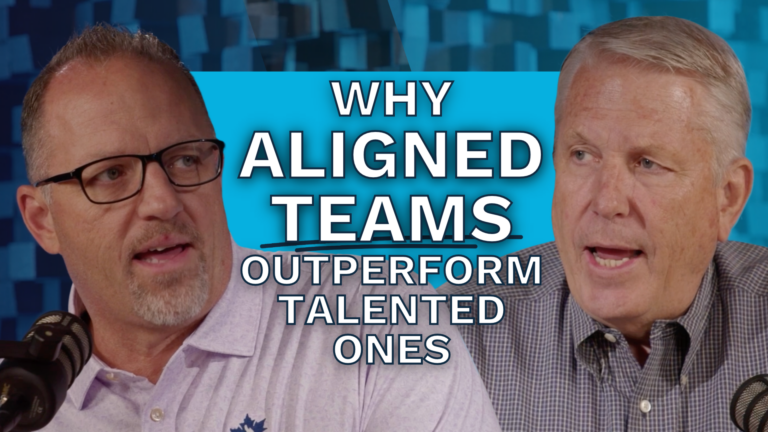
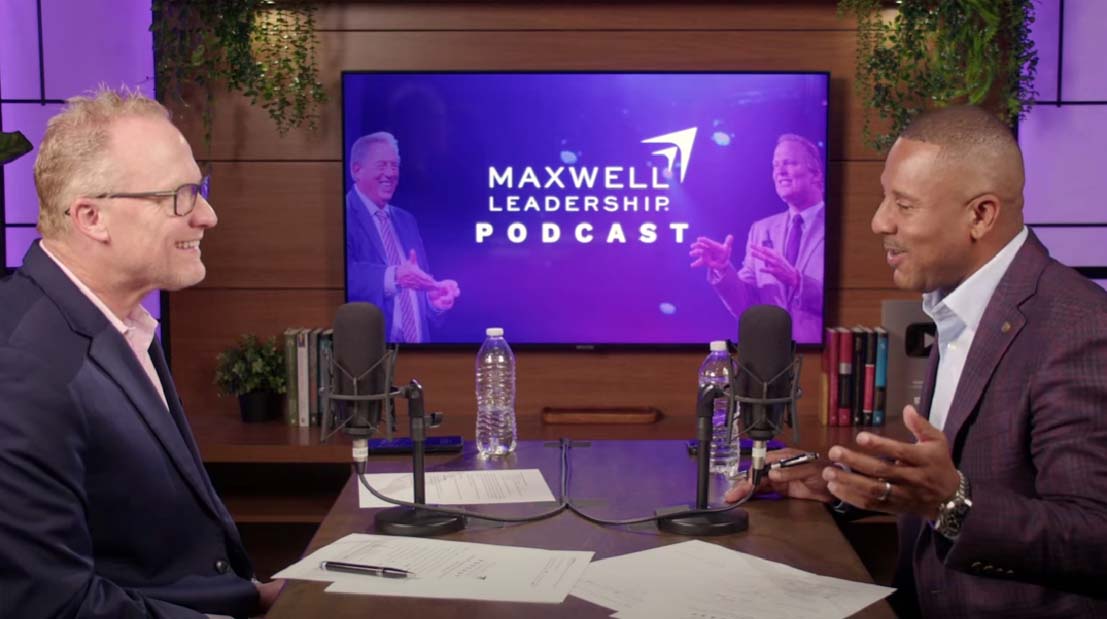
In this episode, Perry Holley and Chris Goede explore why self-awareness and emotional intelligence give leaders a competitive edge. They explain how a growth mindset shapes a leader’s ability to handle feedback, learn from mistakes, and embrace new challenges. Chris and Perry also provide practical tips for increasing self-awareness, like seeking candid feedback and recognizing triggers through reflection. Overall, you’ll gain actionable steps to improve your EQ and create a more positive impact on your teams.
Perry Holley:
Welcome to the Maxwell Leadership Executive Podcast, where our goal is to help you increase your reputation as a leader, increase your ability to influence others, and increase your ability to fully engage your team to deliver remarkable results. Hi, I’m Perry Holley, a Maxwell Leadership facilitator and coach.
Chris Goede:
And I’m Chris Goede. Executive Vice President with Maxwell Leadership. Welcome and thank you for joining us. I want to encourage you to go to MaxwellLeadership.com/ExecutivePodcast. And there, if you’re looking for some training or some leadership coaching, man, that’s what we do. That’s what we’re passionate about. We would love to help you when it comes to the team engagement and turnover and communication, which, by the way, I tell people all the time, it’s always in the top 3 of every organizational needs. That goes for here at Maxwell Leadership as well, is communication.
Chris Goede:
So we would love to help you fill out that form and we would be back in touch with you. Today’s topic is why self-awareness and EQ is your leadership edge. And I love that you put both of these in here. Yeah. Because some people would move them together, right? And you would think about the self-awareness is EQ, which it is, But we’re going to talk about it a little bit differently today. And I love the 2 ideas because one of them is really around mindset and then the other one’s around self-awareness. You’re a big fan. You’ve mentioned Carol Dweck a ton in a lot of what you’ve learned and have really taught on.
Chris Goede:
It’s had a huge impact on you. And so she talks a lot about that fixed versus the growth mindset and where you’re at. And so we’re going to talk about today the difference and, or not the difference, but some ideas for you to look at them differently. That’s probably the better way to say that, but really around the self-awareness piece. So as I just mentioned, maybe even last week, send us a challenge you’re having. We’d love to talk about it on air. That’s where we get a lot of our ideas. This comes right out of some of your coaching.
Perry Holley:
This is actually a recent, very recent situation I was dealing with a leader. Explaining the person on the team who was a top performer. I mean, this is what really got me on this was this was a top performer, but they struggle in very important client engagements. It’s like they fall apart a bit. And when I probed into more of the details about what’s really going on here, I learned that this person was a very naturally talented person. They just— things came easy to them and they were just— they didn’t have to work. very hard to do it. They had enjoyed a lot of early success in the work they were doing.
Perry Holley:
This was another trigger for me. They always expected to win. They’ve always—
Chris Goede:
Oh, it’s going to be that way.
Perry Holley:
Whatever environments they were in, sports or business or in the neighborhood pickup game, they always won, and they were naturally gifted at doing that. As business has become more complex and the speed of things has picked up, And urgency has really increased in almost everything. This person, my leader tells me they’re not engaging the way they used to. They are exhibiting, actually prone to outbursts and anger and those types of things coming up even in front of a client situation. And they get easily upset when things don’t go their way. So became clear to me, and I guess you could say Am I— how clear am I? I think I’m right that 2 things are going on here. That’s where the title of this comes from is that— and I want you to maybe walk us through a little bit about what— Yeah. And I put Carol Dweck on a list of people I’d like to meet one day.
Perry Holley:
I just think I’ve gained so much information and knowledge and things I can put to work both at home with my kids, watching them grow, in myself, watching me grow, and especially at work, watching team members struggle with a fixed or a growth mindset, and then this low self-awareness that I think was going on and lack of emotional intelligence to be able to manage his own emotions and the emotions of others to do that. So we can expand on that, but I guess before we go any further, maybe let’s get more clear about— because as I talked to this leader, he was not aware of mindset. Maybe in the world I work in, I cannot believe that you don’t know
Chris Goede:
that.
Perry Holley:
However, I realize I’m in my bubble. Yeah.
Chris Goede:
And I love that the leader is even aware of and noticing this and wanting to coach and to help that individual. So when Perry talks about Dweck’s content, let me give you some distinction for you. So a fixed mindset believes that abilities, intelligence, they’re static. It is what it is, right?
Perry Holley:
Can’t change. I was born that way.
Chris Goede:
That’s right. The growth mindset, which is what we’re very accustomed to in our bubble around here believes that, man, your abilities can continue to develop through effort, through strategy, through feedback, which is not often easy. Right. So when you have a fixed mindset like this, what ends up happening is you will avoid challenges that really risk you or push you to a different different level because you don’t want to feel incompetent or get into a situation to where maybe you feel threatened by your talent, not at the level of somebody else’s talent, whatever that is in the role that you play. And then also I’ve seen a lot around this with leaders and they have this type of mindset that taking feedback is so personal. It’s their maybe self-worth, would be the right way to say that because they want to always be right, which I may have gone through some seasons of that. So that’s kind of the fix. Talk a little bit about the growth side of it so they really kind of understand the 2 different mindsets.
Perry Holley:
Yeah. And I’ll tell you, this comes up a lot in the coaching work we do is you’ll hear someone say, well, I could never do that. And I don’t want to— I said, why don’t you go into the meeting and propose your point, share your point of view? Oh, I could never do that. And the fixed mindset says, I’m going to reveal to you— this is an imposter syndrome type of a thing— is I don’t want anybody to figure out that I’m not as smart as they think I am. So I just won’t engage. I won’t share my idea. I won’t initiate to do that. The growth mindset says, heck yeah, I’ll share what I think.
Perry Holley:
Here’s what I think. How does that fall with you? You’re open to— you know that you’re going to learn something, whether you— if you fail at it, it’s just information that helps me grow. But a fixed mindset person fails at something, it’s just, it’s verification that I’m not as smart as everyone else. And we love being able to flip that switch to say, how do I get you into a growth mindset so that you take feedback, you take setbacks, you take mistakes, you take shortfalls as opportunities to grow and get better, and you continue to get better and get better?
Chris Goede:
I’ve never thought about that. You just said it a minute ago, but I’d hear that a ton as well. I could never do that.
Perry Holley:
Yes. I’m listening.
Chris Goede:
I could never lead at that level. It also made me think, John Maxwell talks a lot about people come up to him and they’re like, I mean, I can never speak on stages like that in front of people, write books every day, whatever it might be. And they’re like, but if I were, I want to be able to do that. And he goes, well, are you willing to do what I did? Which is that continual painful feedback, critique, growth over time to be able to do that. Okay. So how then between the two. How does a leader begin to shift then from that having a fixed mindset, kind of finite, right, to a growth? And then how does that show up every day when you’re coaching to this? Where do you lead them? How do you help?
Perry Holley:
Well, you already gave it away a little bit on the first one was pay attention to self-talk. And by the way, you need to look at this in yourself. I was pretty proud that I’m in the people development business. I must be the massive example of growth mindset.
Chris Goede:
We just had a personal conversation a couple weeks ago where You and I were coaching each other on going, why are we telling ourselves that? And we live in this space.
Perry Holley:
Yes. So watching your personal self-talk, but as you’re a leader or a parent, significant other, listening to the self-talk of others, listen to words like how they talk about failure. Do they talk about learning from the failure? That’s probably growth mindset. Do they talk about, I failed, I probably shouldn’t have been doing that? That’s fixed. And opening opportunities for the— I hear this a lot in my kids when they were younger, wanting to stay away. I messed up. I’m never going to try that again. Oh no, no, no.
Perry Holley:
We call it failing forward. That’s a learning opportunity and we want to learn and grow from that. I’ll tell you one of the big things I learned from Carol Dweck, because if you ever read the book, it’s an easy read, but it’s lots of case studies. She studied this in young children, in adolescent children, in teenagers, in young people, and in adults. She studied this all across the spectrum of ages. And found that, and this is something I was very guilty of, was if you’re praising the people on your team for the outcome, for the result. So my kid would come home and say, I got an A. You said, way to go, you got an A.
Perry Holley:
You praise the A, and then they go to the next class and they go, oh, I’m not taking that class because what if I don’t get an A? I’ll prove to them. That’s fixed mindset thinking. So what am I supposed to do? Praise the effort. I just had this with a grandchild recently. Hey, Poppy, I memorized this preamble to the Constitution. She’s 6 or 7. I go, wow. Oh my gosh.
Perry Holley:
So she gives it for me. And I say, in my mind I go, you did it. And I thought, how long did it take you to do that? She said, only a day or two. I go, that must have been a lot of work. I’m so proud of the work you put in to do that because what you praise gets repeated. I want you to repeat the effort, but you may not be able to repeat the A. You may not. And so if you have a fixed mindset, you’ll shy away from even trying because you don’t want to reveal— That about you.
Perry Holley:
Yeah.
Culture Diagnostic:
Here’s what most leaders don’t find out until it’s too late. Companies have lost $223 billion to culture-related turnover in 5 years. 70% of change initiatives fail not from bad strategy, but from a culture that couldn’t carry it. And disengaged employees quietly cost organizations nation’s $550 billion a year in lost productivity. The problem isn’t that culture doesn’t matter, it’s that most teams never measure it until something breaks. The Maxwell Leadership Culture Diagnostic changes that. In 2 weeks, you get a real culture health score, a high-risk flag report, and a 30, 60, 90-day action plan, plus an executive debrief Want to run a culture diagnostic at your organization to get real data about how you are doing? Go to MaxwellLeadership.com/Diagnostic to learn more.
Perry Holley:
This other word about hearing people say, I can’t do that, just coaching them to say, you can’t do that yet.
Chris Goede:
I love that. Yeah.
Perry Holley:
I thought it was nice. That was Carol Dweck. How do you talk to yourself?
Chris Goede:
The other thing about this you mentioned just a minute ago about feedback, a lot of times too, I have found myself about your mindset determines if the feedback that you’re getting feels like a threat or a gift. Let me give you an example. I was speaking a couple weeks ago in front of a couple hundred people, and I made a statement in the first half of the day, That was not wrong. It was just a little inaccurate, may not have resonated with the team and where they were going. And so we’re at lunch and so what we do a lot is we go direct to the leader. Hey, how are things going? Can we serve you? Do anything differently? Everything was great. And they go, I got one piece of feedback for you. And they shared it with me and I was like, man, thank you for doing that.
Chris Goede:
Now inside, did I go, I may have had a little bit of that. What do you mean? Yeah. One thing out of, you know, 4 hours, whatever. But here’s what I did. I was like, fair enough. Right. So I was curious. Tell me more.
Chris Goede:
I have a point of view. I didn’t share mine. Tell me yours. And I got to the root of what had happened. So opening the next session, I did a few things, got into where I was going. And then I said, hey, by the way, I just want to clarify something. And it made the situation better, right? The room kind of smiled and nodded and they all knew. I just didn’t know.
Perry Holley:
It makes you real.
Chris Goede:
And it’s just real. Like, that’s one of the greatest things I love about John is I’ve learned so much over the years of, listen, I mean, that joker was self-deprecating. Here’s a quick funny story about that. He just, it’s just, listen, we’re all human and we make mistakes. So we were at an event and you were with us and we were at Henry Bank. And so they needed him to speak right after lunch was served and they wanted to come and mic him up at the table before lunch. He said, that’s probably not a good idea. And they’re like, you prefer after? Like right before you get— that’d be a good idea.
Chris Goede:
He’s like, I spill stuff all over myself. I drop stuff on my shirt. I’m liable to ruin your— But he knows that and he’s okay with it. And you’re just like, hey, it makes you human. And so, man, just make sure your mindset thinks about feedback not as something as a threat, but it’s really a gift. And the other thing I would say is I love what you said about being vulnerable. Be transparent, be authentic with your team. Some of the greatest lessons that you have learned have come from those mistakes.
Perry Holley:
Yeah, that’s right.
Chris Goede:
And by the way, it can help your team as well. But here’s what it does. It models a different type of mindset for them that you actually want in your team. And so sometimes I’ll start a meeting and be like, guys, I got to tell you, let me tell you how I completely messed up last week and this is what I learned from it. And with the lesson, I just think it’s super helpful to do that.
Perry Holley:
I do too.
Chris Goede:
It’s not easy. Don’t hear us say we’re just sitting here talking about it. I mean, I told you, we just had a conversation a couple of days ago about some of the mindset issues that we’re dealing with. And so it’s just being aware of it is what we’re trying to do is bring it to your attention.
Perry Holley:
Shift gears with me if you would to the self-awareness or EQ was what I also noticed. They told me that this individual people, when they got frustrated, began to exhibit emotional outbursts, language, anger, throwing things down. And it wasn’t bad, bad, but it started on a very bad feeling. But where does self-awareness— and when you think about mindset and self-awareness and EQ, can you link those together? I think they do, but what do you think?
Chris Goede:
Yeah. So you and I are both big fans of Daniel Goleman, probably the the most well-known EQ author that’s out there. And he talks about it around self-awareness, self-regulation, motivation, empathy, and the social skill. And so if you want to learn more about that, I encourage you to go read his book on that. What I like to talk about when it comes to self-awareness around our EQ is so that we accurately recognize the wake that you are leaving behind when you’re Gone or after the episode or whatever I did, right? Are you really aware of how what you’re doing, your own emotions, your own physical activities, triggers you might want to call them, is actually landing on other people, whether it’s in a one-on-one, whether it’s in a group environment? And what does it look like to be on the other side of me?
Perry Holley:
Right.
Chris Goede:
Right. And my leadership. And so I think one of the things that we can think about around that is that self-awareness is, is how am I showing up and how do I show up around other people? You begin to become aware of what it looks like on the other side.
Perry Holley:
One thing you notice about fixed mindset people is how they lean toward perfectionism, is it needs to be perfect. And if I’m not perfect, and so I won’t even try because I’m not perfect, I don’t have it figured out yet, so I’m not even going to try to do that. And then this idea of being cast into situations where my emotions are starting to rise up. I found one of the coaching I gave to this person was how to help this individual that works for them is that there is no perfect.
Chris Goede:
Yeah.
Perry Holley:
Now you can strive for perfect and hope that we find excellence along the way. I think that’s Vince Lombardi, but there is no perfect. So we’re going to come up short, but we can learn from that and we can grow from that. And any mistake or opportunity you have to how you feel emotion being triggered in you is to develop this ability to mind the gap, to master a pause right there to say— and the exercise I gave them was, I want you to name the emotion you’re feeling right now. And when this happens, I want you to ask this person, name the emotion you’re feeling. Is it anger? Is it disgust? Is it embarrassment? Is it shame? What are you feeling that’s causing this to come up? And once you can name it, Then there’s a lot we don’t have time here, but every one of these emotions tells you something. I know anger for one, I’ve had this because I had a problem with getting angry if I couldn’t get something right. And the coaching I got on that with anger says you’re not getting something you feel you deserve.
Perry Holley:
So I just started asking myself, Perry, what are you not getting that you think you deserve? And there was an answer every time. Oh yeah, I’m not getting the recognition I deserve. I’m not getting noticed the way I did. I’m not getting my turn. And that’s where my anger is. So then I can call it what it is and then I can begin to address it all without opening my mouth. And it’s taking that, minding that gap, honoring that pause, taking that breath, and then choosing a response instead of a reaction to that. And then that makes me more in control.
Perry Holley:
But I think what this person I’m dealing with is they’re trying to be perfect, it’s frustrating them, they get angry, they start to throw a fit, and they’ve lost—
Chris Goede:
And it leaves a wake behind.
Perry Holley:
Yeah, it leaves a wake. I love that analogy. It leaves a
Chris Goede:
wake. They talk about 95% of people think they’re self-aware. Now we’re sitting here again, Perry and I, um, we’re challenged by it as well, but reality, 10 to 15% really are. And so, um, you probably don’t even know your lack of self-awareness, including me.
Perry Holley:
You’re not aware of your unawareness.
Chris Goede:
Right. That’s right. You’re not aware of your unawareness. Let me come back to this. You mentioned something as you kicked off about this individual. about things maybe came a little bit easy, very successful in their careers as they started. Do you think success can become an enemy of self-awareness? Right? So you become so successful and things become easy, or maybe you begin to become entitled, and then it’s really, really hard to be self-aware.
Perry Holley:
Yeah, I think if things have come easy for you and you’ve had successes come easy for someone, they may be attributing that to the wrong things that you and I have learned. And we both have had some really great success. We’re talking about your son and his success in sports and in football. Yet when we ask him about at the highest levels where he was playing, what was the difference? He said it was the people that they knew they had a gift, but they never stopped working hard for it. Yeah. And I’m thinking some of these people that have had natural success and natural ability, Stop working. And then their head, they lose the self-awareness that there’s a lot of hard work that goes in. Like you said, John, are you willing to do what I did to be able to do what I do? Is that, yeah, it looks pretty good when he’s on stage.
Perry Holley:
I want to do that. But are you willing to do the unseen hours and all the pain and mistakes and feedback in the back of the room that you get? No, I didn’t know all that. Yeah. So my self-awareness goes up. When I realized how I got my success and it didn’t— I have some natural abilities, but I’ve had to work hard. And now my self-awareness is much higher because of that.
Chris Goede:
What made me ask you that is we’re big, you know, in the sports world. And so I love watching documentaries and I love watching documentaries of athletes and some of the ones at the highest level. I mean, the self-awareness is just not there. And so it could become part of that. So I’d love your feedback. Okay, so we’ve talked about the topic enough. Let’s get practical real quick for our listeners. So how do we do this, Perry? You’re coaching them and you’re talking to leaders.
Chris Goede:
How do you encourage them to build more self-awareness, to increase their EQ practically?
Perry Holley:
Number one thing that I had to do, I think, to help anybody that could do it, to have an inner circle, someone that can give you feedback, someone can watch you when you come in a room, I used to have a guy on my team that I trusted. He was in my inner circle. And I would say, when I enter the room, would you— I’m going to— you go in, I’m going to come in last, but you— and I was the head exec. I said, would you just tell me, are eyes rolling? Are they with me? Are they with me? Are they leaning in? Are they leaning back? Are they saying things? Or they’re not? I said, could you just give me some feedback on what it’s like to be on the other side of me? And because we all have blind spots. So I think for me, having that ability to get some candid feedback from people that genuinely care about me, to help me know what it’s like to be on the other side of me. Just tell me what the—
Chris Goede:
And I love in this section right here, I want to go back to your pause.
Perry Holley:
Oh gosh, yes.
Chris Goede:
Because I think that’s really key for all of us. If you can control that and have that 3-second pause instead of reacting right away, I think that’s a huge part of just a real quick reflection. And then on the other side of that, a deeper reflection is, hey, let’s You went through a tough situation, something happened, just don’t let it go and move beyond it. Spend some time saying, what really happened here? What does this look like? And what did I miss out on? What should I have done differently? How did that impact the team that I was traveling with that day because I did that in the airport or whatever it might be?
Perry Holley:
That’s the art of reflection. Is it just taking a minute or 2 at the end of a day to reflect on what you did well, but also what did I not do so well? What What did I learn about myself? What would I do different the next time is great. I started taking note of what triggers me. Could I write down, I got angry just now. What was it that made me angry? What triggered that? And was it me not getting something I deserve? Was it some sort of disrespect? Did I misunderstand? And then start noticing where the triggers are so I’m aware of them the next time.
Chris Goede:
Well, as we wrap up, here’s what I want you to know. We’re not saying, and we’re not talking about some of the examples, removing the emotion out of you and your leader. What we’re saying is, how do you increase— we love to talk about gaps and leadership gaps— is then how do you increase the distance between that emotion that you feel and that happens and your reaction and all that is impacted around you, in you, with your team on that is where you become more self-aware when you reflect on that. And so the leadership opportunity for us to grow is really in that gap, in that gap area between what we perceive as, well, I’m going to do something that’s just impacting me. No, no, it’s not. And that’s the self-awareness of how it’s impacting the other people that are around you.
Perry Holley:
Fantastic. Well, thank you again for the great conversation. And if you would like more information, the notes from this episode, you can get that on our learner guide. You can also about our offerings, our other podcasts, family offerings that we have, you can do all that at MaxwellLeadership.com/ExecutivePodcast. You can also leave us a comment or a question there. We love hearing from you. Very grateful you’d spend this time today. That’s all from the Maxwell Leadership Executive Podcast.
Transcript created by Castmagic.