
Leadership communication shapes how people connect and work together. Every word a leader shares influences trust, clarity, and culture. When you understand how you measure communication effectiveness, you begin to see that leadership is reflected in how your message lives within the people who hear it.
Even strong communicators can miss how their words land. Knowing whether your communication is effective helps you close that gap between message and meaning, building alignment that moves your team forward.
How to Measure Your Communication Effectiveness as a Leader
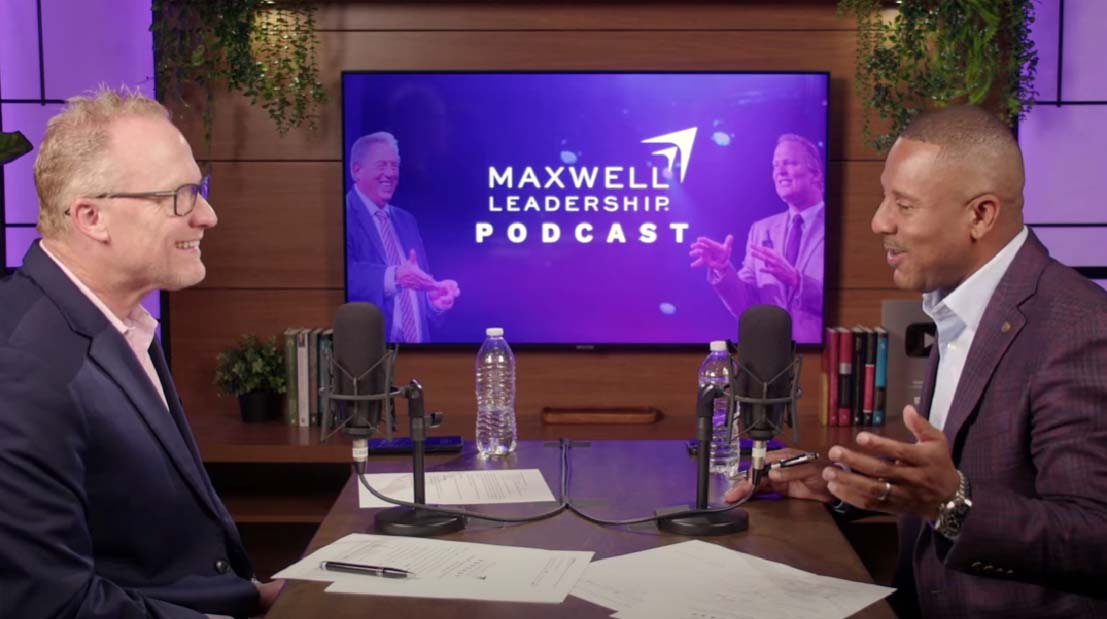
Every leader wants their message to land with clarity and confidence. Yet effective communication isn’t measured by what is said; it’s reflected in how others respond. In the Maxwell Leadership Podcast episode “How Inclusive Is Your Communication?” Perry Holley, Coach and Facilitator for Maxwell Leadership, and Chris Goede, Executive Vice President of Maxwell Leadership, share practical ways leaders can use to measure how well their message is being received and how to lead with greater clarity and connection.
1. Ask What People Actually Heard You Say
Leaders often believe their message is clear, yet what they say and what others hear can differ in unexpected ways. One of the simplest ways to close that gap is to ask, “What did you hear me say?” This small question helps confirm shared understanding and ensures everyone leaves with the same meaning. It turns communication from a one-way statement into a shared moment of clarity.
2. Listen More Than You Speak
Listening is one of the most reliable ways to know whether communication is working. When you focus on what others express, you gain valuable insight into their engagement and clarity. If you ever wonder how to measure your communication effectiveness, start with how deeply and often you listen. The best communicators lead with curiosity before they respond with words.
3. Observe How Your Team Shows Up
Paying attention to your team’s energy and participation can reveal more than any survey. When people feel heard, they contribute openly and take ownership of their work. Chris Goede captures this truth: “When people feel like their voice matters, they show up.”
Look for consistent participation, collaboration, and respectful debate. These are signs that your communication creates connection and trust.
4. Adjust Your Approach to Fit Different Processing Styles
Not everyone communicates at the same pace. Some teammates need time to think before sharing, while others respond right away. Leaders who recognize these differences measure communication more accurately because they give everyone room to process. When you adjust your approach, you make understanding possible for every person in the room.
5. Use the Repeat-Back Method to Confirm Understanding
A powerful way to measure clarity is to invite others to restate what they heard. This approach creates partnership and accountability around understanding. Ask questions like, “How do you interpret what we just decided?” to ensure everyone is aligned. The practice surfaces gaps early and prevents miscommunication later.
As Perry Holley reminds us, “Your voice carries a lot of power, and your title enters the room before you do.” Use that influence to make understanding easy and inclusive.
6. Watch for Patterns of Silence or Confusion
Silence can be one of the most revealing forms of feedback. When people withdraw, it might signal that your message wasn’t fully clear or that they don’t feel safe to ask questions. If you notice repeated uncertainty, missed deadlines, or a lack of dialogue, take it as a cue to revisit how you’re communicating. Effective leaders see quiet moments not as disinterest, but as opportunities to reconnect and clarify.
7. Simplify Your Language and Eliminate Barriers
Complex or exclusive language can make communication feel out of reach. Replace jargon or metaphors that may alienate parts of your audience and speak in ways that invite everyone in. When you use straightforward language, people feel valued and included, your communication becomes approachable, and your leadership becomes more trusted. Clarity is kindness, and ensures no one is left guessing.
8. Rotate Roles and Encourage New Voices in Meetings
When the same voices dominate every conversation, insight is limited. Rotating who facilitates or summarizes meetings opens new perspectives and strengthens engagement. This also helps you see how ideas move through your team and who feels comfortable sharing them. Communication effectiveness grows when every person feels their input is welcomed and respected.
9. Invite Feedback About Your Communication Style
Ask your team how they feel about your communication. Questions like, “Was that clear?” or “What could I explain differently next time?” build transparency and mutual respect.
Feedback is one of the most accurate ways to measure communication effectiveness because it shows how your message truly lands. Leaders who invite this dialogue send a powerful message of humility and continuous growth.
10. Create an Environment Where Every Voice Matters
Chris Goede said it best: “Communication is a two-way pathway.” Leaders who cultivate an atmosphere where every voice matters build the strongest connections. People engage when they feel safe to contribute ideas, express disagreement, or ask questions.
Reflect often on how your tone, words, and presence shape that space. When every voice feels heard, communication turns into a shared expression of trust and purpose.
Would you like to go deeper into this topic? Listen to the entire episode “How Inclusive Is Your Communication?” and read “Effective Communication Skills: Are You Connecting or Just Impressing?”
Strengthen Your Communication Effectiveness with Maxwell Leadership
Effective communication is the heartbeat of leadership influence. When your words create understanding, connection, and shared purpose, you build a team that moves together with trust and alignment.
At Maxwell Leadership, we help leaders grow their ability to communicate with clarity, confidence, and care. Through our Leadership Communication Training, executives and teams learn how to measure their communication effectiveness and turn everyday interactions into moments of lasting impact.
Keep growing your leadership skills weekly with the Maxwell Leadership Podcast, and contact us to learn how our leadership development programs can help you strengthen communication across every level of your organization.