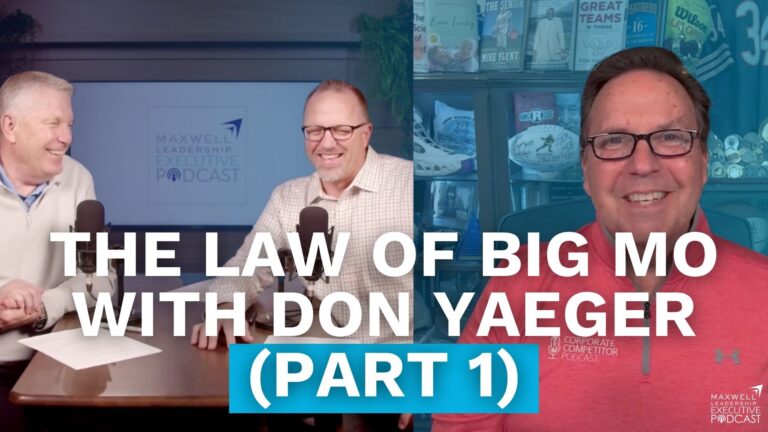
In this episode, Perry Holley and Chris Goede explore the concept of hands-on leadership and what it truly means for executives. They explain how strong leaders act as teachers and system architects, focusing on empowering teams rather than micromanaging. They discuss the importance of obsessing over metrics that customers value and architecting workflows that push decisions closer to the front lines. Listeners gain practical strategies for coaching their teams, building systems that perform without direct supervision, and fostering a culture of continuous improvement.
BELAY Ad:
Strong leaders prioritize efficiency. But leadership isn’t just about performance. It’s about making tough decisions, listening well and showing empathy, being human. The best leaders do both by leveraging the power of AI tools with the intuition, judgment and humanity only a real person can provide. Of course, easier said than done, implementing AI systems comes with its own workload, like researching, integrating and verifying accuracy. And that’s on top of all your other responsibilities. So where do you even start? Our friends at BELAY help busy leaders by pairing them with AI fluent assistants. They handle the admin with a human touch and you focus on leading well.
BELAY Ad:
And Belay is offering free downloads of the future of executive why AI isn’t enough. This resource shows you exactly what AI can do, its limitations, and how an AI supported assistant can elevate your productivity. Text EXEC to 55123 for your free copy today. That’s EXEC to 55123 learn how to lead better with AI.
Perry Holley:
Welcome to the Maxwell Leadership Executive Podcast where our goal is to help you increase your reputation as a increase your ability to influence others and increase your ability to fully engage your team to deliver remarkable results. Hi, I’m Perry Holley, a Maxwell Leadership facilitator and coach.
Chris Goede:
And I’m Chris Goede, Executive Vice President with Maxwell Leadership. Welcome and thank you for joining. Today we’re going to talk about should you be more of a hands on leader? Perry, I thought we were working on is how do we lighten our leader’s load, how do we do less? Right. It gets easier as we go up all those things. But we’re going to talk about this today. It really has sparked a lot of debate around what do you mean by that? Should I be more hands-on? I thought we were trying to empower and develop, especially when we’re at the executive level. And so we’re going to talk about that in just a minute. Before we do, I want to encourage you to go to MaxwellLeadership.com/ExecutivePodcast.
Chris Goede:
There you can download the Learner Guide. We got a spot for you in the upper right hand side. You can click on that learner’s guide. You can ask questions. What we would love is hey, what are some leadership things that you’re dealing with that topics content that we can help you with? Maybe, maybe you have actually a story you want to share of something you took from the podcast and how it developed your team or you individually? We would love to hear that as well. So many leaders have told us, I think we would agree that the higher you Go. As you get older, the more you should stay out of the weeds. You should kind of stay above, above the work.
Chris Goede:
But a recent HBR article, Harvard Business Review article entitled the Surprising Success of Hands On Leaders by Scott Cook and Nitin Noria challenges that assumption. So this is not about micromanaging. So don’t turn off right now and say, I’m not going to get in the weeds and micromanage. They really describe something quite a bit different. It gave me a different perspective and it’s pretty powerful.
Perry Holley:
I thought so too. And this actually came up through a coaching call I was on with a senior executive who has several divisions that he manages with. They each have senior leaders. And he began one of the. One of, they’ve always had really great success. So I’m guessing nobody really paid attention to how they’re doing it because they’re.
Chris Goede:
Doing great, it’s working.
Perry Holley:
All of a sudden, business got a little tighter, expenses went up, revenue came down, whatever was going on. And so this leader positioned himself at their location, one of them, and he began working with the junior leader and asking, how do you do things? And all that. And he realized, he goes, they don’t see things the way they should be seeing. They’re not asking the right questions. They’re just going through the motions of what we are processed and they don’t even question it. And I need to hear how they think to do that. So what does hands on really mean? That the leaders they described, the authors here in the HBR article, they looked at Amazon, they looked at Toyota, they looked at some others. And it’s really fascinating.
Perry Holley:
I would recommend it to anybody. But these leaders, high level leaders, were not inserting themselves in every decision. They were not displacing the teams, they were not hovering over the teams. But I love this, is that they were acting as teachers and system builders. Teachers and system builders. And when I saw that, I go, that’s exactly what this leader I’m working with is doing and needs to be doing. He needs to be working with his leaders to make sure that he’s teaching them how to think a little bit more and building systems that they can implement. So they’re present in the work, but they don’t control the work.
Perry Holley:
They model the standards, they sharpen the problem solving, they establish behavioral norms. They do kind of these big picture like building the system types of things. They don’t meddle, they coach.
Chris Goede:
I like that.
Perry Holley:
They don’t override, they elevate, hoard the decision rights. They’re not trying to make those take the decisions away from these folks. They want to help them make their own decisions, but help coach them in those decisions. And the goal they said was clear, to build systems that perform even when the leader isn’t in the room. And that really got my attention because I said, we teach this all the time. Are you the kind of leader that wants to see things work because of you, or can you be the kind of leader that wants to see things work without you? And with this leader I’m working with, he has so many divisions. He can’t be but in one place at a time. And what he’s finding is when he’s not watching or he’s not there, it’s not working.
Chris Goede:
It’s not working.
Perry Holley:
So I wonder how many others of us struggle with that, is that you can’t be everywhere. Are you building systems and teams that can make these decisions? Are you coaching? Are you elevating their ability to operate in your absence?
Chris Goede:
Love that. Well, the authors describe five principles, by the way. We haven’t talked about that.
Perry Holley:
We were coached out of that, of.
Chris Goede:
Effective hands on leadership. So number one, and I love this point, they obsess over the metrics that customers value. Now when I read this I thought, oh, well, that makes sense. But, well, why don’t we do that, right? Because most of us as leaders, as we begin to look at our business and we track, we track the things that benefit the company, right? When you think about it for us, we think about, you know, the retention and the value of a client. We look at the transaction size, we look at the revenue that’s driving. But the leaders in this study, they obsessed over the metrics that reflect how the company benefits the customer, right? So what does that look like? So these leaders started by deeply understanding what the customer value was. And then they build systems around the customer value, not systems around what they were looking for to see as a value in the organization, as we all do as business owners and P and L owners. And you think about the financials, but if you get focused on that, that’s not the value that is driving that number, by the way.
Chris Goede:
It’s the value that the customer’s receiving that’s driving that number. It’s actually a byproduct of that number. So I love this point right here, is that is the team focused on the right thing? Are they obsessed over the metrics that the customers value, not that the organization does?
Perry Holley:
How many of the folks you work with, you think knows what customer.
Chris Goede:
Oh, I guarantee you it is Low, low, low. Maybe less than 15%. Yeah, they may be able to, let’s put it this way, they may be able to articulate it, but they’re not measuring it or thinking about it. You know, I actually made a note in preparation for this going, I need to think on that for a little bit.
Perry Holley:
I did the same thing. I go, ah, do we do this?
Chris Goede:
Yeah, I think we do it A.
Perry Holley:
Level, but can we be more intentional?
Chris Goede:
100%.
Perry Holley:
Second thing the authors talk about is that these hands on leaders, from a senior perspective, they architect the way work gets done. I really like this, is that this is where hands on really comes into play. That it’s really not about the org chart and where they sit in the org chart, it’s about decision rights and workflows. How is the work happening and who’s deciding what’s getting done. The leaders then they’re trying to push decisions closer to where they need to be made, closer to the front lines and equipping teams with tools and frameworks and processes that can help provide clarity for what, for what they’re doing that remains. You know, they talked about the removing unnecessary approvals, reducing friction, giving people what they need to act with confidence and thinking. You know, if you’re, let’s think if you can’t, you have a lot of people that are working under you. But if you can’t, you can’t be in all those places at one time.
Perry Holley:
But if everybody knew, if you had gone through giving them the ability to make the decisions to reduce the friction of getting things done, they don’t have to come to you, they don’t have to come back through you. They acknowledge that it’s hard work because is the leader is giving up control. You’re actually giving up by being more hands on. I’m giving up control. Why? Because I’m teaching, I’m coaching, I’m setting up systems that work, building up process to do that.
Chris Goede:
Well, listen, that is hard. Giving up control. I recently had somebody say why do you feel like you need to control so many things, right? And then you begin to self reflect and you slowly let yourself begin to leak into that. And I love that word architect and how we get that around systems and processes. The third thing that they bring up is they use experiments to make decisions. What I love about this is that they don’t want to micromanage. It’s not what they’re, they don’t want to get into the weeds and manage that. They don’t rely on hierarchy, they just, they want to rely on data and experimentation.
Chris Goede:
They test new ideas instead of judging them. And authority or movement of these ideas actually comes from evidence, not opinion. And so then everybody can get on the same page when it comes to that. And that kind of just elevates everybody involved, maybe think about, I was just, while you were talking a minute ago, I wasn’t paying attention and I was actually thinking about Elon Musk, his book, and how he will walk through, you know, factories. And it’s like, okay, what if we did this and they’re making decisions? Because then they experimented with doing it a little bit differently or hey, tell me, why are we doing this? Or why is that in place? And you’re going through and experimenting. And so John Maxwell says that good leaders ask great questions and they then let what they are learning lead the way from there. And so I love this. They use experiments to make decisions.
Perry Holley:
I love that. And thinking about the examples again, I can’t remember all four of them, but I know Amazon, Jeff Bezos and Toyota were big in there. Two others, but that was exactly like you said, the Toyota walking the line and being where the work happens. So that was number four of their strategies, was they lead by teaching the toolkit. They said. So one of the leaders that he was quoted as saying that hands on work isn’t a phase that you outgrow. And that’s what you were saying at the top of the broadcast here is that, yeah, we are kind of taught the higher we go, the further we are away from where the work actually happens. And many leaders, now what these guys were learning in this study was that they treat frontline involvement as developmental, something you do early in your career and then you leave it to other people as you climb the ladder.
Perry Holley:
But these best leaders, they stayed rooted in the real work of the organization. So like you said, walking the line and being a part of that, they spend time, they said, where the value is actually created, so what’s actually facing the customer. They get involved with that even when other demands, maybe they said loud and urgent. They try to focus their time on being in places where they can teach the toolkit, where the work really matters, where it’s going to have the most effect and get these frontline leaders operating on their own and thinking strategically the way they like them thinking. Instead of these leaders staying in the ivory tower, they get down and get involved with how the work actually happens.
Chris Goede:
I love, throughout our session today, we talked about, we’ve used the word teaching a ton, right? It is that level four. It’s that reproducing things, learning something new, but then reproducing and continuing to do that. The fifth one they talk about is they strive to be better, faster, cheaper every year, forever, forever. It’s this continuous improvement. It’s this infinite progress that we can make as an organization and be able to build systems and norms around that so that we buy into improving every day. I was in a meeting with Mark Cole yesterday with our leadership team and we were talking about, hey, as we begin this journey, we’re going to be looking at the plus one effect, the 1% better. Last year, this month, where were you? What were the KPIs, what were the metrics, what were the whatever? And then did we plus one it? Did it get a little bit better? Are we, did we get a little bit faster? Did we do it a little bit cheaper? Were we able to make it a little bit better? Those things are questions that we are internally reflecting on and using. And I love that they talked about this here because leaders, if you can figure out how to operationalize daily growth in your team as they’re doing what they are there to do and they begin to catch on to that growth mindset and that continuous improvement, I think that your organization is heading in the right direction.
Chris Goede:
If you don’t, well then we’ve seen a lot of organizations have gone the other way and that’s painful. And so number five, they talk about how do you strive to be better, faster, cheaper every single year?
Perry Holley:
Yeah, that’s what Toyota calls Kaizen and types of things that they put in there. Well, the authors, as we start to wrap up or thinking about this makes so much sense. Why is it hard to copy? And they found out that it’s not a secret by the way that Toyota opens its factories. Bezos shares openly what they do. Donahuer was another one that teaches at Harvard. They actually teach these methods as what they do. But very few companies have ever replicated what they do. So as you hear us think about how we could do more of this, many executives, CEOs especially are expected to stay above the fray and to stay out of, of the operations.
Perry Holley:
And it’s kind of the way we’ve been trained. But this moving to a hands on system architect model requires really an identity shift in how you see leadership, maybe redefining how leadership is. And I gotta tell you, because I have this executive right now who’s dealing with my junior executive team across all these divisions, are not executing the way that I would be that I’ve learned he is actually having to get more hands on. And he told me, I feel, you know, like you feel like he’s micromanaging. You’re not micromanaging. You’re actually training, teaching, coaching and helping to move them along.
Chris Goede:
And the micromanaging would come in if they stayed in it. Right? The goal is not for them to stay in it, it’s to get in, roll up their sleeves, like you said.
Perry Holley:
Or if you had to make every decision. So if you were micromanaging me, you say, perry, what do you know? I want you to do this. What do you do? No, I want you to do that. Yeah, they’re not, this is not what this article says they’re doing that says that they’re, you know, coaching their thinking and asking them what they would do and letting them moving that decision out the locus of control away from the tower and out to the people. But that requires a lot of work, intentionality to teach and train and coach.
Chris Goede:
Yeah, I think it makes me think about, they know when to zoom in.
Perry Holley:
That’s a great one.
Chris Goede:
Right. And then when to kind of to step out. If they go into the, the, the details and the nitty gritty of it, they’re going in with a purpose. And the purpose is not, well, hey, let me show you what I know and you don’t. It’s, it’s through questioning, answering and teaching in a way to be able to get them to understand it. And the other thing is, you got to be able to do this without disrupting the current flow and the momentum as a leader. Because as, as you give an example, you know, leader moves into a factory and then all of a sudden, you know, we’re starting to look at everything and production is going down because now things are being disrupted in a way and momentum is being impacted. And so how do you go about doing this and know when to zoom in and when to zoom out? So as I wrap up, this is not about, we’re not talking about micromanaging as Perry, we want you to be more of a hands on leader, but it is caring deeply about how the work gets done.
Chris Goede:
And so we’re going to get in, help with how it’s getting done, and then get back out. How do we architect a new process, a new system? How do we help them be able to do that? How do we help them think a little bit differently and make decisions and approve so that you can’t be there and you can’t be at every factory, you can’t be in every team, you can’t be in every conversation on the phone. So the goal is to be able to set that up so that it continues. And when that happens, then it won’t. The performance and the production of your team, it’s not going to depend on your presence. And that’s hard for some leaders to hear and think that to your point, it actually is going to happen because of my presence. If not, if I’m not here, it’s not going to happen. That’s not true leadership and influence.
Chris Goede:
So back to your point. A great article and highly worth the read. If you haven’t read it yet, Perfect.
Perry Holley:
Well, thank you, Chris. And as a reminder, if you’d like the learner guide for this episode, if you’d like to learn about our offerings, five Levels of leadership, or our other podcasts in the podcast family, you can do all of that at MaxwellLeadership.com/ExecutivePodcast. You can also leave us a comment or a question. We love hearing from you. Very grateful you spend this time with us. That’s all today from the Maxwell Leadership Executive Podcast.
Chris Goede:
So, yeah, Perry’s thoughts on paper. That’s what they are Thursdays in a row time. Yes. And so they’re all there. As well as gaining more information. We talk about content pieces all the time. We talked about last time, even leading through change. And we talked about resilience and we talked about previously ascend to servant leadership.
Perry Holley:
Firm feedback.
Chris Goede:
Firm feedback, which, by the way, is going to be unbelievably impactful in an organization. We’re rolling that out in 26. If that’s something interest, fill that form out. Our team will follow up. But we’re grateful that you’re listening. Even more importantly, we hope you not only take this in personally, but you share it with your team and. And then talk a little bit about it in your next team meeting. Well, today we’re going to talk about how detachment is a leadership superpower.
Chris Goede:
This means.
Perry Holley:
That sounds dangerous, doesn’t it?
Chris Goede:
This means that in my marriage, I have the biggest superpower I’ve ever had because I’ve been. I’ve been told this.
Perry Holley:
You’re accused of being.
Chris Goede:
Yes, that’s exactly right. Now, this sounds kind of counterintuitive. How do you connect with your team as Perry and I talk about at level two and the five levels with influence and engage them. And yet let’s talk about how we’re going to detach. And so as we begin to unpack this and you understand it, you’re going to see this is an extremely powerful skill for a leader. So let’s dive in, let’s talk about that and make sure that, you know, as we get in, this is not about not caring about our people.
Perry Holley:
Absolutely not.
Chris Goede:
Because that’s not how we roll here at max leadership. Right. Like, we want to add value to people in all ways. So that’s not what we’re talking about. So hang with us because I think today you’re going to learn something a Little bit different that I think will help you as a leader.
Perry Holley:
Yeah, this game. I’ve been reading a new book and I. I kind of hesitate giving book recommendations because books to me are as good as where they find you. So what I think is good to me might not be good to you, but this one is very. I think you will enjoy this. It’s called the need to Lead by Dave Bur Burke. Dave is working with our friends Jocko and Leif from Extreme Ownership. This is book three in their Extreme Ownership series.
Perry Holley:
So if you haven’t picked that up, you might look at that. Dave Burke is a U.S. marine Corps officer. He’s a Top Gun instructor, F18 pilot and flew in the Middle Eastern wars and he was elected back to Top Gun as an instructor and he spent three years doing that. But in his book he typical to the extreme ownership type of books where he gives you a story and then gives you a principle, business principle and then how to apply it to that. But one of his principles was that detachment is a superpower. So I didn’t make that up, he did. But I love the thought about this was that it’s not about, as Chris said, about being cold, aloof or disconnected from people, but it’s about controlling your emotional reactions under pressure.
Perry Holley:
And if anybody could talk about how to control yourself under pressure. And Dave Burke was an aircraft carrier pilot. That was his real goal from ever was he wanted to land and take off from aircraft carriers and he got his wish. But just how he talks about flying with zero visibility, trying to hit a moving deck in a pitching ocean at night with no visibility, thinking you gotta be detached from what’s happening emotionally, but you need to be entirely focused on that. And I think it applies to leadership that we see as well.
Chris Goede:
Yeah, it applies the principles. I’m not sure the stress level you were just talking about landing in the middle of the ocean completely by instruments and then being responsible for teaching pilots that are in that F18 attack squadron. That’s a whole different level of stress than I was thinking about what I’m dealing with. However, we all have stress as leaders. We could be member influences leadership. So we could be leading family, we could be leading volunteers, we could be leading thousands of people. And we’re going to have stress that comes with that. And so when we face that constantly, which, how does that show up for me? It shows up for me with, you know, end, end of the month number crunch, what’s the type, time, timeline on turning around content pieces.
Chris Goede:
I got to have some hard Conversations. Is there uncertainty on what this. Yes. All of that is true for all of us as leaders. And that creates in stress. And so what we want to make sure is that as we’re going through this, we’re not reacting emotionally. Right. We don’t want to be, because when we do that, it’s going to cloud our judgment.
Chris Goede:
We have fear and we’re going to be frustrated. So detachment means that you are actually aware of your emotions. You’re almost think about being able to step out of your body and look at myself and go, what in the world, right. Is going on there? You’re able to kind of step away and be aware of your emotions versus being driven by your emotions. Because it’s even back to your example. Can you imagine leading this team, coaching these pilots and the emotional decision making versus being, you know, very, very calm under pressure and understand what’s going on?
Perry Holley:
Yeah, I think it’s worth figuring out. How do you do that? Is it, you know, thinking about stepping back and taking. Seeing the situation objectively from whatever you’re in? Could that mean I need to step away for a moment, take a breath? Yeah, it could be. Could be just mentally shifting out of react mode, bringing yourself out of going into a reaction to sit back and be proactively. Just look at this situation that’s happening. When you’re emotionally attached to the outcomes or the roles, the opinions, everything that’s going on. In the midst of that, you can lose perspective. And you think about in his role, and that was his great story about in this moment of where it’s all emotion to remove yourself from that and to see what’s going on.
Perry Holley:
Feel the plane, look at the dials. What’s really happening here, not reacting to it, but just taking it all in. And what he says is that these detached leaders then can create space between the event and their response. You think we talk about. I always talk about mind the gap. So something happened. Let there be a pause before I say my next words. So that gives me presence of mind not to react, but to have a thoughtful response to that.
Perry Holley:
And that space is really what we talk about where good leadership lives, is that if I go into react mode, there’s very little gap between what you just did. In my next words, it’s usually bad.
Chris Goede:
Yeah.
Perry Holley:
If there’s a bit of a gap between what you just did and my next words, it’s usually good. And you joke about at home, that’s. It’s a very good strategy for home.
Chris Goede:
100%.
Perry Holley:
Okay.
Chris Goede:
Yeah, very good. We’ll stop the podcast right there. Thanks for joining us. Yeah, I love that.
Perry Holley:
Right.
Chris Goede:
To be able to self awareness in the book, you know, Burke also really emphasizes understanding your red flags. And Perry talked just a minute ago about a couple of them. But those signals that you’re feeling or that your body is telling you or that you’re thinking, you can completely understand. Maybe I’m losing a little bit of objectivity here. Right. Like I’m thinking a little bit differently. This is a red flag. My shoulders are getting tight.
Chris Goede:
Maybe my breathing is speeding up. Maybe I can feel my blood pressure, which often is where mine is. Right. I can kind of feel that raising up. Detached leaders don’t ignore these signals. We don’t just stuff them. We actually try to act on them as soon as we’re feeling them. And that self awareness is really EQ in action.
Chris Goede:
It’s emotional intelligence. Once you become self aware of that to then be able to control those signals and those actions, that’s really where you get that emotional intelligence.
Perry Holley:
Do. Do you have a go to. Do you do something intentionally if you’re triggered?
Chris Goede:
Yeah, it’s breathing for me, to be honest with you. Right. Like it’s just the. It’s the process of trying to slow everything down to be able to do it. I think it probably comes from just years of playing high level sports when you get into situations like that and you, you can feel it, everything around you is building. And then I knew the red flag for me would be blood pressure would be something else would be. And you just got to kind of reset the moment. For me, it happens through breathing.
Perry Holley:
Good, good. Why does he call it a superpower? That seems a little bold, don’t you think? But his statement is that it’s very rare that a lot of leaders, matter of fact, many leaders under pressure, most of us default to some sort of emotional reaction. And that stress that you were describing there really narrows the focus and amplifies fear. And you’re thinking in his go back to his situation, I’m already probably a pretty good level of fear anticipation. I don’t need that to narrow and focus and intensify. I need to dissipate that somehow so that I can take in the situation and make good decisions. And in his world, decisions are life or death. In ours not so like you said, not so meaningful.
Perry Holley:
But really leaders that can stay calm and think clearly in the chaos that you immediately stand out. I just noticed that there are certain leaders in my past that were just triggered and exploded in groups of people and Using bad language and cussing people and shaming people, all because they lost it. And thinking how much better their influence would be, how much better their success would be, their buying would be, if they could just say, okay, tell me more about that. You know, whatever your, your process is to handle the detachment, to detach yourself from what just happened and label it. We talked about last week’s podcast. I mean, you’re, you label it. What’s the story you’re telling yourself about what just, just happened?
Chris Goede:
You wonder too, if some of those leaders that have that and they blow up, do they do that? They’re feeling it. They can’t control it. And they hope, well, maybe if I do this, it’ll motivate the team to do it a little bit differently. Like I’m, you know, somebody asked me.
Perry Holley:
That once about, I led a division of a consulting division of a company before I came here, and client was mad and the consultant said, they want to see you. So the consultant took me to see the angry executive. This executive yelled at me, was cussing, was carrying on. I was asked, taking notes, asking questions, tell me more. Then what happened? I was really, and I was just staying really calm and taking notes, really just taking the verbal beating. And as we walked back to the car to go get a coffee, my consultant said, do you ever get mad? I said, oh, I’m mad right now. I’m steaming mad right now. However, would it help? And she said, no.
Perry Holley:
And then somebody said, is it ever okay to get mad? Is it ever okay? I said, I’m sure there might be, like you said, a motivational moment or some reason to on purpose, intentionally exhibit emotion, but not very often.
Chris Goede:
Right.
Perry Holley:
I just don’t think it ever helps. I think it triggers other people. But there may be that rare moment where you say, I need to, you know, the football coach at halftime, you know, trying to throw down in front of the team.
Chris Goede:
Yeah, maybe. Maybe.
Perry Holley:
Yeah.
Chris Goede:
Well, as we talk about the fact that this is a superpower, the second reason why he mentions it is that detachment will drastically help you improve your decision making. When you ego out of the way, stress is out of the way. It’s not driving the bus. Leaders can evaluate information more accurately and in real time. You can slow things down to be able to do that. And so when you work in a fast paced pace environment, a lot of change, a lot of information flowing in. This is a superpower for you to be able to do that. And so John often talks about how good leadership is really about direction and timing and in order to do that, both the direction we’re going and the, the timing of what it’s going to take, what it’s going to look like when it needs to happen.
Chris Goede:
Man, that requires a lot of clear thinking. And that only happens if you’re able to detach from the stress of everything that’s going on in and around your environment. And we have the privilege of working with a lot of our military, and you gave an example here. But so many of them are, are so good at this. Their superpowers, their ability to be able to detach from the chaos noise and then to be able to bring everything right down to, hey, this is what we’re going to do here and this is why we’re going to do it, no matter what’s going on around them.
Perry Holley:
Yeah, that’s really great example. You know, third reason Dave Burke says that it’s a superpower is that it. This is my favorite. It expands perspective. And that in these high pressure moments when you are. Most people fixate on some immediate threat. We detached leaders can look beyond what’s really loud and urgent. If you’re not detached, if you’re too much caught in it, you just focus on what is the most loud, most urgent thing.
Perry Holley:
And then we start throwing our skeletons right at us. How are we going to solve that? But these detached leaders, why I love this perspective issue so much, is that they notice secondary issues. They since see downstream consequences. They can see an opportunity and pivot. If you’re highly attached, you can’t pivot. You’re. You’re just going after it. I’m just going.
Perry Holley:
And you think about it. Hey, let’s just try this. Just try this. What about what the consequences of that. We don’t have time about. Just do it. No, no, I need to, I need to detach. And he tells the stories in the cockpit about losing the controls and then.
Perry Holley:
So you wanted to. Do I just punch out now? No, let’s look around. What are the secondary issues? What are some other causes? What’s the downstream opportunity? What can I pivot to right now? And you think in that moment, meanwhile.
Chris Goede:
The team members that were like, hey, what about this? What about this? And when you’re not able to do that and you get onto the other side of whatever the situation is and everybody looks back, answering those questions would have been very helpful ahead of time. He was also very clear in the book about how detachment works hand in hand with humility. And when you do this, you’re able to allow yourself to admit mistakes, admit mistakes that the team made and then learn extremely quickly from that. And we’ve talked a little bit about removing the personal bias on this podcast, but also others recently so that you don’t have this distortion of really what’s going on. And it’ll allow you to make better judgment and have better outcomes for the team. Just know our goal is how do we become the most effective leader at level three, Specifically when we talk about production and we talk about getting things done, hitting your KPIs, whatever, those are not only in your leadership, but in and through the team. One of these great superpowers that we’re kind of unraveling for you today in this book that Perry’s consuming is to be able to detach.
Perry Holley:
And I, I think this is really a big point. You made it at the top. But I want to make sure we don’t, we don’t close without saying it again. That detachment, as we’re saying it, is not distancing yourself from your people. It’s really distancing yourself from your ego. Any fear you’re feeling, any emotional reactivity, that’s what you want to distance yourself from. In fact, these detached leaders are often more present and more compassionate to their people because they are not consumed by the reaction of what’s going on. They’re detached from that.
Perry Holley:
They can actually focus on the people. Their care isn’t tangled up with defensiveness or trying to be in control. I can actually focus on you. And so as we look toward winding up, can we get practical just for a moment? Maybe you could share a couple of ideas about day to day. If you said, what can I start to do that would help me not get so emotionally attached, but detach from the issue, not the people.
Chris Goede:
Well, I’m going to pull out a couple of things that we’ve actually mentioned throughout as we were unpacking this, this content for you. The first thing is how do you, how do you take that pause before you respond to someone that maybe gave you bad news or is going to create chaos, like knowing that there’s bad news coming, something’s wrong, before you respond to automatically ignite the bonfire? Why don’t we, why don’t we take a pause for just a minute before you respond to understand what, what all is going to go into that, that also then steps into the next thing, which is how back. How do we begin to go? What is the root cause, like, what is this that is really driving this instead of, to your point, just marching ahead right away and starting to solve problems I was talking to a leader the other day, and we kept getting to a part where this leader is extremely frustrated around some organizational stuff. And while I was completely understanding and that makes sense, I kept going, saying, okay, that’s great, but tell me how the organization, the culture got there. Like, let’s back up a little bit. Like, okay, great, well, this happens. But, okay, that’s probably not the real route. I’ve seen it differently.
Chris Goede:
What. What. What got us there? We eventually got about three steps back because we were able to. I was able to help lead a conversation only because I was not emotionally tied to it because I was detached. And so how do we get.
Perry Holley:
How.
Chris Goede:
How do we do that for ourselves? Yeah, wait a minute. Let’s be careful, because when that happens, there’s no need for leadership coaching. And we’re going to. We’re going to be out. But how do you do that and making sure that we’re trying to make the right decision, maybe in a very emotional time, maybe again, maybe you’re leading the sales team, and there’s two days left, and we’re pushing. We’re just throwing all. Maybe that’s not the right way to go. How do you step back and say, man, you’re watching this team work.
Chris Goede:
And then how do I tweak a few things? Because I was able to detach from the situation to be able to do that.
Perry Holley:
Well, the leadership environment is full of pressures and change, and detachment is really about your being of emotional control. And it’s a strategic advantage. I’m believing in that. If I can remain calm, intentional, adaptive when it matters most, I think that really does elevate that to a superpower to give me more. It gives me just more brain power to focus on the issue versus allowing my brain to be consumed with the. The emergency that I’m feeling inside. So why don’t you wrap it up for us?
Chris Goede:
You know, there’s leaders out there that when they’re overwhelmed, they still are able to kind of see extremely clearly on what’s going on. Then there’s leaders out there that when they’re overwhelmed, everybody knows they’re overwhelmed. And sometimes you go, I can’t believe that’s overwhelming you. Other times they’re like, I can’t believe. How do you handle all of that? We’ve all been part of these situations, and so really what we’re talking about is how do we lead better? That’s what detachment’s really coming down to. It’s not about disengagement. Okay. It’s not about me detaching or disengaging from my team as a leader, as we’re working through these things, it’s how do I do a better job of number one modeling this? Because as we say, everybody’s watching you all the time.
Chris Goede:
Leadership’s contagious. And so when we get into those pressure situations, how do we do a better job of leading? And I think when you’re able to detach at times like that, it helps you clarify the next steps. It helps you clarify your leadership. It helps you clarify what you need to be for the team. It helps you all of that versus when you get swooped up into the emotional side of things. I know I’ve been there before. At times it’s like you have no chance of creating clarity. You’re just.
Chris Goede:
You’re going with the masses and we’re probably going to have to then reboot and do it all over again because no one was able to kind of have that out of body, detached experience through good or bad times as a leader.
Perry Holley:
Well, calm is contagious, as they say. I didn’t make that up, Jocko, and the team did. But if your team is spinning out of control, it might want to look at you because they’re probably with you to do that. Just a reminder, if you’d like to learn more about our offerings or get the learner guide for this episode to take notes, you can do that at MaxwellLeadership.com/ExecutivePodcast. You can also leave us a comment or a question there. We love hearing from you. Very grateful you spend this time with us. That’s all today from the Maxwell Leadership Executive Podcast.
Transcript created by Castmagic.
Maxwell Leadership delivers corporate training that strengthens executive leaders, aligns teams, and transforms culture. Discover how our proven frameworks equip your organization to lead with clarity and impact.