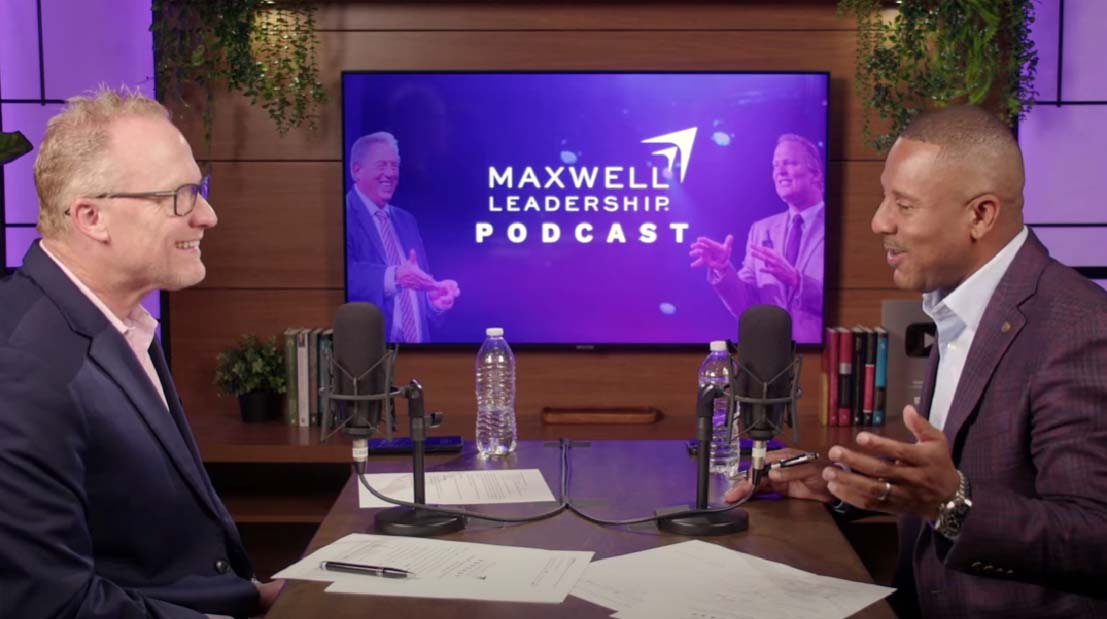
In this episode, Perry Holley and Chris Goede explore the performance power of aligned teams. They highlight the importance of leaders communicating vision, strategy, and individual roles frequently to create true alignment within teams. They also discuss the difference between agreement and alignment. Discover practical tips for clarifying team roles, measuring success, and ensuring everyone knows how their contributions connect to organizational goals.
BELAY Ad:
You know that feeling when you look at your financials and something just seems off? You can’t quite name it, but you know the numbers aren’t telling the whole story. Most leaders I talk to have been there, and here’s the thing: it’s not a you problem, it’s a visibility problem. Belay matches busy leaders with tailored financial solutions so you can stop guessing and start leading with confidence. Their vetted financial experts can handle everything from day-to-day bookkeeping to CFO-level guidance and forecasting for your business. And it’s fully customized to your unique needs. No long-term contracts, no offshore teams, no next available assignment. They personally match you to the right solution for your business. And if it’s not right, they rematch you at no added cost.
BELAY Ad:
Right now, BELAY has a free resource built specifically for leaders like you, the Financial Blind Spot Checklist. It helps you see exactly where your gaps are before they become costly mistakes. Text EXEC to 55123 to download it for free. That’s EXEC to 55123.
Perry Holley:
Welcome to the Maxwell Leadership Executive Podcast, where our goal is to help you increase your reputation as a leader, increase your ability to influence others, and increase your ability to fully engage your team to deliver remarkable results. Hi, I’m Perry Holley, a Maxwell Leadership facilitator and coach.
Chris Goede:
And I’m Chris Goede, Executive Vice President for Maxwell Leadership. Welcome, and thank you for joining. I wanna encourage you today, one of the great pieces of content that we have that we work with teams on is called Teaming for Success. If that’s something that you’re interested in, We would love to hear from you and work with your team. I want to encourage you to go to MaxwellLeadership.com/ExecutivePodcast. You can fill that form out there. You can download the learner guide, but you can also request to talk to one of our team, and we can talk through that content piece with you. Well, today we’re going to talk about why aligned teams outperform talented ones.
Chris Goede:
Now, you and I are both sports guys.
Perry Holley:
Mm-hmm.
Chris Goede:
We love sports. And this speaks right to that. Like, there are some extremely talented teams out there that, man, they’re just not aligned. And they’re— you take an aligned team and they’ll beat, you know, a talented team, man, any day of the week. And so the topic is great, especially when we move it into the organizational bent of it. And in today’s environment, many teams aren’t struggling because they have lack of talent. They’re actually struggling because people are just, Pulling in different directions, right? They’re unintentionally creating energy in different directions without even realizing it.
Perry Holley:
And I think I love that you added that unintentionally. I don’t think this is— this is not somebody who’s undermining your efforts or trying to drive a wedge or anything like that. But that is, are they actually rowing in the same direction? We use that analogy a lot in a room about people are either rowing in your boat or they’re watching or they’re sinking. I did have one guy yell one time, he goes, Perry, everybody in my boat’s rowing in the same direction. And I said, oh, rock on, way to go. And he says—
Chris Goede:
Wait, wait, you used the word rock on? I did.
Perry Holley:
I double pumped my chest and said, yeah, rock on. And got a good laugh in the room.
Chris Goede:
I bet.
Perry Holley:
But then he yelled back, they’re all rolling in different directions, but they’re all rowing, but they’re rowing— Sorry. Okay, that’s another class we have.
Chris Goede:
That’s right.
Perry Holley:
Yeah, that’s right. So everybody’s busy doing the best they can, but this thing of alignment got my attention. I was reading a book called Coaching for Clarity. Coaching for A-Change by Greg Giuliano. And he used the term about getting everybody aligned around what he called guiding stars. And that’s what I really wanted to get to. But he said, as a leader, your job is to align people around the guiding stars. An aligned team knows the answers to questions like these.
Perry Holley:
And this is what I want to discuss.
Chris Goede:
Yeah.
Perry Holley:
What is the organizational vision? What is the organization strategy? What is the team’s unique mission in support of the vision strategy? What is my role? responsibility, and how are we measuring success? I thought, well, this sounds simple, but I don’t see it being done a whole lot. I don’t know from where you sit, I’m excited to hear. It’s a pretty good roadmap though, if you think about it. Yeah, it really is. Vision, strategy, mission, individual role, and measurement, such as how success is measured. So he says that our job is to align people around these guiding stars. Why do many leaders assume that alignment already exists?
Chris Goede:
Yeah.
Perry Holley:
‘Cause I’m thinking that most of us think, Yeah, yeah, I got this. I got this. But in fact, if you’re still tuned in, thanks.
Chris Goede:
Well, listen, I actually, as I was looking over our content for today, I thought, man, those are 5 questions that I need to work on. Well, I like that. I’m going, I really need to go back and make sure that I am repeating the vision enough. I am laying out the strategy, just a great checks and balance. I got a little bit nervous, ’cause I thought you were gonna ask me to answer each one of these for our current business, and I don’t know that I would’ve been able to do that. Then how can I expect my team to be aligned to that? And I think, let’s just start with vision and strategy for just a minute. As leaders, we live in that every day, right? Like, we know what the vision is, but not everybody on your team knows that. And you often talk about how often we have to communicate as leaders to get people to hear us.
Perry Holley:
Well, I told you, I was the January kickoff guy. I mean, I was the best vision and mission presenter of all times. And I went, and then John Maxwell says, well, when did you say it? I said, in January, they got it. And he’s, they don’t got it. They don’t got it. No.
BELAY Ad:
Yeah.
Perry Holley:
You gotta keep saying, how often? Like all the time.
Chris Goede:
Yeah. All the time. Yeah. So you heard that here. They don’t got it from Perry and Chris. And that’s directly from John Maxwell, by the way, not Perry.
Perry Holley:
So we’ll— He probably didn’t say it that—
Chris Goede:
Well, he probably did. He probably did. But here’s what I wanna talk about. So the vision, this is really interesting, right? It’s the destination of where we’re going. The strategy is the route that we plan on taking. How often are you talking about that with your team, and can they repeat it? So the first thing is, is it simple enough for them to repeat? Because if not, let’s simplify it. Second, to Perry’s point, we need to be repeating that often, because when you think about agreement and alignment, agreement is the intellectual side of it. Okay, I understand that.
Chris Goede:
I agree to that. The alignment is the behavior that you see from your team living those 2 things out. So if they don’t have the intellectual side of it because you’re not doing a good enough job of repeating it and bringing that out, then you’re missing the boat because the behavior never shows up. And we talk about in leadership development that we’re in the behavioral change business.
Perry Holley:
Mm-hmm.
Chris Goede:
And there’s many ways that you can do this. And number one, I think here is, Making sure that just because you know it and you live it and you think about it, that your team also knows it, thinks about it, and is living it out. At one point in time, Mark Cole, our CEO, came in and said, I have a $100 bill for anybody, this was around our values, can name our 7 values. The leadership team, $100 bill. He put it back in his pocket.
Perry Holley:
Oh no.
Chris Goede:
Right? We work for the number one leader in the world, leadership organization. So, I know if we struggle, you do as well.
Perry Holley:
Yeah. And you had done a great job. There must have been that $100 miss that you speak of because every Monday on the team call, we recite our mission and vision.
Chris Goede:
Yeah.
Perry Holley:
Yeah.
Chris Goede:
And our values.
Perry Holley:
And our values. And then we talk about one example of a value that you saw this week. So yeah, but he talks about asking 3 people on the team to describe the vision in one sentence. And if you get 3 different answers, well then you, realize that there’s a gap there, a communication problem. He also talks about practically just repeating the vision so much.
BELAY Ad:
Yeah.
Perry Holley:
He said many of us, about the time they start to get it, we stop talking. I used to make fun of the CEO that was so great at this. We’d be at a Starbucks ordering and he could look and he said, oh, that caramel macchiato, that reminds me of our 7 tenets of our vision. And you go, how can you put vision into a Starbucks order? But I guarantee you, every single one of our leaders could recite Wow. Vision and mission, because he kept saying it all the time. I thought it was overkill, but it wasn’t.
Chris Goede:
Yeah.
Perry Holley:
We were just, we don’t get it and we need to get it. Yeah.
Chris Goede:
And when the team gets it, there will be, again, like I talked about, there’ll be agreement in it and then you’ll have alignment, even if they have a different thought or opinion. Amazon has this leadership principle that I read one time that says, and you come into a leadership meeting or it says, hey, have a backbone, disagree, but then we’re gonna commit. And that’s what they’re saying is like, hey, let’s have conversations around this. Let’s make sure we’re on the same page. Let’s make sure you understand how it’s tied to a Starbucks order. And then get into the place to where we can all be in alignment of how we’re acting and behaving this out.
Perry Holley:
That same CEO told me, told our 7 senior execs in our meetings, he goes, I want you to disagree. I want you to fight for your position, for your point of view, But when we make a decision and you don’t agree, I don’t want you going out on the floor and telling your team, well, I didn’t agree with that.
Chris Goede:
I didn’t—
BELAY Ad:
No, no.
Perry Holley:
When we leave this room—
Chris Goede:
That’s good.
Perry Holley:
We’re in alignment. That’s where I learned that word. He said, I don’t care if you disagree or not, but we are in alignment. You had your voice and you lost, and now you’re in alignment. And I thought that was— I didn’t realize how strong of instruction that was, is that any— ’cause I’ve been on teams where somebody would go along and say, yeah, I didn’t like what they did. I’m not doing that. But all right, they had this meeting.
Chris Goede:
And for you in that environment, I’m sure as long as you were able to be heard, hey, my point of view is this, and you put it out on the table, well then you leave the room as a team and you’re unified in that alignment.
5 Levels of Leadership:
What would change in your organization if every leader at every level took ownership of culture, communication, and results? Not just Not just the executives, not just the high performers, but everyone. That’s what we build at Maxwell Leadership. We don’t just train leaders, we build leadership systems that scale across teams, departments, and organizations. From developing mid-level leaders to strengthening executive alignment, our programs help you create a culture where people lead well wherever they sit.
5 Levels of Leadership:
See how leadership can become your competitive advantage by getting started with a free tool.
5 Levels of Leadership:
The 5 Levels of Leadership Field Guide is based on John C. Maxwell’s number one New York Times bestseller and includes team mapping strategies, leadership self-assessments, and a clear model for turning followers into leaders. Download it for free at 5LevelsOfLeadership.com. That’s 5LevelsOfLeadership.com.
Chris Goede:
All right, so the next 2 questions that he talks about, they get a little personal. Okay, next 2 questions. So what’s the team’s unique mission? And then what’s my role in it? So why does then the role clarity matter so much for our team in alignment?
Perry Holley:
Well, yeah, great question, ’cause the mission is really the translation of the big picture about to saying, what do we do? And what are we specifically— what do we exist to do here? And then more important, it’s going to get down into what is my role in doing that? And I think why it’s so important is that if you’re not clear on— and this makes it, even as I’m saying it out loud, it kind of sounds a little silly. Do we really have to get down to what is it we do? But if people are not clear on what you do as an organization or as a team, they’re going to make up their own version of that and they’re going to assign whatever it is they come from to that. Well, I guess what we do is this, so I’m going to do that.
Chris Goede:
That’s right.
Perry Holley:
Instead of you setting— it’s almost like the core value. We have core values. Well, I can’t let you determine what integrity means. Here’s what we say integrity means. Now we all operate under this definition of integrity. And same thing here. This is what we do and your role in what we do is this. Do you see it that way?
Chris Goede:
I do. My challenge for our listeners would be, when’s the last time that you asked a team member to explain in their own words what their role was for the organization? How does it play into the bigger picture? And I love what you’re saying, because when there’s a lack of communication around this, here’s the deal. We often, as human beings, we fill in the void with negativity. So don’t let that happen. Like, drive it. I was on a call last week with Ryan Leak. Ryan Leak and I were talking about culture, and there was some people on the call, and an individual said, is there a difference between individuals being engaged and bought in nonprofits as in for-profits? And so just like, Ryan being a good communicator, he said, Chris, why don’t you take that one first? So—
Perry Holley:
I have a point of view.
Chris Goede:
I have a point of view. What do you— he beat me to it. But here’s what we talked about. And Ryan and I kind of fed off each other for a little bit on this. But basically, yeah, your nonprofits, they’re there for a mission and a vision and whatnot. Now, don’t ever forget, people join companies, they quit people. So we still have to have good leaders in there. But what we were talking about is, yeah, nonprofits are probably, more likely to tell individuals how what they do impacts the greater good.
Chris Goede:
On the for-profit side, it is all about the leader being able to communicate it.
Perry Holley:
Mm-hmm.
Chris Goede:
Because for the most part on the for-profit, unfortunately, some people just look at it as a J-O-B. And you have to be, like you’re talking about, you have to be communicating and saying, hey, Perry, the fact that you take time to prepare, and put your thoughts together to give us an outline to talk about on these podcasts has allowed us to impact however many millions of people, right? Like, you probably could assume that, but how different is it for—
Perry Holley:
Right.
Chris Goede:
You or I to send each other testimonials saying, this is why we do what we do, your role here. It just completely changes our thinking in regards to where we’re at with the content and what we do. So I would just encourage you to do that.
Perry Holley:
We do that all the time. You sent me one this week. Oh yeah, so good. Somebody, he’s trying to encourage me on writing the podcast and he said, oh, here’s one you didn’t know about. This guy sent this in. And I’ll get one on LinkedIn. I’ll send it over to Chris. People are talking and I thought, that’s good.
Perry Holley:
A practical move that Giuliano in the book recommended was you should be able, as a leader, can you say to everybody on your team, your role matters because… And answer that, because if you can’t finish it, I’m sure they can’t finish it. Why does your role matter? And going back to alignment is that, and I think this didn’t come up in the, just hit me about priorities. Generally, people are struggling about what are the priorities I should be working on? If I’m really clear about what we do and why we do it and what my role is in what we do, it’s probably easier for me to determine my priorities. Should I be working on this or that? Say, what do I do? What do I get? What I’m employed to do is— How do I, yeah, to do that? Hey, real quick, you know something?
Chris Goede:
thought about in that example of us and podcasts. And title today is Why Aligned Teams Are Better Than Talented Ones. That means you and I aren’t very talented, but we’re aligned. We are aligned in why we do this. That’s exactly right. Very well aligned. Yeah.
Perry Holley:
Last question from Giuliano in the book was, how are we measuring success? How does a leader know the team is aligned versus assuming it is because everyone is busy and positive and all that is? What’s the measurement?
Chris Goede:
Well, let me first say this. There are so many distractions in teams and organizational development. I was reading an article where it says 64% of leaders feel like their team is being pulled in too many directions. I feel that way about our team, and I am continually asking, what do we need to get rid of? Like, what do we need? Why are we— where are we? Like, there’s just things that continually come up. And so one of the things I’d also say to leaders here is if you don’t feel like the team is aligned, then don’t create something new to try to drive alignment. I actually would challenge you to say, man, maybe you need to be eliminating things to create better alignment. Because a lot of times people get busy and they think busyness is alignment. They think, oh man, everybody’s working hard, they’re working together, they look identical in what they’re doing and they’re producing And that is not it because like you mentioned earlier to one of the people you were coaching or was in one of your classes where he’s like, oh yeah, they’re all rowing, they’re busy, but they’re going a completely different direction.
Perry Holley:
I think we’ve talked on the last podcast last week about feedback, but how is it? Is there defensiveness going on or confusion or finger-pointing? We think that that could be a reaction to feedback. It could also be, I thought I was doing the right things. We’re not in alignment. There’s some gap upstream either with the vision, the mission, my role here, and how we’re measured that’s causing some stress that’s going on.
Chris Goede:
Yeah. And let me go back to something you said earlier. One of the things we want to challenge you to do is, can they articulate it specifically? I’d love if they can articulate the mission and the vision of the organization, but Man, for me, if they can articulate how their role plays into that, that’s the differentiator for, I think, them being engaged and being aligned to what we’re doing as an organization. So I would just encourage you, find ways to check in, find ways to ask questions that align with what we’re talking about, no pun intended, in order to make sure that your team is aligned with what we’re trying to go after. Because a unified force, man, when they create momentum, back to the sports, and we’re talking about a team that’s aligned and creating momentum, it doesn’t matter how talented that the opposition is or the competition is, but it’s only gonna happen when you’re the one leading that and communicating it often.
Perry Holley:
Well, my big takeaway is that alignment isn’t some document you produce. Answering these 5 questions, as simple as they may seem, they are not easy. And making sure that people can answer them consistently in their on the same page. In my book, I thought it really is how alignment gets structured.
Chris Goede:
Yeah. For me, as I wrap up, just 2 quick thoughts. Role clarity is so important. I want you to make sure that everybody understands and can bridge the gap between the vision of the organization and what they show up to do every day. And if they can’t, I think you’re missing out on the opportunity to impact them, but also then their work impact the organization. And then secondly, we think about efficiency a lot, and I know we’re like, well, I mean, how efficient are we? How quick can we do this? How quick can we do that now with technology and AI? And also, so efficiency is doing the work faster, but alignment is making sure that it’s in the right direction, that it’s in the right work, not just getting stuff done and being efficient, whatever, but is the work that we’re doing— The efficiency is determined by, is it in alignment with what’s leading to the goal? You got to close those gaps. You got to be thinking about that. We like to talk a lot about gaps in leadership, and that’s our job.
Chris Goede:
That’s our responsibility as a leader, is to make sure that we’re watching and aware of gaps of where our team is not aligned with what we all have agreed to in the closed doors or the mission and vision, and what’s showing up at work every day.
Perry Holley:
Fantastic. Well, as a reminder, if you’d like to get a copy of these 5 questions, you can also get John Allen’s book, but go to our learner’s guide. You can find information about that, our other offerings, The 5 Levels of Leadership, or our other podcast family members.
Chris Goede:
Yes.
Perry Holley:
You can do all that at MaxwellLeadership.com/ExecutivePodcast. You can also leave us a comment or a question there. We love hearing from you. Very grateful you spend this time with us. That’s all today from the Maxwell Leadership Executive Podcast.
Transcript created by Castmagic.