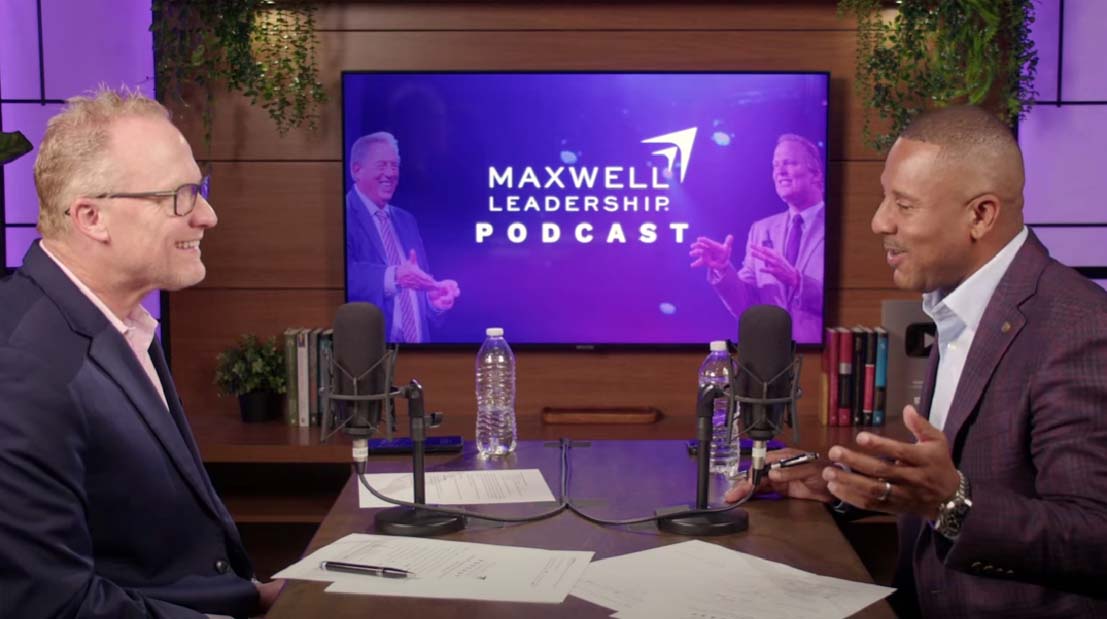
In this episode, Perry Holly is joined by author Don Yaeger to explore the power of storytelling in leadership and business communication. They discuss how great stories should always center on real human experiences and how effective storytelling creates stronger connections with teams and audiences. This episode offers practical guidance for leaders seeking to make stories more engaging and applicable, highlighting the importance of intention and personal connection over strict formulas.
Belay Ad:
There’s a difference between handing off a task and handing off ownership of it. Most leaders never make that leap, and it costs them. Effective delegation isn’t just about getting things off your plate. It’s about trusting someone else to own the results, whether that’s an executive assistant running your calendar and inbox or a bookkeeper owning your financials from the ground up. BELAY personally matches leaders to US-based, highly vetted assistants and bookkeepers. Who take real ownership. The right person matched to how you work, not just the next available one. No offshore teams, just flexible fractional support built around you.
Belay Ad:
Their new free resource, Lead Higher: The Effective Delegation Playbook, walks you through how to delegate well to both an executive assistant and a bookkeeper so you can lead at the level you’re called to. TextExec. To 55123 to download it for free. That’s EXEC to 55123.
Perry Holley:
Welcome to the Maxwell Leadership Executive Podcast, where our goal is to help you increase your reputation as a leader, increase your ability to influence others, and increase your ability to fully engage your team for a Remarkable results. Hi, I’m Perry Holley, a Maxwell Leadership facilitator and coach. And Chris is not here. Normally he would say he’s here. He’s not here. We have put Chris on special assignment. I can’t tell you more about that, but he’s not going to be here for a couple of weeks. And while I am sad that he will miss this, I’m glad to be here because we’re with one of our good friends today.
Perry Holley:
I think you’re going to really enjoy this. Before we get to that, Let me remind you that we have a learner guide for this issue, for this episode. We have all the listings of our offerings and places where you can leave comments and questions. You can do all that at MaxwellLeadership.com/ExecutivePodcast. Well, I mentioned we have a good friend with us today, and he’s been with us before. Don, you might be the first repeat return guest for multiple episodes, but we have Don Yaeger. He’s just written a new book, which I’m pretty excited about, called The Business of Storytelling. And I’ve been talking with Don for years about his teaching he does on storytelling, telling him about trying to help corporate executives and how they communicate better with story.
Perry Holley:
And Don said, I’m gonna solve that for you. I’m gonna write a book for that. And so we’re excited to talk about the book. I’ve already invited Don and asked him to stay for 2 episodes. So we’ll do a little this week about storytelling. And then next week, you wanna come back because we wanna dig into his 10 elements of story and really help you the practical side developing story to help your communication. If you don’t know Don Yeager, as I said, he’s a good friend of Maxwell Leadership and has been a part of a lot that we do. But Don started with Sports Illustrated magazine, associate editor with Sports Illustrated, and then moved into writing books and teaching leadership and being in all aspects.
Perry Holley:
He’s very close with John Maxwell himself and became a part of what we do. And Don is part of the National Speakers Association. Matter of fact, he’s in the Hall of Fame for the National Speakers Association. So he’s very well known around the world as a speaker. He’s a 14-time, just got number 14 about 2 weeks ago, 14-time New York Times bestseller. And again, just a great pleasure to me because he’s a personal friend to me. And I’m so excited to have you, Don. Welcome to the podcast.
Don Yaeger:
Perry, I love you. And this conversation will be so much better because you put Chris on special assignment. I mean, like, I mean, few thought leaders can really work together without that eye candy that he that he tries to be, you know, when he’s on this show.
Perry Holley:
He does. Our eye candy is definitely gone from this. If you’re watching on YouTube, you definitely miss Chris’s pretty face. But, but we’re going to be good. I’m kind of jealous every time I’ve seen you several times in the last couple of months, which was one of them was really good because you gave me a copy of the book. However, you’re, you’re here, you’re there, you’re traveling, you’re speaking. I know you’re in a hotel room today. You’re on the way to, to Europe tomorrow.
Perry Holley:
I’m determining— I think I’m going to start thinking about you every time I see a Dos Equis commercial, that you are the most interesting man in the world. What are you up to these days, and are you just on the road all the time with this, with the new book?
Don Yaeger:
Well, the new book has really got a lot of traction. There are a number of places where— the beauty of it is, you know this, Perry, and you and I have had this conversation, if you ask a leader of any kind, a salesperson of any kind, an entrepreneur of any kind, if you said, would you be better at whatever you do if you could tell better stories? I have never had anyone say, nah. It is always a yes. And if there’s a yes, then there’s an open door for me to talk to them about how are you doing it? What could we learn? What, what have I learned in 30 years of studying great storytelling and Having guys like John Maxwell call me, uh, the best storyteller of our generation. Um, I, I don’t know if I believe it, but John’s— John will gladly say it. And, uh, if he does, I will hang on that one all day long. So yeah, yeah, for sure. I’m on the road doing speaking and, um, continuing to work on other books.
Don Yaeger:
I’ve got a couple more in the, in the hopper.
Perry Holley:
Well, I, I don’t doubt that. They keep popping out. And I was excited to see your number 14, uh, bestseller, uh, announcement the other day. So how exciting. That is for you. So good on that. I’ll tell you, as you and I saw each other a few weeks ago, I’ll tell you, storytelling is part of the secret sauce of my success. I wonder if you think, are there natural storytellers? And I know you say in the book, and I want to get into this, that you say it is a learned skill for sure.
Perry Holley:
But are some people just better at it than others? Because it seems to come more naturally to me, but I have been practicing public speaking as you have. I’ve been practicing it for years and years. I find Story just works there. But I’m thinking as an executive in my executive life, I’m not sure I embraced it as much. What’s your— where do you come down on born storytellers and learned storytelling?
Don Yaeger:
I will grant you that there are some people that are more comfortable telling stories, but I will tell you that I’ve interviewed some of the best storytellers in the world today to talk to them about how they became so good. That it felt like time stood still when you were in their presence. And every one of them tells me what you just said. I know it works and thus I work on it, right? And so good storytellers are working on it every day. And so I will, there may be, as I said, some people who are more, have the gift of gab, but that does not mean they are great storytellers. Okay. Great storytellers are intentional. It’s a great John Maxwell word, right? They’re intentional.
Don Yaeger:
They build things with structure, with some content that they know that’s gonna work. They know how to build rhythm into what they do. Good storytelling is a skill.
Perry Holley:
I’m learning that now. I wanna confess that I thought one of my real strengths is storytelling, but I was doing a session lately, recently for an executive for his team, and I’d done 3 or 4 sessions over a couple of months. And I always ask, I said, if you have any feedback, anything I could do that would make it more effective for your team? And I’m always hoping there’s nothing, but I know there could be something. And he says, wow, no, it’s great, Perry. However, your stories are so good, but you just have one after another, after another, after another. If I’m making 3 points, I use 3 stories. And so as we go through this, I’d like you to give me some coaching on, is there too much? Can you do too much story in there because that really hit me and I, he, I, he’s right. I do.
Perry Holley:
I, everything you say can trigger a, oh, it reminds me of a time and I go into a story, but it, it can be overwhelming, I guess, to the audience if you have too much. Have you seen that?
Don Yaeger:
I don’t think so because again, in the true structure of a, of a, I mean, again, we’re gonna talk today, Perry, about the business of storytelling, right? These are, these are not campfire stories. These are not stories you tell your children at night. These are stories you use to move people to activate, right? These are stories you are building to kind of create opportunity. And in that case, every story, and we’re going to get into this, I know, you know, needs to be, and the way you tell it is story. Here’s the story. Here’s the lesson I learned from it. Story, lesson, application, and here’s how you can apply it. So if you follow that pattern while speaking in story, right? Or telling people stories, I’m gonna tell you a story, but it’s not gonna be, it’s not gonna end generically.
Don Yaeger:
It’s gonna end with a lesson that I learned and how you can apply that lesson and that story into your business to make you better, right? Or into your life to make you better. So if you follow that pattern, I think you could tell stories all day long because each story takes you someplace. And yes, I mean, they may think, oh, I got story after story, but at the end of the day, what they really got was an application after application.
Perry Holley:
Right. I just don’t want to exhaust anyone with the story, but I think to your point, maybe it’s not ending with the— I’m giving an example. Oh, that reminds me of a time. And I don’t know that it actually brings the lesson to them, but let’s dive into the specifics because I love— you start the book Uh, you made a comment that your, your dad, uh, told you this, uh, people that still tell stories, that, uh, real great storytellers will change the world. Now I know he was a pastor, right? Was that— and so he spoke on a weekly basis on that. Uh, when did you realize he was right? That— because did that just come on to you right away that you, uh, the storyteller?
Don Yaeger:
Yeah, Perry. Um, you know, it’s funny, my, my father did talk all the time about storytelling and he was fantastic at it. Yes, as a preacher, He was quite good, but I never really paid attention to what he said to me about how important storytelling was until one day. It was Thanksgiving and I was a freshman in college and I had come home to spend the time with my family. And my family loved— my father, who was a preacher, my mom, who worked at a charity, loved to fill our house with people. on holidays, especially on the holidays. And so every holiday was just a massive meal. It was, you know, it could be 100 people.
Don Yaeger:
And on this particular Thanksgiving Day, we’re just about ready to eat. And there literally is probably 100 people when my father stands and clears his throat and he starts telling a story. It’s a story about just an encounter he had a couple of weeks earlier with a young man. at a coffee shop. And but the story was filled with great drama. It had unbelievable detail, good dialogue between my father and the young man. And then just as it was coming up to the, you know, the close of the story, my father pointed to a back table and he welcomed the young man to our midst. But that day, instead of watching my father, I watched the room watch my father.
Don Yaeger:
Ah, yes. And that’s when you know, that’s when you really get hooked is when you see how other people react to a good story, right? This kind of leaning in, waiting on the next sentence. And that began my journey. Like literally that afternoon, I started talking to my father. How do I learn? How do I, how do I gain this skill? What could— what do I have to do? And 30 years of research and time and Literally sitting with the best to try to understand how they do what they do has led me to the opportunity to write the book that I’m so glad you enjoy.
Belay Ad:
Here’s what most leaders don’t find out until it’s too late. Companies have lost $223 billion to culture-related turnover in 5 years. 70% of change initiatives fail not from bad strategy, but from a culture that couldn’t carry it. And disengaged employees quietly cost organizations $550 billion a year in lost productivity. The problem isn’t that culture doesn’t matter. It’s that most teams never measure it until something breaks. The Maxwell Leadership Culture Diagnostic changes that. In 2 weeks, you get a real Culture Health Score, a high-risk flag report, and a 30, 60, 90-day action plan, plus an executive debrief with your team.
Belay Ad:
Want to run a culture diagnostic at your organization to get real data about how you are doing? Go to MaxwellLeadership.com/Diagnostic to learn more.
Perry Holley:
Yeah, I did. And it was, it’s an easy read too. It’s got a lot of story in it and it, uh, uh, helps make the, the concept stick. I’ll tell you, I, I noticed you had the, you start with universal truths of storytelling. One thing I thought about as I was going through those and getting those, understanding what those were, I’m gonna read them and I’d like you to comment on, you know, leaders specifically, business people, my experience. And I do teach, uh, storytelling on a, on a small, much smaller scale than you do, but it comes up in, a leader’s voice and how do you have a voice that people will listen to and how do you solidify your influence with people and how story can help many, many business leaders. And actually, the higher they go, the worse it gets. Think, I’m telling them the facts.
Perry Holley:
Why do I have to formulate a story? But then when I look at the universal truths, number one says the best stories are always human. Love that universal truth. Number 2 is the story behind the story is the story. Love that. Number 3, the debate is over. It’s not a soft skill. So I thought that’s a universal truth for sure. Love that.
Perry Holley:
And the best stories don’t follow a formula. Would you just think about the business leaders that we see today and how these universal truths have come to reality for you? Can you put some words around how these, how we can help leaders embrace story more?
Don Yaeger:
Sure. Well, I mean, you know, you opened that series of discussions there around the idea that many business leaders, I’ve got the statistics. I know that what we’re doing works. You know, the numbers show it, right? Well, numbers, they don’t last, right? People don’t remember numbers. They might occasionally, but what they remember are when the numbers actually lead you to understand how it affects people, right? That’s why that first one is so important. The best stories are always human. It’s not about how many widgets we, we produce this quarter. It’s what that number of widgets will mean to the people we serve, right? Yeah.
Don Yaeger:
So tell me the story of someone who uses our widget to, to, to make a difference in their world, and suddenly I’ll understand how important it is that we do more of that. Right? So, so bring it, bring it to life. And then the second one, the story behind the story is always what matters. Yes, statistics are important, but the, but the truth is that if you can add story to your statistics, you give those statistics a heartbeat, right? Now those numbers, so you aren’t just telling me, you know, what you think the story is. You start, if you start peeling back the onion, okay, if that’s the story I think, why does it matter? Who does it matter to? What would it mean if we were unsuccessful in doing that exact same thing next quarter? Right? As you start asking this, the behind-the-scenes questions, you’ll find why those numbers are significant. And so I really think that’s an important tool. For people to recognize. And then as you said, the last one there, this doesn’t follow a formula.
Don Yaeger:
There are a lot of people that wanna go to the hero’s journey or, or some of the many formulas that are out there. And, and at the end of the day, that’s not, that’s not how the best storytellers, that’s not how they play. They, they don’t, they don’t believe that a formula kicks out a great story. What kicks out a great story is intentionally delivering it with, you know, a touch of emotion, with good use of pauses and your— the inflection in your voice, the pacing of your conversation. All of those things play in and you have to understand what those are in order to be great. It’s not a formula, but there are a series of habits that make the best storytellers great.
Perry Holley:
You mentioned, I thought this was interesting, that trust is built through mistakes as much as through successes. And that vulnerability, I think, is where you’re going with that. But what’s your— again, this is something that business leaders don’t naturally want to do or don’t naturally lean to do, is to share about mistakes or failures. But it does really affect how people hear a story, don’t you think?
Don Yaeger:
Completely. I mean, people want to know that they’re working with people like them, right?
Perry Holley:
Real
Don Yaeger:
people. And so, you know, recently I was working with an executive, a very senior executive at Microsoft, and he was taking over a new division and he was in his first meeting with this new division and they all perceived him because of all the things he had achieved to be this distant human, right? He was going to be difficult to touch. And so I worked with him on this exact topic, and he ended up opening his presentation to these employees by talking about something that had happened just a week earlier. He was at an event. He was deep into a conversation on a phone. He had to really use the restroom. And so he raced in and he’s looking around. He’s like, there are no urinals in here.
Don Yaeger:
Why? Why? Why not? And suddenly it hit him when somebody comes out of the stall that he’s in the women’s restroom. Right? And he said, so sometimes you can get so caught up in what you’re doing that you don’t pay attention to the details of where you are. And, but that moment of humility, right? This moment of, of, uh, you know, a grown man standing in the women’s restroom because he wasn’t aware of everything that was standing up for him, just allowed him and them to say, oh gosh. I mean, I like that dude. Like, he is like me. And when you are able to put yourself on the same playing field as those that are listening to you, boy, they hear you differently. You earn the right to be heard differently.
Perry Holley:
Oh, wow. What a great— repeat that. Earn the right to be heard differently. What a strong statement. You remind me, I’ve heard John Maxwell say, if you finish talking to your team and they say, so what? You’ve lost them. If they say, me too, then you’re really making a connection. And that’s what that story says. I could do that.
Perry Holley:
I could see me doing that. You’re a real person to that. I was intrigued by the story behind the story is the story, but I wonder if that’s kind of like, how do a leader— what does that mean to a business leader when they’re kind of thinking of a story to tell? Is there a The how and why? I mean, tell me more about what they would do to get the story behind the story being the real story.
Don Yaeger:
And so let me tell you about Johnny down at the 7-Eleven, who owns that 7-Eleven, who we serve every week. And he has an entire neighborhood that comes to his place. If we don’t serve him right, if we don’t deliver for him as he should, it’s not just us. An entire neighborhood gets let down, and we owe it to Johnny and all those people that live there to make sure that what we’re sending into the field are the very best. That’s the story behind the story.
Perry Holley:
Yeah. So you dig making it— and is this making it more, uh, applicable to their specific situation, uh, as you build out? Just not having a generic story but actually making it meaningful. Why is that important to this audience at this time?
Don Yaeger:
Yeah.
Perry Holley:
I look forward on next week digging in. A couple of things I took away from the elements, I thought about research and understanding the audience more. That’s what I think you were just addressing. We’ll talk more about that next week. Before we close this one though, another one of the key elements was that there is no formula, but I’m just telling you, the people I’m dealing with, I’m sure you, they love templates. Leaders love templates. Is there a simple structure? I know we got the elements we’re going to talk about next week, but is there a simple structure just to get, if they’re going away this week, From our conversation and they’re going, I’m gonna think about story. How would you coach ’em to think about it?
Don Yaeger:
Well, I would argue that the best way to tell a story is to think to some of the very universal truths you’ve leaned into, right? How do I make it human? How do I— so I do agree, every leader loves templates, which is why that’s one of the universal truths. Because if you wanna do that, yes, that’s simple. Yes, it’s accessible on the internet. You can grab and immediately start trying to fill in the blocks of the hero’s journey and figure out how do I spit this out at the end. But the truth is that if that’s what you do, it could be very stilted. It can feel like you’re trying to follow something as opposed to you are bringing your genuine self. To the conversation. And so if you want to tell stories, stories come from your heart and they’re delivered to their heart.
Don Yaeger:
So look for stories that you can, you can tell with heart. And, and Perry, if I could share one last thing related to all that, it’s the importance of stories in the age of AI. You know, in the age of AI, everybody thinks, you know what, I’m just going to type in what I know about myself or my situation, And let AI kick out a story for me. AI can give you a story, and in some cases they’re reasonably good. But what they don’t have, they don’t have emotion, they don’t have heart, they don’t, they don’t have empathy. They don’t— I mean, there’s a lot of things AI can do, but what AI can’t do is take your story and create it in a way that it can really draw other people to you. which allows you to do better business. And that’s what, you know, we say all the time, people like people like them.
Don Yaeger:
And that’s true, right? People like people they like, excuse me, and then people like people like them. So, you know, you become better if you are able to make yourself one of them. And the best way to do that is through story.
Perry Holley:
Super, super. Do you have a favorite storyteller?
Don Yaeger:
So, yeah, my favorite storyteller is actually, but it’s in the fiction space, but I’ve gotten to know him over the years, is John Grisham.
Perry Holley:
Oh, wow. Yeah.
Don Yaeger:
He is just the way he paints pictures with words, right? And he does it on the page, but if you’re lucky enough to be in a room with him, he does it verbally as well. He just makes you feel like you are in the middle of the scene, the setting. And that ability, again, that’s another thing AI can’t do that for you, right?
Perry Holley:
That’s right.
Don Yaeger:
But if you can tell me, instead of you generically talking about pushing your grandchild down the street, you know, into a ditch, which you mentioned, thank you very much for mentioning. You did say that they’re headed toward the ditch. You just gotta let it happen. I mean—
Perry Holley:
Okay. I think I pushed them in the ditch.
Don Yaeger:
No, but you let it happen. You let them go in the ditch. Good, good grandparenting. Great job. Um, but if you, instead of telling a generic story about it, tell a story of you most recently out on the street working with your grandchild, like make it, make it real, have you in it and your, your concerns for your grandchild. And, you know, now it’s not just a story that we all can relate to. And now it’s your story. That I feel like I’m part of because I’ve done the exact same thing.
Don Yaeger:
So use real stories. There’s a real, real power in that. And so, yes, I would, I would say one of the things I love about Christian is his ability to do that.
Perry Holley:
I love that example. And I’ve read a lot of stuff, but I can’t imagine in person being able to take that from the page to real life, that he actually has that, that skill. That’s wonderful to hear. Oh, you’re my favorite storyteller, and I’m really grateful you spent the time today. I’m looking forward to continuing the conversation next next week. Just a reminder to everyone here that if you’d like the learner guide for this issue, you can get that as well as leave comments or questions or learn about our other offerings. I didn’t mention from at the top, but Don also has an award-winning podcast, the Corporate Competitor Podcast. He takes anybody in the corporate space and what they learn from sports, either high school, college, or professional sports, and brings out those leadership truths.
Perry Holley:
I think you would really enjoy Don on that podcast. You can get all that information about those podcast and about our other offerings at MaxwellLeadership.com/ExecutivePodcast. We love hearing from you, and we’re very grateful you’d spend this time with us today. That’s all from the Maxwell Leadership Executive Podcast.
Transcript created by Castmagic.