Leadership development is the ongoing process of growing into a leader who brings clarity, steadiness, and intention to the people they lead. It turns a manager who was handed a team into a leader people would choose to follow, through practice rather than promotion. Most leaders are asked to do more before they feel ready for it, whether a new manager running her first performance conversation, a director suddenly responsible for other people’s decisions, or an executive whose calendar leaves no room to work on how he leads. The organization behind them faces its own version of the same problem, where growth either gets left to chance or built on purpose, with a plan and some way of knowing whether it is working.
What you’ll find
- What is leadership development?
- The stages leaders grow through
- How leadership development takes shape in everyday work
- Types of leadership development programs
- Leadership development for senior leaders
- Frequently asked questions
What is leadership development?
Leadership development is often mistaken for leadership training, a confusion that matters because the two get budgeted and measured differently. Training is an event, a workshop or course or program with a start date and an end date. Development happens around and after the training, as a leader takes what they learned into the next hard conversation, the next hire, the next decision they would rather avoid. Organizations that count attendance as development tend to keep promoting managers who were never developed as leaders.
A second distinction sits between the individual and the organization. Growing one leader means helping a specific person get better at listening, deciding, and developing the people around them. Growing an organization’s leadership means making sure there is always someone ready for the next open role, which takes a system rather than a series of individual efforts. Most companies need both, planned in different ways.
Both kinds of growth take longer than a program cycle. John C. Maxwell’s explanation, that leadership develops daily and not in a day, has held up for decades because the influence a leader carries is earned in small interactions over time, one conversation and one decision at a time, with no title or credential able to shortcut it. Development works less like a project with a completion date and more like a habit a leader keeps.
Kept up, the habit changes how a team experiences its leader from one week to the next. Leaders who keep growing communicate with greater clarity, set direction more effectively, and recognize when a change is needed so they can keep leading in a way that fits the moment. Their teams feel three effects in particular.
- Trust grows when leadership feels clear, steady, and dependable.
- Performance rises as teams gain stronger alignment and confidence in the work.
- Growth continues as leaders stay responsive and keep developing the people they lead.
For an organization, the same growth shows up as retention, as people stay where they are being developed.
The stages leaders grow through
Development is easier to plan with a map of where a leader is and where they could go. Maxwell’s 5 Levels of Leadership provides one, describing why people follow a leader at each stage and what it takes to move to the next.
- Position. People follow because they have to. Development at this stage means learning that the title is a starting point rather than the influence itself.
- Permission. People follow because they want to. Growth here comes through listening, connecting, and earning trust.
- Production. People follow because of what the leader has done for the organization. Credibility comes from results, which the leader learns to produce through the team rather than alone.
- People development. People follow because of what the leader has done for them. The leader’s work shifts to growing others.
- Pinnacle. People follow because of who the leader is and what they represent, earned over years at the previous four.
In practice, the map tells a leader, or the organization developing them, what to work on next. A manager still relying on her title needs relationships more than another strategy course. A leader producing strong results alone needs to learn to produce through others before a bigger role makes the limits visible.
Related reading: 4 Phases of Leadership Development maps what to expect as a leader moves through each stage.
How leadership development takes shape in everyday work
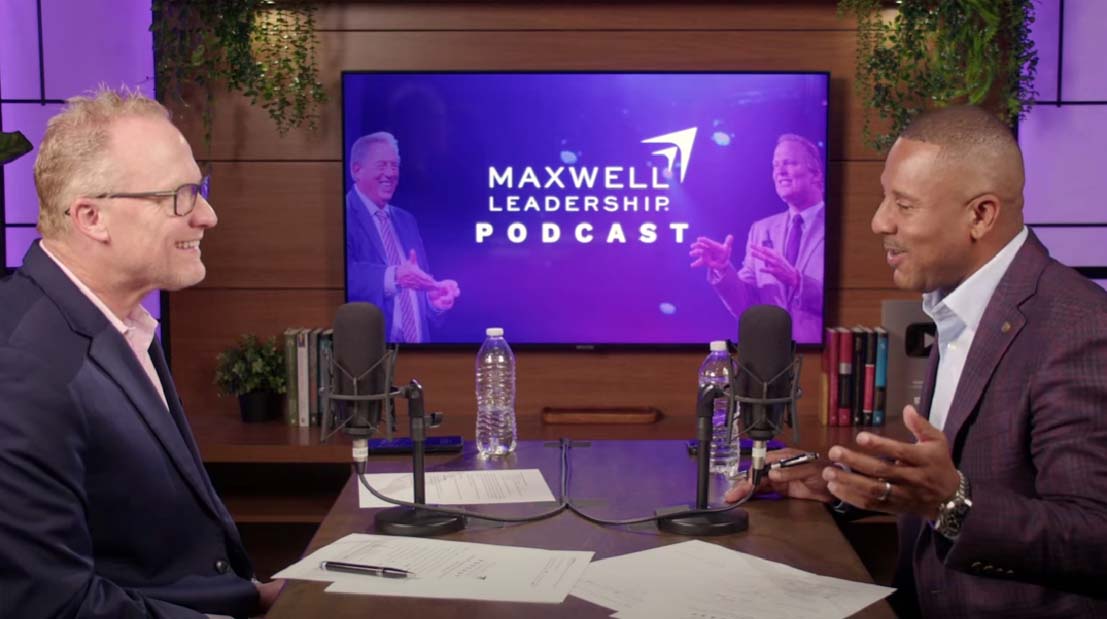
Leadership development shows up in everyday work long before it shows up on an org chart, in how a leader listens, gives feedback, and adjusts when a familiar approach stops working. On the Maxwell Leadership Executive Podcast episode How Leaders Move From Good to Great, Perry Holley and Chris Goede looked at which of those daily choices matter most, working from 360-degree feedback, the reviews in which a leader’s manager, peers, and direct reports all rate the same behaviors, to find what the highest-rated leaders do differently from the merely good ones. The practices that follow come out of that conversation.
Start by listening more than you speak
Leadership grows stronger when a leader slows down long enough to hear the people around them. Listening helps leaders understand what matters to others, notice concerns earlier, and respond with greater wisdom. As Holley says in the podcast episode, “listening is the number one way to show you value someone.” Listening also keeps communication pointed at the right target. People respond well when they sense a leader is paying attention to what will serve the conversation and support the team, rather than to how the leader comes across.
Build self-awareness before you try to build influence
Growth deepens when leaders pay close attention to how they come across in everyday moments. Tone, body language, facial expression, and pace all shape the way people receive leadership. As leaders become more aware of those signals, they begin to see how their presence affects trust, openness, and confidence across the team.
Create daily habits that turn growth into action
A few repeated habits create the pattern of presence and discipline that people come to rely on.
- Put distractions away so people feel your full attention
- Stay engaged in the conversation instead of rushing to your next point
- Maintain eye contact to reinforce presence and respect
- Ask thoughtful questions that invite people to share more clearly
- Pay attention to nonverbal cues so that your leadership matches the message you want to send
Use feedback to help people grow, not just to correct them
Strong leaders use feedback to develop people rather than to correct them. A thoughtful conversation helps someone see where they are doing well, where they can improve, and how to keep growing with confidence. It also tells them their leader wants to see them grow. Feedback that carries that message builds trust and makes growth part of the culture.
Adjust your approach when old habits stop working
Leadership stays effective when leaders remain open to what the moment requires. As teams change and responsibilities shift, leaders need the awareness to notice when an old approach no longer fits and the discipline to respond with greater flexibility. Staying flexible usually comes down to a few habits.
- Ask questions that uncover what your team needs now
- Invite feedback on your communication and leadership style
- Watch for signs that your usual approach is creating friction
- Pay attention to new pressures, priorities, or team dynamics
- Shift your level of support when the moment calls for it
Listen to the podcast: How Leaders Move From Good to Great walks through the everyday practices in this section and the feedback data behind them.
Types of leadership development programs
Development lives in individual practice, which organizations wrap structure around when they want it to happen at scale. A leadership development program supplies the structure, a defined format, a group of leaders, and a rhythm of sessions and application over time. The main formats each fit a different need.
- Workshops. A group builds the same skills and the same language in a day or two, which suits new managers who need fundamentals quickly or an established team closing a specific gap like feedback or collaboration. Maxwell Leadership’s corporate leadership training workshops, for example, run in person at scale across an organization, with the measures for success set before the first session.
- Cohort programs. A pipeline of emerging or mid-level leaders moves through a sequence of sessions together over months, building peer networks alongside skills.
- Mentoring. A leader is paired with someone a level or two ahead, which transfers judgment in a way a curriculum cannot.
- Stretch assignments. A leader is handed a problem one size bigger than any they have solved, with budget and visibility attached.
- Coaching. One leader works with a coach on the specific obstacle between them and the next role.
The formats work best combined and tailored by level. A first-time supervisor, a manager of managers, and a senior executive should not sit through the same content because each is developing toward a different next stage.
Related reading: Leadership Development Plan for Long-Term Growth covers how to decide which programs to run, for whom, and how to measure them over years rather than quarters.
Leadership development for senior leaders
Group formats stop being enough at the senior level. By the time a leader runs a function or sits on an executive team, the skills that need developing are specific to that leader and the decisions in front of them, while candid feedback has become scarce. Individual coaching answers both problems, giving a senior leader a confidential partner with no stake in the org chart. An engagement that works starts with the leader’s goals and upcoming decisions rather than a curriculum, then runs as a sequence of sessions with application between them and checkpoints along the way. Maxwell Leadership’s executive coaching is built the same way, with measures agreed with the organization at the start and assessments taken before and after so that growth is visible rather than assumed.
Grow leaders on purpose with Maxwell Leadership
Over time, leaders who grow with intention give an organization the one thing it cannot hire on short notice, leaders who are ready before the roles open.
Maxwell Leadership helps leaders and organizations turn intention into practice. Our leadership training brings workshops and programs to managers and teams across an organization, built on John C. Maxwell’s body of work. Our leadership coaching pairs individual leaders with a certified coach around their own goals. We believe everyone can learn to lead well, and no one should do it alone. To talk through what development could look like for your leaders, schedule a discovery call. For practical leadership insight each week, subscribe to the Maxwell Leadership Podcast.
Frequently asked questions
What is leadership development in simple terms?
Leadership development is the process of helping a person get better at leading other people over time. It combines learning, practice, feedback, and experience so that a leader’s judgment, communication, and habits improve in ways a team can feel.
Why is leadership development important?
Leadership development is important because the quality of leadership shapes trust, performance, and retention across a team, none of which improve on their own. Organizations that develop leaders on purpose keep more of their people and have someone ready when a senior role opens.
What are the phases of leadership development?
Leaders develop through predictable stages, from relying on a title, to earning trust, to producing results, to developing other leaders. Maxwell’s 5 Levels of Leadership maps the stages, each of which requires something different from the leader and from the organization developing them.
What is the difference between leadership development and leadership training?
Leadership training is an event with a start and end date, such as a workshop or course. Leadership development is the longer process the training serves, most of which happens between events as a leader applies what they learned.
Why do leadership development programs fail?
Leadership development programs usually fail for reasons outside the classroom, such as no executive sponsor, a daily environment that punishes the new behavior, results judged after one quarter, or development treated as a perk for people already in view. A program measured across years, with sponsorship and stretch assignments attached, tends to hold.