
Most organizations that want more women in leadership already have the candidates. They have run teams for years, colleagues go to them when something needs untangling, and by any standard applied to their peers they should be further along than they are. Often a program is already in place to help, a mentoring circle, a speaker series, an annual event with a good turnout, which has done everything except change who gets promoted. The organizations that have managed to change it approach the work differently. Rather than running a women’s initiative alongside the business, they treat developing women leaders as a business result in its own right, with an owner, a number, and support matched to whatever stands in the way.
Sponsorship, not just mentorship
Mentoring is where most women’s programs begin and, too often, where they stop. A mentor offers advice, answers the questions a rising leader cannot put to her own manager, and lends perspective from a few rungs up. Few mentors, however, have the standing to put her name forward when a role opens. A name put forward, more than any amount of advice, is what moves a career. Putting one forward is the work of a sponsor, a senior leader with enough standing to speak for a specific woman in the rooms she has not yet reached, whether the succession discussion, the calibration meeting, or the conversation about who gets the stretch assignment with budget attached. Because advancement is decided there, a woman with three mentors and no sponsor can spend years waiting for someone to bring her up.
Organizations that get sponsorship right assign it deliberately rather than leaving relationships to form on their own, choosing sponsors for their authority to act rather than simply to encourage. The same organizations build sponsorship into how senior leaders are evaluated. A sponsor with nothing at stake tends to drift back into advising within a quarter, whereas one who is measured on the outcome stays engaged. The clearest sign the practice is working comes the day a senior role opens and a woman’s name is raised before anyone has to prompt it.
Access to individual coaching
Consider a director whose next role is one level away and whose main obstacle is how she comes across in front of the board. Neither a mentoring circle nor a general workshop on executive presence will take her the whole distance because both are built for a group rather than for her. What she needs is individual coaching, a confidential setting to work on the one thing holding her back, with someone who has no stake in the org chart. Group programs still have their place, building community and a shared language among women who often feel like the only one in the room, but they cannot reach down to one leader’s particular obstacle, whether delegating after a promotion or managing a peer who talks over her in every meeting.
The need for coaching tends to peak once a woman becomes the only one at her level, when isolation sets in alongside a reluctance to ask the questions that might read as not belonging. Coaching engagements that work start from her own goals and the decisions in front of her rather than from a curriculum, then run as a sequence of sessions with application between them and checkpoints along the way. Maxwell Leadership’s executive coaching for senior leaders runs on the same pattern, for example, with measures agreed with the organization up front and assessments taken before and after so that any change is visible rather than assumed. Which coach an organization chooses matters less than making sure the women closest to a senior step have one, given how often a single obstacle is all that separates them from the role.
Related reading: 5 Strategies for Women Leaders to Harness Resilience and Rebuild Tenacity looks at the personal side of the same work, from a Maxwell Leadership certified coach who has led through it.
Measurable advancement paths for women in leadership
A measurable advancement path is a defined route from one level to the next, with the criteria for each step written down and movement along it tracked by number. Most women’s programs measure attendance instead, while the figure that matters, how many attendees moved up in the eighteen months afterward, goes untracked. Organizations that keep women advancing put numbers on the path, which starts with deciding what to count:
- Promotion rates by gender at each level. The first step into management is usually where the pipeline narrows, a loss that stays invisible unless someone is measuring it.
- Retention between manager and director. Women who leave between the two levels often do so because the route upward is unclear, a problem the number surfaces before the exit interviews do.
- Time in role before promotion, compared with male peers. A consistent difference points to a bias in how readiness is judged.
- Representation in succession plans. Written in by name rather than by category, so that each senior seat has a named woman being prepared for it.
Numbers only change behavior once someone owns them, which in practice means reviewing the figures quarterly with the same seriousness as revenue and assigning each shortfall to a named leader. Without an owner, the path becomes a dashboard nobody acts on. Stretch assignments belong to the same system because a promotion committee looks for a track record built on projects with budget and visibility. Left to chance, those projects go to the people already in view. Organizations that get this right distribute them deliberately, as part of the path itself.
Leadership training designed for the barriers women face
Most of what standard leadership training teaches applies to every leader regardless of gender, which is both its strength and its limitation. The barriers that show up specifically for women sit outside the generic curriculum. A women’s program built on it tends to produce roughly the same results as no program at all.
Stacey Speller, an executive facilitator and coach with Maxwell Leadership and a former court-system executive, has spent years in rooms full of women leaders. The pattern she describes will be familiar to anyone who has sat in on one:
- Plenty of role models, no roadmap. Women can point to leaders they admire and still have no clear map for leading as themselves because the map that exists was drawn for men.
- Borrowed leadership styles. Many women who reached senior roles got there by imitating the style modeled around them, usually a male one, and paid for it in authenticity.
- The sandwich generation. A career, children at home, and aging parents at the same time, with stress that compounds in ways organizations rarely account for.
- Imposter syndrome that doesn’t respect titles. The story a woman tells herself about not being as strong as she seems, carried by women who look like they have it all together and showing up most in the hard conversations she keeps putting off.
- Isolation at the top. Being the only woman at her level often means holding back, out of a worry that showing too much will read as weakness.
- Strengths mislabeled as weaknesses. Empathy, collaboration, and vulnerability, qualities many women lead with, have traditionally been coached out of leaders rather than into them.
In one of Speller’s sessions, a woman raised the problem of an underperforming colleague who intimidated her and admitted she wasn’t sure whether the obstacle was him or her own insecurity. Another participant, someone who looked like the picture of a composed, ambitious executive, answered that she battles insecurity every day because of the story she tells herself. Once one person had named it out loud, everyone else in the room had permission to. The conversation that followed was the one the training exists to make possible. Training built around these barriers creates such a room on purpose, with a roadmap for leading authentically, tools for confidence, and a cohort of peers who understand the specific pressures, delivered by women who have led through them. Maxwell Leadership’s women in leadership development programs follow the same design, pairing group sessions on confidence, communication, and strategic thinking with one-on-one coaching so that the shared material gets applied to each leader’s own situation.
Listen to the podcast: Leadershift for Women with Stacey Speller covers the shifts her training is built around, adapted from John C. Maxwell’s Leadershift, including the move from imposter to authentic and from directing to connecting.
Build the program your women leaders need
What the organizations that get women into senior roles have in common is less a budget line than a decision to count developing women leaders as a result the business tracks, alongside every other. From there the rest tends to follow, sponsors who act, numbers someone owns, coaching for the women closest to a senior step, and training built for the barriers they are up against. Taken together, the four move promotion numbers in a way a single well-attended lunch never will.
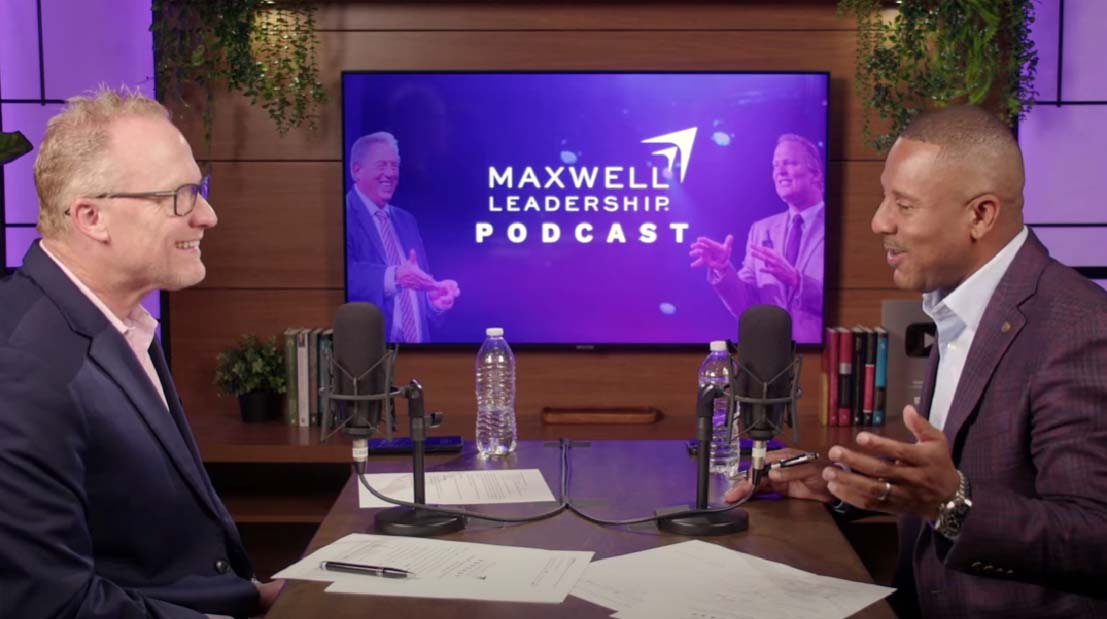
Maxwell Leadership partners with organizations on the training and coaching side of a women’s leadership program. Our leadership training includes workshops built for women leaders. Our leadership coaching gives individual leaders a certified coach around their own goals, with progress measured rather than assumed. We believe everyone can learn to lead well, and no one should do it alone. To talk through what a program for your women leaders could look like, schedule a discovery call. For weekly conversations on leading at the executive level, subscribe to the Maxwell Leadership Podcast.
Frequently asked questions
Why is women in leadership important for organizations?
Organizations with women well represented in senior roles draw on a wider range of perspectives in decisions, retain more of the women in their pipeline, and signal to the whole workforce that advancement follows performance. An organization that develops only part of its leadership potential is passing over capable leaders it already employs.
What are the biggest barriers to women in leadership?
The most common barriers are the first step into management, where the pipeline most often narrows, the lack of sponsors who advocate for women in promotion decisions, and isolation at senior levels where a woman is often the only one. Pressures outside work compound all three, especially for women caring for children and aging parents at the same time.
What is the difference between mentorship and sponsorship?
A mentor gives advice, shares experience, and helps someone think through decisions. A sponsor is a senior leader who uses their own standing to recommend a specific person for a promotion, a stretch assignment, or a seat in the succession plan. Both matter, with advancement depending far more on the second.
How can organizations support women in leadership?
Assign sponsors with the authority to act, track advancement at every level and review the numbers with named owners, give the women closest to a senior step access to individual coaching, and provide leadership training built around the barriers women face rather than a generic curriculum. Programs that combine all four tend to move promotion numbers in a way a single mentoring circle rarely does.