
Picture a manager who hits every number. Deadlines land, targets get met, the dashboard stays green. Then that manager takes two weeks off, and within days the team starts to drift. The results were real, but nothing underneath them was built to hold without someone standing over it.
That gap is where transactional and transformational leadership part ways. Both can move a team toward its goals. Only one of them leaves behind people who keep moving after the leader steps out of the room.
What Transactional Leadership Looks Like
Transactional leadership runs on a clear exchange: good performance earns a reward, and missed expectations bring a consequence. Leaders who work this way set expectations plainly, keep a close eye on progress, and step in when results slip.
It works, and it works well in the right setting. When tasks are well-defined, timelines are fixed, and consistency matters more than invention, this kind of leadership keeps everything on track, because compliance stays high, the metrics are easy to follow, and accountability is built into the routine.
The trouble isn’t that transactional leadership fails. It’s that it only reaches so far. It holds a system together without growing the people inside it, so engagement stays functional and motivation stays tied to the next reward. And when conditions change, as they eventually do, a team that has only ever been managed this way has very little of its own to draw on.
Where Transformational Leadership Begins
Transformational leadership isn’t the opposite of accountability. It’s what accountability becomes when it’s anchored to something bigger than the task in front of someone.
John C. Maxwell defines it as leadership that influences people “to think, speak and act in such a way that it makes a positive difference in their life and in the lives of others.” The work still matters. But the person doing the work is where this kind of leadership actually starts.
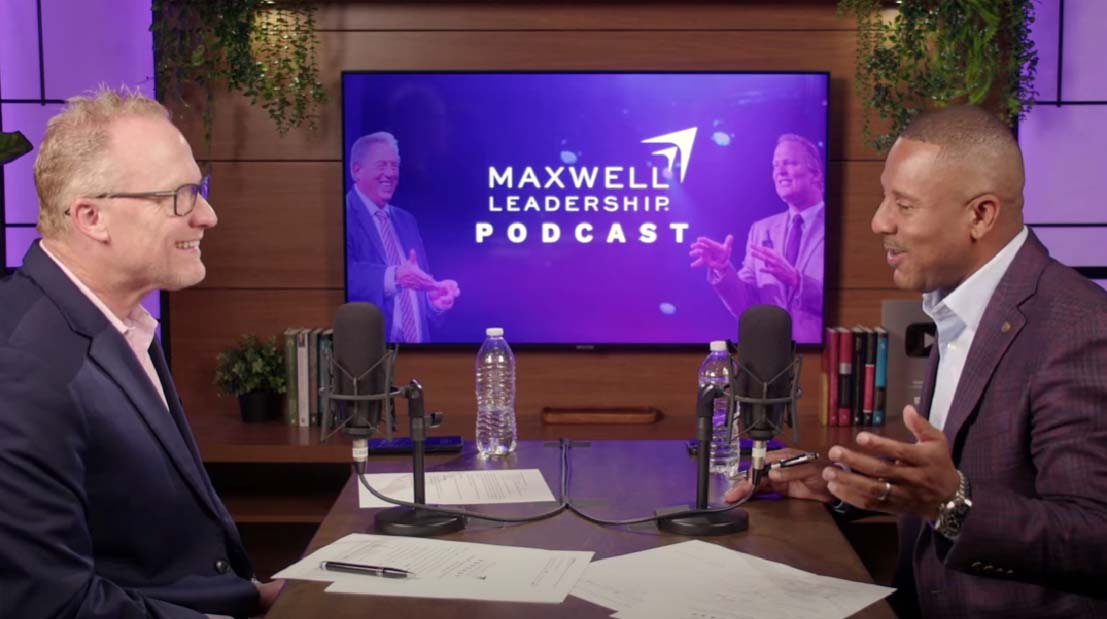
On the Transformational Leadership Series from the Maxwell Leadership Podcast, John Maxwell describes how that conviction first took hold in his own leadership, and he’s blunt about how it spreads: “I think that transformational leadership is caught not taught.” He treats it less as a technique to install and more as an orientation a leader carries. It’s the difference between asking whether someone delivered and asking whether they’re becoming more than they were.
Maxwell lays the shift out in stages, and Mark Cole, CEO of Maxwell Leadership, walks through what each one looks like on a real team. It begins with a calling, the internal pull to make a difference. From there it stands on a cause, moves from a single leader outward to a team, and gathers urgency as it goes. Each stage rests on the one before it, and together they describe someone who has stopped managing a system and started multiplying the people inside it.
Transactional vs Transformational Leadership at a Glance
Seeing the two side by side makes it easier to spot which one is running in your own organization, and what it’s producing beyond the quarterly numbers.
| Dimension | Transactional leadership | Transformational leadership |
| What motivates people | Incentives and consequences | Shared purpose and personal investment |
| Source of authority | Position and title | Relationship and trust |
| Under changing conditions | Holds shape, then turns brittle | Adapts, because people have kept growing |
| What it leaves behind | Results while the leader is present | People who deliver when the leader is absent |
Motivation
Transactional leaders reach for incentives and consequences: the bonus, the deadline, the performance review. Transformational leaders work from shared purpose and a genuine stake in the people they lead. The first kind of motivation depends on the next reward being there; the second keeps running on its own once it takes root.
Source of authority
In a transactional model, authority comes with the title, and people follow because of where the leader sits on the org chart. Transformational authority is earned through trust and credibility instead, and influence built that way reaches further than anything a job title can hand out.
Response to change
A transactional environment tends to hold its shape as long as conditions stay predictable, then strains the moment they don’t. Transformational cultures bend more easily, because the people inside them have been learning to think for themselves all along rather than only waiting for instructions.
What the leader builds
This is the difference that compounds. Transactional leadership produces results while the leader is in the room. Transformational leadership produces people who carry those results forward when the leader isn’t, and over time that shapes what an organization can actually sustain.
When Transactional Leadership Still Earns Its Place
None of this makes transactional leadership obsolete. Compliance requirements, safety protocols, deadline-driven work, and brand-new teams finding their footing all benefit from clear structure and well-understood consequences. A leader who skips past basic accountability usually struggles to earn the trust that transformation depends on in the first place.
The issue is never the transactional pieces themselves; it’s stopping there. A reward-and-consequence exchange makes a solid floor. As a ceiling, it’s the point where engagement starts to erode and your strongest people eventually go looking for somewhere they’ll actually grow.
The most effective leaders hold both at once, keeping expectations clear while investing in the people they’re counting on to meet them.
What Changes When a Team Is Led This Way
John Maxwell teaches that real transformation moves from “me” to “we.” A leader who starts asking “who am I developing?” instead of “what am I producing?” creates capacity across a team that no single person could generate alone.
That move rarely happens all at once. It builds through ordinary choices: how a leader explains the bigger picture, how they respond when someone is ready for more responsibility, how they coach through a mistake instead of just correcting it. Much of it comes down to sharing context rather than only handing down direction, so people understand the why behind the work and can act on it without waiting to be told. That habit, more than any single conversation, is where transformational leadership takes hold.
When choices like these become consistent, the change starts to show up across the whole team:
- More initiative and ownership at every level
- Stronger follow-through and accountability
- Greater capacity for long-term growth
- Healthier leadership continuity when people move on
- A culture that holds its shape when the leader isn’t in the room
It almost always starts with one leader who decides to lead differently, and the culture around them begins to follow.
Become a Transformational Leader With Maxwell Leadership
Knowing the difference between these two models is one thing. Closing that gap is harder. Turning transformation into the way you actually lead, conversation by conversation and decision by decision, is where most growth stalls. It’s also where becoming a transformational leader really begins.
Maxwell Leadership exists to help leaders make that move, from managing output toward developing people. Our on-site leadership training for managers gives managers the practical tools to lead with clarity and values, and to build the kind of influence that produces genuinely engaged teams. For senior leaders, our in-person executive training develops the presence and relational depth that move culture from the top down, grounded in the same values-based leadership principles that organisations like Walmart, Chick-fil-A, and the U.S. Marines have built into how they grow their own people.
In the end, the measure of your leadership isn’t what you produce; it’s who you develop. If you’re ready to lead that way, reach out to our team to talk through what it could look like inside your organization. And if you’d simply like to keep learning, the Maxwell Leadership Podcast is a steady place to grow.