
Most leaders can see something their team cannot see yet. Seeing it was never the hard part. The hard part of leadership vision is getting other people to see it with you, trust it enough to act on it, and stay with it when the work drags on longer and costs more than anyone signed up for.
John C. Maxwell breaks down what separates a vision that moves an organization from one that quietly dies on a whiteboard. It comes down to three things a leader has to get right, in this order: the reality underneath the vision, the response it earns from people, and the resources that carry it from idea to done.
A leadership vision starts with reality
You have probably watched a leader stand up, lay out an inspiring picture of the future, and felt the room quietly decide not to buy it. Often the problem is not the vision but that the leader skipped a step before casting it.
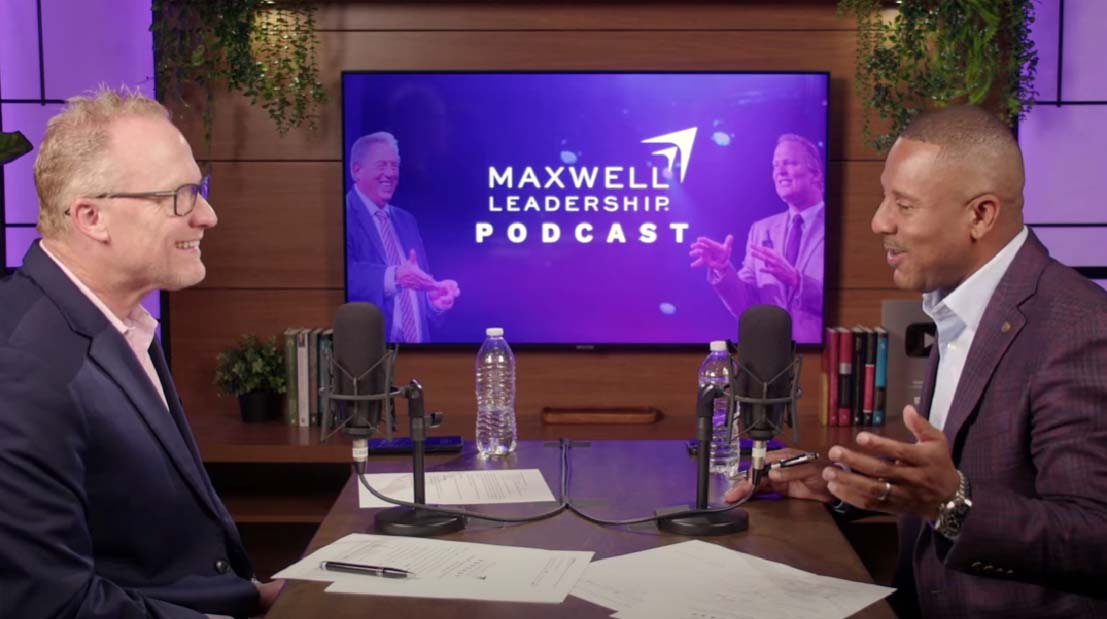
That step is reality. On the Maxwell Leadership Podcast episode Leader-Vision: How to See and Sculpt the Future, John Maxwell puts the order plainly: before you can describe where you are going, you have to be honest about where you are, who you are, what is true today, and what is and is not working. He calls it writing a reality statement before a vision statement. A leader who glosses over the hard facts of today gives people no reason to trust the picture of tomorrow. If you are not straight with me about where we stand now, why would I follow you toward something I cannot yet see?
Being honest usually means admitting three things at the outset, and none of them are comfortable: the situation is worse than it first looked, the work will take longer than the timeline in your head, and it will cost more than your first estimate. Saying so is not pessimism. It is how a team keeps going when the work gets hard, because they heard the truth at the start instead of an easy version that falls apart on contact.
The same facts can drag a team down or give it a place to push off from, depending on whether the leader uses reality to argue what cannot be done or to point at what comes next.
How to communicate a vision people will follow
Plenty of visions are clear in the leader’s head and fuzzy everywhere else. Your job is to make yours visible to people who cannot see inside your head, and that takes language specific enough to picture. A team can act on “we will be the name people trust when the stakes are highest, because of how we handle the hard calls.” Nobody can act on “we want to be the best.”
It also takes belief on your part. People can tell the difference between a leader who believes the vision and one who is hoping out loud, and only the first kind moves a room. Evidence helps too, so when a piece of the vision comes true, say so. A named milestone is the moment your team finally sees that the future you kept describing was real all along.
Some visions are too big to land one conversation at a time, and the whole organization needs to hear it in the same room on the same day. A Maxwell Leadership Keynote Speaking session is built for that moment, with talks like Leading Through Change and Building a Leadership Culture that put the picture in front of everyone at once.
People buy into the leader before the vision
Two leaders can present the identical vision and get opposite results, one team all in, the other unmoved. What separates them is trust. People decide whether to follow the person well before they decide whether to follow the plan, which Maxwell names as the Law of Buy-In, one of the 21 Irrefutable Laws of Leadership: people buy into the leader before they buy into the vision. Anyone can describe a future, but only a leader the team already trusts can move them to commit to it.
Earning that trust is relational work, not a speech. It starts with knowing who you are talking to and finding the ground you share, because people change direction on common ground, not on the points they argue about. From there it is speaking plainly, making the abstract concrete, and listening more than you pitch, until the vision stops being yours and starts being the team’s.
Moving a skeptical team forward means naming the doubts in the room instead of talking around them, and those conversations can get tense. Handling them with clarity and empathy is its own skill, and the one Maxwell Leadership’s Feedback and Critical Conversations Training is designed to build, so candor pulls people toward the vision rather than splitting the room.
Why a vision and a plan are not the same thing
Leaders give up on good visions all the time, and a broken plan is usually the reason. The plan fell through, and somewhere in the disappointment they decided the whole vision was wrong. It rarely is. A vision is what could and should be; a plan is only your best guess at how to get there, and a guess is allowed to be revised. Maxwell’s rule is to stay stubborn about the vision and flexible about the plan.
Hold the direction firmly, the what and the why, but stay genuinely open on how you get there, whether that turns out to be by plane, boat, car, or on foot. Move faster than people can absorb and you lose them, so the timing bends even when the destination does not. If you have stepped into a vision someone else built, there is one more rule worth following: understand why the fences are there before you start tearing them down. And if you are tempted to leave everything exactly as it is, the people who resist change tend to resent irrelevance even more.
Holding the line on the vision while staying loose on the route is hard to do by yourself. Maxwell Leadership’s Executive Coaching gives senior leaders a place to align vision with values, test their read on reality, and decide where to stand firm and where to bend, before those calls play out in front of everyone.
Your team sets the ceiling on the vision
Most leaders with a real vision hit the same wall: they can see it clearly, and they do not have the people or the money to build it yet. Maxwell’s answer flips the worry around. People and money tend to follow a worthy vision rather than show up before it. He tells the story of launching his nonprofit, EQUIP, with a clear vision and almost no one behind it. Ten years later he stood in a room of 250 supporters who had given millions of dollars to the work, asked how many had known him when he started, and watched 27 people stand. His advice to anyone sitting on a dream with empty hands is to start walking, because the resources show up once you are moving, not while you wait.
There is one resource you cannot wait on, and that is your team. You will not rise to the level of your dream. You will rise to the level of the people carrying it with you. Maxwell’s shorthand is hard to forget: a 10 dream handed to a 2 team leaves you stuck in the weeds, while a strong team will carry a vision further than you first dared to plan. So before you make the dream any bigger, sit with the harder question: how good is the team that has to deliver it?
Start walking toward the vision you can see with Maxwell Leadership
Casting a vision people will follow is a skill, not a personality you either have or you do not. It follows the same path every time: get honest about where you are, earn the trust that makes people buy in, then resource the work and start moving. Maxwell Leadership has spent decades on this because of a belief that runs underneath all of it, that leadership is influence, that anyone can learn to lead well, and that no one should have to figure it out alone. If the vision you are carrying feels bigger than what you can pull off by yourself, that is a good sign rather than a problem, and a coach, a keynote, or one honest conversation can help you cast it in a way your team will follow. Connect with Maxwell Leadership when you are ready to take the next step.
FAQ
What is a leadership vision?
A leadership vision is a clear, compelling picture of a better future that a leader sees before others can, then articulates in a way that moves people to pursue it. A strong vision is grounded in an honest read of current reality, not just aspiration, which is what makes people trust it enough to follow.
How do you communicate a vision so people follow it?
Use specific, visual language that lets people picture the future instead of vague statements of intent. Communicating vision also depends on the messenger, because people commit to a vision once they trust the leader casting it, so buy-in is built through credibility, common ground, and honest conversation rather than a single speech.
What is the difference between a vision and a plan?
A vision is what could and should be, while a plan is your best current guess at how to get there. Visions are refined over time and rarely change much, but plans get revised constantly. A failed plan is not a failed vision, which is why effective leaders stay stubborn about the direction and flexible about the route.
How do leaders get buy-in for a vision?
Leaders earn buy-in by being people their team already trusts, then by finding common ground, speaking honestly, and listening more than they pitch. It comes down to the Law of Buy-In: people buy into the leader before they buy into the vision, so relationship and credibility come before the idea itself.
Why should a reality statement come before a vision statement?
Because credibility depends on it. If a leader is not honest about where the organization stands today, people have little reason to trust the picture of tomorrow. Defining reality first, including the real situation, timeline, and cost, lets a team face adversity later without feeling misled.