Inclusive communication is key to building trust and belonging on any team. This episode explores practical ways leaders can communicate more effectivelyâby listening actively, using inclusive language, and encouraging diverse perspectives. Youâll also get tips for running more inclusive meetings, like sharing agendas in advance, setting clear expectations, and making space for all voices to be heard.
Perry Holley:
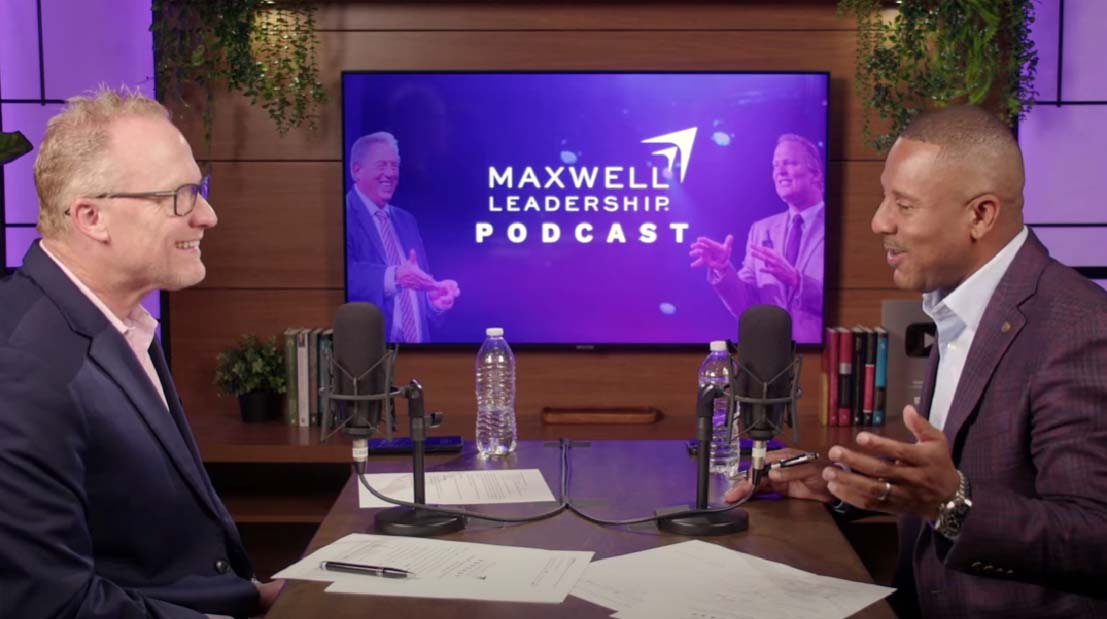
Welcome to the Maxwell Leadership Executive Podcast, where our goal is to help you increase your reputation as a leader, increase your ability to influence others, and increase your ability to fully engage your team to deliver remarkable results. Hi, I’m Perry. Holley, a Maxwell Leadership facilitator and coach.
Chris Goede:
And I’m Chris Goede, executive vice president with Maxwell Leadership. Welcome and thank you for joining. As we get started today, I want to encourage you to go to MaxwellLeadership.com/ExecutivePodcast there. We would love to hear from you. We’d love to hear some topics, maybe even just let us know how some of your discussions are going with your team around some of our previous sessions. Well, as we get started today, here’s the title. How inclusive is your communication? Kind of pilot? On the last pilot, on the last one, we’re kind of staying with the same feeling theme of inclusivity, but this one’s really around communication and fascinated. As I kind of read through the notes, thinking, this happens.
Chris Goede:
Oh, yeah, right. Unintentionally, this happens. So how inclusive is your communication? We know. No doubt about it. The number one thing we hear from companies all the time is we need help with our communication every time. Doesn’t matter. Industry size of the company doesn’t matter. And so a lot of that is leaders.
Chris Goede:
And Perry and I are talking about ourselves here as well. Right. Like all leaders in general, we’re trying to get a point across or we’re trying to communicate something. And without a shadow of a doubt, we may be inviting some people into that, but we’re shutting some people out or not connecting with some people. And there’s lots of ways that we probably exclude people through our communication. We’re not even aware of it. It’s completely unintentional. However, it’s still impactful on them.
Chris Goede:
Right. They’re still impacted by our communication. We need to dig into this and be aware of it.
Perry Holley:
Yeah. And just a reminder that we inclusive or an inclusive environment is an environment where people feel like they belong, that they feel welcome, they feel safe, they feel valued. And a lot of that comes through the words that we use. I said last week that nobody ever. I don’t think anybody ever purposely tried to exclude anyone, but we inadvertently, unintentionally, accidentally do by the way we communicate and interact with people. We can set boundaries there where people may not feel as respected or as valued or as insider. They feel like an outsider sometimes. So that’s really what it’s the foundation of inclusive leadership is this communication piece.
Perry Holley:
And that’s where I Wanted to go.
Chris Goede:
When people feel like their voice matters, even just when they feel like it’s heard right, like.
Perry Holley:
Like I have a voice.
Chris Goede:
Like, yeah, like, oh, that’s a good perspective there, Perry. Whether we. We go that direction or not, it’s the fact that it matters and, and that we. We heard his voice. They’re going to show up. They’re. They’re going to be more engaged with your team. They’re going to collaborate with you and with the team.
Chris Goede:
They’re going to bring ideas that are going to help your business. But when it lacks clarity or we’re not very intentional about how we’re communicating, we could end up driving disengagement. We could end up having mistrust. We could maybe even have conflict. And I know that I’ve had some conversations and felt like all of a sudden it came back as conflict. And I was like, no, no, no, no, that’s not what I meant. And they go, but this is what I heard. And that’s what we’re going to dig into.
Perry Holley:
Yeah. So I wanted to be practical and give you a few tips and things that I work on personally, especially if you are climbing the ladder as an executive leader, your voice carries a lot of power, and I love it. You said it last week that your title enters the room before you do. And so there’s some unwritten rules around that. So if you didn’t listen to unwritten rules. That was last week. This one. I like to start with something that’s hard for a lot of leaders to listen more than you speak.
Chris Goede:
What?
Perry Holley:
I’m not talking to you at all, as far as you know.
Chris Goede:
Yeah, that’s right.
Perry Holley:
I’m finding that inclusive leaders are really great listeners. They want to let people know that, I see you, I hear you. Just, you have a voice. I want to hear your voice. I need your voice into this. They are attentive, they’re present when you’re speaking, and they pay attention to that. So I think, you know, being that. That leader that doesn’t have to speak first, but encourages others to bring input to that.
Perry Holley:
And they. You want to know what others think.
Chris Goede:
Love that. Also, be careful not to use consistent, inclusive language, what that may look like. Avoid using jargon, maybe personalizing communication, being very respectful to kind of where everybody’s coming from and. And their background. And I love this statement right here. Language will shape the culture. We talk a lot about common language, you know, drives beliefs and behaviors. As a.
Chris Goede:
As an example, to kind of flesh this out for you, I find myself Often using sports analogies, using key words in sports. As I’m communicating and when I’m communicating to our chief culture officer, she has no idea what I’m talking about. Right.
Perry Holley:
You think she feels excluded?
Chris Goede:
So 100% she’s like unintentionally, it’s like I again not in a harmful way. It’s just like what does that mean? Right. Like I’m not in on. Everybody’s laughing about it, they’re going along, they’re doing the good old Baptist head nod and she inside may be doing the Baptist head nod but she doesn’t feel like she’s included in that. And so I’m using inclusive language. Be careful how much you do that.
Perry Holley:
Yeah. And also this idea of encouraging diverse perspectives as I mentioned last week is that you, the entire idea around of diversity on your team was to have different voices, different experiences experiences, different backgrounds, different come froms that where people bring insights that are different from you. And so the big piece of being a great inclusive leader is being comfortable with differences. I’m very comfortable with people that are like me, but can I be equally comfortable with people that are not like me? Can I respect differences? That’s the starting point of inclusive leadership. But then if I don’t go through the effort of communicating in such a way that you feel value that you feel like you belong here, like you’re an insider, I expect to hear from you. You may, and I used this term last week, you may cover, you may cover your identity, you may cover your difference and that causes you to assimilate to be like me. And now I’ve lost all that diversity advantage I had by I was actually about to get a diverse perspective. But you don’t feel safe saying it because well, I communicate in a way that I already know what I want.
Perry Holley:
Just tell me what I want. I don’t invite other voices into the room. So I think about, you know, in meetings do I just. You’re very good at this. We mentioned it last week about calling out quieter people, calling out people that may not think they have something to offer and inviting them to speak and that you value their input. You even follow up. Well, tell me more about that. It’s interesting because they’re actually testing the water.
Perry Holley:
Well, I was just going to say something about, you know, X and you go well, tell me more about X. And then they oh, you really care. And now you’re listening more than you talk and you’re inviting their voice into that. You know I saw a tip on this was rotate who facilitates the meetings that, like, for our meetings, you’d be the leader of the meeting. If you’re so focused on the agenda and what you have to get done, you may not have the capacity or the energy to really monitor all the inclusive, exclusive dynamics that may be going on. If someone else facilitated the meeting, looks like Angie facilitated the meeting, and then you would be free to. You’re participating, but you’re also watching. You’re reading the tv, you’re listening to see what’s going on.
Perry Holley:
But, yeah, I think inviting the diverse perspectives is one that I don’t do enough well.
Chris Goede:
And I think also, oftentimes as leaders, we want to come in and say, hey, I want to hear your opinion. I want to hear your ideas. Here’s what I’m thinking. As soon as you say, here’s what I’m thinking, you shut down the room. Like, you can’t do that. You have to speak last. You have to kind of pull back, ask the questions, Let. Let the team talk.
Chris Goede:
And I promise you they’re going to uplevel what you’re thinking is. But don’t come in and into a meeting or situation and immediately declare kind of where you’re at. That may end up. That may end up where you. You go on a decision or the vision, but you need to make sure that you hold that. Another thing is, and I mentioned this as we kicked off today, make sure you set clear expectations and then check for understanding when you’re communicating. What I mean by that is what we feel like we’re communicating, I promise, is not how it’s always received. And one of the things Mark Cole started doing lately in our meetings is saying, hey, Chris, what did you hear me say? And then I have to repeat back to him what I heard him say.
Chris Goede:
And if it doesn’t align with what his intent was and what he was thinking, he’s like, good. No, that’s. Appreciate that. That’s not what I was trying to say. That falls on the communicator. It falls on the leader because he wasn’t communicating, but he’s one in this situation that was saying, hey, what was the understanding? Where. Where am I coming from? And so I think that’s a great little tip for us as leaders, because oftentimes there’s a gap between what we have communicated to what people have heard. The other thing is, I think there’s also ways of making sure that you have clear expectations and.
Chris Goede:
And you check for understanding in how people want to be communicated, too. Sometimes there’s mass Communication. Sometimes there’s one on one communication. We can do this different ways and you use different channels to be able to do it. Whether it’s verbally, it’s emails, check ins, follow ups. So many people are working virtually nowadays that I think we really have to spend a lot of time of making sure that there is understanding of what we’re communicating and how best they like to receive it.
Maxwell Leadership Certified Team:
Hey podcast listeners, many of you listening right now would probably love the autonomy that comes with owning your own business or becoming a coach that helps other businesses succeed. Well, we have a phenomenal strategy where you are 100% in control of your own business, earning income on your own terms, and have access to the people, tools and resources you need to build a thriving leadership development business. When you become a Maxwell Leadership Certified Team member, you join a global community of entrepreneurs led by our expert team of mentors and faculty, including John C. Maxwell. You’ll also get one of the top leadership certifications in the world next to your name, giving you the boost you need to get started. Visit us online at MaxwellLeadership.com/JoinTheTeam to find out more.
Perry Holley:
And it’s a word of caution for anyone that Mark Cole has earned the right to ask you a direct question like that because of the relationship and the bond that you have. The reason I say that is I had a leader once that could make those exact words. Tell me what you heard me say could make that sound like.
Chris Goede:
Were you sleeping like you paying attention like what?
Perry Holley:
And put it on you. But I thought I hear Mark Cole saying it to you. He’s actually doing it from a place of humility. Tell me what you think I heard you heard me say because I want to make sure I was clear. But he earned that with you. He did the relationship work with you over time that says he can ask stuff like that. Some of us don’t have that.
Chris Goede:
It’s a great point.
Perry Holley:
And I just. The whole piece on wrapping that up around just. We’ve mentioned it on almost every podcast over the last couple weeks. Authenticity and vulnerability be you and be open and admit what you don’t know and tell them when you need help and letting people know that you’re inviting them into this. You don’t have all the answers. You don’t have to have all the answers. You’re not perfect. That’s right.
Perry Holley:
And you need them as a team to bring their their diverse opinions and beliefs in here. Even if it’s challenging, it’s okay because it’s safe. You belong here. You’re you’re in the inner circle.
Chris Goede:
Yeah, I love that. Creating that environment where people feel like they can share that is extremely powerful. Especially with, again, I’m going to go back to this right now. The, the, the workforce is virtual. Right. And sometimes it’s in person, sometimes it’s a blend, whatever it might be. But creating spaces for the team to feel in a way that they can, they can share that. The other thing, when you’re in a one on one too, that I would encourage you to do here, as you kind of create this environment of people being able to give you feedback on your inclusivity of your communication, is ask the question, what’s one thing that I could do when I’m communicating that would make you feel more included, more supported? I’ll give this funny example.
Chris Goede:
One of the introverts on my team and I, and this was several years ago, I said, what’s one thing in a meeting I could do that would, you know, make it more engaging or I could, you know, get some of the brilliance out of you. And that individual said, don’t call on me. Right.
Perry Holley:
So.
Chris Goede:
Or is it, hey, give me, give me what you’re going to be talking about ahead of time. Right, give me. And we’re going to talk a little bit about that, like the preparation of it, like what is it? And so there’s a way for you to improve your communication by having some of those conversations in the one on one.
Perry Holley:
Let’s go to that. Because we, we started touching this last week around the kind of a blind spot for many leaders is the meetings. And it’s a great place to exhibit inclusive language and it’s also a great place to unintentionally exhibit exclusive language and this idea. And so you, you mentioned, go with that about starting with an agenda. Why, why is that important? Yeah, send it out in advance.
Chris Goede:
And send it out in advance. One of the things, we have a pretty consistent routine of our meeting flow. So I don’t send the agenda out anymore. I used to now on our leadership team though, Reggie, who is runs those for us, he sends out an agenda and it’s like, here’s what we’re going to do, here’s who’s doing what, here’s what. So that really helps me too because now instead of facilitating that meeting, I’m part of that meeting. So it gives me time to think through that agenda, make some notes, maybe look at some of my numbers, maybe whatever, so that I’m prepared in that meeting to be able to have an extremely Relevant conversation to keep the ball rolling. So with an agenda for us on my personal team, because it’s pretty consistent over time. The team knows what’s coming.
Chris Goede:
The only thing they don’t know is how we’re going to start the meeting. Sometimes it’s questions, sometimes it’s whatever. Right. And so that. But they’re all comfortable doing that and sharing that. But other than that, we have a pretty basic flow and they know when we get to a certain point in the meeting that it is, hey, tell me what’s going on. Obstacles wise, what are you dealing with that’s keeping us moving the ball forward? You know, what are the irritants for our customers or for you as a team member that we need to remove? And so they know that they’ll wait till a certain point and then it’s refreshing because even the ones that are extremely introverted will speak up when it is directly tied to their role. So just having that cadence allows people to communicate in a way that is relevant to them and what they’re doing and expect it.
Chris Goede:
When you start switching it up and they don’t know what the agenda, what’s going to happen is that they’re going to freeze and you’re not going to have this inclusivity of communication.
Perry Holley:
Right. And I’ve learned this at home as well as at work that some people, my wife, if we’re going to make a decision about something, we have to have a more serious conversation about something we’re trying to decide to do for the future. What I’ve noticed, if I just start that conversation, I communicate like a microwave, she communicates like a crock pot. And she needs to think about it and she needs to form her thoughts. And I just, I’m instantaneous. I can think on the fly. She actually said, you’re so quick with your, with your con, I can’t keep up sometime. And I.
Perry Holley:
And she really wants to think about it. Same thing that you do for our team meeting. When you send out that agenda, it says, here’s what we’re going to be talking about. Give me, give these folks a few days to think about it and come prepared. And now they’ll contribute more. I feel more included because, you know, some people on our team are very quick, have a thought and boom, they’re microwaving it. Some people on our team, crock pots. They need to process that.
Perry Holley:
And I, I want to include my processors. A matter of fact, I get more value from my processors than I do for my quick thinkers, no doubt about it. Yeah. To do that. And my wife brings a lot more value than I do just off the cuff. She’s actually processed it quite a bit. So another. This kind of a meeting, best practice is no interruptions.
Perry Holley:
And that may sound harsh at first, but if you can’t stop it, then somebody else needs to. Don’t cut someone off.
Chris Goede:
Yeah.
Perry Holley:
Let’s let Chris finish his thought before we comment on Chris’s thought. Why would you want to do that? Well, if, if you interrupt Chris in the middle of his comment and then. And then the whole conversation gets diverted. What. What does Chris feel? Included or excluded.
Chris Goede:
Right.
Perry Holley:
Insider, outsider, Belonging or not belonging, valued or unvalued. It’s. It’s completely negative. You don’t have to be the only policeman in the. In the room. Everybody can. Hey, let’s wait and let’s let Amanda finish her thought. Hey, let’s wait and let Perry complete the thought and then we’ll.
Perry Holley:
Now, what do you like to say about it? I think it’s. It’s a. I never thought about it as being an exclus.
Chris Goede:
Because then what happens is not only they feel like their point is not important, they’re not going to speak up next time. Here’s the other opportunity for you as a leader in that moment is that then that becomes a coaching moment for you outside of the team room. That individual cutting people off and saying, hey, let’s be a little bit more curious. Like you are listening to respond. And so you may have had a great idea. That’s a spurred up. Write it down so then you can remember it. I don’t know something.
Perry Holley:
That’s what I make a note.
Chris Goede:
But then you can coach and on outside the meeting say, hey, Perry, next time, like what I want you to do is model curiosity about Amanda’s situation. Not. I know you were going to take her idea and one up it. Right. But that, but you cut her off and then that. That creates a maybe don’t one up somebody’s head. Yeah, that’s a whole another conversation. Well, earlier you mentioned the group think, which I completely agree.
Chris Goede:
Right. Not everybody’s got to be thinking the same thing. And I, I think we should encourage people to have an opposite opinion. One of the things that I love about our team is one of our team members has the working genius of wonder. Now, bless her heart, she’s the only one that has it. But I have given her complete freedom to in meetings say what. What is she thinking? Well, how could it be different? And well, guys, what about if. Right.
Chris Goede:
And she’s the only one. And everybody else probably feels like she slows it down. But I continue to encourage that outside of the meeting and in the meeting because you, you want that, right? You don’t want just a unanimous group think around the board.
Perry Holley:
Yeah. And it’s really, when we did that exercise, I think she was taking some heat because she was slow. And then once we found out. Wait a minute. That’s her gift.
Chris Goede:
Yes.
Perry Holley:
Everybody runs to her.
Chris Goede:
Yeah.
Perry Holley:
What do you think about that?
Chris Goede:
That’s right.
Perry Holley:
What are you wondering about? Yeah, I’m not wondering.
Chris Goede:
Yeah. About any.
Perry Holley:
Anything.
Chris Goede:
Yeah.
Perry Holley:
Just as we mentioned, if I mentioned a little bit earlier about if you have maybe a sign, a facilitator in the room that you. Somebody to watch. Our inclusive behaviors, our inclusive conversations are cutting people off, our inviting other voices, our group think all those types of things. Is there somebody that should be watching over that?
Chris Goede:
And you don’t have to have a full time facilitator. One of the things we do is we rotate at times who facilitates a meeting that allows the leader at times to facilitate it, at times to sit back and then, oh, by the way, if I’m unavailable, then the team. Team can continue to run that and hopefully the meeting agenda and inclusivity happens just like as if the leader wasn’t there. Right. The other thing I want to, as we kind of wrap up, I want to encourage you that people receive communication differently. Some, they receive it and just hear the how, some receive it and just hear the why. You got to be careful as you’re, as you’re communicating. As we started off in the beginning, we’re like, yeah, we, we were very clear and we’re communicating.
Chris Goede:
This is what we want to do. Well, that doesn’t always resonate with everybody in the room. Not all. It very rarely will. And so you got to again think about, okay, who’s in the room, who’s my audience, what do they need to hear and what would they want to hear? And then how do you begin to weave that in there so that the entire team feels a part of what you’re, what you’re sharing and it creates that inclusiveness in your communication. So let me, as I wrap up, remember, communication is a two way pathway. Right. It’s not only am I being inclusive in how I’m communicating.
Chris Goede:
We talked a lot about that, but we also talked about kind of underpinning here is how inclusive am I about receiving communication. And so it goes both ways. And I think that there are things that we could look at and how we lead and how we run our teams and our meetings and our peer groups and our families of whether or not we’re truly being inclusive of all parties, all personalities.
Perry Holley:
Yeah, super. Well, great conversation. And as a reminder, if you’d like to get the Learner Guide for this issue, you can find that as well as information about our other offerings, five levels of Leadership360 Leader, or our other podcast offerings. All that at MaxwellLeadership.com/ExecutivePodcast. You can also leave a comment or a question there. And we love hearing from you. So grateful you spend this time with us. That’s all today from the Maxwell Leadership Executive Podcast.
Transcript created by Castmagic.


Be the first to comment on "How Inclusive is Your Communication?"