In this episode, Perry Holley and Chris Goede discuss the transition from being an individual contributor to becoming a leader. They provide practical tips for soloists to prepare themselves for leadership roles, such as leading without a title, building relationships, and managing themselves effectively. They also encourage soloists to let go of being the expert and celebrate team wins, fostering an abundance mentality. Additionally, they emphasize the importance of studying leadership, asking questions, and seeking feedback to enhance personal growth and influence. The episode offers valuable insights for individual contributors looking to develop their leadership skills and increase their impact within their organizations.
BELAY Ad:
Remember those goals you set months ago. More focus for what matters. You know, more time with friends, more bandwidth for family, maybe more growth for your organization. You knew you needed to hire some help, but you didn’t have time for a lengthy hiring process. By the way, you still don’t have that time. That’s why Belay has helped thousands of leaders just like you find the right executive assistant for their specific needs. Because when your time is valuable, you can’t afford the wrong hire. Belay’s US based executive assistants handle everything from inbox management to tribal planning and project coordination.
BELAY Ad:
So you can stop managing the details and start leading with vision. So if you’re ready for the next step on the path to great leadership and download Belay’s free leadership toolkit. Inside you’ll find ways to become a stronger leader and get more out of your work. Just text the word MAXWELL to 55123 today for your free copy. That’s MAXWELL to 55123 to get back to conquering those goals with Belay.
Perry Holley:
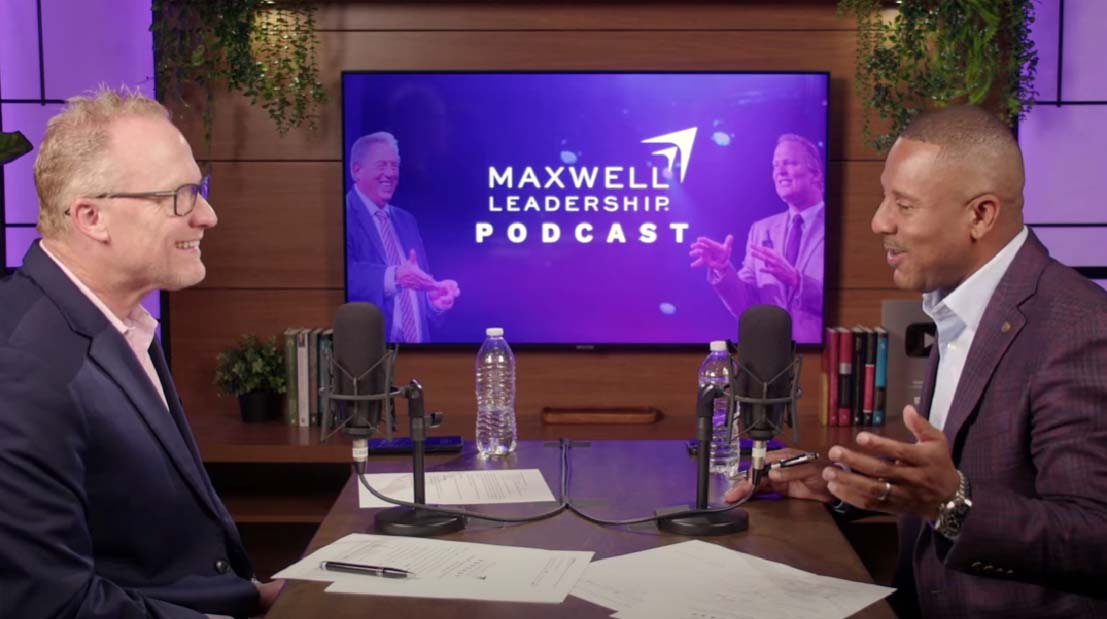
Welcome to the Maxwell Leadership Executive Podcast where our goal to help you increase your reputation as a leader, increase your ability to influence others, and increase your ability to fully engage your team to deliver remarkable results. Hi, I’m Perry Holley, a Maxwell Leadership facilitator and coach.
Chris Goede:
And I’m Chris Goede, executive vice president of Maxwell Leadership. Welcome and thank you for joining us today. Before we get started, I want to encourage you to go to MaxwellLeadership.com/ExecutivePodcast. There you can leave a question, you can leave a comment, maybe even a topic for a future podcast. We would love that and be able to kind of answer that question during one of our episodes and serve you well. Today we’re going to talk about a soloist to a conductor. Now this is a phrase that John has created and it’s where you go from, hey, how do I go from being an individual contributor to then leading the orchestra? Right. And it’s a leadership shift that you have to make.
Chris Goede:
But today we’re going to take a little interesting spin on this and we’re going to talk about what is that soloist to do?
Perry Holley:
So it’s from the soloist side, the.
Chris Goede:
Soloist side, what should he or she be doing? As they are still continuing to contribute as an individual, but beginning to prepare themselves for leadership. What are the things that they can be doing themselves to get themselves ready? Because we know this. It’s not you get a promotion, you get an opportunity. You don’t get to say, I am now A leader, right. It’s a, it’s a process. You just don’t, you don’t flip that switch on. But all of us have a goal to continue to get promoted, continue to grow. And so part of that is how do you increase your influence on the five levels of leadership model before you get the title? And so that’s what we’re going to talk about today.
Chris Goede:
It’s an interesting spin. What can you do to be prepared for the next opportunity to lead at a different level?
Perry Holley:
And this came up from one of my coaching clients who love this idea that, and it is one of the number one problems we hear about our individual contributors, we take our star individual contributor and we promote them to be a first line manager and then they crater, they, they fall apart. And that’s because we haven’t done a good job. But it’s not fair. I think next week we’re going to talk about from the organization side, what should you be doing to prepare your soloist to conduct? But what should the soloist be doing? And it does this shifts in thinking. This comes from John’s leadership writing. But I think the first big shift is about your definition of success. And you think about it. When I’m an individual contributor, my definition of success is doing good work, finishing my project, getting it turned in.
Perry Holley:
It’s all about me and my individual work. But if I’m going to start thinking today like a leader, like if I already had that, how does the conductor think? How does the manager think? Then it’s no longer just about my input. It’s about, am I creating conditions for the team and for others to succeed? I still need to do my work, but I’m also looking at the bigger picture of things. I’ve always asked the question on coaching calls is what would success look like if you, you weren’t the one doing the work? And most of them go, well, what do you mean I’m not doing the work? What would it look like if you had others doing the work? And that mindset shift can prepare to get you in that conductor mindset. You think about, you’re a soloist, you’re the number one chair violin soloist, and you’re saying, man, you’re a fantastic violinist, why don’t you lead the orchestra?
Chris Goede:
Right?
Perry Holley:
You think I don’t know how to lead an orchestra? So you become super soloist and try to play all the solos.
Chris Goede:
Yeah, yeah, yeah, yeah. Great. This is a great image of a leadership shift that is going to happen. And so one way to practice that shift is leading without a Title, as we just mentioned, you know, five levels of leadership. Level one is where you are leading people because you have the title. Well, let’s, as an individual contributor, as a soloist, let’s start thinking about what are some of the things that you can be doing to what we call maybe experiment with your leadership. Like what does it actually feel like to wear that, that weight of, of influence of leading people that could look like maybe you’re mentoring a new hire. Maybe you ask for the opportunity to facilitate a meeting.
Chris Goede:
Maybe you lead and raise your hand and say, I want to be a part of that. As a cross functional project. I have one team member on my team that when something, anything comes up, they’re the first person to say, I’ll run with that. I’ll figure it out. Individual contributor.
Perry Holley:
But he wouldn’t be me, would it?
Chris Goede:
But it’s not you. Okay, I’m sorry. But it’s, it’s getting to a place where you are, I don’t want to say practicing, but you’re getting into the throes of understanding how to conduct. Right. An orchestra without actually holding the baton. Right. Which, this is really good for me because I’m not musically inclined. So this, all of this is foreign to me in these illustrations.
Chris Goede:
I’m just kidding. But if you can’t, if you can’t influence people without a title, Perry and I would tell you it doesn’t look good for you when you become a leader.
Perry Holley:
Right?
Chris Goede:
Because what breaks our heart is most leaders around the world lead from level one, which is the command and control, because I said so. And oftentimes that’s because they just haven’t practiced before they ever even get there. And I tell people all the time that the hardest leadership role is to lead a group of volunteers. Now those volunteers probably want to be there because they signed up to volunteer. Maybe some of your people don’t want to be where they’re at while you’re leading them, but to be able to say, hey, I’m going to lead a volunteer group through this, what does that look like? How do I connect? How do we produce? How do I develop them and go through that process?
Perry Holley:
Well, the big piece of this, moving from solo us, you’re kind of by yourself, your own results, your own playing your own instrument. Now I’m going to conduct. I’ve got to manage all the other instruments. And so relationship skills or people skills begin to become a really big part of leadership. So could you, while you’re a soloist, while you’re an individual contributor on your Team, could you begin working on your people skills? How would you do that? Maybe practice giving feedback to your peers, entering the discussions about how to make things better, how to improve our performance. We could, instead of giving answers to every question that we’re asked, maybe we could learn to ask better questions. And you know, people respect leaders who listen deeply and help discover their own solutions. So I think you could really work on some areas of connecting with people.
Perry Holley:
This level two in the five levels, conflict resolution is another big one that teammates find, help us find common ground, work with your team, compliment, don’t compete and really begin to draw people together. So when you think put those two leading without a title that you said and then now building your people skills, you’re a long way towards developing influence. Even though you don’t have a title, title does give you some influence, but as we say, not much. And you really want to be working on these influence building techniques before you get promoted.
Chris Goede:
And I would say this as you’re listening, maybe you are an individual contributor. This is a little bit of a roadmap for you. Maybe though you’re, you’re leading a team and you have a desire to lead a bigger team and this is going to apply to you as well as you begin thinking about this application. But it all, this is where it all starts though. You have to figure out how to manage yourself because if you can’t manage yourself, then managing others is going to be extremely overwhelming to you and it’s not going to be extremely productive either. And so that means with your time management, that means understanding how to grow your eq, your emotional intelligence, that, that means that you need to be on a growth plan. Perry and I talk a lot about the fact that leadership is contagious, people are watching you. Doesn’t mean you have to have a title.
Chris Goede:
Maybe you’re leading a smaller team, want to lead a bigger team, but they’re watching you. So how do you manage stress? Are you willing to learn from feedback from your team members? How do you receive feedback? All of those things tie directly into what we call the law, the lid in the 21 laws. And as your ability to influence others kind of will set that lid on your leadership, the higher you can raise that before you actually get that next leadership opportunity that you’re looking for, the better you’re going to be off and be able to actually influence and lead others around you.
Perry Holley:
I love this one. Because if you can’t manage yourself, it’s often said, why would anybody else let you manage?
Chris Goede:
That’s Right, that’s right.
Perry Holley:
But managing your time, managing your emotions, managing your energy, managing your priorities, these are all things that people are watching and they’re deciding, are you someone that influences me? You’re late for every meeting, you’re not prepared and you lose it. You’re triggered easily. I’m not influenced by that, and you have no influence with me. That’s right. Yeah, that’s right. Another area I would say, if you’re a soloist, hopefully to be promoted to a conductor one day is to. This is going to be tough.
Chris Goede:
Yeah, very tough. I’m like, what?
Perry Holley:
Let go of being the expert? That’s funny. As an individual contributor, you’re, you’re kind of your, your bread and butter is your expertise, what you know and what you’re great at. And people look to you as an individual contributor to really how you build your career on what you’ve done. But when you’re a leader of a group of people, when you are the conductor of the orchestra, you, you, you can’t play. You may understand all the instruments, but you don’t know how to play all the instruments, most likely. And, but you know how to get the best out of people who can play those instruments. So this would be about celebrating the team, celebrating team wins, having a succession, you know, who, who can. I could back me up if I were not here.
Perry Holley:
Who could I be building skills in, having the abundance mentality of sharing what I know, not hoarding what I know, making as many people around me smart as I can. These are tough things when you’re an individual contributor, but it actually is. The definition of leadership maturity is that I don’t need to be the expert. I have a bunch of experts around.
Chris Goede:
Me and there’s, there’s a little bit of leader pride in this, of being able to overcome this. I, I also think get ready and be comfortable because as you do this and you allow your team to, or the people that you are working to influence do a task or do something that maybe you feel like you’re an expert in, I promise you they’re probably going to be able to do it better than you, and it’s going to raise the lid. As we were just talking about a minute ago, as a soloist. Right. As an individual contributor, we want to encourage you, make sure you study leadership. This goes back to that personal growth journey. Right. You can’t give what you don’t have a man become a student of leadership before you.
Chris Goede:
Actually half that leadership title before you have it. Like, study it. What does that look like? Instead of trying to go to the school of hard knocks and you’re like, well, man, I learned this leadership, which both you and I have plenty of those mistakes. When we did this and when we did that, it would have been awesome if we could have maybe studied some case studies and looked at some things ahead of time. The other thing is, is that ask good questions of those that are leading around you. Maybe there’s somebody that you, you from a distance, you love the way that they lead or they’ve increased their influence or their leadership style, whatever that might be. And, and ask questions about their leadership, about what their role is in the company. And I think just one question will, will drive another one that’ll open your eyes to the world of leadership before you, before you get promoted to the conductor.
Perry Holley:
Well, just a couple of practical ideas there. If you are, you say, yes, I need to be investing in myself in leadership training, even though I’m not going to. Company doesn’t offer leadership training, but I want to be promoted one day or I want to go to the next level in the company is buy a copy of the 21 irrefutable laws of Leadership. It’s an easy read, but it’s got so many practical tips on how to grow your leadership. The five levels of leadership we talk about often is another easy read. But the five levels of influence. How do I work my way through these five levels of influence? One thing a lot of our clients do is they buy a copy of John Maxwell’s Daily Reader Leadership Daily Reader365. One page, about two minutes of reading a day.
Perry Holley:
But it gives you a leadership principle that you can apply for that day. And think about it. These are small things, but if you do it over time, consistently, they will compound into amazing results. And you think, I don’t have time, I don’t have time. But. And I’m telling you, three minutes in any one of these resources will change your life and it will set you up to be the best conductor when that time comes.
Chris Goede:
Yeah, yeah, it’s, it’s an opportunity for you to change your perspective and, and increase the lid. So finally we mentioned, I was talking just a minute ago about asking questions of your leader. I also want you to think about it in a way of not just building it vertically. I want you to think about, wow, there’s peers inside the organization that I could go and I could have learning lunches with. John talks about learning lunches all the time. He’ll schedule a lunch with somebody and then comes with a page of Questions and ready to take notes. Are you taking the opportunity to be able to do that maybe across departments so that people begin to get to know you, get to know your hunger for learning and becoming a better leader. Because when you step into your leadership role, often, especially early on, your credibility will and success will be based off of the relationships that you have already built leading up to that.
Chris Goede:
We have a saying that we talk about where the compensation you have today is not for today. It’s what you’ve done in the past that gets you today’s compensation. It’s the same thing with influence. As you become a soloist into a conductor. What we want you to do is, is to make sure that you’re working ahead of time so that when you become a conductor. Right. Your influence is based off of what you’ve already done in order to get this role.
Perry Holley:
Final thought, I’ll let you close it. This idea of asking for feedback is another great thing you can do. You don’t need to wait for an annual review or get your formal feedback from your performance review. But could you be asking your leaders today, what are the great leadership qualities I have? Where am I lacking? What should I work on? Put yourself out there and say, I want to get better at what I’m doing. And get people confident that they can share with you openly about how you can grow in doing that.
Chris Goede:
Yeah. What’s it like, what’s it look like to be on the other side of me here inside this organization? Right. You don’t have to be a leader to ask that question. You can ask that question and get really, really good feedback because that is going to be a glimpse of what your leadership style, your leadership brand is all about, even as an individual contributor, as a solace before you move into a conductor. So as we wrap up, here’s a couple things for you. This goes along with kind of the framework that we’ve given you here as an individual contributor, as a solace. First thing is man, model excellence. Right.
Chris Goede:
Do your job extremely well to where people go, man. Like Perry’s getting it done over there and he’s modeling excellence. Serve others. We’re big about adding value to people by serving them. And then ask great questions. And through all of that, you’re going to build trust. People are going to begin to build trust. And before you know it, whether you’re, you’re, you’re leading an initiative or a cross function, you’re going to look back and there’s going to be people around you wanting to be a part of all that.
Chris Goede:
Because remember, John says, listen, if you think you’re leading and you’re on a walk, you turn around, there’s no one there, right? You’re just wandering like you’re. You’re not leading, you’re just on a walk, is what he says. So know that the title then comes to people that already know that you’re a leader worth following. What do I mean by that? One of the things we do here is we very rarely will promote unless we know that people are already following them and that their influence has grown. So that people go, well, it’s about time. Like, could you get to a place as a soloist or an individual contributor where people go, man, Perry ought to be leading that team. Perry ought to be leading that initiative. When the people start to talk about it like that, you know that you’ve taken some of these things and put them into action.
Perry Holley:
It’s like the law of attraction. You become very attractive to people when you’re doing these things.
Chris Goede:
That’s right. 100%. Yeah.
Perry Holley:
Good. That. Well, fantastic. Thank you and hope you got some great insights on that. If you’ll remember to go to maxwellleadership.comexecutivepodcast, you can learn about our offerings, like the five levels of leadership, our other podcast offerings. You can also leave us a comment or a question there. We love hearing from you. Very grateful you spend this time with us.
Perry Holley:
That’s all today from the Maxwell Leadership Executive Podcast.
Transcript created by Castmagic.




Be the first to comment on "Soloist to Conductor – What’s a Soloist to Do?"