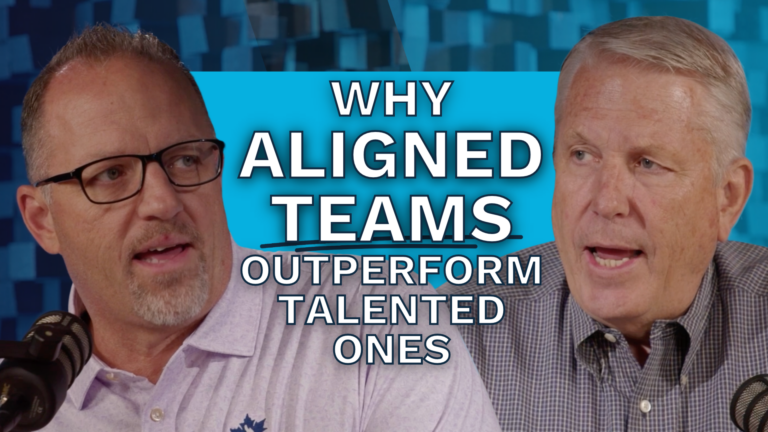
In this episode, Chris Goede and Perry Holley explore common leadership blind spots and what growth requires to overcome them. Find out how to leverage self-awareness, honest feedback, and systems to identify and address often overlooked areas. This episode also shares practical strategies for handling difficult conversations, balancing results with team development, and maintaining clarity in communication.
Perry Holley:
Welcome to the Maxwell Leadership Executive Podcast, where our goal is to help you increase your reputation as a leader, increase your ability to influence others, and increase your ability to fully engage your team to deliver remarkable results. Hi, I’m Perry Holley, a Maxwell Leadership facilitator and coach.
Chris Goede:
And I’m Chris Goede, Executive Vice President with Maxwell Leadership. Welcome and thank you for joining us. Today we’re going to talk about leadership blind spots and what growth requires when that happens.
Perry Holley:
There’s something I’ve been meaning to talk to you about.
Chris Goede:
We’ve talked about blind spots and maybe some of you have looked at this kind of individually before. And so we’re going to talk about leadership blind spots, and these are things that are easily missed. Okay? So let’s just go ahead and throw this out on the table. Every single one of us, we define leadership as influence. And so they coexist. You have leadership blind spots. They are just there. They’re easy-to-miss patterns that before you know it, the team is then beginning to expect that of you.
Chris Goede:
And we want to talk about, okay, how do you work through that? And so we’re going to walk through the 5 of the most common blind spots, and we’re going to talk about why they get harder to see the more senior that you become. Not in age, but in your role inside an organization. Maybe it’s both, but I just wanted to clarify that. And then we’re going to give you some handles, some things that you can actually use and do so that you can identify it, be aware of it, and then work to solve it.
Perry Holley:
So at the risk of making you think I have a plan about how all these podcast episodes fall in line, but a couple weeks ago we talked about having a broken culture. And last week we talked about the self-awareness.
Chris Goede:
Yeah.
Perry Holley:
And I’m finding that a lot of these culture-breaking things we talked about, what can break a culture, they look like leadership mistakes. And we do make mistakes. And trust me, I know we make mistakes. But after a while, one after the other, they begin to compound into really the things that break cultures and show me you’re not really that self-aware. But I’m beginning to think Maybe the mistake is not so much a mistake as it could be a blind spot. So instead of leadership mistakes, I’m thinking, do we have leadership blind spots? But what do you, in your own experience working as a leader and with other leaders, what do you see?
Chris Goede:
I like that a lot because when we talk about blind spots, it’s something that you’re unaware of, and oftentimes it’s in a strength area of yours. Ooh, that’s And so I’m thinking about even something about for me, there are times a blind spot for me would be to run meetings and they are way too highly relational for those meetings and they’re not as productive as they potentially need to be. I thought it was a great meeting. And so I just keep doing that and I lead that way.
Perry Holley:
I tell people about the way we would say this in some of our training would be we all have superpowers. You do have a superpower, something you just do better than others. But on the backside of every superpower is a blind spot. So to his point, Chris is a— one of his superpowers is highly relational people guy. And it’s one of mine as well. And we’re very dangerous together. But he’s right. His superpower to come in and have a meeting where you feel like we are all connected, we all love each other, this is fantastic.
Perry Holley:
We got nothing done.
Chris Goede:
Right.
Perry Holley:
How did that happen? Because on the backside of your blind spot, your blind spot on your backside of your superpower is, I didn’t realize I realized I was not getting down to business to do that.
Chris Goede:
What do you mean we had to shut the doors? I loved hanging out with you.
Perry Holley:
Well, you and I have scheduled a 30-minute meeting, spent 27 minutes— Yeah, that’s right. Kibitzing about what our sons are doing and how we’re, you know, our kids and our wife. And then we say, gosh, that was a pretty meeting. We need to schedule another meeting ’cause we only have 3 minutes left.
Chris Goede:
Just to talk about stuff. Yeah. And so I’ve had some people in my life that have helped coach through that. And they often say build a team or a system around where you may be challenged and to lead in your strength zone. And so I’ve had to do that a little bit, but we’re going to talk about the 5 that show up most often. We get to work with leaders all the time and organizations around the world, all types of different industries. And so we thought we would just give you each of these and then talk a little bit about them. The first one is believing people know what you mean.
Chris Goede:
When you haven’t actually been clear. This is, man, this is something that happens with all of us. And I also think that the faster you’re moving, the more decisions you’re making, the more things that are going on, the lack of clarity that’s actually happening. And you’re communicating things to people where they don’t, first of all, they’re not clear, but then secondly, they don’t even have context behind it. This happened with my son and I. And he was talking to me a little bit about, um, okay, this is, we were down, uh, in the town he’s in and we weren’t gonna be with him next day, but we needed to park somewhere and we needed to go this route. We needed to do this. And so he’s just driving around.
Chris Goede:
He’s got all kinds of things in his head and responsibilities, and he’s probably just upset that mom and dad are there taking up his time. And so he ends up communicating, you good? And I’m like, yeah, yeah, I’m good. I wasn’t good. And the next day I did my own thing and fortunately found it out. And my wife and I were talking a little bit about this and she was just like, he absolutely thought he was super clear talking to you. And because oftentimes as leaders, what’s in here doesn’t always end up coming out here. And then the other part is, isn’t received the same way. And so we really gotta work hard to make sure what we meant and what we intended was actually—
Perry Holley:
Right.
Chris Goede:
Communicating.
Perry Holley:
How would you discover that? So it’s a blind spot. Again, by definition, a blind spot is something that you can’t see. But how would you discover that you have this?
Chris Goede:
A couple things, simple things that I do, not overcomplicated. This is not demeaning. And I love even the way that you talk about this a little bit when we’re doing some training. We’ll be, we’ll be like, hey, what did you hear me say? Right? Like, I just I need you to repeat back to me so that I can make sure that I did a good job of communicating, not that you did a bad job of listening. And that’s one thing. The other thing is I use that scale that I’ve talked about with 1 to 10 with one of my team members. Hey, how clear are you on what we just talked about and the next steps that you’re taking based off that conversation on a scale of 1 to 10, but you can’t use number 7? Yeah. What is 7? 7, Switzerland.
Perry Holley:
Switzerland. Yeah. And that, that, that rocked everybody’s world, by the way, cuz everybody wants to say 7.
Chris Goede:
Everybody wants to say 7. So they will say 8 and I’m like, great, go. We’re clear. You got context. If they say 6, we are still gonna continue, uh, to meet because I just, it makes me realize that I have not been extremely clear and it’s on me as the communicator to do that.
Perry Holley:
Another big place a blind spot can happen is that you hold on to control. Why are you laughing?
Chris Goede:
I have another story for you in just a minute here.
Perry Holley:
Well, holding on to control instead of building trust. And I often think of this as, you know, I don’t mean it to be control that I want to double-check your work or I want to stay closely aligned with what you’re doing and stay involved in your decisions and that sort of thing. But it comes down as a bit of micromanagement, which It communicates to most people that you’re in my business, you must not trust what I’m doing. I don’t mean it to come across as controlling. I just don’t trust you.
Chris Goede:
All right, so before I share how I’ve discovered mine sometimes, in your past or experience, or as you’re coaching leaders, how do you encourage them to discover this type of blind spot? Because I’m just imagining with the engagement level that’s in the world, There are a lot of leaders that are leading straight from level 1, which we call command and control, kind of because of your title. So there’s probably a lot of control that’s going on. How do you encourage the leaders to discover that blind spot?
Perry Holley:
Yes. Well, if you have the— let’s continue with the 5 levels. If you have the level 2 relationship and we’re bordering into level 3, producing results together, I have to learn by building that relationship, knowing where are you and how are you with the work and your competency level and your your comfort with what’s going on, that I tried a little trial and error giving you more. It’s like the art of delegation is that I begin to give you more and more, but over time I build trust with you that you understand the expectation, you’re clear on where we’re going, you’re clear on what I expect, and I can take my hands off. Now, we did a podcast probably last year on improving your micromanagement, but that was based on Admiral—
Chris Goede:
Is it McRaven?
Perry Holley:
McRaven. Yes, thank you. And saying, don’t micromanage the people, micromanage the process. Love that. That’s a big difference. I’m gonna make sure you understand what’s expected, then I’m gonna get outta the way. But don’t—
Chris Goede:
Now let me tell you mine. Here’s another way. I, um, was meeting with an individual, uh, and, and I flew about 5 hours to spend the day and think about different partnerships and growth. And, and so we started unpacking some stuff and it turned more into a coaching session. And within about the first 90 minutes of being there, he looks at me and says, uh, Why do you feel like you need to control everything? And I was like, who asked you? I flew all the way out here to spend the day talking to you. And so, or just get a coach that can kind of just speak into you on that. Because when you do, here’s what I’m gonna tell you. It is a blind spot because you don’t think that.
Chris Goede:
You don’t think you’re doing that. You think you’re helping people. You think you’re taking things off the plate. You think you’re double-checking all these things that we could go through and talk about. The third one is focusing on the results while Ignoring team development. This is a short-term issue problem. What I mean by that is a lot of us do this and it’s a blind spot. We don’t know because we need short-term results.
Chris Goede:
We know we need to move the needle. We know we need to drive cash. We know we need to increase customer service index, all these different things. And so we immediately go to the production side of it and the results because we can see that, we can celebrate that. Versus if we were to take a little bit of a slower, maybe harder, maybe a little bit more of your time over a couple of months in developing people, then what’s going to end up happening is that they’re going to begin to produce, they’re going to begin to develop. And so I love the statement of, if you don’t do it, what you’re doing is you’re borrowing against the future of that individual being able to to drive results. So any thoughts on how you discover that as a leader if you’re focusing too much on the result?
Perry Holley:
Well, I think it’s just a natural tendency to— we get in a hurry and we’re always busy. Everybody’s busy and the personal development, team development takes a backseat. So this idea of— we’ve talked about it with having an individual development plan for everybody on the team, 100%, including you, but you have to make that a part of the regular conversation. So if you have one-on-ones, my goal was I started it once a month, The one-on-ones were every week, but one of those, I would ask the teammate to bring their IDP development plan with them to the call. I want to see how you’re doing on that. And that began to communicate—
Perry Holley:
I learned the questions I ask tell people what’s important. So if I’m always asking about results and asking about the project and asking about how much progress you’ve made, that’s what’s important, not development. But when I started asking about, what are you doing to develop yourself? Show me your plan. I’m going to ask you about it once a quarter at one of your one-on-ones. They started doing it. So making individual development, team development a priority by asking questions about it, showing them what you’re doing, and then reflect that back, they’ll start doing it for sure.
5 Levels of Leadership:
Even strong organizations plateau when leaders are not aligned. Execution slows, communication breaks down, and teams work harder, but not better. At Maxwell Leadership, we help organizations turn leadership into a system, not a title. Through proven frameworks like the 5 Levels of Leadership, Leading Through Change, and resilience training, we equip our leaders to drive clarity, accountability, and results at every level. Because when leadership improves, everything improves. If you’re ready to scale leadership across your organization, start with a free resource. Download the 5 Levels of Leadership Field Guide at 5LevelsOfLeadership.com. Inside, you’ll find practical tools, self-assessments, and a 30-day plan to start building leadership that actually scales.
5 Levels of Leadership:
That’s 5LevelsOfLeadership.com.
Chris Goede:
I also think you can discover this blind spot by going, hmm, do I have a succession system throughout the organization? Right? We talk about succession planning, but we like to talk about it a little bit further because we think it should be at every level, which then leads to, hey, if you weren’t in this meeting, if you weren’t running this project, who would do that?
Perry Holley:
Who would you send? Yeah.
Chris Goede:
And if your answer is nada, then you probably are focused too much on that and it is a blind spot.
Perry Holley:
Yep.
Chris Goede:
The 4th one is avoiding difficult conversations to keep the peace. I’m gonna let you dig into this one because we are rolling out right now, we’re super excited about it, this, the firm feedback that is being so well received. And we know you gotta earn the right to give this feedback, but you have walked hand in hand in developing this course. with Jeff Hancher and for organizations. So let’s talk a little bit about this as a blind spot on why people are avoiding it.
Perry Holley:
Yeah, I think we did a podcast not too long ago about stop being nice. And so stop being nice and telling people what they want to hear and be kind and tell them what they need to hear. And I hear Jeff Hancher in my other ear saying, you’re not being— he said, people don’t do this. They don’t have these conversations because they don’t want to come across as being mean. He said, I’m not being mean, I’m being firm. I keep hearing him say, I’m not being mean, I’m being firm. This idea of First of all, if you have a problem and you don’t address it, it’s not just going to get better on its own. It generally starts to deteriorate and become worse.
Perry Holley:
You now go back to a previous— we said last week, week before about the culture, you’ve tolerated something by not addressing it. You’re blessing it and now you’ve tolerated it. Now you’re sending a message to everybody that that behavior that I should have addressed is okay. So we got to step up to this. What is it you’re— To me, it’s just deciding. It’s not worth The problem is going to be down the road, just step up to it now. But it also says, this is nothing Jeff has taught us, if you have clear expectations—
Chris Goede:
That’s right.
Perry Holley:
If you can give feedback, hold people accountable. But if I have given clear expectations and I have a good relationship, that’s how you earn the right to say hard things. I have clear expectations and you know I love you, then you really want me to say hard things. You’re that way with me. I feel like you could say anything to me and it’s not going to come across harsh because I know very clear about what you need me doing, and I know you care about me. And so if you have not been clear and you’ve not shown care, anything you say that’s going to be a little off the beam is going to sound harsh and mean and like you’re— why are you yelling at me? I’m not yelling. Well, it sounds like you are because I’m not clear what you want and I don’t have a good relationship.
Chris Goede:
Yeah. And I love this. It is a blind spot for a lot of leaders. I mean, it’s not— not many people love to have difficult conversations. And so I think the key in what Perry said there is You gotta have the clear expectations up front because then when you have those difficult conversations, nobody should be surprised about where the conversation is. And is it Brené Brown or somebody that said, I can’t remember who it was, that says, they say, do the hard so that it’s easy versus do the easy so that it’s hard. The hard on the front end is you as a leader is getting extremely clear on expectations and KPIs and making sure you’re heard clearly so that you can then have those Conversations in the moment, not delay them. The last one is assuming culture is what you say instead of what you tolerate.
Chris Goede:
And as Perry mentioned just a minute ago, we talked a little bit about this last week, so we’re not going to belabor this, but we know what we’re talking about here is where, meaning as a leader, you say, hey, I value people being honest with me, but then maybe you’re rewarding or you are not engaging those that are honest, but more of people telling you what you wanna hear. The yes, you know, the yes, the yes women, the yes guys that are out there on the team. And so it can absolutely be a blind spot.
Perry Holley:
Do you think these get harder as you go higher in the organization? Why does more of a status make blind spots? Is it because nobody will tell you the truth or?
Chris Goede:
Yeah, that’s exactly right. Right. Like they, they don’t want to, disappoint you, or maybe they don’t want it to look bad on a part of the organization that maybe they’re tied to. They just don’t. They want to keep it to you. And here’s what I’ll tell you, that is so far from the truth because the leaders want to hear, for the most part, they want to hear that true transparent feedback.
Perry Holley:
So let’s just, before we wrap this up, let’s be a little practical. So if you said, yes, I’m aware I have blind spots, What would deliberate effort look like there?
Chris Goede:
So, what one of the things that I think we would start looking at is saying, okay, can we get this feedback, right, from other people that this is how I’m showing up? It’s a blind spot. I think also the other thing we gotta think about is where are you super strong? We started off with a story early on in this message about me in meetings and it being Highly relational. I’m also still conflicted ’cause I’m thinking about some other meetings that I have. Matter of fact, I have a standing meeting every single Thursday morning with a client, good friend of ours. They go very similar to our conversations, and I don’t know that I’m serving him well, but I know that’s his personality and I think he probably enjoys that.
Perry Holley:
Yeah. And you invited me to one of those calls and we had to reschedule our whole day.
Chris Goede:
Yeah. And usually, by the way, Perry used to have his one-on-ones after the call and I forever would be texting him and he knew—
Perry Holley:
My one-on-ones became 3 minutes.
Chris Goede:
That it was absolutely about it. So I would just say, to answer your question, it’s always awesome to have people around you that can speak into that. Secondly, look on the other side of your strengths as a leader, and more than not, it’s going to show up. Let me go back to another example about being highly relational and people-centered, avoiding the difficult conversation. I promise you, if you’re a people people, that’s going to be one of your blind spots. And so Perry put these 5 together because these are the ones that we see in leaders that we coach and that we lead with, right? Thousands and thousands of leaders on an annual basis.
Perry Holley:
I would also encourage you to ask questions when things are not going maybe the way you expected it to go. Instead of defending your decisions or defending your logic or defending what you meant, ask questions. Go to curiosity and say, how did that come across? Or what was the impact? Or why What did you notice about that? And it starts to open up that you may have been a little directive, but you don’t have a blind spot about how the expectations were set. But I find it easy the higher I go just to defend that I said so, and I miss the whole opportunity to grow and to learn in the midst of that.
Chris Goede:
So the first one, seek feedback. Second one, ask questions before defending. The third one is Challenge your own assumptions as an individual and as a leader on purpose. And what we mean by that is, hey, what would I be doing differently if I were actually wrong about this? Now, we may have lost half of you right there when I said wrong about this, but oftentimes, not oftentimes, a lot of times we have a bias, right? And we’re only looking for evidence that confirms what we’re doing, but we need to step back. We need to challenge that about our leadership and make sure we’re doing that deliberately.
Perry Holley:
And I think finally, number 4, no matter how high you go in the organization, I was going to use the word coachable, remain coachable. But also one of my favorite words, and it’s very attractive in a leader, is remaining teachable. That says, I’m open to the fact that I don’t get it all right. The first time, and I might need some help and your insights, and I could actually use your input, uh, to remain coachable to people. And even after the fact, asking, uh, you’re real good about this, how could I have done that better? How— what did you notice about that? And it kind of reveals, I didn’t see that. Okay, that’s a blind spot. And it starts to really open the door for you there.
Chris Goede:
Yeah, absolutely love that. Well, listen, the common thread— and we’re trying to put the cookies on the bottom shelf for you here throughout all of this— is None of our conversation today is about having the answer. It’s about being willing to ask questions and wonder, what am I missing? Or how am I showing up that I’m not necessarily aware of? Remember, blind spots are things— here’s another way to say it— that other people know about you that we don’t know, or maybe we do and not to the extent of which we have. So we gotta figure out, right, what do those other people see? And if We stop receiving feedback as leaders, then we’re going to hit a lid. And we talk about the law of the lid as leaders, and your organization and your team will never outgrow the capacity of your leadership. And part of that is figuring out what are those blind spots so that you can work through that. I’ll say this too, in my last little comment as I wrap up here. We talked a couple times about the higher you go in leadership.
Chris Goede:
Here’s what I would also say is that if you’ve spent some time in leadership and you’re leading people and you’ve been there and you’re kind of moving your way up through the ranks, people really evaluate your know-how, your competency a lot less, and they evaluate your consistency in how you’re showing up a lot more.
Perry Holley:
Yes.
Chris Goede:
And so that consistency to this thought here, is around evaluating your blind spots. That consistency needs to show up, especially the higher you go in leadership.
Perry Holley:
Totally agree. Great stuff, Chris. Thank you very much. And as a reminder, if you’d like to get the learner guide for this episode, you can do that as well as learn about our other offerings, podcast offerings, as well as our coaching and classroom offerings. You can do all that at MaxwellLeadership.com/ExecutivePodcast. You can also leave us a question or a comment. We enjoy hearing from you. Very grateful.
Perry Holley:
That you spend this time with us. That’s all today from the Maxwell Leadership Executive Podcast.
Transcript created by Castmagic.