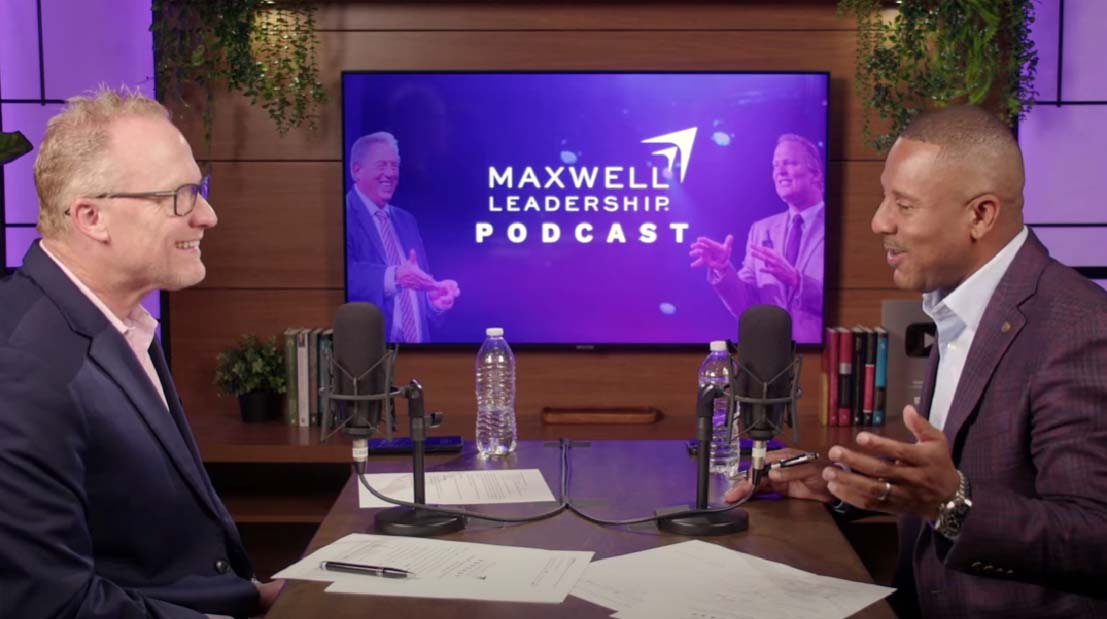
In this episode, Chris Goede and Perry Holley explore the difference between being busy and being effective as a leader. They illustrate how motion—such as planning and preparing—can often masquerade as progress when true impact comes from taking decisive action. You’ll discover lessons from real-life case studies and practical strategies for turning meetings and collaboration into actionable steps that deliver real results.
Perry Holley:
Welcome to the Maxwell Leadership Executive Podcast, where our goal is to help you increase your reputation as a leader, increase your ability to influence others, and increase your ability to fully engage your team to deliver remarkable results. Hi, I’m Perry Holley, a Maxwell Leadership facilitator and coach.
Chris Goede:
And I’m Chris Goede, Executive Vice President with Maxwell Leadership. Welcome, and thank you for joining. I want to take a minute as we get started and just remind you, Perry and I hear all the time when we’re out on the road with organizations or clients, man, we bring this lesson to our team and it allows us just to have an organic conversation about leadership issues and what’s relevant, what’s not inside our organization for the first 5 or 10 minutes of the team meeting. So use this tool, keep using it. If you want to download the learner guide so that the team can work through it, or maybe you want to take notes on it, I want to encourage you to go to MaxwellLeadership.com/ExecutivePodcast. There you can fill out a form if you have a question for us or a topic, or if you want to download the learner guide that Perry put together for us. I think he’s finally figured it out. We’re over 400 episodes now.
Chris Goede:
And so that learner guide, you’re almost there.
Perry Holley:
Almost delegated it off somebody else.
Chris Goede:
That’s right. Well, today’s topic is Busy isn’t the same as effective. Perry, this hurts my feelings because I like to make a list.
Perry Holley:
Yes.
Chris Goede:
And I just like to cross it off no matter what priority level these things are in.
Perry Holley:
Easiest ones first.
Chris Goede:
The easiest ones first. Like, I want to feel like I’m doing something even though it may not be productive. But I’m super excited really to talk about this today because I think this is something that I think we organically It just happens inside our leadership sometimes, and we need to refocus it. And so you were talking to me a little bit about James Clear with Atomic Habits, love that book. And he was talking about the distinction between motion, which is what I’m talking about, right?
Perry Holley:
Right.
Chris Goede:
Doing things that maybe are in preparation for us trying to accomplish something versus action, which is actually the step of producing. a result. And so I think we struggle sometimes separating the two of those organizationally and individually. But unpack a little bit further about what led you to bring this to the table.
Perry Holley:
Yeah, I’d love to tell you it’s all about you. Unfortunately, it’s all about me on this one. And I didn’t necessarily realize I had a problem, but I’m doing a book study with one of our coaching groups. They asked to do that book, Atomic Habits, and this chapter came up. But I also was coaching somebody in that organization, and I realized that leader that I’m coaching was continuing to have strategic discussions and just strategic planning and strategic and meeting after meeting after meeting. But I said, when are you actually going to promote the strategy? When are you going to begin to execute the strategy?
Speaker C:
Yeah.
Perry Holley:
Because yeah, we’re planning on it. I go, oh my gosh, that’s what I do. And I use for an example, I wrote a book several years ago and people say, when are you having your next book out? I go, oh yeah, I’m working on it. I’ve been researching that. I’ve been writing. I’ve got it pretty much written, but I’m looking at ways to publish. And I went back to the publisher, but now I’m looking at— I’ve been doing So much motion. And when I saw James Clear wrote that, your motion starts to look like you’re taking action.
Chris Goede:
That’s so good.
Perry Holley:
But at the end of the day, I didn’t do anything. I didn’t pull the trigger. I didn’t take the action. And so that’s really what I wanted to talk about was, as leaders, are we get consumed with this? What is he defined as motion, which is a lot of activity. But I get home and my wife says, how was today? Great. Did a lot of things. Didn’t get anything done, but I was busy all day to do that. So let’s break it down about what is the difference between motion and action? How do you see it as it resonates with you?
Chris Goede:
Yeah. So motion for me is, you just mentioned it, is researching, is planning, is meeting about the meeting. And this is where I get caught because this is the paralysis by analysis part. there’s no return on investment on that of what we’re doing at times. Whereas the action part of it, that is where we have behaviors that are actually going after and producing outcomes. And I know for me, one of the ways that as I look at this is I don’t have to have all the answers before I start moving into action, but I feel like I need to.
Perry Holley:
Yeah.
Chris Goede:
Right? And there’s a big difference between the two. The other thing I would say, is at times I can be risk-averse on certain decisions or certain things. And so the more I study it, the more I think about it—
Perry Holley:
Are you waiting for perfection? Are you waiting for things to all line up? I think so. I know this is in me, is that I’m waiting for— I don’t want to make a mistake or start too soon, or I can’t figure out what I’m doing. I know a good example. For me was, oh, you want to get in shape or you want to lose some weight or whatever. And so I’m researching diet plans and meal prepping. I’m looking at gyms and exercise workout plans. I’m taking all this action, but I actually never went to the gym. I actually never did.
Chris Goede:
You’re like, I’m going to prepare this perfect workout plan.
Perry Holley:
I mean, I could tell you, I said, I have every book, every diet book, every exercise book, and I can’t lose a pound. I don’t know what’s going on there. That was a lot of motion.
Chris Goede:
That’s going on. Not a lot of action. So John Maxwell talks a lot about the cycle of success, and we’ve mentioned it a time or two here before, and that’s helped me as well defining, hey, you got to get off the bench and you got to do it. But he talks about where, hey, you’re going to make a decision to act. Okay, you’re going to fail. So accept that you’re going to fail and then learn from it, improve, and then reenter to act again. And that’s really helped me get off of the motion into the action and feel comfortable with it.
Perry Holley:
You can always tell people it feels safe because there’s no risk that I can always say, well, I’m working on it.
Chris Goede:
I’m working on it.
Perry Holley:
You’re not getting anything done, but I’m working on it.
Chris Goede:
So you mentioned earlier about just some cautionary tales in business. Talk a little bit about, give us a little case study on one that you know well around Kodak and this situation.
Perry Holley:
Yeah, my brother joined Kodak years ago and I thought, are they still in business? But you study that story a bit and you’ll know it because Kodak in the ’40s, ’50s, ’60s, they owned the film market. If you’re going to take a picture, you were using Kodak film. And what happened later was digital photography comes in and Kodak’s film business goes through the floor, so much so that they can’t recover, and people like Canon and Fuji and others are taking away the digital market.
Chris Goede:
Right, yeah.
Perry Holley:
There’s no more film. But that, you think, oh, that’s unfortunate for Kodak. Yeah, it’s really unfortunate when you know the rest of the story, which was they had actually invented digital photography. They had been planning on it and researching it and building prototypes, and they came out with the first camera, and they had all the— they had it. in their pocket. They, they had it, but they never pulled the trigger to go with it because— and they had other reasons, which they didn’t want to— they thought it would cannibalize their film business.
Chris Goede:
Their film business.
Perry Holley:
But they didn’t think it was going to be that big a deal. Well, somebody else thought it was going to be that big a deal and they jumped. So a lot of motion for Kodak to lose the market by not taking the action on there. And I just thought, I mean, how much of that can be true for any of us?
Speaker C:
Your leaders are navigating change, burnout, and rising expectations every single day. The question is, do you have a system to handle it? At Maxwell Leadership, we equip organizations with practical leadership development that strengthens resilience, sharpens communication, and drives performance under pressure. This is not a theory. It’s leadership your teams can apply immediately because resilient leaders don’t just survive pressure, they lead through it. Start building that system today. Download the free 5 Levels of Leadership Field Guide at 5LevelsOfLeadership.com. It includes real-world case studies, common leadership pitfalls at every level, and a 30-day influence growth plan that your leaders can put to work right away. That’s 5LevelsOfLeadership.com.
Chris Goede:
I think that’s true for all of us in businesses. I think change is happening every day, especially with technology or whatever it might be. And if we don’t act, you’re talking about Kodak, if we don’t act on some of the things that we’re working on, Then we are going to become irrelevant down the road. And they didn’t know it at the time.
Speaker C:
Right.
Chris Goede:
But they did become that. So they were innovating and they weren’t short on the busyness of innovating and coming up with ideas. But then what ended up happening was they didn’t want to disrupt the old business model. And so that busyness just kept getting busy, just kept them busy and they never acted on what their intuitive— in their industry, right? They know that industry. So it’s interesting to think about this, even as I reflect on my leadership or our business unit, right? With the training, coaching, and consulting, how much of this are we just in the motions versus taking actions on changing what we deliver to the market to ensure that we’re adding value to our— our customers.
Perry Holley:
Think about the leaders we coach, though, as well. I mean, you’re in leadership, I’m in leadership. What are some other common areas where motion can take the place of action that you see in leaders we coach?
Chris Goede:
Yeah, I would say what comes to mind for me is collaboration. There are a lot of leaders out there that want to make sure that everybody gets to speak into it. Which we teach this, we talk about everyone wants to be seen, valued, and heard, but sometimes too much collaboration leads to just a whole lot of meetings and a whole lot of motions.
Perry Holley:
I was also going to ask you that, your calendars back-to-back meetings. If you’re in a meeting, can you tell if this is just a motion meeting or just an action meeting?
Chris Goede:
Yes.
Perry Holley:
And there are probably some that need to be motion planning and deciding, but Would anybody make the decision?
Chris Goede:
Yeah, I think you should have— okay, a couple things. Let’s talk about this for just a minute. I think a couple of things from a leader’s perspective about those meetings is what is the priority? If we’re in there and we’re talking about a certain situation as me, what is the priority of what is going on in the business in that meeting? And is everybody aligned with that? Or are we just meeting and we’re throwing another priority on the list, another thing versus saying, no, no, no, this is a priority. Everybody’s going to be in alignment with this. And at the end of the day, here are the next steps. Here are the action steps. For us, I think you got to have clarity around this to drive really good decision-making. But there was a time where when we were growing, we were really efficient.
Chris Goede:
in running the EOS model, right? They call ’em L10 meetings, and there are specifics. I mean, when you leave that meeting, it’s like, hey, yeah, we have motion. We love that idea. That’s where we’re going. But when we get together next week, Perry, here’s your 3 to-dos. Chris, here’s your 3. We’re driving towards that outcome. And so that allowed us to feel like at the end of those meetings that we had action steps coming out of that.
Chris Goede:
So I think you got to be very intentional about that in regards to the collaboration and the meetings that you call.
Perry Holley:
No, I think it’s very tempting to, even when we’re doing the L10 where you have that structure that we’re saying, yeah, I’m working on this and I’m working on that and think, well, what action is actually taking place? What I liked about the structure was you were to come to next Monday’s L10 prepared with your actions, not just the report of your motion that you’ve been taking. I’ve put a committee in place, we’re doing research. No, what action Have you actually taken?
Chris Goede:
Have you taken? Right. And so that next step allowed us to produce a result coming in and out of those meetings. Same thing with your one-on-ones. I would encourage you as you run your one-on-ones, as you end that meeting, have a call to action. What are the next, over the next 5 days, what are your 3 action steps? Get into an action, or especially as the leader, Because it’s contagious. And if you like to just meet and have conversations and use a lot of words, well, then your team’s going to follow that as well. Listen, this is not— this is a true story.
Perry Holley:
Okay.
Chris Goede:
There are some leaders that I’ve had in my life where I knew that if I would go into a meeting, I had not completed the task I needed to complete, but if I just got them talking, And I just went down this road. We would have a great conversation of a bunch of emotions and not cover my action items.
Perry Holley:
And then you say, oh, look at the time.
Chris Goede:
And whoa, that meeting’s over. So leaders are listening right now. Let’s get practical. Let’s give them some action items, right? What should a leader do differently this week thinking about these 2 terms?
Perry Holley:
I like where you were going just now. You’d say about setting a, call it a decision timeline or a decision We do need to do some research. We need to look at it, but we’re making the decision by Tuesday at 4:00. If you need to, I mean, if you’re not good at moving decisions along, you need to say, I’m going to do some research. I’m going to have you look at it, but I’m making the decision. I’m not pushing it out. There’s not unlimited research and things going on. And a deadline often helps you turn motion into action.
Perry Holley:
It really, by time bounding things, it by definition will just make you come to the point. where you’re going to—
Chris Goede:
I like that. I will sometimes self-set a date for me where it’s like, instead of— because I will get into too much analysis, I’ll be like, Tuesday’s coming. Tuesday at 4 o’clock, I’ve got to turn this over to Perry. And so I’ve got to have action steps behind it. And so I think the question is not, do we have the perfect information? This is from my own personal experience. Instead, it is how difficult— if I make a mistake, how difficult is this decision to reverse? Right? Because some decisions are heavier than others as leaders. And so maybe you need a little bit more motion, but some aren’t.
Perry Holley:
No, but I see a lot of people waiting for— well, I see a lot of people. I do this too. Waiting for perfection, waiting for it to be just right. I’m waiting so the risk reduces or the chances of failure seem less, and I keep pushing it off and saying no. And like you said, is this catastrophic? I think it’s the right thing to do. Just instead of researching it more and doing anything, go ahead and put a time bound on it and go ahead. And what is the next action-producing step I need to take?
Chris Goede:
Yeah. And how many meetings have you been a part of and you left there going, are we going to keep talking about this?
Perry Holley:
Yeah, we’ve not done anything.
Chris Goede:
Right.
Perry Holley:
Well, you know me in meetings.
Chris Goede:
Well, Perry has opted out of meetings, and now I just send him, I’m like, here, do this. He loves it.
Perry Holley:
He does.
Chris Goede:
And it’s great. Yeah. But I’ve been on the other side of that, of which I do sometimes as a leader as well. And so one of the things, even just thinking about this week, is what’s something that has been in motion for you and your leadership or your team, maybe for some time, and you look at it and going back to what I just said a minute ago, Not all decisions are the same weight and pick maybe some that aren’t that weighty and start assigning and taking action steps.
Perry Holley:
Well, that’s the big takeaway for me after researching this and thinking about it as it applies to my own life is that for me to even in preparing the lesson, that motion can feel like progress. Action actually creates progress. And to me, I’m really thinking about it more and more. is especially in things that I’m working on is how much time am I just prepping when I should be moving and doing something? So why don’t you wrap it up for us?
Chris Goede:
Well, as I wrap up, a couple of things that I wrote down in my notes thinking about this topic and where I’m at. When I think about particularly, I’m just looking internally at my team, busy teams, and we all have busy teams, they may not have a capacity problem. They actually may have a clarity problem for me as a leader, going back to the priorities and what I was just talking about. And so people will, they’ll just stay in motion when they do not know which result is the priority, which then also leads me down a path that I don’t want us to go down, thinking about the engagement levels, right? They’re just sitting in the middle of the boat.
Perry Holley:
Right.
Chris Goede:
But they’re sitting in the middle of the boat because of my leadership. Because I’m allowing the motion to stay in there. And then I’m going to go back to decision-making as well. I want to encourage you that there is a big difference between making a decision and then managing a decision. John Maxwell talks about this a lot, right? Going back to working out, because I’ve been with you, I’ve been like, I’m going to work out. And so then—
Perry Holley:
He says, we got a great decision-making makers. We have poor decision managers.
Chris Goede:
Yeah. And some decisions that you make, right, leaders, you’re going to have to have a little bit of patience with them. But what decisions are you currently using patience with that you need to go ahead and make that decision and act on it? So this has been a great conversation for me, even just preparing to share it with you today and thinking through. My life. Because as I opened up, give me that to-do list, baby. I am going to mark that thing off. And then I get down and there’s 4 items left. And those are the 4 most important things for us to move the needle forward.
Perry Holley:
I totally agree. And I think as a leader, you should be watching every conversation you have with your team. Are they bringing you a lot of emotion or are they actually taking action? Now, of course, you got to hold yourself to that as well. But I think it’s a great lesson. It was personal. Sorry.
Chris Goede:
For both of us. Yeah.
Perry Holley:
Well, thank you, Chris, for the great insights. And for the rest of you, if you’d like to get that learner guide, learn more about our offerings, learn about our other podcast offerings, you can do all that at MaxwellLeadership.com/ExecutivePodcast. You can also leave us a comment or a question there. Very grateful that you joined us today. And that’s all today from the Maxwell Leadership Executive Podcast.
Transcript created by Castmagic.