Are you suffering from a case of destination disease? Symptoms include a quiet complacency, a decreased drive, a sense of “having arrived.” In today’s episode, John Maxwell is sharing 4 keys to defeat destination disease and recover your desire for constant improvement.
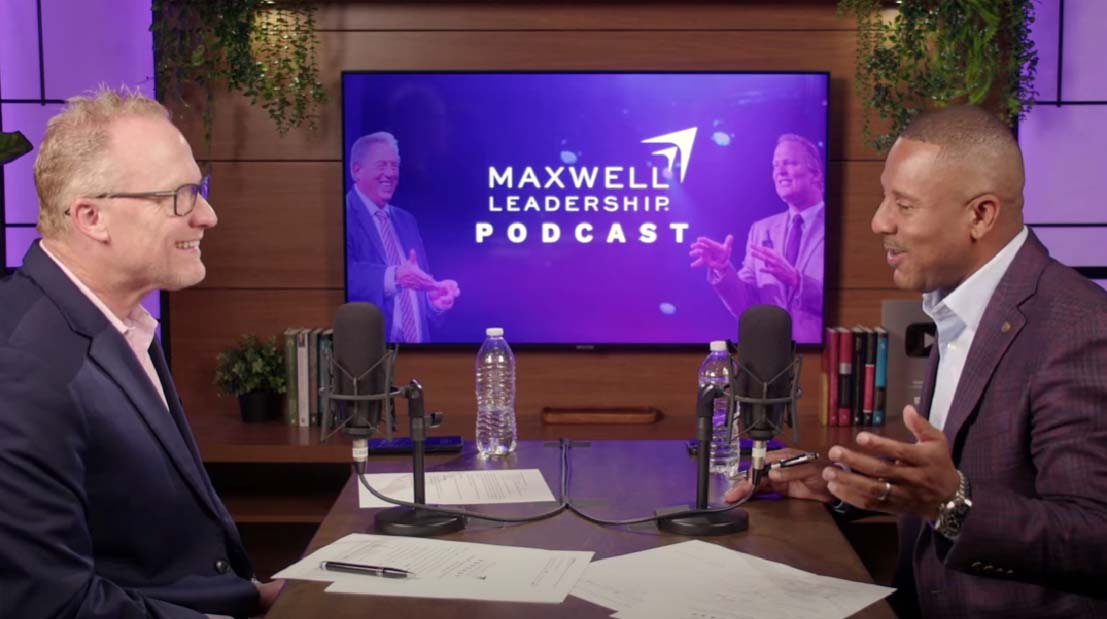
After his lesson, Mark Cole and Chris Robinson unpack John’s insights to help you apply them directly to your life and leadership.
Our BONUS resource for this episode is the Do You Have Destination Disease? Worksheet, which includes fill-in-the-blank notes from John’s teaching. You can download the worksheet by clicking “Download the Bonus Resource” below.
Take the next step in your growth journey and become a Maxwell Leadership Certified Team Member. Click here to speak with a Program Advisor today!
Mark Cole:
Hey, welcome to the Maxwell Leadership Podcaster. I say that every week. Let me say what I’m really saying. Welcome home. This is an environment that is committed to you, to adding value to you, to increasing your value. So you’ll go multiply value, increase the value of others. I’m Mark Cole and in today’s episode, John Maxwell sharing a lesson that I am confident is going to challenge you and it’s going to challenge you to ask the question, do I have destination disease? You’ve heard it said often, good is the enemy of great. John breaks it down in the lesson today and says, good is the stepping stone to great.
Mark Cole:
I can’t wait for you to listen because I do believe that one mindset to say, hey, good is good, but good is not great. Good is only a setup for something better. So after John’s done with his lesson, I’m coming back with my co host Chris Robinson and we’re going to walk through what John has taught us today as well as help you apply this to your life and to your leadership. If you would like to download the free bonus resource and let me say this about the bonus resource, we have up leveled that to where it not only is fill in the blank, but there’s a place to take notes. And then we have some action oriented questions for you at the back of the bonus resource. So go download that or you can go watch on YouTube. You can do all of this by going to MaxwellPodcast.com/Destination let me say one more thing before I turn it to John. We close out every lesson with a question from some of you or a comment.
Mark Cole:
Make sure that today, sometime during the lesson or right after the lesson, you go to wherever you listen to this. Go, leave us a comment, give us a question, let us know how we can improve ourselves. Okay, you ready? Get rid of destination disease. Here is John Maxwell.
John Maxwell:
What happens to you and me when we’re doing pretty well with our team, with the division, we lead with our company, whatever it is, what happens when we’re succeeding? Now we’ve all heard the statement that the enemy of great is good. We’ve all heard that. How many times have I heard people say good is the enemy of great. Now every time I hear that statement, good is the enemy of great, I always say to myself, that should not be true. The statement should be good is the stepping stone to great, not the enemy. I mean, think about it in sequence. Let’s say you start out, you start out with nothing. So you build something and then you get that something up to a pretty good something and then you get up to average.
John Maxwell:
Okay, now you got a good, and then you get up to good. Now in other words, there are sequence steps to great of which good ought to be one of. Maybe not the last step, but it certainly ought to be one of the last steps. I mean, good should happen before great. So good should be an ally of great and not an enemy. And yet it is an enemy of great. And I have wrestled with that statement so much that I finally said I’ve got to address it, I’ve got to look at it. I mean, what do they mean that good is the enemy of great? That statement, what it means is this, that when we become successful and we get good.
John Maxwell:
Now listen to me carefully. Not great.
Chris Robinson:
Good.
John Maxwell:
Good is good enough to meet all of our needs. Good is good enough to give us a good salary. Good is good enough to make us know that we’re accomplishing something worthwhile. Good is good enough for us to help other people increase our influence, pay a few more salary. Good. Good is good. And what I’m coming to discover now is good is good. And because good is good, we settle and we become complacent with good.
John Maxwell:
It’s like I’ve arrived. Oh my gosh, when I think of that, I think of the fact I got my identity after the fact that I’ve got a good organization now I’ve developed some influence cause I got a good organization. Okay, don’t miss what I’m about to say because I think good is evidence that I’ve arrived. And arrived is not a good word. It’s just not a good word. Too many people in their life, in their business, in their relationships, have destination disease. And they just think, man, if I could just know that person. If I could just do that and if I could.
John Maxwell:
So here’s what happens. When I look at what I’ve done and it’s good. There’s a tendency for me. I’m going to give you two word phrases. In fact, I’ll give you the phrases so you can write them down. Then I’ll make the statement. The first phrase is live in and the second phrase is live off. Okay, you got em, live in, live off.
John Maxwell:
When I am good, the temptation is for me to live in the past and to live off of the past. In other words, I’m saying now the past takes care of my needs. I live in it and I live off of it. Now at that moment, when I live in it and I live off of it at that moment, my Growth and development and progress and improvement is over. And that’s why good is the enemy of great. It shouldn’t. Good should be the stepping stone to great. But because we misuse good, we never have and receive great.
John Maxwell:
The brutal fact about success is this. It makes you complacent. It makes you arrogant. Gosh, it makes you close minded. It causes you to build a fence around your success and say, boy, I don’t want to lose this. And so you get a I gotta hold onto it mindset. You see, the objective of your life and the objective of business is to improve every day. What part of improve do we not understand? And what part of every day do we not understand? We are constantly improving.
John Maxwell:
So use your success as a stepping stone, not a pedestal. Okay, Good is a stepping stone to great. But if good becomes the pedestal, you’ll never have great. Why would you have great? You already have arrived. Intuitively, as a young person, I knew this. And I can remember in my 20s, 50 years, 50 plus years ago, for sure, I could remember memorizing what I’m about to give you. I remember it’s a long quote. You won’t be able to write it all down because it’s too lengthy.
John Maxwell:
You can probably go replay this and get it. But when I was about 26, if I have said this quote to myself once, I’ve said it a thousand times and I’m going to give it to you and it just will make sense in this lesson. And the quote is this sad is that day for any person when they become absolutely satisfied with the life that they’re living, the thoughts that they are thinking, the deeds that they are doing, until there ceases to be forever God beating at the door of their soul, a desire to do something greater. The only switch I would make after 50 plus years of memorizing that quote is I would change the end to not only to do something greater, but to be something greater. I memorized that quote because intuitively, as a young leader, I knew there’s no finish line. That arrival is not a good word.
Maxwell Leadership App Ad:
Do you feel like you’re meant for more but you’re not sure what next step to take? Whether you’re leading a team, building your business, or just trying to lead yourself. Well, you don’t need more noise. You need wisdom. Real, proven, practical wisdom. That’s why we created the Maxwell Leadership app. Inside you’ll get daily bite sized videos from John C. Maxwell and other world class thinkers designed to help you grow. Every day you’ll unlock curated playlists on Personal growth, leadership, mindset, communication, confidence, and much more, all for just $9.99 a month.
Maxwell Leadership App Ad:
And here’s the best part. It’s growth on your terms, at your pace, in your pocket, ready to go further and grow faster. Download the Maxwell Leadership app today. Go to MaxwellPodcast.com/App or click the link in the show notes.
Mark Cole:
Boy, I love this quote as John just finished up right there. I love this quote by Martin Luther King. He says, if you can’t fly, then run. If you can’t run, then walk. If you can’t walk. He’s imploring us, just crawl. But whatever you do, you have to keep moving forward. I think Martin Luther King not only said that he lived that.
Mark Cole:
Our question today is not only do we have destination disease, but has that destination disease stopped us from enjoying the journey? Has it stopped us from continuing the journey? Or has it stopped us from even taking the journey because we think the destination is too big? And so, Chris, I’m super excited to jump in with you. You know, two weeks ago we were sitting here talking about complacency. Talked a little bit about your book. I’m gonna bring that up again in just a moment. But it’s almost like this is part two and we skipped a week because here we are saying, hey, you can’t be complacent. And today we’re saying, don’t get destination disease. By the way, if you missed two weeks ago’s episode, you’re brand new to us. Welcome.
Mark Cole:
But go back and listen two weeks ago because it was really good. We’ll put that link in the show notes for you to listen to. But Chris, glad you’re back. Ready to talk about some destination disease?
Chris Robinson:
Absolutely. Well, I love talking about destination disease. They talk about it in the Japanese culture as victory disease or. Or they use the word Sen Tzu. But if, you know, we’re talking about this topic about complacency and this destination disease, if you go back to the original meaning of complacency, it means careless security. Careless security. Think about this. So when we’re thinking about complacency, when we’re thinking about our destination, where are we being careless in our security of what we’ve gained? You know, Mark, you know, too many people have destination disease.
Chris Robinson:
John says, but when have good enough almost kept you from grape? What has been a time in your life when good enough has almost kept you from grape?
Mark Cole:
You know, I try to be extremely honest and vulnerable on the podcast. If I get any compliment, it’s not that I Speak with eloquent, original English. This Southern kills me. It’s not that I have a face for the podcast viewers, because I don’t. I have a face for radio. What I get all the time is thank you for being authentic. Thank you for just living leadership out loud and showing the other side, the struggle side of leadership. I can honestly say when you asked me that question, I’m not proud of this, but I can’t think of a time to where I just went, wow, I settled on good enough and that was fun.
Mark Cole:
Now that sounds good. Until I tell you why. Because I am so critical on myself. I try to be so affirming of others, but just as affirming as I am of others, I am extraordinarily critical of myself. You’re gonna relate to this, Chris, because you got the same problem. And so I can’t authentically say, man, let me tell you, last year on this right here, that I just went, wow, that was pretty good. I’m pretty good. I can tell you one example that I thought I was okay and I really wasn’t in just a moment.
Mark Cole:
But truly, I don’t struggle with this good enough concep. I am constantly to the point of obsession, to the point of missing out on the joy of accomplishment, constantly challenging myself for more, for better. Okay, so does John, by the way, for all of you that want. Speaking of authentic, we’re being authentic. But I will tell you one time that as soon as you asked that question, I thought of we had just had our 10th record breaking event, 10th year of a record breaking event at pebble beach leadership open for our nonprofit. When I took over ownership leadership. You don’t own nonprofit. When I took over leadership of the nonprofit ten years prior, we were in desperate, desperate straits.
Mark Cole:
Chris couldn’t pay the bill, couldn’t pay payroll, had to go raise some. Help me save the company money. That’s never the best money because it’s always this is the last time you’re getting money kind of statements. So I went and raised this money to make payroll to cover our architect. And then from that moment on, we changed some disciplines and we began to grow year over year over year. Up until two years ago, we had grown yet again. And I’m telling you, after a decade of that, I was ready to celebrate. I was fired up.
Mark Cole:
I was excited. I called John Maxwell. I said, john, I didn’t think we were going to make our goal that year. I thought it was going to be a decline, and it wasn’t. I said, john, you’re not going to believe this. It’s the 10th year in a row. This is incredible. He said, hey, can you come down to my room, talk to me and Margaret? And I said, absolutely.
Mark Cole:
I knew they don’t drink, but I knew there was going to be champagne, there was going to be something. Okay. I get down there and John says, hey, let me ask you a question. Why were there 15 non qualified giving units in the room tonight? And I went, didn’t notice. Well, I did. He said, do you know if we had had 15 people that were qualified giving units in the room tonight rather than non qualified giving units, what our offering could have been? No, hadn’t thought about it. He went, well, I think you should. I can tell you this right here, the walk back to my room.
Mark Cole:
And it wasn’t ugly. I’m making John sound much more ugly. The walk back to my room was the walk of shame, right? It was the walk of shame. And the reason it was is because I had become so celebratory and we should have celebrated. And we did celebrate. And when I later told John what he did and how my mindset compared to his mindset, he felt terrible. Apologizes to this day for it still. But I walked back and I went, Mark Cole, don’t ever let a record break you.
Mark Cole:
Don’t ever let a record stop you from a personal best aspiration.
Chris Robinson:
Right?
Mark Cole:
And we could have done better that night. And I let myself slip on that night from thinking that we could have get better. And I felt pretty good about it until an episode with somebody else that is more driven than me.
Chris Robinson:
Oh man, I love it.
Mark Cole:
I love was fun. It’s funny now. It was not funny that night. I didn’t sleep. I was so dejected. I couldn’t believe it. But anyway, we survived, right?
Chris Robinson:
Oh my goodness. Yeah. I was, you know, thinking about when I just recently how you were sitting on the front side. This is like you’re always in that constant growth mode. And I think that we have to be careful there too. To where we don’t overdrive. Yeah. Because I was recently speaking in Romania and delivered a brand new keynote that I hadn’t delivered before.
Chris Robinson:
And I was telling some of the people at the table, hey, I’m delivering this for the first time. Give me some feedback afterwards. And I came off stage and I literally, I had, you know, 10, 12 things just trickling down my head. And one of the other members walks up to me and says, chris, that was it. That was gold. And I was about to say, no, no, no.
Mark Cole:
Yeah, Let me tell you why not?
Chris Robinson:
And I wanted to ramble off.
Mark Cole:
Yeah.
Chris Robinson:
All those things that were wrong. But instead I caught myself and I smiled. I said, thank you.
Mark Cole:
Yeah.
Chris Robinson:
Okay. And then going back for some of that constructive feedback and creating an environment for that, for us, able to grow. Because sometimes it’s, you know, when we’re trying to stamp out complacency, we can go into overdrive, which then ends in time. Burns us out.
Mark Cole:
Exactly.
Chris Robinson:
So we gotta be careful there. But he talks about this live in and live off of our past. What is the difference that you see there?
Mark Cole:
Yeah. You know, I have had the tendency at times to do that. In fact, I was just telling we get the privilege. You every Monday, me every Tuesday, to just kind of rally our team and just talk about business building or leadership. And we kind of cross both of those pollinate, to be honest with you. But I was talking just recently with our team on a Tuesday, and I was talking about this season. For me, I don’t think I’ve talked about this on the podcast yet, but this season of re identifying myself, it’s almost like I’ve grown so much. And what’s required for me for this next season is causing me to have to reintroduce myself to myself.
Mark Cole:
I bet you you’re feeling that a little bit with writing a book and that kind of having to reorient and re identify what once I identified me. And so I’m in the middle right now of living in the past. And what I mean by that is I’m taking what I have been known for for 15 years, whether that is hard work ethic or whether that’s always being in the office or whether that’s being the CEO of a company. And I’m having to reorient that. Chris, into what does it mean to lead into the next season? What. What is that leadership going to look like? Is it leading companies? Is it leading a. Does that look like. And as I’ve began to ask those questions, I’ve realized that to lead today, I’ve been living on what I did to lead in the past.
Mark Cole:
And I think that’s what John’s talking about. I lead how I led in the past. So I’m living in the past to. To face today’s challenges.
Chris Robinson:
Right.
Mark Cole:
When John says lead, live off the past, I think that’s when we allow ourselves to say, well, I was good last time, so I must be good this time. It’s the example you just gave about coming off the stage in Romania. You’re a Great communicator. But just because you communicated a message last year good. Doesn’t mean your next message is going to be automatically good. If you said, hey, I’m a good communicator because I’ve gotten standing ovations, I’ve gotten high price points valuation for my time, that means I’m going to be good this time, too. That’s what’s living off the past. Another way I think a lot of people live off the past is they get where they wanted to go financially, positionally, they get where they want to go, and then they begin living off of yesterday’s goal.
Mark Cole:
They don’t have a new one. And I’m just going to tell you, if you have reached the apex of your pursuit and you have not already identified a new pursuit, you are in deep trouble. Wake up, podcast family. You’re in deep trouble. If you have reached the peak you accomplished it, congratulations, High five. Give yourself more that John gave me that night at Pebble Beach. Okay? Just give yourself a little bit of time. But let me tell you this already.
Mark Cole:
Be setting the new summit, the new climb, because if you learn, if you allow yourself to celebrate too long on today’s accomplishment, you begin living in yesterday’s pursuit and you don’t reestablish and reignite a new pursuit.
Chris Robinson:
Okay, okay, I like this. I like this. So then tell me then, how do you keep leading in the present but still honor the past? How do you keep leading in the present but still honor the past?
Mark Cole:
Yeah, I think for me, I think that is the question of a second man. That is the biggest challenge of somebody that is leading somebody else’s vision. And then you’re given the opportunity to carry a vision. And too often leaders come in and they absolutely want to shake everything up because a new sheriff’s in town and they tear up fences that they don’t even know why they were built, and they build new platforms that are built on shaky foundation because they don’t do. And I think your question is one that we need to truly pose to all of our leaders out there that have just been given the opportunity to lead their vision. And when you get a chance to lead your vision, if you don’t find a way to, number one, honor what success looked like yesterday, defend things that are still working from yesterday, and tear up everything else, then you’re not allowing yourself to truly steward the opportunity that you’ve given. So, as a leader that is really pressing for the future, I think we have to have landmarks. I think we have to have handles of things that happened in our past to help us get where we’re going.
Mark Cole:
One of the things I love to talk about with you, Chris, is you built a very successful business as a Maxwell leadership coach before you ran that entire business. The reason I keep that handle in front of me is the product of the product statement. Kris did it. Now you don’t want to stay. Well, I did it. So I get this right here. You want to launch new frontiers, but if you don’t forget, if you don’t remember where you came from, you won’t appreciate where you’re going.
Chris Robinson:
Yeah, I love that. I love that. You know, he talks about also, too. How do we use our success as a stepping stone, not a pedestal? How do we do that?
Mark Cole:
Okay, all right. You’re doing this to me again. You’ve become a subject matter expert, buddy. On drifting or driving instead of drifting, okay? You have become a subject matter expert. And so I’m not answering that question. You are. Okay. And by the way, I promise you, there is a podcast that we have that you’re gonna love.
Mark Cole:
It’s a podcast that really breaks this book down. You’re gonna absolutely love it. Check that out in the show notes. Go look in our episodes, because we want you to see what’s really behind this book. So we won’t do that today. That’s on another episode. But what I will tell you, Chris, is this book, From Drift to Drive, is truly how you have built everything that you’ve ever done. It is a lifestyle book for you.
Mark Cole:
And so thanks for giving me my copy. But tell me this right here. How do you use success as a stepping stone and not a destination?
Chris Robinson:
Yeah, Well, I think about. When I think about this book and going back to it, I really look at my early career. I’m gonna go back and take a look at, like, from 2001 to 2008, like, I had a very successful sales career, did really well in my 20s. And then I began to accumulate all the stuff. I began to, you know, get the cars. I had the BMW, I had the Hummer, and I had built a house from scratch. And, you know, I had thought that I had the golden touch. And so in 2008, I stepped out to start my own business.
Chris Robinson:
And, you know, we knew that we had a short window of time in order to, you know, run this business. And I knew that I was going to be getting out of it. We were going to get in, build it, sell it, and get out. And I remember when that business failed, okay, I was still living the same lifestyle, like I was still making the income that I was making when I was working full time and had the golden touch. And I remember driving one day when I was taking one of those long drives, because I’m trying to figure out life. And in that moment, Mark, I remember coming to a stoplight, and there was this black F150 truck in front of me, a little silver fireman seal. And, you know, in that moment, I was actually crying out for complacency. I was crying out for, you know, God, why can I just take a normal job? Because what that symbol represented was, you know, normalcy.
Chris Robinson:
Not that a fireman’s job is normal, any stretch of the imagination, but it represented things that kids grew up wanting to do. Fireman, police officer, lawyer, doctor. You know, like, why? Why can’t I just do that? And you know what I believe in the most audible voice, I believe I heard God, he said, because I didn’t place that inside of you. And so when. When I heard that, there was this overwhelming peace that came. But then I had to make a choice. I had to make a choice in that moment if I was going to hold on to this stuff. All that stuff represented success.
Chris Robinson:
Now here I am in a stoplight, I’m crying in a Hummer, and nobody is feeling sorry for the guy crying, the hummingbird. But in that moment, I had to make a choice. Am I going to let all this stuff be my pinnacle, or am I going to let it be a stepping stone? And so what I had to do at that time, Mark, was I had to let go of all that stuff, and I had to make the choice that I’m going to decide that I don’t care what my path to success looks like, I’m going to let go of all this stuff. So that meant letting go of the BMW, turn the keys back in. I cleaned that bad boy up, you know, shined up the tires, took it back to the bank before they was even coming to get it. Did the same thing with the Hummer, you know, with the house as well, too. We let it go because the hanging on to that past success was going to be an anchor in my life, not a building block. And so now I often ask myself, what do I need to give up to go up? Is there something that I’m holding onto in my life that was a marker of success at some point in time, but today it’s no longer a marker, and it’s just a stepping stone.
Chris Robinson:
So for me, in order to make that transition, you have to constantly evaluate what was past success. What does success look like in the future.
Mark Cole:
Good grief. So is that story in this book?
Chris Robinson:
Some of those. Some of those.
Mark Cole:
So let me tell you, I know you’ve got what, seven principles.
Chris Robinson:
Yeah. Seven step framework.
Mark Cole:
Seven step framework that will help you you to go from drift to drive. And so I’m super excited about that. I’m going to come back to that. First, let me say this, okay? If you got to go pick up this book, you got to go see what Chris is talking about and how he has lived it out. Go to DriftToDriveBook.com, DriftToDriveBook.com, to get that. Chris, when we as leaders have the responsibility. And I’m just going to go here one more time. There’s an internal driver.
Mark Cole:
But how do you give someone that doesn’t have that internal drive that you have to go clean the car to turn it back in? Most people wait for you to come get the dirty ratted out car because they’re just so frustrated and everybody else is the problem and everything. Life dealt them a terrible thing and all that kind of stuff. So you’ve got it. You impressed me with that story. I didn’t know that part of your.
Chris Robinson:
Story, by the way.
Mark Cole:
So then how do you get other people to care like that, to get them from drift to drive?
Chris Robinson:
Well, I mean, it’s an active choice. So I knew that the time was coming. I wasn’t going to wait for it to happen to me. So I was going to be proactive instead of reactive. And so instead of waiting for me to, you know, open up the garage door and there’s a tow truck waiting for me, I said, hey, I know this is coming. I’m not even playing this game. I want to get this off my shoulders. Here goes the keys.
Chris Robinson:
I’m going to clean up now. I cleaned it up because I wanted to be a good steward, because I wanted to honor what had been given to me in that season in preparation for what was to come for me in the future. And so beautiful. You know, I wanted to give it back better than I had received the car. I wanted to give the house back better than we received it. You know, we did all the painting, we did all the things to hand this thing over to foreclosure.
Mark Cole:
That’s amazing.
Chris Robinson:
Did all those things because I wanted to give it in better hands because I knew that was going to be a seed that I was sowing for what was to come. So, you know, I did the same thing with the Hummel. Well, Guess what I Drive today? 20, 25 Hummer. You know, it’s nice.
Mark Cole:
It’s a good looking car.
Chris Robinson:
You know, it’s cleaned up and I got assortment of other cars. Right.
Mark Cole:
Drives about 35 miles an hour. But that’s another conversation for another day.
Chris Robinson:
An assortment of other cars. But I believe that’s because I was a good steward and I didn’t wait for them to come and take it. And so when I didn’t wait, I took that weight off my shoulders.
Mark Cole:
Yep.
Chris Robinson:
All right. I wasn’t looking over my shoulder waiting for him to come get it. Hey, hey, come and get it. This is an anchor. No, I’m not getting ready to be able to make this payment here the next couple months. You know, here you go. And so for those that are out there saying, hey, how do I shift into that type of mindset? I really believe it was the decision in the car saying, I’m not going to care what my path to success looks like to anyone else because oftentimes we hold on to these things in this stuff because, well, what are people going to think if they know I went to foreclosure? What are people going to think if my car got repossessed? You know, mine never got repossessed. Right back to you.
Chris Robinson:
This is yours. You know, and so it’s making that shift of not caring what your path to success looks like to anybody else.
Mark Cole:
Beautiful. Beautiful. All right, we got time maybe for one more question.
Chris Robinson:
Yeah, yeah, here we go. So talk to me about the young leader. All right, so what advice would you give a young leader who they haven’t yet arrived, but they feel like they’re doing pretty good?
Mark Cole:
So I challenge every leader that I come in contact with, young leader, established leader, successful leader on the path to success, leader to always remain coachable. And I do that. Chris, if you and I had time this morning before we started recording, I would have asked you this. And that is, what are you learning right now? What are you picking up? And you told me a little bit of learning and re identifying yourself and.
Chris Robinson:
That kind of thing.
Mark Cole:
But. But I’m constantly looking for people that will tell me specifically what they’re learning and how they’re growing and what they are applying right now. Because I believe, if you ask me, narrow down to one desirable trait in a leader that you work alongside of every time, it’s coachability, their ability to learn, their ability to go after a lesson and apply it. And so I would say that specifically to every leader. With a young leader, I would challenge a young Leader to not only get that clarity on I’m learning all the time, I would challenge them on the concept of intentionality. Not just growth, but intentional growth. What is it that you are trying to grow in? Because here’s what I found and I say this quote often. When the teacher’s ready or when the student’s ready, the teacher appears.
Mark Cole:
Well, I believe that when you start looking for a lesson, you find a lesson. When you buy a blue car, guess what you see all the time? Blue cars. When you get a stone covered front of the house, guess what you see? You see all the stone covered fronts of the houses. It’s the same thing. When you challenge yourself to get a lesson, you’re going to get a lesson. When you challenge yourself to get an intentional lesson on a particular topic, you’re wanting to grow in. It’s there, it’s there, it’s there, it’s there. Oh, it’s over there.
Mark Cole:
Oh, it’s right here. Oh, it’s in this podcast. And so getting intentionality with your commitment to be coachable is absolutely what I would tell every young leader. You know, when I think about that, I think about an episode that we did not too long ago called how to Improve Every Single Day. And the first thing I want you to improve on today is I want you to improve by challenging your complacency, by challenging your paralysis with this book from Drift to Drive by Chris. I really want to challenge you to pick up that book. We’ll put in the show notes, the website, but I want you to go to DriftToDriveBook.com. I also want to challenge you. We have a digital product called Every Day with Purpose.
Mark Cole:
And I say this often, and I don’t say this because we need your money. I say this because you need to bet on yourself. I say this because you need to discipline yourself. And so over the last couple of weeks, Chris and I have talked about complacency. We’ve talked about destination disease. I want to challenge you that I don’t care how successful you are, you need to live more each day with a greater sense of purpose and a greater sense of intentionality. So we’ll put it in the show notes, but we’ll make that $199 product. We’ll make it available to this week’s podcast listeners for $49.
Mark Cole:
Go take advantage of that. Hey, Gus, he listened to the podcast how to be a Relatable Leader, and it was a great podcast. You want to go listen to that? But Gus said, I always appreciate the content and applicability of each lesson. I have been watching John ever since he was a pastor. He and you guys have always been an inspiration to me. Blessings to you in all that you do. And Gus, I say that right back to you. Blessings to you.
Mark Cole:
You’re not old. Even though you remember John about 30 years ago, you’re still just a young man. Gus, go get them. Go do powerful, positive change because everyone deserves to be led well.
Maxwell Leadership App Ad:
Hey podcast listeners, many of you listening right now would probably love the autonomy that comes with owning your own business or becoming a coach that helps other businesses succeed. Well, we have a phenomenal strategy where you are 120 in control of your own business, earning income on your own terms, and have access to the people, tools and resources you need to build a thriving leadership development business. When you become a Maxwell Leadership Certified Team Member, you join a global community of entrepreneurs led by our expert team of mentors and faculty, including John C. Maxwell. You’ll also get one of the top leadership certifications in the world next to your name, giving you the boost you need to get started. Visit us online at MaxwellLeadership.com/JoinTheTeam to find out more.
Transcript created by Castmagic.





Be the first to comment on "Do You Have Destination Disease?"