If you want to achieve significance and success in life, you have to be intentional! In this episode, John C. Maxwell teaches a lesson on how you can embrace intentional living and make a difference in the lives of others.
After his lesson, Mark Cole and Chris Robinson sit down to talk about what John has shared and offer practical advice that will help you apply what you’ve learned to your life and leadership.
Our BONUS resource for this episode is the How to Embrace Intentional Living Worksheet, which includes fill-in-the-blank notes from John’s teaching. You can download the worksheet by clicking “Download the Bonus Resource” below.
Leaders, stop trying to do it all yourself. The best leaders know their limits, operate out of their strengths, and set others up for success. Find freedom with BELAY — pairing you with vetted U.S. virtual assistants so you can focus on what matters.
To help you get started, BELAY is offering Maxwell Leadership listeners a free download of their resource, The Cost of Not Hiring a Financial Expert. Just text MAXWELL to 55123 for FREE access.
Belay ad:
You want to lead your people well, but you’re stuck in spreadsheets, cash flow, guesswork, and trying to make sense of your finances. Here’s the truth. Not hiring an accounting professional isn’t saving you money. It’s costing you your leadership. When you’re buried in numbers, you’re not building a culture, you’re not coaching your team, you’re not steering the vision forward. Your employees deserve to work for a company with financial clarity and confidence and. And so do you. That’s why Belay helps growth minded leaders like you delegate what you shouldn’t be doing, starting with your finances.
Belay ad:
Check out their free resource. The cost of not hiring a financial expert to discover how it’s draining your time, your money, and your peace of mind. Just text the word Maxwell to 55123 for your free copy today. That’s Max W E L L to 55123 to get ready to delegate your finances and elevate your leadership with Belay.
Mark Cole:
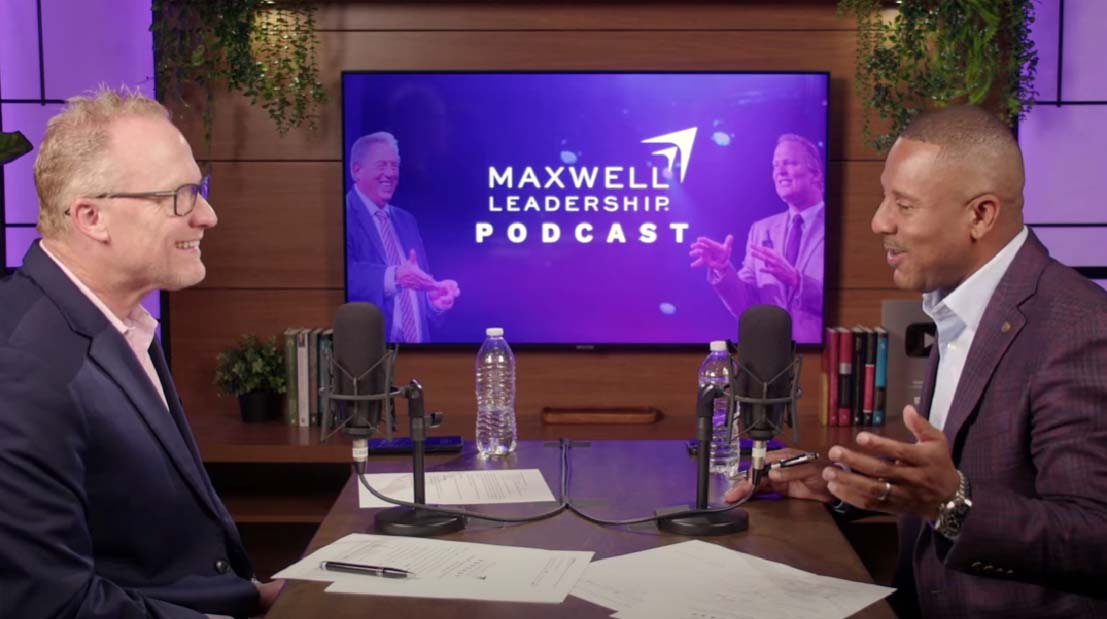
Hey, welcome everybody, to another episode of Maxwell Leadership Podcast. I’m so excited today because I’m going to be adding value to you by giving you a lesson from John. And then, Chris, you and I are going to start talking about how to multiply value and how we apply it. How you doing, man?
Chris Robinson:
Yeah, I’m doing great. I’m doing great.
Mark Cole:
Hey, so tell me something really quick. So by the way, just over a few days ago, about a month ago, we had a birthday.
Chris Robinson:
Yeah, we did.
Mark Cole:
So I’m fitting that in right there. Just so you know. 47.
Chris Robinson:
6.
Mark Cole:
46. Look at that. He corrected that. That one year is a big difference maker. Written a book this year, this past year, I’m telling you. How’s the book going?
Chris Robinson:
Oh, far so good. I mean, we’ve sold thousands of books up until this point. I mean, it’s really been incredible. Just hearing the feedback from people that have read the book, the first couple chapters has really just been amazing. And so to see that impact and see the reach that it’s going to have beyond my time, I’m just truly, truly excited and blessed to be able to do that.
Mark Cole:
So we’re talking today about intentional living. I’ll set up John’s lesson in just a moment. But what role did intentionality play in writing that book? And I’m talking about go back 15 years ago when we were creating these stories. Did you have intentionality then in crafting your story so that you could one day tell it?
Chris Robinson:
No, not. Not to that degree. Especially 15 years ago, it wasn’t Even on the radar. In fact, it wasn’t on the radar a year ago when I walked in the room to actually go in with a group of people that were talking about writing books. But as I look back at this book and the elements that came into it, everything’s been highly intentional and it’s been highly architected. And this book really is an intentional guide to you break those chains of areas of complacency, lukewarmness, places that have been average in your life. And so it really does kick into gear. But it takes intentionality to do it.
Mark Cole:
If you’re new to the podcast, I’ve had Chris on this podcast talking about his book. In fact, Jake, let’s put the book, that podcast that we did, Chris and I, into show notes. And you can go listen to more about the book in there. But you want to go get that from Drift to Drive by Chris Robinson. You’ll love it. Speaking of books, John Maxwell wrote a book several years ago called Intentional Living. If you ask him today, john, what’s the best book that describes you? And he’ll say, it’s Intentional Living. And then he’ll say, if you ask him, what’s the book you wrote the most that you thought would do better than any others that didn’t, he would say, intentional Living.
Mark Cole:
And this is truly his best book. And he’s like, it didn’t even do what I thought that it would do. Which, by the way, he’s got like 14 million copy sellers. The book’s still done quite well. But last week in our podcast on discipline keeps you growing. If you’re brand spanking new to our podcast, you may not have heard that yesterday last week, or maybe you just skipped last week. You were on vacation or something. We did a podcast.
Mark Cole:
Chris and I did a podcast about discipline keeps you growing. And right out of the gates was this idea about the power of intentionality as it relates to discipline. So this week, what I thought we would do, we’d go a little deeper in intentional living. And so we’ve got a lesson from John. You’re gonna love it. You’re gonna spend about five to seven minutes with John, and then Chris and I are gonna come back and talk a little bit deeper about intentional living, how to embrace intentional living. Grab a pen, grab some paper. By the way, if you wanna watch this podcast on YouTube or if you wanna download our bonus resource, you can go to MaxwellPodcast.com/IntentionalLiving.
Mark Cole:
Here is John Maxwell.
John Maxwell:
Let me define intentional living for you. It’s a life that Brings you daily satisfaction and continual rewards as you intentionally make a difference, small or large, in the lives of others. Intentional living is the bridge that will lead you to a life that matters. And most people trust me. Most people, they don’t live intentionally. They’re like the character Brother Juniper in the comic strip by Father Fred McCarthy. Brother Juniper shoots arrows at a wooden fence in the backyard. Then he walks up to the fence, takes out a big marker, and draws a target around it with the arrow in the center of the bullseye.
John Maxwell:
And that intentional living is just like that. We find out where we land, and then we make the target. That’s why we never hit anything on purpose. We never hit anything worthwhile. Unintentional living is like golfing without a hole, playing football without a goal line, playing baseball without a home plate, or bowling without the pins. If you want to achieve success or significance in life, you’ve got to be intentional. And here’s how I learned about intentional living. When I was in the fourth grade, I told my dad that I wanted to be a basketball player.
John Maxwell:
So my father, we had a concrete drive that led into the garage. He made sure that the drive was the width that we needed for a little bit of a basketball court. And then he put the backboard up against the garage. And he was just about to put the rim, and then he got called away on an emergency. And he sat down and said, john, I’m gonna be gone for two days. When I get back, I’ll put the rim up for you, and the basketball court will be complete. He’d already bought me a basketball, and so I can still remember as he pulled out of the driveway, I’m dribbling the basketball on a nice court that he’d provided for me, and I thought, I’ll just dribble for a while. And I did that for about 10 minutes.
John Maxwell:
And I thought, this is kind of boring. And I went over to where the backboard was, and it didn’t have a rim on it, But I took the basketball and I just threw it up against the backboard. And then I literally let the ball dribble itself off the court. Never picked it up until dad came home and put up the rim. You see, it was in the fourth grade that I discovered something about intentionality. It’s no fun to shoot a basketball without a basketball rim. It’s no fun every day in life to go into life without purpose, goal, and intentionality. And I wanna help you to choose a life that matters by becoming this intentional person.
John Maxwell:
You see, being intentional Is like dropping a stone in a smooth body of water. Oh, it makes a small splash, but that’s not where the power is. The power is in the ripples that go out from the center, ring after ring, expanding their impact. Most people fear that significance is out of their rig. Every person can be significant. More importantly, listen to me, my friend. You can be significant. To be significant, you don’t have to be famous or rich.
John Maxwell:
You don’t have to be a celebrity, win a Nobel Prize. You don’t need to reach a certain age, become an old person. All you have to do is make a difference with others, wherever you are, with whatever you have day by day. When you embrace intentional living, you put yourself in your story, you put significance in your life story, you put your strengths in your story, and you stop trying and you start doing. I’ve never impressed with a verse that says, I’ll try my best. I mean, what does try mean? I want you to say, I’ll do my best. I’m gonna do it. As you start this journey of significance and you do things for the first time, you’re not going to be that good.
John Maxwell:
It’s okay. Relax. It’s okay. No one’s good the first time. I wasn’t good the first time. You’re not good the first time. No, no, no. When you first started to walk, you didn’t walk well.
John Maxwell:
When you first started talking, you didn’t talk well. And when you start to live significant, intentional life, you’re not going to always do it well. It’s okay. You got to do it the first so you can do it the second time, so you can do it the third time, so he can do it 30 times. We’re naturally selfish. As individuals, we think of ourselves first, and a significant, intentional life thinks of others first. You see, if it’s all about me, this world’s gonna be very small and not fulfilling. But the moment that I become inclusive and intentional and say, it’s about others and I want to add value to them, that takes us from success to significance.
Maxwell Leadership Certified Team ad:
Hey, podcast listeners, many of you listening right now would probably love the autonomy that comes with owning your own business or becoming a coach that helps other businesses succeed. Well, we have a phenomenal strategy where you are 100% in control of your own business, earning income on your own terms, and have access to the people, tools, and resources you need to build a thriving leadership development business. When you become a Maxwell Leadership Certified team member, you join a global community of entrepreneurs led by our expert team of mentors and faculty, including John C. Maxwell. You’ll also get one of the top leadership certifications in the world next to your name, giving you the boost you need to get started. Visit us online at MaxwellLeadership.com/JoinTheTeam to find out more.
Mark Cole:
Yeah, welcome back, everybody. I was sitting here thinking, just as I was listening to John, if there’s one statement that John lives out, and we’re going to get into some of this perhaps in a minute, Chris. But if there’s one statement that John Maxwell lives out, one is it’s a success statement. It’s when people that know you the most think and love you the most. And kind of, that is kind of his success statement. He’s lived that out. The other thing that he has lived out crazy is I want to make a difference. Doing something that makes a difference with a people that makes a difference at a time that makes a difference.
Mark Cole:
And again, I held up intentional living right before we. Before we heard from John. But that’s kind of how he laid out this book. Is that one statement. And he lives that increasingly, emphatically and exponentially. Intentionally. Yeah, it’s just that. That’s just who he is.
Chris Robinson:
Yeah, he really does. You know, when you take that statement of, you know, one those closest to you to really that be the measure of success, I really think John lives that out now. You know, we have the privilege of being around a lot of speakers, celebrities, and a lot of people. And, you know, sometimes, you know, you. You read the person’s books, and then sometimes you meet them in person. There’s a gap.
Mark Cole:
Yeah.
Chris Robinson:
And what I.
Mark Cole:
Give me the book. Give me the book.
Chris Robinson:
Give me the book. I like the book. But what I can say about John is that he is probably out of all the people that I’ve met, he’s got the closest gap from who he is on stage to who he is in person. And. And I say that wholeheartedly. Yeah. And that’s like one of my biggest goals and dreams, is that I don’t want there to be this large gap between who I am on stage and who I am in person. So it’s almost my greatest fear for someone to be like, hey, Chris is not that way.
Chris Robinson:
The way that he is on stage. And it happens at home, too, you know, I mean, think about it. Anything that we teach, I know my kids are coming back saying, hey. Immediately they’re wanting to point out. And so even trying to close the gap there, that there’s so no deviation. But it all comes back to being intentional on the Stage, off the stage, in the office, out the office, you know, at the restaurant. Not at the restaurant. It’s about intentionality.
Mark Cole:
So it’s funny, before you go there, John was asked to write the book. Perhaps many of you in the podcast has heard the story. Some of you haven’t. We all need to be reminded of it. John was approached by one of his publishers and said, I want you to write a book on business ethics. It was right after Enron. This would have been. Man, this would have been 25 years ago.
Mark Cole:
And it was right after that. And they said, hey, I want you to write a book on business ethics. And he said, I can’t write a book on business ethics. And they went, what do you mean?
Chris Robinson:
Like you writing all these.
Mark Cole:
These books? You’re good at that. And he said, I can’t write a book on business ethics. That’s what I mean. They dug on in. And what John’s real point was, there’s no such thing as business ethics. There’s just ethics. And if you have them, they work at home. If you have them, they work in business.
Mark Cole:
If you don’t have them, you can’t say a code of conduct for business ethics with no personal ethics and live that up. It’s the same thing with intentional living. What you just said there is. John truly has made a decision that if he’s going to live or he’s going to lead or he’s going to learn, it’s all going to be with intentionality. And so there can be no living effectively without intention. There can be no leading effectively without intention. Everything worthwhile is uphill. You’re not going to coast your way to success.
Mark Cole:
It’s going to be with intentionality. So I’m glad we’re digging into this a little bit more this week.
Chris Robinson:
We got to go back, though, because, you know, today we say this with every fiber of our. I mean, there’s probably not a day that you don’t use the word intentionality. There’s probably not a day that you don’t encourage someone that they have to be intentional. But there was a time when that wasn’t the case for you. Definitely wasn’t. For me, it wasn’t intentional at all. But do you remember when you started to become intentional and kind of what was that result when you decided to make the choice to be intentional and move forward?
Mark Cole:
It’s funny, Chris, because I believe, much like I believe there’s a seed of leadership in all of us, I believe there’s a seed of intentional. It just needs to be in our passion point, it needs to be in the things that we care about. So for instance, remember way back when in life when you were playing sports and boy, you were intentional about working on your fielding, working on your deal. Remember the day that you went to college and you were very intentional about finding the best party and we take bad behavior and we go, wow, I’m not intentional because look at how much I did. No, I think you were pretty intentional. I think you found the people that would just bring out that side of you and just go for it. I really do. So let me go back to that and say, okay, so when did I recognize intentionality? Man, it was five years old.
Mark Cole:
I can remember to this day knowing you’ve heard me tell this story. Baby of five. And I loved waking up in the morning and saying, what can I convince my entire family of seven to do today? Because of my influence, most of the time was around what we were going to eat. So I’d wake up in the morning thinking about what I wanted to eat for dinner. And then I’d spend all day intentionally getting the family to agree with me. I loved it. I tell people all the time. When I was five years old, I loved telling, telling people what to do.
Mark Cole:
But what I loved more is when they did it, it was like touchdown, everything. So I had great intentionality. Now let me tell you this. On being bigger on the inside than the outside, I didn’t get intentional with that until 30. Now I read the book Developing the Leader within youn as my first John Maxwell book when I was 18, given to me by my brother in law. Read the book, loved the book, it gave me permission to lead. And I spent the next 12 years building my reputation as a leader rather than building my internal character as a leader. No intentionality on building me the leader.
Mark Cole:
All kind of intentionality in building my reputation with others as a leader. So at 30, I got very serious about what I think is the biggest leadership decision any of us can make. And that is effectively leading ourself. And when you can put intentionality around leading yourself, this whole statement, I want to make a difference, I want to make a difference with people doing something at a time. That whole concept becomes so much more effective when it’s built on a foundation of good internal leadership. So I can tell you I was not intentional for 30 years on being a better leader. I was intentional on being perceived as a good leader. But there’s a big difference.
Mark Cole:
And so that was a moment where intentionality took over for me.
John Maxwell:
Wow.
Chris Robinson:
That’s a big, big difference. Now, when it comes to intentionality and when people are. Now they may be at the cusp of making this decision of, you know what? I do need to be intentionally here all the time. But then they kind of treat it like a lottery. Yeah, you know?
Mark Cole:
Yeah, exactly.
Chris Robinson:
And try to kind of treat it like a lottery. And it’s, I was intentional. I added value to this person. They don’t add value back to me. And there’s not this even exchange. So you know what? I’m just gonna not do that. Have you ever experienced the lottery mentality when it comes to intentionality and adding value to people?
Mark Cole:
Yeah, and I think a lot of times that whole concept of I love the lottery idea, that’s funny to me. I think what I see often when people. I said this a little bit earlier. I think there’s a lot more intentionality even in lazy people than we realize. And people perceived as lazy, they intentionally know how to get out of work. You know what I’m saying?
Chris Robinson:
They were harder looking busy.
Mark Cole:
They look hard looking busy. That is exactly right. I think anytime that we’re talking about intentionality, specifically when it comes to other people, motive matters. So why am I intentional? What is driving my intentionality? And I think in that motive question, there’s really kind of two pathways. There’s the manipulation pathway and the motivation pathway. I’m intentional. When I walk into a room, I’m intentional because I’m trying to manipulate you to my agenda or I’m trying to motivate you to the greatness that’s within you. And so I have found that leaders that have great intentionality may be more regular or more accessible than you think.
Mark Cole:
But why are they intentional? What are they driving at? Is a question that I ask every leader. Why? Give me context. Why are you wanting that? What are you after? And in that, why a lot of times you can find whether it’s a motivation or a manipulation.
Chris Robinson:
Right. Wow. I love that. Love that, you know, when it comes to John, you’ve seen him be intentional, and you. Obviously, he wrote a whole book about it, but give me something. Give me a scenario where you’ve seen John be intentional that isn’t talked about or isn’t read about inside a book because you get to see that you got that proximity.
Mark Cole:
I do. John carries around him. Carries around with him. Very blessed. He carries around a wad of bills to be able to hand out. And I’ve watched him. I’ve watched him. I’ve been in his room working he’s already ready, but we’re working on a lesson.
Mark Cole:
We’re working on a leadership decision. And so he’s putting the final touches of his wallet in his pants, in his pocket or his pen or something like that. So he’s in these final stages. And I watch him every time, look at his cash, pull it up, see how many bills he has in there, and then sticks it back in. And every time, I know what he’s doing right there somewhere today, I’m going to be able to impact somebody that will not be able to ever even know who I am. So they can’t return it. Because he believes that true generosity is when you can give it with no anticipation, no possibility of a return. I’ll never forget.
Mark Cole:
It was. Man, it would have been 20 years ago. I’m traveling with him. I’m getting to go to a game. It was a Cleveland cavalier game with LeBron playing. Okay. And I’m saying 20 years and he’s still playing. That dude is a beast, man.
Mark Cole:
And anyway, we’re going to this game. And I’m just so honored with John. It was early in my career. I still think they were whispering in John’s ear what my name was. I don’t know that he knows that. And so I’m kind of trailing behind and just kind of watching and all this kind of stuff. And I watched John walk by. A street performer playing a guitar guy was not that good.
Mark Cole:
He had to been out there almost as asking for tokens of appreciation, be impressed with my performance. This was not a street performer making a lot of money. This was somebody with a guitar hoping that that would pull on a heartstring. And so he was there. I watched John reach in his pocket. I didn’t know then what I know now. Watched John reach in his pocket, pull something out and put it in the little guitar case. And all of a sudden, this guy started screaming, sir, sir, sir, sir, sir.
Mark Cole:
Came and hugged him and told us the story of what he needed that $100 for. And it grabbed Heartstrings and John immediately. He didn’t do it for show. I’ve seen him do it a hundred times since then. Nobody ever noticed. The guy never even noticed that he put a big bill in his case this time. The guy just blew away, told the story, came running after John and grabbed him and just said, thank you. This is what this means for me and my family tonight.
Mark Cole:
And what’s going on with my little kid that needs some doctor care. Blew us all away. John looked at every one of us and said, how much money do you have in your pocket? Get it out and give it. We all emptied our pockets that night. The guy walked away with $2,700 off of John doing that. Here’s the reason I chose to tell you that story. To your question. John does things like that all the time.
Mark Cole:
Gives intentionally, without getting. But he takes it to the next level. When you give, somebody comes running after him and thanks him. Let me tell you something. If you got money in your pocket, you better get it out because you’re going to cough it up. So now all of us that travel with John, we just put little small bills in our pocket. No, I’m just kidding. I’m kidding.
Mark Cole:
I’m kidding. We don’t do that.
Chris Robinson:
I love it. Nothing but one.
Mark Cole:
Nothing but one. That’s right.
Chris Robinson:
It’s thick, though. It’s thick.
Mark Cole:
I love it.
Chris Robinson:
What a great example. And I’ve seen John do that as well. You know, I remember playing. We went to go play golf, you know, a couple years ago, and, you know, saw John casually walking over to the. The greenskeepers, which nobody does on the golf course. You know, the greenskeepers there to pause. You know, when players are coming up there to be. Not to be seen.
Chris Robinson:
They’re to do their service and go on. But John walked up to each and every single one of them, said hello, shook their hands, and was reaching his pocket, handing cash to them. And that has always stuck with me. I can visually see it right now. And I remember asking him about that, and he was like, nobody sees them. And he goes, everybody tips the people inside the clubhouse, the cart guys, the caddies, he says, but nobody tips them. And he goes, man, that’s a lot more fun.
Mark Cole:
That’s what he says. Yep, it’s a lot more fun doing that because it’s not expected, you know, and it’s not going to give them returns, not because of good service. It’s because of all you do behind the scenes that nobody ever gets to appreciate.
Chris Robinson:
Ye. You know, I’ve got to. I want to ask you about somebody outside of John as well, too, but I’ve got a good friend. He’s a team member. Dexter Godfrey. Now, Dexter Godfrey, I met at my very first IMC when I got certified with the team back in 2011. I mean, this guy was one of the guys that got pulled out of the crowd to go speak on stage, and he killed the stage. I said, man, I got to know this guy.
Chris Robinson:
I got to know this guy. We connected. We ended up becoming great friends. And roommates. And I remember one time walking into the room and his suitcase had fell open, and then it just. Boom. There was this mess everywhere. And I was like, what is that? Well, what it was, Mark, was he had.
Chris Robinson:
I mean, had to be 75 individual cards with envelopes that had just flew all over the room.
Mark Cole:
Wow.
Chris Robinson:
And I said, well, what do you do that for? He’s like, well, he goes, this is how I connect with people. He says, what I’ll do is after each of my conversations throughout the day, I’ll take down their names. He goes, tonight, I’ll write down individual car to each one of them, just telling them great to meet them, et cetera. So he’s taking names all day long where he’s having meaningful conversations, but then at night, he’s spending the time writing out these cards. But he doesn’t stop there. Now, in addition to not only purchasing the card with the envelope, he’s got a stack of $5 Starbucks gift cards.
Mark Cole:
Wow.
Chris Robinson:
That he’s put inside these cards. I’ve seen him do this for years, but it was truly a choice, and he’s not looking for anything in return. The motive is simply, I want to add value to people. I want to connect with people. And he’s not looking for somebody to give him a. Well, you gave me a five dollar gift card. Let me give you a, you know, a five dollar gift card back. It’s just simply a way of adding value to people.
Chris Robinson:
And his intentionality with that is. I haven’t seen anything like it. Just.
Mark Cole:
That’s incredible. You know, you reminded me of a story. Somebody else that’s been on this podcast multiple times, Jeff Henderson.
Chris Robinson:
Oh, yeah.
Mark Cole:
Jeff is one of the most intentional people with a kind word and a note or a text. And I don’t know what his discipline is. He’s never told me, but I’ll tell you he’s got one. Because everybody I know around him has been impacted by some kind word or some text that he puts out there to let people know, let people know that he appreciates them. My mind started drifting because I was trying to remember where this was. I was just in a convention not too long ago, and they said that the art of a note, a mailed card, is coming back because we’re in this digital age. And they said the significance of taking time and writing somebody a note and going to the post office and dropping it in and letting people get that is on the comeback as big, meaningful ways to tell somebody you appreciate them. And I went, wow.
Mark Cole:
So here’s our homework assignment today. We’re not even done yet, Chris. But here’s our homework assignment today. Podcast family, I’m going to really challenge you to find somebody this week to write a handwritten note to that you need to slip in the mail. Because take a lesson from Dexter. Take a lesson from Jeff Henderson. There are ways that we can become intentional and that intentionality will make a difference in the people’s lives.
Chris Robinson:
Yeah. Indeed. Indeed. Well, man, that was a lot of content here today talking about intentionality. I love this topic. We talk about it. We live in this Maxwell bubble where we talk about intentionality. But.
Chris Robinson:
But listeners, if you’re out there today, you know, what areas of your life do you need to become more intentional about? What relationships do you need to become more intentional about? What areas of action do you need to become more intentional about? Ask yourself these questions today to help you get moving in the direction that you want to go. Life is better on the other side of intentionality.
Mark Cole:
There’s no doubt. You know, when we were talking, I pulled this book out just before the podcast as John was talking. And. And what John says right here at the very end, well, he’s given the whole, I wanna make a difference. Do something with people at a time that makes a difference. And then right at the end, in the epilogue, he talks about, tell your story. Make an intentional act to tell your story. One of my favorite things to do with John when we’re out with guests is to anticipate the question he’s gonna ask at dinner.
Mark Cole:
Always has a question, always wants to tell something. The other night we were in Chicago and he brought a question and the table was very scattered. I’m not going to call names. Some of you are podcast listeners listening to the podcast. You know, it was you. But there was scattered. He couldn’t get the table to corral. And so the more he kept asking this question and one person would answer and then there would be a 10 minute tangent before we could get to the second person.
Mark Cole:
So finally John just said, I give up. You guys are not going to play along with me and my question tonight. I can see that the two people that were most distracting left the table. And John said, I really asked that question because tonight I wanted to answer it. And we said, well, answer the question. And so he gave us the answer. It’s a funny long story, but here’s my point. It was a part of John’s story that was really meaningful, very powerful to him.
Mark Cole:
As we go into intentional living, as we go into this concept of embracing an intentional lifestyle. Make it a part of your story. But in that story, make sure that it’s impacting others, that it’s doing something for the lives of others. Choose a life that matters so that it will matter to others. We had a great, we had a great question here from Nigeria. In fact, the episode that we’re referencing is Significance and selfishness. And that’s going to be a podcast reference that’s there. And then our friend Dominic.
Mark Cole:
Dominic, ask a question from the podcast. What you focus on expands part two. Dominic says, greetings from Nigeria. I’m proudly one of your podcast students. Can you recommend great books to me on how I can become a good conversationalist? Well, the first thing that I would say, Dominic, I’ll give you two Maxwell books. One is everyone communicates and few connect. What John teaches there, I’m going to give you three, actually. What John teaches there is your ability.
Mark Cole:
Ability to connect with people is not necessarily how good you present, but it’s how good you engage the person into a conversation like you’re talking about Dominic. Another book I think that will help you is the book 25 Ways to Win with People. And that’s a book that will let you know how to engage and get connected with people. And then finally, the final John Maxwell book that I would give you is Good Leaders Ask Great Questions. One of the greatest ways to connect with others and become a good conversationalist is to understand the art of asking questions. How to win friends, influence people. That’s another non John Maxwell book that I would recommend. Dominic, thank you for your question.
Mark Cole:
Podcast family, thank you for listening. Chris, thanks for being here. It is so good to be doing this with you today. Hey, go bring powerful, positive change to the world around you, because everyone deserves to be led well.
Transcript created by Castmagic.



Be the first to comment on "How to Embrace Intentional Living"