As John C. Maxwell says, “Motivation gets you going, but discipline keeps you growing.” In this episode, John is sharing a lesson on the importance of consistency in leadership and being intentional with adding value to others every day!
After his lesson, Mark Cole and Chris Robinson break down John’s insights and give you practical application for your life and leadership.
Our BONUS resource for this episode is the Discipline Keeps You Growing Worksheet, which includes fill-in-the-blank notes from John’s teaching. You can download the worksheet by clicking “Download the Bonus Resource” below.
Take the next step in your growth journey and become a Maxwell Leadership Certified Team Member. Click here to speak with a Program Advisor today!
Mark Cole:
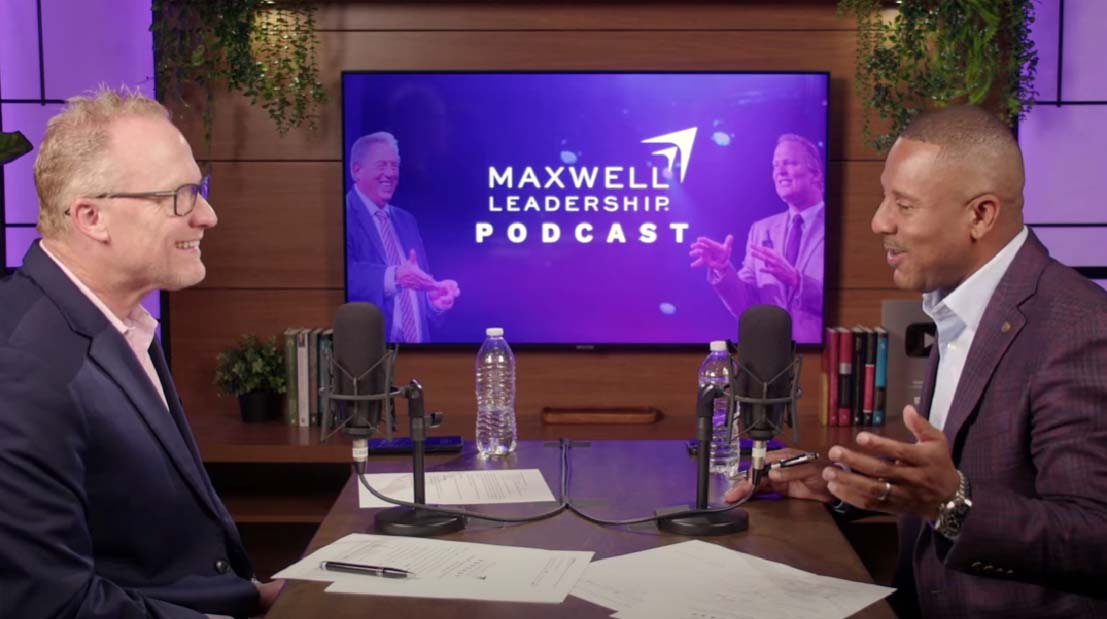
Hey, welcome to the Maxwell Leadership Podcast. We are committed today to add value to you so you will then go multiply value to others. Hey, I’m so excited about today what John’s going to teach about. But before I talk about that, I’m joined today in studio with Chris Robinson. How you doing, buddy?
Chris Robinson:
Hey man, I’m doing outstanding, man.
Mark Cole:
It is always good to see you kids back in school.
Chris Robinson:
Oh, man, back in school. I mean, I tell you what, summer is work. I mean, so they are all back in as, as the listeners know. I, I’ve got six kids, I’ve got triplets that are 16. So now they’re driving back to school. So that’s phenomenal. And then I’ve got a 12 year old going seventh grade and then I’ve got twins that are identical girls that are going into the third grade. So we got the whole range.
Mark Cole:
So now are the 16 year olds Dr. Rest of the kids to. We’re not quite there, right?
Chris Robinson:
No, they’re not separate schools. Okay, so now you know, the younger three, they ride their bikes to school because it’s right outside the neighborhood. Then the older three are driving separately together. So we got two cars deploying to the highest school because two of them are in the same car because they both run cross country so they’ve got the same schedule. Then the third one has a different schedule so he’s driving separately. But it’s, it’s a different world.
Mark Cole:
Hey man, I’m telling you, you said we’re excited that we have three 16 year olds driving. And I went, there’s nothing about that that sounds exciting except you don’t have to curry them everywhere you go. Right.
Chris Robinson:
My full time job was really uber for these kids, you know, I mean.
Mark Cole:
Yes, especially during track season because boy, you got some active little young people right there. That’s so fun. Leadership good. Everything good?
Chris Robinson:
Yep, everything’s good to go.
Mark Cole:
Hey, I am so excited today because we’re going to talk about something. I think between the two of us, we have observed John Maxwell not only teaching this subject well, but really living it out well. And by the way, for when after John’s done teaching, we’ll come back and we’ll kind of break it down. But it’s something that you know a thing or two about as well, the way you live your life. Today we’re going to be talking about discipline, keeps you growing. And by the way, if you would like to see this on YouTube or if you would like to download the show notes, you can go to MaxwellPodcast.com/Discipline. And we’ll have everything you need. Plus we’ll put some other links in there, some other things for you as well.
Mark Cole:
We are going to be talking today about the habit of consistency, the habit of discipline. Discipline. So grab a pen, grab a piece of paper. Here is John Maxwell.
John Maxwell:
Continue to intentionally add value to people every day. I wrote a book called the 15 Laws of Growth and one of those laws is the law of consistency. That says motivation gets you going, but discipline keeps you growing. And what I want you to understand is of all the laws of growth, I think the law of consistency, at least to me, is the most important law. Now the problem is that’s usually we don’t look at someone who says we’re consistent and think it’s a compliment. I mean, if somebody says, I wanna compliment you, we’re looking for them to say, I think you’re brilliant, I think you’re charismatic, I think you’re fun, engaging. I mean, if somebody just said, well, the thing I really love about you is you’re consistent, we’d probably be a little disappoint. But I’m here to tell you the key to your success.
John Maxwell:
The key to my success. The key to your significance. The key to my significance is consistency. Doing the same thing, the right thing, every day, as I’ve shared before, the secret of your success. The secret of my success is discovered. It’s found in our daily agenda. I want you to realize that if somebody says, well, I want to have my whole life filled with significance, adding value to people. All you gotta do is do today the same thing you did yesterday.
John Maxwell:
Intentionally add value to people. You see, the beautiful thing about consistency is over time, it compounds. Today I am seeing all kind of wonderful things in my life happen that to be honest with you, they surprise me. I’m just amazed. I’m just asking myself all the time, how did this happen? Where did this come from? That I really know the answer. It wasn’t something that happened overnight. It was nothing that was magic or secret. It’s the fact that for 40 plus years I just been teaching what I’m teaching you and trying to live what I’m sharing with you.
John Maxwell:
And the principles are simple. Every day add value to somebody, value people, and it begins to compound until the return becomes huge. You’re developing a habit. Don’t allow that habit to be broken. It’s a good habit, helping people intentionally. You see, when I started my personal growth project, I thought, I won’t do it for a short time. I’LL grow and then I’ll go do something else. And what I began to realize is that I was growing.
John Maxwell:
I was loving it so much and learning so much that I never wanted to stop. It became not a program, it became a way of life. And the big idea for you today is that intentionally adding value to others today will bring you fulfillment every day, but only if you intentionally add value to people every day today matters. Make it count.
Maxwell Leadership App Ad:
Hey, podcast listeners, many of you listening right now would probably love the autonomy that comes with owning your own business or becoming a coach that helps other businesses succeed. Well, we have a phenomenal strategy where you are 100% in control of your own business, earning income on your own terms, and have access to the people, tools and resources you need to build a thriving leadership development business. When you become a Maxwell Leadership Certified Team Member, you join a global community of entrepreneurs led by our expert team of mentors and faculty, including John C. Maxwell. You’ll also get one of the top leadership certifications in the world next to your name, giving you the boost you need to get started. Visit us online at MaxwellLeadership.com/JoinTheTeam to find out more.
Mark Cole:
Hey, I love John. Just kind of. He did the mic drop thing, Chris, that he always does. Today matters. Make it count. Done. I’m done. It’s truly, it’s true.
Mark Cole:
That is our goal on this podcast today, is make this day count. Make it significant. Do something with it. Jim Rohn said this. He said success is the result of nothing more than a few simple disciplines practiced every day. And boy, I found that true in my life. Haven’t you?
Chris Robinson:
Yeah, absolutely. I sure have. You know, and it really is the thing that keeps people driving is the discipline. It’s not that we don’t know what to do. It’s that we don’t take time to make that small decision every single day that ends in day to do something. And when we want to develop discipline, that’s really what it’s all about, is just taking a small step today. Oftentimes we think it has to be this big, momentous, you know, grand gesture every single day. And it really does compound over time if we just take a small step.
Chris Robinson:
You know, when it comes to discipline, you’re. You’re a very disciplined person. I mean, your travel schedule is crazy. You’ve got home, you’ve got kids, you’ve got grandkids, you’ve got everything’s going, but your discipline keeps you in it. You know, what discipline do you have today that really allows for you to keep growing. What keeps that drive going for you?
Mark Cole:
Yeah. So, you know, every year, you and my podcast family, you know this, but every year I get really disciplined in laying out a year plan. I architect a year in the form. In this case, I think this year it was a 21 page life plan. It’s just a full document that I put into play. It’s my playbook. It’s what 2025 is going to look like, that discipline. And I may come back and talk a little bit more about that because that is the place that I probably exercise the most discipline.
Mark Cole:
I’m very disciplined while I’m doing it. I’m disciplined in reviewing it. I’m disciplined in changing it. I’m disciplined now that hear what I said? I’m disciplined in changing it. In fact, if I get to the end of the year and my plan at the beginning of the year is what I finish with, with no red lines and no tweaks and no omissions, then I was not actively disciplined to my plan enough. Because a good plan that is disciplined to is going to show improvements along the way. But that would be a big one, Chris, that I would tell you as it relates to learning, I’m constantly in the book reading. I know you’re like that too.
Mark Cole:
I’m constantly in the mode of what am I reading right now? What am I learning right now? I have a discipline that anytime I talk to about five friends or five people, they’re not all necessarily quote unquote friends, but it’s five people that challenge me in my growth. I ask them what they’re learning, which then gets them to ask me what I’m learning. I’m sure they’re up to the trick now because I really want them to ask me because I want to vet it from them. And so I’m constantly challenging myself with environments of what am I learning, how am I applying it, what difference is it making in my life?
Chris Robinson:
Right. Yeah, I love that. I love that. Now John says that it’s a good habit to help people. Now when he says people, it’s broad. And I think people kind of dismiss the fact that, you know, it’s helped people and they’re looking for a specific person or a people. So let’s kind of, let’s kind of narrow this down for them a little bit. Okay.
Chris Robinson:
To give them something. Because for me, I’m like, anybody that I can help today, that’s a win, like it’s any person, period. And I don’t want to diminish that at all, because we see and interact with people all day long. But to give people some ideas, what are some intentional groups that you help daily? Because I think that’ll make it a little bit easier for people to identify. Well, hey, who can I add value to? What does John talk about add value to people every single day? What are some groups that you intentionally add value to every single day?
Mark Cole:
So it’s funny because it’s not as broad as I would like for it to be, especially when you ask me that question live right in front of all my podcast family. Chris, just give me a warning here. No. So it’s not as broad today as it has been at different times. I have had for years a discipline that says anyone that is a direct report to me. Any person that I get a phone call if they’re not going to show up at work, in other words, or if they’ve got a challenge, that’s what I call a direct report. It’s not somebody that I lord over because I try to put myself around leaders, but anybody that’s going to call me when they need something, they need time off or they need something, that kind of thing. There was a time that I was very intentional on daily adding value to direct reports.
Mark Cole:
I had seasons where I am very intentional on adding value to my superiors, people that I report to. And then I work hard to show and model improvement and inspiration to those at the same level of me. Then there’s other times. I run our nonprofits as well. We don’t talk as much about our nonprofits on the podcast, but I run two nonprofits as well as CEO. And so this year, right now, I’m in the middle of finding one of our legacy partners to daily add value to. And I try to find a way. There’s been other times that our board, I would try to add value to them because I knew at some point I was gonna need something from them.
Mark Cole:
And so I worked to put change in the pocket. Family is always up there. Stephanie and I are very involved in our four grandchildren right now. I’m very intentional with. With one of those getting something that is specific to their challenge or their opportunity. And so every day I’m thinking of, what can I do today for Ryder, for Macy? And I get really specific with that. The other groups of people that I try to add value to is. John’s talked a lot on this podcast about inner circle and outer circle.
Mark Cole:
I spend a lot of time trying to add value to my inner circle and. And then monthly add value to my Outer circle so that they feel like there’s an exchange. Because I pull a lot out of those people. I need a lot from them. So I feel a responsibility to put something in the tank so that when I do pull something, there’s something there.
Chris Robinson:
Right? Yep. Understand? Understand. I love it. I love it. You know, he says that it’ll give you fulfillment. Okay. So intensely adding value to others will give you fulfillment. So talk to me about fulfillment that you get from adding value to people.
Chris Robinson:
How does it feel? Your cup?
Mark Cole:
Yeah. See, I was on today. Chris, you and I have the incredible privilege. In fact, let me just take a moment and talk about this. One of the other things I do in my day job, I have a few day jobs. One of the things that I get to do is every Tuesday, and we’re recording this podcast on a Tuesday, every Tuesday that I am not on a plane or not in a committed meeting with John. Every other meeting kind of takes precedent, or my call takes precedent. But John meetings, he kind of.
Mark Cole:
He kind of lost.
Chris Robinson:
I got bumped yesterday.
Mark Cole:
Yes, exactly. Exactly Right. And so when the boss needs it or wants it or something like that, I don’t get to do it every Tuesday. But when I get to do it or when I have control of my schedule, every Tuesday, I get to spend time with our team. You do it on Monday. And Chris and I’s day job is really stewarding this team of 58,000 coaches in 169 countries. It’s kind of staggering to even say it, to be honest with you. And so Chris is our executive vice president of that.
Mark Cole:
He also is over business development, and so he does a mentoring call. I get to do a leadership call on Tuesday. Back to your question. Today, I had asked a young lady brand new to the course about. Her name’s Kim. Kim had got on my call right after joining mentorship. She joined mentorship. She’s one of those activators.
Mark Cole:
She’s an early adopter. She’s not even been to IMC yet. She’s already in mentorship. She bought into mentorship about four weeks ago, five weeks ago now, bought in, jumped on my call, and she said, mark, I’m two weeks fresh. I’ve got an opportunity to go to a trade show and represent myself as a certified coach with John Maxwell. And there’s so much opportunity here. It only comes once a year. She says, but I don’t think I’m going to do it because I haven’t been to IMC yet.
Mark Cole:
I said, kim, oh, my goodness. You got to hear Learn a little. Do a little from Chris Robinson, because Chris would be kicking your rear end right now to get in the game. Get in the game, Kim. So I tried to put on my best Chris Robinson. And I said, kim, do not wait for imc. Get out there. Get your name out there.
Mark Cole:
She said, but I don’t want to know what to say. I said, sure you do. Tell them your story. Tell them what you’re transitioning to. Build excitement for what you are in the middle of doing, not after you have done it. In fact, it’s not even as exciting when you tell me what you’ve done. It’s more exciting for me to tell me what you’re doing. She says, you’re kidding me.
Mark Cole:
I said, I’m really not. Go do it. She says, like, get a booth. And I said, get a booth. And she said, okay, I’m going to do it. She did it this last weekend. Got all kind of leads, already, got a couple of clients, got all this stuff going on for her. But her biggest thing today, when she called me today, just as we’re recording this, she called me.
Mark Cole:
She says, mark, it turned out better than I could have ever imagined. But here’s what I loved. I was challenging myself to think about a destination I had to achieve before I could start activating. And you unleashed me to realize that I can activate where I am and I can perfect where I’m going. And I went, mic drop. Now let’s go back to fulfillment, which was your question. The fulfillment in the life of a leader to see that there people that look to them for instruction or advice or direction when people do it, and they get a higher belief in themselves. And so I said, kim, what are you most excited about? She said, I’m most excited that I did the advice that I was given.
Mark Cole:
I said, that’s what I’m most excited about, not my advice. 100 people could have given you that same advice. I’m excited that you did it, because that’s where fulfillment comes from, is when we’re able to make a decision and see a better version of ourself emerge after making that decision. And so to Kim, who I hope is a podcast listener, I’m so proud of you. I am authentically proud of you in stepping out. People’s going to be helped because of that. But most importantly, there was a belief. There was a limiting belief in her that we pulled off that day and that.
Mark Cole:
I don’t know if there’s anything more fulfilling than that.
Chris Robinson:
Yeah, no, there’s really not. I Mean, I, you know, having access to be able to encourage the 58,000 members every single day. You know, that’s my people. Group of man. I’ve got to add value to somebody on this team today. So there’s not a day that goes by that I don’t have a text message, phone number, email, where I’m engaging with the member to encourage them to answer questions. So I get to do that intentionally. But occasionally, you know, I mean, I.
Chris Robinson:
It’s, I think beyond the team and I get to help some random people, and I love helping random people. In fact, I got an opportunity to do a first time ever where I received some fulfillment mark. Now, this is. This is good because I was at the Atlanta airport, and last time that I was here and I was just standing there for whatever reason, I was there a little bit early, which is, you know, unusual for getting to. To the Atlanta airport. So I pull over and say, hey, I’m just gonna sit here in the parking lot for a little bit right before the rental car place. I’m not going to turn this car in yet. And I get out the car, and I’m just kind of just sitting on the car, looking at my phone, and a young lady walks up to me.
Chris Robinson:
She’s, excuse me, mister, she says, could you. Do you know how to change your tire? And I was like. And, well, no, he’s laughing because he knows that, you know, I’m like the most unmechanically mechanically inclined person on the planet. And, you know, I’m looking around for somebody more qualified than me because I’m going, you know, there’s got to be, you know, a qualified adult here to be able to do this. I said, hey, you know what? I can probably get you started, but, you know, I can get you started, you know. So I walk over to the car, and she’s on the phone with the owner of the car that’s upset because, you know, she’s got a flat tire. And this person on the phone needs the car. Like, they’re telling her, I need this car.
Chris Robinson:
I don’t have time for this. And she goes, well, I got somebody to help me. She said, well, can he fix it? And she said to the lady, well, he said he could get me started. Now I start laughing. And then the lady hears me laughing on the phone, go, why is he laughing? And so, you know, I pull the stuff out the back and I was like. I said, look, between me, you and YouTube, we’ll figure this thing out. So I’m starting this thing one At a time. And I get the tire off, I get the hubcap off, I get the tire on and I get this girl off.
Chris Robinson:
And let me tell you, my hands were dirty, I was sweating like crazy, the Atlanta heat. But I can’t tell you, I don’t know if there’s anything else that I’ve been more fulfilled about besides changing this tire. That’s awesome, because that’s not what I do. That’s not what I do. But what I did do that day was what I do every day. And that was intentionally add value to people, even outside my comfort zone, even outside my skill set. And, man, just helping people is just so fulfilling.
Mark Cole:
I gotta pull back from this for just a moment because I think there really is a lesson right here. Isn’t it interesting, Chris, that your desire to add value to people superseded your confidence at accomplishing a task?
Chris Robinson:
Indeed.
Mark Cole:
And how many of us, if we would put. This is a brilliant thing you just taught me right here. How many of us, if we would just put our value, our fulfillment factor? What is your fulfillment factor? Yours is adding value to people. If you would put your fulfillment factor above your competence, you’ll be more competent than you think you are. If you’ll put your fulfillment factor above your agenda, you’ll get more done than you think you will. If you’ll put your fulfillment factor above your wishes, your personal wishes, you’ll watch a fulfillment happen that you never thought was possible. You’ll have competencies that you never thought was possible. I now know you’re aaa.
Mark Cole:
I know who to call. But also, you’ll walk into Atlanta airport with what you thought was time to kill, to rest. But it was time to set a lady on her way that was struck and paralyzed and didn’t know what to do. I’m just gonna tell you that was a great lesson, man.
Chris Robinson:
Oh, my goodness. But what you pulled out of it, that was the magic, man.
Mark Cole:
No, the magic was that you changed the tire. Cuz I don’t know if my fulfillment factor is big enough for me to say. I’d say, ma’, am, I have aaa. I’m gonna stay right here with you. And we’re gonna wait 45 minutes, we’re gonna get to know one another.
Chris Robinson:
That’s my default. That’s my default. But something inside of me said, go ahead and try it. Go ahead and try it today. That’s awesome, man. I love it. I love it. Well, man, last question here.
Chris Robinson:
We’ll get wrapped up. But you know, what’s a result that you have in Your life today that you can look back and go, this is only because of intentionality.
Mark Cole:
Yeah. So the opportunities, Chris, that you and I are experiencing now is staggering to my 20 year ago mind. The people that I meet that want to know what I have to say about leadership staggers, anything that I could even imagine right now. And I’ve seen a lot, I’ve been a lot, I’ve been there, I’ve done that. I’ve been exposed to a ton with John. But some of the people that I get to interact with now blows my mind. I don’t see a path that got me here. I don’t see a path to increase it.
Mark Cole:
I really don’t. I’m just sitting here going, wow, I’m mesmerized. That would be true for you. I know your journey. So when we sit here and we talk about this habit, what is it that got me to a place that I could not even imagine? I want to say what it’s not. First, it was not a brilliant strategy plan that I put together for my life when I was 22 years of age coming out of college. It wasn’t the magnitude of lessons I learned when I failed my first opportunity to influence people and failed miserably. I learned a lot then.
Mark Cole:
I didn’t learn enough for what I’m doing now. I had a lot of intentionality at an 18, 19, 20, 22, 24 year old young man. I didn’t have enough intentionality to be where I am now. So then how what contributed to getting here? It’s not my strategic thinking. It’s not my education. Listen to how I talk, gang. It’s not any of that. What it is is the consistency of constant improvement.
Mark Cole:
It’s the expectation of an ever present lesson and it is a commitment to give a return on anything I’ve been given. And when I tell you that when I am given, audience with some of the people I’ve been in audience with, some of the people I’ve been meeting with in the last 14 days. I’m constantly asking myself, what am I supposed to do with this? Am I supposed to network here? Am I supposed to connect them? Am I supposed to go bring them into a bigger story? Am I supposed to awaken them? I never take a gift as something to enjoy. I take a gift as something to steward. Every time, Every time. When you give me something today, one of my favorite things that’ll happen today is Jake and Kimberly and my team had me all afternoon doing podcasts and then we didn’t have A couple of pieces in place, and now I get to spend a couple hours with you. And this is long overdue. But here’s my point.
Mark Cole:
That sense of fulfillment is because the intentionality of looking for things to fill it, that doesn’t strike to me. Oh, I don’t have a couple of things. I don’t have a couple hours. I got a couple hours back. Let me go chill. No, no, no. I’ve got things that we can put in. I can put in place.
Mark Cole:
That is long overdue, waiting. Because you’re constantly looking for ways to maximize and to get a return off of opportunity. I’m going to give one final thing, and then I’m going to let you give that same answer. What discipline did you do to get you where you are now? You’re very successful, incredible dad, great leader, highly respected, now an author. Oh, my gosh. Can we continue? So I’m coming back to you with a question because we had a couple extra minutes here, but I would look at you in the Eyes, our podcast family that watches us on YouTube. And where’s the rest of you? I want to see you. I want you to give me a comment.
Mark Cole:
I want you to tell us how we’re doing. I want you to ask a question, get engaged with us in this podcast. But I’m going to look right in your eyes, YouTube family, and I’m going to tell you, you are a product of the choices you make, the relationships that you have, and the experiences that you invest in. You’re the sum total of that. You want to look at your life. There you go. I just gave you what gave you the you that you have right now. And I would just challenge us as you ask this question.
Mark Cole:
How do we go after fulfillment? What’s the thing I’ve been the most disciplined about that has brought that fulfillment for me? I repeat it again. It is the consistency of growth. It is the constant stewardship of opportunity, and it is the requirement of accountability. In my life. And those three things, I have systems and disciplines around that that has led me to heights I never expected. So, Chris, I kind of gave you a renewed bio just a minute ago, but what about you?
Chris Robinson:
Yeah, yeah. For me, I think it falls within the same category if we’re looking at principles that work. Because I think we both have spent a significant amount of our life, you know, studying John’s principles and what he teaches. And if I had to boil it down, I’d boil it down to the three things that I would say, hey, I’m where I am. Today, as a result of discipline in these areas, want to be intentional relationships. You know, growing up, I was always hanging out, partying, doing the different things, and you would find me with guys that were doing the exact same. It wasn’t till my wife and I made an intentional choice that, hey, look, this isn’t a direction that we want to go. We have to separate.
Chris Robinson:
So there was a line, the sand, where we didn’t hang out with anybody. It was just her and I, nobody else for a long period of time until we were able to find the groups that were going in the direction that we wanted to go. And so I believe everyone, if you want to go into a new direction or if you want to, you know, change the trajectory of your life, you’ve got to change the relationships in your life. Now, I’m not saying cast off, you know, people and, you know, denounce them, but what I’m saying is your next breakthrough is typically going to come through a person. In order to get to that person, you’re going to be need to be in some brand new room. So I would say intentional relationships. Number two would be intentional learning. Intentional learning and really directing the area that I want to grow.
Chris Robinson:
It’s selecting, hey, this is the area that I want to grow, and then moving with severe action of learning. So in that, you know, I’m. I’m gathering information on a singular topic. And that’s one thing that I think that I really do well is that I can take a single topic and say, okay, this is the area that I want to learn. And then I begin to gather and just stack everything in that specific language. So that way I can get the knowledge base, I can get the vocabulary, I can begin to see some of the things that repeat, and it gives me a faster understanding of things, you know, with this intentional learning. And then, of course, it’s intentional action. I mean, it’s like, okay, it’s one thing to learn something, but then to actually go out and do something, you know, just like you were talking about the member there, that was, well, I’m gonna wait until I get this seal before I go out and do this.
Chris Robinson:
No, no, you’ve learned this, now go and do this. And what happens is when we take action, action always gives us answers. Okay, well, action always gives us answers. And if we take action, it’s going to allow for us to ask better questions, because now we’ve got a result. And when we have a result, we can do something with the result. But if we want to sit back and Just continue to read, continue to look for philosophies, continue to talk about strategy ideas. We’ll. We’re going to be in the exact same place.
Chris Robinson:
So for me, if I had to boil down relationship, intentional relationships, intentional learning, intentional action.
Mark Cole:
Beautiful. Beautiful. Oh, man, I’m glad I turned that question back on you because that’s right there. It’s incredible. Hey, team there. As you were talking, I thought about an episode that we did recently called the key to improving your life. And we’re going to put that, we’re going to put that in your show notes so you can go back and reference that. I believe that will underscore not only what John’s been talking about today about discipline keeping you growing, but I, I think it’s going to underscore, Chris, what you just gave us with those three points, specifically on the intentional relationship piece.
Mark Cole:
So important. I want to close today with a listener question number one. Thanks for the question. I love digging into your questions and spending a little time about where you are. And so, Brittany, thank you. Brittany listened to a podcast, all’s well that begins well. We’ll actually put that in the show notes as well for you to be able to listen to. Brittany references John’s third point on creativity and imagination and then asks the question, is there a license to be created? Is it a verbal license to be creative? I’d love to hear a little bit more about this.
Mark Cole:
Now let me go back, Brittany, because your question is very specific to that podcast. John’s point said imagination and creativity is more important than knowledge. Information is important. John goes on and says, but what I want more than information for them is I want them to have imagination and creation. Because at the beginning of a project, you can be so much more creative than after it gets going. After a while, back to Brittany’s question. Is this a verbal license to be creative? And the answer to that is the way John positions that around here, Brittany, and our podcast family is he challenges all of us to be creative by the fact of being on the team. You have a verbal license to be creative.
Mark Cole:
What I have found, Brittany, is I’ve worked with leaders in the past that creativity scares them, makes them nervous. It makes them feel uncertain, insecure. It’s not predictable. Creativity is by defined. It is something that is morphing and moving, and a lot of people need their world in a tight little box. Brittany, I think if you’re working with somebody like that or for somebody like that, I think you need to get them to give you verbal license. I think you need to get them to give you space. I think you need to ask for that space, because I do think the origin of the question might be there are environments, not like John Maxwell’s, to where creativity is frowned on.
Mark Cole:
And in that setting, you’re gonna become a challenge to a leader that doesn’t like creativity. You’re gonna become sidelined, almost paralyzed, almost put aside if you use creativity and creativity is not invited. So, Brittany, get a verbal license. John has given you that verbal license. He wants the creativity within you, and he wants it around all of us. But, Brittany, for sure, if you’re in an environment that kind of frowns on that, make sure to have that very candid upfront conversation with your leader. Hey, for all of us, thank you. Brittany, thank you for the question.
Mark Cole:
All of you that give us a comment week in and week out, thank you for the comments. Certainly include questions and insight that will make us better, because together we are working to multiply value to others, and we do that by leading well. So today, go lead well.
Transcript created by Castmagic.




Be the first to comment on "Discipline Keeps You Growing"