Activity does not equal productivity. Are your actions strategic enough to be effective? In this episode, John C. Maxwell is sharing 5 strategy questions to ask yourself if you want to lead successfully!
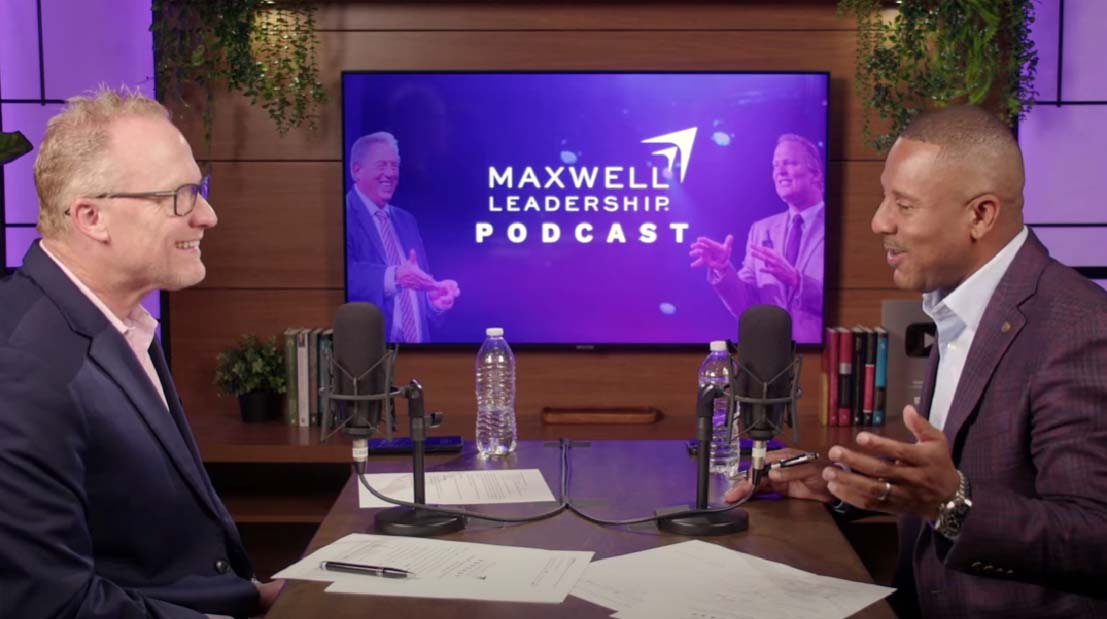
After his lesson, Mark Cole and Chris Goede sit down to discuss what John has shared and help you practically apply it to your personal life and leadership.
Our BONUS resource for this episode is the Success Strategy Questions Worksheet, which includes fill-in-the-blank notes from John’s teaching. You can download the worksheet by clicking “Download the Bonus Resource” below.
Take the next step in your growth journey and become a Maxwell Leadership Certified Team Member. Click here to speak with a Program Advisor today!
Mark Cole:
Welcome to the Maxwell Leadership Podcast. Our podcast is committed to adding value to you so that you’ll multiply value to others. My name is Mark Cole, and today John Maxwell is going to give us five strategy questions that you will be able to ask yourself if you want to be successful. Now, as you know, we come behind John Maxwell’s content, and we give application that you can use to better your life and to better your leadership. And so today, my co host is Chris Goede, and we’re going to sit down and offer you insights and application that will make you better, because it’s making us better. And truly, that is probably the greatest strategy thing that we all need to accomplish at an individual level. How do we take some content, how do we apply it, and how do we get results today? That’s our guarantee to you. It’s going to be incredible.
Mark Cole:
If you would like to download the free bonus resource for this episode or even watch this episode on YouTube, you can go to MaxwellPodcast.com/Strategy. Okay, grab a pen, grab a piece of paper, challenge yourself to put it into action. Here is John Maxwell.
John Maxwell:
If you want to be successful, I’m going to give you some strategy questions that you want to ask yourself. In fact, I’m going to give you five today, and they’re really good questions. The lesson. I love the lesson. And here’s why I’m going to teach this lesson. Leaders. All of us are leaders, and we all have a bias for action. I mean, when you show action to a leader, they’re in the game.
John Maxwell:
They’re not in the stands. They’re not, you know, stuffing themselves with a hot dog and a Coke or a beer. They’re playing the game. They’re out there. I mean, leaders love action. And since they love action, the result of that is they’re busy. We’re busy. If you look at your calendar, every day, you got activities and meetings and places to go and people to see and things to do.
John Maxwell:
We have a bias to action and action. I teach there’s no success without action. So let’s not downplay action, but we’re going to upplay today thinking, because I think the number one responsibility of a leader is to see the big picture. I mean, if you don’t see the big picture for your people, who’s going to see the big picture? You got to see more than others see, and you got to see before others see. We’ve talked about that. You’ve got to see the big picture. Well, how are you going to see the big picture? If you don’t have time to think, to dream, I mean, this is. This is absolutely huge.
John Maxwell:
We don’t accidentally see the big picture. We see it because we reserve time to say, okay, where are we going? How are we going to get there? What does the journey look like? Stephen Covey was the guy that said it so well. What did he say? Begin with the end in mind. Now, you can’t begin with the end in mind if you don’t have thinking time because you know what the end is going to look like. You haven’t yet dreamed. You haven’t let your mind go ahead of you to prepare the plan, the path, the scenario, the picture that you need to know how the end is supposed to end. So if you begin without the end in mind, you’re not asking these strategic questions. I’m going to give you five of them.
John Maxwell:
They’re strategic questions. I would say that you could call them guiding questions. They guide you. They’re a good guide for you. In fact, they’ll guide you to success is what they’ll do. And so let’s get started. Let me give you the five, and the first one. When you look at your business, when you look at what you’re doing with your team, you ask this question.
John Maxwell:
What does not fit? In other words, do you have something that you’re doing in your schedule, in your calendar, in your business that just doesn’t belong there? It just doesn’t fit. And it may appeal to you outside of your business, but when you put it in your business, there’s just no sense of togetherness. Do all the pieces in the puzzle in your company, in your business, on your team, do they fit the organization? Hey, not only do they fit the organization, do they fit the team that you have? Maybe that it’s okay for the organization, but it’s, it’s not a good mix with your team, or, hey, do they fit you? Okay, number two, question. Number two. I love it. This is probably my favorite of the five questions. It’s probably my favorite five questions because I’ve done this for a long time and I’m really good at it. Probably that’s my favorite.
John Maxwell:
And that is what would an outsider do? In other words, if I brought somebody that wasn’t in the company and I brought them into the company, and I said, I want you to give me fresh eyes, what would an outsider do? I mean, when they see my company a little bit different, you see, I love to ask the question all the time, how can I improve? How can I get better? I Ask that question myself every day. How can I get better? How can I improve? How could, how can I go further than I’ve ever gone? But several years ago now I said I’ve got to get an outer circle. And I gotta get, I gotta people that, they don’t work for me, they don’t work in the company, but they know me well, they kind of know what I do, they know my business, but they’re on the outer circle. So their job’s not on the line, they’re not going to work every day, but they’ll think out of the box because they’re not in the box. And so I’ll talk to them and I’ll tell them what my journey is and I’ll ask them for their input and their ridiculously helpful to me because they have fresh eyes. 90% of my progress as far as ideas, thinking, improvement come from new people. Why? Because they’re new. They have fresh eyes.
John Maxwell:
They’ve not accepted their. And, and so I, what, what am I missing? I tell, tell me, what are we missing? What do we need to change? Is there a better way? And. And it just becomes huge. Question two is all about fresh perspective, fresh eyes from others. It’s a huge strategic question to help you be successful. Number three, are the actions, what we do consistent with our strategy? Because I, I see a lot of times the strategy of a company and the actions of the company are not the same. And, and there needs to be what I call a 3V. Think of the letter V.
John Maxwell:
Like Victor, there needs to be a 3V match, vision, values and vehicle. Vision. What we see values, who we are, vehicle, how we get there. Now, do the three V’s bolster, improve, and come together with what our strategy is and what I put on the wall has to be also consistent in my walk. The wall and the walk have to synergize. They have to come together, they have to be consistent. Question number four. Do I understand why we do it this way? Do I, do I know the why behind the what? This is just absolutely huge now.
John Maxwell:
I think confusion, confusion doesn’t bother me. Ambiguity doesn’t bother me. I’m very comfortable with all that stuff because I think confusion is the first step to clarity. I think the only way you get clarity is you got confused. So you said, I got to ask some questions. Now why is why important? Why is important because why gives you the context of what. So when I tell you what my decision is, that’s to give you direction. But when I tell you the why, why, I Made that decision, that’s a whole different game.
John Maxwell:
Now I’m empowering you to make decisions yourself. If I never tell you why, I can never empower you because you won’t know anything about decision making. But what I tell you, here’s what the decision is. Let me tell you why I made that decision. Now I’m going into the context, the surroundings of what brought that decision to now. If I gave you the why, you learn. So when you have to do a decision, you can you say, okay, what’s the why? And, and I teach you that. Now the number five, the fifth one you can see these are great questions.
John Maxwell:
This is going to make a humongous difference for you. Question number five, does my strategy include a double win? And a double win is I win, you win. Now I used to say that all the time. I win, you win. Now I don’t say I win, you win. I say you win. I win. I turned it.
John Maxwell:
Now why did I turn it to you win and I win because I want you to win first. And a double win includes two things. It includes an immediate win and not an immediate win because you’re wanting fast results, but you’re wanting an immediate win because it creates a chemistry to you say, oh wow, if we did this and we did it this quickly and we had this chemistry going, we could probably do more stuff and then it’s a long term win. And the long term win is the fact that you, now you’ve developed like a partnership. So you got to ask yourself the question strategically as you look at your team, how do I get a double win? And when I get that double win, how do I take that to obviously bless both parties and multiply them. And that’s it, that’s, that’s my lesson that I, I give you and I hope it’s a lesson that can help you. And I just love these questions. And I promise you, whatever you’re doing and whatever you’re wanting to build in your team, whatever you’re wanting to do in your business, whatever I want to promise you, you’re going to have thoughts and ideas that are going to help you and bless you that you’ve never had before.
John Maxwell:
So anyway, that’s the lesson. I’m going to stick by it.
Mark Cole:
Hey, welcome back everybody. I love John’s teaching today and Chris, I loved even sitting in here and just talking a little bit about it and realizing how effective it is, how useful it is to put into application, application in leadership environments. It was Jim Rohn that said success is 20% skills and 80% strategy. And so, Chris, I’m looking forward, truly looking forward, to spending some time with you today because we’re. We’re living this out right now.
Chris Goede:
Yeah. I want to welcome everybody that’s listening. If you’re watching us on. On YouTube, Mark and I decided we walked down this morning, hadn’t seen each other, and we’re like, well, we got this almost the same shirt. So we’re representing the brand this morning.
Mark Cole:
This is the Maxwell Podcast dress code today.
Chris Goede:
And that’s not a ploy to get you on YouTube, but get on YouTube. You want to see this because it’s something you want to see again because we’ll make sure this doesn’t happen again. Love this, Mark. And what you and I were talking about is we want to make this very applicable to everybody. Yep. Now we’ve had the privilege of being in Maxwell Leadership for a long time and running with John. And so by almost osmosis, we better be applying some of this. And so Mark and I talked and we were like, hey, let’s bring you inside our leadership room.
Chris Goede:
Let’s bring you inside the organization to show how, from a leadership standpoint, the intentionality behind Mark asking these strategic questions sometimes of the team, but first, himself and really sitting back and thinking about how do I think on the business so that I can elevate the business, because that’s the only way we’re going to be sustainable. And right now, I know you’re thinking about that a lot because of just where John is and his season of life and your calling. Right. How do we get to a place to where we’re sustainable down the road? The only way to do that is for you to be asking yourself some strategic questions. So if you don’t mind, I want to jump in and talk a little bit about this. So as we mentioned, we want to take you inside our leadership team. And one of the things I said to Mark was John’s first question of where or what are we doing? Does it fit in what we should be doing? And you spent some time like you do at the end of every year away thinking on the business, and you came back. And I’ll never forget it.
Chris Goede:
You were. You were so calculated. You were. You like, listen, team, our for profit team, here are three things we better be doing. Yep. If what you are doing does not fit in that and I find out about it, you better have a good reason on, you know, why you’re doing it. Because at the end of the day, we found that there was A lot of things that we were doing that didn’t have have a return for us doing them. And ultimately from a strategic standpoint, you’re asking yourself that question because you’re responsible for the bottom line.
Chris Goede:
You’re responsible for the impact on people. Talk a little bit about how you spent some time away, what drove you strategically to ask that question of yourself then to be able to come and pull that out of us. And now we’re six months at this recording. We’re six months into the year and we’re probably more dialed in than we’ve ever been. I agree on three things inside our business.
Mark Cole:
Well, so let me say that. So thank you for that question. Know that was going to be the question as you framed it. And now that you told me the question and now you framed it, it is so powerful. Thank you.
Chris Goede:
Absolutely.
Mark Cole:
And let me say this, here’s why it’s powerful. Because it wasn’t a quick thing of a two and a half day retreat that I came back with that kind of clarity.
Mark Cole:
Really.
Mark Cole:
Leadership clarity at the organizational level starts first with personal clarity at the leader level. Don’t miss that. You can’t have leaderships leaders out there. You can’t have organizational Clari if you don’t have personal clarity. And so this has been a two year journey for me, Chris, and I wouldn’t have answered that until you set this up. See, I started a year and a half ago getting some personal clarity. Some things were out of sync, some things that I felt like were misaligned, both because results were not there, confusion was present and chaos was erupting. Not because we’re an entrepreneur organization, because we always have chaos.
Mark Cole:
Chaos was erupting because of a lack of clarity and alignment. And so I started first with Mark a year and a half ago going, hey, what are you doing? And you guys on the podcast that are consistent, by the way, if this is your first time, thank you. Go back and listen to some episodes and it’ll make sense because this podcast is a ever growing evergreen process of leadership. And so those of you that know I do my leadership leadership review and then our year end review and then I focus on my leadership, knows that 2024 word was stand. Mark. Find the simplicity of what your leadership has been effective in and stand on that and then began to add assignments to it. Every leader needs to go through a recalibration like that. Mine was 2024 in the recalibration of my leadership and how confusing and chaotic and unclear my personal leadership was as I Began to define and clarify that I realized how off point our organization was.
Mark Cole:
So now think session number two in the point of clarity and simplicity now allowed me from a clarity as a leader to focus on clarity as an organizational leader. And in that, I realized that our organization was trying to do about 10 things when we really needed to be doing three things. So as I came back in January and began to set that course and give those expectations and now lead with the clarity back to those three clear expectations, it has truly aligned us, as you just said, and I agree with you, probably as best we’ve ever been, at least in a long time. We’re leading with the same step, the same cadence, the same drumbeat, and going after the same things. But it starts with leadership. It starts with thinking. It starts with clarity as a leader before it can get to organizational clarity as a team leader.
Chris Goede:
I love what you’re, you’re saying right here, and I want to give you the follower perspective of that. Right? Because you were not clear. And so we’re used to working and living in chaos, right? We were for John Maxwell, who by the way on this lesson said he’s totally, totally very comfortable in ambiguous situations. And that is very true. But because of that and you weren’t clear, we were doing a lot of things that didn’t fit the business because we’re trying to serve you and John. Hey, I got an idea, guys. Great. We’re sending a team here, so there’s lack of focus.
Chris Goede:
So as a follower and then leading my team, we were doing the same thing. Right. And you said what you felt organizationally was coming from you. You got very clear though, came in strategically because you’re saying, what do we need to be doing to get out of this mess? What do we need to be doing that aligns directly with Mark Cole’s calling and John Maxwell’s vision? Okay, great. Here are the three things. So you know what it’s done for us as leaders, as a follower, it’s allowed us to have a decision making filter.
Mark Cole:
Yep.
Chris Goede:
Nope, not doing that. Where in the past I’d be like, okay, let’s try it. It might be a new opportunity. We love innovation. We love trying things differently around here. And what we ended up finding in different business units was we were doing a lot of stuff that not only had little return, had no return, we may even been throwing money in the pot. And now we’ve been able to reallocate and refocus that simply because now come back to this. The strategic question Mark asked himself was after he got clear.
Chris Goede:
And I love that that’s a whole. We could do a whole nother lesson on the clarity you have then turns into organizational clarity. But he asked himself the question, question, what is not fitting, what is not returning on our investment of time, not financially only. That’s part of what we do. But the impact on people. John’s brand, you know, all of those things that we could unpack comes into that first.
Mark Cole:
Well, you know, before we go to the next question, I sit here this morning as I was listening to John and teaching this and then applying it, first personally and then, of course, for our podcast listeners and viewers, and I realized something. I don’t have a problem. And many of us as leaders do not have a problem with an inactive team. If we got an inactive team, we got some other problems. If people are silently quitting, all the things that are out there, you really need to go address with that. But most leaders, I don’t think, has a problem with an inactive team. In fact, I think sometimes we have a problem with an overly active team. They’re overly active at things that are not producing the best, not doing the right things.
Mark Cole:
And so John’s talking about this. In fact, John made the statement. He says leaders love action. How he said it was. Leaders have a bias for action, and so do I. I agree. So does John. We’re always acting.
Mark Cole:
But do you know that I believe for leaders, action is an endorphin. We need action to feel the high if we don’t get anything. Chris, there are many nights, too many nights to admit here on the podcast. There are many nights I wake up way earlier than most people. In fact, some of you are probably going to bed when I’m waking up.
Chris Goede:
Yes, true story.
Mark Cole:
And I wake up and I’ll sit there and I’ll try to wrestle with something. Wrestle with something. I can’t get it right, so I just get up and have to do something. I have to go do something. It can be totally unrelated. And all of a sudden, that action releases things within me, endorphins within me. That gives me that mental clarity that then I go soft. So we have a leadership bias toward action, most of us.
Mark Cole:
But let me tell you what action without thinking will do to you. And I thought about this this morning. Number one, action can give you a false sense of accomplishment. Well, I did something, so I’m successful.
Chris Goede:
Crossed it off the list.
Mark Cole:
Crossed it off the list. But it had nothing to do with what you needed to be doing. It had nothing to do with your strategy. Had nothing to do with success. How many times have I allowed my day to feel successful because I checked off all of my inbox. This is going to be you and I confessing, and I go, oh, I got all of my inbox clean, and I got nothing done that was relevant that day.
Chris Goede:
That’s right.
Mark Cole:
In other words, action can give us a false sense of accomplishment. Number two, action can distort your focus. I have found a lot of times because I feel like I’m supposed to be doing something that I start doing doing something. And because I didn’t replace action with thinking that I was focused on the wrong thing. Way too many times, action has got me unfocused rather than clear in my focus. What action are you doing, and is it founded on good thinking, or do you have to spend time reflecting on what you acted incorrectly?
Chris Goede:
Thoughts go through my mind right now, and examples even of you coming in, saying, here I am, flying in, got some ideas. You bring your energy, fly back.
Mark Cole:
Fly back out.
Chris Goede:
Yeah.
Mark Cole:
And there’s no. There’s not all the time great thinking behind that. The third thing that I think action does that impacts or impedes thinking is action paralyzes effectiveness. We feel like we can’t be effective, and yet we’re acting and reacting and responding and doing things more than we’ve ever done. How many of you in podcast family right now feels like you’re running a pace that you’ve never ran before? You’re busier than you’ve ever been. You’re on the flywheel, you’re on the rat race, you’re going after it, and you feel less productive than you’ve ever been. Perhaps your answer is you’re paralyzed from accomplishment because you’re acting incorrectly. You’re acting on the wrong things.
Mark Cole:
And then the final thing that I thought was action can minimize needed input. How many times, Chris, have you wanted to give me some input? In fact, I’m trying to find some time with you right after this podcast today because I’m too busy for some input from you right now in a situation you and I are working through. And it just occurred to me, this morning, I got a voice text for you, which is how it occurred to me. I got a voice text. I went, oh, shoot, now’s the time to get some input from Chris. Whereas if I would have just taken that voicemail or you hadn’t sent that voicemail, the. The input that I need from you would have been not received because I was too busy. Do you know how many times podcast family I Hear people say, man, I really wanted to tell you that, but you’re just too busy.
Mark Cole:
And I’m going, I’m not too busy for that. How did you miss that? That’s a priority. Well, how they missed is because I’m too active to get good input. And when you’re too active to get to it, too good input, you’re too active.
Chris Goede:
Podcast listeners, you’re getting two podcasts for the price of one today. Okay, we’re going to, let’s go right, right now, the action, without thinking, those four points right there, I want you to carve that out separately and write those down and think about them. Because each one of those, I think we’re all guilty in one way or another. And I was thinking a lot about, as you were talking about that, how John has always said, hey, let’s double down on our strengths, right? Let’s back up a little bit on those opportunities where we need for growth, because that’s where we’re gifted, that’s where wired. And so I was thinking about that even from an efficiency standpoint as a leader, right? Like that’s what we need to be doing, not just action. We need to be thinking about where are those strengths, what is the calling, what is the vision of the CEO? And stay dialed into that versus just coming in and reacting. And so another great decision making filter from Mark. Now the last point you just talked about about needed input.
Chris Goede:
It’s a great segue into. We’re going to cover two more of these questions that John posed of the five and really give you some affiliate application behind it because we want you just to see what it looks like in Mark’s life as a leader and what we’re doing here at Maxwell Leadership. I remember back in the day when John came to you and said, hey, love my inner circle. You guys are not enough. Yep, right. I, I want to get an outside circle and I know everybody’s going, oh my gosh, this what, what type of input is he going to get from there? And I have this statement where it’s like, we don’t need a new idea. We need a new perspective about the idea that we’re currently working. And I think when you bring in an outside perspective that’s not in our everyday bubble because we, everybody works in a bubble.
Chris Goede:
No matter where you’re at, it’s what you think about, it’s what you’re doing every single day. And John was willing to say, I’m going to put my ego aside and I’m going to welcome other leadership thoughts into what we’re doing. And I now see you doing the exact same thing. What would an outsider do? So everything that we’re going through right now, even strategically, I’m going to stay on this thing of where you came back and you’re asking a question, what doesn’t fit? And then you’re like, hey, what would others do if they were running this business? Because we do work in a bubble and you’re in John’s bubble and our bubble. What would an outside business, man or woman, come to us and say, man, I love the idea. Here’s a different perspective on how to do that idea. How’d you get comfortable with that? And then how did you invite other perspectives, right. Other input into your life as a leader, as you were, as you’re strategically kind of forming Maxwell Leadership.
Mark Cole:
Well, get comfortable with it is a funny question because I can remember Linda Eggers, who’s been with John for almost 40 years now, 35 plus years. I can remember when John came to us and said, hey, I’m getting an outer circle because we’ve been his inner circle for a long time.
Chris Goede:
That’s right.
Mark Cole:
Linda Eggers truly asked the question, am I not enough? And John, I mean, he didn’t even have to think about it. He went, no, you’re not. But don’t feel bad. I’m not enough either. I got to go find some different thinkers. So to admit that you’re not enough is never comfortable for a leader. So I don’t know that I’m still comfortable with outside voices, but I am now committed to the discipline of outside voices. And by the way, again, podcast family, don’t wait for the comfort, wait for the revelation.
Mark Cole:
When you get the revelation and you go after it, it will bring you a return that you, that you want. So now we go to this concept of when and how do we engage in outside voices in an outer circle, so to speak. Just last night, I’m working through something with you. I’m working through something. And I and I needed an outside perspective, but I needed an outside perspective that had inside language, had inside understanding. And I’m just going to tell you just real quick sidebar. Not even going to take time with this. There are different degrees of outside perspective that are needed at different times.
Mark Cole:
Sometimes it’s good to have an outside perspective that knows nothing. And then there’s other times they have an outside perspective that knows a little. And then there’s a lot of times that have an outside perspective that has no vantage point or no Advantage to what’s being talked about but is able to actually give you. I was with Liz Bohannon at a Dave Ramsey event not too long ago with John Maxwell. We were talking in the Green Room, and Liz Bohannon was asking John about his inner circle, who’s in your inner circle, and that kind of thing. And she made an interesting statement. She said, no one. You can’t have an inner circle that only benefits from the decisions your leadership makes.
Mark Cole:
You got to have people close enough to you that has no actual benefit to your leadership decisions. And I thought, wow. And I’m still working on that. I’m quoting her. I’m still working to apply that. But my definition of a true outside voice is somebody that is not vested in financially, are vested in their own success trajectory on what we’re discussing. That’s an outside voice, just kind of as a frame of reference. And let me tell you, the power of Fresh Eyes.
Mark Cole:
For me, I’m just going to give you four powers that I get, four lifts that I get from Fresh Eyes. Number one, they remove the emotion. They’re not fired up about it, right?
John Maxwell:
They’re not.
Mark Cole:
They’re just trying to serve you and give an answer. They bring no to low emotion to the discussion at hand. The second thing that they do is they marginalize success or failure. You know, sometimes we try to make a decision based on whether it’s going to be successful or failure, and we don’t need to make a decision based on that. And we put critical thinking on an idea on whether it’s going to bring success or a quicker failure where I can move on. And outside perspectives marginalize that. They go, okay, it may be successful, may not be, but let me give you some thoughts that’ll help you make the best decision. Third thing that I found from fresh perspective is they enhance the bigger picture.
Mark Cole:
Last night it happened for me. I was reminded of a bigger picture in a conversation that I had last night. There is a bigger picture at play. And so many times what happens when we’re in the middle of a decision, our vision shrinks down rather than stays up. You get a fresh perspective. And almost every time, I get reminded with that fresh perspective of the bigger picture. And then the fourth thing that happens is it exposes blind spots. It gives you visibility into things that even people close to you can’t have.
Mark Cole:
Isn’t it true? It’s an old adage, but you can’t see the forest for the trees. If your whole team is in the trees, you’re not even Recognizing you’re in a forest.
Chris Goede:
That’s right.
Mark Cole:
And fresh perspective that’s not in the forest with you, they’re not in the trenches with you, will give you blind spots of why you keep going in a maze in a circle and you keep circling rather than heading out.
Chris Goede:
How have you taken outside perspective and not allowed too much of it to then almost paralyze you? Versus okay, that’s enough. Right? Where people go, okay, great. Collaboration is great. Outside perspective is great. How do I know when enough is enough? Am I getting too much information? Have you gone through and strategically thought about our business and then you sought outside perspective from some your outside circle and then go, that was way too much. How do you keep yourself from receiving too much outside?
Mark Cole:
Two things and it’s what I won’t allow to happen and not what I do. So this is a negative response to this, but I think it’s super important and very critical to your question in implementing it. One is I get over my people pleasing tendency. I’ve said it often that I’m a recovering people pleaser. Therefore, when I get outside perspective, especially from people that I respect, I absolutely tell myself I am not going to make this decision to please them because of their perspective. I’m going to make the decision that is right for me and our team and for our organization. So I resist the people pleasing tendency. The second thing that I get really passionate about is I resist the temptation to make them an expert.
Mark Cole:
They’re not an expert. They’re a fresh set of eyes. I’m the expert. You know why I’m the expert? When the decision is made, the responsibility is on my shoulders. So I never give to fresh perspective is the responsibility I have to make the ultimate decision. And too often when we get outside perspective, we let that become the gospel.
Chris Goede:
Right?
Mark Cole:
We let that become thus saith. And I’m just telling you, you’ve got to get away from that because they today they’re not even thinking about me. They had a great conversation. Yes, exactly right. It was a great conversation. They were the expert and the advice was free and flowing. But let me tell you something, today they’re off to something else.
Chris Goede:
Yeah, leaders. You know why that’s so important? As I was thinking about what Mark was just saying is that when you then go and then cast that vision to your team and then try to live that out and lead through that, if it’s not in you and it’s theirs, you’re not going to be able to do that. Right. You’re not going to have that clarity. You’re not going to be able to stand firm and, and be in the trenches through good and bad when that decision happens to your point, that would have been their decision. And they, as soon as you hung up the phone, they’re off to its own house. There’s Mark trying to lead their decision. So I love that.
Chris Goede:
I love those two things. Okay, as we move to the third question that we want to cover again, we want to take you behind the boardroom here, the leadership door inside Maxwell organization. John says you ask, you got to ask yourself the question, do I understand the why we do it this way? I don’t know how often you strategically ask that question of yourself. When you’re in some thinking time, you may. But what I do know is I see you asking this question all the time to your leadership team. And what I love about this is once you understand the why gives you, as John says, the context of what we are doing. But we got to get on the same page as the why. So for example, we’re in a meeting the other day, our leadership team, and you’re talking about something that you have cast vision to the organization for.
Chris Goede:
Well, we get in that meeting and then you got a little bit of a gap of what you communicated versus what you were hearing from us. And you wanted the why. Like, and we stuck in there for about 30 minutes and you kept saying, but tell me why we do that. Like, I need to understand the why behind that so that I know what we’re trying to accomplish so that when I can be a support to you, I can. So I think it comes into the everyday leadership that you have that I’ve seen you ask that. I also think you can be asking yourself the question, man, why in the world are we doing that? Like why in the world are we. And all these kind of flow together. As you came back from your year end retreat and, and came to us with a new initiative, talk a little bit about because you are with John all the time and that is your calling and we support that.
Chris Goede:
We want you in proximity. That also is hard for you at times leading the business because you come in and you don’t understand the why, but you’re not afraid to ask the why. Right? Why is it so important for leaders to understand the why? We are doing things a certain way.
Mark Cole:
You know, so John said this and so I’m going to answer the question. Pulling out of what John’s content. He says the wall and the walk must be consistent. The wall that you’re on and the walk that you’re doing has got to be consistent. And so I love this analogy. I wish we had more time to talk about it with a lot more description of just our recent, most recent leadership meeting when I had been giving a report in the organization of one thing. And yet I found that one of the particular leaders leaving a pretty large part of our organization was giving a whole different walk in how they were perceiving what I said from the wall. And I realized you can’t have a watchman on the wall claiming a message that is not driving the behavior of the the organization, whether that’s a good message or a bad message.
Mark Cole:
In this particular case, I was given a good message and it was being lived out in a very challenging thing. Why is it? And what John is saying right here is when you understand the why and when you understand the passion for consistency, there’s got to be consistency. And when you can put the why number point, number four, he makes with three point number three, that he makes on consistency, now you can begin driving behavior and consistency in the organization. That’s why John says your wall and your walk have to be consistent. So it was worth diving into that for 30 minutes. It was worth us coming out. And by the way, you jumped in and gave credibility to how the confusing message was, because some of our team did not see how that was a problem. And, and I want to let you know, number one, you got to realize that your walk has got to match your talk.
Mark Cole:
You’ve got to realize that what the leadership is saying is the wall, what we’re fighting, has got to be lived out in the organization. If that doesn’t alarm you, that’s your first problem.
Chris Goede:
That’s right.
Mark Cole:
That’s got to alarm you. The wall of the walk’s got to align. So John gives us a way to be consistent and he says, okay, you got to be consistent in, in vision, you got to be consistent in values, you got to be consistent in the vehicle. What he’s really saying is, is the whole context of why we’re chasing this or addressing this or communicating this. The vision of that has got to be consistent at all levels of the organization. And it’s got to align to the values of the organization, the values of the leadership within the organization. And then ultimately how we go about it, we’re talking in this lesson about strategy has got to match that. I’m going to give you three questions that I thought of today to make sure that your wall and your walk are matching.
Mark Cole:
Okay? So leaders, this is for you and then figure out, because I won’t take the time today, how to implement this with your team. But question number one is all about what John taught us. Vision. Vision is what we see. So here’s the question. Is what you’re seeing or what you’re chasing energizing you? I believe most people burn out because they have allowed their vision to leak and their action to creep away from the vision that has leaked out.
Chris Goede:
Great statement.
Mark Cole:
I think that’s the great. I think that’s one of the greatest challenges of burnout is because what you’re chasing is not what you originally was seeing and you’ve lost energy and you’re calling it burnout. No, you just lost focus.
Chris Goede:
Focus.
Mark Cole:
Let’s go get our focus back. And I promise you, I’ve watched leaders beat burnout in a snap of a finger because they got refocused. It’s happened to me, just happened to me this week. I was so burnt out on a challenge I’m trying to solve and I lost a vision perspective. I got the vision perspective and I’ll give it to me. Give it to me. Get me on the phone. Let me talk to somebody.
Mark Cole:
Because there is now an alignment to what I am chasing with what I have been seeing. And now I’ve got energy, whereas I lost energy earlier. It’s happening to you, leader, even if you don’t know it. You’re calling it burnout. It’s a lack of focus. Question number two. Are you being true to yourself? This is all about values. Am I living out somebody else’s values or am I living out mine? I’ve done a lot of business.
Mark Cole:
I’ve done a lot of roles and responsibilities. Responsibilities in this company, Chris. But every one of them allowed me to live out my values. I can remember one time one of the leaders that I was leading a particular sales team and a leader in my life came and says, you need to lead them like this. You need to do like this. You need to do it like that. And I went, do you really think that’s what’s going to turn this thing around? And this leader said, absolutely. And I went, we just have to ask the question, do you need my resignation effective today, or do you need two weeks from me because I can’t leave like that because that’s not my values.
Mark Cole:
Leaders, if you’re doing something that is violating your values, you do not have an alignment with your personal wall and your public walk. And you are. That incongruency is robbing you of the focus and the ability to be consistent that you’re wanting. The third question that I asked myself this morning on matching my wall and my wall walk is, are you being effective or efficient with your time? This is all about the vehicle. And I’m going to tell you our strategy last year.
Chris Goede:
Yeah.
Mark Cole:
And our strategy this year is totally different.
Chris Goede:
Yes.
Mark Cole:
Because the strategic plan is matched to our vision and our values. And the vehicle is running better today. Are we further down the road yet? No. But is there a. An alignment that is preparing us to get further down the road? Absolutely, because we’re being effective and efficient because our wall and our walk are aligned.
Chris Goede:
So. Good. One of the things I was just thinking about as you were talking and teaching us on this lesson was, you know, 69% of people in your organizations are unengaged.
Mark Cole:
Yep.
Chris Goede:
Now, I think that it’s probably higher number than that because Gallup does a lot of work and they let people take their own assessment, whether they’re engaged or not. So that’s another conversation. But what Mark just gave us on those three questions, and I was thinking about them. For me, personally, I’m sitting here going, and you and I had some conversation at the beginning of this year that allowed me to refocus my business in alignment with what I value. Where do I get efficient and effective? And I’m thinking about the conversation we had. January, December, you said, go away, think about it, come back, give me a plan that aligns with these three things. For you, you. What that did was especially in the values area.
Chris Goede:
For me, that’s a level two. And the five levels of leadership we talk about, where all of a sudden I’m there because I want to be there. Y. I’m giving Mark and John discretionary effort because I’m in alignment with those three things. Those three questions, I promise, will change not only your life as a leader, but make sure your team is answering the same questions. And if not, you got to move around that. And let me.
Mark Cole:
Let me compliment you for a minute, but it is a teaching point, not a chance to give an attaboy to a friend of mine, a co leader of mine, a guy I love being in the trenches with. And that is, your thinking is infinitely better than your thinking was last year. Your action was brilliant last year. How many hats did you have on last year? I didn’t have an activity problem. And your thoughts were good. I mean, you gave me good thoughts, but, boy, the depth of your thinking just in a meeting four days ago, the depth in your thinking is much greater because you are aligned, you’re congruent. And it goes back to because now you’re able to think in the areas of your value, in the areas of your vision and the area that you are most gifted in with the vehicle. And because of that, your thinking is quicker, your thinking is deeper, and your thinking is more effective.
Mark Cole:
Leaders, if I can put a bow on this today because Chris and I do not want to stop and Jake is throwing toilet paper at us right now. If, if I could challenge you to do one thing, it would be to get your actions and thoughts congruent, get them aligned. Because John says your success, your strategy has got to align. And he’s given questions for us today to go apply. Hey, we have a episode that we did not too long ago called Success. Keep it simple. I’m going to stick that in the show notes for you because I think that podcast would be great as kind of a second listen, a deeper dive into what we’ve been talking about today. And I’m going to also put the episode from chapter one of the Charismatic Leader in the show notes because Salem gave us a comment this day that I really appreciate.
Mark Cole:
Salem, Salem said, I like, I like the phrase focusing on others gives a sense of purpose and gives you more energy. Focusing on yourself will ultimately and eventually drain you. And so today we’ve been challenging you to get certainly focused on yourself so that you can be better focused on others. Thanks for joining us today on this incredible episode of the Maxwell Leadership Podcast. Go do something powerful, positive for the world around you because everyone deserves to be led well.



Be the first to comment on "Success Strategy Questions"