“You’re responsible for the changes that you make in your life. But the good news is you can make the changes you need to make in your life.” In this part 2 episode of our series on successful change, John is equipping you with the insight you need to pivot your performance for good!
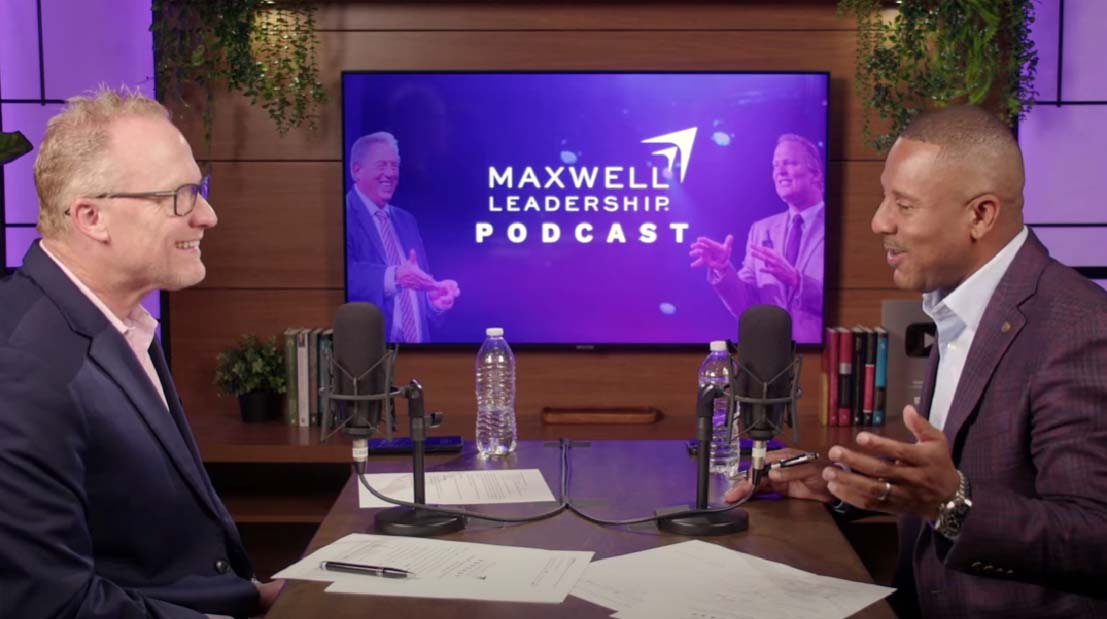
After John’s lesson, Mark Cole and Traci Morrow discuss his points to help you apply them directly for your life and leadership.
Our BONUS resource for this episode is the 6 Steps to Successful Personal Change (Part 2) Worksheet, which includes fill-in-the-blank notes from John’s teaching. You can download the worksheet by clicking “Download the Bonus Resource” below.
Take the next step in your growth journey and become a Maxwell Leadership Certified Team Member. Click here to speak with a Program Advisor today!
Mark Cole:
Welcome to the Maxwell Leadership Podcast. My name is Mark Cole, and we’re in part two, which really means that if this is your first podcast, you are behind. You want to pause? You want to go back last week, Traci? Because we covered part one last week, Traci. We talked about change. We talked about change. John gave us some basis of change, and we’re gonna continue that with three today. But I gotta ask you something. You’ve changed a lot.
Mark Cole:
You changed from being a mom now to being a grandparent. Talk to me about that change.
Traci Morrow:
Yeah, it’s the best change ever. It’s changing from, like, being the one who says all the rules to being the one who gets to kind of push the boundaries of the rules. It’s the best.
Mark Cole:
So that’s our lesson today. Become a grandparent, and you’ll get to change the rules, push the boundaries. That’s awesome. Hey. Well, John said last week, he said, when you change your thinking, you change your beliefs. When you change your beliefs, you change your expectations. When you change your expectations, you change your attitude. Let’s find out today from John what happens when you change your attitude.
Mark Cole:
And two other changes that John’s gonna talk about. Hey, if you’d like to download the bonus resource, you can go to MaxwellPodcast.com/SuccessfulChange and you’ll be able to get more information there as well as watch us on YouTube. Okay, grab your pen, grab your paper. Here is John talking about successful personal change.
John Maxwell:
And number four, let’s just go on. In this process of how to make personal changes with our life, when you change your attitude, you change your behavior. That which has our attention is going to determine our action. And when our attitude begins to change, when we become involved with something, our behavior begins to change. And that’s an absolute fact. The reason that we have to do personal changes is that we cannot take our people on a trip that we’ve not made. See, too many leaders. They try to be travel agents instead of tour guides.
John Maxwell:
They try to send people where they’ve never been. We give them a brochure, we give them a bon voyage, and off they go. And we wave to them. And, you know, tell me how it was when you come back, a tour guide says, no, no, no, let me take you where I’ve been. Let me tell you what I’ve gone through. Let me tell you what I know. Let me show you what I’ve experienced in my life. So if you’ll just allow me to skim this.
John Maxwell:
The choice within you. Choice number one. Is you have to evaluate your present attitudes and choice. Number two is you got to think, is your faith stronger than your fear? And then you’ve got to write a statement of purpose. This is just basically how to change your attitude. Then you gotta determine if you have the desire to change. Then you have to live one day at a time. You have to change your thought patterns.
John Maxwell:
You have to develop good habits. You have to continually choose the right attitude. You’ve got opportunities around you, such as you’ve got to enlist the cooperation of a good friend, Appreciate and associate with the right people. Select a model that you’re going to follow. You got to learn from your mistakes, and you’ve got to expose yourself to successful experiences. But I’m pushing this so that I can get to number five, because number five is key in change. When you change your thinking, you change your beliefs. When you change your beliefs, you change your expectations.
John Maxwell:
When you change your expectations, you change your attitude. When you change your attitude, you change your behavior. Number five, when you change your behavior, you change your performance. That’s a fact. See, it’s always behavior. If we don’t make it, it’s always going to be on the field of behavior. What? What am I doing? What am I doing? It’s gonna make me or it’s gonna break me. If change is not awkward, it’s not change.
John Maxwell:
Awkwardness is natural. If people aren’t feeling awkward doing something new, they’re not doing something new. People would rather be comfortable than correct that. People would rather stay in a routine than make the changes, even when they knew the changes were gonna be better for them. Because there’s an uncomfortableness or there’s an awkwardness involved in that process of making that kind of a change. But here’s what I know. I have to change my behavior for me to be able to change my performance. Remember this? Remember this.
John Maxwell:
Hey, practice doesn’t make perfect. Practice makes permanent. If you’re practicing wrong, you don’t get better. You don’t get better practicing wrong continually. You just get more consistently wrong. So practice doesn’t make perfect. It makes permanent. And until we go through the awkwardness of making changes that we need to, we’ll never change the performance that we want to have at the end.
John Maxwell:
Okay, let me review it quickly. Let me give you the last point. We’re done. The six steps to successful personal changes is when you change your thinking, you change your beliefs. Secondly, when you change your beliefs, you change your expectations. When you change your expectations, you do change your attitude. When you change Your attitude, you change your behavior. When you change your behavior, you change your performance.
John Maxwell:
And number six, when you change your performance, then, and I would say only then, you change your life. That’s when you change your life. Your life. Let me give you four closing comments. Change makes a person feel alone, even if others are going through it. That’s just very true. Even if other people are going through that change, you just feel alone in it because you say, oh my goodness, I know the others are changing, but I don’t think they’re having the difficulty I’m having. There’s something about the awkwardness and the time that it takes to make proper changes that just seems to isolate you from anyone else.
John Maxwell:
Even though a group is going through it together, you just kind of felt, but my situation’s a little bit different and I think I’m just not quite as fast as the other ones. And there’s a tendency to have isolation, aloneness and withdrawal when you’re going through this change. Secondly, it’s easier to turn failure into success than an excuse into a possibility. And have I found that to be true? A person can fail and turn around and understand their failure and make a success. But I want to tell you, a person that makes excuses for everything never will see the possibility of it. I promise you, when you excuse what you’re doing and excuse where you are and you allow the exceptions, you fail to ever get to that possibility. And to turn excuses into possibilities is an impossibility. The third comment I would make on this lesson is hope is the foundational principle for all change.
John Maxwell:
When people read and they look at their situations and they look what they haven’t done well and they look what’s not happening well in their life, the only thing that will motivate them to make that change is the belief that it will or it can get better. Because hope is the foundation for change. Here’s the last thing I want to say to you, and that is you’re responsible for the changes that you make in your life. But the good news is you can make the changes you need to make in your life.
Maxwell Leadership App Ad:
Do you feel like you’re meant for more but you’re not sure what next step to take? Whether you’re leading a team, building your business, or just trying to lead yourself well, you don’t need more noise. You need wisdom. Real, proven, practical wisdom. That’s why we created the Maxwell Leadership App. Inside you’ll get daily bite sized videos from John C. Maxwell and other world class thinkers designed to help you grow every day you’ll unlock curated playlists on personal growth, leadership, mindset, communication, confidence and much more, all for just $9.99 a month. And here’s the best part. It’s growth on your terms, at your pace in your pocket, ready to go further and grow faster.
Maxwell Leadership App Ad:
Download the Maxwell Leadership App today. Go to MaxwellPodcast.com/App or click the link in the show notes. Try it free for seven days with the code podcast7. That’s podcast the number seven.
Mark Cole:
Hey, I love that last mic drop moment that John had. We may get there. Traci, in our recap, you’re responsible for the changes that you make in your life. But the good news is you can make the changes you need to make in your life. I love that it goes back to Brian Tracy’s quote, the key to success is action. And so Tracy, I’m so glad to just continue this part two of a successful personal change with you.
Traci Morrow:
Yes, I am too. This is empowering, that last comment that he made. But this whole lesson is incredibly empowering and I love that John is an incredible tour guide. He’s not a travel agent as he talked about and hopefully that we are all learning as leaders, ourselves, learning from him, learning from you, Mark, to be tour guides ourselves and learning, you know, putting these six steps into action. Hopefully you are printing out the bonus resource because I, I really follow along with that bonus resource that helps me to really drive that lesson home. And so as we jump into number four, when he talks about when you change your attitud, you change your behavior. And he packed a whole lot into number four really quickly, almost so fast you can’t, you had to almost slow it down on a slow speed. But John says often that action is where we get traction and a lot of it is, you know, the internal work that we do inside as leaders to prepare us.
Traci Morrow:
But nothing really happens until we take action and behavior is where everything changes. And so is would would you say, Mark, that number four is where most people get held up in your experience, in the people that you have mentored as a tour guide? And if so, I’m kind of assuming that it is. I could be wrong. But if it is in fact the one that they get held up on, why would you say that’s the one?
Mark Cole:
Well, you know, you know, I got your tempted me again to get back on my soapbox of what irritates me in leadership. My pet peeve, because this is where the crossroads of that really happens and that is when it’s time for your behaviors to model your attitude, to model your actions, to model that change. And I think the reason it’s so hard to get to this level and then to go through this level of change that John’s sharing with us is because it’s so euphoric to see a change that you want than it is to actually change some things you’re doing to get there. It’s what John. People come up and say, john, I wanna do what you’re doing. And he says, yeah, sure, you wanna do what I’m doing, but do you wanna do what I did to do what I’m doing? And I think this is that break point, if you will, in change to where your actions are either going to model what you’re dreaming or what you’re wishing or what you’re saying, or. Or it’s just gonna stay in your thoughts, your dreams and your words. Because this is, as you just said, this is the traction place.
Mark Cole:
This is where your actions really begin to match your words or to demonstrate that it is just words and your actions are not gonna measure up. I don’t wanna get to the next step yet, but we want the performance and we want the attitude change. But in between those two is, I believe, the true test of real change. Will you start changing behaviors to match your attitude, to match what you’re wanting to accomplish?
Traci Morrow:
Yeah, I feel like number four is. That one is the one I personally, again this week, I’ll put myself back up on the chopping block in the hot seat. I feel like that is the hard one. It’s, it’s taking back my notes from last week. I brought them back out again. It’s. It’s one thing to say, like, I’m going to take responsibility. I’m going to own this.
Traci Morrow:
I’m going to work internally. It’s so much inside, but it’s, it’s really almost where this number four is, where you almost feel like you’re stepping out and it feels very vulnerable. It feels very much like you’re putting yourself out there. And it’s all the work that you’ve done to see if it’s actually going to work. You’re going to see will your team follow? Will the people that you’re leading actually hear what you’re saying? Will the vision that you cast get picked up and will people start to run alongside of you or do you have still some more work to do as you, as you, as you tweak it?
Mark Cole:
You know, Traci, as you were talking about that, I had this visualization you’ve got grandkids now. We talked about that in the pre notes about the changes. Yeah, it’s so funny. I’ve now watched a lot of little bitty kiddos take their first steps. And you know the way we get them to take their first steps? Right. We get them to fall in love with something they want and then we put it just out of their reach.
John Maxwell:
Yes.
Mark Cole:
And so these little babies and imagine your leadership, especially in this part of wanting to change. Imagine that you now have fixated on that thing that you desire. It’s there. And now you got to do what? You got to take that first step that all the people around you are wanting you to take. And you don’t want to take that first step because you don’t know how. You don’t want to take that first step because you feel awkward. You don’t want to take that first step because the last time you took a first step, you fail. And so all of these little images that we see in our little baby and taking that first step there is the desirable thing just beyond the reach.
Mark Cole:
But it’s going to take an awkward step to get it. It’s going to take a fall to get it. It’s going to take a first time ever concept to get that thing that you desire. Therefore, free yourself up. You’re going to look weird the first time, you’re going to look awkward, you’re going to fall, you’re going to fail. But you’re not going to ever get it if you don’t take that step.
Traci Morrow:
Yes, I completely agree. And having raised six kids myself, nobody stays walking awkwardly forever. I don’t have a 32 year old son who is still walking around like a toddler. No, they figure it out and those. And so I guess the follow up question would be then how he said something like, practice doesn’t make perfect, practice makes permanent. And so how does one ensure. So for those of you who are perfectionists, who tend to get caught up in your head and are afraid to make that first step, you’ve taken your first step. Congratulations.
Traci Morrow:
It’s awkward. And now you’re like, I hate that feeling. I am a perfectionist who hates that feeling. Okay, we’re talking to you and maybe some of you who aren’t perfectionists. Nobody likes to feel awkward. But how do we ensure, how does a leader ensure that they’re not making practicing wrong permanent? How do they ensure that they practice and they’re awkward but they get better?
Mark Cole:
Yeah. And I think that comes with surrounding yourself with people that’s been there before. So I think that first step, it feels like nobody’s ever been there before. It’s our first step, and we don’t think anybody else has ever had a first step. Right. And so we kind of convince ourselves that that awkwardness of that. The awkwardness that stops us from taking the first step should also be the awkwardness that compels us to improve our steps along the way. So as a leader, we take that first step and I give you this illustration of a little baby and we go, oh, my goodness.
Mark Cole:
And we just kind of almost need the push to go make the next step. People in that following, practicing, if you will, is very important too. I don’t want to walk the same way as I did as a new leader. I don’t want to run the same way as I did when John first started asking me to run the companies. The best way I know to make sure that my practice does not become permanently bad, but becomes better over time is realizing that the key to success is. Is constantly not only acting, but changing and improving your actions along the way and getting constant feedback. So it is the repetition and the feedback that I think makes your practice effective, not just practice permanently bad like John was talking about.
Traci Morrow:
And you have to be brave enough to surround yourself. This is the value of having a mentor, having somebody who is good, really good at it. But that’s also scary too. So I would love to have you talk about that as somebody who is his coming up behind is the second. Has been the second chair to a very big, big first chair. How scary that is to awkwardly take those first few steps and then sit under the. The. The mentorship of somebody who is.
Traci Morrow:
Has masterful, has mastered what you are awkward in. I think a lot of people, when you do something awkward, it easy and it’s tempting to surround yourself with people who go, way to go, Tracy. You did so amazing. You’re incredible. That was great. And you feel like, hey, I did it and it felt safe. And I. I probably know I was awkward, but everyone around me said I did so great.
Traci Morrow:
I feel good about myself. That’s not going to help me get better. It’s not going to improve my performance. But can you talk a little bit about what it feels like for you personally when you know it was awkward and you go sit under somebody who’s mastered what you’re awkward in and they talk to you and tell it to you straight.
Mark Cole:
Well, so the best illustration I have is that I’ve been for years running companies for John and Then about eight years ago, nine years ago, we decided that I needed to have a place on our platform and speak as well. It was a part of a long process to make me believable from stage. And I was terrible.
Traci Morrow:
And.
Mark Cole:
And it wasn’t that I hadn’t communicated before. I had. But it was in a different environment. It was in a very emotionally charged environment where I didn’t have to give a lot of content. I just needed to give a lot of passion and believability in my passion. And so when I began starting to communicate with John, it was terrible. It was awkward. And not only that, John, because we have a speaking training company, John decided to train me and critique me in front of thousands of people.
Mark Cole:
He had made me come up and speak in front of 2,3000 people using his microphone, with him sitting right there beside me, and then come up and tell me what I did wrong right after it. And it didn’t take me but about two times. And I went, this is quite comical, actually. This is funny because I’m being critiqued by one of the best communicators. And that comic relief that I began to see in myself, not taking myself seriously is what John would call it and say, I’m not supposed to be as good as John. I’m not supposed to be good on this stage. I’m supposed to be a work in progress. Relieving myself from tomorrow’s expectations to make sure that I was just better than yesterday’s results really gave me a sense of peace.
Mark Cole:
Now, just last week, John pulled me aside after I had communicated. He said, mark, I’m blown away at what you just did. He said, you’re no longer believable to me to be a good communicator. You have all the ingredients for a great communicator. Let me tell you what to tweak right here. And he said, this tweak is not going to feel as easy and tangible as the many, many tweaks I’ve given you before. And he was 100% right. It was a feel, it was an essence of something.
Mark Cole:
He was trying to get me. Here’s my point. I think we’ve got to relieve ourselves from greatness when we get started at anything. But at some point, you have to transition from the mindset that I’m just trying to be pretty good to. I now want to be great. Here’s where the transition happened to me. It didn’t happen with John. John was constantly my mentor and my critique source for speaking.
Mark Cole:
But I had about four Other people around me that I was asking additional, more relevant application because they were more communicators at my level. John was way up here and sometimes his suggestions felt too out of reach for me. So I brought people around me. And I’ll never forget sitting at a table in, we were out of the country, Guatemala, maybe Paraguay, and John began to critique me. And the two of the four people was in the same table and they began to critique me as well. And it overwhelmed me, Traci, it overwhelmed me. I pulled the two people that was critiquing me like John, and I said, hey, look, for the next little while, I don’t need your critique. John’s given me enough, thank you very much.
Mark Cole:
I need your affirmation. I need you to tell me what I did right before you tell me what I can improve. Because I was starting to lose my handle of confidence. And I was aware of that enough to know that I asked these people to give it to me from an affirming perspective. About a year after that, I looked at that same leader. In fact, it’s Jared Cagle, he’s one of our podcast guys. Especially when I do a book interview, Jared’s on here with me. About a year after that, being in Paraguay, Guatemala, I looked at Jared and said, jared, I’m done with the affirmation.
Mark Cole:
I’ve got a sense of confidence now. I need critique just like John has given me. He went, why? What’s changed? I said, my level of confidence in being good has changed to a passion to be great. And when that changed, I wanted to get away from affirmation and I wanted immediate critique so I could get sharpen and get better. The whole point that I’m making, because your journey and whatever you’re trying to change and become good at is different than whatever I was trying to get good to great in. Whatever it is. Know yourself, be true to yourself and engage people in where you are, not where they are. Because the change is not going to happen if you try to do it the way that John Maxwell does it or Jared Cagle does it.
Mark Cole:
You’ve got to do it at the way that you do change, and that is by knowing yourself so you can get people to help you with where you are and what works for you.
Traci Morrow:
And remember that leadership really does take a certain level of self confidence, that it is not for the faint of heart, depending on what level we’re talking about. But I’d like to just stay on this for just one more second to bring it back to that medium level. Where you were before you got to the place where you invited Jared back in? Because I also think that there are a great many people, maybe not in speaking, but in other areas. Did you also where they are getting feedback not just from a mentor, but they’re perhaps getting feedback from that might from maybe social media, from maybe people who are the greater mass audience who is weighing in and it can get into your head. And so what would be your advice? I know it’s very easy to say, like shut it all out, but to some degree you’re interacting on social media. It’s knowing when enough do you are you get letting a little bit in so that you can interact, but also not letting it close to your heart. Where do you shut out the naysayers who are maybe ripping you to, who would maybe rip you to shreds? Let’s use you as an example. You were in front of thousands of people.
Traci Morrow:
Did you sometimes have people rip you to shreds or say, mark, you should not be on stage. You are terrible, you are the worst. This should be somebody else mean feedback that was cruel and not productive for you. And how did you discern between somebody who you’re speaking to, who you’re trying to help, who you’re there to serve and when you should shut it down and just think like that was not productive, that was not coming from a right place. I shouldn’t listen to that because I think a great many leaders are having to deal with this.
Mark Cole:
They are. And I put it into two buckets, if you will, two categories. And I put it into input or insight and feedback. I don’t get feedback from the masses. The masses does not know me. The masses do not know what I’m trying to accomplish. They have a perspective of me. They have an image of me that is mostly shaped by their perspective or their desire of me.
Mark Cole:
Feedback is people that I trust and I have invited them into the journey. Meaning they know where I was, they know where I am, and they know where I want to go. Those people have what I call feedback. They can really give me critique and affirmation in the form of feedback. I get insight from the press, from the social media, I get insight, but I don’t. The difference is, is I don’t take insight serious. I take it as one dimensional. I take feedback as multidimensional.
Mark Cole:
Because feedback, again, they understand me. They understand where I was, they understand who I am, they understand where I want to go. Insight doesn’t understand more than one of those. They understand the image they have of Me the image they want from me or the image that I have given them based on how I treat my social media, for instance. So that’s where I even had a lot of people come up and say, hey man, it was good, you’re going to get better. And I would get really amused by that with people that would stand in line to tell me it was good, but you’re going to get better. And I would go, you have no idea that I am a piece of cloth clay in John Maxwell’s hand to show that you can learn in process rather than learn and then be seen as good. And I needed to instill hope.
Mark Cole:
So all of their well meaning well wishes were amusing to me, but it was just insight, not feedback. And now they stand in line and say, man, that was so good, your confidence. And they’re using comparison. I go, it wasn’t that good. I had a key point that I didn’t deliver the way that I wanted to because it’s just insight, it’s not feedback.
Traci Morrow:
So I love that you said that because when it flipped to good insight, you didn’t move them into the feedback bucket just because it was what you wanted to hear. It’s still just one, still just one dimensional and you still don’t put too much weight in it. It doesn’t mean you devalue people, it just means they don’t, they see a tiny little snippet. And I think that’s so important for leaders to hear that, especially if you have a young, young leader to hear that. Because social media, I think some people, it weighs heavy on their mental health because they hear that and they, they weigh that as feedback. So thank you for taking the time because I think that that is really going to help somebody today massively. Okay, so when the next one, number six, when you change your performance, you change your life. And I believe that is such an impactful thing to say.
Traci Morrow:
I before we get to his quote, foreclos, I just wanted to say I heard a statement by Brandon Cormier from Zeal Church here in Colorado Springs and it’s kind of in line with what he said. It just brought this to mind. He said increase of impact will always lead to an increased invoice. And that’s, I thought like when you are changing your life and you’re changing your performance, it will always come at a cost, A cost that you didn’t see coming. A cost. And John gets into those four points in his close closing statements and we’ll touch on those if, if we can in just A second about. But is there a process that you go through, Mark, for counting the cost as you are changing your performance to change your life and therefore impact more lives? Do you. There is a cost, There is an invoice to going through that process.
Traci Morrow:
What, what do you. What is your process of counting that cost? Because you’ve got to see it sometimes. You don’t always see it, but you know this is going to cost something of me more.
Mark Cole:
Yeah, I always do try to count the cost in any risk and any investment. I always try to count the cost both from opportunity and from a failure, from a missed opportunity. And so, number one, I consider it from both angles. What, how possible could impact be if I invested in this, if I sacrificed this, if I went all into this and then also go, what’s to lose? What could happen? So the pros and the cons, so to speak. The second thing that I do is always double the perceived cost of time and energy and money. Always double it, Always double it because it is. Anything worthwhile is uphill. John says, but anything worthwhile is going to cost you more and take you longer.
Mark Cole:
Trust me on this. Anything worthwhile is going to cost more and take more time. The final thing that I do is I surround myself with. With guardrails on where I think I’m most exposed. So if I think there’s gonna be an emotional exposure to me, that’s like what I did just a while ago in the talk. I needed a couple of those people to tell me what I was doing right before they shared with me what I was doing wrong because the critique was overwhelming my passion to get better. And I needed some areas that I was improving from an affirmation standpoint before I could handle the thing. And I sensed that I was getting too close to the guardrails of positivity in believing self, belief in myself.
Mark Cole:
See, you said something just a moment ago I think is very well worth repeating, and that is in that invoice. When it comes, I know the price. Everybody around me doesn’t know the price. So it doesn’t matter to me what everybody else says is on the invoice. I know what’s on the invoice, by the way. The return is all mine too. I know the return. Everybody else just gets to affirm and confirm, but.
Mark Cole:
But not to determine. I determine it because it was me that sacrificed for it. It was me that invested in it. And so I only use outside voices when the invoice comes. And no matter the cost or the result, the reward I’M the one that senses that. And then I allow external voices to affirm or confirm it.
Traci Morrow:
I love that I wrote that down. I hope you all did too. Okay, in his four closing statements, we hit on the fourth when we started out with that one. These three, first three are so powerful. I feel like we could spend five minutes on each of them. But the first one, he said, change makes a person feel alone, even if others are going through it. How do you recommend leaders fight against isolation?
Mark Cole:
Well, I think the isolation, when it gives you clarity and insight into yourself, is good. I think basically, Traci, it’s understanding good isolation and bad isolation. Good isolation for me is when I have time to really get in touch with what’s inside of me and build a plan to get it from the inside to the outside. Developing the leader within me, for instance, I develop the leader inside so that it will be more impacting when it spills out of me and impacts others. But when isolation is used for negative self talk, for lack of belief, for incubating bad tendencies, bad mindsets within me, that’s where aloneness becomes a problem. And many leaders don’t, first of all have a real key way of determining when isolation is good or bad. They just either think it’s all bad or all good. I disagree with that.
Mark Cole:
You’ve got to know what your tendencies are in isolation and then protect yourself from it if it’s bad tendencies and protect it if it’s good tendencies.
Traci Morrow:
Okay, that’s good. The last one I would love for you to land on. You kind of shared a little bit how you do with when you were with speaking, like with Jared and with somebody else speaking into you when you can’t go too low as you’re getting feedback. But he said, hope is the foundational principle for all change. So how do you cultivate, personally, how do you cultivate hope?
Mark Cole:
I have to have a bigger purview than whatever the current reality is. There’s got to be a bigger narrative. So I’m up there failing. I’m up there wasting everyone’s time if it’s a matter of taking that segment of time and inspiring people. But if it’s about inspiring people over a span of time and how you can go from this level of communication to this level of communication that kept giving me hope. But if I took it from man, John could have spoke longer, and it had been a lot better. We were one time in China, and he said, mark, I want you to speak today. And I went, john, they have paid you a lot of money.
Mark Cole:
I want you to speak. It’s not going to be good. He said, it’s not about being good. We’re building a story of how many times you’ve communicated around the globe and you’re not even a professional communicator. And it’s going to inspire millions when we tell that story. He just gave me a higher narrative. A higher narrative. So for me, hope comes as a foundational principle.
Mark Cole:
If you can get the desired outcome of the change, not the pain of the change, not the difficulty of the change you’ve got. Hope becomes a narrative of something greater than just the difficulty or the penalty or the difficulty, as I said, of the change. That is to me, Traci, again, man, I just want to keep talking about personal change. Now. I’ve got about five things that’s going through my mind, and I love it.
Traci Morrow:
I know, I know.
Mark Cole:
It’s so good, you know, but it does remind me of. One of our listeners asked the question, and I love this, by the way. There’s an episode I want to remind you to go back and listen to if you have listened to, or I want you to listen to it for the first time. It’s called Success. Keep it simple. And we’ll put that in the show notes, because that is an incredible. I remember that episode, and it was really, really helpful. Another episode that was really, really good.
Mark Cole:
We’ll put this in the show notes, too, was Live Life Rich. I got multiple people reaching out to me after that particular podcast. We have a question from that podcast, and the question is, how do you split your schedule to balance out everything from personal, others, community, et cetera? And the first thing I want to tell you is I don’t. There’s no way to serve all those at the same time in the same way. I live in the tension of all of my key pillars. Family is very important to me. I could never spend too much time with my family. Have you ever heard somebody say, man, I just spent too much time with my family? Well, you got problems at home that needs a counselor.
Mark Cole:
Okay? But I’ve spent too much time away from family. I’ve never spent too much time pursuing impact, the Maxwell Leadership way. Can you ever do that? Too much. So I have to live in tension, my friend. And how I split my schedule is not from trying to acquire balance, but it’s how to maintain tension so that when there are greater needs at home, I give up schedule at work to spend it at home. When there’s a special need to travel with John somewhere else, I ask my team to invest family time into being a part of what we’re doing around the globe to make an impact. And we see the tension, we see the split of schedule and the competing priorities as tensions in our life to manage and maintain, not balance to try to get inside of. I wish I could go longer with that question to my friend, but we have officially ran out of time today.
Mark Cole:
Thank you everybody. Traci, thank you. If you’ve missed us for a while on YouTube, go check us out. We are doing this podcast to add value to you so you’ll multiply value to others because everyone deserves to be led well.
Maxwell Leadership Certified Team:
Hey podcast listeners, many of you listening right now would probably love the autonomy that comes with owning your own business business or becoming a coach that helps other businesses succeed. Well, we have a phenomenal strategy where you are 100% in control of your own business, earning income on your own terms, and have access to the people, tools and resources you need to build a thriving leadership development business. When you become a Maxwell Leadership Certified Team member, you join a global community of entrepreneurs led by our expert team of mentors and faculty, including John C. Maxwell. You’ll also get one of the top leadership certifications in the world next to your name, giving you the boost you need to get started. Visit us online at MaxwellLeadership.com/JoinTheTeam to find out more.
Transcript created by Castmagic.





Be the first to comment on "6 Steps to Successful Personal Change (Part 2)"