What values are defining your legacy as a leader? In this week’s episode, John Maxwell illuminates how true leadership can only center on values, and those values can only center on people.
After his lesson, Mark Cole and Chris Robinson dig into practical ways you can identify, live out, and multiply these values within your team and organization.
Our BONUS resource for this episode is the Values Are the Soul of Leadership Worksheet, which includes fill-in-the-blank notes from John’s teaching. You can download the worksheet by clicking “Download the Bonus Resource” below.
Take the next step in your growth journey and become a Maxwell Leadership Certified Team Member. Click here to speak with a Program Advisor today!
Mark Cole:
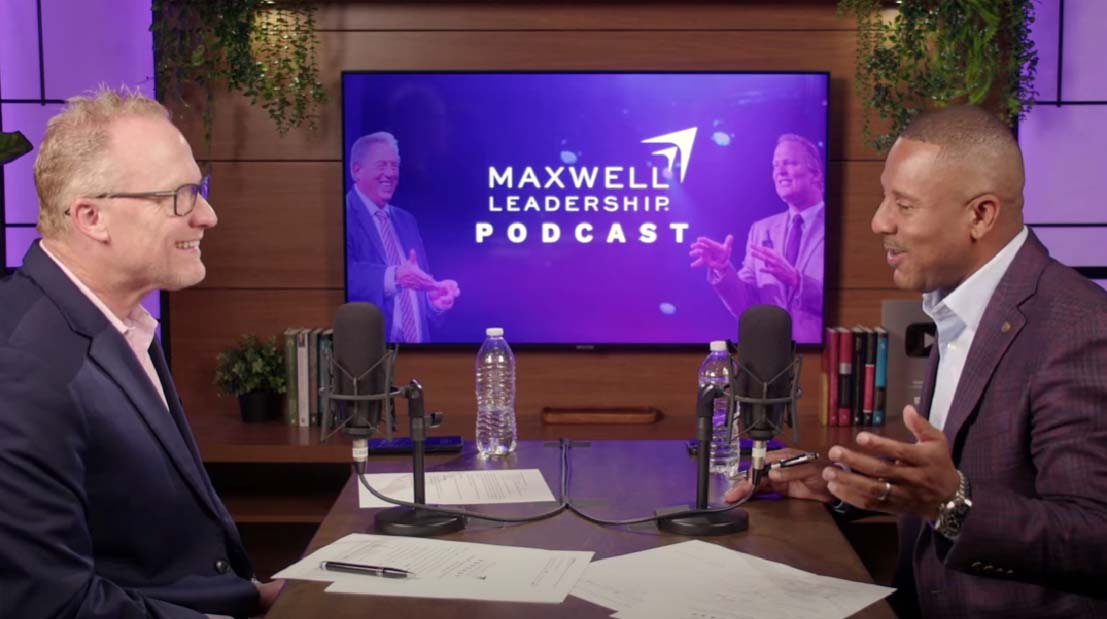
Welcome to the Maxwell Leadership Podcast. Our podcast is committed to adding value to you today. I’ll come back to that word so that you will multiply value to others. Chris, one of the things you get to do is go out and speak to our 61,000 coaches all around the globe. Just got back last month from a international trip and just incredible. One of the things John will talk about this today, he talks about where people of value that value people and add value to them. Would you agree with me that when you walk in and meet with a coach, a Maxwell Leadership certified coach, 61,000 of them, you immediately know because you feel valued by being in their presence? Right?
Chris Robinson:
Yeah, absolutely. I mean, when you value people as tangible and you know, it doesn’t matter what room around the world that we walk into, I know that it’s a like minded group that is wanting to help people. And when you have that common core and value, everything else kind of comes together and we can come to a place where we can unite, you know, in a world right now that’s so divisive, where, you know, we argue about any and everything that we could possibly argue about. You know, the one thing that I truly believe that people can get behind is good values. Okay, so when we go to all these places around the world, values is something that translates in every single language.
Mark Cole:
You know, it’s interesting today, podcast listeners, viewers, John’s going to talk about the soul of leadership. He believes the very essence, the very core, the soul of leadership is centered around values. And so he’s taken the whole lesson today and he’s going to share with you the value of values, how to share value. And I’m really excited for you to hear it because we talk a lot about values around here. In fact, one of the things we’ve done just recently, because we value you, we’ve started a community for us to connect. Now it’s a Facebook community. And I know some of you are going, when’s the last time I used Facebook? Well, I don’t know. But the next time is today.
Mark Cole:
And the next time is because we wanted to create and we’ve got this Facebook community with 61,000 of our coaches. We wanted to create a Facebook page to where you could lean in, to where you could engage, where you could connect with other leaders that can help you apply what we’re talking about today in today’s podcast. Why are we doing that? Same reason we do the podcast. We value you, we want to add value to you and we want to increase your value and So I want you to go to our Show Notes. You’ll find a link there, and in that link, we’ll give you the direct access to this Facebook community that we’ve established to add value to you. Go there, by the way, you can go to the Show Notes, and you can find the downloadable resource that you’ll be able to follow along with John, as well as some other resources that we’ll put. Okay, you ready to talk about the soul of leadership? Here is John Maxwell.
John Maxwell:
Values are the soul of leadership. It’s who we are. And who we are, our values, determines our behavior. And somebody asked me the other day, they said, john, how do you know whether the values that you embrace. I embrace. How do we know that they’re good? How do we know that they are good values? And the answer is very simple. Our values are good if they value people. If they value all people all the time in all situations, I think good values align with the golden rule.
John Maxwell:
Do unto others as you would have them do unto you. In other words, when you begin to treat others, ask yourself, am I treating them? Am I behaving toward them like I would like for them to behave toward me? Leadership must always value people. And why? Because leaders see more than others see, and leaders see before others see. And because you see more than others, and because you see before others, you are at a distinct advantage over others. To be honest with you, when you can see a bigger picture, you can see a better picture, and you can see it quicker, you’re gonna win. So the question is, if I can see a bigger, better picture than you, am I gonna use that for my advantage, or am I gonna use that for your advantage? Am I gonna use you to help me, or am I gonna help you? This is so important. When you stop loving people, you should stop leading people because you’ll take advantage of them. I see it happen all the time in our culture, and people shouldn’t be taken advantage of.
John Maxwell:
The advantage that people should have is, as a leader, you lift them, you help them, you make things better for them. And so leaders always valuing people is just kind of like the core of who we are. And that’s why I love saying, what do I love saying? We are people of value who value people and add value to them. That is so beautiful. We’re people of value, and because we are people of value, we value people. Why? Because you cannot value others if you don’t value yourself. We see others as we are. If I value me, I have a shot at valuing you.
John Maxwell:
But If I don’t value me, I won’t value you either. If I depreciate me, I’ll depreciate you. So we are people of value who value others. And how do we show that we value others? By adding value to them. That is who we are and that is what we do. And when we do it well, we become incredibly viable to people. Let me just illustrate what values look like. Values look like glue.
John Maxwell:
They hold people together. So what makes us tight, what holds us together is our values. When you are people with like values, there’s a glue and adhesiveness that just keeps us stuck together. Values are like a foundation. They provide stability. They provide stability to the people. They give stability to the individual. It’s what we stand on.
John Maxwell:
The foundation allows us to go high. So the better values foundation we have, the higher we can go and the more that we can grow. Values are like a ruler. They set the standard, the measurement for our behavior. It’s how we hold ourselves accountable, who we are and what makes us unique. Values are like a compass. They give direction. Values are kind of like the north star in your life and in my life, they provide guidance for us.
John Maxwell:
It’s kind of like we know where we’re going because we know who our values and what they are. Values are like a magnet. They attract like minded people. Values are also a fingerprint. You know, every person has a unique fingerprint that identifies who they are. Your value is who you uniquely are. It again makes you different, unique, and set you apart from others. And then finally, values are like a map.
John Maxwell:
They just. It’s an internal map. It’s what is inside of us that gives us daily direction, guidance within our lives.
Pass it On by Gloria Burgess:
Here’s a question worth sitting with. What if the most important thing you ever did for someone cost you nothing but a decision? In the segregated south, one quiet act of generosity set off a ripple that is still moving today. Pass it on by Dr. Gloria Burgess is the true story of her father. A man who received an extraordinary gift from an unlikely source with only one condition attached. Pass it on. That’s the kind of leadership the world needs today. Legacy isn’t reserved for the powerful.
Pass it On by Gloria Burgess:
It belongs to anyone willing to give something of themselves to make a difference. A word, an opportunity, a belief in someone who hasn’t yet believed in themselves. This is a book you’ll read in one sitting and think about for the rest of your life. Get your copy at the link in the show notes.
Mark Cole:
Hey, welcome back, everybody. I’m so glad. I hope you heard John talk about this. I hear John all the time saying that what he said in the show, notes, what he said in the show were people of value that value people that add value to them. John talks about values probably as much as any other subject in leadership. And so I hope you enjoyed that from John. I certainly did. Sitting here listening to it, realizing, man, we really steward something here when we talk about values.
Chris Robinson:
Yeah, we really do. I think we steward it, but we also get a chance to experience it. And you know, one of those things that we get to, one of those places we get to experience is what we call our transformation trips through our foundation. Well, it’s a collaboration between the foundation and our Maxwell Leadership certified team where we go to other countries and we’re invited in by the president of that country and we go in there and we assess what values are important to them in that country. And so we go through a full vetting process of, you know, what values are most important to the people of that country. And then we go out and teach these value based roundtables. And it’s one of the most unique, powerful things that I had ever been a part of because I’ve been to every single country except for one. There was one country I didn’t make it to.
Chris Robinson:
We went to Papua New Guinea. I miss Papua New guinea, but I’ve been to every single one outside of Papua New Guinea. And we’ve gone into these countries, we figure out what the values are important to them and then we go in and we facilitate these all throughout the country. And I’ve seen this process work time and time again. There isn’t arguing, there isn’t fighting, there isn’t, you know, this mass dispute. Because values are value and they truly are the core of leadership.
Mark Cole:
Yeah, you know, it’s so funny. You said there’s no dispute. I remember one community. We’ve, we, we now have been to seven countries, Chris. Can you believe it? Seven countries. In fact, in two countries, we’ve already got over 15% of their entire country population that is set through our 12 week values curriculum and just seeing incredible things. More about that maybe in another podcast, because I want to stay right here on values. But it’s so interesting.
Mark Cole:
Our world, the world that we’re in. And John several years ago started saying this thing, I’m leadership sad. I said, john, what does that mean? By the way, we’ve sold a lot of leadership books. For you to be leadership sad, you need to be leadership glad. And he said, well, here’s what it is. We’ve lost the essence, we’ve lost the soul. And I can remember saying that and going, ah, okay, but isn’t it true that it has played out over the last eight years, 12 years, 15 years, it’s played out that we’ve lost the soul of leadership. Leadership is given to us as something to steward, to use it on behalf of the people we lead.
Mark Cole:
Leadership position is nothing more than a responsibility to lead on behalf of the people. And how do you know you’re leading? Well, when the value of the people is rising, when the sense of self worth of the people you’re leading matters, when somebody that you’re leading feels like that their agenda is more important than your agenda, now you know that you’re leading. And yet isn’t it true? We look in all these different industries and all of these sectors of influence and we see more leaders interested in themselves and their agenda than they are the people whose agenda, who their agenda impacts the most. The people. And I think that’s why this message is so important. If we’re going to do a turn, you mentioned country transformations. If we’re going to do a turn as a country, as a globe, as a generation, I think we’re going to start it by going back to the essence of values, the essence of doing things that enhance and increase and add to the value of another person.
Chris Robinson:
Yeah, well, I mean, that’s a tall order because as I’ve gone around the world, as I continue to go around the world, I mean, I truly believe that the world at large is starving for good leadership. I believe that every room we step into, every single country, there’s not a room that I could step into. And they say, no, leadership is great, leadership is awesome. And it is saddening at times, but yet there’s this hope that, man, what if just 10% of this room that I speak to today actually makes a shift and chooses to lead better? What if 10% of this podcast listeners here today, one out of 10 say, you know what, I want to choose to lead differently today? What subtle shift can we begin to make in the culture if we truly choose that, hey, we’re not going to wait for better leadership, but we’re going to be better leadership.
Mark Cole:
Yeah. So you know, Chris, as you were talking about that, we’re talking about these country transformation trips, I thought about one community we went to and we’re trying to establish values. And the way that we do these is we work with the president. The president vices in over 30 countries, presidents, prime ministers has invited us to come in and do transformation work. And then we mobilize 150, 200 of our coaches, and we go in and make a splash of training facilitators over a week’s time. And then they go and train 75, 80,000 of their country’s population. In a matter of two to three weeks, we have them started. It’s incredible.
Mark Cole:
It’s remarkable. We were looking at one community about launching values, and the guy started questioning my values. He went, well, where’d your values come from? What if your values are not my values? And I went, well, they’re kind of human values. But by the way, the leaders of the country, the community, determined our list of 40 values, which 12 or 13 matters the most to them. Right. For transformation. And we got into a conversation about, was my values good enough? And I went, have we not landed at a place to where we can’t even agree that adding value to people cannot be without an argument?
Chris Robinson:
That’s a bad value.
Mark Cole:
It’s a bad value.
Chris Robinson:
Helping.
Mark Cole:
Somebody help us. Somebody help us. Lord, help something.
Chris Robinson:
Oh, my goodness. That’s the world. That’s where it’s at right now. You know, John did make a statement in this particular audio that we listened to that says, now this is very strong. It says, when you stop loving people, you should stop leading people. Now, I would imagine that a lot of people that are listening to this right now, they don’t love the people that they work with. Yeah. Now, does that mean that they should actually stop, or what is he saying there? Give us some context around that to kind of make that palatable.
Chris Robinson:
Because I think a lot of people are working with people that they just don’t even like. Not necessarily. Not even close to loving.
Mark Cole:
Yeah, I know. I would need to figure out if I can represent John well and say this nicer. I don’t know that I can. Chris. John really says if you’re leading people that you don’t like, you need to quit leading those people. There needs to be something now. You don’t have to agree with them. You don’t have to necessarily like what they do or like what they stand for.
Mark Cole:
But, man, you need to like the potential in there. You need to love the brotherhood, the sisterhood, that, the sense of connectedness and teamwork that you’re wanting to create. You need to love the idea of human potential. And I think the day that a leader begins to look at people as task, as burdens, as weight, they’ve lost their effectiveness. I can already tell you that. I think they’ll start Doing something stupid and demeaning and devaluing. We all know it. We have global leaders with too much of a microphone that don’t like people.
Mark Cole:
And we all look at that and say, man, I. I don’t know if I can hold my nose long enough to like you. If you don’t like the people that you’re leading, and I think John’s pretty clear on it, Chris, it’s not easy to make it palatable. If you don’t like the people you’re leading, change your perspective. You need to like the people that you’re leading. You need to love them. You need to love the potential in them. And you need to check your heart if you don’t have a genuine love for the people that you’ve been asked to lead.
Chris Robinson:
Right. I love it. I love it. You know, this next remark, he says that you cannot add value to others. You cannot value others if you don’t value yourself first. So I know early in your career, you know, especially coming into Maxwell World, you had really had come to a place where you had given up on leadership and had really dealt with the struggle of self worth, of should you be able to lead again? Talk to me about how you built up your self worth and how that part of your journey really affected how you led during that season.
Mark Cole:
Well, let me do two things kind of as a foundational point for all of our new podcast listeners, some of you seasoned podcast listeners that understand Facebook communities. You know my story, but let me just quickly do two things. One is your question reminded me of a quote from Stephen Covey that says, leadership is communicating others worth. So clearly they are inspired to see it in themselves. That’s a leader’s responsibility. Chris, if I see you low, if I see you down, if I see you discouraged, my responsibility is to loan you some belief so you can see the worth that’s inside of you. That’s certainly what happened to me. Because to catch you up with my story, I came totally busted, broke in every major category of anyone’s life.
Mark Cole:
Financially, relationally, spiritually, emotionally, dream wise. I just was broke. And two of the things that happened in my brokenness was I never wanted a meaningful relationship again. Never. I wanted nobody to be close to me. I wanted to just be cordial with people. Number two, I didn’t want a leadership position, had no desire. And what happened in the organization.
Mark Cole:
Now to your question, how did I break out of that? What happened? I walked into an environment that didn’t look at what I did and what I brought to the Table to see my value. They saw something deeper in me called potential. They saw something deeper in me called a set of values that had been overlooked by others in my life. People that knew me, they allowed what I did to tarnish their ability to see who I was. And that happens for all of us. By the way, if you’re a leader that you’re focused more on what people are doing rather than who they are, you’re missing their value. You’re seeing your value from being in relationship with them, because that’s the difference. Chris this organization was not looking at me as valuable because of what I was doing with the organization.
Mark Cole:
And I was leading sales teams, I was leading, I was filling everything I was doing, I was winning sales contest. But they never equated my value to what I was doing. They equated my value to who they saw me to be. My potential. That’s what turned it for me. I went, whoa, now this feels like authentic leadership. It’s not how good I look. It’s not how much I walk the company line.
Mark Cole:
It’s not how much I adhere to a set of disciplines that allows me to feel valuable in this organization. What allows me to feel this value in this organization is my potential and my commitment to enhance my potential. When they saw my passion to grow, when they saw my passion to develop myself, they went, oh, now we know he not only has potential, he’s willing to mine that potential and cultivate it into something greater. And those two things that I brought to the table made this environment mine, that value in me, and began to believe in my ability to lead again.
Chris Robinson:
Wow. Wow. Incredible. Love seeing that growth and love seeing, you know, you’re fortunate to get into an environment I know somebody out there right now is starving for man. I just wish I could find that environment where people could see me for who I am. And if you are out there, hey, this may be the season where you begin to take a look. This may be a season where, again, you take that stand and say, hey, I’m going to become this type of individual so that I can begin to attract those type of individuals around me and create the environment. So if you’re not in the environment, you got to create it or you got to go to it.
Chris Robinson:
But I know there’s others out there that desire that.
Mark Cole:
And let me tell you this. I woke up this morning, saw that I was gonna get to spend some time with you in studio. Made it a good day. I thought about what we get spend time to do in studio, and that is to talk to you. And if you’re watching this on YouTube, which I hope you do sometimes, come over here and join us visually. If I could extend anything to you through this podcast, it would be what was given me by being on this team. And that is to show you that I see you and I see your potential. You say, mark, you can’t see me even if you’re watching the, watching the podcast.
Mark Cole:
Right now I’m looking direct in the camera and you can still say you’re not really seeing me. But I want our words to help you feel seen. I want our borrowed belief to make you feel the value that you have. And I want our words to inspire you to go and extend, expand your own value so you can give value to other people. That’s what our whole tagline is. We want to add value to you so you’ll multiply value to others. And that’s what it’s all about.
Chris Robinson:
Yeah, each and every single day. We’ll get into this last one here for you, Mark. But you know, John talks about values are the glue, the foundation, the compass and the map. But they’re easy to talk about when things are calm. So talk to me about what’s the value of yours that’s been most tested in the last few years?
Mark Cole:
Well, so let me go back back five years ago, almost six years ago. Now I’m a brand new owner of an organization that needs cash. We used all of our cash to complete the transaction and now we need cash and Covid hits. And so I know that’s still a wordy dird to many of you that you go, ah, don’t go, use the COVID things again. It’s not so long ago that it’s not fresh what it felt like to cancel an event for the safety of people. That was going to cost me years to pay back that decision. Years. And I won’t quickly forget that.
Mark Cole:
Not that I want to remember Covid, but I want to remember the feeling of having to cancel an event that was going to be a four or five million dollars event and having to swing that to still pay the hotel contract and have nobody come. And it’s something beyond my control. I’ll never forget. We’re sitting in Israel, me and John, and I’m making this decision and John’s letting me feel a little bit of the decision, you know, as he should as a new owner. And then he looked at me, Mark, and he said, let me tell you this, your values have to drive your decisions. Because if you change your values to Profit or money or that kind of stuff midstream, whether it works out or whether it doesn’t, it will never fulfill you. But if you make the decision, good or bad and better or worse, you make it from a place of how you value people. You may pay a bigger price, but you won’t regret it.
Mark Cole:
You won’t feel challenged with it, you know, recently, Chris, in thinking of your question, I had to make some really difficult calls in one of our nonprofits, and we had to make the decision that the. The mission of our organization was going to matter and we were going to have to make some hurtful cuts, some big cuts. And I can remember going, man, the organization’s mission is more important than the people that’s going to be really impacted by this. And it was a hard. It was hard for me. It was really, really hard, unusually hard, because it was in our nonprofit, and it was just hard. And I can remember going, yeah, man, that’s true. Can I make the mission of the organization? And then I rem to myself, what is the mission of the organization? And that is to sustain, impact and valuing people for many years to come.
Mark Cole:
And I realized the magnitude of the mission, being sustainable, was a way to still live in alignment with our values in making the tough call. That’s not. That doesn’t work for everybody. That wouldn’t even be satisfying for some of the people that were impacted by the decision. But for me, I was able to link it to a value of mine, and that was super important to me. I’ve seen people come, I’ve seen people go. I’ve made changes that people agreed with, made quite a number that people didn’t agree with. But every time I have to settle myself in what my value construct, my value matrix is going to be to make sure I’m making that decision.
Mark Cole:
Good or bad? Good results. Bad results. Making it with a point of my value ecosystem, my value structure. I want to come back and remind you that this whole concept of our podcast is to multiply value to you, but with a desire that you would extend that, pay it forward by multiplying value to others. And I want you, much like Stephen Covey talked about, I want you to have so much clarity on your value, your inspiration, that you’re able to extend that to others. That’s one of the reasons we’re creating this Facebook community. We’re establishing it so that you can come into an environment and feel like home, feel like you’re valued, feel like you’re important. So go test it out, try it out.
Mark Cole:
Make it better. Put some comments in there. We’re super excited about it. In fact, let me say this. Jj, I want you to come to Facebook. JJ gave us an incredible comment about why self awareness sets great leaders apart. This was a podcast that we did some time ago. We’ll put that in the show notes.
Mark Cole:
And JJ said, do it, learn from it and do it better next time. You love do it, don’t you, jj? You’re exactly right. Make it applicable. Go and do something today that we reminds us the value of leadership, the soul of leadership. Everyone deserves to be led well.
Transcript created by Castmagic.