
Strong teams slow down when the message leaves too much open to interpretation. The work still moves, yet it moves in slightly different directions, and leaders get pulled back into rework and clarification.
When leaders simplify communication with care, they give people language they can use and direction they can trust. That steadiness strengthens follow-through and builds the kind of confidence that shows up in results.
What Simplifying Communication Really Means and Why It Works
Simplifying communication does not mean stripping a message down until it loses meaning. It means taking something complex and expressing it with enough precision that people can act without guessing. When priorities, timelines, and ownership are clear, teams move faster and rework drops because fewer decisions are based on assumptions.
It also increases ownership. When expectations are specific, people do not need constant check-ins to stay aligned. They can make good calls on their own because they know what matters and what success looks like.
The key is keeping simplicity and respect together. That starts with understanding the difference between simplifying, talking down, and oversimplifying:
- Simplifying makes the meaning clear and consistent so the team can act.
- Talking down shows up in tone or unnecessary basics that signal low expectations.
- Oversimplifying leaves out context people need to use sound judgment.
- Clear simplicity keeps the message specific and actionable, while still trusting people to think.
How Leaders Can Simplify Communication When The Stakes Are High
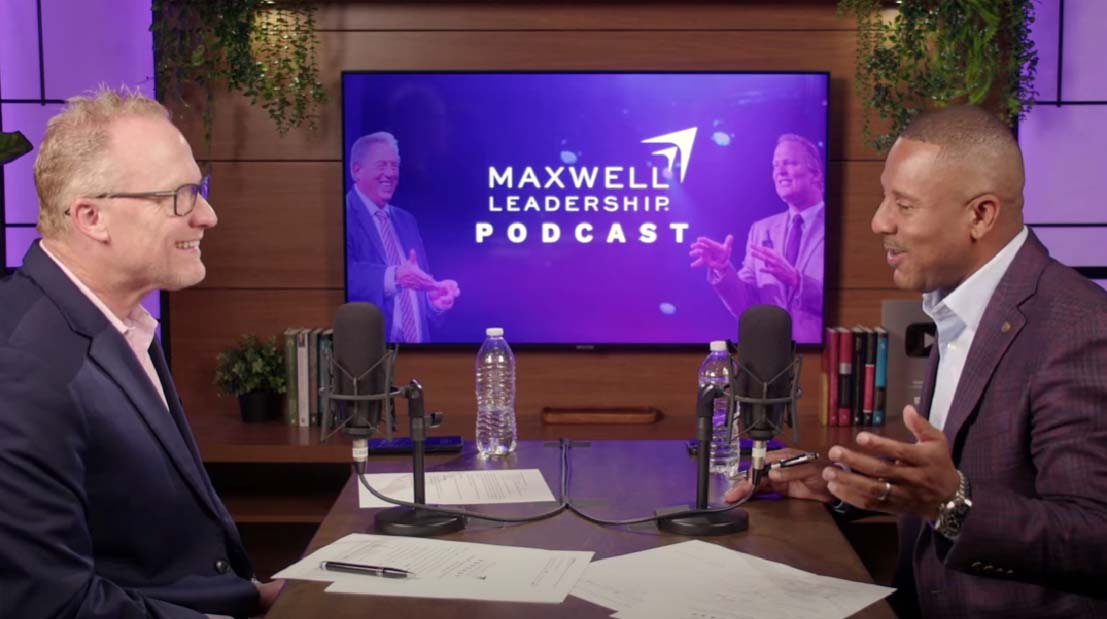
Pressure can pull leaders into rushing the message or overexplaining it, and both patterns create room for confusion. Strong leaders simplify in a way that keeps meaning clear and dignity fully intact. In the Maxwell Leadership Podcast episode “Communicating with Clarity: A Leadership Game Changer,” Perry Holley, Coach and Facilitator of Maxwell Leadership, and Chris Goede, Executive VP leading coaching and development, share practical insights leaders can use to simplify communication without talking down to their team. Let’s explore those insights next.
1. Clarify Your Thinking Before You Communicate
High-stakes moments call for leaders to finish the thinking before they deliver the message. Holley says, “You can’t communicate clearly if you haven’t thought it through completely.” When your thinking is clear, your team does not have to guess what you mean.
Use a simple prep frame before you speak:
- Write the point in one sentence.
- Add only what guides action, such as the decision, why it matters, and what good looks like.
- Remove any wording that could be interpreted two ways.
This keeps the message clean and makes follow-through easier.
2. Assess What Your Team Already Knows Before You Simplify
Simplification lands best when it starts with your team’s current understanding. When leaders assume too much knowledge, people get lost. When leaders repeat what people already know, the tone can feel heavy and unnecessary.
Use a quick check before you explain. Ask what they already know, what they are assuming, and where they feel uncertain. A simple prompt works well: “Before I go further, what context do you already have on this?” This helps you match the message to the moment without talking down to people.
3. Build The Message Around Outcomes, Not Opinions
Teams move faster when leaders communicate for execution, not expression. Goede describes that mindset clearly: “I am thinking about what they need to hear from me, not what I want to tell them.” When you prepare from your team’s side of the table, your message becomes easier to apply.
Keep the frame outcome-based:
- What do they need to do next
- What is changing and what is staying the same
- What does success look like in practice
This keeps the tone steady and reduces follow-up because people leave with direction they can use.
4. Align Intent And Understanding Before You Move On
Even a strong message can land in different ways when people are under pressure and working from different contexts. If your language leaves room for interpretation, people will fill in gaps based on their own workload and experience.
Before you move on, lock down the meaning that drives action. State the priority clearly, name the time horizon, and describe what success requires in observable terms. This keeps the team aligned early, so you spend less time later pulling work back into line.
5. Replace Vague Language With Clear Expectations
Simplifying does not mean using basic language; it means using precise language that carries one meaning. Words like “soon,” “high priority,” or “expensive” invite interpretation, and interpretation slows execution, creates delays, and frustration.
Tighten subjective language into specific commitments.
- “Soon” becomes “Thursday at 3 PM.”
- “High priority” becomes “top two tasks before anything else.”
- “Expensive” becomes “over $5,000.”
When timing and thresholds are specific, people stop guessing, and delivery becomes steadier.
6. Create Shared Language That Drives Decisions
Precision handles single instructions. Shared language handles repeat situations. When key terms mean different things across roles, teams make different decisions while believing they are aligned.
Goede puts it this way, “Common language leads to beliefs that drive behaviors.” Define only the terms that shape priorities and standards. A simple template helps, “When we say ___, we mean ___. You’ll see it when ___.” This builds consistency without micromanagement.
7. Select A Format That Supports Questions And Context
The channel you choose can either strengthen clarity or distort it. When the message is complex or sensitive, real-time conversation helps because people can ask questions, and misunderstandings can be corrected quickly. When the message is straightforward, writing often works well because it is easy to reference and share.
A simple rule of thumb is to match the medium to the weight of the message.
- Use live conversation when the topic has many moving parts or emotional weight.
- Use written updates when the information is clear, stable, and easy to confirm later.
- When in doubt, choose a format that allows dialogue so meaning does not drift.
This reduces the need to overexplain later because clarity is built into the medium itself.
8. Connect Purpose To Practical Steps
Different people need clarity in different forms, some want the why first, and others need the how first. You can support both by connecting the outcome and reason to the steps and standards that guide execution.
This prevents talking down because you are translating the message into what people need to act, rather than repeating yourself with more volume or more detail. It also keeps teams steady under pressure because they understand the meaning and method together. When purpose and steps are connected, people move with confidence that shows up in follow-through.
9. Cut The Extras So The Message Stays Easy To Repeat
A message stays simple when people can repeat it without carrying extra weight. A useful filter is to ask whether a detail changes what people decide, do, or prioritize, and if it does not, you can park it or offer it only when needed. Overexplaining can feel heavy because it signals you do not trust people to sort what matters. Instead, close with a brief recap that someone can repeat in ten seconds, focused on the decision, the next step, and the timing. This keeps clarity traveling beyond the meeting. Concise meaning protects momentum.
10. Confirm Understanding Before The Conversation Ends
This is the final check after you have already tightened the message. Goede offers a respectful verification tool, “In your own words, not my words, in your own words, what did you hear? What does that mean to you?” This protects alignment without putting anyone on the spot.
You can also use a quick clarity scale. Ask how clear the plan feels on a 1 to 10, then ask what would move it one point higher. Keep your tone curious and supportive. When people can restate the message accurately, you know the simplification worked.
Read: How Leaders Know Their Communication Is Effective
Build Communication Habits That Scale With Maxwell Leadership
When leaders build steady communication habits, clarity becomes something the team can rely on, even when the pace is fast and the pressure is real. Over time, those habits reduce confusion, strengthen follow-through, and help people take ownership because they know what matters and how to deliver it well.
Maxwell Leadership supports leaders who want communication that strengthens culture and drives consistent execution. Through our Leadership Communication Training, leaders gain practical tools to communicate with clarity, listen with intention, and lead with confidence in the moments that shape trust and performance.
Subscribe to the Maxwell Leadership Podcast for weekly leadership insight, and connect with our team to discover training experiences that strengthen the leadership habits that help your organization grow with clarity and alignment.