In this episode, our hosts discuss what it means to become an influential person instead of an influencer. You’ll learn about the five levels of leadership, discover how influential people think differently, and gain practical tips to build authentic connections with others. Our hosts also explore the impact of emotional intelligence, long-term thinking, and leading with principles instead of preferences. Discover strategies for handling pressure, fostering an abundance mindset, and developing influence through consistent, intentional actions.
Chris Goede:
What if the best thing you could do for your leadership is stop doing so much? Most leaders think growth means working harder, saying yes to everything, and staying in every detail. But real leadership capacity doesn’t come from doing more. It comes from freedom. The freedom to think, to plan, to lead instead of react. When you free up your time and attention, you show up sharper in every room. You make better decisions. You lead with vision instead of survival mode. The Freedom Framework shows you exactly how to create that space by delegating the right work to the right support so you can lead at your full potential.
Chris Goede:
Text EXEC to 55123. That’s EXEC to 55123 to grab your free copy or learn more about Belay’s personally matched assistance today.
Perry Holley:
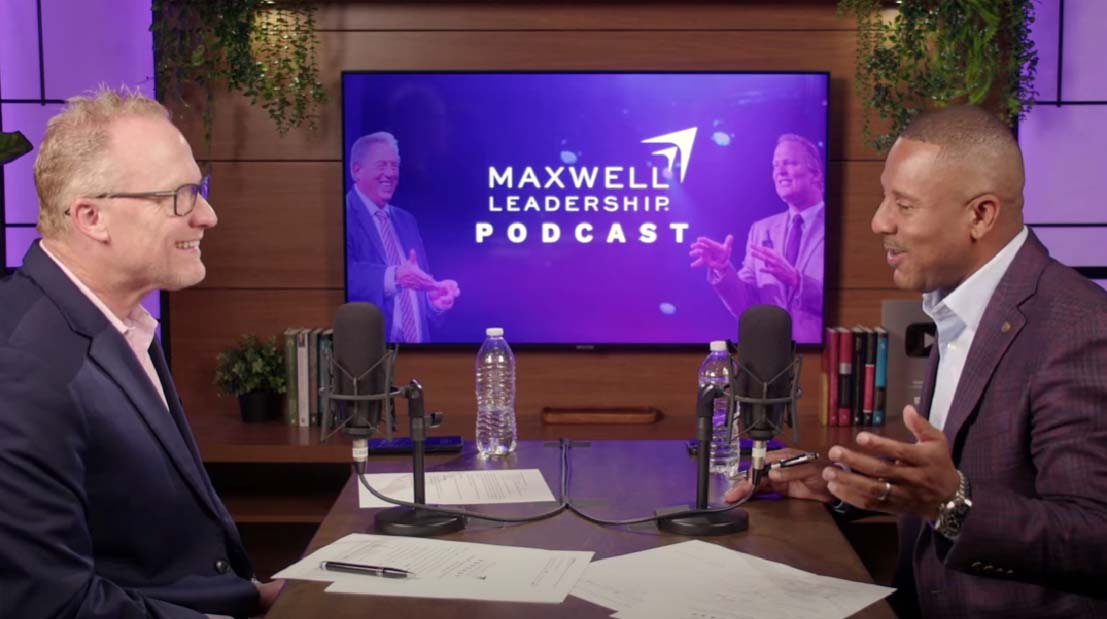
Welcome to the Maxwell Leadership Executive Podcast, where our goal is to help you increase your reputation as a leader, increase your ability to influence others, and increase your ability to fully engage your team to deliver remarkable results. Hi, I’m Perry Holley, a Maxwell Leadership facilitator and coach.
Chris Goede:
And I’m Chris Goede, Executive Vice President with Maxwell Leadership. Welcome, and thank you for joining. We just want to encourage you to go to MaxwellLeadership.com/ExecutivePodcast. There, there’s a form. If your team is looking for some leadership training or coaching, we would love to help you with that. Maybe you just want to download the learner guide for today’s session. We want to encourage you to do that. Use that as a resource.
Chris Goede:
And one of the things that we love hearing when Perry and I are on the road or we’re around, we’re meeting with people, is they’re like, man, I love taking the lesson, giving it to my team. They fill out the notes, and then we come and spend the first 10 or 15 minutes really just talking about it and how applicable it is in our organization. So we want to encourage you to do that. Well, today’s topic is becoming an influential person. Now, I did not say becoming an influencer. I thought this is where Perry wanted to go. He’s getting to a place and he’s like, you know what? I need to start increasing my influence on social media.
Perry Holley:
There might be a TikTok going on there.
Chris Goede:
That’s right.
Perry Holley:
I need to do that. I haven’t TikTok’d in a while, so I’m going to—
Chris Goede:
Yes. I don’t even know if that’s— and nor would I ever see you on there because I don’t have them. But one of the things that we’ve built this entire podcast on, and it is something that we have seen change organizations and change leaders, and it’s why we do what we do. is the 5 Levels of Leadership, and it’s really an influence model that both can be lived out individually, personally, but also organizationally. We’ve operationalized the model for organizations to adapt that as their culture, as their leadership language inside the organization. So just really quick, for those that maybe are new to joining us, didn’t know the content behind where we’re coming from, the 5 Levels is at level 1, you gain influence with people because of a title, a position that you have. Could be mom, dad, grandma. It could be manager, whatever the title is, volunteer leader.
Chris Goede:
And we all get those titles.
Perry Holley:
Congratulations. This is great news.
Chris Goede:
Congratulations.
Perry Holley:
So somebody saw something in you. You just made the lowest level of leadership, but you’re there.
Chris Goede:
But you’re there.
Perry Holley:
Yeah.
Chris Goede:
We don’t want you staying there.
Perry Holley:
But I follow you because— I have to.
Chris Goede:
You have to. And you’re the boss. One of the things that it breaks our heart is that we see around the world, probably 70, 90% of leaders lead straight from here, level 1.
Perry Holley:
Level 1.
Chris Goede:
And so that’s level 1. Level 2 is, hey, people follow you because they want to. This is where you’re connecting with them, you’re building relationships with them, you’re learning about how to connect and to lead them. Level 3 is then you progress to where, hey, now you’re gaining level 3 influence because you are producing for the organization, Not only individually, but we also like to talk about in and through your team, whether it’s you’re part of a team member or you’re leading a team. Then there’s level 4 influence, which is the people development level. This is where your influence is increasing because of the value and the developing and the reproducing of your leadership skills that you’re giving and imparting onto the other individual. And then finally, the last one is also given to you, And that is level 5. That is what we call the pinnacle level.
Chris Goede:
This is where you’ve led people so well for so long that you have level 5 influence and people give that to you, that man, listen, they will go anywhere with you to do anything because you have that type of influence with them.
Perry Holley:
Yeah, fantastic. This has been life-changing for so many leaders that personally have, for me personally, and then for those I’ve gotten to work with to really make that, I call it the greatest leap in all of leadership where people stop following you ’cause they have to, you’re the boss. And then they suddenly, all of a sudden, want to follow you because they want to because of something you did. What I love about that level 2 is called permission. I never understood that. Position at level 1, yeah, I get that. You have a position. Permission, all the power changes to the follower.
Perry Holley:
They have to give you permission to influence them. So I wanna become this influential person because it’s gonna help me with the team that I have to achieve the results that we need. People are gonna have to choose to be with you rowing in your boat, as we were saying. Love it, yeah. Not watching the scenery go by. This lesson was very much influenced by the writing of Dr. Travis Bradberry. Many of you know him from his books on emotional intelligence, 1.0 and 2.0, as well as others.
Perry Holley:
I’ve really enjoyed that. His core point is really that influential people, what you’re seeing if you find somebody who’s influential in your life, it’s an outward thing you’re seeing, their confidence or the impact they have in your life, but it’s all built on the internal work that they’ve done to build a set of habits around emotional intelligence and how they show up to other people. And this whole game of leadership is around people. If the people, and John said this years ago, and I totally come to believe it and see it all the time now, is that you’re not gonna be successful in whatever you do.
Chris Goede:
That’s right.
Perry Holley:
Unless a lot of people want you to be.
Chris Goede:
Yeah.
Perry Holley:
So how do I get them to want to be? So I thought in a few minutes we have today, let’s just talk about these habits, but I kind of grouped them into 3 components about how do influential people think, how do influential people treat others, other people? And then finally, how do they handle pressure? Ooh, that’s gonna be a good one. But I wonder about, just to start with the thinking, what are your thoughts? How do, if you think about someone that’s very influential in your life and how you’ve tried to build influence in yours to be influential, how do we think?
Chris Goede:
Yeah, a couple things that I see in those individuals is that they’re focused on, they know, and they’re focused on the principles of things, not just preferences. That again, that’s what’s influential to me in thinking about this, where, you know, they, they base their decisions, their communication, their, they have a, they have a decision-making filter and it’s based off of principles. 2 other things for me is long-term thinking. I think that people that are, that are influential with me are thinking out in front of me. Like I’m, I’m intrigued and they’re thinking about things even maybe for me that I haven’t even thought about, right? That is allowing them to become more influential and not only thinking long-term, but the final thing I was thinking about was, man, they’re thinking at a different level, meaning maybe a different altitude, whatever we’re talking about. They’re like, I’m like, how do I start thinking like that?
Perry Holley:
But that sounds easy. What you said is very logical and very easy, but maybe someone listening, I’m gonna throw myself in there. I can be tempted to kind of follow the thinking in the room, or I’m kind of following the group. And what you’re I mean, and I totally— this is why it is an influential person is you’re kind of coming above what the group thinks. Is that just me that has trouble with that?
Chris Goede:
No, it’s not. It’s not. But I think that’s where, and I do the same thing at times. One of the things that we do throughout Maxwell Leadership when we work with organizations is we do one of the assessments we do gets into the right path, 4 and 6, and we get down into the 16 sub-factors and really identifies kind of what happens in a room. And I’m in the middle on some of them, which that means is I can either lead in a certain situation or I can go with the group. And I know when I don’t have confidence in a certain area, I will be swayed by the group. And that’s why I was thinking about this even before we recorded today and think about, for me, it’s really those that they have their principles and they are not moving from that. So the room may go one way and they’ll be like, that’s okay.
Chris Goede:
This is my principle. I’m just going to— Instead of folding to the room. And it was a little bit convicting to me as I thought about that, because there are certain areas I need to make sure that I’m developing those principles in those areas.
Perry Holley:
That kind of leads— Dr. Bradbury mentioned that about the influential people can be disruptive, but the way you just said it was not in a negative way disruptive, but they kind of have their own— they’ve thought about it. They have a point of view. They don’t mind disrupting the room a bit to share a different Thought.
Chris Goede:
Yeah. Isn’t there a difference when you think about some influential people that are— I love what you’re talking about— disruptive versus being distracting, right? Like, there are some people that come in and they want to disrupt things, but they’re just doing it for distraction. But I think those that are influential that disrupt things, I think they challenge things that are happening, not the people that are doing those things. Like, they’re challenging status quo. They’re, hey, why do we do that? Well, we’ve always done that. Okay, well, let’s not keep doing that. And they’re willing to disrupt things and maybe even question in the right way, respectfully, what other people are thinking. So maybe we’re in that room.
Chris Goede:
Let’s go back to that scenario really quick. And they’re like, well, hey, tell me more about why you’re thinking like that.
Perry Holley:
Right.
Chris Goede:
Like, I have a point of view, But tell me more about that, right? And so they do it in a way, I think they do it in a way that does not jeopardize their connection at level 2 with people.
Perry Holley:
So I love that. And I think then they’re not disrupting or pushing back to make a point, but they’re genuinely trying to improve the outcome, improve the, raise the level in the room a bit. And I love that about, you said about what your point of view is that I realize other people have a point of view and I’m open to it, but I also have a point of view. And so how can we— it’s okay to be disruptive in a positive way about that. Does this come about by thinking about the practical skill here of asking good questions? Is it curiosity or is it just that respect that other perspectives may be in the room and I’m gonna be respectful of those perspectives so that we have a curious discussion about those? Asking good questions.
Chris Goede:
I would say that I think people that are disruptive, And are influential, because now I’m thinking about there are disruptive people that are not—
Perry Holley:
Yeah, have no influence.
Chris Goede:
Maybe those are the distracting people that we talked about a minute ago. 100%, they are curious and they are making sure— listen, as a person of influence, we say this, people want to be seen, valued, and heard. And so we’ve got to close the intent versus impact gap. And the only way to do that, if you’re going to be disruptive, is to make sure that you’re asking questions, you’re getting People just want to have their opinion and voice heard. They don’t necessarily want to move in that direction with you, but if you come in and just distract and run over them versus just being disruptive, it’s a completely different influence, and you’re going to not be as influential as you want to be.
Chris Goede:
What would change in your organization if every leader at every level took ownership of culture, communication, and results. Not just the executives, not just the high performers, but everyone. That’s what we build at Maxwell Leadership. We don’t just train leaders, we build leadership systems that scale across teams, departments, and organizations. From developing mid-level leaders to strengthening executive alignment, our programs help you create a culture where people lead well wherever they sit. See how leadership can become your competitive advantage by getting started with a free tool. The 5 Levels of Leadership Field Guide is based on John C. Maxwell’s number one New York Times bestseller and includes team mapping strategies, leadership self-assessments, and a clear model for turning followers into leaders.
Chris Goede:
Download it for free That’s 5LevelsOfLeadership.com.
Perry Holley:
Something you said earlier about seeing the big picture, you kind of looked up into the lights.
Chris Goede:
I did. Yeah.
Perry Holley:
In this massive studio that we have here. They think bigger picture. But Dr. Bradbury said that influential people are productive. He meant by that they don’t They don’t wait for new areas or new ideas to just pop up on their desk. They kind of go looking for that, that they’re, they intentionally scan what’s coming next. And I never really thought about that leading to having influence is that, and, but you’ve hit it a minute ago that you’re kind of looking out for just the right moment. Yeah.
Chris Goede:
And you’re like, how did Perry know that? Like, I remember having a conversation with Perry 3 months ago and now it’s here. Well, that’s that influential part of you as a leader where you’re able to— that’s thinking a little bit long-term and then being able to innovate, be able to think, be able to prepare. And you’re like, man, I get it. He or she is super influential.
Perry Holley:
I remember in a conversation we had last week where I was sharing what I’m learning in AI and you said, what is the old guy doing with AI?
Chris Goede:
100%. That’s right. You’re learning at a pace faster than I am. And you gotta be doing that every day in the AI world, right? And I’m like, say what? Can we talk about that a little bit further? Can I reschedule another call? So let’s shift as we’re moving quickly through this, because each one of these sections, by the way, Perry and I could unpack for a couple of hours, and they all tie back to the 5 levels. But the second one he talked about was influential people treat others and treat other people. What have you noticed in your career as a leader? About how highly influential people are communicating when it comes to this?
Perry Holley:
Well, they’re very people-oriented and others-oriented, maybe I should say, is that influential people, you’re not going to have a lot of influence with anyone if you’re focused on you. I’ll never forget the day I understood for real what Dale Carnegie was talking about when he said, be more interested than trying to be interesting. I just think that most influential people have a real knack for putting others first and using that curiosity fact, realizing that you have a perspective and I’m not just going to run over you because I think mine is right and yours is wrong. I’m actually interested in to do that. So I think they communicate in a way that doesn’t shut down conversation. They respect, even if they have a disagreeing disagreement with you, they respect the connection.
Chris Goede:
That’s right.
Perry Holley:
John taught me this. I write it, the word connection, a line, and content on the bottom. It’s connection over content, connection over content. That no matter what I have to say in my communication, I always say it in a way that would respect our connection and maintain that level 2 connection. I can’t just say what I— and by the way, guys, this works at home amazingly.
Chris Goede:
Yeah, that’s right.
Perry Holley:
Just because you think you’re right, And wanna win. If you are right and win, you’re gonna lose. So I’d protect the connection at all costs, no matter what the content of my message is.
Chris Goede:
Yeah, I love that. Made me also think about, make sure you’re not always just making statements to your team, to your people, to your peers, right? Like as you’re communicating and you’re thinking about how you treat other people, how many of us have been in a meeting, we walked in and be like, here’s what we’re doing and this is why we should do this. And they walk out. Versus like, here’s what we’re doing, here’s the context why, like, what am I missing? What do we need? What would need to be true for this to actually work for us? So thinking about ending your sentences and during communication with questions versus statements will allow the other person to speak. And they love to hear their own voice, just like you love to hear your own voice. And so you could, that’s right. I promise you this, you could ask 2 questions and be in a 30-minute conversation, let the other person talk, and they would walk out and they’d be like, man, Perry really cares about me.
Perry Holley:
He’s a master communicator.
Chris Goede:
Master. And Perry, all Perry did was ask 2 questions. So, so just be thinking about that.
Perry Holley:
Do you think of the, uh, it’s just a note I’d made about abundance. I think influential people have an abundance mindset versus scarcity.
Chris Goede:
This is probably one of the biggest attributes in John Maxwell versus leaders that I have seen around the world. What do I mean by that? That joker, and yes, I just said joker on national podcast. I mean, he cares more—
Perry Holley:
That was Chris Goede.
Chris Goede:
Yeah. He cares more about adding value to other people, no matter what the situation is. Doesn’t mind sharing ideas and thoughts and serving and And so there are so many people that we have run alongside in my journey that I’ve been working with John that I just see they’re in a much better place, starting with me, because of the opportunities that he’s given me that he could have given somewhere else, or he could have taken them himself, or the things that he has taught me. And so one of the things is, is it’s hard for us because we naturally want to have a scarcity mindset and we want to protect the things that we have because we think, Well, that’s our ticket.
Perry Holley:
Yes.
Chris Goede:
Right?
Perry Holley:
Yeah.
Chris Goede:
And, and it’s like, no, like, and I, it goes all the way back to even when I was 23 and started working. I remember he’s like, work yourself out of a job. I’ll find another job. I was like, no, like I just got married and I have a family. And so obviously he goes, you need to do it. And I didn’t know what he is talking about back then. Right. But now multiple times over, I understand what he was talking about.
Chris Goede:
And so 100%, people are super influential with me when they have that type of mindset versus trying to keep everything close to the chest and hide it from me.
Perry Holley:
Right, right. Let’s go to number 3 before we wrap up. But how do influential people handle pressure? I wonder what your experience is. Do you, can you tell? Usually they say pressure doesn’t reveal your influence. It doesn’t create your influence. It reveals your influence. What are your thoughts?
Chris Goede:
Okay, so when you think about pressure, there’s a couple of things that come to mind is there are situations as leaders that we run across that they’re, I would say, organizational pressure, they’re group pressure, but then there’s also individual pressure. And for me, I think that the ability to be consistent in no matter the storm that’s going on around you organizationally or individually, I think the people that can handle that with humility, they can handle it with consistency, win or lose, by the way, because I want a leader and I want somebody that I look up to that has a lot of influence that, man, we missed the mark. But my leadership and all the things we talk about with influence are consistent through that, just as if we had the greatest year ever as an organization. And so there are pressure situations that I see leaders that just completely lose it. And some of them lose it on your coaching calls before they even get with their people and you coach ’em not to, and then they still lose it.
Perry Holley:
Right. Well, it’s a reminder that calm is contagious.
Chris Goede:
Oh, I love that. That’s perfect. Yeah.
Perry Holley:
Yeah. That you, people are watching you and if they, if you’re outta control, they’re gonna be outta control. If you’re gonna lose it, they’re gonna lose it. And the whole idea every time Every time I’m in London, I take a picture of this on the tube, on the subway platforms. It’s etched in the concrete in yellow. It says, mind the gap. And I took this picture and I put it over my desk for years to say, mind the gap between the stimulus, whatever, something happened, and your response. And that gap, the longer that gap, the bigger that pause, the better my response.
Perry Holley:
And so to your point, that consistency of influence, you’re not gonna influence anyone if you react quickly and it’s bad, negative, or highly emotionally charged. The slower your response, the more selective your response, The more calm your response, the more people are going to be engaged with you and with your influence on that.
Chris Goede:
Yeah. Let me jump in real quick. I know one thing you mentioned to me, I want you to hit on this before I wrap up, about the book that you read and the content’s out of here, that where influential people expected good outcomes both for themselves and for people around them, Can you unpack that a little bit for our audience? Is it a mindset thing? Is it a communication thing? In the book itself, what was the skillset tied to that that can help our listeners?
Perry Holley:
Well, most people that have influence are trying to accomplish goals and their own path and everything, but they also believe that for others. It’d be like you having your goals for what you’re trying to do in the business, but you also believe in the goals for me. You’re trying to see me achieve my outcomes. You’re trying to help me to be on the stages, to be with the people, to have the impact that I’m trying to have at this stage in my career. And that you totally believe that what is possible in the organization is also possible for me. And I think by you extending that graciousness to other people really builds influence with others.
Chris Goede:
I like that.
Perry Holley:
That says, I not only believe in what we’re doing, I believe in you and what you’re doing. And so we don’t let a lot of petty disagreements or different points of view, things get in the way because you have as much belief in my progress as you do in the organization’s progress. And when you think about the people in your life that believe in you and feel that way, they have a lot of influence with you. You’ll, I gotta take this call, is from that person because they have a lot of influence with me.
Chris Goede:
I love that. Well, let me wrap us up today with a couple of thoughts and maybe an action item for you as we’re closing up. What I want you to hear us say today is that this is a method, this is a methodology, this is a process that ties back to the 5 Levels of Leadership. And the influence is borrowed. Your influence is borrowed from the people that you’re influencing one conversation at a time, but it’s also lost that way as well. And Perry and I, when we facilitate, we talk a lot about 5 Levels that it, It takes a little while to become influential, but man, you can lose it, right? In a hurry. And so know that every conversation that people are evaluating you and thinking about that. One of the action items is back to this abundance mindset, ’cause this was really hard for me, is maybe this week take the time to make one introduction, to make one connection between you and another business opportunity with no strings attached.
Chris Goede:
Remember, the difference between influence and manipulation is a very fine line, and it’s the motive behind why you’re doing what you’re doing.
Perry Holley:
Yeah, yeah, motive matters.
Chris Goede:
And I would say this, anybody that, going back to this title, that has influential in my life or is influential in my life, I have no doubt that their motive is pure. So let’s start with that foundation. We didn’t even talk about that today.
Perry Holley:
No.
Chris Goede:
But let’s make sure that that is part of your foundation. The other thing I wanna close with is this is a 21 Laws principle that John has taught for a long time. It’s the law of process.
Perry Holley:
Hmm.
Chris Goede:
And it just goes back to, I was thinking about when I was talking about the conversation just a minute ago, is that, man, this is something that happens on a daily basis. And, and so people that are influential with you, they show up consistently on a daily basis. You wanna become more influential with people. It’s a process. It’s not gonna happen overnight. And it’s gonna take a little bit of time, but you gotta be consistent with it.
Perry Holley:
Love that. My favorite word. Well, thanks, Chris, and thank you all for joining. If you want to know more about this episode or get the learner guide for this episode, you can do that at MaxwellLeadership.com/ExecutivePodcast. You can also learn about our offerings there. You can also leave us a comment or a question. We love hearing from you. So grateful you spend this time with us.
Perry Holley:
That’s all today from the Maxwell Leadership Executive Podcast.
Transcript created by Castmagic.