The best decisions often become great when they’re managed, not always when they’re decided. In this week’s episode—part 1 in a replay series from 2024—John Maxwell reveals the often-overlooked art of managing your decisions daily so that you can transform good intentions into great results that last.
After his lesson, Mark Cole and Traci Morrow provide real-world strategies to help you put John’s decision-making principles into action right away.
Our BONUS resource for this episode is the My Decision Log, a practical tool for empowering you to make strategic decisions. You can download the worksheet by clicking “Download the Bonus Resource” below.
Jake:
Hey listeners, Jake here. I’m the producer of the Maxwell Leadership Podcast, and I’m hopping on the front end of this episode to let you know that over the next 2 weeks, we’re going back into the archive for a series that first aired in 2024. We picked this because it feels even more relevant now than when we first released it, and many of you have been asking about this topic. I’ll let Mark cue up John’s lesson, but for now, enjoy the lesson and this throwback to our old intro music. Hope you enjoy.
Mark Cole:
Hey, welcome to the Maxwell Leadership Podcast. This is the podcast that adds value to leaders. who multiply values to others. My name is Mark Cole, and I get to serve alongside of John Maxwell in what I believe one of the greatest decision makers I’ve ever met. John’s known for leadership. He’s known for being a business guy. He’s known for an author, a speaker. But in my second chair reality of John Maxwell, he absolutely knows how to make good decisions and turn them into great decisions.
Mark Cole:
So this week, John Maxwell, Traci Morrow, and I began a 2-part Part series on making great decisions. Now that’s because the decisions you make, the more impact you will have, and the more impact you will have, the more fulfilled your life will be and the lives of those that you lead. So this week, as we discuss how to make great decisions and how to prioritize those decisions. Now next week, we’re going to delve into common traps of decision-making. You’re going to want to come back build off the lesson today. If you would like to watch this episode on YouTube, or if you would like to download the bonus resource for this episode, visit MaxwellPodcast.com/Decisions. Now grab a pen and paper. Let’s start making better decisions.
Mark Cole:
Here is John Maxwell.
John Maxwell:
Once a decision is made, stop worrying And start working. Successful people make right decisions early and manage those decisions daily. Now, here’s what I want you to note. It is not always what we know or analyze before we make a decision that makes it a good decision. It’s what we do after we make the decision to implement and execute it that makes it a good decision and maybe even A great one. Let me explain. To be honest with you, I think decision-making is overrated. I think a lot of people, when they look at a decision, they say, boy, I’ve just gotta make the great decision, thinking that if they make the great decision, everything after that great decision will turn out great.
John Maxwell:
I find that not true. I think you ought not only to make good decisions, you have to not only have good decision-making, you have to have good decision-managing. Let me explain. On June 14th, 1969, my wife Margaret and I got married. That was a good decision. But 35 years later, I am here to tell you that the good decision for us to get married has become a great decision. But it’s only become a great decision not because we said I do 35 years ago. It’s become a great decision because what we have done after we made the decision.
John Maxwell:
Amen. Again, too many people overrate the decision-making and underrate the decision-managing. There are 2 possibilities in making a good decision. In your notes, one, there’s a possibility that we would manage incorrectly and have average results, or number 2, That we would manage correctly and have great results. Now, making good decisions— better is kind of like the wings of an airplane. We need both good decision-making and we need good decision-managing. According to a study of unsuccessful executives in more than 200 firms conducted by the Laboratory of Psychological Studies of the Stevens Institute of Technology, Here we go. Inability to make decisions is one of the principal reasons executives fail.
John Maxwell:
It is a much more common reason than lack of specific knowledge or technical know-how. Peter Drucker said this, whenever you see a successful business, someone made a courageous decision. So how do we prioritize decision-making? Because we have a lot of decisions to make. How do we line them up and say, these are the decisions that I should spend time on? Once you are confident that you have identified an exhaustive list of decisions, take the following steps to separate today’s biggies from tomorrow’s minor ones. Number 1, Compare payoff. Compare payoff. Ask yourself, which decisions on my list will produce the highest payoff? Think in terms of your investment in time and energy. On a scale of 1 to 3, rate each item on your list as follows: 1 equals most important.
John Maxwell:
2 equals somewhat important. And 3 equals least important. Okay, did you get that down? I’m teaching you now how to really begin to understand which decisions are more important to make than others. So when you get your list of all the decisions you have to make, put a 1 by those that are most important, 2 by the one that’s somewhat important. Number 3 is the things that are least important. So I’m helping you now to begin to compare payoff. I’ll explain that later. Number 2, consider your goals.
John Maxwell:
Not only do you need to compare the decisions you have to make in relationship to the payoff, But then you have to consider the goals. You have to consider what are you trying to achieve? Now ask yourself, which decisions are essential to my goals? That means first reviewing your primary job responsibilities and reminding yourself of the key success factors that drive your performance. For example, say you, and presumably your boss, measure your results by striving to attain goals tied to 5 main areas: low employee turnover, low error rates, Rates, quarterly revenues, inventory control, and communication with your sales force. Every decision on your list that relates to any of these 5 outcomes must take priority. Why? Because that’s your job description. That’s what’s required of you. Applying the same 1 to 3 scale above, rate each decision based on its relevance to your goals. Now, let me stop here for a second.
John Maxwell:
Look what we’ve done. In helping us to prioritize decision-making, the first thing I did is I had you put numbers: 1 for that which is most important, 2 for the middle, and 3 for the least important. I had you prioritize where your decision should fall. The second thing I did after you assessed those numbers, I had you compare them to what you’re supposed and required to do as a job description. Now, the third thing I want you to do in helping you to prioritize decision-making in your notes Number 3, delegate. Delegate. At this point, each item in your log should have 2 rankings alongside of it for potential payoff and alignment with your goals. Add the numbers together.
John Maxwell:
Highlight all entries that total 2 or 3. These matters clearly require attention. Now focus on the remaining decisions and ask yourself, which of these issues must be handled only by me and no one else? You may find that others can lighten your load and just as easily take charge of certain matters on your behalf. In fact, if you are grooming a few of your top lieutenants to accept more responsibility, allow them to exercise some influence and call the shots whenever Possible. Let me put it another way. Let me give you a very simple approach that I have used for years that works for me in the area of decision-making. Every morning I take 5 minutes and I look at my calendar. And when I look at my calendar for that day, the events that I’m going to enter into, I ask myself a very simple question: of all the people I’m going to see, of all the things that I’m going to do today, What is the main event? And I decide right then that morning what the main event is going to be.
John Maxwell:
There can’t be 2 main events, there can’t be 3 main events. What is the main event? Once I determine what the main event is for the day, what I realize is I’m going to spend more time, more energy, more focus on that main event than anything else, and here’s why. Why? I probably can’t go through every event and every person I meet throughout the day and always hit a home run or always do well. I probably am going to have some conversations that are average, or I’m probably going to do something that maybe is average. But here’s what I know. If I decide what the main event is at the beginning of my day, and if I put all of my effort and energy and focus there, what I know is, is when I come to the main event, I am not only going to do my best, but I’m going to probably be my best. And here’s what I know. I don’t have to be good at everything I do throughout the day, but I had better be good at the most important thing.
John Maxwell:
I would encourage you to use that kind of approach in prioritizing your life. Just take out 5 minutes every morning and basically ask yourself very simply, what’s the main event? Now, there’s something else I’ve done for many years. I’m talking about, I’ve done this probably since 1974, 1975, probably for 30 years. I’ve done this. I call it the 3 Rs of prioritizing. For me to find out what my priorities are in decision-making, I ask myself 3 questions that all contain a word that starts with the letter R. For example, I ask myself the question, what is required of me? Now that’s very similar to what I shared with you when I said consider your goals and gave you the illustration of you and your boss sitting down and there are 5 things that you gotta do. I look at myself and I ask myself, what do I have to do? What’s required of me? That’s one of the ways that I’m gonna determine which one of my priorities I’m gonna focus on.
John Maxwell:
The second question with a word that starts with the letter R is this one: what gives me the greatest return? In other words, of all the things that I do, when I do this, it has a greater return, it has a greater profit margin, it just brings greater advancement than anything else. So now I’ve asked myself, what do I have to do— requirement— when I do it seems to have a greater return than anything else? The 3rd R is what is rewarding to me? And I always ask the question, what’s rewarding to me? Because here’s what I know about me. If I don’t enjoy doing something, I’ll look for excuses not to do it. And so therefore, as I’m prioritizing my life, I ask myself, what’s required of me? What gives me the greatest return? And what brings me the greatest reward? All I’m doing is giving you tools, whether it’s that way or the main event way, or the prioritizing decision-making by a 1, 2, or 3 number. I’m just trying to give you ways to prioritize your decision-making because listen to me carefully: activity is not necessarily accomplishment. Just because you’re busy doesn’t mean you’re effective.
Live Unstoppable:
If your team works hard and still can’t get past the same ceiling, Brian Ruffner has an explanation. In Live Unstoppable, written with construction leaders in mind, He says most companies run at roughly 25% of their people’s potential, and the fix starts with the leader. Brian is a Maxwell Leadership Certified Coach, and he’s lived the problem. As a senior sales leader at a Fortune 500 company, he inherited a team with 87% turnover and brought it down to 5%. The book gives you 2 systems. One One builds your team in 6 stages. The other builds you, the leader. The aim is a team that drives growth without you pushing it.
Live Unstoppable:
Get your copy at the link in the show notes.
Mark Cole:
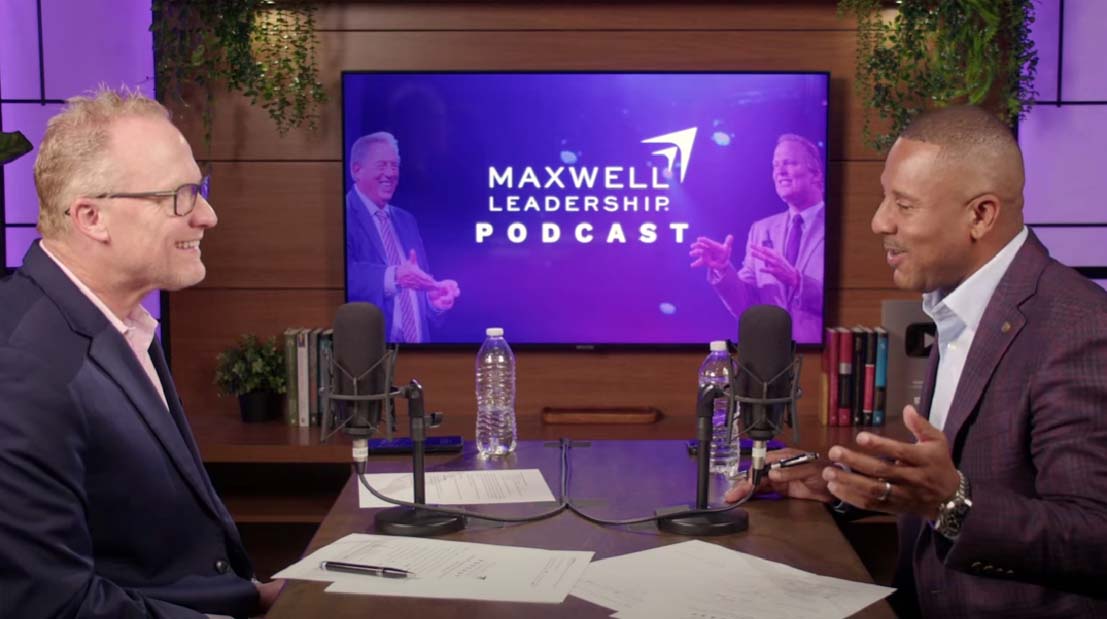
Hey, welcome back everybody. On behalf of Traci and John Maxwell and Jake here in the studio with us today, our entire team is honored to take a leadership growth, a personal growth, a leadership development journey with you. And man, one of the best ways to do that is to read a book. biggest understated responsibilities of a leader is making decisions. And not only making decisions, but it’s the pressure of making great decisions. And so John has taken us on a 2-week journey. I’m very excited about it. Traci and I are going to talk a little bit about it from an application standpoint.
Mark Cole:
But Traci, it’s good to have you on today. Very excited about talking about great decisions.
Traci Morrow:
I am excited to be here and talk about this because I hope It is going to free up some people who are maybe stuck in the decision-making process because they feel like they have to make a great decision right off the bat, Mark. Because what John said and what freed me so long ago, and I hope that you all heard it, and it was, I used to think that you had to make a great decision. And what John is teaching us today and what we’re going to hopefully break down is that It isn’t so much as making a great decision, but it’s managing a decision made, a good decision made, that makes it become a great decision. It’s how you manage that decision. And that is all the difference in the world because I think we have so many friends. I know so many people on my team are that perfectionist mindset. And with good reason. We want to steward what we are tasked with stewarding as leaders well and with excellence.
Traci Morrow:
And so, we sometimes— that can freeze us up though from making a good decision. And so, just right off the bat, full honesty, Marc, I’m just curious, would you say that you have always been a good decision maker, like a fast, early decision maker? Or is that something that you had to grow into with age and learning through making some bad clunky decisions?
Mark Cole:
Yeah, I wish there was a universal answer to give to you because in some areas I’m extremely fast and I make decisions that people go, whoa, don’t you need a little more context? I’m going, no, I got everything that I need.
Traci Morrow:
Right.
Mark Cole:
There’s others that they keep coming back and giving me the same context over and over again as if I didn’t hear it the last time. And what they’re really saying is, let me tell you again what I told you last time so you’ll hurry up and make a decision, right? So I do wish, Traci, that I had this universal, yes, I’m a great decision maker, or no, I’m an incredible processor, but when I make a decision, it’s a great one. In actuality, it’s somewhere in that tension that we probably all find ourselves here as we listen today. I have found, to your question though, Traci, I have found in my areas of strength, I’m a relational leader. In my areas of competence, I have some abilities to really see math and see some opportunities. In the areas of my strengths and And in my giftings, I’m a lot faster because I’ve developed an intuition. And let me say this right here. It’s not only that I’ve developed an intuition, I have developed a security.
Mark Cole:
I’m comfortable in my skin in the areas of my strength and weakness. And I know that if I make a bad decision, I have recovered from bad decisions in that area before. Practically, it’s when I take on a new task or a new responsibility or a new group of people to lead. that I start slowing down. What am I missing? What else do I need to learn before I make a decision? So I feel like I am fast when it comes to organizational decisions. I feel like I am slow when those organizational decisions impact people that I love, that I appreciate, that I want the best for. And I think that comes back to being a relational leader. I slowed down When a decision I’m going to make negatively impacts another human being.
Traci Morrow:
Is that something that you process through on your own or you process that through with your inner circle?
Mark Cole:
Yeah. So I’ll never forget, you perhaps have heard me talk about this on the podcast. Before the podcast ever started, I think John gave me the greatest leadership mentoring that he’s ever given me. And it was on this concept of, Mark, you need to make a choice. Do you want to lead or do you want to be loved? And I was like, of course I want both. Both. Now what’s the next question, John? What’s the next question? Both, both. And he’s going, no, no, no, there’s some situations, sometimes there’s some circumstances you can’t choose both.
Mark Cole:
Which is going to be the highest priority at this season in your life? For years, I got away with, whether consciously or unconsciously, I got away with People were my first choice. But when I became CEO, which was back in the early 2010s, 2010, 2011, what John was really saying to be an organizational leader to where people follow you, level 3 of the 5 levels of leadership, people follow you because of what you’ve done for the organization. For those of you that are not familiar with the 5 levels of content, level 1 is the position level. People follow you because they have to. Level 2 is the relationship level. People follow you because they want to. Number 3, the production level is people follow you because they get to, because they have watched you do something great. And what I found in my CEO world is I had not found a niche in people following me because of what I’d done for the organization.
Mark Cole:
So John went down this route, and of course it is both, Traci. You and I are both very relational leaders. But I have found over and over and over again, there comes a time to where you have a first filter that you have to make a good decision with, and then you make it a great decision by helping people understand the context after the decision is made. Here’s what I was trying to do before. I would try to go get a sense of unity, camaraderie, and buy-in before I would make the decision. And John’s saying, you can’t do that. Vision separates. It does not unify ever.
Mark Cole:
When you set a clear vision, some people are going to opt out. I don’t think I’m up for that.
Traci Morrow:
Right.
Mark Cole:
And I kept thinking when I cast vision or direction that I needed everybody to go with me. thing that could happen for a leader is the dead weight, the laggards going with you when you’re trying to go somewhere. And so it was good, Traci, to come back. And that was a— I made a good decision to say, I want to lead during this next season as a first filter, and I want to continue to be in love, because it gave me a first filter dimension that I had not had before that. And I still used my people skills, people abilities to then get people on board with that decision once it was made.
Traci Morrow:
And that’s right in line with— he talks about 2 possibilities in making a good decision. He talks about how we manage it. We can manage it incorrectly and have average results. And that’s the difference between the average and the great results when we manage it correctly. Now, what you just talked about was the average, was the managing of a situation ahead of things and seeing something more than before, like what John talks about, and casting the vision and it becoming people decide which side they’re on. But what about managing? Before we even get to John’s prioritizing decision-making and what that means, what about managing? Talk a little bit about what that means when you manage between average and great. How you manage when things— when there’s an error or a blunder that’s been made as a leader. Because I think a lot of leaders side on the side of average.
Traci Morrow:
Because they are afraid to manage through a mess up, a blunder, or an error.
Mark Cole:
Yeah. There’s 3 things that come to mind as I think about that. And by the way, this is going to apply to your question. How do you manage a good decision into a great decision? It’s also how do you manage a good decision that turned bad?
Traci Morrow:
Right.
Mark Cole:
Because I think it’s both.
Traci Morrow:
Way to say that way more succinctly than me.
Mark Cole:
Yeah. I think as a leader, we have to really be truthful that we’ve made some good decisions to managed them to great and they turned out bad, even though we managed them well. They were just bad decisions. Right. I think there’s 3 components to managing a decision from good to great or from good to bad. I think number one is owning the decision. We talked about it. It is my decision to make.
Mark Cole:
I call the balls and strikes. I called a strike, swing away. I called a ball, I called a bunt, and everybody was charging in baseball, and I just missed the timing of that call. I think you have to own it and not waver. And I’ve watched too many leaders make a decision and the next day you couldn’t tell if they really made the decision or not. Be unwavering. You made a decision. Your team will rally to your decision, good or bad, because people want strong, effective leadership.
Mark Cole:
Now, so ownership, own the decision. A good decision going to great, a good decision going to bad, own the decision. This was my decision. Number 2, deflect praise for the good decision going to great and accept responsibility on the bad— on good decision going bad. The leader should not get any credit for a good decision going great, the team should. And a leader should own all the responsibility when a good decision turns into a bad decision or a bad reality. So ownership, but then Take people with you. In other words, let them feel the joy or let them feel the disappointment.
Mark Cole:
I just recently stood up in our state of culture and I said, guys, gals, I got to tell you something. I really did not lead well in 2023. I didn’t lead with good communication. I didn’t lead with great decision-making. The decision-making from 2020, ’21, and ’22 caught up with us in 2023. I want you to know I am aware I made good decisions that turned bad, and I want you to know I’m responsible. And then here comes the second thing: apologize. Apologize.
Mark Cole:
And I looked at as many people as I could. I even said it, I wish I could see every one of you on Zoom right now. I want to look you deep in the eyes, and I want you to feel a heartfelt apology from me. Too many leaders wait for somebody else to point out they made a bad decision. Rather than owning it and stating it before everybody else does. By the way, they’re already thinking it. They’re glad you finally know it. And then apologizing.
Mark Cole:
The third thing that I would say is managing a decision to good— a good decision to great or a good decision to bad stays in the follow-through. Too many leaders make a decision and leave it, wash their hands from it, and never follow back up. And that that gets repeated gets done. We know that from a vision teachings that we’ve all done. That that gets managed gets reported. We know that from an accountability teaching that we’ve done. But I will tell you, a decision going from good to something, good or bad, great or bad, is all about staying with that decision and being involved with it all the way through.
Traci Morrow:
I just have to say, we’re going to get right into how John talks about prioritizing decision-making and what that looks flight. But I have to say, what you did in that state of the culture meeting was exactly the quote that John gave by Peter Drucker. And that is, when you see a successful business, someone made a courageous decision. And apologizing and owning something that— mismanaging or a bad decision or anything, it’s a reset of sorts. And I think leaders are so afraid of that that they hide from it. And it actually does worse damage that when you come forward and you say, this is exactly what I see and this is where it went wrong and this is what I will do to change it. And I apologize for that. It is a complete reset because it gives, it gives such confidence to people when they hear, hear a leader say, this is what I see, this is what happened, and this is what we’re going to do to change it.
Traci Morrow:
What, what else could— what more could you want from a person? Because they just— that’s solid leadership is when someone can step forward I was applauding you. I was one of the people on Zoom. I felt like you were looking at me through the camera. Anyway, I just wanted to say that to a leader who needs to say something to their team. Your team needs to hear it.
Mark Cole:
Let me say this. Thank you, Traci. And I love being on the team with you. It’s incredibly humbling. We get to co-host here. We get to lead. You’ll be on stage multiple times in 2025. You partner with John.
Mark Cole:
A lot of things we do together, but I love co-leading and co-learning you. It’s my favorite thing. Let me go back to this, and then you can move us. But let me go back to— and I will butcher this quote and who made the quote, but it’s in my life plan this year on the idea of stand. Having done everything to stand, stay standing on what you know. John says the older he gets, the less certain he is about more things, but the more certain he is about a few things. And so that’s kind of the concept that’s driving Stand. I am very confident on several things, and I’m going to stand on those in the midst of all the uncertainty.
Mark Cole:
One of the quotes that really struck me, I’d never heard this quote before. I can’t tell you who it is, even though it’s in my life plan, and I can’t quote it exactly right now, but I will come back to a podcast and give it to you exact. Here’s the quote in essence. When a leader makes a decision, good or bad, bad, he becomes, she becomes a light. Now think about that. You know what a lighthouse is for? It’s not to say, welcome home, come see me. It’s to say, get the heck off of this place because you’re getting ready to run into the shore. And we love lighthouses, but lighthouses is telling us where not to go, not where to go.
Mark Cole:
And I’ve worked with some leaders that I was certain of their decisions, and it showed me what not to do in my leadership going forward. Don’t despise decision-making, just use it as a light, a light to shed insight or a light to reject direction. But take it as a gift because he or she that makes a decision is casting a light.
Traci Morrow:
So good. So good. I know somebody needed to hear that. It’s just so good for me to hear it and just appreciating the decision John Maxwell made in having you sit in the chair that you sit in and that you get to be on this podcast and sharing what you, what you share with all of us. I know I learned from you each, each time we sit together and learn together. So, prioritizing decision-making, he gives 3. He talks about 3 points, comparing payoff. He gives how to put his schedule together.
Traci Morrow:
He says, then he talks about considering your goals and how you go through those 3 points and then how to delegate. Now, we have, we have really landed on that first part, which I think was important. I would like to— 1 and 2 kind of go together. It’s prioritizing and then considering those priorities as you consider your goals. So, first of all, when he talks about on a scale of 1 to 3, making the list of things that you have to do and saying what’s most important, somewhat important, and least important, how often do you do that, Mark? And what does that look like in your day-to-day?
Mark Cole:
Unapologetically, I do it every single year. What’s most important, what’s somewhat important, what’s least important. I look at what I treat rated as important in the previous year, and I reflect and say, did I get that one right? And did I nail it? Did I accomplish it with the focus? And then if not, and it’s a high importance, then I put there. If I didn’t accomplish it or did accomplish it, it was least important, it didn’t give me the return, I learn from it and make a decision for what’s going to be prioritized in 2024. So I am relentless, ruthless, if you will, about doing that at year end. What I am not as good at is doing it on a monthly basis. And I believe a leader should do it on a monthly basis as it relates to business plans, life plans, and ambitious goals for a given year. Having said that, I just like John talked about, I start every day.
Mark Cole:
I start every day looking at my calendar and saying, what is the most important thing of today. It’s where John has trained us to say, where do I have to be 100% today? Where can I be 90? Where can I be 50? Where can I be 20 and somebody else be the other 100? And I identify that in the morning every single day. What I also do, and John does this as well, he didn’t cover it in the lesson today, at the end of the day, I grade myself. Did I get that right? Did I guess the right thing was the most important thing? And what did I do with the most important thing? And how can I learn from it?
Traci Morrow:
Yeah, I love that. And can I just say, that could be to our parents out there. This is something that way ahead of schedule, you can teach this to your kids. This can be taught to kids where they make a list. You teach them to make a list of what they have to do and then highlight with a highlighter pen the things that absolutely have to be done, because the things that we keep in our head feel way more stressful. But if we can write them down or put them on their phone, teach them to make lists each day, we’re going to deal with a lot less stress cases in kids, but we’re teaching them something. We’re teaching them to do something, and they need to see us do it. So by all means, model it as well.
Traci Morrow:
But we need to teach them to do something that will carry through into their adulthood, into their professional lives and their personal lives, that will help them organize their thoughts and their minds, which will help them sleep better. which will help them be more productive both in their personal lives and their professional lives. And if we can teach this to kids young, imagine how productive they will be and less frenetic they will be. So, by all means, teach that. I teach my kids, make a list. I give them notepads and then I have them highlight the things that absolutely need to be done first. And then teaching them to do the same thing. Look at their calendar at the beginning of the day, looking at it at the end, and they’re way less apt to forget something miss a meeting, miss being on time somewhere.
Traci Morrow:
So I just wanted to put that in there because, you know, I always like to put in something to do with parenting.
Mark Cole:
Love that.
Traci Morrow:
Lastly, delegating. Delegating. I believe the mark of a great leader is someone who knows how to delegate. One of the first things I learned from John as a 20-something was staff your weaknesses. And for me, that was just learning very early on to do the things that I am really good at doing, know the things I’m good at doing and what brings the return and what’s required of me and where I need to show up the best, but also learn to delegate to someone who is great at something I’m terrible at, that enjoys something I don’t enjoy doing. And that, uh, that has to do with our team. How good are you, Mark, at delegating? Is that something— talk to our people who are hold everything kind of control freaks, which It’s kind of also the mark of a leader. And talk to them about how you developed as a delegator and what that kind of looks like.
Mark Cole:
Well, for me, number one, I feel there’s a big difference between delegating and just kind of dumping on somebody. I believe there’s a difference. I look at delegating, and I know John talked about it here as delegate. I really work hard for me to make a distinction between delegate and empower. I think delegating a lot of times is misused by leaders. They give tasks that they don’t want to focus on. They give tasks that there’s not enough resources and they hope there’s a miracle worker that gets it. Or they give tasks because they don’t really believe in the task in the first place.
Mark Cole:
Most leaders are like me. They hold on to the things they’re certain of, they love, the things that gives them great fulfillment.
Traci Morrow:
Yes.
Mark Cole:
I think a great leader delegates from a place of empowerment. I love to delegate to somebody something that they can do about 80% as good as I, and then watch them outgrow anything that I can do or have ever done. And I think empowerment is more about giving things that I believe in and giving things that I am willing to resource and giving things that I am willing to serve the leader while they make it successful. And if I can get those 3 things down pat, I think I have, to use John’s word in this lesson, I think I have delegated well. Again, I call that empowerment, but I feel like I have empowered well if I give somebody something that I really am passionate about. I could do it very much, thank you very much. I give people something that I am willing to put my money behind it. I’m ready to resource it and I’m willing to stay engaged.
Mark Cole:
To me, that is empowerment. But now let’s go because there’s a big tool that John has given us right here. It’s actually in Developing the Leader Within You 2.0. For those of you that don’t have that book, he does a whole chapter on developing the leader within you is about prioritizing. And in that prioritizing section, he talks about the 3 Rs that’s in your notes today. We’ll put that in the show notes. We’ll give you a 15% discount on both, on 21 Laws of Leadership and on Developing the Leader within you. But let me finish this right here.
Mark Cole:
I think for all of us that are feeling like we’re strapped with responsibility that we do not want, or that we are holding people around us back from leading like they would like to, I believe that you need to go work through this exercise of what gives you— what’s required of you, what gives you the greatest return, what is rewarding to you. I believe that exercise of identifying those 3 things and then looking for ways to delegate with empowerment off of those things will make a difference for you. Let’s unfortunately wrap it up. I know Dr. Phil, some of you listen to Dr. Phil, he has a great quote. He says, sometimes you make the right decision, sometimes you make the decision right. And I love that by Dr.
Mark Cole:
Phil because it goes back to making a good decision that turns bad. You still got to go make it right. We illustrated that in the lesson today. Hey, Gary listened to Goal Oriented to Growth Oriented podcast. Gary is one of our longtime Stay the Course, part of the family podcast listeners, viewers. And so Gary, thank you. Here’s what Gary said about that lesson. He said, thank you, Mark and Traci, for this lesson.
Mark Cole:
I love 3 things that you said: establish your strengths and purpose, share your vulnerability with my inner circle, then others, and determine and overcome my fear. Gary, that’s why we do what we do, is for you to have takeaways like that so that you can go lead better, because everyone deserves to be led well.