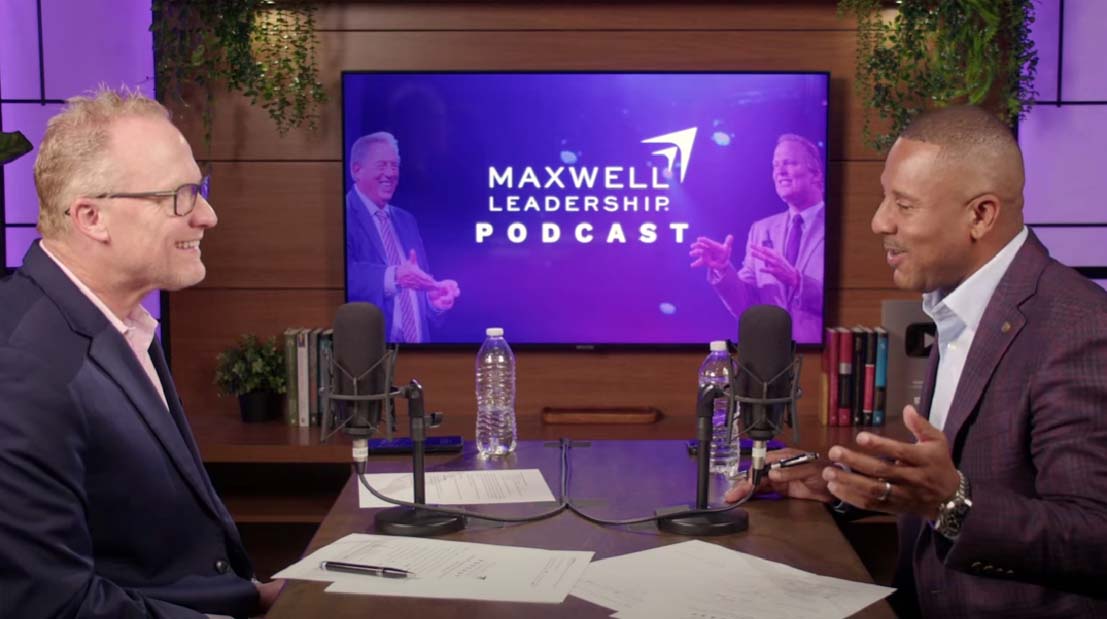
The impact a true coach can have on unlocking hidden potential within a team is immeasurable. In this week’s bonus episode of the Maxwell Leadership Podcast, Jared Cagle dives in with Coach Tom Mullins to explore the power of adopting a coach’s mindset in leadership and how it can help you empower and develop champions.
Tom Mullins:
Every time my grandfather walked into a room, 2 things would happen. Number one, people would lean in like anticipation, and then a smile would come on their face because they knew when Brother Tom came in the room, he’s going to have something encouraging to say.
Jared Cagle:
Welcome to the Maxwell Leadership Podcast, the podcast that adds value to leaders who multiply value to others. My name’s Jared Cagle. I’m Chief of Staff here at Maxwell Leadership. Honored to be your host today for this bonus episode with Coach Tom Mullins. We’re going to be talking about his book, The Coach’s Playbook: 10 Game-Changing Lessons for Young Leaders. I cannot wait for you to hear the wisdom and the insights from a man who has built big organizations, big teams, and is now able to share the wisdom that he’s learned with us. Coach Tom Mullins, thanks for joining us. I can’t wait to dig into this resource together.
Tom Mullins:
Hey, Jared, great to be with you. And I’m excited to jump into this as well, because it’s kind of like a coaching manual for young leaders. You know, it’s interesting that I get asked this same question by young leaders wherever I travel, and it’s a very similar question. And they always say, now, Coach, what do you wish you knew when you were a younger leader, like in your 30s or 40s, And that you wish somebody had coached you up or taught you. And that question prompted me to actually write the book, The Coach’s Playbook. And of course, I had to get a good subtitle to it, The 10 Game-Changing Lessons for Young Leaders. But here’s what’s interesting. I really believe these fundamental principles that we explore in the book are good reminders for leaders at all levels of leadership.
Tom Mullins:
One thing I learned as a football coach and football player is the key is always strengthening your fundamentals. And there are certain fundamental principles of leadership that we can never get away from, that we need to continue to strengthen. And I believe that the book helps strengthen those for even veteran leaders as well.
Jared Cagle:
Well, I do too, and cannot wait to dig into that and get a little more insight. from you today. You write in the book, Coach, that when you started your career, there really weren’t many leadership books or conferences to help you figure any of that out. You had your grandfather’s example and everything you learned in the locker room. Tell us a little about those 2 significant influences on your life.
Tom Mullins:
Right. And I wish when we started Christ Fellowship 43-plus years ago that John was out there and I’d read his material and knew him personally, and I did not. And— but I did have a great model in my grandfather. He modeled the type of life and love and leadership that you wanted to emulate. So I was blessed to have that. In my coaching career, playing career in college and a coaching career in college and high school, really taught me the fundamentals of how to build team. how to motivate team, how to be prepared and organized, to embrace the challenges and adjustments you need to make in leadership. So all of those principles combined with the model of a grandfather who was a godly man, a man of integrity, a man that really loved and affirmed people, and he led from that position.
Tom Mullins:
I think taking a combination of the best of those 2 worlds and blending them together, became the foundation for my whole model of leadership with the church. And then realizing that really the coaching principles that I learned in football can transfer right over into any dimension of leadership in your life. And it was actually at a conference when I first met John, Jared, which was at Woodstock, Georgia. He was doing, back then, he was doing these 3-day— Powerful. pastor conferences. And so I went to it and I went, oh, it’s a coaching clinic. You know, I loved it, man. I’m getting coached up.
Tom Mullins:
I bought all 100 of his cassette tape leadership lessons. I bought everything he had on the product table. He was speaking my language. And I go, this guy’s got it. I gotta get to know him because he’s talking my coach’s language. And that’s how I connected with John. And I’ve said, I’m so thankful that I made that connection all those years ago.
Jared Cagle:
And speaking of coaches’ language, you talk about in the book, you quote your friend Art Williams.
Tom Mullins:
Right.
Jared Cagle:
And he said, nobody wants a boss, but everybody wants a coach.
Tom Mullins:
They do.
Jared Cagle:
I’d love for you to talk about the difference between a boss and a coach.
Tom Mullins:
I’d love to. And I define— I grabbed this definition of a coach in the book. It’s really on page 1. It says this. Defining a coach. And now, a passionate, dedicated individual who unlocks hidden potential and maximizes a team performance by believing, encouraging, and developing. That’s a pretty powerful statement. And that’s why I think that Art made that comment.
Tom Mullins:
He said, you know, nobody wants a boss, but everybody wants a coach because A coach’s primary call is to help you become the best version of you, to help you perform at your highest level, to call that champion out in you. And I think that’s why coaches are some of the most endeared people to our hearts that we have played athletics. You look back, I can remember all my coaches, and they have a special place in my heart because they challenged me, they were tough on me, they were very much of a disciplinarian, And they would accept nothing but your very best, but you knew they were calling the best out in you. And that made them very valuable to us. And then we learned from them and shaped from them. One quick, really funny story about this. Many years ago, I got a call from my high school secretary. We were having a high school class reunion.
Tom Mullins:
Now, you gotta go back several years now because it was our 50th reunion. And she calls me from Ohio. We’re in Florida. I grew up just north of Cincinnati, Ohio. And she says, we’re having our class reunion, Tom, we want you to come. I said, no, I can’t come. I was making all kinds— I didn’t wanna travel 1,000 miles to go up there and see all these old people up there in Ohio. And she said, called me back a second time, said, don’t you realize you were the class president? I’d forgotten that, Jared, that I was even class president.
Tom Mullins:
I knew I was captain of the football team, but I didn’t know I was president of the class. She sent me pictures out of the yearbook, Validate you were the president. Come on, get up here. That didn’t— still didn’t work. But then she pulled the clincher. She called me the next time. She said, Coach Young is going to be there. He was my high school football coach, and he wants to see you.
Tom Mullins:
I said, I’ll be there. I flew up to Cincinnati, Ohio, met my cousin. He and I played football together. We drove up to a country club where they’re hosting this reunion. And Jared, we pulled in there. I looked at these people standing there and I’m going, who in the world are these people? It looks like the nursing home just dropped these people off for the early bird special. And I looked at my cousin, I said, who are these people? He said, that’s our class. I said, oh my gosh, these winters have been hard on these people up here in Ohio.
Tom Mullins:
What’s going on? Hey, this is no joke. One guy standing there, Jared, with an oxygen tank. And he had, you know, the oxygen thing in his nose, and he’s smoking a cigarette. Who smokes a cigarette when you got an oxygen tank on? Come on. And he’s a member of my class. But I saw him. I looked and I saw Coach Young. There he was.
Tom Mullins:
He was in his 80s at that time and still stood strong and tall. And man, when I saw him, my eyes teared up and I ran over to him and I hugged Coach. And why did I make that trip? Because when I was 16 years old, he pulled me aside and he said, Tommy, you have the ability to play at the next level. And if you give me everything you’ve got every day and be a leader on this team, I’ll make sure you get that opportunity to play at the next level. Nobody, Jared, in my family ever been to college, and there was no way I could afford to go to college except by a football scholarship. And Coach Young delivered for me. Gave me actually multiple offers to go play on the college level. And all of those years I hadn’t seen him, but the impact of that coach believing in me, calling the champion out in me, caused me to drop everything, change my schedule, and travel 1,000 miles to get up there just to see my coach.
Tom Mullins:
There’s something about that spirit of a coach when we take that approach in leadership that just has great impact upon people.
Jared Cagle:
I want to go deeper into something here. That is powerful. Coach Young, and you said in your definition of a coach is to unlock hidden potential.
Tom Mullins:
He
Jared Cagle:
saw something in you and called it out. He said, I can help you go to the next level. When you take this coach’s mindset and maybe you go back into that example with Coach Young, What do you think he saw in you? What’s the key to looking deeper beyond sort of the surface as a coach and seeing that potential that’s hidden and then calling it out?
Tom Mullins:
I think that’s what our role as leaders are really all about, that we are constantly looking for that hidden potential in those that we lead and those that God brings across our pathway. My grandfather pastored a very small church in southern Ohio. Never more than about 100 people. But yet 28 pastors came out of that little church over the years. And I’m astounded at that because I think my grandfather had captured this principle of affirmation. He always had a way to affirm you and always wanted to, like, believe the best in you, speak the best about you, and call the best out in you. So it was like he was always looking for that. You know, as a coach, I was always looking for the talent in people and trying to really call that out.
Tom Mullins:
Even today, I mean, I got on a plane, I was coming home from Africa a few days ago, and I was over there training 2,500 pastors in Kenya. And I was coming home and the flight attendant that was walking down the aisleway there of Delta, Was built like an athlete. And I right away said, were you a running back or were you a linebacker? What positions did you play? And he told me he was a running back. I asked him what his 40 speed was. Now here’s a grown man, you know, and we’re already going back and connecting because I knew he was an athlete. But that’s kind of what’s in me, wired in me. I’m always looking for that in people. And when we as leaders start treating everyone God brings on our pathway for We know there’s potential here.
Tom Mullins:
I’m going to look for it, and I’m going to try to call that out and put them in a position, get them in the right position on the team so that they can display their God-given gifts they have. And then we try to equip them and develop them and release them to really be the leaders they’re called to be.
Jared Cagle:
I love this principle of affirmation and looking for talent. Looking for talent is not just in the recruitment. It’s also all the way through because you got to put them in the right positions, the right seats on the bus, as we say. Looking for talent isn’t reserved to the beginning with just getting them on the team. We’ve got to constantly, every day, be looking for talent and setting people up to win. You write in the book also, Coach, about champions calling the champion out of others. And you had a senior on your team, Charlie Pell, who kind of took you under his wing and called you up to run with him. Right.
Jared Cagle:
And I wonder if you could put yourself back in the shoes of that young leader, someone that wants to draft off of a champion ahead of them, but doesn’t quite know how to access those types of people, doesn’t really know who it is around them that they can— what do you do? What do you look for? How do you find a champion to draft off of? I’d
Tom Mullins:
like to share the story about when I met John Maxwell for the first time. You know, I was actually traveling in Russia and Romania when the Iron Curtain had fallen, and we were over there on crusades. And John and I had a mutual friend, and though I didn’t know John personally at the time, and he said to me— this guy’s name was Roger Breeland, had a singing group called Truth. And I was over there traveling with him, and my wife and I were traveling with him, and we were doing crusades. And he said, You’ve got to meet John Maxwell. You two have so much in common. Well, that’s when I went to the first conference. But what I did instinctively was when I met John, I wanted to find out what he was passionate about.
Tom Mullins:
And then I wanted to find out how can I add value to what he is valuing and is passionate about? Yes. And then when I found out his vision for EQUIP, to take leadership training to the world. I said, John, what can I do to help you fulfill this mission you have? And then I also said to him, we’re not going to take mission dollars and put in to support this. I want to carry your briefcase. You may not remember, Jared, but back in the beginning, John had a big old briefcase that he carried everywhere he went. And so I learned how to just carry his briefcase, Keep me in mind, Diet Cokes, whenever he needed some food cleaned off his clothes, I’d clean him up, get him ready to go. I was just there to serve him. So here’s a principle I tell young guys.
Tom Mullins:
If you find leaders that you really feel passionate about, that they can add value to you, go try to find a way to add value to what they value. John’s thing was, I’m passionate about EQUIP. I wanna take leadership to the world. All right. Well, I’m going to get— find mission dollars and other people. I brought other business leaders with me to John’s leadership conferences so they could catch the vision to help support John’s passion and mission. And then traveling with him. So it’s that add value to what they value is a very important basic principle.
Tom Mullins:
But you’ve got to be very intentional. to seek out and position yourself to be in a place where you can learn and grow under these leaders. I mean, sometimes it’s a great sacrifice, but we gotta prioritize. I’m gonna get over here in the same space where these leaders are that I can learn and grow from. When I was in football, I always went and spent time with the national championship coaches. So I would go to their spring practice. I’d get permission, I’d come in, bring the staff in, we’re in spring practice with them, ’cause we wanted to learn and grow, hang out with the champions. So you’ve gotta be intentional to find a way to hang out with the champions that you’re trying to learn and grow from.
Tom Mullins:
Today we have so much resource that we didn’t have back when I was starting as a young leader, especially in the church. But today through Maxwell, Maxwell companies, Maxwell’s books, all the training materials that we have, the conferences that we have. There’s really no reason now for us not to position ourselves to learn and grow in those type of environments.
Jared Cagle:
Yeah. John tells a story. You mentioned you carrying his briefcase. He tells a story often of you sitting on the front row in an environment that was very distracting. You remember that story well, don’t you? You were coaching him from the front row.
Tom Mullins:
Well, we were in Africa. It was a very— I’ve never seen a worse venue for a communicator in my life. And being a communicator, I could empathize with John being put in this position. So I just grabbed the chair from the table I was in, pulled it around and sat right down in front of John where he was speaking, got my pad out and said, come on, baby, teach me, teach me. Now, I’d heard this lesson multiple times in other countries. We went to about 8 countries on that tour in Africa. But every time I sit under John, I make it the first time I’ve sat under him. Yes.
Tom Mullins:
Every time I hear a lesson from John, I make it my first time I’m hearing that lesson. And when I treat it that way, it’s amazing what you get, the depth you get, the perspective you get on leadership principles and truths when you treat it like it’s the first time. But, you know, that was just my way of trying to encourage John in that moment. And my goodness gracious, what John has done to expose us to the world, the influence that he’s lent us, the opportunities to meet great global leaders, it’s just expanded our world, expanded our influence, and our opportunities to serve the Lord.
Jared Cagle:
Well, you’ve been an incredible encourager and even One who empowers people so well inside of our world, looking for things and places for people to be able to serve. And you’ve done that inside of our organizations. You’ve done that inside of your own organizations. It was interesting to me when I was reading the book, Coach, you talked about how one of your biggest mistakes that you felt in your leadership was that you didn’t create enough space around you for others to lead. Right. I think my experience with you is pretty different, maybe because I’ve experienced you on the later part of your career where you’ve learned a lot of these lessons. But take us back to that early phase. Why was empowering people so challenging? And what can we learn about that, especially as young leaders today?
Tom Mullins:
I think this is interesting, Jared. When I was coaching, you have to empower your staff, your team, your players, your leaders. So that became very natural for me when I was coaching football, especially at the college level, because of the sophistication of everything and the challenges. You have to have a well-empowered team if you’re going to accomplish anything. But then when we started the church and we started— I started pastoring, It was almost like I was not thinking enough long-term. I was thinking short-term. I can do this quicker and better myself than to try to take the time to train someone else to be able to do this. And slow but surely, I look back and I realize, oh, you wasted several years of trying to be the super leader here.
Tom Mullins:
instead of just getting back to empowering. And you know, it was interesting, Jared, when early on I— when I sat under John, first time that he taught, it was in Woodstock, Georgia. I can never forget it. It was in the early ’90s. And I’m sitting under John and he’s teaching. And it really made me go back to the coaching style of leadership. And I realized, you know, really this is the right way to lead the church. Get back into your strength area, get back into your coach’s mindset, get back to building teams and equipping teams and empowering teams to go.
Tom Mullins:
So that’s when I made the transition back to actually what I did in coaching. For some reason, I don’t know why, I thought, you know, the pastor, I’m a pastor in a small church, And the church I grew up in, my grandfather did everything. So I guess I was thinking I need to do everything. No, no, no. So as leaders, man, and don’t, you know, I tell people all the time, you’re never gonna accomplish anything of significance alone. So let’s always be in the process of mentoring, having people around you that you can sow into and encourage. And you don’t wanna lead in a vacuum. And you also wanna create space for others To lead and grow around you so you create a good culture of leadership.
Tom Mullins:
Today we see that we have a leadership college at our church. We’ve already— we’ve taken well over 1,000 people through our leadership college. That is just to empower them to lead within the church. And then, of course, we’re doing our leadership training through our actual college programs and internship programs. And we’re trying to raise up the emerging generation of leaders and equipping them and empowering them. And I’ll tell you what, it is amazing what happens when you position young leaders in an environment where they are actually entrusted to lead, but they’ve been trained, they’ve been equipped, and we put them alongside of a veteran. And you can watch what they can do. I had an experience several years ago where I was invited to spend 24 hours on the USS Enterprise.
Tom Mullins:
That’s where they shot the original Top Gun movie, off the USS Enterprise. And so I had an invitation from a friend of mine in History Handful with Campus Crusade for Christ in the day. And you want to come? We’re going to fly you on, tailhook you on the plane. You’re going to spend 24 hours on there. with the captain of the ship and the officers, and then we’ll shoot you off of it the next day. And I said, well, can I bring some people with me? I got a couple people I need to bring with me. And they said, yeah, you can. So I called John.
Tom Mullins:
I said, John, have you ever been on an aircraft carrier? He said, no. I said, come on, we’re gonna go. So I got Maxwell to come with me. I brought my son Todd, one of our business guys, Lester, and we flew out there, tailhooked, Spent 24 hours on there. But here’s what captured me. I’m watching these young teenagers, 18, 19, 20-year-old kids out there handling $60 million aircraft, out there on the deck directing traffic. They were doing sorties, exercises where the planes were taking off and landing for 12 hours a day. Unbelievable experience.
Tom Mullins:
So I turned to this officer, I’m up in the captain deck there, and I turned to this officer. I said, what’s your secret to getting these young people so trained and so prepared to do what they do? And he said, it’s simple. He said, we train them, we have very strict discipline, but we put them on a team with veterans. So they are right there with a team of veterans, but they’ve been empowered. And their decisions are critical, even life and death decisions for these pilots. And it struck me. I said, you know what? We’re not calling our young teenagers up enough. We’re not empowering them enough.
Tom Mullins:
We’re not equipping them enough and entrusting them when they’re proper training, proper discipline, and you team them up with veterans. It’s amazing what they can do. And it really impacted me to the point where I said, we gotta get back and we gotta start training much earlier. So now we have leadership development right on down through our middle school programs of the church where we’re identifying young leaders and they’re in special leadership growth tracks from middle school right on up. And so anyways, it’s changed my whole philosophy about getting back to coaching philosophy of calling those champions out, and equip them and then empower them and give them space to lead.
Jared Cagle:
I love how many opportunities you’ve had throughout your career to go learn from greatness. You just gave us an example there, but not only to go learn from them, you always take somebody with you, Coach. I’ve noticed that about you. You said, who can I— can I bring somebody? Your first question, can I bring somebody with me? Can I bring somebody with me? And then sharing that learning, Man, that’s critical in not only our growth, but our team’s growth. And then I love what you said about entrusting to especially young leaders. At some point, you got to let them feel the weight, don’t you? Right. You got to let them feel the weight. And when they feel that weight and then pairing them alongside of a veteran that understands how to guide them through that, That’s a really big principle you just gave us there.
Jared Cagle:
I want to move to another principle that you learned through the years about celebration, celebrating inside of culture. You actually say it’s the most underemphasized thing inside of leadership culture today. Why do you think that is? And talk to us about really the benefits of celebration.
Tom Mullins:
This is funny. It actually goes back to my high school days. I was talking about my high school coach, Coach Young. Loved him to death, called the champion out in me. But there was one thing that he would never let us do, and that was celebrate. It’s like we’d come in after a big win and we’re in there having fun in the locker room. He’d come in, all right, quiet down, quiet down. We got a game next week.
Tom Mullins:
Get focused. I’m going to get focused. I’m going— I told myself, when I become a coach, we’re going to celebrate. So when I became a coach, I said, come on, baby. When we win, we celebrate. I’d go in and on the Monday game films, I would let the players run the films and make sound effects and show the plays and the bad plays, good plays, and just have fun with it because we won. Because I realized what celebration does. It really bonds a team together.
Tom Mullins:
You’re validating the effort that was put forth to accomplish the victory that we had today. And it’s just an important thing. And we all want to be celebrated. There’s none of us that don’t want to actually have someone believe in us and celebrate us. You know, so I realize that principle is important in any organization. And so we carry that over, and I’ve carried that principle over into my leadership, even in the church, where we take time to celebrate. Every staff meeting we have weekly, We will, after our time of praise and worship, we have a time of celebration. We celebrate our staff and their impact that they’re having.
Tom Mullins:
We have like 14, 15 campuses and we got more staff than I even, I don’t even recognize them anymore. So many staff we have, it’s unbelievable. But one thing we do, we wanna have a spirit of celebration because of what it does. So it validates your effort. It celebrates you as an individual and what you have done to contribute to that. It keeps focus on what our real mission is. And that I also believe you can enjoy the experience and the journey. There are times it’s going to be hard, times it’s going to be challenging.
Tom Mullins:
But man, after you put the effort in, there is a reward. And celebration kind of accents that reward for your team.
Jared Cagle:
No question. The Coach’s Playbook. This is what we’re talking about today. An incredible resource for leaders, especially young leaders. I think all leaders, however, can learn from this book. We’ll show you how to get this book in the show notes below and make sure you click that link and take advantage of it. Coach, there’s a bookshelf in your office that you call your accountability corner. That’s right.
Jared Cagle:
I’d love for you to talk a little bit about this Accountability Corner.
Tom Mullins:
Yes. On my bookshelf, I have several rows there of books, and it’s filled with mostly John’s books, you know, hello. But on the very top shelf, I have a picture of my great-grandfather and my grandfather. They were both ministers of the gospel. My great-grandfather was a circuit-riding preacher in the 1890s. And, um, and plus he was about 6’6 tall. He was a big old tall dude. Wow.
Tom Mullins:
I wish I’d had a little bit more of his height. And then my grandfather, who was my pastor, and the man that really shaped my life and called the champion out in me for the things of God. And when I look at, at the men I have up there, I realize that each one of them, there’s a trait that They really inspired me to try to emulate. My grandfather inspired me to be a man of affirmation because there’s— I just saw when my grandfather, Jared, would walk into a room of people that knew him, 2 things would happen. And I even observed this as a young boy. Every time my grandfather walked into a room, 2 things would happen. Number one, this would happen. People would lean in like anticipation, and then a smile would come on their face because they knew— they called my grandpa Brother Tom.
Tom Mullins:
They knew when Brother Tom came in the room, he’s going to have something encouraging to say, something positive to say. Now, isn’t that— in our culture today, oh my goodness, with social media, We’re so quick to criticize and find fault and put down. When we become people of affirmation, we actually stand out from the rest of the world because we’re, we’re looking for the best and trying to speak the best over people. And that makes us separate. So I take that affirmation from him. On the next level down shelf is a picture I had shot with me and Dr. Billy Graham. My wife and I had a chance to spend several hours with Dr.
Tom Mullins:
Graham in his home in North Carolina. I mean, hello, I got to have a root beer float with Billy Graham. Talk to me. I mean, is it getting better than that? A root beer float with Billy Graham. It’s not. And so we were there for about 3 hours, and I had all these questions. John always taught me, be prepared when you’re in that kind of situation. Think through your questions you want to ask.
Tom Mullins:
So I came with all my list of questions. I was prepared. to have this meeting with Dr. Billy Graham. I could not get Dr. Graham to talk about himself or his crusades or the great leaders he met. He, he wanted to know about us. He wanted to know about Christ Fellowship, what God was doing.
Tom Mullins:
A couple of his grandchildren at that time were attending our church, and all he wanted to talk about. So I left there with this in mind. This is probably one of the greatest men in our generation used of God. And yet what struck me was his humility. There was a humility about him. He had a genuineness of heart about the humility. I said, oh Lord, I want to be a man like Dr. Graham.
Tom Mullins:
I want to recognize that everything is for you. And I don’t want to be my focus here. I want to always be a focus there and into others. So that struck me, and that reminds me to walk humbly before the Lord every day. Below him on the shelf is Dr. Bill Bright, the founder of Campus Crusade for Christ. And Dr. Bright was an amazing man.
Tom Mullins:
Was he a man, Jared? He was a man that was so mission-focused. That’s all he could think, speak, dream was mission, to fulfill the Great Commission. And I know you’ve heard this story from John, John and I were called to his deathbed side, and we drove up together into Orlando. Dr. Bright lived in a very humble little condo up there with his wife, Annette, and we were called to his bedside. He was struggling with every breath, but he called us there for a purpose. And struggling to get his breath to talk to us, he challenged us To carry on to fulfill the Great Commission. He was so mission-focused.
Tom Mullins:
And when I left there with John, I said, John, this man has not only taught us how to live and stay on mission, but how to die on mission. And it so impacted me. So when I look at Dr. Bill Bright, it’s like, come on, son, don’t allow mission drift to get in there. Stay focused. Keep the main thing the main thing. Here’s what you’re called to do to impact the world with the love and message of Jesus Christ. So let’s keep this focused today.
Tom Mullins:
You’re on mission today. And then finally, I’ll just mention one other. I actually got 2 other guys on there, but I’ll just mention one other guy. And this guy named Dick Smith, a businessman in my church. By the way, all these men are in heaven. You don’t make it on my counter if you’re still living. You know, you’ll— you know, when John goes to heaven, I’ll put him on the shelf, you know. But this guy Dick Smith, he modeled generosity in his life for me.
Tom Mullins:
Everywhere I went around, this guy modeled generosity. And I said, oh, I want to be a man like that. And listen, I’m going to tell you this one little final story about Dick. He loved us so much and was such a generous man that When he was on his deathbed, I was holding his hand and his children were there, his grandchildren were there, my wife Donna was there with me. And I’m holding this man’s hand that has loved me. He was a founding elder of our church. He— we lived with him for 9 months while I was building a home. My whole family lived with him in his home.
Tom Mullins:
This guy just modeled generosity in every way he did. His boys came in, Jared, and did something I’ve never seen before. They came in, put the blankets back, pulled the compression hose off their dad’s legs and feet, had a basin of water and washed their dad’s feet and prayed this prayer, may the Spirit of our Father fall on us. And I’m just weeping. I wanted to go down there and wash his feet too, but I, I couldn’t invade that sacred moment. With 2 sons praying for the mantle of their father to fall on them. His life and his legacy is carried on today through his family and the impact he has on me. And when I look at Dick Smith, I say, I want to live a generous life in every aspect of my life, recognizing everything God’s given to me is to flow through me to enrich the lives of others.
Jared Cagle:
Just spectacular, spectacular reminders. And what a picture there as well. So a man of affirmation, a man of humility, a man of mission, a man of generosity. You got to at least give us the 5th, even if it doesn’t come with a story.
Tom Mullins:
Well, okay. Well, there’s another sweet guy in there. His name is Reverend Brooks Lynn. And when my wife and I got married early in college, Uh, her former college roommate’s father was a pastor in Florida. And so one summer they invited us down to be summer interns. I was still playing football, and I went down there and I was a summer intern with, with them. And I met this precious pastor, and he did everything. He mowed the lawn for the church.
Tom Mullins:
He was a custodian for the church. He ran all— there’s no thing called a mimeograph machine. Google it, look it up, all the younger people. And that was running off the Sunday bulletin, which was, you know, the program for the week and announcements and so forth. He just did everything. And I saw in this man a servant leader, a humble servant leader that loved his people. And I tell pastors all the time, man, listen, just love your people and be a servant leader. Never allow the spirit of entitlement To get anywhere around you, especially as you grow and you find more success than you can expect.
Tom Mullins:
No, no, no. Always keep that mindset of a servant leader in every situation, and it keeps balance, I think, in your life and what you do. So really, you go from the power of affirmation, true humility, stay mission-focused, keep a servant leader’s heart. And live with generosity. And, and I think that’s the way you can have eternal impact upon the lives of others for the kingdom of God.
Jared Cagle:
Incredible. This is an episode, listeners and viewers, that I know I will be going back and listening to and taking notes over and over again. And I hope that you are as well. Coach’s Playbook: The 10 Game-Changing Lessons for Young Leaders. It’s available now. Go to the link in our show notes. Make sure you grab a copy. Grab a copy for a young leader in your life.
Jared Cagle:
Make sure that they have this proven effective wisdom on their bookshelf as well. Coach, I don’t know what to say with all that you’ve unpacked for us today. You’ve been very gracious and generous with your time. If there’s one more thing before we sign off that you want to leave with us, I’d love to give you a chance to do that.
Tom Mullins:
I have a chapter in the book. I think it’s chapter 9 in the book. But I talk about in there the importance of guarding your integrity as a leader, because our character is really our leadership currency. And I make this statement in the book: if you will guard your integrity, it will guard you. And I think in our age, when there’s so much compromise, we have to be so on guard, so aware, to simply live a life of honor before the Lord. Because when we seek to honor the Lord, even though we’re imperfect, even though we have weaknesses and faults, But if our heart’s desire is to honor God and walk before him as men and women of integrity, that is where the favor of God will rest upon us. And that is the difference maker in our lives and our ministries. So if we guard our integrity, it will guard us.
Tom Mullins:
There’s a scripture I’ll leave you with found in Samuel 2:30, where an unnamed prophet comes to the old priest Eli, and he makes this comment speaking for God. He says, those who honor me, the Lord says, I will honor. Let’s live, let’s strive to live that life that says, let’s honor God. Honor God. And when we strive to honor God by honoring and loving people, you just position yourself to receive the honor of God and blessing of God upon ministry. And that’s been the secret to John Maxwell. Listen, I know John. I’ve known John now for, you know, 33, 34 years, been traveling with him.
Tom Mullins:
He has the favor of God upon his life, the blessing of God. Because I’ve told John, you’re not that good to see all that God’s doing through you. Hello, come on. You know, and John will be the first one to tell you, I’m not that good. He doesn’t take credit for this. He knows it’s the hand of God and a blessing of God. But John has walked and guarded His personal integrity. So I challenge leaders, just guard your secret life, guard your hidden life.
Tom Mullins:
When you guard that, it takes care of everything else.
Jared Cagle:
It’s been an incredible privilege. It’s always, always encouraging to be with you, Coach. Thank you for the wisdom today. I can’t thank you enough. We are grateful as Maxwell Leadership that you’re a part of the family, that you’ve been a part of what we’re doing now for a long time, helping us expand expand leadership that’s built on values, values-based, people-centered servant leadership. We’re taking it all over the world, and you have been a forerunner for that. And so we’re grateful and honored to have you in our corner. Listeners, viewers, thanks for being with us today.
Jared Cagle:
Hey, share this episode with a friend, a family member, a coworker, anyone that you think would benefit from it. We would be grateful for the word to get out as well. And until next time, always remember, we do this— Because everyone deserves to be heard. To be led well.