
Influence does not automatically follow position, and the gap between the two is where most new leaders quietly stall. The way through is mindset before motion, because how leaders see themselves shapes how they show up for the team.
A leadership mindset is not reserved for people with a title. Leadership is influence, and influence can grow from any seat in the organization. When the internal story shifts from contributor to leader, motivations, choices, and time horizons start to follow.
What is a leadership mindset?
Mindset defines how a leader sees the role, the team, and the work ahead. It runs underneath every decision, every conversation, and every meeting agenda.
A leadership mindset is the consistent internal posture that puts the team’s progress ahead of personal production, sees people as both the means and the meaning of the work, and treats influence as the real measure of effectiveness. Title or no title, the posture is the same. What changes is how it gets applied across the day. It is also the part of leadership development that tends to get skipped, because it is invisible from the outside.
The stories leaders tell themselves leak into the room. A leader who privately still sees themselves as the top contributor keeps solving problems that belong to the team. Step fully into the role, and you start creating space for the team to solve them. The difference compounds over months.
Why the shift from team member to team leader is so hard
Most leaders are promoted because they were exceptional at something specific. The technical specialist becomes the engineering manager, the top seller becomes the sales leader, the strongest contributor becomes the team’s boss. The skills that earned the promotion are not the skills that make the promotion work.
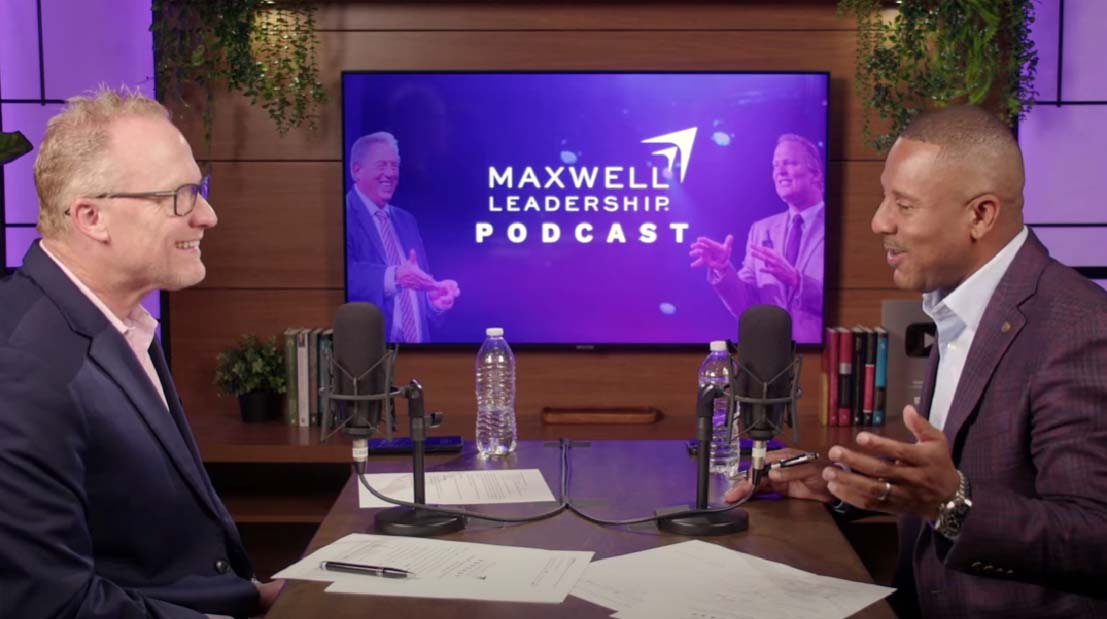
In the Maxwell Leadership Executive Podcast episode “Developing a Leadership Mindset: From Team Member to Team Leader,” Chris Goede, executive vice president with Maxwell Leadership, and Perry Holley, a Maxwell Leadership facilitator and coach, walk through the practical pressure points of this transition. One pattern Perry surfaces is common enough to be a warning sign: leaders promoted into roles they don’t yet know how to do tend to retreat into the work they already know how to do. The new sales manager becomes a super-salesperson. The new engineering lead writes code instead of building the engineering team. The role gets done in name only.
The harder move is from specialist to generalist. A leader has to widen the lens, learn how the team’s roles connect, and stay close enough to the work to be useful without taking over. Chris Goede frames it as going from “me” thinking to “we” thinking, and he is honest about the cost. Leaders give up the satisfaction of being the best at one thing for the harder satisfaction of building a team that can outperform any single contributor.
How to build a leadership mindset
The shift gets built through three reframes in how leaders see their role, their people, and their mission. They come straight from the coaching conversation in that episode, and hold up as a working diagnostic for anyone moving into a leadership role or trying to grow influence inside one.
Reframe how you see your role
A leader’s primary contribution is no longer individual output. It is the team’s output, the strategy that shapes it, and the development of the people producing it. Production still matters, because the team needs to see the leader engaged in the work, rolling up sleeves on real deals, and modeling what excellence looks like. The center of gravity has moved.
Chris Goede shares a question John C. Maxwell has used to guide this shift for years: if someone on the team can do what you are doing at 80% of your level, give it to them. Two things follow, and both serve the leader. The team member grows toward and often past that 80%, and a mentoring relationship forms that deepens trust and influence. The leader gets time back for the work only a leader can do: setting direction, removing roadblocks, and thinking further out than the current quarter.
Observation is the underrated skill here. A leader watching the team work picks up patterns no individual contributor can see, and those patterns become the basis for better calls about who to develop, where to invest, and what to change.
Reframe how you see your people
A team is more than a set of contributors to manage. It is how the mission actually gets delivered, with each person playing a part in making the vision real. The move is away from competing with peers or working solo, toward building an environment where each person contributes a strength the team needs.
The leader’s job becomes solving the problems the team cannot crack on its own and building its capacity to handle the rest. Insist on solving everything yourself and you train people to bring you problems. Ask “how would you handle this next time?” before you answer, and you build their problem-solving muscle while freeing yourself for the parts of the job no one else can do.
People deserve to be led the way they need, which is not always the way the leader would prefer. That takes noticing how each person communicates, what motivates them, and what they need to do their best work. Self-awareness is the floor for that kind of attention, and growing it is one of the most direct routes to greater influence.
Reframe how you see the mission
The mission has two halves: making the people on the team successful, and connecting what they do to the larger vision of the organization. Both matter. Drop the second and the work stops feeling like it counts; drop the first and the vision stays abstract while engagement slides.
Communication carries the mission. The leader has to send it in a way the team can receive, and take in what the team sends back in whatever form it arrives. Taking offense at how someone communicates is a fast way to shut the channel down. Communication is the leader’s job to manage.
Chris Goede points to Mark Cole, the CEO of Maxwell Leadership, who has wrestled with this same tension. As leadership grows, a leader cannot keep everyone happy, cannot stay a peer to every former peer, and has to accept that the role asks for a different kind of relationship with the team. The shift means accepting that cost as part of the work.
A quick self-check for your leadership mindset
Three questions are enough to surface whether the shift has happened or is still on the to-do list. Answer them honestly.
- How do you see your role? Does the honest answer lead with driving results through others, or with your own production? Both can be present. The question is which one leads.
- How do you see your people? Listen for the motive in how you describe the team. People as resources to deploy sounds different from people as the ones who carry the mission.
- How do you see the mission? A strong answer ties the team’s daily work to the larger purpose and treats serving the team as part of carrying it. A weak one treats the mission as an external metric.
Develop your leadership mindset with Maxwell Leadership
Mindset is the quietest part of the role, and the part that shapes everything else. Treat the move from contributor to leader as an internal change first, and the outward behaviors follow with less friction. Influence widens, decisions land cleaner, and the team moves with more confidence because the leader moved first.
Maxwell Leadership works with executive teams ready to make that shift permanent. Our executive leadership training builds the strategic presence, relational depth, and clarity of purpose that separate a titled boss from a leader the team chooses to follow. The full Chris Goede and Perry Holley conversation is worth hearing, so follow the Maxwell Leadership Executive Podcast for ongoing insight on building influence, shaping culture, and leading well through change, or reach out to design a development experience that matches where your leaders are now.
FAQ
What is a leadership mindset?
A leadership mindset is the internal posture that orients a person around influence, team progress, and people development rather than personal output alone. It shapes how a leader sees the role, the team, and the mission, and it operates whether or not the person carries a formal title.
Can you have a leadership mindset without being in a leadership position?
Yes. Influence is not granted by a title, so people who take responsibility beyond their own desk, develop others, and connect their work to a larger mission tend to be recognized as leaders before the title catches up.
How do you shift from being an individual contributor to a team leader?
The shift starts internally. Stop treating personal production as the main contribution and start measuring yourself by the team’s output, the development of its people, and the direction of the work. Practical moves include handing off work someone else can do at 80% of your level, asking questions before answering, and spending more time on observation and direction than on solo execution.
What is the biggest mistake new leaders make?
Retreating into the work they were good at before the promotion. Production crowds out leadership, the leader stays buried in tasks that belong to the team, and the team stalls because no one is actually leading it.
How does mindset affect leadership influence?
The stories a leader tells about the role, the team, and the work shape day-to-day behavior, and that behavior is what the team experiences and what builds or erodes trust. A settled, confident mindset earns influence through consistency. A leader still wrestling with the role tends to send mixed signals the team picks up on quickly.