Chris Goede and Perry Holley explore the evolution of servant leadership and its increasing relevance in today’s business landscape. They discuss how servant leadership now prioritizes emotional resilience, empowering team members, and leveraging technology to create personal connections at scale. They also emphasize the importance of connecting daily work to a greater purpose, which is especially crucial for engaging younger generations in the workforce. Furthermore, they highlight that true servant leadership begins with taking care of oneself to effectively serve and lead others.
Perry Holley:
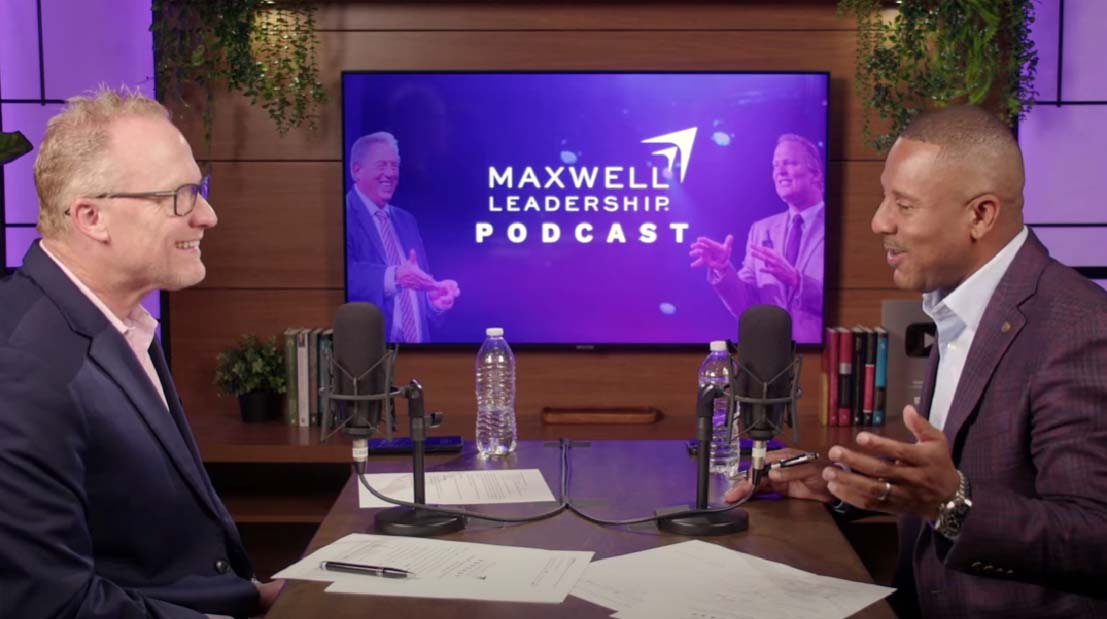
Welcome to the Maxwell Leadership Executive Podcast, where our goal is to help you increase your reputation as a leader, increase your ability to influence others, and increase your ability to fully engage your team to deliver remarkable results. Hi, I’m Perry Holly, a Maxwell Leadership facilitator and coach.
Chris Goede:
And I’m Chris Goede, executive vice president with Maxwell Leadership. Welcome and thank you for joining. Today we’re going to talk about the evolution of servant leadership. Perry has developed a course for us on servant leadership, actually at the request of one of our organizations and has been extremely well received. But today we’re going to talk about it a little bit different. You know, you think about servant leadership. Sometimes people don’t want to use that term in organizations, you know, but it’s really about putting people, putting your team, putting the leaders in the organization in a position where they’re thinking about their team and their people first. But it’s evolving and Perry’s going to share a little bit more about that in just a minute.
Chris Goede:
Before we do dive into that, I want to encourage you to go to MaxwellLeadership.com/ExecutivePodcast. There you can fill out a form if you interested in some training, some coaching, or maybe even have just a question for our team. If you’ll fill that out, you. You can also at that location, download the Learner’s guide and you’ll be able to see a link to the blog. So we want to encourage you to go there as a resource for it. So, Perry, Servant Leadership. This is interesting because I know when you started working on this, it was not taboo, but people really can’t define it. We built a course around it.
Chris Goede:
It’s been well accepted inside organizations. Now it’s kind of evolving and it’s changing. What drove you to bring the content to our listeners today?
Perry Holley:
Yeah, as you said, it was always, you know, 1970s Robert Greenleaf, some great, great content, great material. How does it apply in our culture and in your organization? As you mentioned, people say, hey, I really like the idea. Can you call it something else?
Chris Goede:
Yeah.
Perry Holley:
No. Well, I did suggest Leading with Love and that their heads exploded.
Chris Goede:
That was even further. Yeah, they know we’ll go back.
Perry Holley:
But I think what I’m finding and what I was doing, I just started, I saw a couple of things that trigger my interest. Began reading in my daily reading time and looking at just giving some credit. Tiffany Fennell, consulting Meridian HR and the Quarter Deck Research Group. There’s some people that had some really great articles and some thinking there. And so I thought I’d just bring Some of that and then put our own spin on it, what we’re thinking about. But it’s kind of growing and adapting. This idea of servant leadership more relevant in this kind of hybrid tech, AI, purpose driven business environment. Could that be driven a little bit by the younger generations coming in? Yes, of course.
Perry Holley:
It has a lot of effect on almost everything we’re doing. But I thought it’d be interesting to talk about some of the things that I’m reading and I really wanted our listeners just to think through whether you call it servant leadership or have a formal program or not. This is some of the things I think are most important to leading in 20, 25, 26, 27, just based on the circumstances and environments we’re in.
Chris Goede:
Well, I think this is really the timing of it’s interesting. I was just having a conversation the other day with, with a leader and we were talking about culture and we were talking about serving his people extremely well. And then the dynamics of the work world to where you have all virtual, you have all some in office, you have some that are hybrid. And how do you, how do you create that common language of their culture, how we think, act and interact across the board when it comes to serving and leading as people. So I think the timing to your is extremely relevant. And so one of the biggest shifts I know you discovered was this empathy and mental well being. It used to mean one thing to us. It means something completely different in today’s terms of, of what that looks like.
Chris Goede:
And a lot of that has to do. Maybe it’s post Covid, maybe it’s the fact that there are a lot of people that are working virtually and they’re spending a lot more time, you know, by themselves in their own little house, their own environment and there’s not a whole lot of interaction going on. But what we’re seeing, and I know this is very relevant to content piece you just recently helped Valerie Burton put together for us on resilience. By the way, quick little shout out. Yes. She just recently became bestseller USA Today, so super proud of her on the rules of resilience. And we have a training right behind that that Perry worked closely with Valerie on because we’re seeing this burnout and this stress of the workforce is an issue. So how do you identify it and how do you proactively go after it and then how do you even reactively go after it as well? So servant leadership now means prioritizing emotional resilience.
Perry Holley:
Love that phrase. Yeah.
Chris Goede:
So I you have that in my notes and when I Saw that I was like, I like that. The emotional resilience, checking in with people regularly, normalizing conversations about stress and isolation and creating opportunity for people to connect as well as feel rested and feel renewed. So many times as leaders, we think about just being around about the results, but we have to understand those results don’t happen without our people. And so how are we helping them along on that? I have a team member of mine that I know that there’s some challenges there around this, and I basically just wanted to get extremely vulnerable with the individual and help, whatever that looks like with the emotional resilience as you talk about here. But the only way to do that is to take a different approach and just worrying about the metrics that that team member is turning out.
Perry Holley:
Yeah, well, I love that. I think that’s probably the biggest thing that caught my attention was, you know, there’s a lot of anxiety and especially the younger generations coming in and the emotional challenges that some can feel. I thought as a servant leader, really being able to help with emotional resilience and how you connect with people that way. Another area that I’ve seen talked about a lot was this empowerment over micromanagement. Now, that’s not anything new that we’ve been talking about empowerment for years. Whether people do it or not, I’m not so sure. But moving from command and control, which many leaders like more to more of a coaching mindset about how you deal with your folks, that you really. The servant leader idea is setting goals for your team and then letting them work with autonomy, how they can determine how to best do their work.
Perry Holley:
Your job becomes more about removing obstacles than it does about giving them. You know, walking them through every step. You. You really let them do the work. But you, you’re guiding and you’re looking and you’re watching over, I often think about this. One of the most helpful word pictures I find for servant leadership is that of a shepherd with sheep. And that your job as a shepherd is to guide the sheep, to protect the sheep, to feed the sheep, to nourish the sheep, keep them out of the ditch, keep them in the. And I just love that idea that if you’re a leader doing these things, I’m giving you, you know, this is where we want to go and you can decide how to get there.
Perry Holley:
I’m going to make sure you don’t wander too far off the trail. I’m going to get. If there’s any obstacles in the way, I’ll make sure that you’re nourished and Fed and protected through any challenges that may be coming. But really looking at servant leaders, when it comes to this empowerment over micromanagement, that you’re multiplying the capabilities of your team, you’re not just driving results at all costs, you are actually trying to facilitate for the people that they are growing and learning and multiplying capabilities and that you’re not any way taking away from that with them.
Chris Goede:
Another part of this evolution that this one really, as you shared it with me, made me read it twice. And it was servant leadership tied to the use of technology. Because when I think about servant leadership, I think about everyone’s face to face or it’s screen to screen. But now with AI and the usage of that as a leader, obviously we’re all very familiar with the interactive platforms, but using things to be able to communicate with transparency, but yet inclusivity inside the organization, the key in the phrase here is intimacy at scale. So even in a company of 10,000 servant leaders can create a personal connection through real time. Matter of fact, the first thing I thought about was one of our clients has just under 12,001 of their key values is servant leadership. And what does that look like? And the founder and the leader of that organization models this through personal connection with people in the, in the field. And it’s not like he walks through the front door of a corporate office to connect.
Chris Goede:
He comes in the back door of the people that are, you know, that are cleaning up the cafeteria and doing different things or whatever. It might be like asking questions and very open and sharing the data around the company. So technology if used in the right way with like a lot of things, especially with the new AI movement, it becomes an amplifier for serving those people, not a replacer. Like you’re not gonna all of a sudden, you know, because you can do things faster and quicker if it’s tied to people. Be careful of how much you’re using technology to be able to do that, because that’s not gonna have a servant leadership feel to it. But yet servant leadership is evolving and using technology.
Perry Holley:
Yeah, I love that. And I’m thinking also I ment a little bit about generations in the workforce. But as this Gen Y and Gen Z are taking on more prominent role in the workplace, These are your 20 year olds to 40 year olds that are, and some of them are in leadership now. And your teams are becoming more and more composed of this generation, that servant leadership has really deepened into purpose. And I laugh because in my generation you’re one behind me. I think our Two generations were more driven by accomplishment, by success, by achievement, and the next two, the Y and the Z, are more driven by purpose and meaning. Doesn’t mean they don’t want to succeed. They do.
Perry Holley:
Doesn’t mean they don’t want to make money. They do, but that’s not the way I saw it for sure. And maybe the way you saw it. And I just think that as a servant leader, making the connection between daily work and a bigger purpose.
Chris Goede:
Love that.
Perry Holley:
And I gotta tell you, I have this conversation a lot and leaders often think I can tell look on their face. And I just, I can’t let it go. So I, I say it out loud. You don’t think that’s your job, do you? No, I don’t think that’s my job. Why is it my job to connect you to something bigger? And I thought, so what if it’s, let’s say it’s not your job. But if I told you, if you help them, would it make your organization have more highly engaged individuals that want to see you win and hit that higher purpose? Would that work for you? Yeah, of course it would.
Chris Goede:
I’m sitting here going like, I know, that’s so true. I know leaders say that around the world, all size organizations. And I just get frustrated. I’m like, what do you mean? Like, is that not my job? Like the job is to, to lift the, you know, raise the tide in that team and that organization. So how do you go about doing that? And the instructions to do that looks different, obviously different leaders, different people, different generations. And we’re sitting there saying, hey man, let’s connect them to this purpose. And I promise you, the engagement level.
Perry Holley:
It just, I’ve just, and maybe my generation is the culprit in, you know, the toughen up buttercup, just get back to work mentality. But what they’re finding now is that this servant leadership mindset of putting others first and, and protecting and helping and guiding and removing obstacles and that sort of thing, that when you tie it to purpose, it builds loyalty and engagement, ways that money can’t. Now, maybe for older generations, money was a big deal. I’m not, definitely not saying money’s not a big deal. Today it is. But there’s bigger things here. And I think some of us are having a hard time getting our head around the fact that, and I tell this often is that when I’m out in the, in our clients organization, I’ll say to someone, what do you do here? Well, I just service the cars or I just, you know, Run the front office. If your people are using the word just, yeah, I have a problem with that.
Perry Holley:
So help them. Help them figure out you don’t just run the front office. What do you do? And, and I say, be corny. Go over the top. Exaggerate. What do you do that matters to world domination and world comfort and world peace? Make connect what you do to something big. And they’ll laugh with me. And I said, I know, it is kind of funny, but let’s do it anyway.
Perry Holley:
And. And we do it, and I get them going, and I’m thinking, you know, what do I do? Well, I just teach leadership training. No, I don’t. I’m adding value to leaders who multiply value to others that can change the world, and I want to be a part of that. And does that help me get out of bed in the morning? Does that help me be engaged in and empowered and taking ownership? Yeah, it does. Even though I have a very small piece of the pie, I’m. I. I’m.
Perry Holley:
I’m owning that piece of the pie. I thought in my loyalty and my engagement is at the highest it’s ever been in my life, because there’s great purpose. Even at my advanced age. There’s a thank you for me. I want to say, before you did, there’s great fulfillment. It is, right?
Chris Goede:
Like, even when you think about. Let’s just talk about our podcast, and we were just talking about how, you know, we’re On, I think, 368 episodes, that you have brought the content to the table. We’ve sat around the table and dialogue. And it’s not that we’re just doing a podcast. It’s not that just Wade, who’s behind producing for us, our team that’s editing or those that are posting it. It’s not just the impact that it’s having on people around the world. You were just on an international trip, and people are coming up to you going, man, thanks for the podcast. Right? So there’s a bigger purpose behind why we get in the studio every week and record these, even though we really don’t want to see each other that often.
Chris Goede:
Maybe it’s just one way, but the tying, that goes, man. I woke up this morning like, this is what we get to do today because of this. Right? It’s interesting, too. I want to, I want to jump in here for just a minute because I didn’t have any intentions on. On doing this, but I want to let our listeners know when you talk about that purpose, that you’re just talking about, I think that’s so key. We’re going to, we’re going to talk about purpose and even some of the career development path going forward, how important that is to the younger generations. We have a brand new assessment that helps you find your team members purpose. And if you’re interested again go to MaxwellLeadership.com/ExecutivePodcast and just type in put purpose assessment, send the form and we’ll have somebody reach out to you.
Chris Goede:
It’s a brand new assessment. The reason being is that gives you a guide to be able to say okay, well how do I tie what they feel like their purpose is to what they’re doing? It’s a tool. That’s what Perry and I talk about. We just want to provide resources and provide tools for you that allows you to increase the, the lid of your leadership and increase the engagement level of the teams. So another mindset shift in this evolving servant leadership thought it’s out there is that, you know, a lot of people used to think, or maybe they still do that servant leadership is like this self sacrifice.
Perry Holley:
Like why they want to call it something else.
Chris Goede:
Yeah, like, but that’s not what it is. And, and what we’re learning today in order to serve other people so well is that we got to take care of ourselves first. And you heard us talking about being resilient and you heard us talking about burnout, what all that looks like leaders if you are not taking care of yourself first, both your physical health, your mental health, your emotional awareness, you cannot pour from an empty cup. You cannot give what you do not have to other people when it comes to this. And so we actually are learning more and more about the fact that really truly servant leadership starts with which isn’t this funny? All leadership starts with yourself is being able to take care of yourself extremely well and to model that self care because people are watching you all the.
Perry Holley:
Time, all the time.
Chris Goede:
They’re contagious. Leadership is contagious. You’re contagious. And we want it to be contagious in a good way. And know that the team understand you have healthy boundaries and that you’re resilient and you’re not weak. You have strength, but it just doesn’t come naturally. You’ve done that because you have put some things in place to be able to do that. Very similar to what Perry was giving us as an illustration of a shepherd.
Chris Goede:
Well, that shepherd shepherding starts with you and your leadership journey and your emotional physical health in order to be able to serve others.
Perry Holley:
Well, I was, this was a Big ad to me, because. Yeah. You don’t think about the shepherd taking care of themselves, because if something happened, you know. Well, the airlines put on your mask first.
Chris Goede:
Right. That’s right.
Perry Holley:
Is that you. You. You take care of the shepherd. The shepherd goes down, the sheep hurt.
Chris Goede:
Yeah.
Perry Holley:
And so you’ve got to be taking care of that. I’ll just say this and I’ll get you to wrap up, but that, you know, servant leadership often is seen as soft or too emotional or nice to have philosophy. It never was that. It’s. It’s. People say servant leadership sounds soft. I said it’s not subservient leadership.
Chris Goede:
That’s right.
Perry Holley:
It’s servant leadership. And it’s hard. If you’ve ever done it, it’s probably the hardest thing you’ll ever do. And. But now, well, what I’m learning and feeling about, it’s more of a strategic, sustainable approach to blending this empathy, this empowerment, this purpose, and this technology is coming in a way that serves your team in creating a workspace where people can really thrive and be connected and be engaged and feel cared for in that. And there’s a lot of anxiety. And last thing in the workplace today and hall of life today, can you bring that steady stability of that, give people a chance to engage at their fullest?
Chris Goede:
Yeah, it’s. It’s something that is interesting, the dynamic that’s happening right now, because it is shifting into where servant leadership is. No. No longer kind of a philosophical approach. It’s actually becoming part of a system, part of a operating system of how we do things here. Companies are moving from just having them on the wall of what their values are to now expecting their leaders to live this out and doing it in a way that serves their people, which, by the way, is servant leadership. And so it’s actually something that is a. Is.
Chris Goede:
It’s a competency that it’s filled with things that are learned behaviors. Not all of us come out of the womb, I think, ready to serve other people because we all think about ourselves first more than anything else. Right. And you go, oh, man, this is. So. It’s actually a learned behavior that as a leader, the more you can learn to do that starts with yourself.
Perry Holley:
Yes.
Chris Goede:
And then be able to pour that out. I promise you, the purpose, the connection, the engagement, all of that is. Is at a higher level. I’ll close with this story. I wasn’t intended on sharing this either, but, you know, we just had a meeting on Monday. We have one of our team members that. That’s going Through a little bit of a journey.
Perry Holley:
Right.
Chris Goede:
And got a great attitude about it. It’s a health journey. Upside, all good things. But in that moment, I didn’t want the meeting to go without setting a tone that we were there to serve, to serve that individual in that situation, as individually, but as a team. And what does that look like now? I’m not saying that I am at a place to where I’m completely healthy, emotionally, physically, at a place, but I did have time to reflect and prepare to go into that, knowing what was in front of that individual the next day. And I wanted that to be something that the team spent some time on. That’s just an example of the fact that we’re serving that individual in a time like that. And leaders, I think you’re missing opportunities to rally the team, to rally the troops, to lift the opportunity of, hey, we’re going after this together.
Chris Goede:
Whatever it is, whether it’s the fact that there’s a health issue or whether there’s a company that needs our help, or the fact that we got to go international and somebody brings us international and spends four days with us and they need you in every day part of the meeting. So it’s just an overall. I. I love that we’re talking about it again, because sometimes it is kind of taboo. Like, I don’t want to talk about servant leadership. I would challenge you to think about it completely different because it’s the foundation of your influence. When you’re able to understand level two and to connect with people and build relationships with people, that sets the foundation for what you can achieve as a team. And then the leaders that you’ll be able to develop coming out of your team.
Perry Holley:
Well, I love the way you handled that on the team meeting. And that person, you gave them the opportunity to share and they did. And gave the team opportunity to love on them, and they did. It gave everyone the opportunity to find out how I can serve, and they did. And it just opened the door for almost a servant leader culture. That’s right. And I thought it was handled really well. Well, thank you, Chris.
Perry Holley:
Great stuff. And just a reminder, if you’d like to learn more about the five levels of leadership or our servant leadership offerings, you can do that at MaxwellLeadership.com/ExecutivePodcast. You can also leave us a question or a comment there. We love hearing from you. Very grateful you’d spend this time with us today. That’s all from the Maxwell Leadership Executive Podcast.
Transcript created by Castmagic.
Maxwell Leadership delivers corporate training that strengthens executive leaders, aligns teams, and transforms culture. Discover how our proven frameworks equip your organization to lead with clarity and impact.






Be the first to comment on "The Evolution of Servant Leadership"