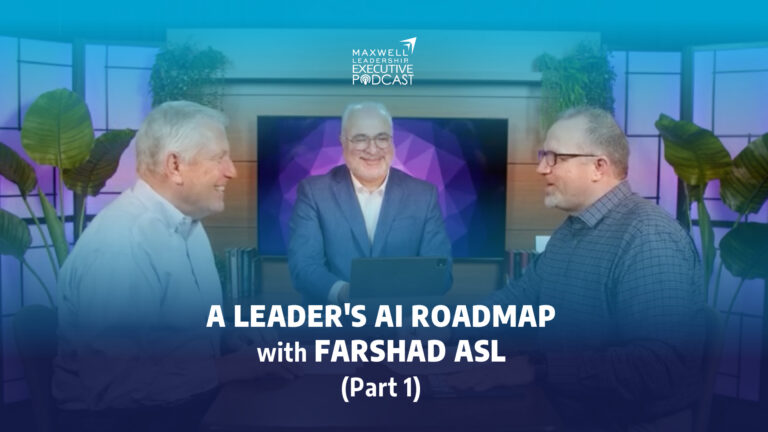
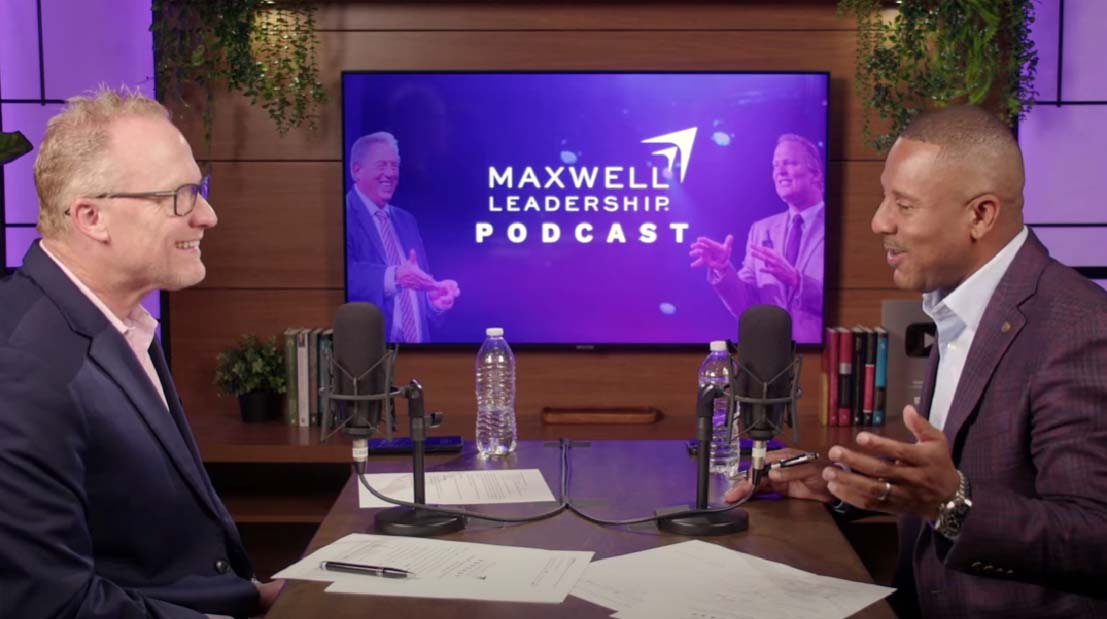
In this episode, Chris Goede and Perry Holley explore the vital role of alertness as a leadership discipline. They explain how leaders must consistently tune in to their own tendencies, their teams, and their organizational environment to prevent problems before they escalate. The conversation highlights practical strategies for developing greater self-awareness, organizational alertness, and environmental curiosity, helping leaders notice signals others might miss. Listeners will gain actionable questions and reflective practices designed to build the discipline of alertness, fostering stronger teams and healthier organizational cultures.
BELAY Ad:
Strong leaders prioritize efficiency, but leadership isn’t just about performance. It’s about making tough decisions, listening well, and showing empathy—being human. The best leaders do both by leveraging the power of AI tools with the intuition, judgment, and humanity only a real person can provide. Of course, easier said than done. Implementing AI systems comes with its own workload, like researching, integrating, and verifying accuracy. And that’s on top of all your other responsibilities. So where do you even start? Our friends at Belay help busy leaders by pairing them with AI-fluent assistants. They handle the admin with a human touch, and you focus on leading well.
BELAY Ad:
And Belay is offering free downloads of The Future of Executive Partnership: Why AI Isn’t Enough. This resource shows you exactly what AI can do, its limitations, and how an AI-supported assistant can elevate your productivity. Text EXEC to 55123 for your free copy today. That’s EXEC to 55123. Learn how to lead better with AI.
Perry Holley:
Welcome to the Maxwell Leadership Executive Podcast, where our goal is to help you increase your reputation as a leader, increase your ability to influence others, and increase your ability to fully engage your team to deliver remarkable results. Hi, I’m Perry Holley, a Maxwell Leadership facilitator and coach.
Chris Goede:
And I’m Chris Goede, executive vice president with Maxwell Leadership. Welcome and thank you for joining. I want to encourage you to go to MaxwellLeadership.com/ExecutivePodcast. There you can click on the download the learner guide button, or it says explore options. There you’ll see a form. We want to encourage you, if you’re looking for some leadership development training for your organization, we do a lot of coaching, executive level coaching, leadership coaching, entry-level coaching. We would love to serve you. You can fill out the form, put some of your notes there, and our team will follow back up with you.
Chris Goede:
Well, today’s topic, we’re going to talk about alertness, the leadership discipline you can’t delegate. This is interesting because Perry and I were just talking a few minutes ago. We were talking about how we both, when we read that, we go, is it awareness? Is it alertness? And so we’re going to dig into this and we’re going to talk about this leadership quality because we don’t hear a whole lot of people talking about it. It doesn’t get a lot of airtime. And what we’re not talking about when you think about alertness, we’re not talking about more caffeine, which I could probably use some of that, or dashboards or notifications, but actually the The kind that John Wooden, the great UCLA basketball coach, describes as essential for leaders committed to continuous improvement. And that’s what we want to be about. We want to be about growth, the infinite mindset of growing. Wooden wrote that alertness is the ability to be constantly absorbing and learning from what’s going on around you.
Chris Goede:
And he said it’s critical for those that are in charge to be doing this. Man, I had never thought about this. I’m observing in this, but am I really alert? Do I really have that alertness to what’s going on around me.
Perry Holley:
And while this is not an intervention by any means, I too, the same thing when I was reading some John Wooden and I ran across this talk about this, I thought, wow, I don’t think I realized about— and really the enemy is busyness and speed of our business is that I’m just trying to make it through today. I’m not really noticing. And I’ve noticed really most leadership failures, they rarely happen because a leader doesn’t care. As a matter of fact, I can’t ever met a leader didn’t care. It happens because the leader stopped noticing what was going on. And the breakdown in organizations don’t come from some one catastrophic decision. They come from missed signals. And it could be culture is eroding or high performers are disengaging or customers are quietly leaving, competitors are pivoting.
Perry Holley:
None of those things happen overnight. They don’t happen immediately. You don’t wake up and boom, but they happen over time. But if you’re not alert and have some process for you, a discipline of paying attention, even in the speed and the busyness that we are prone to be sucked into. Things are going to happen. They’re going to happen on your watch. And you’ve got to be alert to these things, to the signals that are happening.
Chris Goede:
As a leader myself, that’s hard to hear. I know a lot of executives, when you hear that, maybe some hard truth. We oftentimes— I love what you said about the busyness, and we see people when they’re busy and we think, oh, well, okay, we’re getting things done, and we want to reward speed and decisiveness and output. But Coach John Wooden reminds us that the awareness has to come before action, right? You’ve got to be aware of what’s going on and alert before the action happens. So here’s a question that we want to pose for every leader listening that we want you to sit with as we get started here. What’s happening in your organization? Or if you’re asking yourself, my organization right now that I won’t see clearly until it’s a problem? I’ve never asked myself that question, and I think that’s a phenomenal question to be thinking about. In essence, it’s what are we choosing not to see that’s going to potentially be a detriment to us in the future?
Perry Holley:
You can also just do a little reflective exercise thinking back. And I can say this because I did this, was I lost a key employee once who resigned and went to work at a competitor. I’ll be honest, I’m pretty proud of myself as a leader in maintaining a really great relationship with my team. But when I did a debrief, an exit interview with this person, I said, what happened? Why are you leaving? I thought it was so great. And he gave me like 3 things that had been happening and going on.
Chris Goede:
Wow.
Perry Holley:
And I hadn’t noticed. And so I had asked myself, why didn’t I know that? Why was I not Was I just kidding myself? Was I pretending that it was okay? Did I just not want to see it, or did I just oblivious to it, just miss it? So this idea of being alert is a discipline that I think that we all need to pay a little more closer attention about. How am I noticing those things? I like the question you posed.
Chris Goede:
It’s good.
Perry Holley:
But some people I’ve noticed in some of the research, people talk about just assuming that it’s kind of just how some people are wired. You’re more intuitive than me. You’re more alert to things. That are going on. I notice this in my own home is that I’m very alert to things that are happening. And I’ll say something to my wife. Did you see that? See what? Did you hear that? Hear what? And I’m like a spidey sense of things. And she doesn’t pay attention to those.
Perry Holley:
She’s other places. So people aren’t more observant than you. It really comes down to, as Wooden would say, it’s like a conditioning. You condition yourself to pay attention and something you train yourself, something that you can practice to do that. And there’s some good news in that is that because alertness isn’t really revered for the naturally reflective and cautious leader, it’s available to anyone willing to slow down long enough to pay attention to what’s going on. So what do you think about that? You can’t slow the pace of what’s going on around you, but can you slow yourself down to be alert?
Chris Goede:
I think you can. I think you also have to have a set of questions like we’re even posing here today. Like the question I was like, man, I’ve never asked myself that question. That then changes your lens and your bias of how you see things. But you got to ask yourself that question and be able to reflect on it. So in essence, slow your mind down, slow your thinking down to be able to do that. And so what I love about this is this can be developed, this can be learned in a way that will help us as a leader. Reminds me of John in The 21 Laws.
Chris Goede:
He has the law of awareness, and he talks in there about knowing yourself, knowing others, knowing the situation. That’s going on around you and with your team. And so to make this super practical, we’re going to break this out. We’re going to say, okay, let’s break out alertness into 3 dimensions that maybe you can grasp and work on going forward. This first one, I think I love this because it aligns with when we talk about self-awareness, we’re going to talk about self-alertness here. And so are you evaluating yourselves? To what Perry and I were just talking about. Are you getting to a place where you’re able to ask yourself some questions and then be able to spend some time reflecting on them? Coach John Wooden believed that leaders had to be awake to their own tendencies. That’s why a lot of teams— I’m thinking about this— a lot of teams bring in coaches, sports teams bring in other coaches to then scout against their own team.
Chris Goede:
Right. Like, what are the tendencies that we’re showing up with? Or in other words, as a leader, can you save me from myself? That’s what I’m thinking about. Can I ask myself enough questions? Can I be enough alert that I know what my tendencies are and to be able to save me from myself? Also, if you’re listening to this and think about your leadership journey, the higher you go, probably the less feedback that you get. We talk about this in self-awareness too. And so this is where we got to make sure that our self-alertness becomes even more important. So a couple of questions for you to think about. How is my mood affecting my team? Are you alert to that? What’s going on? What pressure am I under that might be distorting my judgment? And then finally, where am I defaulting and just doing what comes natural versus thinking about what does that look like? How do I do that differently? And it takes humility to be able to do this and to admit it. It’s not you criticizing yourself, it’s you thinking a little bit differently about how alert are you with your example, even around the house.
Perry Holley:
Yeah. So of the three dimensions, so Chris hit self-awareness. Number two is organizational alertness. And this is where many of us think we’re really killing it, that we’re really alert because we’re watching dashboards and KPIs and reports that we’re looking at the numbers and we know all that. But we’re missing the human signals that is so important. We think about in the 5 levels about really knowing our team is that are we watching? Are you alert to the energy level of the team? Do you not only hear what’s said but what’s not said? Are you reading between the lines when you’re interacting with people? Do you notice if someone stops contributing at a meeting? They’ve always spoken up, but now they’ve gone quiet. Where does friction keep showing up? With the team or with the work or with the client. I’m sensing, I’m watching, I’m alert to these things in the organization.
Perry Holley:
I noticed Coach Wooden was— he was really big. Of course, you’re watching the games. That’s like reading the reports and the KPIs. He would watch the practices and really observe the habits and the interactions that were revealed in the practices. Organizations are the same way in the day-to-day, in the office or on the Zoom or at the client location. Observing from people. And I’ll close with this on that. I notice what people tell me.
Perry Holley:
What are they comfortable telling me? And are people giving me bad news? Does it feel safe to talk to me? Are they hiding things from me? Are they afraid to say the truth in front of me? If I’m alert to that, that, man, people never really tell me bad news. They always come and tell me how great things are. I have to find out the hard way that something’s going wrong. Okay, that’s a good thing to be alert to right there. There’s something that’s not psychologically safe or something’s going on there that I need to know about.
Chris Goede:
The third bucket is environmental alertness. It’s kind of the third dimension, like your markets that you’re in, competitors, customers, the culture. We aren’t as alert leaders. We’re not reactive, but you’re actually really curious. We don’t want to chase any trend. I think about this even in the leadership space, in the AI space right now, there’s a place for it, but we don’t want to go all in on every trend. And so you want to be aware, you want to learn, you want to know what’s going on around you. Even so much so, like, we’re getting ready as a team to spend some time at a quarterly offsite.
Chris Goede:
And I started thinking about, I wonder what the economic situation looks like. We have a great friend that you introduced me to with JD that I said, hey, what do you think about this? You’re like, I think it’s a great idea. And so call them up. We’re not the answer, but there are people that are the answer. Am I willing to be alert to what we see out in front of us in the environment? Great example. And we’re super excited that he’s going to be able to add value to us. And so we need to make sure that we are overly prepared, but we got to stay in the present. We know how to deliver what we deliver, but are we Are we being able to do it in the right way in the present of, in this example, the economic situation? And so I want to have awareness of that.
Chris Goede:
I want the team to have awareness of that. And I want us to be curious about what’s going on in the environment around us.
Perry Holley:
Well, you mentioned earlier that generally things don’t come apart because you don’t care. Generally, you’re not paying attention, not alert because of overwhelm that’s going on. And I noticed another lesson from Coach Wooden was he He built margin into the day, margin into the practice, margin into his interactions. And here’s what I know is maybe tough for a lot of us to hear is that if your calendar won’t allow you time to reflect and to think, your leadership is going to drift. And I think that we get a little overwhelmed sometimes with back to back to back to back, and then we can’t figure out, well, how did I miss that indicator with my key employee? How did I miss that so-and-so stopped interacting, or why did I miss that disengagement is at an all-time high on my team? Oh, because I’m heads down and too busy. So alertness requires time to think, to notice, and to process what’s going on. And if you’re not taking that time, it’s generally because I’m in a state of overwhelm.
Chris Goede:
I think this is a personal and professional application piece as you begin thinking about it. I know several different relationships that have come to an end. It was like, how did we get here? They weren’t alert to the signs early on. So here’s what we want to do as we’re moving towards the end of this. We want to give you something that you can use. We want to give you some questions, and we call this the alertness loop. And what we want to challenge you to do is maybe 10 minutes a week where you spend some time and you ask yourself some of these questions, because this is where that’ll come up. Like we were talking about, instead of waiting for it to happen or waiting for your team to come to you, we’re getting a little bit proactive.
Chris Goede:
So the first question that we want to pose for you is, hey, what surprised me this week? Maybe it’s in your time of reflection of the week at the end of the week. What surprised me? Because this will reveal gaps where you weren’t alert. Where you weren’t aware? If you say, oh, nothing surprised me, well, I’ll leave it right there. You could probably ask one of your team members, right?
Perry Holley:
I’m thinking about that. That surprises me.
Chris Goede:
But yeah, that surprises me that you would say that. But there’s got to be something in there that you do that. So that’s the first question.
Perry Holley:
Question number 2 I would use would be, what did I notice that others might have missed? This is interesting because it kind of trains your observation skills, reinforces your intentional leadership practices, kind of a discipline of what are other people not seeing? I always think about, am I self-aware? Am I others aware? And then am I situationally aware? Am I paying attention to what’s going on? Am I reading the room? Am I reading the people? Am I alert to that? So what have you noticed that others might have missed?
Chris Goede:
And the final question here is, what assumptions am I operating on that may no longer be true? What is the rose-colored glasses that you wear? What’s your bias? What are you assuming that you need to question, that you need to be alert about? And this is something that if you are asking yourself this question on a weekly basis, will save the organization from some valleys down the road because you just allowed it to continue to happen.
Perry Holley:
Yeah, I think I’ll let you wrap it up for us. But I think what I’ve taken away from Coach Wooden was really that leaders Need to be awake, not anxious. Need to be not controlling of others, but present. And so are you present when you’re with your team? Are you alert when you’re on those Zoom calls and you’re tempted to look at your email and do other things? Are you reading the room and sensing what’s really going on inside people and inside the business?
Chris Goede:
Well, as we wrap up, we can outsource all kinds of things. We can outsource data. Analysis. But, man, when it comes to what’s happening in your team, in your organization, on your team, you got to be alert and you can’t delegate that to somebody else. Hey, Perry, would you stay alert to.
Perry Holley:
My team and tell me what’s going on?
Chris Goede:
Tell me what’s going on. Right. Because people will take cues. We talked about this. They’re going to take cues from their leader. And if you’re not alert, well, they’re not going to be alert and it’s just going to cascade from there. Problems don’t appear suddenly, but they do signal often and early. Makes me think about, you know, we travel a ton, and oftentimes now you get in these rental cars and it’s got all this technology.
Chris Goede:
I’ll be driving down the road and all of a sudden I get a signal that says, need a coffee break? And I’m like, what? No, I don’t. And there must be some type of signal. Maybe it’s the steering wheel hasn’t moved in 15 minutes. Maybe I did veer a little bit off while I might have been on my phone or something triggered that car was alert to something that I was doing or not doing. By the way, this works in leadership that put that stinking thing. It says, do you need a coffee break? And I’m like, who’s driving this car, me or you? Right. Kind of thing. And so I think being alert, having your eyes wide open as a leader, It’s something I hadn’t really thought about till today.
Chris Goede:
And we talked through it, and now it’s going to give me a different perspective, a different lens, a different thinking of what’s going on around me and my team and the organization. I would just encourage you as leaders to be doing that because your culture and your team, it will erode if you’re not alert very quietly. And then it’s going to show up. It’s like we talk about the 5 levels of leadership. Trust takes time. But you can lose it in a second. And so are we alert to what’s going around us as leaders? So great questions for you to be thinking about in the coming week.
Perry Holley:
Very good. Well, thank you, Chris. And as he reminds you at the beginning, you can learn more about our offerings, about our other podcast offerings. You can leave us a comment or a question. You do all that at MaxwellLeadership.com/ExecutivePodcast. We love hearing from you. So grateful you spend this time with us. That’s all today from the Maxwell Leadership Executive Podcast.
Transcript created by Castmagic.
Maxwell Leadership delivers corporate training that strengthens executive leaders, aligns teams, and transforms culture. Discover how our proven frameworks equip your organization to lead with clarity and impact.