How you see your world determines the actions you take and the results you create—what lens are you using to view your leadership? In this week’s episode, John Maxwell unpacks how your perspective shapes your impact, and reveals four keys to developing a leadership lens that drives lasting effectiveness.
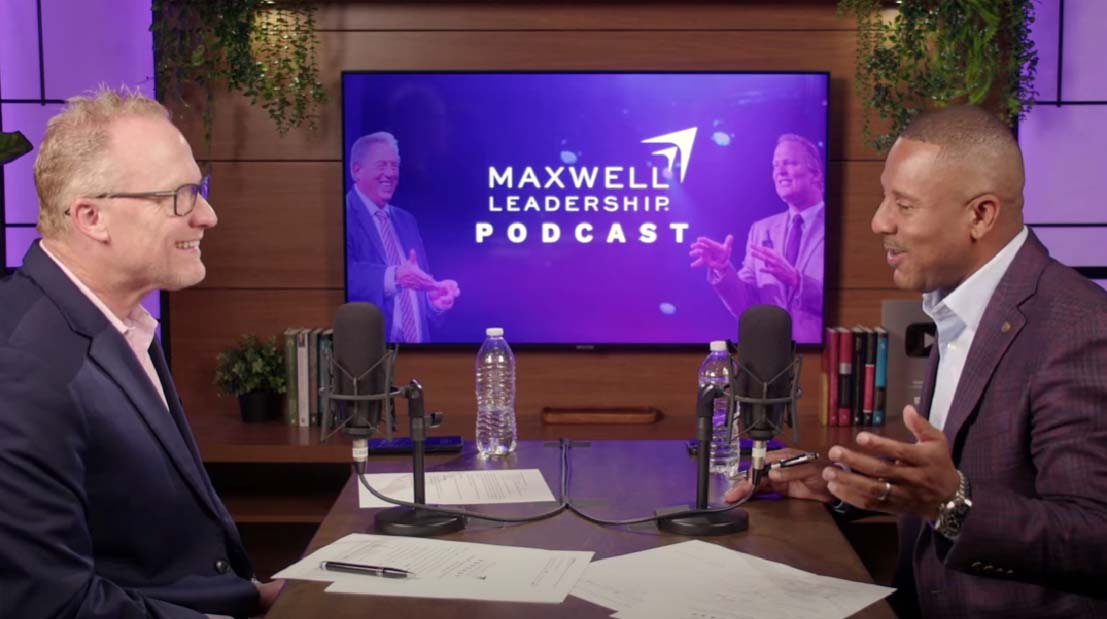
After John’s lesson, Mark Cole and Chris Robinson dive deep into practical ways you can shift your perspective and model impactful leadership behaviors in your daily life.
Our BONUS resource for this episode is the The Leadership Lens: How You View Things is How You Do Things Worksheet, which includes fill-in-the-blank notes from John’s teaching. You can download the worksheet by clicking “Download the Bonus Resource” below.
Take the next step in your growth journey and become a Maxwell Leadership Certified Team Member. Click here to speak with a Program Advisor today!
Mark Cole:
Hey, welcome to the Maxwell Leadership Podcast. Chris Robbins and I are so glad you’re with us today. I, I’m super excited about this conversation because I think that perspective matters. And so today, John’s going to share with us about the leadership lens. How you view things is how you do things. Now, Chris, we’re all about adding value to leaders who multiply value to others, but There’s probably some times in our life we’ve viewed some things and did some things incorrectly. So tell me about a time in your life.
Chris Robinson:
Yeah. When I think about it, I think about, you know, um, viewing how self-talk, how important that is. Like I always heard about, you know, you need to talk well to yourself, but of course, you know, you let things slip. And like, um, growing up, you know, I would just say things to myself that weren’t helpful. You know, you would say things like, ah, I’m stupid, or oh, I’m dumb. Or, you know, you would just— Talk to yourself bad. And I realized that, you know, talking well to myself, um, is really something that can help me. And it really began to encourage me and I’ve gotta be my number one encourager.
Chris Robinson:
And as I’ve grown, I’ve realized how important that is, but I’ve seen it kind of play out. Um, just a few days ago, I, my youngest daughter is now playing golf. I mean, oh my goodness, you talk about a dad’s dream. Uh, his, uh, daughter get— did the golf and just, she’s just loving it every day going to the range. But we were on the driving range and I hit a bad shot. And out loud, I said, “Oof, that was bad.” And I didn’t really think about it, but it came out my mouth. And then the next shot, she hits a ball, and she goes, “Oh, that was bad.” And I said, “Whoa, whoa, whoa, wait a minute.” I said, “I’m sorry.” I said, “I said that out loud, but that was— I didn’t mean to say that out loud.” I said, “Here’s what you have to say, Eliana.” I said, “Look, you can’t talk bad to yourself. You can’t call it a bad shot.” I said, “So here’s what we’re gonna do.
Chris Robinson:
Every single shot that you take, no matter what happens, say, ‘That was good.'” That shot was good, the next shot’s gonna be better. I love this. And so what now began to happen, she would hit a ball, it wouldn’t go the way that she wanted to. She looked back, she goes, “That was good, but the next one’s gonna be better.” And so my view on how I talk to myself and paying attention to how I model that for my kids has, you know, has changed extremely over the years.
Mark Cole:
It’s so funny when you were talking about that, I thought about, I don’t know if you have these, I, I’d love our podcast listeners, I wish we had a quicker way to get comments back because, uh, did you ever sing a song wrong? Like way back in the day, you thought one song said this and you would sing it out loud and you would go, and finally somebody corrected you and you felt like goofy. But truly how it was said was how it was played in your mind. And you made it make sense, even if it didn’t make sense, right? We’ve all had these experiences. I wish we— we need to have a podcast conversation about some of those. My grandson Ryder, he would say, he said for years, I mean, he’s 12 now and I can remember saying this, 4 or 5 months ago, when he wanted it, when he was trying something and he couldn’t get it, he’d say, “I forgive up.” And I’d go, “Do you mean you give up?” He said, “No, I forgive up.” And I went, “Okay.” I said, “Tell me, tell me what you mean there.” ‘Cause it really was the appropriate thing to say, “I give up. I’m not shooting the shot anymore. I’m not doing this.” But he said, “I forgive up.” And he said, “Well, I’m just trying to say I’m sorry, but I’m not gonna do it anymore.” And I went, “I forgive up too. I just forgive up.” How we view things is how we do things.
Mark Cole:
And he was for— he was asking for forgiveness. Just ’cause he wasn’t gonna try it one more time. He was done. And so, hey, what I want us to do today, kind of, what it— where do you do this in leadership? Where are you viewing things in a certain way that is driving what you do? And there’s times that’s good. There’s other times that’s not so good. What John’s going to share with us today is number one, the foundational principle that our leadership is shaped by our perspective, our view, And then how do we sometimes change that view, therefore change what we expect? Um, so hey, grab a pen, grab a piece of paper. In fact, if you’re new to the podcast, we have a resource that I want you to take advantage of. We call it the bonus resource, and you can find it as well as the link to participate with Chris and I, uh, visually today.
Mark Cole:
Their YouTube, uh, link is there, and any notes that we have, any links that we mentioned throughout the show today, you can find all of that at MaxwellPodcast.com/Lens. So grab that pen, grab some paper. Here is John Maxwell.
John Maxwell:
How we view things is how we do things. Here’s what I know. What we believe about life determines how we perceive life, which determines what we receive from life. Uh, the old comedian— you’re, you’re too young to know about this, but Flip Wilson was a great comedian, and he used to have this expression he would say all the time, “What you see is what you get.” What I’m about to share with you has great life-changing potential for you. Trust me. Number 1, hold the perspective of others in a proper perspective. The most important voice that you listen to is your own. That’s why I tell people all the time when they do self-talk, be careful what you say to yourself.
John Maxwell:
This is the most important voice that you’re going to hear. Let me give you some questions to ask about people’s perspective of you. Questions I ask about people’s perspective of me. Here are the questions. When people have a perspective of me, I ask myself these questions. First, do they care about me? They don’t care about me, to be honest with you, why would their perspective matter? Number 2, do they want the best for me? Number 3, do they understand me? A lot of people, they just don’t understand you. They— a misunderstanding leads to a wrong perspective. Number 4, do they want to control me? Number 5, will they help me? I mean, are they gonna give me more than perspective? Are they gonna give me a hand? Another question I ask myself is, are they immature? Immature people always have a selfish perspective.
John Maxwell:
Keep a realistic perspective as you become successful. You know, Max Dupree said, the first responsibility of a leader is to define reality. And the challenge with success to be honest with you, is it’s a separator. And the challenge with separation is when you get separated from people, you lose the common touch, and so much of the time you lose the realistic touch. I, I can still remember in my life when I would speak at conferences, uh, during the breaks, I, I would just go down to the front and, and, and stand there, and people come up and we just talk, and they’d ask questions about what I taught, and I just kind of love the, the camaraderie. And, and I remember, I remember very specifically when I stepped down to have that conversation, and all of a sudden the people around me, instead of wanting to ask me questions, wanted me to sign one of my books. So I started signing books, and I missed— I really missed the conversation. That was the day I realized that I had gotten to a level of success that was going to begin to separate me.
John Maxwell:
I was going to be an author that signed books, not a friend that just kind of had a little conversation with people that you love. It’s okay. It, it’s part of what happens in your life, but the challenge with separation is if we’re not careful, we lose perspective. That’s why I share with people all the time, Just walk slowly through the crowd. Take your time. Listen, listen, learn, and then lead. The fourth thing— or the third thing, not the fourth— focus on the big picture when the small stuff distracts you. You’ve heard me talk about what you focus on expands, and in our days, we have good days, we have bad days.
John Maxwell:
What am I going to focus on? When you’re doing something great that’s making a difference in people’s lives, don’t let the— don’t let the small petty stuff control your agenda, control your day. Hey, quit getting off of the wall doing something big and life-changing to try to satisfy just a few people who are never gonna take the journey with you and usually just wanna kind of distract you on taking your own journey. Number 4, live with a values perspective. Don’t do what is best, do what is right.
Mark Cole:
Wow.
John Maxwell:
What maybe is best for me maybe isn’t best for you at all. Right aligns with good values. If you align your behavior with good values, then everybody wins in it. And I thought, wow, I love this distinction. Don’t try to, do the best, just, just try to do what’s right. You know, Teddy Roosevelt said, “In any decision, the best thing to do is the right thing to do.” In my book, “Change Your World,” I talk about the value of values, and I close with this, that if you live and learn good values, you have an inner change that the law can never reach or touch. Take these 4 and chew on them for a couple of days. Live them, practice them.
Maxwell Leadership Certified Team:
Hey, podcast listeners, many of you listening right now would probably love the autonomy that comes with owning your own business or becoming a coach that helps other businesses succeed. Well, we have a phenomenal strategy where you are 100% in control of your own business, earning income on your own terms, and have access to the people, tools, and resources you need to build a thriving leadership development business. When you become a Maxwell Leadership Certified Team Member, you join a global community of entrepreneurs led by our expert team of mentors and faculty, including John C. Maxwell. You’ll also get one of the top leadership certifications in the world next to your name, giving you the boost you need to get started. Visit us online at MaxwellLeadership.com/JoinTheTeam to find out more.
Mark Cole:
I, I love, Chris, as we, as we come out of John teaching, I— John was mentored by John Wooden, and I love this quote by John Wooden that says, in my opinion, being an effective leader requires being an effective listener. The most productive leaders are usually those who are consistently willing to listen and learn. If there’s any way— if there’s any way better than learning if our perspective, number one, is right, number two, if it’s driving our actions, it’s by listening. It’s by paying attention to others. So I love that quote by John Wooden. I love this lesson by John.
Chris Robinson:
Yeah, absolutely. I mean, when we talk about listening, man, I really have seen you do this well. And most recently seen you do this with a group of members that you flew all of us into West Palm Beach, Florida, and you sat there for a couple days just listening. I’ve seen you do that before in town hall meetings with our members. I’ve seen you do that before with our executive team where you really— and sometimes I know it’s got to be difficult because I can see you sitting on your hands and I know you want to say something. You feel it. But I think you do a great job of modeling that. I think you do a phenomenal job of modeling that.
Chris Robinson:
And Even when you bring in new staff to our organization, the first 90 days they can’t do anything. They’ve just got to listen. They’ve got to understand context. They’ve got to understand why we do things the way that we do them. And so I appreciate you modeling that out for us and just being a good listener in those times.
Mark Cole:
Well, thank you for that. John really meant— he has modeled that for me. You and I do— Chris is talking about our tribe, our community. Chris’s day job is an ambassador to 61,000 certified coaches, speakers, and trainers. He’s a product of the product. He was that before. He’s executive vice president in Maxwell Leadership. He’ll be traveling internationally.
Mark Cole:
Yeah. Well, man, you’re— Yeah, right in the middle, man. So, and going all over and seeing these 61,000 coaches in 169 countries, And really what John has modeled with all that success is really we’re better leaders when we’re better listeners. And I’ve watched you do it. That’s kind of an expectation. It’s a characteristic of leadership is listening for sure.
Chris Robinson:
It is. But let’s talk about perspective because he says that how we view things is how we do things. But sometimes we can be technically right, but practically wrong. I love that. Now I seen this play out with my 13-year-old David here recently. So David, he has got an entrepreneurial spirit.
Mark Cole:
Like his daddy.
Chris Robinson:
A little bit, a little bit. I was like, where do you get that from? We don’t know. And so, you know, this past week we got a— my wife’s phone was just messages going off and going off and going off and it’s Facebook Marketplace. Well, she goes, well, why is Facebook Marketplace going off? I said, I don’t know. She says, where’s my computer? Well, her computer was missing and David had the computer. Well, David is heavy into e-bikes right now and he is— he’s trading up, he’s modifying these bikes, he’s doing different things.
Mark Cole:
Where did he get that from? Right.
Chris Robinson:
He’s doing up— well, all the Facebook messages were on Facebook Marketplace to adults all over the county. Oh Lord, trying to trade bikes, trade Xbox. How much cash will you take? I mean, he’s working deals. We’re seeing these conversations that he’s having with the dogs, and we go and ask him, David, what are you doing? Because he doesn’t have access to social media. And she said— he says, well, I’m trying to sell my bike because then I can now buy the next bike because I’ve got this much cash. And if I trade my Xbox as well then I can get this bike that’s triple the price of what I want. And my wife was irate.
Mark Cole:
Yeah.
Chris Robinson:
Because here he is talking to all of these strangers all around the county, adults, kids, whoever, and he has no idea the concept of the other side. Now me, I’m going, oh my goodness, this is, this is awesome. If I could just get the, uh, adults to reach out like this for business that I, that I help— some, some of the 61,000, some of you listening right now, yes, if I could just get you to reach out the way that David did in this moment, it was great. He was practically correct. He was technically right, but he was practically wrong. Yeah, because being 13, he doesn’t know the consequences or who he’s inviting to our house to make this trade or whatever the case may be. So I found myself in this conundrum
Mark Cole:
of celebrating your characteristic, trying to throttle
Chris Robinson:
it down a little bit, right? You know, but we could often be technically right but practically wrong.
Mark Cole:
Love that statement.
Chris Robinson:
Talk to me about, um, something where you were practically right it was logical, it was even defensible, but later you realized it was the wrong thing at the time.
Mark Cole:
Yeah. So I can remember John wanting to launch one of the books that he wanted— it was the book Intentional Living. For those of you that have not read that book, it’s— he thinks it’s one of his best under— his best book that was most underappreciated. And, um, we, we were technically going to release that as kind of this movement of intentionality. Do good works, do good things for people, pay it forward. All that time, you remember when, uh, Starbucks would have these pay it forward moments and 55, 60 people would buy the person behind them’s meal, right? Or drink or whatever. And so we were in the middle of that and we felt like that technically, Intentional Living needed to be the right move with that. Practically, however, we made it a technology launch rather than a book launch.
Mark Cole:
And so while we really, truly, technically got this thing really nailed, practically, to get the book out there, people were not going to go do an act to read the book. And so we’ve sold Millions of books, 40 million, who’s counting, John? We’ve sold a lot of books, and that was one that we tried to make, we tried to sell a movement with the book rather than sell the book and let the book cause a movement. And so I remember that one partially because we lost about $1.7 million on that book launch, but I also remember that because John said, Mark, you can never let a process drive the vision. The vision has to drive the process. And Chris, I remind myself that all the time. Systems, processes, people don’t drive a vision. A vision drives those things.
Chris Robinson:
Right? Yeah, I love that. I love that. He then moves on inside this segment here and he talks about the most important voice to listen to is your own. Talk to me about what’s the way that we make our own voice the most important?
Mark Cole:
Well, so first let me say this, Chris, you started, uh, when I asked you the question, right on, you talked about your self-talk, right? Right, yeah. And I, I gotta really be careful because I too don’t have great self-talk sometimes. You talked about your bad shot. You talked about that with your daughter. Man, I grew up calling myself names that I would never call somebody else. Right. I’ve, I’ve, as a leader, I have challenged my credibility to lead that I would never challenge in someone else. So when I, when John says this, and I, I want you you and I to camp out a little bit on this, uh, how to make your voice the most important.
Mark Cole:
First, you got to check what you’re saying. What are you saying to yourself? And if you’re saying things more critical to yourself than others, you need to not change the voice you listen to. You need to change your voice. Don’t get it confused. I do want and believe and underscore what John’s saying here. Your voice has got to matter more than all the other people’s. Yeah. But what you’re saying, it’s got to matter more than what your vo— what voice you listen to.
Mark Cole:
You’ve got to be saying the right things. You gave us a great illustration. It was a great setup to this. Hey, that was a good shot. The next one is going to be better. That will absolutely hit pay dirt for not only your daughter, but for you if you’ll start thinking like that. So before I underscore, and I want to underscore the most important voice is our own, I want to underscore that what we’re saying really needs to be looked at. Assessed and modified if it’s not uplifting and it’s not encouraging.
Mark Cole:
Yeah, that’s number one. But then I do want to camp out on this people-pleasing tendency that so many of us have. We get so caught up in popularity contests rather than productive contests. Mhm. We get so wrapped up in getting everybody to feel good about us and don’t realize it’s more important that we feel good about ourselves.
John Maxwell:
Mhm.
Mark Cole:
And we allow people and their opinions and their buy-in to modify activity that we already know what we’re supposed to be doing. Right, right, right. And I think that’s what John’s trying to dive right here is often we allow our view, therefore our do— Right. —to be shaped by others and it will not last unless it settles deep within. And I think that’s not only why John included that in the lesson, I think that’s why it’s super important in this perspective, in this leadership lens. You’ve gotta get it right at home with yourself. And then others are confirmation, affirmation, not insight or absolute direct— I feel like that it can’t even— I was gonna say not even direct instruction. I think other people has got to only be affirming what you feel inside.
Mark Cole:
And often it is the insight rather than giving us insight.
Chris Robinson:
Right. Yeah. And I love that. I think on the first part that you talked about of really checking our words and what we’re saying to ourselves, there was a statement that was made at probably one of my— probably first or second speaking events ever, and it’s always stuck with me. There was a speaker that said this. They said, “Hey, when it comes to your self-talk, if I said to you what you say about yourself, would we be friends?”
Mark Cole:
Wow.
Chris Robinson:
And I said, “Oh my goodness.”
Mark Cole:
Say that again.
Chris Robinson:
If I said to you— What you say to yourself, would we be friends?
Mark Cole:
Wow.
Chris Robinson:
Now that I think is the litmus test when people are contemplating, well, do I talk bad to myself? Do I not talk bad to myself? If, if— when you answer that question immediately, you know where your self-talk is.
Mark Cole:
Like, that is such a great litmus test. Speaking of the leader, how you view things is how you do things. That is a great litmus test.
Chris Robinson:
And, and what I’ve found is, and is that people either say no immediately or yes or maybe, but they’re able to find exactly where they’re at when asking that question. And then I’ve had one gentleman challenge it one time afterwards when I shared this on stage one time. He says, you know, Chris, he goes, you know, I, I just need something different. He goes, I talk bad to myself to motivate myself. And I just simply asked, well, how’s that working out? He says no.
Mark Cole:
Then try something else.
Chris Robinson:
Try something else.
Mark Cole:
Try something different.
Chris Robinson:
Try something different. You know, and so we, we do have to take that litmus test there, but then also too, making sure that those outside voices are affirming, you know, so that’s where we can, when we’re listening to other voices, it’s great because we need to have coaching, we need to have mentors, we need to have people that are speaking into our lives, but there’s also a hidden cost to listening to the wrong voices for too long. Yep. You know, so tell me about a time when you kept listening to the wrong voice longer than you should have. Not because you didn’t know better, but because of loyalty, because of responsibility or compassion, and really kind of what cost did that have for you personally or professionally?
Mark Cole:
Well, and I’ll go even more, uh, responsibility, leadership, but you listen to that voice because of a commitment you’ve made. You’ve committed to be friends, you’ve committed to be a lifemate, you’ve committed to, to be in a, in a worship environment and committed to this particular person being a voice in your life. It goes much deeper than even just the relational or the leadership positional. It goes to the fact that oftentimes we stay under the influence of someone’s negative perspective because we feel like our commitment makes us— we have to. We got asked a question recently by one of our podcast listeners that said, “How do I deal with a leader who is giving me negative talk all the time?” And oftentimes I’ve watched people say, “Well, that’s the leader. I have to just deal with it. That’s my—” significant other, I have to just deal with it. And I say, no, no, no, no, not so.
Mark Cole:
So when, when you ask this question, how do we deal with it when some— when our position or our relationship seems to demand it? I would say, number one, don’t let that be an excuse. Don’t allow— because I can tell you a time in my life to where someone very important to me would hold something over my head for years. Wow. And I allowed myself to see myself differently because of that accusation, that guilt, that reminder of a bad season in my life. And for years, I allowed someone else’s, um, posture, perspective, to identify me.
Chris Robinson:
Mm-hmm.
Mark Cole:
Uh-huh. And I felt like I had to. I didn’t feel like I had another choice. And what I would tell you people that are out there listening to somebody significant in your life, whatever that significant category is, don’t allow people in your life to improperly define you and therefore minimize you and the power that’s within you. Surround yourself with people— as you said, that will talk to you the way
Chris Robinson:
that you should be talked to. I love that. I love that. And so you find yourself in that scenario, but then you can now begin to go into this fourth one that John talks about, which is success and separation. And so success can be a separator, but tell me about how you’ve seen success quietly create distance for you in a relationship, the intentional practices that you use to stay grounded as I mean, you’re in the room with presidents, you’re in the room with celebrities, you’re in the room with multimillionaires, billionaires. And so there’s this gap that’s being created. But what are some of the practices that you utilize in order to stay connected? And then also too, in there, where have you seen it quietly separate relationships as well too?
Mark Cole:
Well, I think for all of us, and again, you’re, you’re on a road tour, um, often with people that have great influence. Number one is humbly accepting that you’re supposed to be in the room. I, I have walked into rooms to where I did not feel qualified. That— I have walked into many rooms to where I didn’t feel like I deserved to be there. Two different things. By the fact that I got the invitation, I deserve to be there. I never tell myself in any room in any room, I don’t deserve to be there anymore. I think that creates a mindset that minimizes the contribution you can make to the room.
Mark Cole:
But I also never walk into any room and feel like that I’m entitled and that I should be there. It’s a fine line, perhaps. I think it’s a wide line because one is the difference of humility and one is the difference of lack of self-esteem. And your contribution into a room is going to directly relate to your posture in entering that room every time. And so when I st— used to say, I don’t deserve to be in this room, I automatically put everybody at a different place than what I am. That I’m not qualified in the room makes me walk into every room ready to learn. I’m ready to learn, man. If it’s a president, I’m ready to learn how he got to become president.
Mark Cole:
But also walking into the room feeling unqualified gives me the ability to walk in with a novice hungry persona that becomes attractive to people that also want to grow. And so that one idea was a game changer for me. And I crossed that bridge, I guess, Chris, it would probably be about 10 years ago when John started taking me into rooms and I’m going, what am I doing here? You and I often, we tear up often and go, Can you believe we get to do this? That’s not a statement that says we don’t deserve it. We should be here. But it’s a statement of humility and appreciation, not a statement of defamation and lowering ourself and ourself perspective.
Chris Robinson:
Yeah, well, that— it was exactly 10 years ago as I think about this. And as you were sharing that story, I remember the very first conversation that you and I ever heard. We were inside of what we call our Presidents Advisory Council as a part of Maxwell Leadership Team. And I was on that very first group. —group that was selected, and I had a chance to have lunch with you that day.
Mark Cole:
Yep.
Chris Robinson:
And I asked you about being inside of rooms that, you know, you, you didn’t feel— might not feel like you belong in. And I remember it was almost verbatim to what you just said. You said, hey, I may be unqualified, I may be undeserving, but I’m fully confident I belong in the room. Yep. You said those exact words to me 10 years ago, uh, and still today you’re out here living it out, man.
Mark Cole:
And you are too now. You are too. I mean, think about it. If you had not crossed over that mind, all society would have looked over you, all the, all the excuses, all the things, right? And here you are now walking, and people now asking you to come and not even asking John Maxwell to come. Dead serious. You’re walking into that. And if you would have not learned that, man, I’ve got to be qualified and walk in this room— no, you got to be confident that you should be walking into that room.
Chris Robinson:
Yeah, you got it, man. What an incredible session today from John. Thank you so much for sharing everything today, man.
Mark Cole:
Great time. I know, for sure. You know, as we I’m going to read a podcast, uh, uh, comment from Dan, but I, I want to just say this right here. We go back to my little writer saying, “I forgive up.” I, I wish that for every leader listening and, and every leader viewing today, I wish I could give you belief. The thing I love to say more than anything, Chris, the thing I was saying to you that day in lunch 10 years ago, is, man, if you could see what I see in you, you could borrow my belief and walk into any room. You’ll get on planes, John and I won’t be there.
Chris Robinson:
Mm-hmm.
Mark Cole:
You, you, you don’t need it. It’s because there is potential in us that when we realize it and we see it, it makes a difference. It’s how we view things is how we do things. I wish that I could reach through the lens. I wish that I could reach through your audio speakers, and I wish that I could just give you The belief. And why I have the belief is I’ve seen it work so many times. It’s worked for me. But guess what? It’s not over.
Mark Cole:
It will work for you too. And I want that for you. Uh, I, I want that to become your voice to yourself because I do want you to listen to your voice. Hey, Dan, thank you for, uh, being a podcast listener. Thanks for viewing our podcast. Dan listened to a podcast called Acknowledge Your Humaness. We’ll put that in the show notes and let those of you that are new to our podcast listen to that. It goes right along with, uh, what we’ve been —talking about today.
Mark Cole:
Here’s what Dan said. He said, this advice really humbles us as a leader. We need to ensure that we concentrate on what we are developing and creating, not just on who we are. This podcast also reminds me of the importance of mentoring others so they can succeed. That’s what this podcast is all about, adding value to you so you’ll multiply value to others and do that and do it well. Because everyone deserves to be led well.
Maxwell Leadership App Ad:
Do you feel like you’re meant for more, but you’re not sure what next step to take? Whether you’re leading a team, building your business, or just trying to lead yourself well, you don’t need more noise. You need wisdom. Real, proven, practical wisdom. That’s why we created the Maxwell Leadership App. Inside, you’ll get daily bite-sized videos from John C. Maxwell and other world-class thinkers designed to help you grow every day. You’ll unlock curated playlists on personal growth, leadership, mindset, communication, confidence, and much more, all for just $9.99 a month. And here’s the best part— it’s growth on your terms, at your pace.
Maxwell Leadership App Ad:
In your pocket. Ready to go further and grow faster? Download the Maxwell Leadership App today. Go to MaxwellPodcast.com/App or click the link in the show notes. Try it free for 7 days with the code PODCAST7. That’s podcast, the number 7.
Transcript created by Castmagic.