Ready to discover the key to getting the most benefit out of every experience? In this week’s episode, John Maxwell reveals the two “bookends of success” that elevate your preparation and multiply your results!
After his lesson, Mark Cole and Chris Robinson discuss practical ways to apply John’s powerful insights to your daily routines and most important goals.
Our BONUS resource for this episode is the Bookends of Success Worksheet, which includes fill-in-the-blank notes from John’s teaching. You can download the worksheet by clicking “Download the Bonus Resource” below.
Mark Cole:
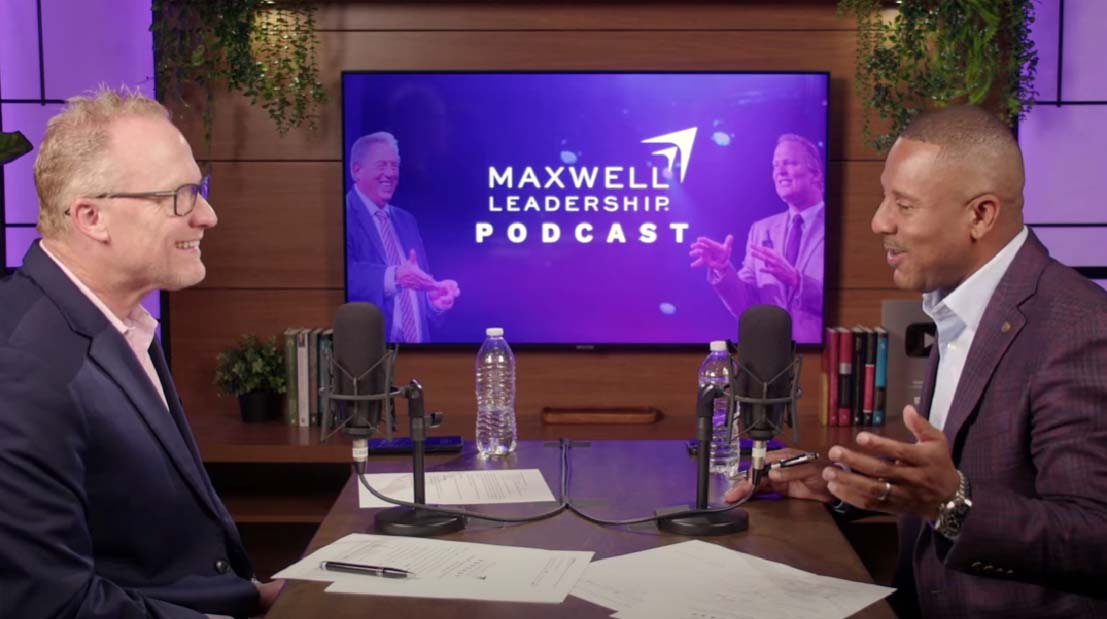
Welcome to the Maxwell Leadership Podcast. This podcast, today, we are committed to you. We’re committed to adding value to you. We’re committing to resourcing, equipping you. And we ask that you take that value and multiply it to others. I’m Mark Cole, and today I’m in studio with Chris. Chris Robinson.
Mark Cole:
I’m telling you what, last year, you wrote a book. Last year, you, like, change the world. You, you. You’ve got a threshold of book sales that, man, very few get to. But here we are, first week of January, man, are you. How are you doing on your New Year’s resolution?
Chris Robinson:
Well, you know, just like everybody else, you get started, you kind of do some things, some things that I said that I, you know, you kind of get excited about, you know, this big expansion and vision of what we want to do, and you kind of overestimate your abilities sometimes. But, you know, I’m in the first seven days, and we’re on track. Let’s see if I can make it to 21. That’s the goal.
Mark Cole:
21.
Chris Robinson:
21. That’s the number.
Mark Cole:
Let’s go. Those of you that don’t know, Chris Robinson is our fearless, incredible leader of a tribe of 59,000 certified coaches, speakers, and trainers and growing every single day. And so, boy, I hope you set some big New Year’s resolutions, because there’s a lot of people looking at your leadership right here. Hey, today, speaking of leadership, today, John Maxwell is going to talk to us about the bookends of success, how you need to prepare more and how you need to reflect longer. That’s just. That’s it. We’re really going to spend our time together, John, teaching us how to prepare more, how to reflect longer. Chris Robinson and I will come back after he’s done teaching.
Mark Cole:
We’ll share with you and connect with you on how we can apply this to our life and to our leadership. If you would like to download a bonus resource that we’ve created for you while John is teaching, or if you’d like to watch us on YouTube and I will give you some ideas and thoughts to equip you along the way, all of this can be found in our show notes. You can go to MaxwellPodcast.com/Bookends and you’ll be able to find all of those resources. Let’s grab a pen. Let’s grab a paper. Here is John Maxwell on the bookends of success.
John Maxwell:
Preparation and reflection. Maximize every experience. If you said, John, when I’m in an experience, I want to maximize It, I would say the preparation on the front end and the reflection on the back end is going to take that experience to a whole new level. And in fact, I call these the bookends of success. It was John Wooden who said, when opportunity comes, it’s too late to prepare. So we’re talking about preparation. You see, if we prepare on the front end an experience, if we really get ready for it, we can maximize it. Just like I’ll talk in a few minutes about if we reflect on the back end, we can maximize it.
John Maxwell:
Get the picture going in, I maximize it by my preparation coming out, I maximize it by my reflection. So when I’m talking about preparing, what do I mean? Well, let me give you really quickly a couple thoughts. Prepare. Prepare continually. You see, there are two types of people in this world. There are the types of people that say, I will wait for an opportunity, and when that opportunity comes, I’m going to get with it. I’m going to prepare. And the other person says, you know what? I’m going to get ready just in case the opportunity comes.
John Maxwell:
I learned that from John Wooden, but I learned that also from a story I read about Bill Bradley. Bill Bradley was a professional basketball player, played for the New York Knicks, but he was a great college player, and he was an amazing man. In fact, you probably know his name. Bill Bradley became a senator and at one time even considered running for president. So he was very successful. But it was when he was learning to play basketball as a kid and he showed really good talent, that he was going to be a real good player, that his father gave him this advice. And here’s what his father said to him. He said, now, son, when you’re not practicing, someone else is, and when you meet that person, he’s going to beat you.
John Maxwell:
What person? Bill Bradley’s father was saying to him that day was, somebody is out there preparing to be a great basketball player. And when you aren’t, trust me, when you meet that person that’s preparing and practicing, when you’re not, he’s going to beat you. And you know Joe Frazier, that great heavyweight champion? What did he say? He said, champions do not become champions in the ring. He said they merely get recognized as champions in the ring. He said their becoming champions happens in their daily routine. In other words, he used to say, in the darkness of the hour, when their training is when they really become champions. And what are we learning here? We’re learning about preparation, and we’re learning about the fact that in our strength zone, in the things that we’re good. We need to constantly be practicing.
John Maxwell:
We need to constantly be preparing. That’s why when people talk to me about writing, I share with them every day I write. And what do you mean every day you write? Well, what I mean is every day I write and when people say, well, I want to be a writer, what do you suggest? I always suggest the obvious. Well, start writing if you want to be a writer, start writing. If you want to be a really good writer, stay writing. This is all about preparation. And the preparation is, it must be continual. We want to continually prepare.
John Maxwell:
Now you got that, that makes sense. I know it does. But we not only want to prepare continually to really maximize every experience, we want to prepare visually. We want to set ourselves up visually for success. And what I’m saying there is my expectation determines my preparation. I don’t know if you’ve ever had this experience. You probably have. But I can think back at some of my earlier days when I was in school, and I can think a lot of times when I was going to take a test in a class that wasn’t really good in, and I didn’t have a heavy expectation of doing well in the class.
John Maxwell:
That really messed with my preparation. It’s almost like the level of my expectation determines the level of my practice. And I’m asking you this question. When you see yourself visually, do you put success in your picture? So when I speak, when I do a lesson like I’m doing right now, I expect to be at the top of my game. I expect to do good. I expect to communicate well with you. And there’s something about that expectation I have that says, now what you have to do is you have to back it up with your preparation. So there’s a visualness that I don’t want you to miss.
John Maxwell:
I want you to see yourself as winning. I want you to see yourself as succeeding. I want you to see yourself as doing well. Because once I can visually see that, that takes care of all my preparation. I’ve taught people often that I get up early and write in the morning at 5, 5:30, not because I’m so self disciplined, but because I’m filled with anticipation. I can hardly wait to write because I think I’m gonna write something that’s gonna help people. The moment that I visually see myself adding value to you, contributing to you, make a difference in your life, then what happens? My preparation begins to come up to the level of that expectation to maximize an experience. There’s that preparation on the front end, and you prepare continually and you prepare visually.
John Maxwell:
You also take. Let me take a moment. You also prepare realistically. Reality is the foundation of preparation. And I read it. I remember I was going through a difficult time in one of my companies and I was really needing to let a couple key people perhaps go. And I really didn’t want to because there was a pretty deep friendship there and we’d been together for a long time. But I knew it wasn’t best for the company.
John Maxwell:
We needed to move on. They weren’t probably going to have the capacity to take us where we needed to go. And so I took a week break trying to prepare myself emotionally for this. And I read in one of Jack Welch’s books the six Rules for successful leadership. And those six rules, I’ve got them here. Cause I’m gonna give them to you because I’m telling you, I lived with these rules. Here’s what he said. Remember, I’m trying, I’ve gotta make a hard leadership decision, but I don’t wanna make a hard leadership decision.
John Maxwell:
And here’s what Jack Welch said. He said, number one, control your destiny or someone else will. All of a sudden I realized, oh my gosh, if I don’t take control of this situation, the person, they’ll take control of it. He said, number two, face reality as it is, not as it was, or you wish it were. Number three, be candid with everyone. You can see all the realism in this. Number four, don’t manage lead. Number five, change before you have to.
John Maxwell:
And number six, if you don’t have a competitive advantage, don’t compete. I’ll never forget that dose of realism from this CEO of General Electric. Just brought me back to reality of my life and I made the decisions that I needed to make. So on maximizing experiences on the preparation front end, just prepare continually. I mean, just continually be in an act of doing what you need to do. Prepare visually, put yourself in the picture, see yourself as successful, but prepare realistically and realize that if you don’t control the situation, someone else will. That’s the preparation side. But after the experience, we reflect.
John Maxwell:
And reflection turns experience into insight. In other words, when I reflect on what has just happened, all of a sudden the experience that I had becomes insightful to me. So in mentoring, I basically prepare, reflect, and then I act. So every year at the end of the year, I do a year end evaluation reflection and I ask myself these questions. Now this is all about reflection and I’m just gonna give them to you. I don’t even have time to teach em but you’re getting the idea. If you wanna maximize experiences, you gotta prepare on the front end and you gotta reflect on the back end. And my year end questions when I’m just kind of evaluating my year are the following.
John Maxwell:
First one, what made me proud? These are my accomplishments, I reflect on those. Secondly, what did I learn? This is all about my growth. What did I learn from this last year? It’s gonna help me be better. Number three is what did I lead? This is all about my calling and what I’m supposed to be doing. Number four is a huge reflection question, what held me back? This is about awareness. I look at my last year and say, okay, when I didn’t do as well as I could have done, what was it that held me back? This is a really a helpful but very reflective question. Number five, do I still love what I do? That’s all about my passion love. Number six, am I willing to pay the price again this year? You know, maybe I’m getting tired because you see, every year when I start off, I’ve gotta up the price again.
John Maxwell:
And that’s all about commitment. Question number seven, what is most important right now? That’s about my priorities. What do I need to change? That’s about the challenges I have. And then what is my word for the year? Which is all about focus. And I wrap up this very simple best advice teaching, which basically says that my preparation, my reflection of an experience is what maximizes that experience. Those are the bookends of success. And so I want you to, I want you to try those bookends. Okay? Would you do that? Just say, okay, next time I’m getting ready to have an experience, prepare a little bit more on the front end than what you’re used to and then reflect a little longer on the back end than what you’re used to.
John Maxwell:
And I will promise you. My name’s John, remember I’m your friend. I’ll promise you you’ll up the experience because you used the two bookends of success.
Maxwell Leadership App Ad:
Do you feel like you’re meant for more but you’re not sure what next step to take? Whether you’re leading a team, building your business, or just trying to lead yourself. Well, you don’t need more noise. You need wisdom. Real proven, practical wisdom. That’s why we created the Maxwell Leadership app. Inside you’ll get daily bite sized videos from John C. Maxwell and other world class thinkers designed to help you grow. Every day you’ll unlock curated playlists on personal growth, leadership, mindset, communication, confidence and much more.
Maxwell Leadership App Ad:
All for just 9.99amonth. And here’s the best part. It’s growth on your terms, at your pace in your pocket, ready to go further and grow faster. Download the Maxwell Leadership app today. Go to MaxwellPodcast.com/App or click the link in the show notes. Try it free for seven days with the code PODCAST7. That’s PODCAST7.
Mark Cole:
Hey, welcome back, Chris. I love talking about. Well, I love talking about anything with you because it’s so fun to lead beside you and lead alongside you to see so many people impacted. I love this lesson because it is about success. And many people perceive you, myself, John Maxwell, with this ideology of success that is unattainable. But today, what John just did said, oh, no, no, no, it’s attainable. It’s yours. You can have it.
Mark Cole:
And if anybody loves relating to people and letting them see how simple your success is so that they can replicate it, model it, expand it, do better than it, it’s you. And so, man, I’m super excited about digging into this today.
Chris Robinson:
Yeah, well, I’m excited about this one as well, too. I mean, because when we talk about success, you know, really, we have to look at it on small segments, and a lot of people look at the grandiose of success, overall success, but success happens daily, and success happens in the small things. And so you have to look at applying these principles today to just the next small thing in front of you. That’s right. So success today could mean that, hey, I get to work on time. Success means today that I actually work all day today. Success means today that I walk in there with the positive attitude. And so when looking at success, and we’re talking about these bookends today, don’t think about the grand overall kind of success.
Chris Robinson:
Think about, hey, how can I win today? But he talks about these bookends, you know, preparation and reflection allow for us to maximize every experience. So why do you think most leaders focus on the moment but missed the bookends?
Mark Cole:
Oh, man. So we teach. I’m learning something right now. So right as soon as you said that, I’m learning something right now. And I bet you all of our podcast listeners have already learned it, but it’s called signal noise. Are you familiar with this?
John Maxwell:
No.
Mark Cole:
So, a good friend of mine and yours, Chris Hodges, I was recently with him and he talked about signal noise, and he said great leaders have a ratio of of vision, signal and distracting noise that minimizes the noise so that they can focus on the signal. He said, for instance, Bill Gates was tested out to have 80% signal noise. A signal to noise. He was 80% signal, only 20% noise. There’s only one person in our modern history or in our modern leadership that is tested at 100% signal, no noise. You want to take a guess who it is? Elon Musk. Elon Musk in this test is. He has the ability to eliminate noise and stay focused on a signal better than anyone else.
Mark Cole:
You come and you ask this question. What is it about leaders that they get so focused on the middle of what they’re doing that they miss the book and they miss the preparation, they miss the reflection? And I immediately went to what I’m learning right now about signal noise. And I went. I think it’s because most leaders like you and me, we focus on action, we focus on activity, and we lose the bigger picture of preparation and reflection because we feel like we gotta do, we gotta do, we gotta do. You say your favorite statement is, learn a little, do a little, right? Do a little. And we focus on the do because we’re around so many people that don’t do anything most leaders don’t have a problem with doing. If they’re a leader, they. They’re a leader because they have accomplished something.
Mark Cole:
They’re accomplishing something, or they have the ability to accomplish something that makes people gravitate to them. And it’s in that ability to accomplish that we spend so much of our focus that doesn’t allow us to focus on the power of reflection and the power of preparation, because we gotta get to doing something that’s tangible. Return right then, and we miss the power of those two bookends.
Chris Robinson:
Wow. Wow. That’s incredible. Isn’t that interesting? Yeah, it is. It is. I want to learn that. Now I got to find out more about the signal.
Mark Cole:
Do you got to come back to me? Because I’ve just heard it, and it is intriguing me like crazy.
Chris Robinson:
Wow. I love it. I love it. You know, you know, when we talk about this preparation, though, you know, how has your preparation evolved as a leader over time? You know, when you first start out, what did preparation look like? What’s preparation look like today?
Mark Cole:
Best illustrated, I’ll give you as a leader, as a business leader, for sure. But let me give you at a personal level, we’re at the beginning of the year. By the way, all of you that’s listening live, Happy New Year. I think this is. This is one. I think this is episode one, I think, of 2026. If you’re listening live and congratulations, you’re starting the year this is a good New Year’s resolution. Everybody keep listening to me and Chris and John Maxwell this year.
Mark Cole:
But I really, at the beginning of this year, at the beginning of the year, at the close of a year, it always questions like that always takes me back to how I reflect and prepare my life. I believe the most important thing that we have is that we build, that we create is the life we want to live, the legacy we want to leave. And we worry a lot about that, but we don’t spend a lot of time preparing or reflecting on that. In fact, I would dare say many people, not our podcast listeners, but other podcasts, they spend more time reflecting and preparing on vacations than they do on their life. They spend more time thinking about building and preparing a house that they want to build than the architecting the life they want to live. They spend more time in preparing how they’re going to spend their weekend than how they’re going to grow their life over a given year. And it concerns me, it awakens me, but it also arrested me when I figured that out. And so I spend a ton of time on a consistent basis on reflecting and preparing my life.
Mark Cole:
It is the thing I spend more time doing reflection and preparing than anything in my life, any area of my life in business. How my reflection and preparation has become better is I put specific questions into our leaders hands every single year to ask how the business could get better. But John spent time today talking about year end reflection questions. As a business, I think you need to do that as well. I think you need to have leaders. I do that so that I can discover what I don’t know because other people, more people’s perspective gives me greater knowledge, greater insight. I also do that to find out where they are. I want to know their perspective on the business.
Mark Cole:
And so I’ll spend a lot of time now in business doing reflection questions for the business. And then every year starting in October, all of our P and L leaders have to start spending time submitting business plans, financial plans for the next year. And that’s a real important thing. I think many people do that. But here’s how we do that. We do that from the standpoint of when we go back and look and we go, how could that month have been better? How could we have financially got more out of that month? Most of the time businesses spend more time preparing and not reflecting. And if they would go back and discover in January, we’re in December, we’re in October, we’re planning the next year if they would go back and do an autopsy on January. From a performance standpoint, they would get a lot better visibility and reliability on the numbers they put in place.
Chris Robinson:
I love that. I love that. And so, I mean, preparation and, you know, and reflection is incredible when it comes to really preparing you for where you want to go. And I love what you said here about how people over prepare for these small things in their life. You know, the vacation, the house, the week. And you’re stepping on some toes out here right now because there’s got to be one podcast listener out there that does that more than planning for their life. And so, you know, we got one person out there, Mark, that’s just more.
Mark Cole:
Excited about, they’ll get better, they’ll get better, they’ll get better.
Chris Robinson:
We’re trying to, we’re trying to help people. We’re trying to help people. You know, this next question here for you, Mark, is reality is the foundation of preparation. John says, why is facing reality one of the hardest leadership disciplines today?
Mark Cole:
Yeah, you know, you do a great job even as a parent in helping your kids face the reality. I remember you telling the story, one of your kids that was running went, this is just not your thing. Right. So you might even want to talk on that in helping kids. But I think in leadership, which you could speak into as well, we often are so positive as an environment. We’re, we’re a people development. We’re a people potential organization. And nobody really wants to work for a leader that’s pessimistic, that tells you all the bad stuff wrong with you.
Mark Cole:
We, we don’t like a spouse that’s like that. We don’t like a boss that’s like that. We. I’m a words of affirmation guy, so give me some words of affirmation. You’re a positivity guy. Give me some positivity and, and, and, and, and help me with the, with the, Help me to figure out how to forget and, and, and, and ignore the negativity. But as leaders, I think we have to discipline ourselves to deal with things and look at things from a reality standpoint. I heard John the other day, somebody asked the question, this is so interesting you’re asking this question.
Mark Cole:
Somebody asked John the other day, said, how do you remove positivity in your life so that you can have more realism? And John, how did you remove. Because John was teaching, said, how did you remove positivity and have a more realistic view? And so John gave some really good answers. He said, hey, I realized that my positivity sometimes I would budget, and it wouldn’t quite hit me there. And I realized. And so I started telling myself I got to really put in realism. And I thought he finished it. And I went, can I comment on that? Because we do a lot of Q and A together now. And I went, he didn’t remove his positivity and replace it with realism.
Mark Cole:
He added realism to his positivity. John’s a positive person. I don’t want him to remove his positivity. I don’t want him to change the color of the sky in his perspective. I need that. What I need him to do is to add realism to his positivity, not remove positivity and put realism in. And for all of you that struggle with an overdose of positivity, don’t change it. The world needs more of you.
Mark Cole:
But do add realism to it. And the way that I see John do that is he puts people around him that has a little bit more realistic point of view. Some people might. Would say a pessimistic point of view, but I say realistic, and John will listen to them. He does not overpower them with his positivity. When somebody brings a challenge to the table, John will listen to the challenge. And so I think that the way that I’ve added realistic thinking to my table is bringing more realistic people around me, but not trying to remove my positivity. I don’t want to remove my positivity.
Chris Robinson:
Yeah, yeah. And we got to be very careful there, because there’s. I remember very early in my career, career when I would, you know, hire people. I was hearing the phrase, you know, you want to hire people that are different than you, and you want to hire people that are opposite of you. And so I knew I was a technically just a positive person, so I would try to hire some of these pessimistic people, and there would come this clash over time. And what happens is if we go too far overboard, then it pulls down if we go one way or the other in positivity or in reality. And I think a lot of people are just scared to face the reality sometimes, even when they’re positive, they. They.
Chris Robinson:
If they don’t take a look at the mountain, you know, and face the mountain of, hey, this is what’s in front of me. You know, they find themselves, you know, going in different directions. And so I believe that we truly do have to face the mountain. I truly do believe that we do have to have that positivity, but that all the realism, I guess, is. Is it. It helps, but your Perspective is I believe is the main thing that’s going to really determine which direction that you go. 100 and so we have to make sure that our perspectives are moving in that right direction. But the reality is the foundation because we have to know what’s really going on.
Chris Robinson:
Now John also talks about expectation determines preparation where leaders often underestimate themselves or their teams.
Mark Cole:
It’s such an interesting question right there Chris, because really it’s everywhere. I feel like that we often under under assess ourselves or we over, we over value ourselves in certain areas of leadership and it’s just a natural tendency. I think it all goes back to our PODC last week. We talked about self awareness and we talked about this inability for a leader to really have visibility into themselves without other voices around them. And so find out. It’s a good question that you’re asking. Where do we often overestimate or underestimate our leadership effectiveness or overestimate or over prepare in some areas we overthink some things and then we don’t think about some things. You need to have a really good insightful conversation about yourself with someone.
Mark Cole:
And on this question you’re asking Chris, and that question goes something like this. Where do you feel like that I have deficiencies in preparing and get some people around you to tell you this is where you come across under prepared. Often for me it’s communication. I run companies and so I don’t spend enough time preparing my communication moments. I don’t, I don’t have enough PowerPoint behind me. I don’t have enough articulation in the application points that I want to give because I just made a million decision on we’re going to invest in some technology and then I got to go stand in front of an audience. And so because of that I under prepare for communication too often. Now don’t say amen out there.
Mark Cole:
Podcast family be with me just a little bit here. But preparation in that area. And so what I do is I get people around me to help me with preparation and I also get people around me to hold me accountable to spending time preparing. What is your area? What is your area Podcast listener to where you are in deficit of preparation or reflection. Staying with communication. Often when I first started communicating I would surround myself with people that would reflect on the positivity, positive things that I had done in communication. I’m a words of affirmation guy. And they’d come say man, you should have done that better.
Mark Cole:
And I’d say I’m not ready to hear that. Just tell Me, what I did.
Chris Robinson:
Right. Okay.
Mark Cole:
I’m not quite ready to hear what I should have done better. Now that I’m trying to perfect that craft and become better at the craft of communicating, of speaking, now I crave critique. Now I surround myself with people that will reflect with me longer on what I should have done better than what I did. Right.
Chris Robinson:
Right.
John Maxwell:
Yeah.
Mark Cole:
So I think it’s very important for every leader to know, where are you in deficit in preparing and reflecting? And where do you need to improve the amount of time and energy you put into preparation and reflection?
Chris Robinson:
Yeah, well, I mean, again, they can ask that question. I think the question that you gave right here is so critical. You said, hey, ask people around you, where do you feel like I have a deficit in preparation? Now, that’s a tough question to ask. Just like you asking for help on a speaking presentation, you know, just. Just. I’m not ready for that yet. So I think that we have to prepare ourselves, and I think that people that are listening, if you start off small, asking these areas to kind of build your tolerance up, because this takes a level of humility to be able to ask people, hey, here, look underneath here and tell me what’s wrong, what needs to be fixed? And so I think we have to start small in this and then work our way up in order to develop this skill set to do that. You know, this goes back to me asking John for, you know, feedback, and, you know, then the whole table jumps in, giving me feedback.
Chris Robinson:
Whoa, wait a minute. I do this for a living, people.
John Maxwell:
You know.
Chris Robinson:
But it’s being in a space to be able to say, okay, go ahead and hear this. And then now, just like you, every single presentation, every single time, let’s go ahead and hear about this. Go ahead, give it to me. Guys like, it just. But it takes you getting to a place to be ready to receive that feedback. Yeah, but once you get there, man.
Mark Cole:
Oh, the payoff’s incredible.
Chris Robinson:
Payoff is incredible. The payoff is absolutely incredible. You know, if we. If you had. If leaders out there had to change one year this thing based on reflection, what should it be and why? If they had to change one thing this year based on a reflection, what would that be and why?
Mark Cole:
Well, for me, on reflection, I’m going to spend time. This year. This year, I have identified two areas that I don’t think I reflect well. One is on the challenging things. I don’t want to hear the challenging things. I have challenged myself to. To not reflect on the challenge because I want to be a hope dealer. I want to add value.
Mark Cole:
But what I realized over the last couple of years is by not digging into the critique, the pessimistic, the challenging side, and reflecting on what we could improve, better operation excellence has declined. Effectiveness has declined. The second thing is it’s more centered around for application. For everybody listening to podcasts, it’s more centered around customer service. It doesn’t mean customer service to me. It means team engagement. It means team inspiration. I read a book in 2025 that really impacted me called Fans first by Jesse Cole.
Mark Cole:
I’ve mentioned it a couple times on the podcast. He came to our IMC event. He really inspired me to understand what it meant to put something first, to have a team first mentality or a fan first mentality or a staff first mentality. And so I’m reflecting everything that I’m doing right now painstakingly. In fact, just recently, I did a vision casting call for our 59,000 coaches. And at the end of it, I gave them an email address that I very rarely give out. And I said, give me feedback from that. And I’m painstakingly going through every one of them.
Mark Cole:
And it is a lot going through every one of them, processing it and then responding. I’m not doing a quick response yet. In fact, I’m copying you on a lot of them. You know that you’re going, good grief, Mark, you’re not really saying that. You’re very thankful, actually. But I’m painstakingly going through that. And when I’m ready for a response, not because it was 24 hours later, not because let them know I got it, but when I have processed it, digested and responded, no matter how short it is, then I will respond. And it’s fun, it’s insightful, it’s painful, it’s a lot.
Mark Cole:
But it’s an intentional thing to say. No, I’m going to reply, I’m going to respond, I’m going to acknowledge and I’m going to apply because I think that I have been missing that with feedback for the last two or three years. And I’m going, no. I’m going to value feedback differently. I’m going to reflect on feedback longer. I’m going to respond to feedback every time.
Chris Robinson:
I love that. Well, I know that’s going to pay dividends for the organization, that’s going to pay dividends for each individual that sends that. And so just that access and that ability, I mean, it means a lot to a lot of people.
Mark Cole:
So I’m glad, I am glad that it means A lot. I really am. I’m not doing it for it to mean a lot. I should have been doing it all along. I just don’t have the bandwidth. But this year I am intentionally going after something because I’ve made some leadership dynamic changes. Well, I got to find ways to get closer if the perception is as I’m getting further. And so it’s a very intentional thing that I’m glad it’s speaking and communicating and reflecting on something.
Mark Cole:
And I want all of that. Sometimes I wish that was the reason that you do things. But in leadership, you have to have multiple reasons why you do something. And so in this reflecting longer. Boy, I am reflecting longer on feedback.
Chris Robinson:
Yes, you are. And I see it. I see it and I’m grateful for it. You know, give us. We’re getting ready to wrap up here. But what’s one intentional action you believe every leader should take this week to grow more intentionally?
Mark Cole:
So let’s keep it in the family of what John has told us on the bookends of success. I wish that for one week you would add 15 minutes of preparation for your day in the morning. I just wish you would. Whatever time anybody gets up, just whatever it is, I wish you would back the alarm clock up 15 minutes. And no matter how much you prepare, I wish you’d add 15 minutes to it, period. And what I would love for you to do, no matter what your nighttime routine is, whatever it is, tv, go straight to bed, whatever it is, I wish you would give yourself 15 minutes to reflect on your day. Try it for one week and I just ask for 30 minutes. And you can put the bookends of what John Maxwell says success on here.
Mark Cole:
And I think if we would all do that, just add 15 minutes of preparation time, 15 minutes of reflection time. I think the dividends will give us in seven days a return that will make us consider it for a second.
Chris Robinson:
Week, a third week week, I believe it will. Hey, Mark, thanks so much.
Mark Cole:
Yeah, man, likewise. You know, I was looking. Speaking of reflecting, I. I love what Larry said to us. Larry’s one of our podcast listeners. Larry, thank you so much. He heard the podcast what happens when others help you win. By the way, incredible podcast.
Mark Cole:
We’ll put that in the show notes. You want to go do that? But here’s what Larry said after listening to that. I love the message you two shared on helping others win. It reminded me of what I need to do daily. Larry, thank you for that comment. And we just did it again. We gave you something to do this week. On reflection and on preparation that’ll help you win.
Mark Cole:
Hey, I want to share with you something today that I’m super excited about. It’s the beginning of the year and I want you to invest in yourself this year. Some of you, if you’ve been listening to the podcast a long time, you know this is every year. So this is not a new song and dance. This is me every year challenging you to uplevel your growth, up level your intentionality. And today, the way I want you to do that is I want you to up level your leadership. The world around you needs a model of high road leadership. They need a model of how to lead themselves better.
Mark Cole:
And so today I’ve asked the team put together a package that will help people lead better. And so we have a digital package. It’s a package that includes John Maxwell lessons, inspiration, action plans that will help you lead from a higher road of leadership. It is normally $299 today for our podcast listeners, this week, this episode, we’re making it available for $199. We’ll put the link in the show notes. You just need to click the link. You need to invest in yourself. Let’s become high road leadership people together.
Mark Cole:
Thanks everyone. Go do something great because everyone deserves to be led well.
Maxwell Leadership Certified Team:
Hey podcast listeners, many of you listening right now would probably love the autonomy that comes with owning your own business or becoming a coach that helps other businesses succeed. Well, we have a phenomenal strategy where you are 100% in control of your own business, earning income on your own terms, and have access to the people, tools and resources you need to build a thriving leadership development business. When you become a Maxwell Leadership Certified Team member, you join a global community of entrepreneurs led by our expert team of mentors and faculty, including John C. Maxwell. You’ll also get one of the top leadership certifications in the world world next to your name, giving you the boost you need to get started. Visit us online at MaxwellLeadership.com/JoinTheTeam to find out more.
Transcript created by Castmagic.