In this episode of the Maxwell Leadership Podcast, John Maxwell explains why true leadership skills begin with a mindset of giving, not getting. You’ll discover how to build a culture rooted in gratitude, accountability, and service—principles that drive long-term employee motivation and healthy growth.
After John’s lesson, Mark Cole and Traci Morrow share stories of leaders who model humility, gratitude, and discipline—showing how to transform entitlement into empathy and competition into collaboration.
Our BONUS resource for this episode is the Lead to Give, Not to Get Worksheet, which includes fill-in-the-blank notes from John’s teaching. You can download the worksheet by clicking “Download the Bonus Resource” below.
Mark Cole:
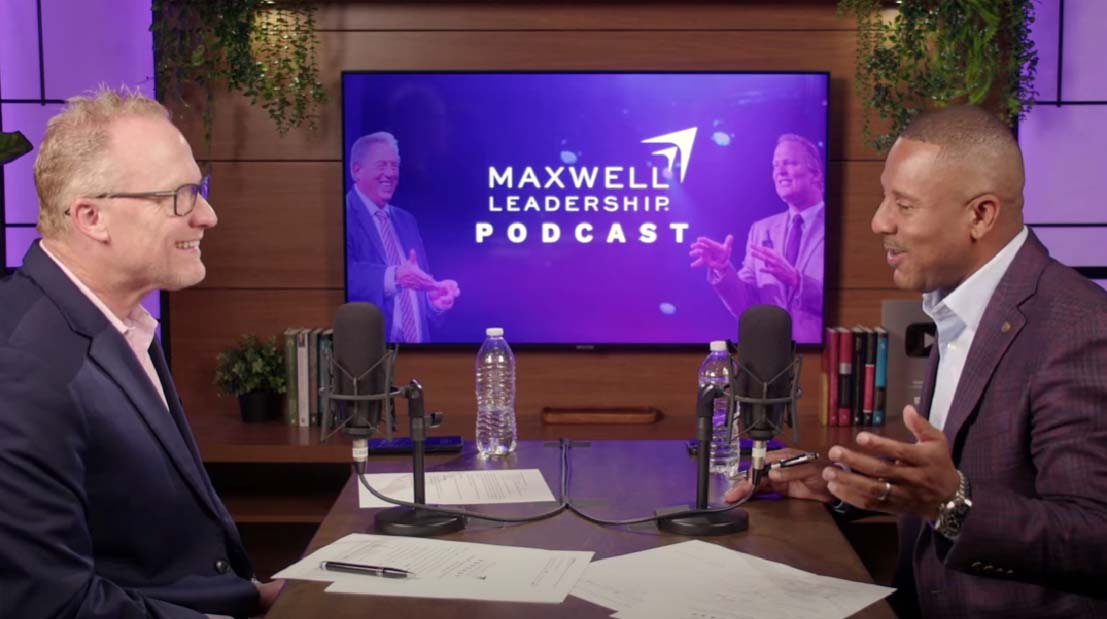
Hey, for all of our US partners and listeners and family of the podcast, it is Thanksgiving week. Happy Thanksgiving. If you’re listening live tomorrow, I hope you have a great time with your family. My name is Mark Cole, and I want to welcome you to the Maxwell Leadership Podcast. We want to add value to you today so you will multiply value to those around you for the rest of your days. And so I’m joined by Traci Morrow today. Traci, so good to have you.
Mark Cole:
Happy Thanksgiving.
Traci Morrow:
Happy Thanksgiving to you.
Mark Cole:
Likewise. Hey, you gotta give me. So give me something. Some family tradition at the Morrow household. You gotta give me something. What is Thanksgiving week like for you guys?
Traci Morrow:
Oh, well, gosh, there’s so many things. I’m going to give you two. One of them is about people, and one of them is about food. Okay, so about people. We have a humongous family, and so it could be anything. Hopefully all of our kids are, you know, we have. Almost all of our kids are going to be around the table, all but one, and our grandkids. And so we usually like.
Traci Morrow:
Like to see if there are people in our church or attendees around our church or military people or someone in the community who needs a place to come and join us. So a lot of times we’ll have, you know, displaced college students or something. So in addition to our humongous family, there’s just tables in every nook and cranny filled. People who are beyond our family, other people who are looking for a place to come and find family. And that’s been a tradition back to our home and to my grandparents. There was just always people everywhere in the house just packed in. And I just love. I feel like that’s what Thanksgiving is for.
Traci Morrow:
For me. That’s. That’s the people part. And then the. The food part is that my. My parents were Slovenian. My grandparents were Slovenians, first generation. And so there is a sweet bread that is you fil huge table, and it’s called petitsa.
Traci Morrow:
And so any Slovenian friends out there listening? You know what this is? You get this huge table and you roll out this bread and you fill it with all kinds of sugar and raisins and sweets and nuts. And then you roll it up in this huge. It looks like a big, huge snake and of sweetie goods. And then you put it in the pan and you bake it, and it’s so delicious. Do you have. Do you have any Mark?
Mark Cole:
Well, I just found a new one. And that is you invite outsiders. So I’m jumping on a plane. I’M coming to your place. Not to see you, by the way. Not to see you. Don’t get too happy. I want some of that dessert right there.
Traci Morrow:
Petizza. Petizza. Okay. You’re welcome. You’re welcome.
Mark Cole:
Oh, yeah, it sounds so good, truly. And the family and the sense of community would be much better. I’m confident. Yeah. So for me, my mom is 96 and and so for me at every Thanksgiving, I think but one in my life was at my mom’s house and she still stays in a little small basement place and we have 24 hour care for her, but we still all come to her house for Thanksgiving and it is not convenient for all of our family. We squeeze in there, but it’s still mama’s house. And so as long as possible, that’s going to be our tradition.
Traci Morrow:
That’s beautiful.
Mark Cole:
That will change at one point someday, but that’s not today. So I’m thankful for that.
Traci Morrow:
Beautiful.
Mark Cole:
So John is going to share with us today, speaking of gratefulness. It’s all about leading is to give and not to get. Simon Sinek said it well, leadership is not about being in charge. Leadership is about taking care of those in your charge. And I think Simon was right in that quote and I think John is right that leadership is about giving more than it is about getting. And so John’s getting ready to teach us. Hey, if you’d like to follow along with John, we have a bonus resource. Also, we have a link that you can join our podcast via video as well as we’ll throw some other links as the program goes along.
Mark Cole:
Today you can find all this at MaxwellPodcast.com/LeadToGive. If I haven’t said it yet, Happy Thanksgiving. Go listen to this lesson right now. Get ready because John’s gonna share with you on how to be a leader that gives. Here’s John.
John Maxwell:
Increased contribution to others is essential for lifetime growth. And as you become more successful, numerous rewards will come your way. Greater income, praise, recognition, reputation, status, capabilities, resources and opportunities. These are all desirable things, but they can be growth stoppers. They may tempt you to become fixated on just the rewards. This is becoming huge right here. They may tempt you to become fixated on just the rewards rather than focus on making still greater contributions. The way to guarantee that rewards will continually increase is to not think too much about them.
John Maxwell:
Instead, continue making an even more significant contribution by helping others to eliminate their dangers, capture their opportunities, maximize their strengths. Greater rewards will automatically now that word automatically there. This is truth. Greater rewards will automatically result from this, and your future will continue to be filled with increasingly rewarding ways to contribute. Always focus on creating new kinds of value for larger numbers of people, and you will ensure that that your contribution is always greater than your reward. Mother Teresa said it so well. A life not lived for others is not a life. So here are two steps to making your contribution bigger than your reward.
John Maxwell:
Number one, I’m gonna do my best to do one and get off of it, because I could spend the next 30 minutes on this one, but it wouldn’t do you any good because I would want to rant and rave. Number one, adopt a no entitlement attitude. If you want to make a greater contribution of your future, get off of this entitlement mindset. This means you believe that you have to make some kind of a valuable contribution to others before you deserve any reward. What a novel thought. That you have to do something to receive something. Wow. Whoo.
John Maxwell:
That’s amazing, isn’t it? The attitude of an entrepreneur is if they don’t succeed in offering something that others perceive as being valuable, they won’t stay in business for long. And not every entrepreneur realizes the only way that they’re ever gonna have a business stay in business, make any kind of money is by adding value to people. And so their whole thought is, how can I add value to people? Now just let me just say this, because this is so. I’m so passionate about this. Quit looking around and asking yourself, what am I going to get out of life? What am I going to receive in life? Who’s going to give me something? Who’s going to help me? Who’s going to add value? Get off of that foolishness. That is the way failures think on a continual basis. You have only one thing to focus on every morning. Only one thing.
John Maxwell:
How can I add value to other people today? That’s it. You say now, John, what do you mean, that’s it? That’s it. Every morning I ask myself, who can I add value to and how can I do it? That’s the question on my mind, because here’s what I know. If I spend my day adding value to people, all the rewards are going to come my way. The stuff will be here. Don’t worry about the stuff. The stuff comes. The stuff comes automatically when you do the right thing.
John Maxwell:
Your job is not to worry about what you’re going to reap. Your job is to worry about what you’re going to sow. It’s the sowing end. Second thing to do to help make Your contribution bigger than your reward is be the first to help. When you see you can contribute to somebody or help somebody, just be the first to help. Zig Ziglar. I heard him in Dayton in 1975. He’s been a longtime friend and buddy of mine.
John Maxwell:
But in 1975, I sat on the front row at the Dayton arena and I heard Zig say, you can get everything in life that you want if you would just help enough other people get what they want. And I remember writing that down that day. That was one of those times when my life was changed, because those statements really spoke to my heart. Up until that time, I didn’t understand the principle. That’s the day that I began to learn this principle. I remember writing on a piece of paper not only what Zig said, but I remember writing two conclusions. Number one, help others get what they want. And number two, be the first to help others get what they want.
John Maxwell:
And being the first to help is very special. If you’re the fourth person to help or the seventh person to help, it’s always nice. But if you’re the first person to help, somebody’s got to step up. Somebody’s got to contribute, somebody’s got to give. Somebody’s got to be the first to help. So I put in here as this last statement. My success is determined by the seeds I sow, not the harvest I reap.
Maxwell Leadership Certified Team:
Do you feel like you’re meant for more but you’re not sure what next step to take? Whether you’re leading a team, building your business, or just trying to lead yourself. Well, you don’t need more noise. You need wisdom. Real, proven, practical wisdom. That’s why we created the Maxwell Leadership App. Inside you’ll get daily bite sized videos from John C. Maxwell and other world class thinkers designed to help you grow. Every day you’ll unlock curated playlists on personal growth, leadership, mindset, communication, confidence, and much more, all for just $9.99 a month.
Maxwell Leadership Certified Team:
And here’s the best part. It’s growth on your terms, at your pace in your pocket, ready to go further and grow faster. Download the Maxwell Leadership app today. Go to MaxwellPodcast.com/App or click the link in the show notes. Try it free for seven days with the code PODCAST7. That’s PODCAST, the number 7.
Mark Cole:
Hey, welcome back. I think John had a mic drop moment there and how his teaching just quit and it was a mic drop moment. And by the way, we stopped because John said my success is determined by the seeds I sow, not the harvest I Reap. And I have to remind myself that all the time because I look at harvest all the time in every area as the example of what successful is. And Traci, it was just a good reminder for me that, that what I’m sowing today is the measure of success, not what I get tomorrow.
Traci Morrow:
I agree. And I believe that this is really a deep dive into the maturing of a leader like our heart and who we are settling deep into that. And I am. I couldn’t help but think of our young entrepreneurs, our budding, hungry leaders. And as I listen to, to John’s message, and so to you, Mark, as a seasoned leader. Notice I didn’t say old.
Mark Cole:
You’re welcome. I thought that.
Traci Morrow:
But as a seasoned leader speaking to young and budding leaders, can you just mentor them a little bit on the value you see in young leaders who are up and coming, who sow into others and show up first to help?
Mark Cole:
Yeah, I’ve got a guy right as you’re saying that we didn’t pre script that before getting in the studio, but I’ve got a guy that instantly came to mind when you said that he’s 18 years old. I would have him leading one of my companies right now if he didn’t have clarity that he needed to go to college. He’s just a brilliant leader, but he’s so committed to bringing value in every meeting that he’s in. In fact, he asks a question. As an 18 year old, he’s constantly asking questions, what about this? Why did you do that? What are you doing there? And just constantly asking questions. But before he leaves any meeting, any time I’ve spent time with him, which is multiple dinners or lunches, he’ll go, hey, did I add value to you today? And I go, huh? And then he says, how? How did I add value to you? So he doesn’t come back and just say, hey, did I add value today? Which is some cliche statement that he probably could have picked up along. He wants to know how. One day I asked him, I said, jim’s his name.
Mark Cole:
I said, jim, why do you ask that? He said, well, I just feel like I always get value and I just want to make sure that I’m always bringing something to the table. I said, that’s wonderful. I said, why do you ask why? And he said, so I can do it again. If it added value to you, I bet you it’ll add value to somebody else. And I expected him to say the reason he asked, did I add value to you? I don’t know why, but then why he asked was so that he could learn. Because I thought it was a posture of learning. It wasn’t. It was a posture of discipline.
Mark Cole:
If it added value here I’m going to do it again because it made sense. And I thought, wow, 18 years old, wise beyond his years, but intentional. That is going to take him incredible places. So, yeah, I think young leaders that’s listening out there always try to come curious questions and always try to come bringing more than you take from the table, which is what John’s talking about today. Your leadership is about giving.
Traci Morrow:
And when you said that about Jim, I thought about when, when John will say practice doesn’t make perfect, it makes permanent. And I think like him asking those questions is him wanting to make it a permanent part of who he is as a human being wherever he goes, not just to you. If it added value to you, it’s going to add value to his parents, it’s going to add value to his professors, it’s going to add value to his peers. So I love that and way to go. I love this topic. It’s all about the heart of the leader. And so, you know, I love, I love that and diving deep into that and I know that you love this topic too. So leaders tend to be across the board competitors and for some this might be a topic that is foreign to them because they like the reward, it’s the, it’s the buzz.
Traci Morrow:
They love the trophy, they love the reward of the win. And so talk to our competitive leaders who this is foreign to them and share how this actually does help them win.
Mark Cole:
I think that every sustainable, successful leader that I have met has a competitive nature. I think that’s the thing that drives them. I think having a competitive nature, I won’t tweak in any leader. What I will tweak is defining what a win looks like and who the benefactor of a win is. See, winning is not when another team loses. Winning is when I have done my best and that best created a win. Winning is not even having a winning score above somebody else. Winning is about having a game plan, executing on that game plan and learning how to make the next game’s game plan better.
Mark Cole:
And so often I work with leaders with a competitive nature and I never try to undo the competitive nature. I think the only way to continue sustaining. I think the reason John Maxwell at 78 is still passionate about growing and doing better is not because he hasn’t tasted a win or his life has not been successful. It’s because he is Constantly wanting to win, competitive. There’s a competitive nature in John. He don’t want to sit on the sidelines, wants to win. So. But what I do work on that a competitive perspective sometimes gets into is I deserve to win because I did the game plan right.
Mark Cole:
And it comes to what John’s talking about here with entitlement. Anytime competition, a competitive nature leans back to an entitled mindset. I really work hard with leaders to undo that entitlement because entitlement will take competition and make it self gratifying and self serving rather than others gratifying and others serving. So get entitlement out of the way. Competitive natures also I look for another fruit of what competitive natures will do to disrupt a leader’s effectiveness. And that’s when they’re manipulating with their competitive nature rather than motivating with their competitive nature. I’ve watched a lot of competitors bring out the best in others because they were so competitive. But I’ve watched way too many leaders bring out the worst in others because their competition was used to manipulate people for their benefit.
Mark Cole:
And I think that’s the two big keys that I want us to work on is stay away from the entitlement, stay away from the manipulation, but keep that competitive nature. It’ll keep you in the game longer and it’ll keep you in the game at a higher performing rate.
Traci Morrow:
You hit on entitlement, which I think is. I looked up the definition just a little bit ago just so we could have the actual definition. And it said believing that you have a right to something, that’s the just short form of it. And so as a parent, I raised six kids and now I’ve got a bunch of grandkids and you have a bunch of little grandkids and you’re kind of in the role. So one of the things as I was raising my six kids, my oldest child is 32, and when he was in kindergarten, first grade is when I first started noticing that that that’s when they really started giving. I don’t know when he started playing T ball and soccer is those first few years is when they started handing out participation trophies to every kid who played the sport. And then, and then when he started getting into first, second, third grade is when he’d go to a birthday party. And when you and I were kids, now this is sounding like an old person to say such a thing, but when we were kids, you’d go to a birthday party and there would be like two or three games and those kids would go home with A prize from the game and then everybody brought present for the birthday kid.
Traci Morrow:
Well, when my kids started in this first kid and then all the kids after that, every kid who went to the party started getting a goodie bag. And with each increasing year, these goodie bags were sometimes more. What was in the goodie bag was more expensive than what some of the kids were bringing as the gift for the kid. So it was creating, I just remember feeling this frustration that it was creating this entitlement that now those kids are in the workforce. So that kid is 32, my other kids are 31, 29, 27, and they’re in the workforce. And along with all those kids who are at those birthday parties and at those t ball games and soccer field and they, they all got participation medal trophies and they all got thirty dollar goodie bags just for showing up to the party. And I, there’s an entitlement that like just for showing up, I should be getting something and so can you. There are now parents who are raising future leaders who are going to be 30 in 25 years.
Traci Morrow:
Can you talk to as a leader now and what you’re seeing, Is there something that you would say to parents who are stuck in this cycle of what we’ve created? And what would you say because you’re now kind of raising kids again, what would you say to parents who are raising up future leaders of how they can fight the entitlement trap of future leaders right now of this young generation?
Mark Cole:
I think that, I think one of the ways to fight it is expressed gratitude. Expressed gratitude. So there’s not a meal that my kids don’t sit down to that before they can get up and quote, unquote, be excused or move on to the next thing that they don’t have to express gratitude for the meal they just had. Now we start that in our, in our posture of faith. We start that by expressing gratitude to our greatest provider, God, at the beginning, but at the end you express it to the human person that was most responsible for that meal. So if we go out to eat, everybody says thank you before we leave the table. If we have dinner at home, everybody expresses a thank you to my wife or to their grandmother if before they leave the table, because I think expressed gratitude arrest people to realize that this is a blessing, this is a gift, this is something that I received that I don’t necessarily deserve or other people don’t necessarily have access to. And so there is that that we work with that I think combats entitlement.
Mark Cole:
I think the other Thing that we try to do in parenting, at least I try to do this in teams as well, is make sure that everybody feels a sense of contribution. They’re giving something to get that. These participation gifts, trophies, as you said. I would sit down with my kids, my grandkids, and I’d go, hey, look, let me tell you what this gift is. It’s because you played that game. Remember when you didn’t feel good and you asked us not to go to practice that time? This is because you went to practice. I always attach even somebody giving a gift to everybody that I don’t understand. I always attach that to something they chose to do that was overcoming difficulty, that was doing it when they didn’t feel like it.
Mark Cole:
So they didn’t win. They won the most mvp. One of my grandkids rode the bench more than he played and he got a participation trophy. And I said, now let me tell you, you remember when you would slap everybody’s hands when they come off and made a great play? That’s why you get this. That’s what I want you to attach this trophy to, is because you stood up and celebrated that other people were not celebrating. John says it like this. Don’t compliment your kids on their gifts. Compliment your kids on their choices.
Mark Cole:
And I think that’s what I’m talking about here with entitlement sometimes goes with gifts. But if you can assign moments of recognition, like participation trophies or getting a gift bag at a birthday like you talked about, to something they did, some choice that they made, I think it minimizes the sense of humanity to go toward entitlement. One other thing, on these participation gifts, I will always tell my grandkid or my kids back when Tori would go to birthday, Mason would go to birthday parties, and I’d say, hey, go ask the birthday person if they got a gift bag. Because you don’t want to get a gift if they didn’t get one. Because, you know, oftentimes these parents don’t even think about it. And everybody but the birthday person gets a gift back. And so my kid always goes. And if the answer is no, they already know.
Mark Cole:
Here’s mine. I want you to have it. They already know that’s going to happen because I don’t want them to think that they are the ones that’s being celebrated right here. And I’ve watched my kids get so dejected when they had to give that birthday person their gift bag because they, after all, they did not get one. And so anyway, I don’t know if that’s helping or making them angry at me. But that’s a couple of things that I do.
Traci Morrow:
I love that. Because what you’re doing is you’re fighting the entitlement trap. And, and you’re, and you’re developing a character trait in them to be looking for somebody who doesn’t have what they have. And while they might be fighting it and be mad as a. Developing something in them to not have that entitlement that a, that they have a right to, something that’s just handed to them. So I love that. Thank you for adding into that because there are parents right now who are creating the, who are raising up future leaders. And, and that’s going to help somebody.
Traci Morrow:
So thank you for that. Okay, so the next question I had was you talked a little bit about manipulating the system rather than motivating, but is this whole idea of sewing and being the first to help so that you can of, in effect rise out of the people pile and, and, and reap? I mean, the, the idea is when you sow, when you sow, you’re going to naturally reap something and that when you are focusing on contributing, you’re naturally rewards are going to come. John says that when you’re the first to help rather than the seventh to help, it’s still great. But there’s something about that first person that helps. Is this a system, what he just described, that can be to some degree rigged or manipulated? For instance, is there this, the kind of thing that even when it’s tested, like when somebody with wrong motives comes in and they start to be the first just because they’re wanting, they, they know that by being first, they’re going to get the re. The bigger the reward. By sowing more into people, they’re going to actually rise to the top by, by in some way starting out by maybe manipulating that. Do you think that somebody can work it and rig it, or is this the kind of thing that while you may start out with wrong motives, it starts to take, it actually starts to take root in your heart and you can actually start to enjoy it.
Traci Morrow:
Am I making myself clear in that question?
Mark Cole:
You are. And it’s funny because it’s a. I love the question. I love the concept that we’re going to discuss for the next couple of minutes because absolutely it’s rigged.
Traci Morrow:
Absolutely.
Mark Cole:
The more you bring to the table, the more you’re going to eventually, over time, you’re going to get from the table. And yes, people have that figured out. So, you know, you come and bring somebody a gift Every time that you come, you’re going to get more attention from that person. You go and ask the boss, can I wash your car this weekend? I’ve got a little extra time. Can I run an errand for you? You’re actually going to get more attention. I can’t deny the fact that it’s rich. I don’t think we can talk about. It’s more blessed to give than to receive.
Mark Cole:
But ask and you shall receive all the different even messages we were taught early in Sunday school is all the carrot the reward? If you do this, this is what you get. So I would say to your question, yes, the idea of sowing giving a great return, whether that’s sowing a nice word into somebody, whether that’s sowing an act of kindness or an act of service into somebody, you’re going to, over time, continue. If you do that, you’re going to get and reap a reward. But rather than deal with the riggedness of that system, I want to talk about the motive behind why you do what you do. Because if we can go back and unwrap and say R is your motive to come and sow things so that you can get greater return and benefit for yourself, eventually that’s going to lead. That motive is going to lead into some other worm, some other disease that’s going to get into your giving mentality that you are going to lead to mental that you are going to lead to entitlement or you are going to lead to manipulation. So I think we have to go back and we have to really check our motives. Am I doing this because it’s really bringing value to someone, or am I doing it in hopes that they will give value back to me? That’s a really internal battle until it becomes so obvious that people won’t take nothing from you because they know it comes with strings.
Mark Cole:
Yes. They know it comes with expectations, but you know it before. If you will check your heart and check your motives.
Traci Morrow:
I love that and I appreciate that, because somebody could tend to be cynical of somebody doing something nice for them and because they’ve been burned before or whatever. And so I think it’s important to at least address.
Mark Cole:
And Tracy, they are. They are cynical. I know, I know. I grew up holding doors for people, most specifically holding doors to ladies. And then all of a sudden it became very taboo. Don’t hold my door. I can open my own door. And I’ve been told that as a Southern gentleman that was raised to take care of others and specifically women, I’ve been Told that multi.
Mark Cole:
You offend me by opening the door for me. And I’m going, I am so sorry. It wasn’t. It wasn’t to mistreat you or devalue you or to show a different classification between the two of us. It was just a manner. It was just saying, yes, ma’, am. Yes, sir. It was.
Mark Cole:
It was so. But. But here’s what I did. Immediately, I felt really sorry for those people that would correct me because I went, wow, they live in a world of cynicism, that there’s some underlying meaning by doing this act of kindness. And so you don’t get distracted from that. I just stopped doing it. I just realized that person didn’t appreciate it.
Traci Morrow:
Yeah, that’s good. That’s good. Okay. So what does to you, from your perspective, what does a no entitlement attitude look like if a leader has one? What kinds of things? So give us a peek of what it looks like inside the mindset. How do you talk to yourself? What kinds of things do you say to yourself when things don’t go your way? When you thought you had a position and it didn’t go to you, when someone said they were going to do something and they didn’t follow through?
Mark Cole:
What.
Traci Morrow:
What are. Maybe it goes so fast that you haven’t ever broken it down, slowed it down enough to dissect it, but what does it look like inside your mind when you don’t have an entitlement attitude and it doesn’t go your way?
Mark Cole:
Well, I think it comes back to having people around. I think we talked about this a little bit last episode. I have people around me that when I start presenting myself as if I deserve something or I stop being grateful for something, have people around me that stop me in my tracks and just go, hey, look, you’re not. I don’t feel naturally. I wasn’t raised naturally, I should say, to be an entitled person. Everything that comes to me feels like the greatest surprise blessing I’ve ever had, even the paychecks. I went through a season here as CEO and owner. I went through a long season of not paying myself because of either financial difficulty or because of COVID five years ago.
Mark Cole:
And to this day, when the 15th and the 31st comes around or the last day of the month comes around, I go, yes, got me a paycheck. Now I’m the owner. I got all that. But every pay period, I just kind of. In fact, last pay period, I was just reminiscing about the years that I did. I went without a paycheck and I was sitting in the car and I got a ding in my. On my bank account and I got a ding that I had a deposit from, a direct deposit from the company I own. And I kind of just did this and I said, thank you, Mark.
Mark Cole:
Thank you for paying yourself this time. I just had this moment because I don’t want to take things for granted. So that’s really crazy. But I really did do that. But I just never have had that. There’s others that don’t slow down, so. So I have to have people around me to slow me down. I remember that made me sound too good.
Mark Cole:
So let me remind. Let me recount to you something. I wasn’t good. I showed up at a meeting and everybody was late and I called Kimberly and I said, kimberly, does everybody not know that my calendar matters and that I don’t have time to wait for people? And she went, but do they have time to wait for you? I mean, that was her first thought. So you would rather them be waiting on you than you waiting on them? Are you a little entitled right now? And I went, yes, I am and I’m proud of it. And then she said, no, you’re not proud of it. You need to back off a little bit and you need to chill out because you’re starting to act like your schedule and your time is more important than others and that’s not who you are. So it’s having those people around you again, that goes back to something we said last week.
Mark Cole:
But having people around you that pick up on it because naturally we’re going to go into some entitlement methods sometime.
Traci Morrow:
Sure. And then. Okay, so what about the times when you are not. When you are not having an entitled attitude and someone. What are the things that you say to yourself? Or how do you process if someone says that they are. You know, if you have a disappointment where you thought you were going to have something and it didn’t come your way, if you thought you were going to get a position and it didn’t come your way, you thought you were going to have a speaking engagement and it didn’t come your way, how do you. What is the healthy process that you do from a healthy perspective as a non entitled person leader, how do you process through in that way?
Mark Cole:
Well, it’s, it’s all the times that I got something that I didn’t deserve it. And I’d go, yeah, Mark, you deserved it this time. But look at all the times you didn’t deserve it and you got it. Look at all the times that John invited you to go somewhere when it should have been somebody else and you didn’t. So there are times absolutely that I feel like I missed out, that I’d done everything I could have done and qualified for everything that I could have done and still didn’t get it. And it goes back to, oh, I can’t remember. We just finished up the World Series a few weeks ago and it was one of the baseball players was talking about getting robbed. He hit a home run.
Mark Cole:
It was over the fence and just a spectacular catch robbed him of his home run. And they went. It was that disappointing. He went, not at all. I admired the guy that made the catch. And he said, yeah, but you hit it far enough for it to go over the deal. And he says, yeah, but I’ve also had home runs that I didn’t hit far enough. And a freak accident or something like that happened and he recanted one of the stories.
Mark Cole:
I think you have to have a mindset that says you win some, you lose some, you qualify for some, you don’t qualify for others.
Traci Morrow:
Yeah, that’s a great attitude. Well, let’s just close out with this question. What? Because John ended with a mic drop, what seeds are you currently sowing?
Mark Cole:
Well, you mentioned a little bit in this episode, I’ve mentioned in others, we’re getting the privilege of pouring into our grandkids right now in a season that they really, really need it. We’re pouring into our grandkids different than a lot of grandparents pour into. And so we’re sowing these seeds. I was talking a little earlier with some friends before we started recording about, you know, four grandkids and when I come home, I just came home from a lot of travel and Penelope, as soon as I walked in, my three year old grandchild said, g Paul, we’re going to play dolls tonight. I said, oh, we are? She said, yeah, and then we’re going to operate on them and be doctors to the dolls. I said, oh, okay. She said, and after that we’re going to going to cook. And so she had the whole thing laid out.
Mark Cole:
And so then my oldest friend right after that and said, and when y’ all are done cooking, Paul, I’ve got a new move in ping pong and I’m going to beat you in ping pong tonight. And the other little one said, paul and I’ve got my whole band set up and we’re going to go be a boy band together. And then my youngest grandson or the other grandson said, and after all that, before we go to bed we’re going to watch America’s Funniest Home Videos. They had my entire schedule played out, laid out for me and rather than face the weariness of the day and the trip and the etc. Etc. Cry me a river, I said boy, I am getting to so into these kids life like most grandparents don’t get. I mean how many grandparents have their grandkids walk in and give them their agenda for the entire night? I have my whole agenda set up for my grandkids and I get to see the results of that. That so that would be one.
Mark Cole:
Another one that I would do in a professional standpoint is I’ve empowered another leader here at Maxwell Leadership to do the role that I was carrying of President of Day to Day Operations responsibility. And I’m so into that. It’s a new onboarding, it’s a new position, it’s a new reality that I haven’t had. And so I’m sowing into that believing over the next several months that there’s going to be great results to that. And that’s in mentoring, being more accessible, showing the ropes. So I hope all of us to kind of close it out. I hope all of us have places that we’re sowing that may not get immediate results, that may not be for the results themselves. It’s to benefit and impact others.
Mark Cole:
And I hope you’re doing. I think I gave two examples, to be honest with you, that I get a great reward from. I get great results. The best seeds are the ones that you the best gift seeds are the ones that you sow with no anticipation of any kind of return at all. And it’s Thanksgiving and that’s what it’s all about is being and expressing gratefulness not only for what you have, but what you’re able to give and what you’re able to give. The next level is what you’re able to give with no anticipation of a return. So I hope everybody has a great Thanksgiving tomorrow. If you listen to this live, I certainly do.
Mark Cole:
Let me close with a comment from one of our podcast listeners. This podcast listener was listening to the podcast. Discipline keeps you growing. They’re obviously one of our coaches. We have 59,000 coaches around the globe and I think this podcast listeners may be one of those. They remained anonymous, but this is what they said. This discipline keeps you growing. Podcast was great.
Mark Cole:
I have a coaching client who is hesitating to take action, sharing this with him now. And I just want to tell you, anonymous podcast listener, those examples of multiplying value to others is why we do what we do because everyone deserves to be led well.
Maxwell Leadership Certified Team:
Hey podcast listeners, many of you listening right now would probably love the autonomy that comes with with owning your own business or becoming a coach that helps other businesses succeed. Well, we have a phenomenal strategy where you are 100% in control of your own business, earning income on your own terms, and have access to the people, tools and resources you need to build a thriving leadership development business. When you become a Maxwell Leadership Certified Team Member, you join a global community of entrepreneurs led by our expert team of mentors and faculty, including John C. Maxwell. You’ll also get one of the top leadership certifications in the world next to your name, giving you the boost you need to get started. Visit us online at MaxwellLeadership.com/JoinTheTeam to find out more.
Transcript created by Castmagic.





Be the first to comment on "Lead to Give, Not to Get"