In this episode, John C. Maxwell teaches the essential shift from good intentions to intentional living. You’ll learn how discipline, accountability, and daily action can transform your leadership and your life.
After John’s lesson, Mark Cole and Traci Morrow discuss how to apply these principles personally and professionally—from conquering passivity to leading with clarity and purpose.
Our BONUS resource for this episode is the Stop Meaning Well, Start Living Well Worksheet, which includes fill-in-the-blank notes from John’s teaching. You can download the worksheet by clicking “Download the Bonus Resource” below.
Mark Cole:
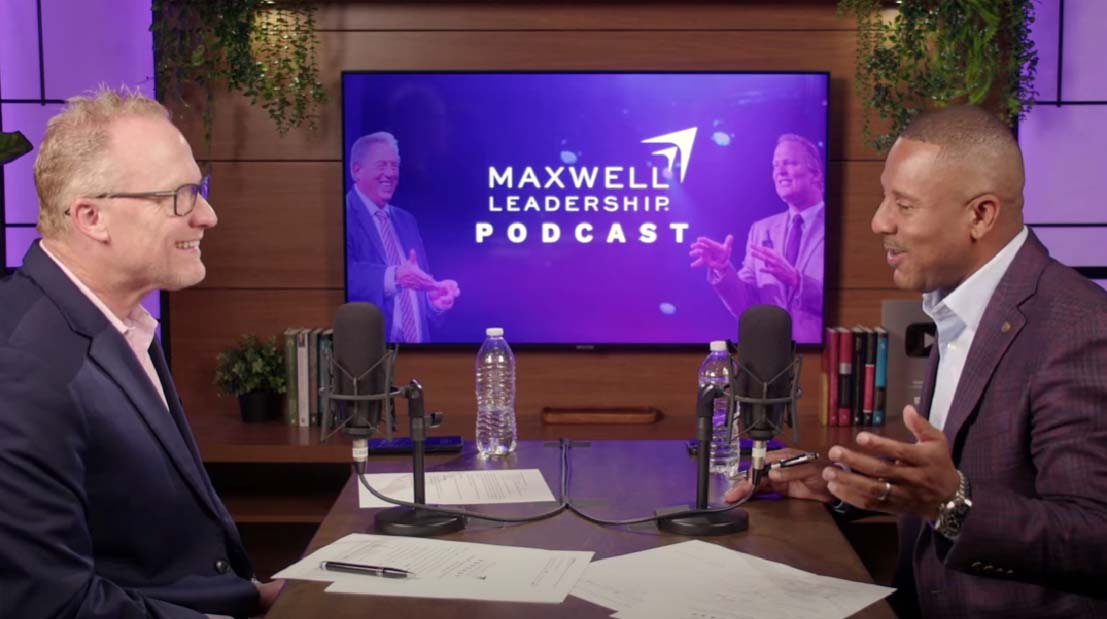
Hey, welcome to the Maxwell Leadership Podcast. We are going to add value to you today and then expect you to go multiply that value out. So many of you come up to me whenever I meet you at some event or in some city and you say, hey, I listen to the podcast in community. In fact, we take your podcast and we learn it and apply it to our team meetings. And so for all of you that are listening together, way to go. Way to inspire all of us to do that. Today we’re going to talk about stop the meaning well syndrome and start living well. And I’m super excited about getting to that and getting to John’s content, but Traci is with me today.
Mark Cole:
Traci, I’m so glad you’re here. Here. How are you doing? What are you excited about these days?
Traci Morrow:
I am doing well. I am excited about many things, but the thing I’m most excited about right now is we are on baby watch. We have a couple granddaughters who are on the way and one who is on the way any day now. So we are very excited about that. Yes. Grandbabies. Grandbabies. Yeah.
Mark Cole:
You make grandparenting just absolutely awesome. Stephanie and I, we’re taking a different approach to grandparenting. So when you say, I’m excited about another grandchild, I go, oh, Lord, no, no, no, not right now. Stephanie and I have four. That keeps us extremely busy. And so, yeah, I’m super excited about that. Super excited. Because, I mean, we’re in the middle of gratitude week, and so our gratitude month, rather Thanksgiving, is right around the corner.
Mark Cole:
So, very excited about that. Hey, John’s gonna talk to you and talk to us today about living and listening intentionally. It’s so interesting because he’s going to break it down for us in his teaching segment of how the transfer from meaning well or intending to do well and start doing it all rest in intentionality. John wrote a book several years ago called Intentional Living. It’s a brilliant book. I’m going to challenge you to pick it up. In fact, while John’s teaching today, I’m going to find a way to get you a discount so that you will be challenged to pick it up. But until we come back, Traci and I’ll be back and talk more about what John’s doing.
Mark Cole:
Let’s get ready to listen in to John. Hey, if you would like to download the bonus resource or if you’d like to view us, view this podcast on YouTube. You can find all the links and all the additional bonuses in the in this link right here. MaxwellPodcast.com/LivingWell. Go to that link and you’ll find some great bonuses there. All right, here’s John. Get ready. It’s going to be a great lesson today.
John Maxwell:
Can good intentions be bad? The answer is yes. And the reason I say yes is when good intentions don’t turn into intentional living, nothing happens, so it can’t be good. When you shift from passive good intentions to active intentional living, in other words, when you and I shift from I should and that becomes I will or I could becomes I did. Now that’s when good intentions begin to add value to others. But too often, good intentions want to add value to others, but they find out reasons why they couldn’t or shouldn’t. You see, good intentions are about desire, where intentional living is about action. People with good intentions, they have a wish someday. People that live intentionally, they’ve got a purpose and they do it today.
John Maxwell:
I find often that people with good intentions live in a fantasy world and they basically hopefully will be able to get something done. Where people that live intentionally, they are strategic and they definitely will get something done. People of good intentions, they’re passive. Intentional livers are active. You see, if we are filled with good intentions, we may do something good occasionally. But if we live intentionally, we’ll do something good continually. People that have good intentions are usually emotional based, where people that live intentionally have a discipline to do it. People with good intentions are always saying, you know, someday I should do something about that.
John Maxwell:
But again, if you and I live intentionally, we say, I will do something about that. You see, people of good intentions, they’re always behind the Life 8 Ball. They’re just trying to keep their head above water. They’re just trying to survive. Where people who live intentionally, they’re going to succeed because they put actions to what they think and feel. So the big idea for today is good intentions will never take you anywhere you want to go. Only intentional living will will get you the things that you want in life. What I’ve always said about a dream, is this a dream like good intentions, it’s a beautiful, wonderful thing.
John Maxwell:
But the moment you start the journey, once you become intentional, you pay a price. And most people, they would rather think about it than do it. So therefore, they never get the best fulfillment in life that is rightfully theirs. How can you. How can I become the kind of person who understands people, who really knows what people want? And we have the insight into how to work with them to really add value to them, to really make a difference in their life. And the answer to that question is, we can do this if we become an intentional listener. Wow. I was very fortunate.
John Maxwell:
My mother was the best listener I’ve ever known, and she always had time. Now, my father was a very successful man of action, but my mother understood as children growing up that the best thing she could do is to listen to us. And she listened until we were finished. I mean, there was no rush, there was no push, there was no interruption. She just listened. And I look back now today at things like being very secure, being very comfortable in my own skin, having a sense of self worth. And I think it’s all wrapped up into the fact that my mother, day in, day out, by just listening to me, instilled that in me. She basically was saying, john, what you say is important, who you are is important, and I’m going to listen to you.
John Maxwell:
My mother was intentional in her listening. She wasn’t passive. It wasn’t that she was just hearing a discussion and she had nowhere else to go and nothing else to do. So she’s listening. She was intentional. She knew that the act of listening is one of the greatest ways to show people that you truly value them. Now, regretfully, I had a little bit more of my dad, the action part, than my mother the listening part. So when I started off in, I wasn’t listening very much.
John Maxwell:
I had visions. I was getting people on the leadership train, we were going places, and I really didn’t have a lot of time for listening until one day one of my staff members came up and said, john, you don’t listen to us. I said, what do you mean I don’t listen to you? She looked at me very confidently, said, no, you really don’t listen. You want us to hear your vision, but when we want to share with you where we are, you’re not really that interested in us. Oh, that cut me deeply. In fact, I went home and shared it with my wife, Margaret. And Margaret agreed. She said, I think you’ve really got to work in this area.
John Maxwell:
And I can remember for the next three years I would sit in meetings with groups of teams, and on my legal pad, I take my pen at the beginning of the meeting, and up at the right hand corner, I put a letter L for listening about three inches up there in that right hand corner so I could visually see it. And during that meeting, I would look at that li and say, john, listen, listen, listen. We overvalue talking and we undervalue listening. And if you wanna make a difference with others, we must become intentional listeners. Live intentionally seize the moment do things on purpose and my friend, begin to enjoy the fruit. Making every day count.
Maxwell Leadership App Ad:
Do you feel like you’re meant for more but you’re not sure what next step to take? Whether you’re leading a team, building your business, or just trying to lead yourself? Well, you don’t need more noise. You need wisdom. Real, proven, practical wisdom. That’s why we created the Maxwell Leadership App. Inside you’ll get daily bite sized videos from John C. Maxwell and other world class thinkers designed to help you grow. Every day you’ll unlock curated playlists on personal growth, leadership, mindset, communication, confidence and much more. All for just 9.99amonth.
Maxwell Leadership App Ad:
And here’s the best part. It’s growth on your terms, at your pace, in your pocket, ready to go further and grow faster. Download the Maxwell Leadership app today. Go to MaxwellPodcast.com/App or click the link in the show notes. Try it free for seven days with the code PODCAST7. That’s podcast the number seven.
Mark Cole:
Hey, welcome back everybody. Traci, I was reminded of the Mother Teresa quote that says a life not lived for others is not life. In other words, if you can’t find a way to live your life to impact others, you really are missing out on the beauty of life. And so I’m super excited. In fact, we’ll talk a little bit more maybe in the middle of the program about the growth app that Maxwell Leadership has. But I just want to tell you right now there is a value resource that we have a video on that app. It’s called Influence Follows Giving and it’s a great month to have that. It’s by Valerie Burton and the day that she recorded that is August 19th.
Mark Cole:
Go check that out. We’ll put that in the show notes. But Traci, I’m super excited to talk today about living well as opposed to intending to live well. Meaning well. Yes, glad to have you on the podcast today for sure.
Traci Morrow:
Yes, I’m excited to talk about this. And I was thinking as I was listening to John that some of the leaders who are are listening in may have been running their life up against this lesson and probably thinking that they may not be passive because most of us are like the rest of us, that we aren’t passive in all areas. Right. We probably maybe are active in many areas that in our life as a leader. So we might be a take charge parent or maybe some other aspect of our life. But as I’m talking to you leaders, as you listened to John, there maybe was that one area that you maybe kept trying to push to the side and focus on the areas that you are really good on. Like maybe you kept thinking of that you wanted to start a business or launch a podcast or maybe you need to apologize to someone or you know, to make it really personal or getting help or a tool in one area or help with your budget. You know, you knew immediately what it was as John started to talk and.
Traci Morrow:
And so that this podcast is for you in that one area. So Mark, I, you know, how do you. How does a out as a leader who maybe is great in these other areas, has mastered being in action in these other areas, but we all have that area or maybe one or two or three where we really are passive or we are holding back. How does a leader move from passive to active if they’ve never been disciplined in that area? You know, John talks about the difference of that is being disciplined. What is the advice that you give to that CEO or to that team member to get them unstuck and moving in an area where they are undisciplined and they don’t know how to apply those lessons to that one area?
Mark Cole:
Yeah, it’s a great question. I have such a propensity to action. I was given that naturally that was demonstrated to be by my parents, specifically my mom. She just constantly had to be. She had a propensity to move, to act. And so I feel like to answer this, I’ve got to first put a disclaimer that I have a propensity to action. I’ve got to be doing something. I’m not a great sit back and wait.
Mark Cole:
And if something comes to me as a lesson, I’m ready to put it into practice. Okay, but let me do give you, I think some three things that I think will help people that may be struggling with acting on it. And I go back inside of me to something I’m very passionate about and that is life architecting, designing the life you were intended to live. I’m very passionate about that. That’s personal growth, planning, that’s year end reviewing all the things that I talk about quite often here on the podcast when I first started that I didn’t have intentionality around personal growth. I didn’t. And so what I went back when you was asked that question, I went back and said, okay, one, let me remember a time where I did struggle with meaning well but not living well. And it was certainly that I wanted to grow.
Mark Cole:
I love to grow. I thought I was growing, but I realized I had no intentionality around it. And so the first thing that I Would tell someone that is in that slump, they mean well, but they’re not living well. They don’t have a bias or a propensity to action like I just described. Let me help you. First, I would tell you this. Any area that you’re tackling, any area that you want to start intentionally living well on, start small, get some wins. And so my first advice to you, or my first response, Traci, to you would be start well.
Mark Cole:
I mean, start small, start living a something that is tangible. It’s almost like you can’t miss. For me, my first growth plan, all I needed to do was read some books, talk to some people and go to a couple of experiences. It’s almost like I was going to do that even if I just lived life normally. So I started the discipline with sure wins, things that I knew would happen. The second thing that I did is I put it down on paper. There’s something about writing down what intentionality means that locks you into it. Personally, I love the progression of smart devices, of intelligence at our fingertips.
Mark Cole:
I love all of that. Yet sometimes I despise it. One is social media, but that’s another podcast for another day. The second one is certainly that it’s made us cheat writing things down, because I absolutely believe pen to paper, sitting down, writing it down locks something within us. Put a plan down. Those of you that are still committed to do it digital, okay, type it in your phone, type it on your iPad, but get a plan that is down, that is written down, that is memorialized. And the third area, after start small, get a win, write it down, say what you’re write down in what you intend to do. The third thing is get accountability, Tell somebody you’re going to do it another time.
Mark Cole:
That comes to mind, Traci, when you are asking that question is when I decided that I wanted to run a marathon before I was 40. And so I started small. I just started running a mile, two miles, three miles every day, not 26.2 coming out of the gates. I, I put it into practice. I started small. Second thing is, I wrote it down. I put an 18 week training plan down, pen to paper, this is what I’m going to do. And then I got some friends that I said I was going to do it and I influenced them to run it with me.
Mark Cole:
And those three things, starting small, writing it down, getting an accountability group, I think is how to stop just wanting to do better and start doing better or start living well.
Traci Morrow:
I love all of that because that first step gives you confidence Just to flesh this out because I’ve just recently done something brand new and I think that step maybe for the perfectionists out there that are afraid of that first step, that first step, that getting that first win gives you a confidence boost, that the fear inside as you’re being held back from taking that first step, you have the confidence to then take that second step and putting it to paper gives you a deadline. And when that with that deadline and mixed with accountability, it’s like you want to save face because you’re going to have to answer to that person of like, okay, I did do it or I didn’t do it and nobody wants to do that. I love that. Okay, so moving right along, John talks about having to pay the price. And so that, that sometimes just even pay the price, that alone feels a little nerve wracking or maybe scary to somebody. So how do you as a leader set up your team members in a po positive way but also a realistic way? Because the reality is you do have to pay the price, that there will be a price to pay just for buy in.
Mark Cole:
Yeah, I think the first thing is a mindset shift that many people have to make and that is if you are going to have something of value, something that you value greatly, there’s a price tag to it. There’s a price tag to it. I remember a mentor of mine, a mentor of John’s. We’ve been on many stages together in many one on one rooms together. Lou Holtz. Lou Holtz is a great football coach, college football coach, did an incredible job at Notre Dame and other colleges as well. And Lou Holtz tells the story of a time to where his family was just kind of struggling with how much he was traveling. And of course I have a parallel track, so I appreciate that.
Mark Cole:
And he said that his family’s just going pretty hard at him one time on how much he was away and all that. And so he got his family all in the car and he drove them to a different part of town than the one they lived in, one that was struggling a little bit different. He said, hey guys, we’re moving here next week and this is going to be your school, this is what you’re doing. And we’re going to move here. And they were like, no, we’re not moving here. We’ll lose our friends, we’ll lose our pool in the backyard, we’ll lose all these things. He said, oh. He said, so you do like those things? Because those things cost.
Mark Cole:
And the cost of those is not just the money. It’s the amount of work that I have to do to make sure that our family can have these things. He said it was not at all celebrating a lot of travel and all that, like I do, but he was instilling in his kids that when you want certain things, there is a price tag on it, which was his point. My point to you today is there’s a mindset shift. If you really want to be effective, if you really want to be successful, you need to get a mindset that it’s going to cost. And let me say this. When I say it’s going to cost, it’s going to cost you more than you knew you were going to pay. It’s going to cost you more time than you thought you were going to invest, and it’s going to cost you relationships you thought would take the journey with you.
Mark Cole:
You will pay a price to accomplish something of value in your life. There are, as John said in the lesson, there are no shortcuts to success. There’s no shortcuts to living. You’ve got to take the journey and you’ve got to pay the price and you’ve got to invest the time.
Traci Morrow:
So do you actually have. When you’re. When you have a big project coming up or something big that your team is tackling, do you actually have a time where before that happens, you sit down with your team and you talk about what the cost is going to be and what if. So what does that look like?
Mark Cole:
I do it so it’s so funny. It’s at a granular level, too. I have a meeting this afternoon, and it’s. It’s envisioning an event that we have coming up next March in Dallas. We’ve had this event many, many times, but we’ve had it in South Florida, and we’re moving and it’s a big move, and there’s a lot of adjustments that we see on the horizon. And I’ve already set it up. I’ll start the meeting just like this, Traci. I’ll start the meeting.
Mark Cole:
Say this meeting is going to cost us $25,000. Well, where did I get 25,000? I’ve flown people into Atlanta. I figured out the day rate and the hourly rate of every person that came. And then I put a multiplier on it, because if they were doing the other things outside of that meeting, they would be able to produce dollars. Sales, business development. And so I’ll go in and I’ll start the meeting by saying, this meeting is going to cost us $35,000. I’ll explain why and then I’ll go, guys, we’ve got to get a return on this because if we do it right, we will get a great return of impact and a return on the investment of dollars. So yes, I do that.
Mark Cole:
I do it before every meeting where I fly people in or have a lot of my team that are normally doing other things in a meeting. I level set the cost of the meeting. Now translate that on out. When I began to allow myself to dream at 33 years of age, 40, of what it would look like to sit at the decision making table of Maxwell leadership, I counted the cost. I watched John’s personal life, I watched how much he traveled. I looked at the sacrifice his family made. And before I ever accepted the role of being called to John Maxwell as being his right hand, I set every one of my family down. Macy was 6.
Mark Cole:
Our oldest daughter was 17. Stephanie. Stephanie was none of your business.
Traci Morrow:
That’s a smart man right there, Stephanie.
Mark Cole:
And I said, I set him down. I said, guys, let me tell you, if I live this out, if I make this commitment to John to do what it takes to sit at the table, this is what our family will give up. These are the things that will happen. Now I’ll tell you some of the perks that’ll come from that. But let me tell you the price tag. Because the price tag’s more important than the perks. And we sit down and we calculated the cost of that. Guess what we under calculated.
Mark Cole:
It’s cost more, it took us longer. Guess what it cost us? Relationships with people in our community that we can’t have because we spend family time every time I’m home, not community time. And so it cost us relationships, it cost us more time, it cost us more money. But I think any person that desires something of value that wants to quit meaning well with that and wants to start living well, needs to count the price tag on the front end and be sure that you know you’re under assessing the price tag because it’s going to be more. Yeah.
Traci Morrow:
And I think the key there that is so important that you added is those conversations around the price tag are so important with the key people in your life. So it’s not just your team at work, but your family as well. And I love that you modeled that and can point back to that all those years later. I know that you said that so many times that you and Stephanie have been able to point back in this, in the heavy seasons of travel, in the hard days that you can look back and say, you know what, we talked about this. We agreed on this as a team. This is something we’re all in for. So I love that you bring up that example and that you modeled that so well. So moving on.
Traci Morrow:
John said that his dad was a man of great action and that his mom was such a great listener. So he had those two, two people in his life that he can point to and that he, he, John will say he was naturally a man, great action, just as you said you are, and that he had to work to become a better listener. So I’m just curious, do you and. And speaking to, to team leaders out there and CEOs and, and leaders of small and large teams, do you have someone, if you’re, if you’re a leader, who is a person of great action and you’re listening to this, you might be thinking like, oh, I’m not a great leader. I’m not. Not a great listener either. That’s a bad slip of the tongue right there. Not a great leader.
Traci Morrow:
Do you have someone on your team who is like a designated ears of the team? Obviously, we’re all trying to work to become better listeners, but is there somebody who you have as. As like your ears of the team that reports back to you and kind of takes the pulse and takes the heart of the team and reports back to you, or is that something that you try to do and is it a delegating thing or is it something you try. There’s no way. I can’t imagine the larger your team that you’re the ears of everybody. How does that work?
Mark Cole:
Yeah, you touched on it. I do have somebody, my executive partner for well over a decade. Kimberly is my eyes and ears. She’s not only my ears and what the team is saying, she’s my ears on how the team is hearing me. And so I think it’s really important and she’s assigned that. I mean, more than getting me from point A to point B, which, by the way, Kimberly keep getting me from point A to point B. I need that. But more importantly than that role in my life, she plays the role of really describing what it’s like being on the other side of me, really describing how I’m being received by the team, how the team is hearing me, and what I need to hear back from the team that may or may not be in meetings that she and I are in.
Mark Cole:
So, for instance, just yesterday, she called me after a meeting and she said, mark, I know what you intended at that meeting, but let me tell you Two follow up emails that you haven’t seen that lets me know that your instruction in that meeting was not as clear. And she laid that out for me. And she said, I think it’s because you were too intense in your conversation. I’m a passionate person and what passion feels like on the other side of you is intensity. So I’m extremely passionate about everything that I do. And that passion oftentimes comes across as anger, comes across as frustration, comes across as dissatisfaction because of the intensity of my passion. And so she said, I’ll tell you, not only that they didn’t hear you, here’s the proof. I’ll tell you, not only that they misunderstood you, here’s the truth.
Mark Cole:
I think the reason that that happened is because you were too intense when you followed up and responded to that question. Your intensity therefore sounded like you were dissatisfied and you were trying to cast a vision for the future, not a condemnation on a missed project. And because of that, people took it personally that you were frustrated with something they did yesterday and you were trying to cast a vision of what to do differently tomorrow.
Traci Morrow:
Wow.
Mark Cole:
It’s a long answer with a great illustration, perhaps. I hope it was a great illustration. It’s a long answer to say that. Yes. You’ve got to have people telling you what it’s like being on the other side of you even if you’re in the room.
Traci Morrow:
Right.
Mark Cole:
So for you small time leaders that only have one or two or five people reporting to you and don’t have 59,000 coaches around the globe, you still have to have somebody that hears differently than your ears here in a room if you’re going to start living well in your leadership, that is.
Traci Morrow:
Kimberly is such a key, invaluable team member to you and the fact that you have her is so powerful for your team. I think there are probably, I bet that there are so many spouses that are like, if I could just get that team member to come in and help me in my marriage. Stephanie’s like, if Kimberly, could you come in in this conversation with me and Mark?
Mark Cole:
And by the way, Kimberly does help with that. Do you know what that sounded like to your family? Do you understand how Stephanie probably took. So, yeah, there’s a, there’s a help there too. I’m very grateful for.
Traci Morrow:
Yes, yes, that’s a key, key player to you. But it takes a very mature leader to, to keep someone like that close to you because I think so many leaders keep a, keep, yes. Men and women around them that go like, great message, great job, Wouldn’t do it any better. You sounded so great. And I think that feeds the ego and makes you feel good about yourself and it doesn’t help you or at all. It doesn’t help you become a better listener. And so my follow up question to that would be like, how do you help a leader really understand? Or how does a help, how does a leader gauge if they’re a bad listener listener or not? Or how do they bring in a Kimberly in into their inner circle if they don’t currently have one?
Mark Cole:
Yeah. So here’s how you know, I’m going to ask everybody listening or everybody viewing us today one simple question. When’s the last time somebody told you you handled something wrong? Think about that question. When’s the last time outside of a significant other? Because we are inclined to speak like that at home? When’s the last time that somebody that you’re signing their paycheck told you you did something wrong? Can you remember? Do you remember what it was? Do you remember what your response was? And if you can’t remember something in the last week or two, you got too many yes. People around you because you’re doing something wrong every day. You’re doing something that could be improved every day. That is what’s called humanity. That’s what’s called living life.
Mark Cole:
You have room for improvement. And if people around you are not constantly telling you how you can improve and get better, then you have surrounded yourself with people that your paycheck, that the paycheck they receive is more important than their desire to see you succeed. And that is a challenge. So I work hard. I’m working on something this afternoon that’s a recording, that’s a broadcast that’s going out. And I’ve got two people on that call because it’s the first time I’ve ever tried a couple of things in this. And I said, you’re on this call and I’m paying you to bring back to me what I did wrong. And if you don’t have anything to critique me on, don’t show up at this meeting.
Mark Cole:
If you don’t intend to find something that you can perfect me on, then don’t show up in this meeting. One of our vice presidents, I mean very, very successful, got a lot of work to do. But today his job is to tell me what I did wrong in this call. Because this is not going to be my last call. It’s just going to be my first call. And if I want my next call to be better than my first call, I’M going to need people around me that will tell me what I did wrong, not what I did right.
Traci Morrow:
Right. Yeah. I love that. That’s good for me. I think every person listening to this can be thinking, oh, that’s so good. I’ve been thinking as you were talking, trying to listen, but also assess myself. So, last question, because this is just so such great content. But I think this is sending us all away with homework, which I love a podcast like that.
Traci Morrow:
Hopefully we’re all. Every podcast is leaving you with homework to assess yourself. But how does one practice now? They leave this. They’ve got their homework, they’re looking for someone. They’re. They’re assessing whether or not anybody has, you know, their price tag. They’re assessing whether or not they have someone close to them and when was the last time they were. They were told that they, you know, weren’t a good listener or with whether or not they’ve got some work to do.
Traci Morrow:
But how does one practice or begin the this? Taking the first steps to practice, becoming an intentional listener.
Mark Cole:
Yeah, it’s so funny to answer that question. Let me tell you what it’s like being on the other side of John Maxwell’s mentorship. I listened to him describe himself in this call in this podcast today. And I gotta be honest with you, in mentorship, not in leadership, I experience his dad in leadership, but in mentorship, I experience his mom. And I never knew that because what did he say about his mom? He said she always listened to and she’d never rushed him. And so he felt unconditional love. Now there’s times when John is leading me, he’s charging the heel, and he’s taken me with him that I go grief. Can I just have a moment? Will you have a little bit of patience with me? But in the area of mentorship, when I bring my list of questions to John, I never, and I may never feel rushed by him in mentorship.
Mark Cole:
So much so that again, as he was describing that, I went, wow, imagine being mentored by John the way that he described his dad compared to his mom. Or imagine being mentored by John the way he leads sometimes rather than the way he mentors. What I’m trying to paint right here is John learned how to listen to become a great mentor. Every week that I’m not traveling, every week I’m on the call with 150 plus coaches in a program we call mentorship. They can ask me any question. And unless I have a meeting on the backside, I will stay and listen to every one of their questions, and I will let them give me minutes of context before they get to their question. You know why I do that? Now, that’s not my nature, Traci. You know, the reason I do that is because when I put a mentorship hat on, I’ve realized people don’t want me to rush, People don’t want me to direct.
Mark Cole:
People don’t want my advice. They want my questions so that I can help them to discover the answers within them. And you can’t rush that process. It’s completely, radically changed my life because John was influenced by his mom and learned how to mentor differently than lead. Why did I answer that like that, Traci? Because that was a long answer. You really can. Leaders learn how to value someone else by asking more questions. You really can change this drive that’s within you and do more listening than you do talking.
Mark Cole:
You can learn how to do it. John Maxwell’s proof. I’m proof in the mentorship. As a second generation or third generation of John’s mom, you can too. But it’s going to take intentionality. I end today’s session the same way I started it.
Mark Cole:
And that is you need to get the book Intentional Living. We’re going to give you a discount. You can find all the information in the show notes, click the link, use the code podcast, and we’ll get you a discount there. But I want you to be living intentionally so that you stop thinking about doing good and you start doing good, so that you stop thinking about success and you start doing successful things. That’s the purpose. That’s what we’re trying to do here, and that’s what I want you to do. I made a mistake. Just a few minutes ago, I gave you a video on our growth app by Valerie Burton.
Mark Cole:
Now you can go check that one out, too. But the one that’s really relevant today is one by Perry Holley called Small Steps and Big Growth. We’ll put that in the show notes. You’ll be able to access that. I want to go to one of our podcast listeners because, by the way, always about podcast listeners. And Solomon asked a question. After listening to the podcast, what you focus on expands. In that podcast, we talked a lot about your vision.
Mark Cole:
And Solomon asked the question. I love this question. How can I start on my vision in life while still working for someone else? And Solomon, I’m so glad you asked this because I’ve been working on my vision for life all while having 10 different positions here at Maxwell Leadership. I was working on my purpose of life when I was washing tractor trailer trucks back before I came to njoy was the name of the company back then. Your position in life and your position in reporting to someone or having a bunch of people report to you has very little to do with your purpose and your vision in life. You may have to do some things to get to a point to where you call all the shots. But unless your vision in life is to be the big cheese or your purpose in life is to be the boss rather than your purpose in life to be something greater than what you currently are and to do it with people, you can start right now on your vision in life. You may have to do some roles and responsibilities along the way that you don’t want to do, but don’t wait.
Mark Cole:
Do you become the boss to have a vision of how you’re going to lead your life? Solomon, thank you for that question. Thanks all of you for listening today. Traci, thank you as always. Hey everybody, go do something powerful positive with your leadership because everyone deserves to be led well.
Maxwell Leadership Certified Team:
Hey podcast listeners, many of you listening right now would probably love the autonomous that comes with owning your own business or becoming a coach that helps other businesses succeed. Well, we have a phenomenal strategy where you are 100% in control of your own business, earning income on your own terms, and have access to the people, tools and resources you need to build a thriving leadership development business. When you become a Maxwell Leadership Certified Team Member, you join a global community of entrepreneurs led by our expert team of mentors and faculty, including John C. Maxwell. You’ll also get one of the top leadership certifications in the world next to your name, giving you the boost you need to get started. Visit us online at MaxwellLeadership.com/JoinTheTeam to find out more.
Transcript created by Castmagic.




Be the first to comment on "Stop Meaning Well, Start Living Well"