In order to lead the way, you have to see where you’re heading. In this week’s episode, we’re diving back into John Maxwell’s two-part series helping leaders cast vision for their team!
After John’s insights, Mark Cole and Chris Goede share their experiences and analysis to help you see – and seize – your organization’s future.
Our BONUS resource for this episode is the A Leader Sees More and Before (Part 2) Worksheet, which includes fill-in-the-blank notes from John’s teaching. You can download the worksheet by clicking “Download the Bonus Resource” below.
Leaders, stop trying to do it all yourself. The best leaders know their limits, operate out of their strengths, and set others up for success. Find freedom with BELAY — pairing you with vetted U.S. virtual assistants so you can focus on what matters.
To help you get started, BELAY is offering Maxwell Leadership listeners a free download of their resource, The Leadership Toolkit. Just text MAXWELL to 55123 for FREE access.
Belay ad:
Remember those goals you set months ago. More focus for what matters. You know, more time with friends, more bandwidth for family, maybe more growth for your organization. You knew you needed to hire some help, but you didn’t have time for a lengthy hiring process. By the way, you still don’t have that time. That’s why Belay has helped thousands of leaders just like you find the right executive assistant for their specific needs. Because when your time is valuable, you can’t afford the wrong hire. Belay’s US based executive assistants handle everything from inbox management to tribal planning and project coordination.
Belay ad:
So you can stop managing the details and start leading with vision. So if you’re ready for the next step on the path to great leadership and download Belay’s free leadership toolkit. Inside you’ll find ways to become a stronger leader and get more out of your work. Just text the word MAXWELL to 55123 today for your free copy. That’s MAXWELL to 55123 to get back to conquering those goals with Belay.
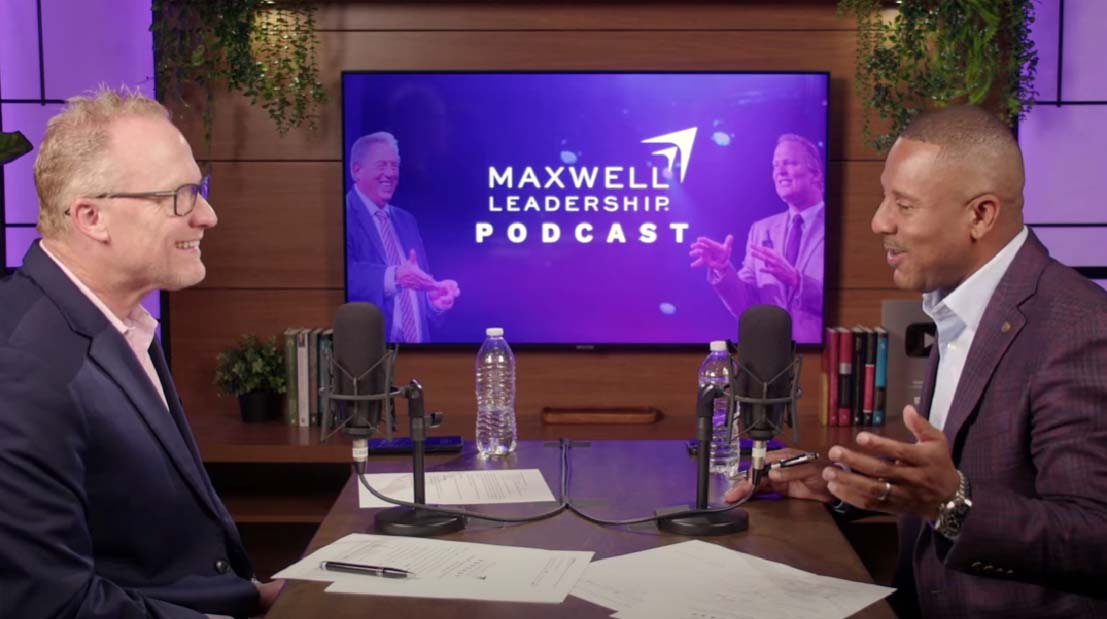
Mark Cole:
Welcome back to the Maxwell Leadership Podcast. And Chris, I say welcome back. That’s right, because you are late. If this is your first podcast, you’re late because you’re right in the middle of part two of a series that John is doing called A Leader Sees more and more and more before. And I really do tell you I don’t want you to leave. I’m afraid you won’t come back. But you really want to go listen to number one because this really will be a building episode off of last episode we covered in the last two episodes or in the last episode we covered the two things that John has done to create a discipline of seeing more, more, more before. If you’re tired of sitting in rooms and others seeing it before you, you need this series. If you’re tired of having to wait and wait and wait before you can see a clear path forward, this series is for you and Chris. We’ve learned from the best on this right here.
Chris Goede:
Absolutely. What we’ve learned is this is a learned behavior. This is a skill set that you came into, your leadership that wasn’t as refined as it is now. And as we go through the three today and the two that we covered last week, you’re going to learn some handles from Mark on how to adapt that to your leadership journey.
Mark Cole:
Yeah. So let’s get started, you guys. In a recent survey that we gave you, thanks for all your feedback. Thanks for liking us. Thanks for giving us five stars. All of that helps. Thanks for your questions, but thank you for many of you who gave us some feedback and said give us more John. We want to hear more John.
Mark Cole:
And here he is. Here is more of John Maxwell. Grab a pen, grab a paper. If you would like to download the bonus resource, you can go to MaxwellPodcast.com/MoreAndBefore you can check us out on YouTube at that same link, here’s John.
John Maxwell:
Number three is ask questions. Ask questions. That will help you know, more, more and more. Before, earlier in my career as a leader, I always wanted to give direction and I began to understand that I was assuming a lot by giving direction. You see, I was leading by assumption. And when you start asking questions, you stop leading by assumption because now you know where they are and you know what they’re thinking and you’re asking them what do you feel about this? And what are your expectations? And share with me what would you do and what do you think? And what do you think about how I’m doing this? And you’re pulling them out and you’re finding them and when you find them, you can go there and you can lead them. I just think, I think a lot of leaders, I think a lot of leaders, they just assume that their people are with them and they assume that they’re on the same page and they just assume that they all have the same values and they assume that they all have the same work ethic and so they lead under assumption, which is kind of like the mother of all mess ups in leadership. And that asking questions is such a big validating experience Anyway, you know, if I come to you, maybe the highest compliment I could ever give you is to ask your opinion about something.
John Maxwell:
Help me out. What do you think? Here’s what I’m thinking. Give me some feedback on this. Talk to me, talk to me about this. And so I, you know, define more. And before, I mean, I’ve had learning lunches where I ask people. I’ve done this every month for, for 40 years. I take somebody out to lunch and buy their lunch.
John Maxwell:
I don’t even eat, I got questions to ask. And the one thing about the person I’m with is they’re bigger, better, faster, smarter, more experienced than I am and they’ve got something to teach me. And so when I’m with them, one of the questions I ask is, who do you know that I should know? It’s a phenomenal question. I could spend three hours now telling you people that I’ve met because I asked the question, who do you know That I should know. Because you see, every time you’re introduced to someone else like this, you get more and more, and you get more before. I have a wonderful neighbor friend who literally, after reading the book Good Leaders ask Great Questions, he went out to dinner with me and he said, john, I have a question that I ask. And he said, I wanted to share it because your book stimulated it. He said, I sit down with people that are very successful that are 10.
Chris Goede:
Years older than I am.
John Maxwell:
And I look at him and I say, okay, you’re 10 years ahead of me in life. Talk to me about my next 10 years. What do I need to know about what’s ahead of me? Because you’ve just experienced some of this kind of get me ready, get me prepared. You know what’s ahead of me. So asking questions helps you to find and experience more and more and more before in your life. Number four is intentionally grow every day. Just intentionally grow every day. Because what happens is this.
John Maxwell:
When you intentionally grow every day, you increase your growth capacity. You have growth capacity, if you’re intentional in it, to receive more, to be able to handle more, to take in more. Many people, I look at them and I say, look, we’ve got a problem. We’ve got a growth capacity problem. And the reason that you have a growth capacity problem isn’t because you can’t expand your capacity, but growth is the only way that you can expand your capacity. It’s the only way that you can receive more, more and more before. And so, you know, the only guarantee, the only guarantee you and I have that tomorrow is gonna get better is that we’re growing today. It’s the only guarantee.
John Maxwell:
So when I ask people about tomorrow and they say, well, you know, boy, I just. I hope, man. I just. I’m kind of hoping that it’ll get better tomorrow. Boy, I hope.
Chris Goede:
I hope.
John Maxwell:
And I want to stop and say, you know, my name’s John. I’m your friend. Hope is not a strategy. Dear God. Hope if. Hope, Hope, hope. Let’s just raise the bar a little bit above hope. Let’s get a plan.
John Maxwell:
I mean, let’s get a system here. Let’s start developing. Let’s start growing within our own self. And then the last thing, number five is invest time. If you really want to have more, more and more before, invest time with people and going to places. So invest your time with people and going to places that will inspire you to see more, more and more before. And I had a mentor named Elmer Townes that literally, in my late 20s, about 28. He pulled me aside, he said, john, if you really, if you really want to really grow and be successful, you know, meet great people and go great places and attend great events.
John Maxwell:
And what I’ve discovered about this is that when I, when I do this, and so now every time, what am I doing? I’m putting myself back into the bottom of the class. Are you with me? I’m going to be bigger, better, faster, smarter than me, learning lunches. I’m just, I’m putting myself into, into an environment where somebody’s gonna be able to help me because they just are better than I am. And what I found is that every time I’m around a bigger person, okay, when I leave them, I feel bigger myself. There’s something about who they are and what they say, that even though I’ve not been there yet and I want to get there, but I’m not there yet, there’s something about them that I leave and I just feel bigger. I remember my first time with John Wooden and we had spent literally six hours together. It was supposed to be a breakfast. And I had five pages of questions for him and he gave six hours.
John Maxwell:
And then when I was done, he said, we only got through two pages. John, would you like to come back again? And I said, yes. And it started a 10 year mentoring relationship with him. But I remember the guy who introduced him, his name was Jeff. Let me get, who do you know that I should know? This kid was a principal in Florida, in a school. And he said, well, I know John Wooden. And he said, you ought to know him. And I said, I’d love to know him.
John Maxwell:
Okay. So I got there. So I’m with Jeff and we’re going back to the car in the kind of parking lot outside of his condo there. And we got, just about to the car, he said, john, turn around. And I turned around, I looked up on the porch and there was Coach Wooden standing at the porch, just looking at us, leaving, waiting. And when I turned around, he waved to me and gave me a big smile and said, nice to be with you today, John. I felt so big because I was around a bigger person. Let me tell you something, when you’re around a smaller person, they’ll reduce.
John Maxwell:
You understand me? Average people want you to stay average. You’re not gonna get more, more and more before around these people. They inspire you. I want you to live beyond yourself. I want you to rise higher than you’ve gone. Because every time you win, if you’re wanting to add value to people A lot of people win. And I have a dream. And basically my dream is that I can add value to leaders.
John Maxwell:
You, that you’ll turn around and you’ll multiply value to others.
Maxwell Leadership App Ad:
Do you feel like you’re meant for more but you’re not sure what next step to take? Whether you’re leading a team, building your business, or. Or just trying to lead yourself? Well, you don’t need more noise. You need wisdom. Real, proven, practical wisdom. That’s why we created the Maxwell Leadership App. Inside you’ll get daily bite sized videos from John C. Maxwell and other world class thinkers designed to help you grow. Every day you’ll unlock curated playlists on personal growth, leadership, mindset, community, communication, confidence, and much more, all for just $9.99 a month.
Maxwell Leadership App Ad:
And here’s the best part. It’s growth on your terms, at your pace in your pocket, ready to go further and grow faster. Download the Maxwell Leadership app today. Go to MaxwellPodcast.com/App or click the link in the show notes. Try it free for seven days with the code podcast7. That’s podcast the number seven.
Mark Cole:
All right, Chris, I’ll be honest with you. I want him to have 10. I mean, he stopped at five. And this is part two of two parts, so there’s not a part three coming. But could you not just listen to him talk more about his discipline of challenging himself to see more and more?
Chris Goede:
Yeah, and he lives it out. Right. So for us that they have the chance to, to see him often, you can see I lived out even those that listen to him though. I hope you hear it and I hope you read it in his books when he’s communicating because he continues to just take it to the next level. And today Mark and I were just talking about there are three more. And I said, hey, Mark, which, which three do you want to cover? We’re limited time. Matter of fact, we get in trouble oftentimes. And Jake just shuts the recording off.
Chris Goede:
You should hear what we talk about when the recording’s off. But we went through and we go, no, we gotta touch each three of these. And as I was thinking about it, this is how I want to set it up for you. Today. I was looking at these next three and Mark’s leadership journey and what I came down with. I wrote these things down. I said, the first one we’re going to talk about how do you broaden your horizon as a leader to think more and more before. The second one is going to be how do you sharpen the vision that you have because he is continually sharpening the vision we have for Mark’s leadership.
Chris Goede:
And then the final one is going to be, well, how do you accelerate your progress to that vision? And John has given us three principles, and you’re going to talk about how to apply these in each one of those areas. The first one John talks about is to ask questions. Now, John approached it on the episode as external. John has learning lunches. He learns from big thinkers, from thought leaders. I want to come inside the organization and your leadership, and I want to talk about what does that look like for Mark Cole as the CEO now to be thinking way out in front of us, to be asking questions internally. And I like the word curiosity. You seem to be more curious these days in what is going on at every level.
Chris Goede:
Not micromanaging, but thinking because you want to know so that you can think even further out in front. Talk to us a little bit about some questions that you’ve learned from John or you’ve developed in your own leadership that you are now using as the CEO and setting the vision internally with where we’re at as an organization.
Mark Cole:
Yeah. About 10 years ago now, maybe 12 or 13. Good grief. Time flies. John started asking me this question that freaked me out. He started asking this question, what am I missing? And he’d say, what do I need to know? And I’d tell him what he needs to know. That when I was prepared for, I knew what he needed to know. But he would.
Mark Cole:
He would say, what do I need to know? Any more additional content? And then he would give me the decision, hey, we’re going to. Going to pursue this opportunity now. What am I missing? And I remember the first few times he asked me, I’m going, this is little old me, right? Big old John wanting me to tell him what he missing. I’m not going there. This is a trick question. I’m not going to go tell.
Chris Goede:
You got it covered.
Mark Cole:
You got it covered. I’m not doing well. Then I waited a little while longer as he would ask that question every time. And I’d go, like, if I tell him something and then he doesn’t like it, I’m going to sound dumb.
Chris Goede:
Yeah.
Mark Cole:
Eventually I discovered something in watching him lead somebody else that never had an answer for him. Never did. They were yes people, they got a mess. I realized that my ability to get asked that question was directly in response to my ability to answer that question.
Chris Goede:
That’s great.
Mark Cole:
It wasn’t answering it correctly. I didn’t put that there. It wasn’t giving John Maxwell Insight. I didn’t say that it was having an answer.
Chris Goede:
You had a thought to the question. That’s good.
Mark Cole:
And John has since taught me that the value of leadership is all in your ability to contribute when a problem or a situation is trying to be solved. Your ability to contribute, not your contribution to be used, your ability to feel confident enough to contribute. And so I began to understand that John’s question what am I missing? Was an answer was a desire to see if there was something more that he was not considering. But it was more than that, as most questions from John is, by the way. It was to find out how I was thinking and then finally it was to find out how much buy in I had from his direction.
Chris Goede:
I love that.
Mark Cole:
And this question became very layered to me and therefore helped me understand the value of more, more and more. Before just recently you asked how I’m applying this. We have this big initiative in Maxwell Leadership. It’s a certification program that we certify coaches, speakers and trainers. And there’s over 58 now in 169 countries that are certified. And I challenged our team to do something after 15 years. The other day I challenged them to tell me what we should be doing better with something that is really working. And Chris, I can’t describe to you the euphoria that I had when I walked in with a very viable product, with a very accomplished solution, with a very strategic and successful business initiative, asking myself what am I missing? And the more, more and more before I got out of that meeting was not just in better ideas that are coming.
Mark Cole:
Stay tuned. It was not just in the collaborative conversation and lifting the hood on something that’s been very successful for 15 years. It was the sense of buy in that I got from the team because as John says, the greatest compliment you can give somebody is, is asking what they think. What’s your opinion? Chris? You know where I’m going with this right here. I cannot remember how much I choked, shook you and said you’ve got to start talking to me in meetings. Because I knew there was gold in them there hills. I knew there was something. And now every meeting I’m just waiting.
Mark Cole:
I’m waiting for that moment that you’re going to give me something and I’m going to see it before. That is an earned opportunity.
Chris Goede:
That’s right.
Mark Cole:
When you number one leaders, you need to be asking the question.
Chris Goede:
That’s right.
Mark Cole:
Those of us that get asked that question, you need to have an answer. Even if it sounds silly at first, even if it sounds Irrelevant at first. I can’t tell you the first time I remember it, I said, john, this is what you’re missing. I’m not missing that. I already know that. And I went, well, why did you ask me that? Okay, it was it to embarrass me. He was asking to see what I was thinking about the whole decision direction forward. So what I would tell you is John did talk a lot about asking external questions.
Mark Cole:
We need to be asking internal questions to see more and more and more before.
Chris Goede:
Yeah. And I love how he talks about don’t lead by assumptions. Right. Because oftentimes, and you would agree with this, the perspective and the way to solve the problem is often closest to the problem. And as you begin thinking more and more before, you want to make sure that you have others perspective. Right. And also I love what you said, the three things you gave us. The first one was make sure he’s not missing anything literally with maybe even what Mark’s going to tell me is going to open a new door, it’s going to open a new thought and your team is going to do the same thing.
Chris Goede:
Don’t, don’t have an assumption just because you’re asking questions. Ask questions authentically, by the way. Exactly right. Like you know where you’re going. I know where I’m going. But really are you, do you have that, that curiosity, that advantage of saying, hey, I’m going to authentically step in here to see what I can learn, to see what new doors I may be able to help the enterprise as a whole. The last thing that you talked about on the third thing, and I’m over here in complete agreement with you, is the buy in factor. People, they just want to be seen, valued and heard.
Chris Goede:
They don’t. And you have taught us this in your leadership. Hey, we might not all be in agreement in here, but when we walk out of here we’re in alignment. But by the way, if you’re asking questions authentically and you’re doing it in a way where you’re curious about what’s going on with your team compared to the vision that you as the leader want, what’s going to end up happening is as long as my voice is heard, we don’t go that direction, I’m still bought in. And I think your point on how John was asking you that question was to get you to a point to see where you bought into what his new vision was and, or did he have to do a little bit more work. And I think leaders, you need to be thinking about that same thing.
Mark Cole:
Yeah. Let me say this to that, Chris. I’m going to be very authentic. I try to be very authentic. When John began to challenge me, Mark, you need to ask more questions. You need to listen to your team. You need to ask more questions. I got to be honest with you.
Mark Cole:
It was a task list for me, not a desired list for me when I first started. So how did I be authentic when really I’m ready to set a course and not really hear your impact. And I’m just being honest with you as a leader, and many of you feel the same way. I was like, oh, these questions and these answers, they slow me down. How do I be authentic in asking it? And a trick of the trade for me is I can remember first asking questions and trying to do it because John told me I needed to and because I wanted to check it off the box. And I would ask the question, and the way that I would demonstrate authenticity is I would repeat back the answer to the person. I go, so what you’re saying now, I may have already thought it, I may have already had it, but I would go, okay, I’ll tell you what. I like what you’re saying right there.
Mark Cole:
What if we implemented it right here, I made it. Their idea wasn’t necessarily the idea. It already came in already thinking that. But here’s what I’ll tell you. Your best answers are not your first answers.
Chris Goede:
Right.
Mark Cole:
The gold is in the second, the third, and the fourth question and the answers behind it. And if you want to get your. Your team’s best thinking, you’ve got to ask the second and the third question. And you’ve got to show them authentically that you really want their input. Because now constantly, Chris. And I’m a better leader today. I really am constantly. I get better ideas from my team than my ideas.
Mark Cole:
But that wasn’t true at first because I wasn’t honoring them by asking the second and third question. I was just asking the question.
Chris Goede:
But I think your. I think your role was different to where you were the implementer of John’s vision, playing a different role now as the CEO and the vision caster carrier and. And driver. And so now that’s a little bit of a different. Not giving you an out to it, but just saying I think your role has changed a little bit. That has required that. Which, by the way, this is what this lesson is all about. When you get to the point as a leader, thinking way out front and opening doors and learning new things and getting buy in, you have to do that by asking questions of the team in the appropriate way.
Chris Goede:
All right, so the second one, where this is. If any of these are your sweet spot, this is your sweet spot. Is this intentionally growing every day? And we know. And if you’ve been a longtime listener of John Reed or John’s content, watching the podcast, you know that we talk a lot about we are growth, not goal oriented. As someone that’s out in front setting the vision, you can’t set a goal. I remember. I mean, you’ve learned this, too. This is what we’re doing.
Chris Goede:
This is our vision. And then you’d come back three weeks, guys, I got a bigger vision, right? I spent time with John on the plane, and now here’s where we’re going. But you grew in those three weeks. You have a system, you have a process. This is your niche, is in the personal growth. What are you doing every day right now to get to a place to where you’re growing in your leadership to be able, as I said in the first podcast, man, people want their leader to set the direction and have the vision. We want that from you. You can’t give what you don’t have.
Chris Goede:
How are you pouring in yourself to be able to give that to the organization?
Mark Cole:
Well, and you said this, but I underscore this point in the notes. Growth is the only way you can expand your capacity. It’s the only way. Maxwell leadership, podcast family, listeners, viewers, what did you do yesterday to grow yourself? I hope it’s another podcast. I hope it’s something, because you need to be growing every day, not just on Wednesday, not just when the relief, when I get around to the next podcast release. It’s an everyday discipline. It is for me, it is for John. Chris, it is for you.
Mark Cole:
What is it for you, listener and podcast family? And I’m super excited about this. I said this last month, last episode. I wasn’t going to say it this time, but our Maxwell Leadership app is a tool to grow every single day. If you will spend four to six minutes every single day on your personal growth, the return this year will be without comparison, your best year yet. And we’ve created this app that gives you every. In fact, on July 17th, Chris, you did a five curiosity shift video. We took that video, we put it on the app as an example of a video every single day. And you can go back and look at July 17th and see what Chris said for all of our podcast family, because this fits in this.
Mark Cole:
This question you’ve got. We’re going to give you a seven Day free trial for all of our podcast listeners. So go into our show notes, click on the Maxwell Leadership app link, and then you’ll put a promo code called Podcast seven and you’ll be able to get access to that. But Chris, going back to your question, it is the discipline of every single day. Don’t tell me what you’re going to do. Show me what you’re going to do.
Chris Goede:
Yeah, I love that. Okay, let’s jump to this last one here that John talks about investing your time properly. I added the word properly because we all invest time. It’s how are you deciding to do that? And you see John in rooms and around leaders and he talks about it back when even when he’s asking questions, puts himself around people that he would say is smarter, thinks faster, thinks bigger in order to learn properly. And then he talks about the five people that are closest to you. We’ve used that with our kids growing up. Whether it’s financially, whether you’re a person of faith and spiritually leadership wise. Like what.
Chris Goede:
What are the five people around you? I have seen your circle of five over the last five years grow exponentially to where you’re having business conversations now. And what I love of it is that we benefit from it because you come and share with what you’re learning, which, by the way, leaders, you want your people to be developed. You, it is contagious. What you’re learning is share with your people. Every meeting that you’re leading, the first 10 minutes should be what are you learning? And by the way, people go, oh, well, if Mark’s learning, I better be learning. But you’re in rooms now that are. You would probably go, how did I even get here?
Mark Cole:
Yep.
Chris Goede:
What’s been the benefit for you of challenging yourself to be the person that maybe is not the smartest person, not the best leader in the room. And what are you learning from that? That has allowed you remember back to where we’re going with John’s topic is like to see more and before the rest of the organization.
Mark Cole:
You know, it’s interesting that you say that. I go back just a few weeks ago. I’m on a plane to Argentina to meet the president of Argentina and the mayor of Buenos Aires, which is the second most powerful, influential leader in all of Argentina. And I’m on a plane going down for four days to meet 150,000, 150 of our coaches that’s going to train tens of thousands of people in Argentina on our values curriculum. But I’m in a plane with some of the most successful people that I’ve ever been around, ever. And I’ve traveled with John Maxwell. I meet with presidents, I met with president of Argentina. But this eight hour flight down, this eight hour flight back was with some of the most brilliant thinkers, some of the most globally recognized leaders that I’ve ever had in one plane, one environment.
Mark Cole:
It grows every single week, every single month, every single year to this. But it started, Chris, with a discipline I had 13 years ago. Thirteen years ago, John had just asked me in the last two years to lead Maxwell leadership. Now, even at that point, John is a globally world recognized icon in the concept of leadership and personal growth. He’s been in demand for many years. And I went, I am the leader of the premier leadership organization in the world. How am I going to do this? And immediately my mind went to what John’s teaching right here, and that is invest time in people that are leading brands as internationally recognized as Maxwell leadership. And I began, I began a discipline that every year I would find people that was leading with better, with more zeros than I had to lead, with greater brand recognition than I was carrying and with greater global vision of impacting the globe and than I had as John’s CEO.
Mark Cole:
And I began the discipline. So I didn’t just show up on a plane just a few weeks ago and all of a sudden go, wow, it’s been a discipline of mine for 15 years. And people go, wow, how did you fall into that? Well, with a lot of God’s favor, a lot of Maxwell’s coattail, but with a lot of discipline that I am going to spend time every single year with somebody that is leading bigger than me. I got one more point on this. So get a discipline. Whatever you’re leading, whatever you’re leading, some of you, we’ve got big time listeners, big time leaders that listen to this podcast. You’re not too big that you shouldn’t be spending time with somebody bigger. Who are you spending time that is bigger than you, that is faster than you, that is going at a different level of incline than you.
Mark Cole:
And if you can’t quickly answer that, change your disciplines and find time to do that. But let me tell you something else that I learned from John. John says often, he says, I’m my own best friend. And he means that he loves, he loves, he’s his own best friend. He says, hi, I’m John. I’m your friend, but I’m my best friend. But he should, he loves that. He loves being his own best friend.
Mark Cole:
I will tell you this. It occurred to me about four or five years ago, I started getting all these requests from people that wanted me to mentor them. They would pay me big money to mentor them. They would ask me questions. They’d line up to ask me questions, for goodness sake. And I wouldn’t take myself serious a long time on that one day, it hit me, why are people paying me money? Why are people standing in line to ask me questions? And it was because my exposure, it’s not my intelligence. Listen to how I talk. It was my exposure.
Mark Cole:
And I started going, if everybody else wants to spend time with you, Mark, how much time are you spending with yourself? And I went deep within myself, Chris. And I would challenge others of you really did. How much time are you spending with yourself? Because there’s something within you that requires. Requires you to get in a car and get quiet with your thoughts. That requires you to get in the office a little bit late and get in a thinking chair that may require you to go every single quarter, every single year like I do, and just go have a day with myself and get inside of me. Because I want to spend time with myself now, too.
Chris Goede:
I think what you’re talking about right there is that you are taking time to reflect on the experiences that you are having and in rooms and investing your time around to then be able to apply to your vision for the company so that it is greater than anything we could think about. So don’t miss that point, right? Because yeah, you can put yourself in those situations, but then are you taking time to get quiet and reflect on that? So, you know, I shared with you guys that Mark will often share what he’s learning. You know, one of the first times I remember, I’m going to throw this in here real quick. This was years ago. And you said, guys, I want to. I want to share with what I’m learning. I went and met with Joel Manby, a really good friend of ours, and you said, here are the questions and here are the answers. I wanted you to hear them.
Chris Goede:
I wanted you to learn from. This is what I’m thinking on, right? So he’s setting the stage for us to say, what are you doing? To be thinking out further than maybe you are with leading your team or maybe you’re just even an individual contributor. How can you be doing it differently? Who are you meeting with that’s in the trade that you’re in. The last point that I want to make, and then I’m going to throw it to you, is because these five points, they allow you, they’re learned behaviors and the principles that Marcus shared that he has learned that has allowed him to see the future. Not just see the future, though. Shape the future. Hear me say this. Leaders, we can see some things, and I think John and you could look and see some things for his legacy in the mantle you’re carrying.
Chris Goede:
These five are allowing you to shape what that’s going to look like. That’s the weight that you carry. But I want to talk about one other leadership principle really quick as I throw it back to you to wrap up. I was sitting here thinking about this, and I was thinking about some of the rooms that you’re in with leaders that you’ve had the opportunity to have invest in you. And what was awesome about that is that John was in those rooms with you, so he brought you along, and now we’ve transitioned. You were intentional about having some meetings prior to that, but now very intentionally, now you’re in some rooms without John. Yep. Here’s my challenge for those that are listening.
Chris Goede:
As you’re going through this, you may be in a seat where you are casting vision. You are seeing more. And before. One of the biggest things in leadership is the lack of developing people. What happened in Mark was because John was intentional about bringing Mark into those rooms to invest time and have people that are doing things bigger than John invest in Mark, and it became contagious. And now you look at that, and now you see where you’re at. So I just want to encourage you leaders that are setting the vision, that are thinking out there and further, who you bringing along with you on the journey. Because the reason Mark is where we are and the reason Maxwell leadership is going to be where it’s going to be in the future.
Chris Goede:
And the vision is because John has been super intentional about asking questions about growth every day and about making sure that the right people are investing time in you.
Mark Cole:
You know, it’s funny, as you said that it was interesting because John says it often. I can get you in the room, but I can’t keep you in the room.
Chris Goede:
So true.
Mark Cole:
So John would look at me for the last five years, the last 10 years now, but the last five years of my CEO of his company, the owner of the company, and I’m going, he said, I’m gonna get you in the room. It’s up to you to see if you can stay in the room. I got asked the other day, John had said that John and I were doing a Q and A together, and they said, hey. John talks about how he got you in the room. And John, I’d love to hear how you got him in the room. And then, Mark, I’d love to hear how you stayed in the room.
Chris Goede:
Well, that’s interesting.
Mark Cole:
It was an interesting question. And I don’t know if this is going to come out well in a quick little sound bite right here, but I answered the question. I stayed the room because of my clarity, because I became clear in what I was offering to the room and how I could take it with my certainty that I should be in the room. And then with my consistency, I stayed passionate about being in the room. And it was really those boom, boom, boom, three things that I felt like I began to exercise. The fact that I, quote, unquote, could stay in the room. And it was because I was consistent, I was passionate, I was clear. I was certain I should be in the room.
Mark Cole:
You said something while ago that really struck me. You said, you can see the future, but then you begin to shape the future. I think there’s a middle step to that, too, Chris. I think you see it, then you seize it. It becomes yours.
Chris Goede:
That’s good.
Mark Cole:
Then you start shaping it, because for years I’ve been seizing it. John’s vision is my vision. John’s vision is my vision. I see it. I see it. I see it, John. Now it’s mine. Now it’s mine.
Mark Cole:
Now it’s mine. Now shaping it is taking a whole nother gift set that required me to show the competence and the consistency and the clarity to stay in the room.
Chris Goede:
I like that a lot, man.
Mark Cole:
It’s a.
John Maxwell:
More.
Mark Cole:
More and more before. I’m sorry, it has the end. I don’t want it in. Let’s just keep talking about it. I do want to. I do want to hit a listener comment and question, and it’s from Solomon. Solomon asked the question from the podcast, accountability makes you better. Here’s the question.
Mark Cole:
Why is today’s generation struggling with accountability and how can we reverse the trend? And, Chris, I’m going to throw that to you. Why is today’s generation struggling with accountability and how can we reverse the trend?
Chris Goede:
Yeah, I think one of the best ways that I’ve seen accountability work is transparency within the team or transparency within a friend group or with a generation. So, for example, it’s often thought about as accounting as a dictator, accountable as a dictatorship. I’m going to tell you to go do this, Mark, and then I’m going to hold you accountable to do it. And I think the shift has happened. And the way that we do it on our team is this peer to peer, this teammate accountability. We are in this together and we are going to hold each other accountable. So one of my quick answers off top of my head is what is the group doing? Where’s the group going? Talk about more and more before, like, what’s the vision of the group and can we, as each other, as a team, hold each other accountable? I think the younger generations are straying away from the hierarchical dictatorship of leader. I’m going to come over the top and we’ve got to create a different culture and environment where we’re holding each other accountable as a team.
Chris Goede:
Not necessarily from a, a leader to, you know, someone that’s working on the team. That will come. If there’s clarity, though, the accountability will be accepted and the team will know where it is and be able to call out or help out one of their peer peers on the team.
Mark Cole:
Love that answer. Love that question. Solomon, I was thinking as you were answering that, Chris, we have a podcast called Generations at Work.
Chris Goede:
Work.
Mark Cole:
And Solomon, not only you, but anybody that’s interested in making a connection with the next generation. Do you know for the first time in history, we have five generations in the same workforce? Yeah, five generations. And Tim Elmore, who wrote the book Generational Diversity and also is just a thought leader about connecting with the next generation, he is doing this podcast, Generations at Work podcast. You can go to MaxwellLeadership.com/GenerationsAtWork. Chris, you have the Executive Leadership Podcast.
Chris Goede:
We do, yep.
Mark Cole:
How do you get to that?
Chris Goede:
MaxwellLeadership.com/ExecutivePodcast. And so those are our three podcasts that they can find on our platform.
Mark Cole:
You can. And we go back to point number two, intentionally grow every day. I just gave you two free podcasts. I’m gonna give you seven days to go to our app. You can go to that app, it’s in our show notes and get a seven day free trial. Don’t miss the point of how to see more, more and more before grow yourself intentionally every day. We’ve given you ways to do that. You need to do that for your sake.
Mark Cole:
You need to do that for the world’s sake around you, because everyone deserves to be led well.
Maxwell Leadership Certified Team:
Hey, podcast listeners, many of you listening right now would probably love the autonomy that comes with owning your own business or becoming a coach that helps other businesses succeed. Well, we have a phenomenal strategy where you are 100% in control of your own business, earning income on your own terms, and have access to the people, tools and resources you need to build a thriving leadership development business. When you become a Maxwell Leadership Certified Team Member, you join a global community of entrepreneurs led by by our expert team of mentors and faculty, including John C. Maxwell. You’ll also get one of the top leadership certifications in the world next to your name, giving you the boost you need to get started. Visit us online at MaxwellLeadership.com/JoinTheTeam to find out more.
Transcript created by Castmagic.




Be the first to comment on "A Leader Sees More and Before (Part 2)"