Where does change begin, and how can you make it last? This is the question at the heart of intentional growth – and in today’s episode, John Maxwell has the answer for you! Tune in to learn 3 of the 6 steps to successful personal change.
Stick around after John’s lesson for Mark Cole’s and Traci Morrow’s insights tailored to help you apply the lesson to your life and leadership!
Our BONUS resource for this episode is the 6 Steps to Successful Personal Change (Part 1) Worksheet, which includes fill-in-the-blank notes from John’s teaching. You can download the worksheet by clicking “Download the Bonus Resource” below.
Take the next step in your growth journey and become a Maxwell Leadership Certified Team Member. Click here to speak with a Program Advisor today!
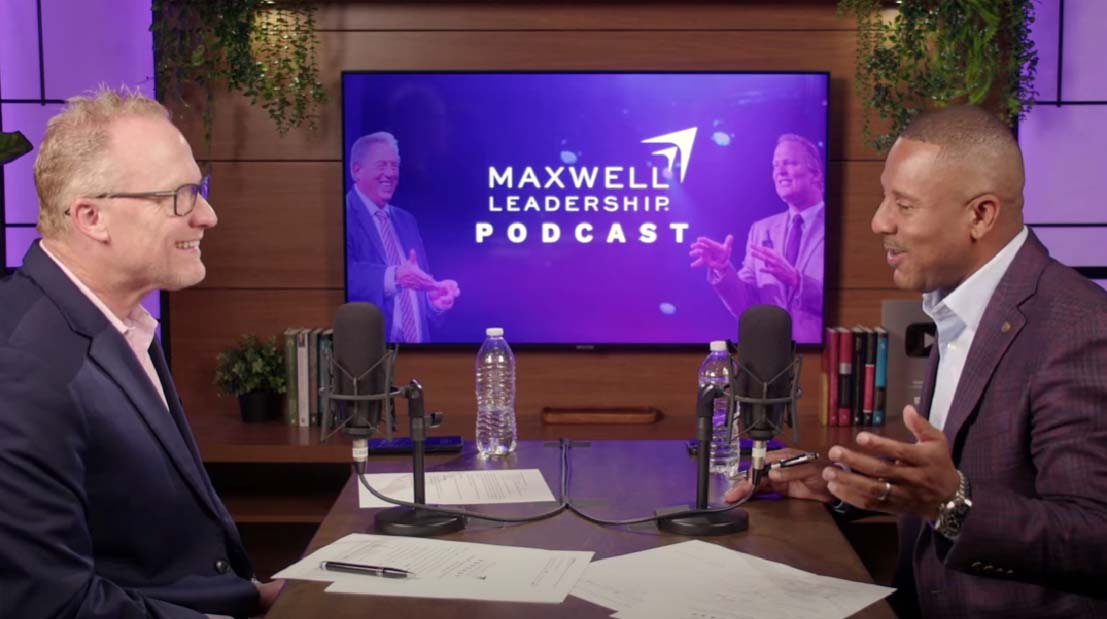
Mark Cole:
Welcome to the Maxwell Leadership Podcast. We’re so glad you’re here today because today, guess what? You’re in for a change. How many of you like right now, you just, there’s something you’ve been meaning to change, something you’re wanting to change, something that you know has to change. Fred Smith says if you really wanted to be any different, you would be in the process of changing right now. Isn’t that so true, Traci?
Traci Morrow:
It is true. And I think it really comes down to that deep question we all have to ask ourselves, is do I really want to change this or am I just circling around talking about wanting to change it?
Mark Cole:
It’s true. It’s so true. Traci Morrow will be back with me right after we hear from John. John today is launching a two episode series for us to talk through six steps to successful personal change. Today we’ll dig into three of those and then Traci and I’ll come back and then once John is done, we’ll have a great time and be back next episode. You guys, you have really impacted us with your feedback and so we just continue to look for more and more ways to bring you more and more of John and that’s going to happen today. So here’s what I need you to do. Grab a pen, grab some paper, grab your technology.
Mark Cole:
John’s going to give you some things that will change your mindset so you can change your outcomes. If you want to download the bonus resource or if you would like to watch us on YouTube, you can go to MaxwellPodcast.com/SuccessfulChange. Alright, here we go. Get ready for a change. Here is John Maxwell.
John Maxwell:
Mahatma Gandhi said we must be the change that we envision. So what I’d like to do in the beginning of this lesson, because it’s on personal changes that you make in your life, is I would like to make some personal comments about personal change. And the first comment I would like to make is this. One person cannot change another person. Now I’m going to talk to you about an early leadership error that I made a lot because when I started as a young leader, I thought that a leader could change the people. And boy, did I work at it. I mean, I just worked real hard. Alright? I’m going to give them thoughts and ideas and principles and I’m going to change people.
John Maxwell:
And after several years, sadly, it took me a long time. You have to understand, I was a slow learner. Okay? So after several years, one day I awakened to the thought that the only Person that can change themselves is themselves. You can change yourself, but I can’t change you. You see, I’m responsible to you, but I’m not responsible for you. And there’s a world of difference between those two. I’m responsible to teach you good leadership. I’m responsible to share things that can help add value to your life.
John Maxwell:
But you’re the only one that can take responsibility to change yourself. And that’s what this whole lesson is about. This whole lesson is basically saying that if you don’t like some of the stuff that’s in your life, or if you don’t like some of the things that you’re doing within your life, the only person that can change that is you. Now, you can bring people around that’ll add value to you. You can get people around that will encourage you, be great friends, support you, walk through with you, coach you do all that good stuff, but the only person that can change you is you. And it took me years as a leader to figure that out. Because a lot of times I think, oh, man, I gotta work harder, I gotta be better. I gotta do this more so I can get those people changed.
John Maxwell:
And one day it hit, no, no, no, John. You can create the right environment. You can certainly do the right kind of teaching, but you’re responsible to change yourself. One person cannot change another person. The second comment I would make about personal change is this. Most people need to look at the way that they look at change. Now, I just want to say under that kind of a quote, the only way things will change for me is. Is when I change.
John Maxwell:
Has nothing to do with hope. Has nothing to do with. Well, I just hope things will change around me. No, no. The only way that things will change for me is when I change. Or I’ve heard this before. I don’t know why I’m this way. Okay, well, you are the way you are because that’s the way.
John Maxwell:
Hang on, you want to be. Let’s expose it for what it really is. Fred Smith was exactly right when he said, if you really wanted to be any different, you would be in the process of changing right now. So when I run into people and say, well, I really want to be different, I want to make some changes in my life, I say, your behavior tells me that you’re not making the changes you need to make. In other words, your behavior will tell me, I don’t want to know what your intention is. I don’t want to even hear what your words are. If we’re going to change, we need to look at change differently. The third personal comment that I would make is that when you make the right personal changes, I believe this with all my heart.
John Maxwell:
Other things began to turn out right. Some people say I like things to turn out better for me, I like things to turn out right. I like things to turn out better in the organization or in my family, whatever it is. Then what I say to them is start with making personal changes. When you change your thinking, you change your beliefs. I’m going to work you through a six step process of how to change. And it begins with thinking. It begins with the mind.
John Maxwell:
You see, beliefs are nothing more than a byproduct of what you have thought long enough about that you have bought into. Always remember that. So what you believe is something that has been previously continual. Thoughts that formed themselves to one day became a belief or it became a conviction. Everything begins with a thought. That’s where it all starts. The thought is the originator of anything that happens to us. What we think determines who we are and who we are determines what we do.
John Maxwell:
The process is very simple. Thinking, becoming, doing. That’s always the process. Thinking, becoming, doing. Our thoughts determine our destiny and our destiny determines our legacy. And so all change. All I’m saying here is all change begins with thinking. If you change your thinking, you’ll change your beliefs.
John Maxwell:
If you don’t change your thinking, you won’t change your beliefs. So I want to believe something different. It starts there. Now, very simple. When you change your thinking, you change your beliefs. Step number two, when you change your beliefs. Now you’re going to see how we’re building this throughout this entire lesson. When you change your beliefs, you change your expectations.
John Maxwell:
Beliefs form expectations. Belief is the knowledge that we can do something. It’s the inner feeling that what we undertake, we can accomplish. For the most part, all of us have the ability to look at something and know whether or not we can do it. So in belief, there is power. Our eyes are opened. Our opportunities become plain. Our visions become realities.
John Maxwell:
Our beliefs control everything we do. If we believe we can or we believe we can’t, we’re correct. Accomplishment is more than a matter of working harder. It’s a matter of believing positively. It’s called the sure enough factor. If you expect to fail, sure enough you will. We become outside what we believe inside. We’re finding that if you change your thinking, you change your beliefs.
John Maxwell:
And we’re finding if you change your beliefs, you change your expectations. So let me talk to you about beliefs that help me change. This is Just something that works for me. I think it’ll work for you too. The first thing I want you to realize is change is personal. In other words, I come to the place where I say I need to change. The second belief that helps me change is that it is possible. Not only do I take responsibility for the fact that I’m the one that needs to make the change, I have to then believe it’s possible that I can change.
John Maxwell:
And if I can put those two together and come to the third conclusion, I’ve now developed a strong belief factor for change. And the third factor is this, that change is profitable. That if I change in the right areas, it will become very profitable for me and I will be rewarded for that change. Now, change is personal, it’s possible, and it’s profitable. That’s the belief foundation that you have to have to make the appropriate changes in your life or my life. Here’s the way it works. Change your thinking, you change your beliefs, you change your beliefs, you change your expectations. Number three, when you change your expectations, you change your attitude.
John Maxwell:
Because your expectations determine how you see things. I tell the story of my friend Joe Sawyer, who told me this cute story about a boy who was fishing one day. And the elderly man who was fishing nearby noticed that the young lad was having considerable success in his endeavor. And what was more unusual than the amount of fish that he would catch was what he would do with the fish once he successfully landed them on the bank. The boy would hold up each fish in his hand and, and measure it. If the fish was larger than his hand, he would throw it back in the water. He only kept the small ones. And finally, with curiosity, the old man slipped over to the young boy and he asked, son, why is it that you keep the small fish and throw the large ones back into the water? And the young boy replied, well, you see, sir, I can’t keep the big ones.
John Maxwell:
I only have a 10 inch frying pan. I know all kinds of people in life who have a 10 inch frying pan. They’re constantly having to throw back the big ones and keep the small ones because it’s the only thing that fits into the way that they think. Nelson Boswell said, the first and most important step towards success is the expectation that we can succeed. And positive expectations produce the following six always have, always will. Number one is excitement. You show me somebody that has positive expectations and you’ll see a sense of excitement. Number two, conviction.
John Maxwell:
A belief that something should be done. Number three, desire. Number four, confidence. Number five, commitment. Number Six Energy. If I were to ask you today, how would you like to possess these six things? How would you like to possess excitement, conviction, desire, confidence, commitment, energy. Every one of you raise your hands and it’s very simple to possess those six things. It’s very simple.
John Maxwell:
You know how you possess them. Raise your expectations. Because your expectations change your attitude.
Maxwell Leadership App Ad:
Do you feel like you’re meant for more but you’re not sure what next step to take? Whether you’re leading a team, building your business, or just trying to lead yourself. Well, you don’t need more noise. You need wisdom. Real, proven, practical wisdom. That’s why we created the Maxwell Leadership App. Inside you’ll get daily bite sized videos from John C. Maxwell and other world class thinkers designed to help you grow. Every day you’ll unlock curated playlists on personal growth, leadership, mindset, communication, confidence, and much more.
Maxwell Leadership App Ad:
All for just $9.99 a month. And here’s the best part. It’s growth on your terms, at your pace, in your pocket, ready to go further and grow faster. Download the Maxwell Leadership app today. Go to MaxwellPodcast.com/App or click the link in the show notes. Try it free for seven days with the code PODCAST7. That’s podcast the number seven.
Mark Cole:
Hey, thanks, John. Traci, I’ve got. One of my greatest privileges was getting to spend time with John Maxwell and Jack Welch. Jack is the guy that said, before you are a leader, success is all about growing yourself. When you become a leader, success is all about growing others. And I think that’s what John’s trying to get us to do is there are six things. You’re only getting three today, but there are six things that will help you create the process of change. And so Traci, I know you and I were just talking about before we started recording about change and just the change in our lives.
Mark Cole:
And I think that’s an ever present, ever big reality of leaders is change.
Traci Morrow:
Yeah, it affects every person. So no matter what stage you’re at, I think this is applicable to every person and we can immediately begin applying. And I love lessons like that. And he dives right in with the, with the Gandhi statement, we must be the change we envision. So I would love to set the tone of this podcast. Mark, I feel like that opening call from with him quoting Gandhi before he even gets into the first three. It’s the call of the leader. It’s being the change.
Traci Morrow:
It’s people do what people see. John always says. And so modeling change, talking about your beliefs and your attitude and your approach around change. And so I would love it if you would be willing to share a little bit before we talk about what other people can do, moving away from ourselves, like you just said. But what is your personal approach to change?
Mark Cole:
Yeah, when you were talking about that and then talking about Gandhi’s quote, I thought about another quote of John’s that says nobody likes change unless you’re the one calling the change, unless it’s your change. And then all of a sudden you like it, you become a champion of it. You can’t believe everybody else don’t like it. And, and for me in change, first I have to own it. I have to go, this is gonna change for whatever reason, maybe it’s my anal retentive way, but I have to own the change. The change has to come from within as a sense of buy in. I’ve got a buy in from within. The second thing that I’ve got to do is I’ve got to, for me, I’ve got to envision the outcome of the change.
Mark Cole:
That’s why when I’m communicating change in the organization, and I do all the time, we’re a very changing, very much ever present, ever changing, ever pursuing something better, bigger and brighter. I always try to communicate the change in what it will mean to the people we’re going to change. The this is what it’s going to look like on the other side. And then the other thing that I always try to do is I try to overplay the sacrifice, the unsettling, the disruption that the change is going to happen. So I overplay the cost. I try to clearly play the outcome and I try to own it deep within me. And I found that when I do that and I do that very intentional, it’s a big difference maker for me in seeing the change in the results that we’re want.
Traci Morrow:
And would you say that that’s something. When would you say you embraced change in that way? Like would you say you were a young man and you embraced it like that? Or did you resist to a certain stage and then you’re like, okay, this is gonna be a natural part of life and leadership?
Mark Cole:
Yeah, it’s so funny. I feel like that as a young man I really embraced change pretty well. And then I went through these 20s and 30s to where I wanted to put everything in a nice box. And Even in my 40s I began to lead and I began to own change because it was my change. And now I’m realizing in the next stage that change comes pretty easy because man I’ve been through enough change that I know there’s always something great on the other side of change. So now I really have. And I don’t know, I guess the older I get and when I start barking on the front porch at everything that goes by, as John likes to laugh and talk about with old people, maybe I’ll go back and become resistance change. But I kind of like it now.
Mark Cole:
It’s kind of promising. It’s kind of exhilarating.
John Maxwell:
Yeah.
Traci Morrow:
I wonder if it has to do with the ages and stages of life. Like when you’re a young person and you don’t have any idea about the consequences of change and then you feel get a little consequence on you, either your own consequence or someone else’s consequence, and you think like, okay, I’m going to put everything into a box and play it safe. And then you realize, okay, well, if I’m going to grow or get out of my own way, I need to get back into the change world again and accept it again. And it just is kind of the cyclical stage. So getting back into the points now, one person cannot change another point. Number one. What do you say? I think for some people that was a hard pill to swallow. Others were like, yes, I’m going to have my spouse listen to this, I’m going to have my mom listen to this, or my boss listen to this.
Traci Morrow:
What do you say leaders who are listening to this and they maybe thought, oh, I have people on my team who I hired on or I brought on thinking, well, I can change that, or I was planning on changing that. I have a plan to change that. What do you say to leaders who had a plan or have a plan actively to change the people on their team? What do you tell them?
Mark Cole:
You know, John says often that the most important person to lead is oneself. And I completely agree with that. I think the easiest person to lead is oneself. And here’s what I mean by that. The leader really can control the change that goes on within them, the necessary adjustments that need to happen to be more successful. When you put into the mix somebody else’s will, somebody else’s mindset, somebody else’s heart position and posture, then all of a sudden, for me, change becomes a lot more difficult. That’s why I think, John, one person cannot change another person. I was recently doing a Q and A with a couple of hundred leaders and I was asked the question, really they went pretty deep, pretty authentic to be in such a large group about the difficulty they were having in getting their team to Adopt and adapt to some change that was going on.
Mark Cole:
And they said it made so much sense when we, as leaders started talking about it, and it made sense when we communicated it. But when we started going through the process, that’s when we ran into problems. I said, of course you did, because that’s when somebody else’s will and somebody else’s personal preferences started coming into play. And what I was really attempting to communicate to them is the same thing that John’s saying right here. There’s only one person you really can control when it comes to change. Then everybody else is going to have their own perspective, their own willingness, and their own reasons on why they would change. You put those ingredients in, and that’s where we have to embrace what John also said. And that is you have a responsibility to the people that you lead, but you’re not responsible for the people you lead.
Mark Cole:
They’re responsible for themselves.
Traci Morrow:
And have you ever been in a place. Okay, so his statement that he. We kicked it off the podcast with Fred Smith’s statement, but I’d like to revisit it for just a second because I think. Think it’s potent. If you really wanted to be any different, you would be in the process of changing right now. That’s kind of like, ouch. That is true. I’ve said that to people before because whether it’s like, I want to lose weight, I want to lose weight.
Traci Morrow:
Just as an example for years. And you talk about wanting to do something. I want to change. I want to be better. I want to be better at this, at leading my team. We want to be more on time with our deadlines, let’s just say. But there are lots of reasons or excuses, really, that people give for not being different or in the process. So how do you help somebody discern or help a leader understand? Do I really? Have you ever asked someone that? Like, are you.
Traci Morrow:
You’re going round and round and round and round with the same thing over and over again. How do you help them really discern if they really just don’t want to change?
Mark Cole:
Yeah. You’re now uncovering by going deeper into that, my challenges as a leader. Because my greatest challenge, Traci, truly, is when somebody communicates, especially if it is repetitive communication. I want to change. I want something different. I want to be better. I want to be more effective. And yet they’re not willing to go through what it takes to actually do the change or ask the questions.
Mark Cole:
One of my greatest, again, another pet peeve that is very similar to this is people that want to be an effective leader, but they don’t ask any questions, they don’t ask why they don’t want to grow and they go, help me be different. You give them something to do, you give them something to consider. They say, oh, that’s not relevant to me. I’ve already done that. And I’m going, if I thought you asked me advice, if I thought you were already doing it, I wouldn’t have told you to go do it. But to them, it’s obvious that they’re, quote, already doing it. And so John calls them, forgive me, those of you that are very pure, but John calls them an ask hole. They ask for advice all the time, but they never take it.
Mark Cole:
And so you’re going back to the people that really want change. If you really want change, you’ll do something about it. And I really struggle with people that say they want it but won’t do what it takes to get it.
Traci Morrow:
Yeah. And sometimes I’m just thinking about myself personally. I’m just going to plug myself, put myself in the hot seat. Recently, going through a change in my own career, Talking with you, Mark, and putting myself into position of asking for advice and you giving me advice that sounded way out of my comfort zone to do something and thinking to myself, after you hang up the phone and you get the advice, I can either do this advice or not do this advice. It’s up to me. Like, no one’s going to make me do what somebody, a leader pours into you to do. But if I don’t do it, it’s on me. And so there’s that moment where all of us have to decide, am I, do I really want change or am I going to just sit and rest and say, well, he doesn’t really get it.
Traci Morrow:
He doesn’t know the position I’m in. You can make a ton of excuses or you can just say, you know what, I asked for advice. I trust this person. It’s uncomfortable for me, but I’m going to do what this person who I trust says to do. And the worst that can happen is it doesn’t work.
Mark Cole:
Yeah.
Traci Morrow:
And that growth is groundbreaking a lot of times. And you do break through. And so I just want to share that with somebody who might be listening and who maybe has been making excuses. And you’re like, yeah, maybe that’s true. Maybe I just need to do the thing that I said I didn’t want to do because somebody I trusted said I, I could do it to break through to that next level. Okay, going to the next one where he talks about, you change your thinking and you change your beliefs. How? I think a lot of people, especially as you get. Maybe I’m.
Traci Morrow:
Maybe this is true or for some and not true for others. So bear with me in just a minute. But as you get to 40 or 50 even and 60, you can, if you’re not careful, you can get set in your thinking. And so how does a leader ensure that they. This is one thing I really admire about you and John. You have your prince. There’s the laws of leadership and there’s principles of leadership, but you’re. You have ideas flowing through you at all times.
Traci Morrow:
You listen to other ideas. You listen to people who think differently than you and look at things differently than you. Different ages of people, different stages. People who think differently than you and look at life differently than you. How does a leader ensure that they don’t get stuck in old thought patterns and therefore they just don’t change because they’ve insulated themselves with people, thinkers who think just like them and support their current thinking?
Mark Cole:
I think the greatest tool John’s ever given me in this, because, again, number one, I’m extremely persuasive. Some people call that hardheaded. I like persuasive better. I’m very opinionated. Once again, people call that very difficult to deal with. I like to call that as certain in my leadership. But what that does is that requires somebody with a strong resolve. My mom used to call it a constitution.
Mark Cole:
They’d have to have a strong constitution. They’d have to have a strong backbone, a strong resolve to get close to me. The closer to me, the stronger you’re gonna have to be, the more secure you’re gonna have to be. I love contrarians. I love people that try to bring up a different way to look at something, even if there’s cons. I just thoroughly enjoy that. Maybe it’s the old debate class coming out of me, Traci. I don’t know.
Mark Cole:
But here’s what that means about how then do I get these people or this perspective around me that gets me out of the rut in my thinking? And John’s given all of us cause. We’ve taught it here on this podcast. The tool of an inner circle and an outer circle. An inner circle exists to keep me grounded in who I am, who I want to be, what I want my legacy to be. An outer circle is intended to stretch my thinking, give me new ways to think and to expand the comfort zone, to expand my ability zone out of my Comfort zone to expand my potential zone out of my comfort zone. They’re there to stretch my thinking and my way of looking at things. You know, you go back to college days, we all, we leave the house, we leave the nest and all of a sudden we’re questioning everything. Well, who says the sky is blue? Well, who says that you have to eat at 6 o’? Clock? Who says you can’t hang out later on a Friday night than you can on a Thursday night? Who said that Monday night has to be state? We go through all this why, why, why? Who says? Who says in our leadership we need to have discipline? Well, who said I’m onboarding a senior leader on our team right now.
Mark Cole:
And I said, hey, for 30 days you gotta ask the question why. For the next 30 days you can ask the question why not? And the last 30 days you can ask the question what happens when we do. And what I’m really doing is getting them to understand why. Then I’m getting them to challenge us in why not. Because we are all internal in our thinking. And then I’m asking them to take risk by saying what’s going to happen when we launch this new idea. And that whole mind shift thinking is really, really breathing a lot of energy into our organization.
Traci Morrow:
I love that, I love that. Those are great questions to ask and hopefully those of you paused that and wrote those down, those questions down for yourselves. Okay, moving on to when you change your beliefs, you change your expectations. I feel like this has the power to radically change a leader’s entire trajectory if you continue to follow along with these, and hopefully you are. Because it’s only question. But out of the six, can you give example, an example of how this personally has for you, has blown the roof off of the status quo for you and your Maxwell leadership team?
Mark Cole:
Yeah, I can. It’s so funny. I wish I could remember the. I think it was a car advertiser that was advertising on a football game. Me and my brother was watching two different locations and he texted me this quote. I’m getting ready to say, I think John even said it in the lesson today. He texted me this quote and it’s from a car and I just cannot remember the car. So forgive me, advertisers out there, I’ll give you credit as soon as I can find it, but it says if you believe you can or you believe that you can’t, you are right.
Mark Cole:
If you believe you can or you believe you can’t, you are right. And my brother text me that. And of course I Saw the same thing. And I knew what he was watching was watching the same football game. And I text him, I said, man, that is so good. He said, hey, you can use it. You don’t even have to give me credit. And I was like, I’m not supposed to give you credit, Danny.
Mark Cole:
That’s the guys whose ad we just looked at. They get the credit for it now. I’m still not even giving them credit. But here’s my point, Traci. Working with John, I have learned to believe this one thing. When I believe that something is not possible, I haven’t thought through it well, because I’ve watched John over and over again stretch my thinking with telling me what could happen and me saying, no way, it’s not gonna happen. And then it happened. For me to realize that most of the time, when I knee jerk a response that says, that’s not possible, I’m wrong.
Mark Cole:
So now when I look at something and say it’s not possible before any kind of thought, I immediately assume that I’m incorrect, that it is possible. I just haven’t thought through it. And challenging myself to justify why something is wrong or something is possible has really helped me change my level of expectation and the level of accomplishment I’ve had because of that expectation.
Traci Morrow:
Yes. Yeah, that has been the same for me. I think both of you, being around you has challenged my. This is not going to work. This is not. I don’t. I don’t see this rolling out. I quit too soon before.
Traci Morrow:
And I hope that somebody listening today, on the brink of quitting, just listened to that and heard that in a different way, and you’re challenged to think it through a little bit more. Okay, so let’s. I’ve got. I’ve got so many more questions, but our time is running thin. So lastly, he talked about when you change your expectations, you change your attitude. Right before that, he said, change. Change is three things. Personal, possible, personal, pro, possible, and profitable.
Traci Morrow:
Gosh, that’s a tongue twi. Tongue twister. Why leaders are still nervous about change. I think it’s just human nature. I mean, like you said, some people, we go through the ebb and flow. Or sometimes you’re hiding from it, sometimes you’re chasing it. But don’t you think. Why do you think that leaders don’t see that change is profitable? I feel like if they saw it more, they would chase after it more.
Traci Morrow:
But what do you think? Why do you think they just can’t see that?
Mark Cole:
I think it’s because we, as a leader, we don’t grow up in our perspective. Let me give you an example. I got the incredible gift and honor of being very engaged in our grandchildren. And I watch the difference in the thinking of our 11 year old and our 6 year old. And I will tell our 11 year old, hey, let’s go out and let’s find an old artifact in the backyard with a little metal detector. And I’ve watched Ryder go, okay, let’s go, let’s go right now. And I’ve looked at my little Emory, my little buddy, and you know, the childlike faith that Jesus talked about is very real. But it’s almost like when we, when we’re going to achieve something that’s good for us from a benefit, we almost have this hesitancy.
Mark Cole:
It can’t be that true. And so my little buddy, Emory, 5, 6 years old, I’ll go, hey, let’s go out in the backyard and find something. He said, we’re not gonna find anything. There won’t be anything out there. And it’s not just a personality, it’s a stage of life. Now why is that stage of life? Because after years and years and years of going out and proving something to my older grandchild, there is a level of belief that we can do this. And sometimes in the area of leadership, we mature beyond the it’s impossible mindset.
Traci Morrow:
So good.
Mark Cole:
When you start pursuing things that seem impossible, but you actually accomplish them, it actually begins to build your faith. I wish more people would try the impossible because when they get more than they bargained for, they will start trying more of the impossible. And that’s what I believe. We want to wake people up in this concept that says when you change your expectations, you change your attitude. When you walk out and say, we’re going to find something, this is going to be cool. You may not find what you started looking for, but you’re going to find something because you changed your attitude. If you say we’re not going to find anything, chances are you’re going to come back and not have found anything. But if you can change your attitude, you may not find the artifact, but you may find the coolest looking figure in a tree that you’ve ever seen.
Mark Cole:
You may find a squirrel’s nest that has five different babies in there that’s growing up. You go out expecting to find something. And if you don’t grow up in your leadership perspective and start expecting to find something, you will miss it and you’ll stay stymied or small in your thinking as a leader.
Traci Morrow:
I love this And I think anybody can do this. You don’t have to be six years old to do this. If you are an adult and you have not been practice this. John always says feed your faith and starve your fear. You just need to get a win in these first three before we build on them next week. And it’s important because anyone can do this. So lastly, we’ll just end on. He talks about the frying pan and I feel like it’s all about preparation.
Traci Morrow:
He talks about people who walk around with a 10 inch frying pan. And so any fish that comes along that was bigger than that, the fishermen would just throw it back in. And so I can’t help but think about the analogy of that to business. And there are people who are building business and they’re, they’ve got, they’re writing up contracts and they’re preparing for small contracts. So should some a bit a large contractor opportunity come along, they aren’t even prepared. They haven’t even thought about it. And so they don’t even try for it. They don’t even try to expand their territory.
Traci Morrow:
And so how, how would you, how does a leader prepare not just for where they they’re at today, but also with the mindset of the bigger pan two or three steps beyond. How do you do that in Maxwell leadership where you’re not just preparing where you’ at today, but you’re also looking a little farther down the road as you grow and get bigger as well?
Mark Cole:
Well, I think when I heard John say that when opportunity presents itself, it’s too late to prepare a quote from John Wooden that John talks about all the time. And I think about, man, I’ve caught more fish in the last five years of leadership than my frying pan ever could do. But you know what I do? I cut that fish up and I cook it two different ways. I cook the first part, I cook half of it in one setting and then I cook the other half in the other setting. I’m not throwing any fish back. I’ve worked too hard for opportunities. I fish too long for the privilege of getting to do what I do right now. I don’t throw it back.
Mark Cole:
I find a different way to fry it. I find a partner that’s got a bigger frying pan. I’ve expanded my thinking to go. There’s no opportunity that surprises me or intentionally gets in my environment that is not my stewardship responsibility to do something with it. And I’ve watched too many people disqualify themselves from the very dream they’re chasing. They’re chasing this big dream. They’re chasing this big deal. And when it starts coming true, they disqualify themselves before they ever have a chance to enjoy what they’ve been pursuing the whole time.
Mark Cole:
And our responsibility. Traci, we were talking about this a little bit ago with you. Just an opportunity that you’ve got ahead of you. And I’m so excited. You, you’ve been doing this for a long time. It’s about time that you embrace that this is a dream of yours, and we’ll keep it between mine and your friendship and behind the scenes in the studio. But here’s what I’m trying to say to you. So many of us are chasing the very dream that is starting to come to us.
Mark Cole:
And we start comparing our frying pan of today, our potential, our opportunity of today, rather than where we can grow into in the future, and we miss the opportunity. And I’m thankful. I’m thankful for that. You know, it reminds me, Tracy, I wish we had more time, but we’ll come back. We’ll come back for part two. How about that?
Traci Morrow:
That’s right. That’s right.
Mark Cole:
But we had a listener question that I wanted to address, and it’s Malgorza Algorza said, what are some good questions to ask yourself during difficult times to refocus. And I love this question. In fact, I really just wanted, like, slow down and take a whole podcast on this because, number one, John wrote a book called Good Leaders Ask Great Questions. And I have a set of questions that I ask of myself and my inner circle. When the times of difficulty seems harder than the return of staying the course, it’s emotional questions. How am I doing? How am I coming across? What’s my faith language sounding like? Am I still exhibiting hope and faith? That’s not just spiritual faith. It’s just the hope. Am I still exhibiting that Better days are ahead? I ask myself.
Mark Cole:
I asked my inner circle, hey, am I still speaking on the future or the past? Is the best days ahead of us or the best days behind us? What’s my language? The second question that I ask myself and those around me is, am I still consistent? I’ve been known as a positive person. I have great positive energy or great positive attitude. My question is, hey, am I still being positive right now in the difficult time? Because difficulty should not determine my positivity. And the final question that I ask, am I still looking to solve problems or state problems? Am I solving a problem or am I just stating a problem? I don’t believe the world needs more leaders who can state we all know we got problems. All God’s people got problems. The world needs leaders that are solving problems, not stating problems. And I ask myself those three questions my Gorzada and that is what I want to leave to you today. By the way, you asked that question after the podcast how to increase your focus.
Mark Cole:
And so we’ll put that in the show notes for those of you that hadn’t listened to it. Thanks for joining us today. Come back next episode and we will take on the next three steps of successful personal change. Hey, go make powerful, positive change. Speaking of change because everyone deserves to be led well.
Maxwell Leadership Certified Team:
Hey podcast listeners, many of you listening right now would probably love the autonomy that comes with owning your own business or becoming a coach that helps other businesses succeed. Well, we have a phenomenal strategy where you are 100% in control of your own business, earning income on your own terms, and have access to the people, tools and resources you need to build a thriving leadership development business. When you become a Maxwell Leadership Certified Team member, you join a global community of entrepreneurs led by our expert team of mentors and faculty, including John C. Maxwell. You’ll also get one of the top leadership certifications in the world next to your name, giving you the boost you need to get started. Visit us online at MaxwellLeadership.com/JoinTheTeam to find out more.
Transcript created by Castmagic.




Be the first to comment on "6 Steps to Successful Personal Change (Part 1)"