
Can stress management really help uncover blind spots in leadership? The answer often hides in the noise leaders carry with them. The nonstop meetings, the urgent deadlines, the pressure to deliver. That noise rarely fades on its own, and without space to pause, clarity gets crowded out.
When stress eases, though, something shifts. Stress management serves as the opening that allows awareness to surface and leadership to grow.
Can Stress Management Help Blind Spots in Leadership?
Stress has a way of narrowing vision. Under prolonged strain, leaders skip over emotional signals, disregard team dynamics, and fail to understand how others really experience them. The mind becomes reactive, rather than reflective, and feedback feels threatening rather than helpful. Rather than being blind to our own shortcomings, stress actually deepens the gap between how we see ourselves and how others see us.
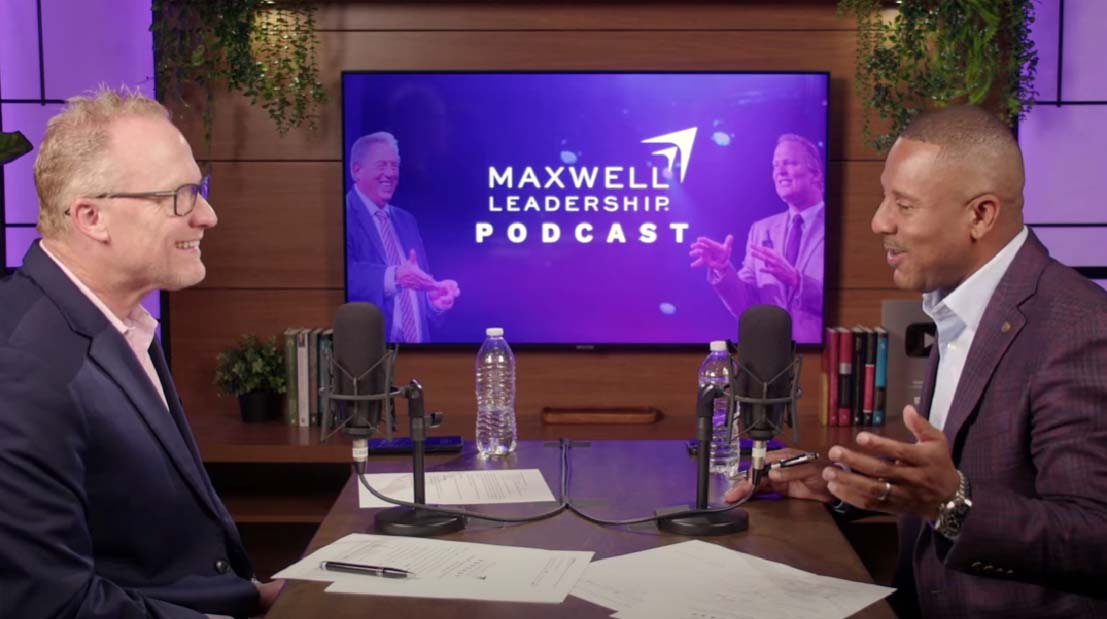
In the Maxwell Leadership Podcast episode “The Self‑Aware Leader”, John Maxwell, Mark Cole (CEO of Maxwell Leadership), and Chris Goede (Executive Vice President of Maxwell Leadership) discuss how managing stress shifts leadership from reaction toward reflection. Maxwell reminds us, “Self‑awareness is a result of maturity and feedback and a willingness to change.” Stress erodes that maturity and shrinks our capacity to act on feedback or invite it.
True self-awareness is uncommon. Fewer than fifteen percent of people meet the mark, and fewer than a third see their abilities as they really are. Stress makes that gap wider, shrinking awareness and pulling leaders further from an honest view of themselves, while the most important blind spots go unnoticed.
Stress Grows When Identity Is Misaligned
In the podcast episode, John Maxwell introduces the framework of the five versions of identity: Who you believe yourself to be, who your family sees, how friends perceive you, what acquaintances assume, and who you actually are. When those versions tug in different directions, tension builds beneath your surface. That ongoing friction drains emotional energy and creates doubt about whether you’re leading from who you truly are or from others’ expectations.
Over time, stress shows up quietly. “The less we know about ourselves, the more we will role-play.” That truth reveals how a lack of clarity pushes you to shift roles with the audience or context instead of standing grounded.
Pause for reflection: Which version of you is causing stress right now? Noticing the roles you switch between gives you the opening to restore alignment, and that is what leadership clarity feels like.
Stress Pushes Leaders into Role-Playing
Leaders without awareness often adjust their behavior according to the audience or situation. You may soften your tone for a team member or draw hard lines in front of a stakeholder. That inconsistency burns mental bandwidth, generates stress, and erodes trust. As Maxwell puts it, “The better we know ourselves, the more we will be the same with everyone in every situation.”
Acting out multiple versions of yourself distracts from your natural leadership fingerprint and hides blind spots from detection. Emotional inconsistency triggers stress within your team, lowers engagement, and drives fatigue. When others must guess who you will be, they focus on reading you instead of moving a decision forward. As a result, leadership becomes forced, rather than fluent, and areas in your vision remain unrevealed.
The Role of Delegation in Reducing Stress and Supporting Clarity
John Maxwell shares that ninety-five percent of decisions in his organization are made by his team because they share the same values and know how to act in line with them. That level of delegation lightens the weight of constant decision-making and creates breathing room for clarity.
When your team reflects your principles, you don’t have to make every call. You can step back. You can listen. You can learn from gaps you couldn’t see before. Self‑awareness grows in the space that delegation creates. And as feedback returns through trusted, values-based channels, your understanding of strengths and blind spots becomes sharper.
Read more: Delegation Done Right: Strategies for Leading with Impact
Stress-Free Leaders Can Learn from Feedback
Mark Cole describes the feedback paradox beautifully: “You’ve heard a lot of people say reveal my blind spots, and then somebody tells you something you don’t see in yourself, and you discredit it because you can’t see it. Well, it’s a blind spot, which means you can’t see it.”
He also mentions that it is worth asking, “What’s it like to be on the other side of me?” Listening to that answer can shift your view of yourself dramatically. But when stress is high, feedback starts to sting. It feels like a threat, not help.
Managing stress lifts the emotional defense that blocks honest insight. Feedback stops feeling sharp and starts feeling wise. And that’s when growth happens in ways stress once ruled out.
Read: How Leaders Build a Strong Self-Awareness
Healthy Practices Leaders Can Adopt to Manage Stress and Grow Self‑Awareness
Here are six grounded, practical ways leaders can convert stress into strength and sharpen leadership insight with trust and humility.
1. Mindful Breathing and Micro‑Pause Practice
Brief breath awareness or micro‑breaks help interrupt the stress hijack cycle. That simple shift shifts your nervous system away from a state of reaction toward one of clarity. That enables clearer thinking and greater accuracy in interpreting your own behavior and that of those around you, giving you the space to notice emotions before they hijack your response.
2. Reflection or Journaling Time
Once a week, dedicate ten minutes to jotting down your reactions, emotions, patterns, and stress reveals. Ask yourself where you felt pressure, where you leaned into strength, and where blind spots might still be hidden. That consistency invites presence and builds familiarity with your own motivations before stress pulls awareness away.
3. Structured Feedback Routines
Invite a peer or 360° insights every quarter. Present yourself as the learner, not the judge. Asking “What would you see differently about how I lead?” invites perspectives you might never see or imagine. Feedback becomes a trusted lens, not a threat, when practiced as a habit.
4. Delegation Based on Strengths Awareness
When your team knows your values and assumes the weight of work aligned to strengths and expectations, leadership stress decreases. Clear delegation delivers consistent execution, giving your senses space to notice when something feels off. It highlights patterns worth exploring rather than tolerating, allowing for less workload and increased awareness.
5. Executive Coaching and Inner Circle Support
Bring alongside you someone whose perspective matters more than your own. A coach or trusted peer circle can hold up a mirror to pressure patterns and stress triggers in ways your inner voice cannot. Maxwell Executive Leadership Coaching provides leaders with a professional space to explore internal pressures, identify blind spots, and expand their awareness without fear.
6. Implement the Student Posture in Everyday Dialogue
Approach others as learners and ask, “What’s it like to be on the other side of me?” Let their answer help you see what you don’t feel under stress about. Mark Cole reminds us that staying curious about how we affect others keeps ego in check and insight in play.
Would you like to go deeper into this topic? Listen to the entire episode “The Self-Aware Leader”.
Partner with Maxwell Leadership to Convert Stress into Leadership Strength
Stress can cloud authentic leadership, fragment connections, and conceal the hidden barriers holding you back. When clarity fades, you stop seeing weakness and strength in balance.
At Maxwell Leadership, we offer Executive Leadership Coaching designed to help leaders convert stress into strategic insight. Explore the Maxwell Leadership Podcast for ongoing growth, and consider our Executive Leadership Coaching as a next step on your leadership journey.
Contact us to cultivate leadership that rises above the noise, empowers teams with trust, and leads with clarity and self-aware strength.