
Many people confuse leadership with management, thinking they are one and the same. While they share some similarities and are both essential for organizational success, leadership and management have unique roles and responsibilities. The distinction between leadership vs management matters for anyone looking to enhance their effectiveness and make a meaningful impact.
Bottom line
Leadership and management differ in focus. Leadership is influence that moves people toward a shared vision, while management is the discipline of planning, organizing, and executing the work that gets them there. Leaders concentrate on direction, change, and people. Managers concentrate on process, stability, and results. Neither outranks the other, and the most effective professionals learn to do both.
What you’ll find
- What is leadership?
- What is management?
- Leadership vs management: key differences to know
- How leadership and management complement each other
- Can someone be both a leader and a manager?
- When management is what your team needs
- How to cultivate leadership and management skills
What is leadership?
John C. Maxwell defines it simply: leadership is influence, nothing more, nothing less. Leadership is about inspiring others and creating a vision that motivates people to strive towards a common goal. Leaders are visionaries who see beyond the present and imagine a brighter future. A leader earns trust and loyalty by influencing and motivating people, and guides them by setting an example rather than issuing directives. They show empathy, listen actively, and encourage others to bring their best selves to work. True leadership involves guiding individuals and teams towards growth and development. Leaders are committed to their people, believing that investing in individuals is the best way to achieve collective success. How that influence shows up varies from leader to leader, which is why the strongest leaders learn to draw on more than one of the common leadership styles instead of defaulting to a single approach.
Think of a leader like a coach who helps their team see their potential. They encourage taking bold steps, provide encouragement during challenging times, and celebrate victories. Leaders foster an environment where innovation thrives, where people feel valued, and where everyone is working towards a shared purpose.
What is management?
Management focuses on the systematic and efficient operation of an organization. Managers are responsible for planning, organizing, and controlling resources to achieve specific objectives. They create processes, establish rules, and ensure that tasks are completed as efficiently as possible. Where a leader’s focus might be on the vision and the people, a manager’s attention is often on the structure and the process. Managers are task-oriented, keeping day-to-day operations aligned with organizational goals.
Think of a manager as a conductor, ensuring every part of the orchestra is playing in harmony, following the same sheet music. They set deadlines, allocate resources, and monitor performance to ensure that everything runs smoothly. Managers are essential for maintaining order and stability, so the organization can function effectively and meet its objectives.
Leadership vs management: key differences to know
Placing the two roles side by side clarifies what each one contributes:
| Key difference | Leaders | Managers |
| Vision vs objectives | Create a compelling vision that inspires others to follow. | Set specific, measurable objectives to turn the vision into reality. |
| Innovation vs administration | Encourage new ideas and risk-taking; act as innovators. | Focus on maintaining order and adhering to established processes; act as administrators. |
| People vs systems | Invest time in building relationships and developing their team; people-focused. | Concentrate on systems and procedures to ensure goals are achieved; systems-focused. |
| Change vs stability | Drive and inspire organizational change, guiding through transformations. | Ensure stability by implementing changes effectively, minimizing disruptions. |
| Influence vs position | Draw authority from trust and credibility, regardless of title. | Draw authority from their formal role in the organization. |
| Future vs present | Focus on long-term direction and what could be. | Focus on near-term execution and what must happen now. |
Both leadership and management are vital, serving different yet complementary purposes. While leadership inspires and motivates, management organizes and executes. An effective organization needs both to thrive.
How leadership and management complement each other
Leadership and management are not opposing forces but complementary ones. Effective organizations recognize the value of both and find ways to integrate them. Leaders set the vision and inspire people to achieve it, while managers ensure that the vision is translated into action through structured processes and strategies. This synergy allows for both innovation and stability, driving sustainable success.
In organizations where leadership and management are balanced, employees feel both motivated and supported. They are encouraged to innovate and grow but also have the structure and guidance needed to perform their tasks efficiently. For example, a company might have leaders who set a vision for creating a more inclusive workplace culture. At the same time, managers could implement specific policies and practices to make that vision a reality. This alignment fosters a productive and positive work environment.
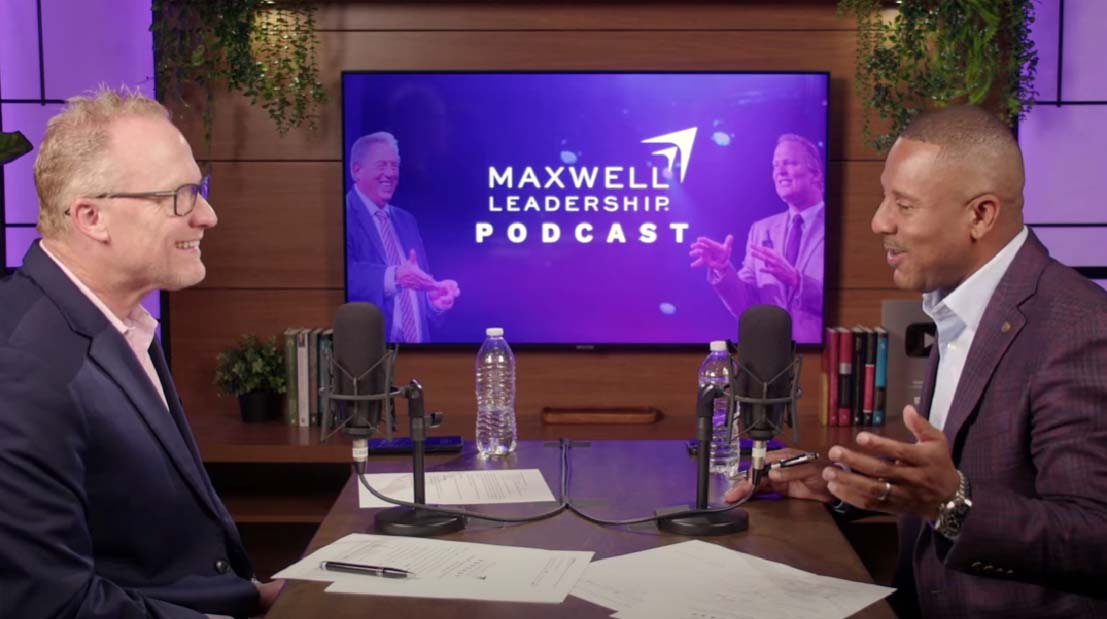
Maxwell Leadership’s podcast, The Leadership Shift from Managing People to Developing People, goes deeper into how focusing on developing your people can create a more empowered and effective organization. In the episode, Mark Cole, CEO of Maxwell Leadership, talks with Matt Tresidder, CEO and co-founder of Leadr, about what changes when a manager stops supervising tasks and starts growing people. “Leadership is a burden, and that burden is a privilege,” Tresidder says, describing the responsibility that comes with developing others rather than simply directing them. You can also watch on YouTube:
Can someone be both a leader and a manager?
Absolutely. Many individuals find themselves wearing both hats, especially in roles that require them to inspire their teams while ensuring efficient operations. Balancing leadership and management is essential in today’s dynamic business environment, where adaptability and innovation are as critical as efficiency and organization. Successful leaders often develop management skills to organize their visions effectively, while skilled managers can cultivate leadership qualities to inspire and motivate their teams.
At Maxwell Leadership, we believe in the power of developing both skill sets. Our leadership training for managers focuses on how to lead with vision and manage with precision, ensuring that individuals and organizations can reach their full potential.
When management is what your team needs
Not every team problem is a leadership problem. When deadlines keep slipping, ownership is unclear, or priorities shift from week to week, the gap is usually in management, because no amount of vision-casting can fix a broken process. A team that cannot say who owns a decision or when a deliverable is due needs structure before it needs inspiration.
The most useful question is where the work is breaking down. If people are capable and motivated but the work around them is chaotic, the team will benefit more from stronger management, while a team that runs smoothly yet feels disengaged and stagnant is asking for leadership. Organizations that treat one as a substitute for the other usually end up solving the wrong problem well.
How to cultivate leadership and management skills
Cultivating both leadership and management skills is essential for those looking to make a meaningful impact. Here are some actionable tips:
- Continuous Learning: Invest in your growth by reading books, attending workshops, and taking courses.
- Seek Feedback: Regularly ask for feedback from peers, mentors, and team members. Understanding how others perceive your leadership and management can provide valuable insights for growth.
- Practice Empathy: Focus on developing emotional intelligence. Understanding and connecting with others is key to effective leadership.
- Develop Organizational Skills: Sharpen your ability to plan, organize, and delegate, the management skills that keep a team running efficiently.
Maxwell Leadership offers various training programs, including executive leadership and corporate training among others, to help you develop both leadership and management skills.
Bridging the gap between leadership and management with Maxwell Leadership
Here at Maxwell Leadership, we believe that mastering both leadership and management skills is key to driving personal and professional growth.
Our On-Site Leadership Training Workshop offers customized solutions to help individuals and organizations develop these skills. These workshops are tailored to your specific needs, providing the tools and strategies to lead with vision and manage with precision.
Whether you’re looking to enhance your leadership skills, improve team dynamics, or foster better communication, Maxwell Leadership is here to support you on your journey.
Subscribe to our podcast! Get free leadership insights, from leadership coaching and professional development tips to ways to create a leadership culture of success within your organization.
Explore our On-Site Leadership Training Workshop! Dive deeper into developing your leadership and management abilities. Remember, everyone can learn to lead well. And no one should do it alone.
Frequently asked questions
What is the main difference between leadership and management?
Leadership is influence directed toward a vision, while management is the coordination of people, processes, and resources to execute it. Leaders focus on direction and change; managers focus on structure and stability. Organizations need both to perform.
Can you be a leader without being a manager?
Yes. Leadership is based on influence, not position, so people at any level can lead by earning trust and moving others toward a shared goal. Many of the strongest leaders in an organization hold no formal management title.
Can a manager become a leader?
Yes. Leadership skills are learned, not inherited. Managers grow into leaders by developing a vision for their team, communicating with clarity, building trust, and investing in the growth of the people they oversee.
Is leadership more important than management?
Neither is more important. Leadership drives innovation and change while management provides stability and execution, and a team missing either one underperforms. The goal is developing both rather than choosing between them.