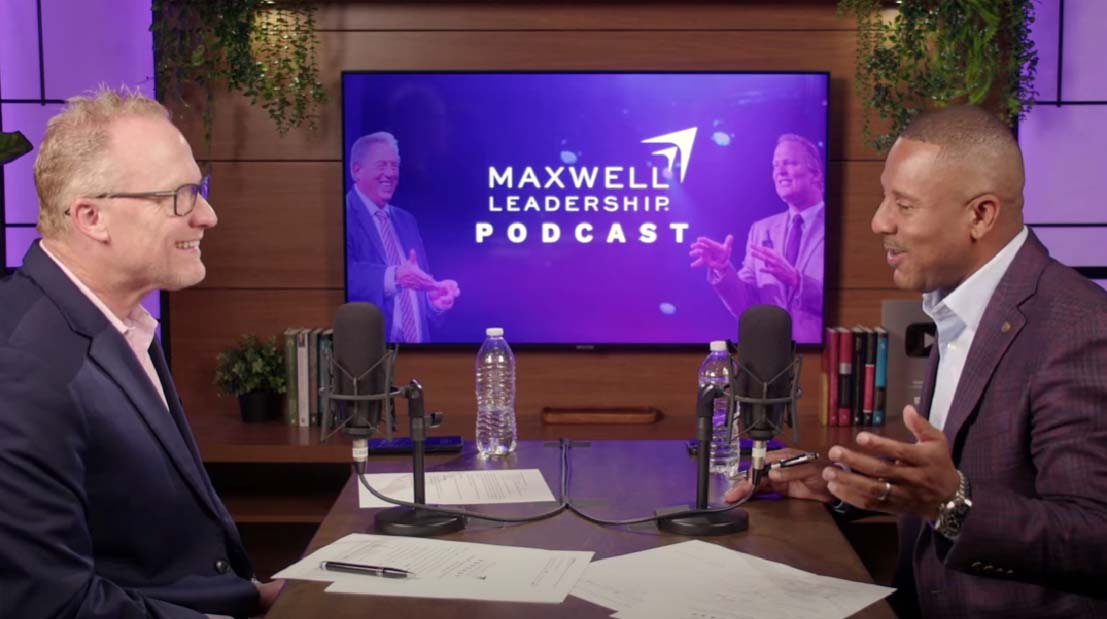
In this episode, Chris Goede and Perry Holley explore the signs of a broken workplace culture and outline why leaders hold primary responsibility for shaping it. Discover 3 ways to create an environment where people feel valued, seen, and heard, plus 3 elements crucial in transforming and sustaining a healthy culture. You’ll gain practical strategies to identify challenges in your own teams and drive meaningful cultural change.
Perry Holley:
Welcome to the Maxwell Leadership Executive Podcast, where our goal is to help you increase your reputation as a leader, increase your ability to influence others, and increase your ability to fully engage your team to deliver remarkable results. Hi, I’m Perry Holley, a Maxwell Leadership facilitator and coach.
Chris Goede:
And I’m Chris Goede. Executive Vice President with Maxwell Leadership. Welcome, and thank you for joining. Before we get started, we always want to point you to a resource for us, maybe you as well. I say us because we want to hear from you. We want to hear questions you have, topics you’d love for us to talk about, maybe something your team’s struggling with that you could then listen to together. So in order to do that, we want you to go to MaxwellLeadership.com/ExecutivePodcast. There you’ll see a form on the landing page, and we would love to hear from you and the topic so that we can—
Chris Goede:
Let’s talk about it in a future episode. Well, today’s title is How to Fix a Broken Culture. This is interesting because I think a lot of people, they don’t even realize that a culture’s gonna happen one way or another, or maybe even sometimes if it’s truly broken.
Perry Holley:
Right.
Chris Goede:
And you and I talk a lot about, with teams, about the engagement level. And I know domestically here in the United States, it’s, I think the last time I saw, 31%. of the team is engaged. And what’s interesting about that is their engagement level is tied directly to their leader or their direct—
Perry Holley:
Yeah. How’s it feel to work here?
Chris Goede:
Yeah. And then ultimately, that’s who’s responsible for the culture. Because a lot of people go, oh, it’s the chief culture officer, or it’s the human resource director, or whatever. But then we go, no, this is really about how do we live this out here? And we talk a lot about think, act, and interact is how we define culture. And that is tied directly to you as a leader. Now, if you’re listening to us, I’m pointing at the camera and we’re in our new studio here a couple weeks and Perry and I are still trying to figure out—
Perry Holley:
Where’s the camera?
Chris Goede:
Yeah, what camera we’re looking at. There’s a camera?
Perry Holley:
We’re being filmed?
Chris Goede:
But man, it’s just a lot of cultures I think are broken and people just don’t know about it.
Perry Holley:
And you can’t not have a culture. You cannot have a culture. You either design the culture you want or you default to it. And then I heard one of our colleagues say this and it really hit me hard. He goes, well, your culture, exists in your absence. And I thought, oh my gosh, you know, you’re thinking how people are, well, when I’m here, they’re all fine. But when you leave, when you’re not there, when you’re not present, your culture, that’s why it’s so important you design the one you want because it’s gonna happen in your absence to do that.
Chris Goede:
So real quick, so you just, I hadn’t thought about this, but I’ve been in organizations when certain leaders are there, it feels different to be there versus when they’re not there, And that’s an example of maybe that culture truly isn’t what that leader thinks it is.
Perry Holley:
Well, let’s start there though. I think that’s interesting is that we’re thinking, well, what is a culture? So you said how we think, act, and interact is how we do things here. It’s what it feels like to be a part of this. You can come up with your definition of culture, but what are the root causes? If you said, do I have a broken culture? What do you think is behind breaking the culture? You just gave an interesting one is that when certain people are in the house, people act different. They salute and stay mute, or they only say the right thing. I mean, that’s one big one that thinks to me. What do you think?
Chris Goede:
So a couple that come to mind for me that I’ve experienced before is the meetings, meaning the way those meetings feel. How predictable are they? Are people there? Are they just coming to the meeting and not participating? Perry loves our weekly meetings and, and has asked out of all of them. So I don’t know what that says about our culture. We still have those. Oh, we still have those. Yeah. Uh, the other thing too, I think that’s very telling, and I know working in the sales environment, you will agree with this, is that the high producers are not sticking around. Your low producers are, whatever those KPIs are, revenue or cost, right? And, and maybe the low ones are staying there, but you’re losing the high producers and you go, well, why are they leaving? Right? Like, what’s the culture about? There’s so many things and, and some of ’em are tangible, some are not that you can tell when it’s broken.
Perry Holley:
I was with a, an organization last month and there was something I was, we’re doing a talk on how to speak, how to speak to executives and they want, they have to present to their executive team a lot. And I, I was, I was helping them with executive presence and things. I said, so if the executive, ask you point blank, what is your point of view? And you know that your point of view may differ from theirs, what would you do? And they said, I would shut up. I go, you wouldn’t state your point of view? This is what executive presence is about, about your gravitas. Oh no, I would never. I go, okay, I don’t know what you think your culture is, but if your people are gonna salute and stay mute, they’re going to say what you think they think you want to hear.
Chris Goede:
That’s right.
Perry Holley:
That’s a danger sign to me. And then what did you think about conflict also? I noticed in our meetings, why I think we have a bit of a healthier culture here is that people don’t mind saying that they disagree with you as a leader or with someone else. It’s respectful. It’s very respectful. But nobody seems to be fearful about, I disagree with that. What do you— does that—
Chris Goede:
So I think that goes back to the— he was talking about meetings and predictability. I think when you have good tension, I think when you have good pushback or disagreement and it’s done in the right way, And I think that is a part of a healthy culture. Whereas if you get in meetings, whether it’s in a team meeting dynamic or a one-on-one, and it’s just like, check the box, keep moving, you don’t get any pushback, you don’t get any ideas, you don’t get any innovation, you don’t get any feedback. Like, that’s where the problem comes in.
Perry Holley:
Yeah, totally agree. Yep.
Chris Goede:
Well, the other thing we wanna talk about with the second one is when honesty stops being safe.
Perry Holley:
There’s that safety word again.
Chris Goede:
There’s a safety word, and we’ve talked quite a bit about this, but leaders have to allow their people what Perry was just talking about, to disagree the right way, respectfully, to communicate it in the way. And if they don’t, then they just don’t feel comfortable in that culture and they’re not being themselves. Culture equals what leaders model, what they reward, and then what they tolerate.
Perry Holley:
Yeah.
Chris Goede:
People talk about culture sometimes as a soft skill. Perry developed a course for us around servant leadership, and one of our things was we were like, man, this is going to feel soft to people. But we had corporate teams that continue to this day to have Perry come in and do some of that training. But it’s the same thing with culture, right? I would say this, I would say culture is more about a performance system than it truly is just being something that’s really soft. So if that’s the key and you think about performance, well, what do you do when people are hitting their KPIs, when they’re performing, right? What do we do? We will celebrate it. We won’t ignore what’s happening there. We will maybe correct them if they are performing the wrong way and we need them to And then also then the things that continue to drive success that are repeated, we encourage that. And so when you look at the word culture and performance, I don’t think you can separate the two versus people saying, well, culture is just what it feels like to hear.
Chris Goede:
So does that make sense?
Perry Holley:
Yeah, it does. But I’m wondering this, you interested me when you said what is, what your leader models, obviously people are watching you and then what you reward. So how you, you know, thank people or appreciate people or affirm behaviors that you’re seeing, but then you use the word tolerate. What do we tolerate? I wondered in your career through the different leaders you’ve worked for, have you ever seen a leader tolerate something from their team that you could now look back and say that was a culture killer? It was damaging the culture?
Chris Goede:
Yeah.
Perry Holley:
Yeah.
Chris Goede:
It reminds me of In 360 Degree Leader training, we talk about unwritten rules.
Perry Holley:
Oh yeah.
Chris Goede:
Like, what are the unwritten rules of the organization or the leader? And I think in athletics, a bunch of examples come to mind, but also in the organizational office to where they allow things to happen and then it becomes the norm, which then becomes the culture, which is what you started off talking about earlier, which was like, well, when Chris is not here, when Perry’s not here, Well, it’s okay. It’s unwritten because we tolerate those examples. And so I think that is in every organizational dynamic.
Perry Holley:
Well, all culture is built on your core values, whether— and they can either be on a coffee mug and a break room wall, or they can actually be things that you intentionally live out. And I wonder if you think about, by the way, the way that’s done is you establish core values, you this is a big miss, is that we often let everybody on the team define them themselves. And so you cannot do that. The leadership team must say, these are our 4, 5, 6 core values. This is what they mean.
Chris Goede:
Specific behaviors.
Perry Holley:
Specific behaviors that go with those. And then we catch people doing them and we celebrate that and thank them in front of others. And actually, I like one group I did capture the stories and put them into the onboarding PowerPoint that says, one of our core values is integrity in all situations. I’m making that up.
Chris Goede:
Yeah.
Perry Holley:
But then they catch people making hard choices to do the integrous thing, not to take a shortcut. And then they call that out to others. This is what that looks like. But then they also catch people not doing it, and they take those off on a one-on-one and say, that’s not how we do things here. But I wonder, it’s just a question for you about accountability and clarity about what the actual values mean. What’s your experience with that? Because I think this is A little bit of a miss and why we have a broken culture sometimes is we’re all operating on our own interpretation of the values and the accountability to those and the clarity of what they are is not there.
Chris Goede:
Yeah. I want to give you a story that I thought about with this question. So I was visiting an organization that’s a partner of ours, and they happen to be in the, we’ll call it the heavy machinery business, right? So I mean, blue collar, they’re working hard workers, this and that. I’m taking a tour of their plant. I go into the cafeteria and I don’t know if I shared this story or not, but on the wall, I turn around and I see this massive wall and this massive painting. And it says, it says in there, no gossip. I was like, and it’s a big cafeteria in this manufacturing place that they feed ’em breakfast and lunch and, and then the shifts come in for dinner. So I’m walking with the owner and, and the CEO and I was like, hey, stop.
Chris Goede:
We gotta talk about that sign. Like, is that truly a— is that truly one of your values? He goes, oh, absolutely. And I said, well, have you ever had to do anything about that where people aren’t living out their values? He goes, absolutely. I go, hold on a minute. Wait a minute. You have let— you have gone through a process to potentially have let somebody go because one of your values is to not gossip inside this manufacturing organization. And they violated that? He goes, absolutely. And I’m like, I got to hear more.
Chris Goede:
Like your phrase, tell me more.
Perry Holley:
Yeah.
Chris Goede:
I was like, tell me more. And so what has that done? It has communicated to a way in the team members that is like, hey, this is a value of ours. We’re going to take action on it. Here’s what this means behaviorally, to your point, and we’re going to hold you accountable to it. So it’s really clear and we’re going to hold you accountable to it. And if you can’t get on board, not only Are we going to take action? But what’s really interesting is, is that their peers also hold each other accountable.
Perry Holley:
That’s ownership.
Chris Goede:
And, and they begin to own it. Yeah. Because they’re like, hey man, Perry, listen, we don’t do that around here. I just wanna make sure, I don’t want anybody running up the flagpole and I look over and then Perry’s not here. Right. And so you get the team and the, the members of it to just buy in, let alone every time they eat breakfast or lunch, it’s as big as they can get on one of their values.
Perry Holley:
But that ownership, what that does is it develops a bunch of culture carriers. So I, I ask a group CEO, who are your culture carriers? Well, it’s me and the leadership team. Well, then we might have a problem because the minute you’re not present, who’s carrying the culture? And what you just described was they’re holding each other accountable.
Chris Goede:
That’s right.
Perry Holley:
Ownership for that culture.
Chris Goede:
That’s right.
Perry Holley:
And even if something as odd as no gossip, gossip can be destructive and it can undermine a lot of— so I mean, I compliment them for making it real and making it—
Chris Goede:
And listen, how simple is that? I mean, and how often does that happen in your organizations as a leader where there’s gossip? So I love it.
5 Levels of Leadership:
Your leaders are navigating change, burnout, and rising expectations every single day. The question is, do you have a system to handle it? At Maxwell Leadership, we equip organizations with practical leadership development that strengthens resilience, sharpens communication, and drives performance under pressure. This is not a theory. It’s leadership your teams can apply immediately. Because resilient leaders don’t just survive pressure, they lead through it. Start building that system today. Download the free 5 Levels of Leadership Field Guide at 5LevelsOfLeadership.com. It includes real-world case studies, common leadership pitfalls, At every level, and a 30-day influence growth plan that your leaders can put to work right away.
5 Levels of Leadership:
That’s 5LevelsOfLeadership.com.
Perry Holley:
All right.
Chris Goede:
The next point is like, okay, so what it actually then takes to fix your culture, what does that look like? Because we’ve talked about it’s going to happen one way or another. How do we go about when we realize that we do have a culture and that it is broken, that we will fix it? So what we’re going to do is just give you maybe a couple of things off the top of our head that we’ve thought about, that we’ve seen in organizations, or that we facilitate and teach in classes or coaching calls. The first thing I want to start with is actually something we’re working on around here at Maxwell Leadership. And some of you go, What do you mean you’re working on your culture? Is it not a perfect culture? I’ll try it that way. Yeah. See, I didn’t even have to say anything because Perry just lets you know. And here’s what I’ll tell you. When you have people, this includes your family, we have challenges, right? Always.
Chris Goede:
With culture. And so we do our best to live this out.
Perry Holley:
This whole leadership training thing would be a lot of fun if it weren’t for the people.
Chris Goede:
It’s exactly right. That’s exactly right. But one of the things we’re working on is The truth-telling, because you have to be at a place to where you’re able to reward honesty. Again, we go back to what Perry said, in the right way and communicate at the right time. But we need to be making sure that there’s truth being exchanged in the organization and that people are then actually maybe rewarded for that. May or may not be a little bit strong, but you want to be communicating that. And I would say, at least acknowledged when you’re telling the truth about a certain situation. When you do that, because we talk about how authenticity is a trust accelerator and trust is a currency to leadership and leadership leads to culture.
Chris Goede:
And so there’s gotta be truth in that.
Perry Holley:
Yeah. And you start to tolerate little half-truths or you start to accept behavior. I think behavior is one of the key things you need to fix is that, am I tolerating bad behavior?
Chris Goede:
That’s good.
Perry Holley:
And, but what, What determines bad behavior? Well, you’re not doing things the way we do them here based on our core values, how we treat people, how we treat the customer, how we service, how we build, what do we do, and how you show up. And the gossip example, that’s bad behavior. Well, we don’t tolerate those types of things. But everything, I’m going back to something you said about the trust is so important, is the linchpin of all things trust is that you need to be Recognizing that every interaction you have and every— that’s why Greg teaches us about how you think, how you act, how you interact is communicating whether we have trust here or not.
Chris Goede:
Everywhere, every day, every meeting.
Perry Holley:
Every interaction is that you need to be coming across. And I love you use the word authenticity. You need to be real. And people see you as fake or not real or putting on a mask to be a certain way around us. All of a sudden, I need to put on the mask. And we talked about inclusion in a couple of our courses. Well, this is not being included. This is fitting in.
Perry Holley:
I’m going to be what you want me to be, and I’m going to act in a way that I think is safe. All of a sudden, our culture is broken and we don’t even know it because people are acting in odd ways that they think is safe just to fit in today. I agree.
Chris Goede:
We often talk about people want to be valued, seen, and heard, which by the way, is part of even Leading to some safety that we talked about early on in here about them feeling comfortable in there. Our encouragement to you to begin fixing that, another point here is always be listening to make sure that you’re— now, you don’t have to act on everything that you hear, but man, be curious. Always be listening to your people, and you’d be amazed at some of the things that will just sprout right up out of that conversation. that are toxic to the culture. You just don’t see it as a leader. And you’ll hear it from your people if you’re listening.
Perry Holley:
And I see leaders rewarding, well, it’s going to sound harsh, the wrong things, but they don’t seem like the wrong thing when you’re doing it. But we reward heroics over teamwork. That one person that stays late and that one person that comes in and, I took one for the team, instead of bringing in the team and leaning into teamwork is what I want to celebrate on that. individual performance over the collaboration is that I don’t wanna be too heavy on, I wanna thank people for their effort, but I’m not gonna reward you for individual effort when you fail to collaborate with the rest of the team.
Chris Goede:
Yeah.
Perry Holley:
Trying to be the hero again to do that. Politics over integrity, people doing, you know, playing the politics card. I hate that. What I, one more inner word here and we can move on, but It seems to me like if you want to have a really strong culture, consistency— when you’re inconsistent on how you tolerate things, when you’re inconsistent on the behaviors that are allowed, when you’re inconsistent on even how you act, that destroys a culture. So how do you see consistency as a leader? Is this the hardest thing, or is— to me, it’s the most important thing.
Chris Goede:
Yeah, but I think it’s the hardest thing too. Some of the things we mentioned, if you don’t have the clarity, if you don’t listen, if you reward the wrong things and you do ’em inconsistently, when your team shows up, they don’t know what to expect.
Perry Holley:
Yeah.
Chris Goede:
They don’t know what to expect. And you, for example, let’s just, let’s talk about, I’m sure all of us have dealt with email communication, Slack communication off hours. Right? So are you an organization as a culture that we encourage, I don’t wanna use the word balance, but we encourage, hey, evening times, you don’t have to reply to an email, but then all of a sudden you’re in a meeting and someone shouts out Perry for, man, you saw that, you responded quickly, you got back to me. I had what I needed by 9:30 at night. Well, you were like, do you know? So What is the consistent communication that happens there? I think there’s this, the more you consistently do the little things right over time as a leader, thinking about the culture, thinking about the culture, the more it just starts to spew. You say all the time that leadership is contagious and people are watching you all the time. Well, they’re watching you all the time.
Perry Holley:
All the time.
Chris Goede:
Emails, showing up at the office. How are you showing up? What’s the energy? Are you listening to people? All of those things, all those leadership moments are part of the culture.
Perry Holley:
I agree. And they’re watching, and what you do is a lot louder than what you say. And everybody should know that by now.
Chris Goede:
100%. Okay. Well, as I wrap up and close, here’s our challenge for you as you listen to this. These may seem like simple things. You go, ha, yeah, that makes sense. Our challenge to you is, are you aware of the signs? Maybe now after this, you look at it a little bit differently, and maybe you just pick one sign or something that you’ve recognized in your own leadership or in your team. And then the question is, what is the behavior behind that that’s driving it? Because that’s what we want to fix. We’re in the behavioral change business.
Chris Goede:
Business is really what we are for ourselves first and then for others. One of the things that I think is, as a leader, there’s no doubt what Perry said, I think is absolutely true, which is if you lead a team, if you lead an organization, there are gonna be times in your career when you show up and the culture’s different than when you’re not there. So how do you find truth tellers? How do you find people that can honestly give you really good feedback? And you’re at a place to where you can accept it because you want to know what those behaviors are. And as the leader, you have to start modeling. It’s why when we go into organizations, we’re like, hey, the leadership team needs to go first, and then we need to start modeling that behavior in order to do it. But you can’t model the right behavior until you reflect and figure out what is the current behavior, and then what is it that you want it to be? And then you gotta be intentional about it because as we said in the beginning, it’s gonna happen one way or another.
Perry Holley:
A good place to start would be if you’ve taken something from what we’ve said here is maybe some of the signs that might be a broken culture is pick one. And as Chris just said, what is it you want it to be? And then work on it. Is it how we communicate in meetings? Is it how we think, act, and interact that people are not being consistent in how they show up? I mean, pick one and then maybe start to work on that. And then I think being intentional, even talking to your team about, how seriously we take our culture. Because I mean, people will join Maxwell Leadership because it’s Maxwell Leadership, but they will quit because of me.
Chris Goede:
That’s right.
Perry Holley:
That’s good. And I just want to make sure that I’m a culture carrier for what we’re trying to do here. And I want to build a bunch of little culture carriers on my team.
Chris Goede:
Maybe you’re even saying, well, I don’t even know how to have that conversation. Great. That’s why Perry and I do this. That’s why we’re sitting here. So maybe you hand out this lesson, this podcast, and then have people come back together and give you that type of feedback, or you talk about it as a team. You will be amazed at what’s gonna happen in that conversation.
Perry Holley:
That is true. That is true.
Chris Goede:
We just did, by the way, let me just say this. We have a brand new Maxwell Leadership Culture Diagnostic.
Perry Holley:
Oh yeah.
Chris Goede:
And we rolled it out and we tested it with our organization.
Perry Holley:
It was very eye-opening, wasn’t it?
Chris Goede:
And I’m just gonna leave it right there because when the results came back, our leaders and CEO were like, What? And here’s what we had to decide: is what we’re seeing in this anonymous diagnostic the truth? Because there were some leaders in that room that were like, well, well. And then we had a conversation. We first have to accept that this is truth. And by the way, it is truth because it’s where their reality is. This is a whole nother podcast, so I need to stop. But that culture diagnostic, By the way, if that’s something you’re interested in, when you go to that form, and Perry will redirect you again in just a minute, man, make a note on there because if that’s something you’re interested in, we’ll follow up. And it’s something that we’re seeing having a huge impact on culture and organizations.
Perry Holley:
You just gave me an idea for a podcast. I don’t want to miss that.
Chris Goede:
Yeah, I love it. Yeah. See, he’s filling out the form, but right here in the podcast room with us.
Perry Holley:
All right, well, thank you. I’m making a note. Sorry. Thank you, Chris. And great conversation. This culture is real. It’s how you’re People either stay or leave. They want to be a part of what you’re doing.
Perry Holley:
So as Chris said, if you’d like to learn more about our offerings, if you learn more about our coaching offerings, we’d be glad to work with you on any of these topics. You can also learn about others in our podcast family. You can do all that at MaxwellLeadership.com/ExecutivePodcast. We love hearing from you. So grateful you’d spend this time with us. That’s all today from the Maxwell Leadership Executive Podcast.
Transcript created by Castmagic.