
Most leaders can point to a set of core values on a wall or a slide. Fewer can say those values show up in how their team works on an ordinary Tuesday. The distance between the two is culture, and closing it comes down to daily leadership: values your team helped define, lived out where everyone can see them. Built consistently, culture outlasts any single initiative.
Why your team already has a culture
Every team has a culture, whether anyone planned it or not. Leaders either define one on purpose or default to whatever forms on its own. The default is rarely the culture they would choose. Culture shows up in how people think, act, and interact. It runs on the values a team believes rather than the ones printed on a mug.
Two truths put culture squarely in the leader’s hands. Culture is more caught than taught, so people absorb it from what they watch far faster than from what they are told. Culture also exists in your absence: whatever happens when you are not in the room is the culture you have built. John C. Maxwell defines leadership as influence, nothing more, nothing less. Culture is the shape your influence leaves on a team over time.
How to build team culture in seven steps
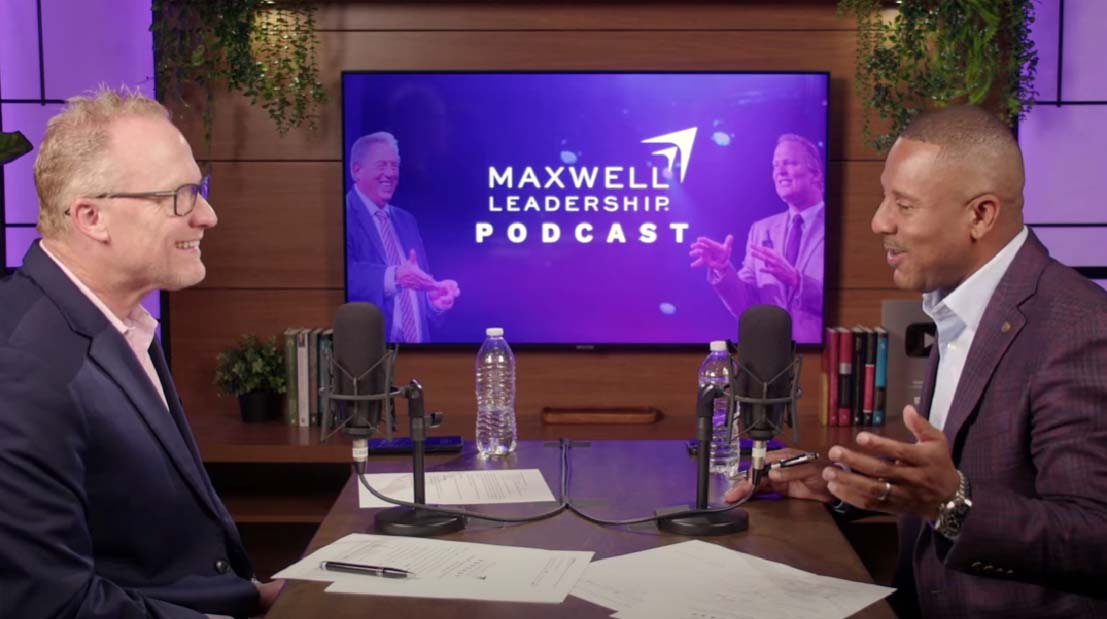
In Building an Extraordinary Culture, an episode of the Maxwell Leadership Executive Podcast, Chris Goede and Perry Holley share a seven-step model. The steps run in sequence: the first three build commitment, and the last four turn it into results.
1. Inform your team continually
Culture needs repetition and a common language, because values fade when they are mentioned once at an offsite and never again. One practical habit is opening team meetings with the purpose, the mission, and the values before the task list, so the why stays in front of the what. Recognition works the same way: when you celebrate a win, name the value it expressed before naming the person who delivered it, and the team learns both are worth noticing. Definitions deserve as much attention as the words themselves.
A value like service means something different in every organization, which is why the strongest cultures spell out what each value means here and the behaviors it should produce. Left to individual interpretation, a value stops being shared at all.
2. Involve people in shaping it
People commit to what they help build, which is why informing a team is never enough on its own. Invite team members into decisions about how the values get lived out, especially where they hold experience and a point of view, and let them see how and why the final calls were made. Everyone wants to be seen, valued, and heard, and a person whose voice shaped the culture treats it as their own rather than as a policy handed down. The stakes are larger than they look: Gallup found global employee engagement fell to 21 percent in 2024, only the second decline in twelve years, driven mostly by a drop in manager engagement. Involvement is one of the most direct remedies a leader controls, because people give their best where they feel connected and heard. Rebuilding it is also one of the most common reasons organizations bring in Employee Engagement training, since the habits behind connection are easier to name than to practice.
3. Inspire by living the culture out
No amount of communication survives a leader who does not model the message, because people believe what they watch long before they believe what they are told. Presence is what makes values believable: being visible, doing the work you praise, and letting people catch you living the culture when you think no one is looking. Maxwell describes the habit as walking slowly through the crowd, staying close enough to people that the culture has a chance to spread. The example can be as small as picking up stray trash on a walk across the property; the people who notice will come down and join in without being asked. A culture lived visibly gives everyone else permission to live it too.
4. Inspect what you expect
What gets inspected gets respected, so take a regular look at whether decisions, behaviors, and priorities still line up with the values you have named, and correct course where they drift. A useful question for the review is a simple one: is what we are doing still aligned with who we say we are? Staying close to the work matters here, because a culture delegated to someone else while the leader steps away stops being led at all.
5. Improve continually
Inspection only matters when it leads to adjustment. You already run this loop elsewhere: leaders review financial statements, customer scores, and their kids’ report cards because they want the next stretch to be better than the last, and culture deserves the same treatment. Small, visible corrections tell the team the values are alive, while a finding that never changes anything teaches them the review is a formality.
6. Increase capacity
A healthy culture increases what a team can carry, and you will feel the shift as engagement and trust grow: more customers, more responsibility, and more change become manageable where they once felt like strain. The temptation at this stage is to coast on what is working, which is why the model treats growing capacity as part of the culture itself. A team that keeps expanding what it can handle never has to relearn the habit under pressure.
7. Impact people
Whatever your industry, every team is in the people business, and the final measure of a culture is the change it creates in people: teammates who grow, customers who are served well, and a community that benefits. The first six steps all point here: inform, involve, and inspire your people, then inspect so you can improve, increase, and ultimately impact people.
Start building a culture that lasts
A lasting culture is built in ordinary moments, in what a leader repeats, models, and rewards over time. Leaders who treat it as a daily practice give their organizations something competitors cannot copy.
Maxwell Leadership can help you build it: Company Culture consulting works with organizations to define their values, translate them into daily behavior, and build the alignment and trust a strong culture runs on. Everyone can learn to lead well, and no one should do it alone. Schedule a discovery call to talk through where your culture stands today, and subscribe to the Maxwell Leadership Podcast Network for free weekly teaching from Maxwell Leadership’s growth and development professionals.
Frequently asked questions
How do you build a good team culture?
Start with values your team can define in behavioral terms, then reinforce them through repetition, involvement, and example. Culture strengthens when leaders review it regularly and adjust, the same way they manage any other priority. Most culture problems trace back to values people were told about once and never saw modeled.
What are some examples of team culture?
Common patterns include collaborative cultures built on open communication, results-driven cultures organized around performance, learning cultures where growth and feedback are constant, and service cultures centered on the customer. Most healthy teams blend several. The visible signs are the same in each case: how people treat each other, what gets celebrated, and what happens when no one is watching.
What are the 5 C’s of culture change?
Definitions vary depending on who you ask. Common versions include clarity, communication, consistency, commitment, and celebration. Whichever list you use, the discipline behind it is the same: define the culture you want, talk about it often, live it consistently, and recognize it when it shows up.
What is the culture of team building?
Team building activities support a culture without creating one. An offsite or a shared exercise builds connection for a day, while culture is formed by the values a team lives out daily. Use activities to strengthen relationships, and rely on consistent leadership behavior to do the deeper work.