In this episode, Perry Holley and Chris Goede explore the importance of critical thinking for leaders. They explain how critical thinking helps leaders enhance their problem-solving skills, make informed decisions, and communicate more effectively. The hosts also share practical tips for developing critical thinking skills, such as asking thoughtful questions, evaluating information sources, and considering multiple perspectives. Additionally, they encourage leaders to engage in diverse conversations and embrace uncertainty as part of the critical thinking process.
Chris Goede:
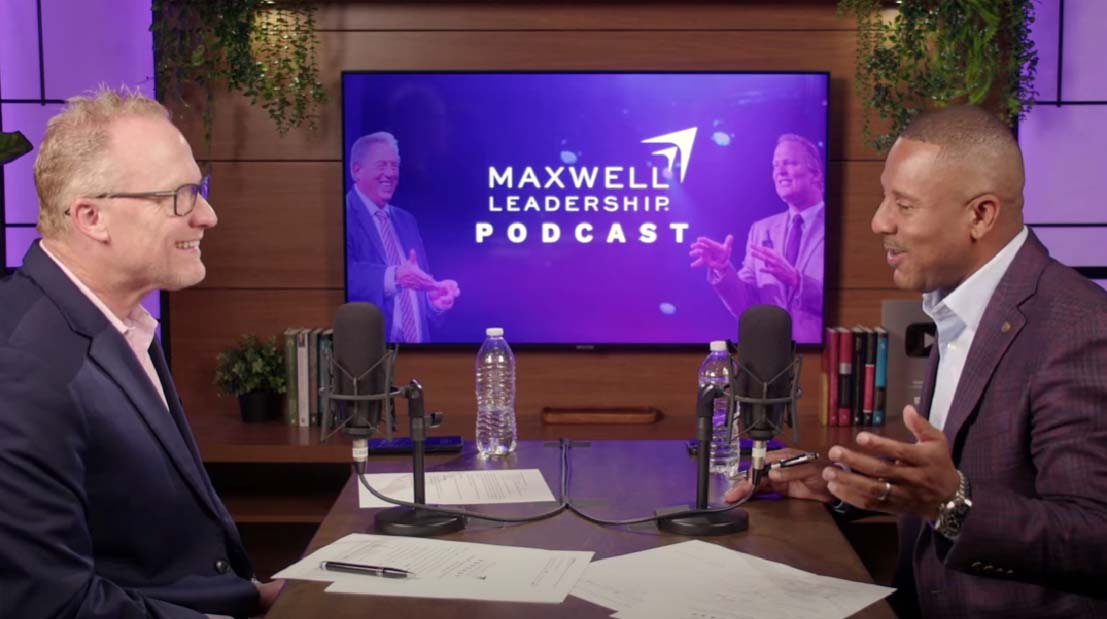
Welcome to the Maxwell Leadership Executive Podcast where our goal is to help you increase your reputation as a leader, increase your ability to influence others, and increase your ability to fully engage your team to deliver remarkable results. Hi, I’m Perry Holley, a Maxwell leadership facilitator and coach.
Chris Goede:
And I’m Chris Goede, executive vice president with Maxwell Leadership. Welcome and thank you for joining. Well, today’s title, I’ve heard this before. It could be when from my parents, it could be from my, my wife, it could be, I don’t know, I.
Perry Holley:
May have said it to you maybe.
Chris Goede:
Maybe from someone sitting across from the table. We’re going to talk about this phrase that Perry came up with is what were you thinking? Right. And immediately, I hope you’re, whether you’re exercising, whether you’re riding in the car, you’re sitting in the office, hopefully taking notes on the learner guide. You go, man. I’m familiar with that phrase. And so we’re going to dive into this from a leadership perspective. I think you’ll enjoy some of our content today as we do want to encourage you to go to MaxwellLeadership.com/ExecutivePodcast and there you can learn more about our five levels of leadership or the 360 degree leader, two of our staples when it comes to team development and culture enhancement. Well, as we begin talking about this, as I mentioned, you have heard this a few times.
Chris Goede:
I know that, that I have what’s interesting about it, and I was telling Perry right before we started recording, it’s so true, this statement. It’s the tone of how this question is asked and it’s either you’re being curious or there’s some concern there. I feel like when I was a child, most of it was major concern. There was not a whole lot of curiosity behind the question to me and what I was doing. And so we’re going to actually look at it today from a leadership perspective and as a challenge. And it’s just going to say, hey, how are you thinking? Like, are you thinking critically or are you just reacting? Which, by the way, is the, is the leading indicator of someone coming up to you saying, what were you thinking? Because that is going to come after the fact. And so we’re going to look at this on the front end of how are you really thinking?
Perry Holley:
I can actually hear my dad going, you weren’t thinking, were you, Barry? You weren’t.
Chris Goede:
Wasn’t even thinking.
Perry Holley:
I wasn’t thinking.
Chris Goede:
That’s true for some leaders, too, for me at times as well.
Perry Holley:
So this critical thinking, I think is A leadership superpower and your ability to critically think through the things that are out in front of you and your team and your company to do that. There were a couple of books. When I got into John Maxwell world 35 years ago, the books were coming out. There’s one that I said I would never ever read. And it was called Thinking for a Change. And then some things happened and as always, someone said, you know, you should read this book.
Chris Goede:
That’s right.
Perry Holley:
So I did. And the idea of being a thinker never occurred to me. It was like I kind of just flow through life. So lots of great stuff. Not really going to go deep into that today, but this idea of can you develop the skill of critical thinking, I think can be a superpower for many leaders to help put you situationally for your strategies and your direction in your team.
Chris Goede:
So it’s on the front end.
Perry Holley:
I’m looking forward to hearing your thoughts on it.
Chris Goede:
Yeah, it’s on the front end. And I love that you mentioned that. I was going to ask you about it because I know that that book had a profound impact on you after you read it. And. And originally we’re not going to read it.
Perry Holley:
And I was.
Chris Goede:
I hear that.
Perry Holley:
And Today Matters. I was gonna read Today Matters either.
Chris Goede:
It was a game changer and you helped us build a course.
Perry Holley:
That’s one of my favorites. It’s actually a game changer.
Chris Goede:
Yeah. So let’s talk about critical thinking. Right. It’s a. It’s a mental process where some of us will actually lean towards this a little bit more than others. Some of you gonna have to develop to learn behavior around it. But we do think that all leaders should dig into this a little bit, where you’re doing some careful analysis, evaluations, and really interpretation of the information that you’re receiving and the ideas that you’re receiving. And so you’re going to.
Chris Goede:
You’re going to question assumptions, you’re going to consider different perspectives. At the end of the day, though, one of the things through all of this process is as you become a better critical thinker, you have to then make a decision. So what we’re talking about today is not purposely delaying decisions. Right. Because that is making a decision in itself. We don’t want to do that, but we want to just challenge the way that you go about it in a different way with using critical thinking.
Perry Holley:
And I like to think about critical thinking really cultivating my curiosity. And we talk here a lot about are you invoking curiosity in your leadership? I think it’s a Miracle skill and something you should do a lot. John says that leaders are learners. So you’re really, as a critical thinker, you’re really learning in real time. It’s not passive. You’re engaging with the world. You’re kind of refusing to accept the first or easiest answer. Sometimes in leadership, stakes can be high.
Perry Holley:
We’re making decisions on our future. We’ve just been talking about the second half of the year and content we’re going to offer and things we’re going to do. And even now we’re talking about 20, 26 and we’re looking out. And so you’re making decisions about that. And decisions without good thinking really is just making a guess and hoping I’m right. Yeah, I think this is what we should do. I really want to get into. So what can we do to really get this critical thinking as a skill set?
Chris Goede:
Right. So what’s the PA payoff for us? Right. As leaders? Great. You’re like, yeah, I need to think a little bit differently. Critic. What’s. What’s the. What’s the payoff? The first one is enhanced problem solving.
Chris Goede:
I think this is where you’re able to break things apart in a way to where you can look at it from different angles. It gets you the opportunity to maybe step outside the problem and have a different perspective versus just putting a band aid on it to keep going. A lot of us work at such a pace and a fast pace that we’re just like, hey, just. Just go do that. And then all of a sudden that breaks again. The problem shows up again in a couple of weeks, and you’re like, just go do that. And you’re putting the band aid on it. But are we able to kind of step back and understand it from a different perspective? Second one is informed decision making, where you weigh the evidence, not just opinions.
Chris Goede:
I think there’s circumstances, I think there’s facts, then there’s some opinions. But you also avoid being swayed by the emotion of other people or maybe even yourself, because sometimes I know that even though I’ve been told I don’t have emotions, I just. I had a hard time getting that out for a minute there.
Perry Holley:
Almost like I’m emotional.
Chris Goede:
I was almost emotional is that, you know, I’m the best salesperson this guy’s ever seen. Right. Like, and. And my emotions will lead into that. But. But how do you get out of that? Not only your emotions, but maybe your teams or others and make an informed decision and then finally effective communication to where you can then make the decision? How you got there. And you can communicate that in a way very clear and engaging when you are presenting that to other people.
Perry Holley:
Well, I’ll add to that too. If you have this ability, the critical thinking is that you develop a little bit of a resilience to being manipulated by, by, by opinions and things that you can actually learn to separate fact from opinion. I was doing something the other day, my wife was sitting there and I saw something come across, Instagram or whatever. I go, hey, when did this happen? And she said, fake news, that’s an AI generated thing. I go, how do you know this? Well, it’s in her space. And she know. I thought, I didn’t, I didn’t even know it was a fake. I just thought this must be a fact to do that.
Perry Holley:
And I just saw some research. It came up in a political context. But saying that the way people present things to you today, you’ve got to be very careful about what is fact and what is their opinion. And people are very good. We are very good. I’m not just. We’re all very good at presenting my belief as fact. And that’s not always the case.
Perry Holley:
It’s misinformation sometimes. So as a critical thinker, can you be resilient to this manipulation of a bunch of, of opinions that are coming at you and really pull out what are the facts here? And I think that’s a, that’s a big piece of that.
Chris Goede:
Let me add to that. So what’s interesting about that is that I think this is a skill that also helps you. If you do it and understand it properly, as people are persuasively communicating that may not be factual to where you can receive that in a way and process it and still be curious, which we talk about versus completely disengaging or becoming combative to it. I know, like, I’ll give you an example. Someone in my life is extremely passionate and the way they say things, it comes across as that is the end all, be all.
Perry Holley:
That’s the way it is.
Chris Goede:
Yeah. And I will start saying, no, that’s not how it is. Right. But if I was able to enhance my critical thinking and handle that internally by being additionally curious, process and then re engaging boy, the connection there between me and that individual would be a lot closer, a lot tighter, which is the foundation to all of our leadership. So anyways, I just want to jump in for a minute because I was thinking that, yeah, that’s interesting. Like, because there are a lot of people that are just like. And there’s no facts behind.
Perry Holley:
But I, as a sales leader, you’re. You lead a sales team. I had a sales team for years. And I’m telling you, I had a sales exec once, his favorite line was, you’re entitled to your, your view of your, to your opinions, but you’re not entitled to manipulate the facts to make it fit your narrative. I go, oh, yeah, wait a minute. But then when I became, I had his job later, I go, oh yeah, people come in here and tell me all kinds of things why it couldn’t happen. Was that a fact? No. No.
Perry Holley:
And so I need to be, I need to be critically thinking through what are the components here? What am I analyzing? What am I The. Another point I would add was about this continuous learning is that if I’m in a mode of continuous learning, I’m always adding to my base of being able to sort through and sift through things and some thinking on how I want things to play out in my strategies, in my direction, what we’re trying to do.
Chris Goede:
Yeah. So let me go back to this example. I just kind of interrupted you on and, and with what you just talked about continuous learning and then thinking about John’s 15 invaluable laws of growth, where he talks about the law of curiosity, which we were just talking about. And, and growth begins with a mindset where again, in my example, I, I was able to take that data in or that opinion, persuasive thought and then be able to ask some questions to get to that point where I’m being curious about that, to be able to decipher it. And critical thinking is, is that curiosity applied with that discipline over and over and over again gives you to think differently than how sometimes I do it in the moment, which is we started off. I don’t just, I’m just reacting. I’m not even processing that. And so where we’re going with this is we’re, this is a skill set that Perry and I are giving you an insight on, on projects, on big things, on, but also in conversations in order for you to stay connected to people.
Perry Holley:
I like that. Curiosity applied with discipline. I like that. So let’s, let’s get practical for a moment and give a couple ideas. So if you say yes, yes, I need to do a better job at critical thinking and I need to apply some, some think time to where we’re going, what our direction is, where want to end up those types of things. Well, let’s just give them a couple ideas. One of them was, this may seem incredibly obvious, but you need to ask thoughtful questions. And actually, I say that it’s not that ridiculous as when I read it.
Perry Holley:
But sometimes I don’t ask thoughtful questions. I accept information at face value. I need to dig deeper. I need to be curious. I need to find out what’s behind that, what evidence supports what you’re telling me. Tell me where that came from. And I know in our world, we’re all. We’re getting a lot of things coming at us that we can.
Perry Holley:
That sounds great. Let’s do that. No, no, tell me more about that. Tell me more. It’s a great little phrase I use a lot to do that. But I think if we start asking. Don’t just accept things at face value. Ask thoughtful questions to get underneath what it is to make sure.
Perry Holley:
Am I. Before I process it, Do I have it right?
Chris Goede:
Yeah. Yeah, that’s good. Second one is evaluate information sources. Okay, where is this coming from? Is incredible. Is it maybe a bias that they have? I was on a call yesterday. I was coaching an executive, and we were talking about some things, and then we were going through just some personal updates, and he said, man, it was fascinating. So I was working with an organization, and I actually took an assessment that identified what my bias is in life in general. And he began to tell me about it, and I was like, man, that’s fascinating.
Chris Goede:
I wonder what my just natural bias is, because we all have them, right? And by the way, what my natural bias is is how I’m going to give you information. Another thing I was thinking about, we’re sitting in here with Studio and. And Wade’s producing for us today and. And making sure Riverside’s running. And one of the things that my team had me doing a while ago was doing these videos, right? It’s not something. I don’t do social media really well. So they. They probably saw the first couple videos and they were like, what are you thinking? Is probably what they said, right? Because I hadn’t thought about making sure I had the right equipment.
Chris Goede:
Well, I’m in here with Wade, and Wade’s like, hey, you should just get this mic they just plug into the bottom of your phone. And I was like, okay. So I ordered. He sent me a link. I ordered it. Why? Because I thought about, well, he’s in technology. I don’t even know how to turn a computer on, let alone talking to a phone. And he’s used these mics before.
Chris Goede:
So immediately I evaluated the information, information that came from the source. I was like, I’m gonna get it. So then Another Amazon box showed up in my house. But that’s his fault. Not my fault. But. But I think we. We do that a lot.
Chris Goede:
And by the way, be careful when you’re giving information, because I think you also give it with your own bias. And. And so you want to be a credible source for other people as well.
Perry Holley:
Yeah. Wade, you want to make sure that he knows how to turn that thing off. Don’t want you recording things we don’t want to hear.
Chris Goede:
That’s right. Okay.
Perry Holley:
Another critical thinking best practice is to consider multiple. You know, kind of asking yourself, what am I missing here? Who sees this differently? I just was on a coaching call, and one of the guys that I coach, he said, I’m trying to get more disagreement in my meetings. I want people. Everybody just nods their head and goes along with me. He goes, I’m trying to. I’m encouraging dissension, but nobody will dissent. So he said I had to, you know, what am I missing? Tell me, what’s another way to look at this? He said I had to assign every meeting I assign. Okay, you’re the devil’s advocate, and he gives them permission.
Perry Holley:
Now, you know that people aren’t going to think you’re being a jerk. They know that you’re expected, that you have an obligation to dissent, that. We just heard that somewhere recently. Yeah. Obligation to dissent was one of those.
Chris Goede:
Yeah. I love it. One of the things that I think I want to challenge everybody, including myself, because I thought about it as you were just talking, and it’s really personal, is this multiple perspectives. I want to encourage you to do this even more in your personal life than even maybe your professional.
Perry Holley:
That’s good. Yeah.
Chris Goede:
Because I think we get more comfortable, I think. I think. I know. With our own bias and our own perspectives, with our family. And yet if we would do this, as we’re coaching you to do at the office, I think you would have a different environment and understand different perspectives here personally.
Perry Holley:
Well, you know, you just mentioned bias. One of them that is very obvious to me that I have is. And everybody, I think, has this among confirmation biases. I know what I think. And so I’m always looking my bias. I’m looking for proof. I’m looking for validation and verification that I’m right.
Chris Goede:
Yes.
Perry Holley:
And so it could be whatever I believe. I just. I’m looking for evidence to do that. And I’m not open to other perspectives. I’m not open to. How could that be different? We’re watching news. The other night, I said, I just love to ask her, how did she come up with that? Because I totally disagree with what was said, but I’m open to how did. Is there something.
Perry Holley:
I don’t know, where did that come from? How could you possibly think that? But you know, if you’re face to face, it probably would have been a fight. I don’t know if I. I just want to. I’m curious because I want to. I want to. I’m critically thinking through this, and you just said something I can’t believe. So can. If I can have that in my work and people challenge my thinking and we get the best thinking out of this, I do too.
Chris Goede:
Number four for you is embrace uncertainty.
Perry Holley:
What?
Chris Goede:
Yeah. So this is. This is great. Not every decision will have all the facts. This is a problem for me. I feel like I can get as much data as possible right before I move. And then what I’ve learned is that it’s okay if I revise kind of my thought, my position. Once new things come along.
Chris Goede:
It’s as simple as man. I didn’t know that before. Now that I know that my whatever is this way now, I want to encourage you. I said this early on and I can only say this. I’m going to repeat it a couple times in this episode because I am. I was going to say a recovering, but I probably still am. We’ll get paralysis because of wanting to have all the data. Wanting to know, you know, was the source correct? Wanting to know, did I ask the right questions? Did I ask enough people? And that’s not what we’re coaching you on here.
Chris Goede:
Right? Because then people will be really be saying, like, what were you thinking? Because you just never made a decision. So we’re not saying that. We’re just saying, hey, no, no. We want to encourage you to make decisions faster because we believe the faster you make decision, the more success that project, that decision has. But just know you’re going to have uncertainty as you make those decisions. As you go through critical thinking, as you enhance that, you’re not going to be able to answer all those questions.
Perry Holley:
But if you’re in that, come back to the continuous learning before us. So even if I. If I make a wrong decision, okay, now by critically addressing it, I can. I’ll make much better decisions in the future just by owning that mistake that we talked about previously. Number five says engage in diverse conversations. Do you talk with people who think differently, that are differently, they have different backgrounds than you? This. Most of us have spent a lot of effort building a diverse team of. Of Individuals.
Perry Holley:
They’re not all like us, thankfully. But are you leveraging those diverse perspectives, those diverse backgrounds, those diverse way of thinking, and just boldly asking, what do you think? Where would you do from where you. I’m just thinking even the diversity, the generational diversity about. So I’m the old guy. I got a bunch of young guys. So this receiving from them. How would you do this? What do you think? You asking Wade, what. What.
Perry Holley:
The technology I could use. You. And I don’t know, but he knew. But that was. Now your. Your. Your knowledge is expanded, your thinking is expanded on solutions you could use. So I love that one.
Perry Holley:
To say, you know, we. We tend to only talk to people that think like us. Hey, what about talking to people that don’t think like us?
Chris Goede:
Right. Oh, that’s so good. Well, we. We like to stay with the number five around here because of the five levels of leadership. But I got a bonus tip for you today. Another item that I just want to share with you is when you’re asking questions, this is a. This is a pet peeve of mine. And so I thought I’d just air it here in front of millions of our closest friends.
Chris Goede:
Don’t. Don’t ask questions because you’re. You’re testing someone or this is. This even gets me more. Don’t be asking questions. I call them leading questions. You think about watching some of these attorneys.
Perry Holley:
Yeah. Law shows.
Chris Goede:
Okay, look, I’m not. I’m not on trial here. Like, like, don’t be asking me in a way. And I have some people that come to mind to think about. This is like, no, no, no, no. Like, genuinely ask those questions. Because, by the way, we can tell. And there’s a big difference.
Chris Goede:
Big difference in your thinking and critical thinking of asking questions in a way to learn. We’ve talked a word about curious versus the fact that you’re trying to test someone whether they’re right or wrong to prove that to you or that you are trying to ask questions in a way to get people to believe what you believe. Like, that. That’s not. That’s not the way to go about this. That’s not what we’re talking about in here. And so that’s your little bonus.
Perry Holley:
I love it.
Chris Goede:
Pro tip from Perry. Holly.
Perry Holley:
I was working with a senior leader, and she had a new initiative she was going to roll out. Pretty big deal. And we were talking about. She said, I’m nervous that I haven’t got it all together. I go, well, have you. I’m thinking about critical thinking. Tell me about your thinking. Tell me about your process.
Perry Holley:
And she said, here’s what I’m going to do. After we went through it, she said, I’m going to invite three groups into the room. And so she got frontline people, middle managers from the organization, and some of her peers, her level. And she presented it to all of them and asked them one question. What are you seeing that I’m not seeing? What am I missing here?
Chris Goede:
So good.
Perry Holley:
And she said. I said, well, how’d that go? She said, well, it was humbling. And what I learned was there were some ripple effects from the decisions I was making that I had not considered that other groups would be effective. And so I just revised the plan, and it rolled out much better. I thought, wow, that’s. That’s critical thinking to the. You know, I thought through it, I got a plan, I have a direction, but then I’m going to ask other people to take it apart.
Chris Goede:
What’s awesome about this is she still controlled the narrative. Okay, so we’re not talking about this collaboration to get to a point, right? It was almost like, hey, this is where I’m at. What, what am I? Like, what am I missing? What are my thoughts? Too many leaders will come and say, hey, what do you guys think about what we should do here? Right. Well, then you got a wire and you got it. Then you got a storm, and they.
Perry Holley:
Tell you what you want to hear.
Chris Goede:
And yeah, all that stuff, it’s like, no, okay, so here’s an option. Or here’s an option. Let’s talk about this. Like, control the narrative when you do that. So. Well, I’m going to wrap up with a couple of thoughts as we go through here. And one of the things we want you to do is we just really want you to pause. We want you to pause and think critically to be able to make better decisions, not to be able to react.
Chris Goede:
And when you do that, we talk about buy in, and we talk about the team buying into the leader and the team buying into how you’re leading before they really buy into anything else inside the company. And so they’re going to look to you to be that critical thinker. I think also I want to encourage you to share how you go about making decisions, how you go about thinking, what did you do? Because it’s contagious. And then your team will begin to think about it just a little bit differently as well. And so here’s your challenge for this week. Think about a decision that you’re facing right now. What’s Something that you’ve got to decide on. It could be big, it could be small, whatever it is.
Chris Goede:
But instead of just like reacting and running and going and doing it, here’s a checklist for you. Okay. And Perry put this together. I’m sure it’s in your show notes if you want to download it. There’s but love these five questions. As I was looking at them before our session today, I thought, man, I need to have these somewhere in front of me all the time. What’s the real problem? Here’s question number one. Number two, what are my assumptions about that? That is a great question to ask and sit down, because we don’t ever want to tell ourselves the story of what our assumptions are.
Chris Goede:
But if we force ourselves to write down some answers on that, you’d be surprised what comes out. Number three, who would see this differently? Who could add value to this? Once you’ve got a direction, remember, keep control of the narrative. What’s the evidence one way or another? And then what’s the risk of being wrong? This, this, this question right here for me, I learned this a while ago. I used to think it was a lot bigger than it really was, and so it would paralyze me. Back to my parallels. I told you I was gonna name three times. That’s it. In the beginning.
Chris Goede:
That don’t, don’t paralyze it. This. Right, because. And, and the risk ends up not being as big as you, as you think. Oftentimes I would talk through this with Mark or John. They’d be like, and so what? Like it’s okay. Like, if that’s the worst, then. Then we’re good.
Chris Goede:
So John says the leader who learns to think well leads well. Critical thinking isn’t a one time exercise. This is something that we’re hoping becomes a habit for you, whether it’s in the decision making or even as we were talking halfway through about conversations and how you’re thinking while you’re having conversations.
Perry Holley:
Yeah. I remember Abrashov in his book it’s your ship, he said, I want you to make the decision. If. Here’s three criteria, though. If it’s going to kill somebody, hurt the ship, or cost taxpayer money, don’t do it. Other than that, go, go.
Chris Goede:
Yeah, we’ll cover everything else. Yeah, I love it.
Perry Holley:
All right, Great stuff and thank you again. If you would like to get that learner guide Chris mentioned or learn about our offerings or other podcast offerings, you can do all that at MaxwellLeadership.com/ExecutivePodcast. You can also leave a question or a comment for us there. We love hearing from you. So grateful you spend this time with us today. That’s all from the Maxwell Leadership Executive Podcast.
Transcript created by Castmagic.




Be the first to comment on "What Were You Thinking?"