The first step toward helping someone become their best is to help them believe that they can. In this week’s episode, John Maxwell shares the influential power of giving others a win!
After his lesson, Mark Cole and Chris Robinson unpack his insights so you can apply them directly to your life and leadership.
Our BONUS resource for this episode is the Help Others Win Worksheet, which includes fill-in-the-blank notes from John’s teaching. You can download the worksheet by clicking “Download the Bonus Resource” below.
Take the next step in your growth journey and become a Maxwell Leadership Certified Team Member. Click here to speak with a Program Advisor today!
Mark Cole:
Welcome to the Maxwell Leadership Podcast. Hey. Our podcast really is committed to adding value to you and then asking you to do something with that value. We want you to multiply value to others. That’s more than just a statement for us. It’s a lifestyle. It’s a commitment. And we hope that’s what it does for you today.
Mark Cole:
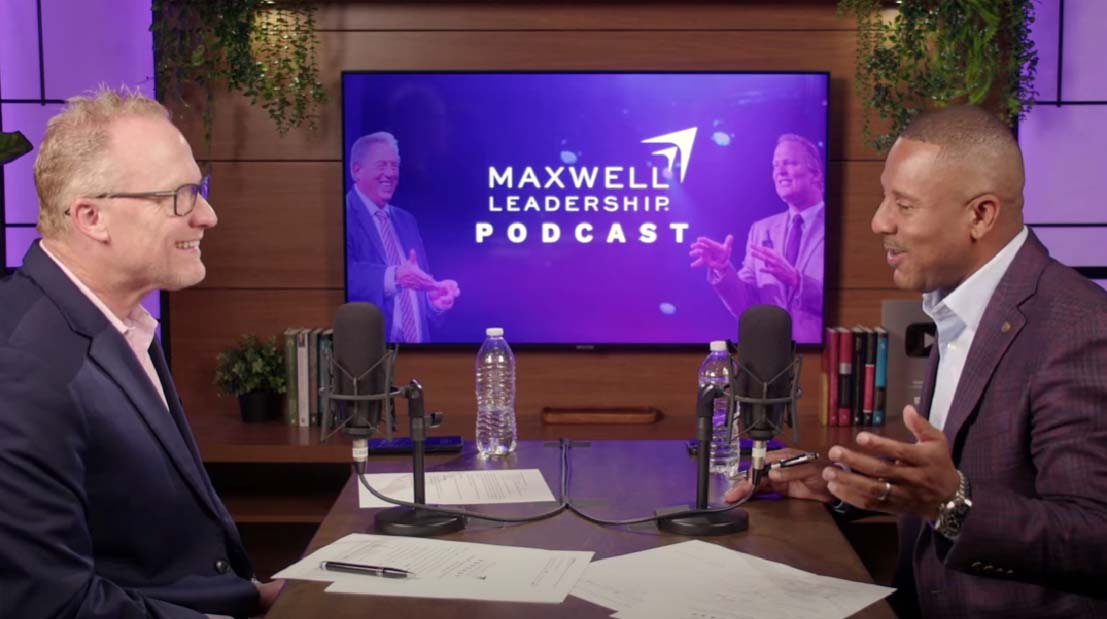
We’ll hear from John in just a moment, but I’m joined in the studio with Chris. How you doing, Chris?
Chris Robinson:
Hey, man, I’m doing outstanding.
Mark Cole:
Amen. It’s October. October. I would ask you your favorite fall story, but right now I know what your favorite fall story is. He lived in St. Louis and then came down to West Palm beach to help run the Maxwell organization. And so right about now, you’d be pulling out jackets if you were still in St. Louis.
Chris Robinson:
Yeah, I would. I would. But hey, I’m thankful. And I. And if I look back at choices and what my favorite fall story is, it’s 70 degrees all fall long in Florida. We gotta deal with a little hurricane, but that comes and goes and we’ve been fortunate in that. But hey, I’m telling you, it’s about a six month stress that we’re getting ready to go into in Florida. It’s paradise.
Mark Cole:
It’s paradise. I guarantee you it’s probably more than six weeks because I love December. January in West Palm as well.
Chris Robinson:
Oh, yeah, yeah.
Mark Cole:
He’s rubbing it in. Hey, podcast family. He’s rubbing it in. You have just officially lost credibility with many of our podcast listeners. That’s exactly right. Well, today John’s going to be talking. Speaking of moving and making a good choice, John today is going to talk about what happens when you help people win, when you help others sense and feel. Win.
Mark Cole:
Feel that win. And so I’m excited. I want you to grab a pen and paper. In fact, if you’d like to download a bonus resource, if you enjoy watching this podcast on YouTube, you can go to MaxwellPodcast.com/HelpOthersWin and you’ll be able to get all of that, get the access. We’ll put some other links in there throughout the show today, so enjoy that. Hey, Chris. And I’ll be back in just a moment. We’re going to talk about some winning things.
Mark Cole:
Chris is a competitor. He’s competed in some sports, so we’ll talk a little bit about that. But here is John. Here’s what John’s quote is today. When you help others win, you win too. Let’s go learn how to win so we can help others win. Here Is John Maxwell.
John Maxwell:
What happens to people when you put a win under their belt? And when I use the phrase a win under the belt, what I basically am asking is, what happens when you help someone else win? You see, the average person in life, to be honest with you, throughout their day, they lose more than win. And we add incredible value to people when we help people succeed. My father understood that when I was again a kid. My brother Larry is two years older than me. And what we love to do after dinner, we’d move all the furniture out of the living room to the sides, and we’d have a big wrestling match. And my brother was older and bigger and stronger than me, and he always won. And I just kept wrestling. Which shows you my iq.
John Maxwell:
Cause every time I lost. I’ll never forget one night at the dinner table, Larry and I were talking about a wrestling match, and dad interrupted and said, larry, he said, this week, I’m going to wrestle John. You be the referee, I’ll wrestle him. And, man, I thought, oh, my, I’m really in trouble. I mean, my dad’s even much bigger than my brother. And, wow, I’m going to really. I’ll get pinned quick. And so we cleared the furniture and we wrestled.
John Maxwell:
And much to my surprise, after a long, hard wrestling match, I defeated my dad. I pinned him, and I remember I felt so good, my brother was shocked and surprised. The next night, after a struggle, I won. And the next night I won. And for five nights, every night after a great struggle, I would win. And my father put my arm in the air and pronounced me to be the champion that evening. I’ll never forget that next Monday, my dad looked at Larry and said, you can wrestle John again tonight. And I can tell you, my brother never defeated me again.
John Maxwell:
Many times we would just wrestle till we were tired. I didn’t always pin him, but he never pinned me again. Now, what happened in that one week? Did I all of a sudden just gain muscle and body frame and strength? No, no, no. My father put belief in me. My father wished the best for me. My father put a win under my belt. And in adding value to people, you want to intentionally, in every encounter, basically say this to yourself. I wanna say something or do something or be something that will help that person get a win under their belt.
John Maxwell:
Every Thanksgiving when my children were growing up, Elizabeth, we call her Eli, and I would. With the turkey, we would take the wishbone, and it was a ritual that we would make a wish and I would look at that wishbone very carefully. When she was small to make sure that I got the tender part, the part that was fragile, so that when we pulled the wishbone, she would win. And I’ll never forget one time after we had done this, maybe for six or seven Thanksgiving, Eli looked at me and she said, daddy, she said, when we’re doing this, she said, what do you wish for? And about that time, it snapped and she got the bigger part and she won the wishbone. And I said, I always wish for the same thing, sweetheart. I always wish that you would win. When you begin to look at others and feel that same way that you wish that they would win, you will intentionally look for ways to help them do that. And the big idea is the first step in helping another person’s ability to achieve is to help them believe that they can put some wind beneath their wings of belief so that you can help them have a win under their belt.
Maxwell Leadership Certified Team:
Hey, podcast listeners, many of you listening right now would probably love the autonomy that comes with owning your own business or becoming a coach that helps other businesses succeed. Well, we have a phenomenal strategy where you are 100% in control of your own business, earning income on your own terms, and have access to the people, tools and resources you need to build a thriving leadership development business. When you become a Maxwell Leadership Certified Team member, you join a global community of entrepreneurs led by our expert team of mentors and faculty, including John C. Maxwell. You’ll also get one of the top leadership certifications in the world next to your name, giving you the boost you need to get started. Visit us online at MaxwellLeadership.com/JoinTheTeam to find out more.
Mark Cole:
Hey, welcome back, everybody. Isn’t that, isn’t that so true? Is John just kind of communicates the power of letting people win? And we’re going to break that out a little bit because I haven’t always felt that way. We’re going to talk about that a little bit. Confession’s good for the soul today. But man, you’ve competed. You competed at the highest level. I mean, you played baseball, you’re high level pickleball. What is it about winning that is just so exhilarating?
Chris Robinson:
Well, you know, I don’t know if it’s what that is. I think it’s something innately inside of us that it’s a feeling of success, it’s a feeling of completion, it’s a feeling of competition. And, you know, I just, it’s just something that drives me. I’m getting excited just talking about what.
Mark Cole:
He’S coming up, he’s fixing to challenge me to some pickleball and I’m out.
Chris Robinson:
Let’s compete at something. But I mean, it really does come down to very small things. Like my wife and I, you know, we’ll play board games from time to time. She loves playing the board game. Sorry. And so, you know, a couple days throughout the week she’ll be playing with the kids. And you know, I don’t, I really love that game. I really loved it.
Chris Robinson:
But if I’m a play, we’re going to compete. And so, you know, I just recently here I come to the table and I came out and I won the first game. Oh, I was excited. She was just like, oh, it’s your first time. And then so immediately afterwards, I stand up and you know, I go tell the kids, I said, hey, look, there’s a new undefeated champion in the room. She’s like, you played one game? I said, yep, undefeated, Undefeated. And so I sprinkled the next games out over the next few, few days. And I went about a week where I was the undefeated champion.
Chris Robinson:
Wow, okay, that was about three games. Okay. But it’s something about competing. You can see the competition rising up in her going, oh my goodness, I want to play again.
Mark Cole:
Cuz she’s a competitor too.
Chris Robinson:
Yeah, she is, she is, she is. And so that desire to win, I just think is something inside of us, inside of all of us. And again, in some of my kids, you can say, ah, they don’t want to compete. And it’s not as outward, but at the same time, you know, it’s in there, it’s in there. Everybody wants to win, everybody wants success, everybody wants to achieve in whatever it is that they’re doing.
Mark Cole:
Yeah, so funny. John, in his teaching today, gang, he made winning kind of holy. It wasn’t so holy in my time. I took a lot of, a lot of ugliness. We’ll maybe talk about this in a bit. There was a lot of things that came out in my pursuit of winning that I’m not so proud of all the time.
Chris Robinson:
His dad, I mean, his dad made that really holy because I mean, his dad let him win for five days. I’m telling you, all I could think about when he was doing this was my kids doing karate when they were about, I want to say they were about four. The two boys were in karate class and they were to go test for this belt. Well, they refused to do the kick test, but the guy gave them the belt anyway. And they came home. My wife said, hey, they got their new belts today. And they were all excited. And she says, but they didn’t do any kicking.
Chris Robinson:
I took those belts. They never saw the those belts again. So I feel kind of convicted right here.
Mark Cole:
Melvin Maxwell needs to come mentor you some.
Chris Robinson:
I should have tied them up and told them they were great. I don’t know. But I got those belts.
Mark Cole:
Everybody does not get a trophy in the Robinson household.
Chris Robinson:
Let me tell you this. Oh, my goodness. Well, anyway, let’s dive into some of these. You know, we talk about the wins, but, you know, we do have. All have somebody that was an encourager in our life that helped us win very early on. Who is somebody in your life that really came along and helped you get one of your first wins in life?
Mark Cole:
Yeah, you know, I was thinking about that boy. I always felt high love and support for my dad from my dad. Just, he loved me, he appreciated me. He was not good with words of affirmation. My love language is words of affirmation. Now a quick story about my dad that many of you may not know is my dad’s mom and dad were deaf mutes. So my dad never heard I love you, good job, way to pitch. He was a.
Mark Cole:
My dad got a full ride baseball scholarship to Georgia Tech, had a mean knuckleball, but he never could hear that affirmation. Now he felt it, but he never heard it. And so therefore, I don’t know that my dad ever learned words of affirmation. That was my love language. Right. So I felt a lot of support from my dad. But I’ll tell you, there was a guy early in my leadership career, I was 17, 18, just taking on leadership positions. And Tim would tell me all the time that I could do it, that I could handle it, that this was mine to charge.
Mark Cole:
And in fact, Tim’s the one that gave me my first Maxwell Leadership book to read. And I can remember that probably the greatest story of affirmation and just somebody that really made me feel like I could win was my third grade teacher, Ms. Richardson put belief in me, put in me that I was a winner. It wasn’t even really around sports. We talk. It’s October, you know, I mean, we’re into sports right now. Go Dogs. Don’t tell my daughter I said that.
Mark Cole:
Don’t go Gators. No Gators. And so, you know, we’re right in the middle of this time of the year. That just brings out the fanatic fans. But I believe that what Ms. Richardson put in me was a winning mindset. Not a winning a score, but a winning mindset at third grade, right there. Eight years of age.
Mark Cole:
I learned a winning mindset from Ms. Richardson.
Chris Robinson:
Wow, I love that. I love that. You know, and then there’s this shift, though, and there’s a shift that now you have had somebody pour into your life that, you know, helped you win. But then there’s a phase where you begin to wish that other people would win. Talk to me about when did you begin to look at others and wish that they would win?
Mark Cole:
Well, so my first chance at being a parent biologically was at 36. So I was pretty mature. And I gotta be honest with you, I appreciated people that won. As long as I wasn’t the competitor, as long as I wasn’t the adversary, I’d appreciate winning on somebody else, even if they were not my team. But if I’m in the game and wanting somebody else to win, man, I didn’t learn that till late in life. And it was when Macy, our youngest daughter, was born. And holding her in my arms, Chris, I imagined, what can I do? One of the first thoughts I had about four quick thoughts. One of those first four quick thoughts that I still remember this day.
Mark Cole:
Put her hand. I’ve got to help her win. I’ve got to make a way for this girl to win. And I wish it was. I wish it was younger in life. In fact, I’ll tell you a story. I was over a lot of youth programs early in my life. And in those youth programs, man, we’d have kids come in.
Mark Cole:
No fathers, no home life, just terrible. And there was this one kid that I took a real liking to. Loved him. I mean, just this kid. I saw so much of me in him. He didn’t have. He had nowhere near as many blessings.
Chris Robinson:
I.
Mark Cole:
But I just really saw in him high potential. And I just kind of took him under my wing. And in learning experiences, I was a teacher in a private school and learning experiences. I’ll never forget the day he came to me and he said, mark, I’m going to tell you something. You are better than the dad I never had, because there’s no dad that could be like that. Thank you for making me feel like I’m important. I’m on top of the world. Chris, look at me.
Mark Cole:
Let me see how many people I can tell you about this. One week to the day later, I’ve got him on the basketball court and he’s on the other team. And I’ll never forget, I wasn’t that good at sports like you. I have a big mouth. And so I was good at running my Mouth and getting into the head of the good athletes so I could at least compete with them. I did not have the ability. I just had the mouth to try to unsettle them so that we could kind of figure out who was going to win. If it were just on talent, I would lose.
Mark Cole:
But talent, I mean, no talent in mouth. I sometimes won. So I got in there and I was just harassing them. Harassing. They’re beating us, and I have the less talented team, and they’re beating us, and I’m just harassing them like crazy. And we won. And I rubbed it in their face. Same kid, seven days later came up to me and says, I’ve never felt more low than the way you made me feel today.
Chris Robinson:
Oh, man.
Mark Cole:
Good grief. Number one, we’re living in the extremes. I’m the best in the world. Seven days later, I’m the worst in the world. But it occurred to me later in life, it didn’t occur to me then, Boy, we can want to win so bad that our winning makes people feel like losers. I’ve been on teams to where we won, and my conduct made the people that won with me on my team go apologize for winning because of how rough I was on the adversary. So I got to tell you, it truly was Macy being born. Unlike you, I do let Macy win.
Mark Cole:
It doesn’t sound like in sorry. And other things you don’t do that may need to have some therapy session here. I remember many times because my wife’s a little bit not gonna let you win. You gotta win. If you win, I’m like, no, I don’t wanna beat my little girl. I want her to win. Stephanie couldn’t understand that. But, yeah, I can remember the joy of feeling defeat because of somebody else’s victory through my little girl.
Mark Cole:
I now. I’ve coached softball teams now, and I love watching other people win on my team. But it was learned. It was not natural.
Chris Robinson:
Wow. See, now you went wholly on me as well. You know, talking about holding your baby girl for the first time. How can I help her win? Look, I got three that came out at one time. I’m gonna be honest. My question was, how am I gonna do this?
Mark Cole:
You couldn’t even hold them all.
Chris Robinson:
I couldn’t hold them all. I got three of them at one time. How am I gonna do this? Yeah. So maybe I need some help today.
Mark Cole:
Yes. Therapy after the podcast.
Chris Robinson:
Right. I love. I love it. You know, for me, you know, making that shift, I can tell you I didn’t really have a. Not like I ever wanted people not to win, but, like, truly, genuinely wanting to see people succeed. I think that came early in my career, fortunately, because I was deeply dug into John’s material, and I was. I remember being a very young sales manager at that time, and we were, you know, we were trying to win. We were in a sales environment.
Chris Robinson:
It was telephone sales, and every team that we were leading who could get the most sales. I mean, there were big prizes, big money, up for rewards. So it was in your best interest to win. But I remember going through the 21 laws and reading pages 5 and 6 inside the book. On one page, it showed your ability when you’re dedicated to success. And then on the other side of the page, on page six, it showed your dedication to success with leadership ability, which was an outward focus on others. And I remember at that time, that was the shift, and this was in early 2001, 2002, that I saw in those two graphs that I become more valuable to an organization. I become more valuable people.
Chris Robinson:
Not that if I’m the star, but if I’m the star creator. Yeah. And when I began to make that shift, everything began to win. Everything began to win. I began to win more. I began to attract more winners because I had their best interest at heart. It wasn’t about me being the sales manager and getting all the results and being the winner. It was about, how many people can I get promoted on my team? How many people can I help get the cars that they want, the houses that they want, the relationships? If I could help them with those things, Everything else takes care of itself.
Chris Robinson:
For me, that was the biggest shift in helping and wishing that others.
Mark Cole:
You know, I think back to I love this concept, gang by podcast listeners. What happens when you help others win? That’s the question that John is tackling today. That’s the question that Chris and I are applying. I can remember, again, it would have been pre my daughter. So this would have been 19 years ago. I just kind of learned how to enjoy other people winning. I was leading a lot of people, and inwardly I was going, man, I could do that better. I could do that.
Mark Cole:
I would not focus on the fact they just won. I’d focus on the fact that I could have performed better. I can remember leading in John’s organization, barely because Macy was born early in my career here, but I can remember still having this thought of, man, if I was just given the ball, we would have won bigger. If I would have been on that team, we would have won. Did not have that celebration. And here’s what happens as I go back and relive that, because I really do believe I have matured beyond that. And I do think it took Macy for me to mature beyond that. I’ll tell you this.
Mark Cole:
There were times in my life, early, early on, I wouldn’t get in a game because I wasn’t sure I could win. How many of us are not trying something because victory is not certain? Because winning is so important that we will not get in a game that we’re not certain we can win? And I’m just telling you, you’ve lost. If you won’t get in a game that you didn’t win, you lost. You might not think you didn’t lose since you didn’t get in a game that you couldn’t win. But you lost. You lost because you’re paralyzed. And there’s people right now listening to this podcast that you’re not in a game that you would like to be in because winning yourself is the most important thing rather than learning yourself or helping others win. You know, there’s a real true statement when we say, may the best man win, may the best team win, may the best woman win.
Mark Cole:
There’s a real statement there. And you watch these athletes. We’re right in the middle of football season. Yes. I’m glad it’s back. Big Kansas City fan right here across from me.
Chris Robinson:
Yep.
Mark Cole:
Go Chiefs. That’s okay. I’m a Dolphin fan. And you’re from South Florida. I love the Falcons, too. I’m seasoned ticket holders. Love you guys. But we’re in the season right now of watching true sportsmanship on display and true sportsmanship.
Mark Cole:
You mentioned Kansas City Chiefs. I love Patrick Mahomes. I love when they lost the super bowl last year and how he complimented Jalen Hurts. And the entire team says, the best team won. They played better than us. They were more prepared than us. He didn’t go well. We could have if we should have.
Mark Cole:
You don’t watch that. You watch real, true, top tier elite athletes. And when the best person wins, they congratulate them. And that’s not a thing they’ve been coached to do, just to be right in the media. That’s something that really comes from the heart of a true competitor. They want the best performing team. They want the best performing individual to really win the game because it keeps the integrity of the sport and it solidifies the outcome of the win. And I want to be a business leader like that that says, wow, may the best person on the team win, may others win.
Mark Cole:
I Want to be a leader that says, hey, I want to be in the game, and I want others to win the game if their plan is better than the one that I’ve been working.
Chris Robinson:
Indeed. Indeed. I love it. I love it. Now, there’s a little bit of shift that John talks about where he says the first step to helping another person’s ability to achieve is to help them believe they can. Talk to me about a person that believed in you, that helped you go to the next level or to help you win.
Mark Cole:
Yeah. So I couldn’t talk about anyone other than John Maxwell on this. And since you didn’t exclude him, you might have meant to, but since you didn’t, Chris, I came to this organization a little bit like your story. I came to this organization. I obviously grew up around leadership. I grew up, but the mindset that I had when I came here 25 years ago was I had nothing to contribute to the concept of leadership. I had nothing to contribute to the concept of meaningful relationship, and I’m done. That was my mindset.
Mark Cole:
And I got in this environment and people that have been mentored by John, and then ultimately John, because I have a lot of proximity to him now, but people that had been mentored in this environment began to help me see and feel and experience true belief in myself. I had believed in my talents before. I had believed in my family heritage before. I had believed in the fact that I was born on third base. In my world, I had been advanced because of who my parents were and that kind of stuff. And so I was born on third base. I was born on second base. I didn’t hit a single.
Mark Cole:
I was just born on base. And so then I come here, and I wasn’t born on anything. Nobody knew me. I felt the worst about my potential than anybody around me. They didn’t know me. I didn’t believe in me. And I watched this organization and who I surrounded myself began to put belief. Here’s my first bullet point.
Mark Cole:
If you are struggling with helping others believe their best, it’s probably because you don’t believe in your best, because you can’t give somebody else belief in themselves. If you don’t have authentic belief in yourself, you can give them a motivational speech and they may take it and run with it, but you didn’t offer them belief. They just found belief somewhere else. You can’t give belief if you don’t have belief. I can’t have belief in you, Chris, if I don’t have belief in myself. So the first thing, the first teaching Point is, I would tell you, you have got to build belief in yourself so that you can give belief to others in this environment. Going back to working here, the second thing that they did is they gave me belief. They also gave me opportunity.
Mark Cole:
It’s one thing to say, I believe in you, I believe in you, I believe in you, but I never get give you an opportunity to live out that belief. Too many leaders are going around and saying, I believe in you, but not showing that belief. And the only way. The only way. The only way I can tell somebody I believe you can run the ball is if I give them the ball to run. You can’t say, I believe borrowed. Belief only works when there’s an activation clause in it. You believe in me.
Mark Cole:
Okay, so give me the ball this next play. And then the final thing that I would say is, you can’t help somebody believe if you don’t show them the true win. The scoreboard has to show a win. Now, I’ve given a lot of people the ball that the scoreboard didn’t indicate the win. So I had to go show them they were looking at the wrong scoreboard because the scoreboard that shows they were out there, that they got. They did that perfect move. They followed the block perfectly. That concept is something that sometimes I have to show.
Mark Cole:
Show the teammate that what a real win looks like. And a real win is not always that they got the sale. The real win sometimes is that they ask for the sale. So I think that’s how I’ve built that belief in others.
Chris Robinson:
Wow. Well, I mean, very fortunate, because there are a lot of people out there that say, hey, I don’t have anybody that believes in me right now. And they have that low self belief. And so what would you say to the person that says, you know what? I don’t have anybody, and I’m kind of struggling myself mentally right now. What advice would you give them to get around people to get that belief circle going?
Mark Cole:
Let me, Let me. Let me say. I want to say two things to that person. First, the first thing I want to say is, it’s not true. You don’t have anybody to believe in you. I believe in you. Chris believes in you. You know why he flew up from West Palm beach today to be here in studio with me.
Mark Cole:
Could have done it by zoom. You know why he did it? He believes in you. He didn’t do it because there’s a bonus on the other side of the podcast. He didn’t do it for those things. He did it. You know why John Maxwell, still at 78, is still speaking like he did today in our lesson while he’s still on the road. It’s not because he needs the money, guys, everything’s good. The Maxwells are okay.
Mark Cole:
He does it because he believes in you. We do this podcast because we believe in you. So first of all, if you’re listening, and you are, if you’re listening or you’re viewing and you are, then guess what, it’s not true. You don’t have anybody to believe in you. I believe in you. Now that can sound very out there, very far fetched because have we really ever met? So let me take you to the next thing that is more tangible and you need to find people that will believe in you. You need to find people. There’s a lot of places that you can go to find people that will believe in you.
Mark Cole:
There’s a lot of places that you think you should be able to go to because they should have belief in you that they don’t. They want to push you down. So really, truly don’t think a church or a hospital or something to where you normally find people that will help you. I’ve found people in those organizations that don’t want to lift you, but you need to find a place. You need to go and find somebody that will look at you and say, I believe in you. That’s what you need. That’s your assignment. That is your assignment in this lesson specific to what Robinson just asked me and that is how do you find somebody? When you don’t feel like that you have somebody, you find somebody.
Mark Cole:
Go do it. Go look at places like worship, go look at places like community centers, go look at places like nonprofit that are missional minded. But in all of your pursuit, pursue getting somebody that can lift you and put belief in you. That is the way that you’re going to move. Chris, I got one other thing that I just want to say right here and hear you kind of give me a feedback on. There truly is a level of accomplishment that one gets to where that accomplishment is enough. And now you want to see people around you get accomplished. John’s definitely at that, at his stage in life.
Mark Cole:
I definitely reached that one with Macy. I’m not saying in every area of life, but I definitely reached that. What do you say to people that still just quite hasn’t got that passion for others to win more than they want themselves to win?
Chris Robinson:
Yeah, well, I think it’s very difficult to break that barrier, to be honest with you, because I remember reading in the Books from John, you know, help other people win, you know, help enough people win and help eventually you’ll get what you want by Zig Ziglar. And I remember that, and I remember being dead set on, I want to help people get promoted on the job. And it was awesome. And then there came a time where I was in competition for a promotion with somebody that I helped get to that role. Now here, the test was coming, and the test comes for everyone of, do you really believe what you say that you’re believing in? And I remember being in that car ride with this individual saying, hey, look, I know it’s going to come down to either me or you, all right? But here’s the commitment that I’m going to make. I was like, if I get promoted, I’m going to help you get to that next tier. And if you get promoted, I’ll ask that you do the same. And that was very, very, I think, mature in that moment.
Chris Robinson:
I was in early 20s, probably 23 or 24 years old. When making that statement to somebody, and he got the promotion on the inside, it was like, oh, man. Of course, my first response was, well, hey, what is it that I missed? What is it that I could do? I did all the proper protocol of trying to figure out what I needed to fix, but that was the first time where I had helped somebody and they had exceeded me, and it truly happened. But this person did well. This person treated people like people. This person did awesome in that job. But then that confirmed for me, oh, man. Yeah, I did the right thing.
Chris Robinson:
And it fired the pursuit inside of me to continue to help others win. So still to this day, I’ve got coaching clients that make millions upon millions of dollars, and I couldn’t be more excited for them. I’ve got people that were in bad situations, and I’ve helped to get great support doing well above and beyond what I’m doing. I couldn’t be happier for them because now I know the real, true feeling of it, and that’s the real significance for me. And so it takes some shifting. It’s difficult. It’s not easy to say, we want to see people go beyond where we go beyond. That’s polite until it really happens, and then you really get a chance to choose, is this what I really want or not? And if you do choose it, I’m telling you, it’s greater on the other side of seeing other people win.
Mark Cole:
Thank you for sharing that story and for all of us just kind of taking note on how to help people win. More and what happens in us when we help others win. That was incredibly helpful. There’s something I want to give you that is beyond you, that’s bigger than you, and that is the book Change youe World that John wrote. It’s really about what you’ve been given is a stewardship issue so you can make a difference with the people around you. It’s the book you want to pick that up. The other thing is we have a digital product that helps you know how to change the world around you, helps you know how to help others win. And I really want to challenge you if this lesson has spoken to you and you go, man, I’ve got to get better at looking at others and helping others win.
Mark Cole:
Change youe World is a book that will lift your thinking beyond yourself and start putting your thinking on what we call significance. What will happen through you to make others win. So go check that out. That product is in the show notes as well. There’s another episode that we did that’s very similar here that I want you to go listen to if you have a little extra time this week. It’s called how to Be a Leader. People love to follow. Great episode.
Mark Cole:
Want you to go check that out as well. Hey, Jim, listen to the podcast Strategies to Stop Complacency. And Jim, thank you for your comment. They help us tremendously. Jim said, get around people bigger, better and faster than you. He said, I needed that reminder today because I don’t want to have room for complacency. Jim, me and you both, buddy. Thank you.
Mark Cole:
All of us. Go make a powerful, positive difference because everyone deserves to be led well.
Transcript created by Castmagic.



Be the first to comment on "What Happens When You Help Others Win"